
Key Man Policy for Business

Jason Stolz CLTC, CRPC
A Key Man Policy—also known as key person insurance—is designed to protect a business from the financial shock that follows the unexpected death of a vital owner, executive, top producer, or operational leader. In many privately held companies, one individual drives a disproportionate share of revenue, relationships, technical knowledge, strategic direction, or lender confidence. When that person is suddenly gone, the company does not simply lose an employee—it can lose stability, negotiating leverage, cash flow continuity, and in some cases, long-term viability. A properly structured key person policy creates immediate liquidity inside the business so leadership can make deliberate decisions instead of desperate ones. The proceeds can stabilize payroll, protect contracts, reassure lenders, fund recruiting and transition costs, or offset temporary revenue declines while the company recalibrates. This is different from personal coverage intended to protect a family; key person coverage exists to protect the enterprise itself.
Business owners often confuse key person insurance with ownership-transfer planning. While both may use life insurance, they serve different purposes. If you are comparing structures, review Key Person vs. Buy Sell Insurance to understand how beneficiary design and intent differ. A buy-sell agreement funds ownership transfer between partners; a key man policy injects capital into the company to keep operations steady. Many growing firms implement both over time—first to stabilize risk exposure, then to formalize succession and valuation mechanics. If your concern extends beyond death to prolonged disability, pairing a life-based key policy with Business Overhead Expense disability insurance is often critical, because a key individual being alive but unable to work can be financially just as disruptive as death.
At its core, a key man policy is typically structured as business-owned life insurance. The company owns the policy, pays the premiums, and is the beneficiary. If the insured key individual dies, the death benefit is paid to the business. The purpose is liquidity—flexible capital that allows the company to absorb impact without liquidating assets or taking on emergency debt. That liquidity can be used to preserve client confidence, maintain credit relationships, or buy time for strategic transitions. Companies with financing in place often find lenders view documented key person coverage as a strength. Even when not required, it signals preparedness and continuity planning.
Who qualifies as a key person? It is not always the CEO. It might be the founder responsible for 60% of revenue, the lead engineer who holds proprietary knowledge, the medical professional whose credentials drive referrals, the sales producer with the top book of business, or the operations executive who ensures delivery timelines are met. The practical test is simple: if this individual disappears tomorrow, does the company lose revenue, credibility, or execution capacity? If the answer is yes, that person is likely “key” enough to insure. In partner-owned firms, multiple individuals may qualify. If succession planning is also a priority, again compare structures carefully in this breakdown of key person versus buy-sell planning so policy ownership and purpose align correctly.
Determining coverage amounts should not rely solely on arbitrary multiples of compensation. A smarter method begins with exposure analysis: projected lost profit during a transition period, recruiting and onboarding costs, debt obligations tied to performance, contract risks, and the realistic time required to stabilize operations. Some companies use two to five times compensation as a starting point, but revenue dependency and replacement timelines matter more than salary alone. Coverage should mirror measurable business vulnerability. If you need a starting framework for estimating overall life insurance needs, including non-business exposure, review How Much Life Insurance Do I Need? for broader context before narrowing to business-specific calculations.
Term life insurance is the most common vehicle for key person coverage because it provides high face amounts for relatively low cost and aligns with identifiable business risk windows—growth years, expansion phases, debt repayment schedules, or pending succession transitions. Many firms require protection only during a defined period. Term keeps premiums efficient while delivering maximum coverage. Permanent life insurance, however, may be appropriate when the key individual’s importance is foundational and long-term, or when the business desires additional structural flexibility. Permanent coverage can remain in force indefinitely and may provide cash value features that support long-range planning. If evaluating how permanent structures evolve over time, including conversion pathways, review Convert Term to Permanent Life Insurance to understand flexibility within policy design.
Underwriting considerations matter more than most owners expect. Carrier appetite varies significantly, particularly if the insured has a medical history that falls outside textbook “standard” health. Business owners often assume there is only one underwriting outcome, when in reality different carriers evaluate the same profile differently. If the proposed insured has hypertension, diabetes, cardiac history, or another condition, understanding how underwriting varies becomes essential. This overview of life insurance with pre-existing conditions illustrates why strategic carrier alignment can materially impact pricing and approval outcomes.
Protect the Revenue Engine of Your Business
Compare term and permanent key person strategies, align coverage to real business exposure, and structure ownership correctly for lenders and long-term continuity.
Request a Key Man Policy QuoteKey person planning is often layered gradually. A company may first secure coverage to stabilize operations, then integrate broader risk tools such as disability protection or buy-sell funding once valuations and ownership agreements are formalized. If the concern is extended inability to work rather than death, explore how Business Overhead Expense disability coverage helps cover rent, utilities, salaries, and fixed costs during recovery periods. In some industries, disability probability exceeds mortality risk during working years, making dual-structure planning prudent.
Ownership structure also matters. In most arrangements, the business owns and benefits from the policy, but formal consent from the insured is required. Corporate resolutions should document premium responsibility, beneficiary designation, and contingencies if the insured departs the company. Clarity prevents disputes later. If the company includes multiple partners, coordinate coverage with any shareholder agreements so intent is unmistakable.
It is equally important to distinguish employer-provided group coverage from individually structured policies. Employer group life may provide limited amounts and may not be portable if the key individual leaves. For broader understanding of structural differences, review Group vs. Individual Life Insurance. A key man policy should be intentionally structured for business continuity, not assumed covered under general employee benefits.
Liquidity at the moment of crisis can determine whether a business survives intact or is forced into distressed decisions. Key person insurance is not about pessimism—it is about leverage. When a company can reassure clients, lenders, and employees that capital is available, confidence stabilizes. That stability protects long-term enterprise value. The relatively modest premium outlay compared to potential loss makes key person planning one of the most cost-effective risk management tools available to privately held firms.
Life Insurance Quoter
Use the tool below to explore term lengths and coverage amounts. After identifying a realistic range, align policy ownership and structure to your specific business objective.
Stabilize Your Company Before a Crisis Hits
Design coverage around real revenue exposure, debt obligations, and transition timelines—not arbitrary multiples.
Start Your Business Protection Review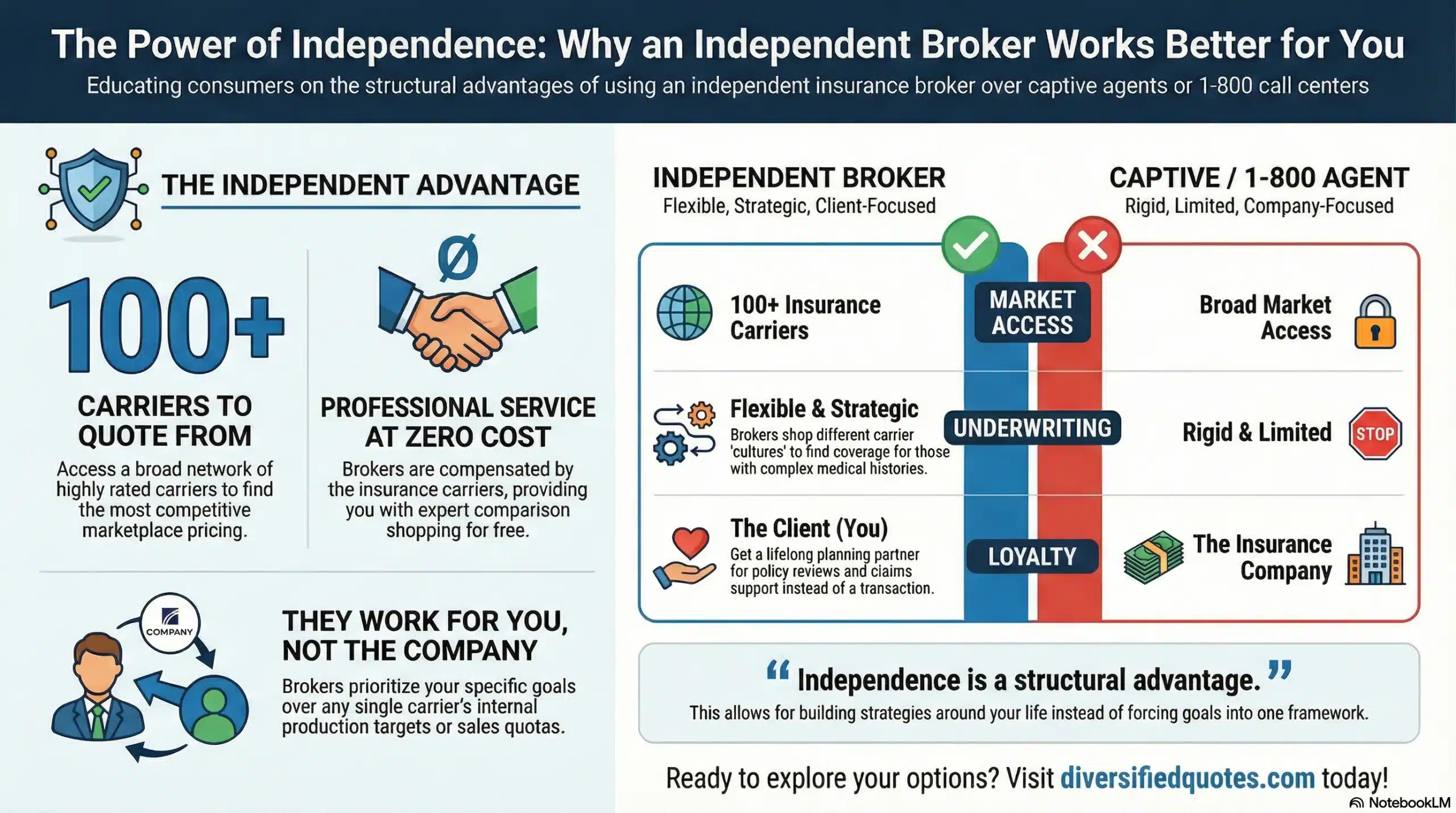
Talk With an Advisor Today
Choose how you’d like to connect—call or message us, then book a time that works for you.
Schedule here:
calendly.com/jason-dibcompanies/diversified-quotes
Licensed in all 50 states • Fiduciary, family-owned since 1980
FAQs: Key Man Policy for Business
What is key man (key person) insurance?
Key man insurance is typically a business-owned life insurance policy (and sometimes paired with disability protection) on a person whose death or disability would create a financial threat to the company. The business usually owns the policy, pays the premium, and receives the benefit, which can be used to stabilize operations, protect cash flow, and fund a transition plan.
How is key person insurance different from buy-sell insurance?
Key person insurance is designed to protect the business’s operations and cash flow after losing a key individual. Buy-sell insurance is designed to fund an ownership transfer agreement between partners or owners. The structure can look similar, but the purpose and beneficiary intent are different.
How much key person coverage should a business carry?
Coverage is usually based on the financial impact of losing the key person, including projected lost profit during a replacement period, recruiting and training costs, contract risk, and debt obligations. Many businesses start with compensation multiples, then refine the number by estimating how long it would take to stabilize revenue and leadership after a loss.
Is key man life insurance premium tax-deductible?
In many situations, premiums for business-owned life insurance are not tax-deductible. Tax outcomes can vary based on structure and purpose, so it’s important to confirm treatment with your tax professional for your specific arrangement.
Should we use term or permanent life insurance for a key person policy?
Term life is common because it delivers high coverage amounts at lower cost for a defined risk window. Permanent life can make sense when the need is long-term or the business wants cash value features for planning flexibility. The best choice usually depends on budget, the length of the risk, and how the policy will be used in the company’s continuity plan.
What happens if the key person leaves the company?
If the insured leaves, the business typically reviews whether to cancel the policy, transfer ownership, keep it in place for a transition period, or repurpose the coverage if appropriate. The right move depends on the policy type, any agreements tied to lending or partnership, and the company’s continuity needs at that time.
About the Author:
Jason Stolz, CLTC, CRPC and Chief Underwriter at Diversified Insurance Brokers, is a senior insurance and retirement professional with more than two decades of real-world experience helping individuals, families, and business owners protect their income, assets, and long-term financial stability. As a long-time partner of the nationally licensed independent agency Diversified Insurance Brokers, Jason provides trusted guidance across multiple specialties—including fixed and indexed annuities, long-term care planning, personal and business disability insurance, life insurance solutions, and short-term health coverage. Diversified Insurance Brokers maintains active contracts with over 100 highly rated insurance carriers, ensuring clients have access to a broad and competitive marketplace.
His practical, education-first approach has earned recognition in publications such as VoyageATL, highlighting his commitment to financial clarity and client-focused planning. Drawing on deep product knowledge and years of hands-on field experience, Jason helps clients evaluate carriers, compare strategies, and build retirement and protection plans that are both secure and cost-efficient.
