
Beyond Insurance: Exclusive Wealth Strategies
Beyond Insurance: Exclusive Wealth Strategies
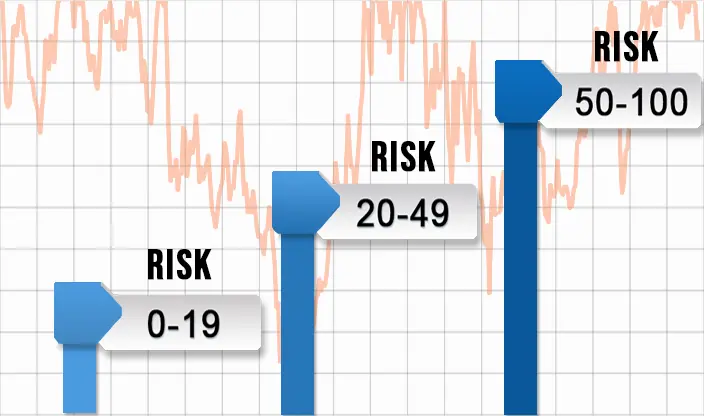
Most financial planning frameworks in the retail marketplace begin with a product — a fund, a policy, an account type — and work backward toward a rationale for why that product fits the client. Institutional investors operate from a fundamentally different starting point: they define objectives first, quantify constraints and capital commitments, map liquidity requirements across time horizons, and only then evaluate which exposures might serve a defined role within the overall structure. The gap between these two approaches is not a gap of complexity — it is a gap of process, documentation, and discipline. Sophisticated families, executives, and entrepreneurs who have moved beyond the accumulation phase and into the preservation and distribution phase of wealth management often find that the product-first frameworks they started with no longer match the structural questions they are asking. The Exclusive Wealth Strategies program is designed for that conversation — connecting qualified clients with an independent SEC-registered investment adviser whose approach mirrors the institutional methodology that defines how the most financially resilient families approach long-term wealth planning. Our resources on Concierge Wealth Services and an invitation to explore more provide the broader context for this program within the full wealth services offering.
The focus of this program is process and framework — not product sales or investment recommendations. Diversified Insurance Brokers does not provide securities advice, does not manage investment portfolios, and does not make investment recommendations. Our role is to facilitate introductions to an independent SEC-registered investment adviser — FamilyWealth Advisers, LLC — that provides advisory evaluation and guidance under their own regulatory framework for clients who meet eligibility requirements. The planning topics explored through this program include diversification frameworks, liquidity strategy, quantitative risk modeling, governance structures, and capital allocation methodology — not specific product recommendations. For clients whose financial questions have grown beyond the insurance and annuity conversation, this program provides a structured pathway to a higher-level planning dialogue that the insurance and annuity marketplace alone does not address. Our resources on what the top 0.1% know and how ultra-high-net-worth investors build wealth provide background on the institutional planning principles that inform this program.
Access to this program is generally limited to accredited or qualified investors under applicable SEC guidelines — individuals and families whose financial position reflects the complexity that institutional planning frameworks are designed to address. Eligibility determination is made solely by the independent adviser, not by Diversified Insurance Brokers. The qualification review process begins with a brief introductory conversation to understand planning objectives, current structure, and long-term goals. From there, the independent adviser evaluates whether the planning methodologies they employ are appropriate for the client’s situation. The risk analyzer tool below provides a starting point for evaluating portfolio risk characteristics and can help frame the initial planning conversation. Our resources on what is an accredited investor and institutional grade portfolio construction provide the foundational context for understanding who this program is designed to serve.
Portfolio Risk Analysis Tool
Evaluate your current portfolio’s risk characteristics as a starting point for the institutional planning conversation.
Institutional vs. Standard Retail Planning — How the Frameworks Differ
The difference between institutional planning frameworks and standard retail financial planning is not a matter of which products are selected — it is a matter of how the planning process itself is structured and sequenced. The table below summarizes the key structural differences across the planning dimensions that matter most for families at or approaching the wealth preservation phase.
| Planning Dimension | Standard Retail Approach | Institutional-Style Framework |
|---|---|---|
| Starting Point | Product selection — advisor recommends a fund, account, or policy based on client profile and available product menu | Objective definition — planning begins by documenting required outcomes: income needs, capital preservation targets, liquidity timelines, tax considerations, and legacy goals; product evaluation follows only after objectives are clearly defined |
| Risk Measurement | Typically measured by volatility relative to a benchmark or assessed through a questionnaire-based risk tolerance score | Measured through quantitative indicators, historical regime modeling, and scenario analysis that evaluate how portfolio exposures have behaved across economic environments — including inflation spikes, credit contractions, and liquidity tightening periods |
| Diversification Logic | Based primarily on asset count or allocation percentages across asset classes | Based on interaction effects — evaluating how exposures behave relative to each other during stress events, not just during normal market conditions; some assets that appear diversified in normal environments may correlate during liquidity events |
| Time Horizon Framework | Generally focused on accumulation to a target retirement age, then distribution from a single pool | Tiered liquidity planning that maps near-term distribution needs, mid-horizon obligations, and long-term capital preservation against exposure structures designed to function across decades; different allocations serve different time horizon functions simultaneously |
| Decision Governance | Decisions made reactively — typically triggered by market events, fund performance, or periodic advisor check-ins | Decisions governed by a documented investment policy framework that defines risk tolerances, acceptable allocation ranges, rebalancing triggers, and liquidity thresholds in advance — providing structure for decision-making during market volatility that reduces behavioral error |
| Transparency and Reporting | Account statements showing performance relative to benchmarks; limited visibility into underlying risk exposures | Detailed reporting on risk exposures, drawdown characteristics, scenario outcomes, and alignment with documented objectives; independent oversight as standard rather than exception |
| Behavioral Architecture | Reactive — portfolio decisions often coincide with market stress peaks when emotional pressure is highest | Proactive — governance documentation and pre-defined rebalancing rules reduce the probability of reactionary decisions during volatile markets; policy creates accountability that persists across emotional cycles |
This table describes general planning framework characteristics for educational purposes only. It does not constitute investment advice, a promise of specific outcomes, or a guarantee of any level of performance. All investment strategies involve risk, including the potential loss of principal. Past performance does not guarantee future results. Investment advisory services referenced on this page are provided exclusively by FamilyWealth Advisers, LLC, an SEC Registered Investment Adviser. Diversified Insurance Brokers does not provide securities or investment advice.
Process Before Product — Why Sequencing Matters
The most consistent differentiator in how sophisticated families approach wealth planning is the sequencing of the process — specifically, defining objectives and constraints before evaluating exposures. This sequencing prevents a common failure mode in retail financial planning: selecting products or allocations that match a general risk profile but do not map to the specific capital needs, tax obligations, distribution timelines, and legacy objectives of a particular family structure. When planning begins with product selection, the client is working backward from a solution to a problem that has not yet been clearly defined. When planning begins with objective definition — articulating required income streams, acceptable drawdown ranges, liquidity checkpoints, and multi-generational goals — the evaluation of exposures becomes purposeful rather than categorical. A growth allocation that looks appropriate in isolation may be inappropriate for a family with near-term liquidity requirements that preclude a long recovery horizon after a significant drawdown. A conservative allocation may be inappropriate for a family whose distribution needs are modest but whose legacy objectives require sustained capital appreciation over a long time horizon. The process-first approach surfaces these distinctions before commitments are made. Our resources on quantitative risk management and how smart investors manage risk without sacrificing growth cover the risk management philosophy that underlies the institutional framework this program introduces.
Evidence-Based Risk Analysis — What the Tool Reveals
A foundational element of institutional planning frameworks is the use of objective, evidence-based risk measurement rather than questionnaire-based risk tolerance scores. Standard retail planning typically determines risk tolerance through a brief questionnaire that identifies how a client describes their comfort level with hypothetical portfolio declines — but this approach measures stated preference, not experienced behavior, and often fails to account for how portfolio structure interacts with actual cash flow needs. Institutional risk frameworks evaluate portfolio characteristics through quantitative indicators — drawdown history across market regimes, correlation behavior during stress events, volatility-adjusted return patterns, and scenario outcomes under defined economic conditions. The risk analyzer tool accessible through this program provides a starting point for this type of analysis by evaluating the risk characteristics of a client’s current portfolio structure before any planning conversation begins. This produces a more factual, less preference-based starting point for the planning dialogue and can surface vulnerabilities or concentration risks that are not visible from a standard account statement. Our resources on institutional grade portfolio construction and how the wealthy minimize taxes cover two of the primary dimensions — structural risk and tax efficiency — that institutional planning frameworks evaluate simultaneously rather than in isolation.
Purpose-Built Diversification — Beyond Asset Count
Diversification in retail planning is commonly understood as spreading assets across multiple fund categories — large cap, small cap, international, bonds, alternatives — with the assumption that asset count and category breadth are sufficient to reduce portfolio risk. Institutional portfolio construction approaches diversification through the lens of functional role and interaction effects rather than category labels. The key question is not “how many different asset classes does the portfolio include?” but rather “how do these exposures behave relative to each other during the specific economic conditions that are most threatening to this portfolio’s objectives?” During normal market conditions, many asset categories that appear diversified behave roughly independently. During liquidity events — periods of sharp credit tightening, systemic stress, or forced deleveraging — correlations between asset categories can spike significantly, reducing the diversification benefit precisely when it is most needed. Institutional portfolio construction specifically evaluates this stress-correlation behavior and structures exposures to serve functional roles that are complementary across the full range of economic environments — growth environments, inflationary environments, deflationary environments, and liquidity stress environments — not just across normal market cycles. Our resource on curated investment access covers the investment access dimension that connects institutional framework design to specific exposure selection.
Liquidity Planning — The Most Overlooked Component of Wealth Strategy
Among sophisticated families, liquidity planning is one of the most consistently underweighted components of wealth strategy — and one of the most consequential when it is handled poorly. In standard retail planning, liquidity is typically addressed as a single emergency reserve — a cash allocation designed to prevent forced selling in a declining market. Institutional liquidity frameworks are more structural: they map all anticipated capital requirements across defined time horizons — including near-term distribution needs, tax payment timing, planned major expenditures, and potential opportunistic capital deployment — and then design the portfolio structure so that each liquidity requirement is met by exposures that are appropriately liquid at the required time. This tiered approach prevents forced sales of long-duration holdings at market bottoms because the portfolio’s structure anticipated the cash needs in advance. It also preserves the ability to deploy capital opportunistically when markets present asymmetric opportunities — because liquidity reserves are defined and protected, not opportunistically consumed by earlier distributions. The governance documentation that institutional planning produces — a formally written investment policy statement — typically codifies these liquidity tiers, their rules for replenishment, and the triggers for accessing each tier, creating a decision framework that functions under stress without requiring active deliberation. Our resource on protecting your nest egg covers the broader asset protection philosophy that connects to institutional liquidity planning, and our resource on Roth conversions covers a specific tax planning strategy that frequently intersects with liquidity planning in the context of retirement distribution design.
Governance — The Infrastructure That Persists Through Volatility
One of the most durable contributions of institutional planning methodology is governance — the documentation and procedural infrastructure that defines how decisions will be made in advance, rather than in the moment of market stress. Investment policy statements, rebalancing rules, drawdown response protocols, and distribution trigger frameworks are the governance tools that institutional investors use to ensure that portfolio management remains disciplined across emotional cycles. For families managing significant wealth through business transitions, inheritance events, or retirement distribution phases, governance infrastructure can be especially valuable because those transitions often coincide with elevated emotional complexity. A documented framework that defines what will happen — which accounts will be drawn from, in which order, under which market conditions — reduces the cognitive burden and behavioral error risk during exactly the periods when emotional pressure is highest. The same governance principles apply to major life event planning: when a business is sold, when a large inheritance is received, or when retirement distribution begins, the absence of a documented framework frequently produces suboptimal capital deployment decisions simply because the volume of decisions and options is overwhelming in the absence of structure. Our resources on what the top 0.1% already know and how to protect your funds in retirement provide additional context for the governance and preservation framework that institutional planning introduces.
Request a Confidential Qualification Review
Explore whether institutional-style planning frameworks align with your long-term financial structure. Access is generally limited to accredited or qualified investors under SEC guidelines. Eligibility is determined solely by the independent adviser.
Important Disclosures: Diversified Insurance Brokers does not provide securities or investment advice and does not make investment recommendations. All wealth management and investment advisory services are provided exclusively through FamilyWealth Advisers, LLC, an SEC Registered Investment Adviser. Past performance does not guarantee future results. All investments carry risk, including the potential loss of principal. Access to certain investment opportunities may be limited to accredited or qualified investors under SEC guidelines. We may receive compensation or other benefits in connection with referrals made to our investment adviser partner. Any potential conflicts of interest will be disclosed to clients in accordance with applicable regulations. There is no guarantee that any particular asset allocation mix will meet your investment objectives or provide you with a given level of income. We recommend that you consult a tax or financial adviser about your individual situation. Investments in bonds are subject to interest rate, credit, and inflation risk.
Request a Confidential Conversation
📞 Call us at 800-533-5969
or visit our Contact Page
Important: We do not provide securities or investment advice. If appropriate, we may introduce you to an independent SEC-registered investment adviser for evaluation under their regulatory framework.
FAQs: Beyond Insurance — Exclusive Wealth Strategies
What is the “Beyond Insurance: Exclusive Wealth Strategies” program?
It is an access program that introduces qualified clients to an independent SEC-registered investment adviser — FamilyWealth Advisers, LLC — that employs institutional-style planning frameworks for wealth management. The program is designed for accredited and qualified investors who have moved beyond standard insurance and accumulation conversations and want to explore planning methodologies that mirror how institutional investors and ultra-high-net-worth families approach portfolio structure, risk management, liquidity planning, and governance. Diversified Insurance Brokers does not provide securities or investment advice — our role is limited to facilitating introductions to the independent adviser, who provides any investment guidance under their own regulatory framework.
Does Diversified Insurance Brokers provide investment advice through this program?
No. Diversified Insurance Brokers does not provide securities or investment advice and does not make investment recommendations. All investment advisory services associated with this program are provided exclusively by FamilyWealth Advisers, LLC, an SEC Registered Investment Adviser. Our role is facilitating introductions to qualified clients and providing educational context about institutional planning frameworks. Any specific investment guidance, portfolio recommendations, or advisory services are delivered entirely by the independent adviser under their regulatory framework, not by Diversified Insurance Brokers.
Who is eligible for this program?
Access is generally limited to accredited or qualified investors under applicable SEC guidelines. Accredited investor status is defined by the SEC and generally includes individuals meeting defined income or net worth thresholds, among other criteria. Final eligibility determination is made solely by the independent adviser — FamilyWealth Advisers, LLC — not by Diversified Insurance Brokers. The qualification review process begins with a brief introductory conversation to understand planning objectives and current financial structure. Our resource on what is an accredited investor covers the eligibility criteria in detail.
What does “institutional-style planning” mean in this context?
Institutional-style planning refers to planning methodologies used by sophisticated institutional investors — pension funds, endowments, family offices — that differ from standard retail financial planning in their sequencing, rigor, and governance structure. These frameworks typically begin with defining objectives and constraints before evaluating exposures; measure risk through quantitative and scenario-based analysis rather than questionnaires; evaluate diversification through stress-correlation behavior rather than asset count; structure liquidity in tiers aligned with specific capital needs; and document decision frameworks in investment policy statements that govern behavior across market cycles. The program introduces qualified clients to an adviser who employs these frameworks — not as a guarantee of any specific outcome, but as a more structured and disciplined approach to wealth management.
What topics are explored through this program?
The planning topics that may be explored include diversification frameworks and portfolio structure, quantitative risk modeling and stress-scenario analysis, liquidity strategy and tiered capital planning, governance documentation including investment policy frameworks, capital allocation methodology across economic regimes, tax efficiency in the context of portfolio structure, and decision-making discipline during market volatility. These are educational and advisory topics — not specific product recommendations. Any specific investment guidance is provided by the independent adviser under their regulatory framework. The program is oriented toward clients who want a more rigorous planning methodology, not clients looking for a specific product to purchase.
How are fees structured in this program?
Fees for investment advisory services are disclosed and administered by the independent adviser — FamilyWealth Advisers, LLC — not by Diversified Insurance Brokers. Fee structures, minimums, and terms are specific to the advisory relationship and are disclosed to clients by the adviser in accordance with applicable regulations. Diversified Insurance Brokers may receive compensation in connection with referrals made to the independent adviser, as disclosed under applicable regulations. Any potential conflicts of interest are disclosed to clients in accordance with applicable regulatory requirements.
What is the portfolio risk analyzer tool and how does it fit into the program?
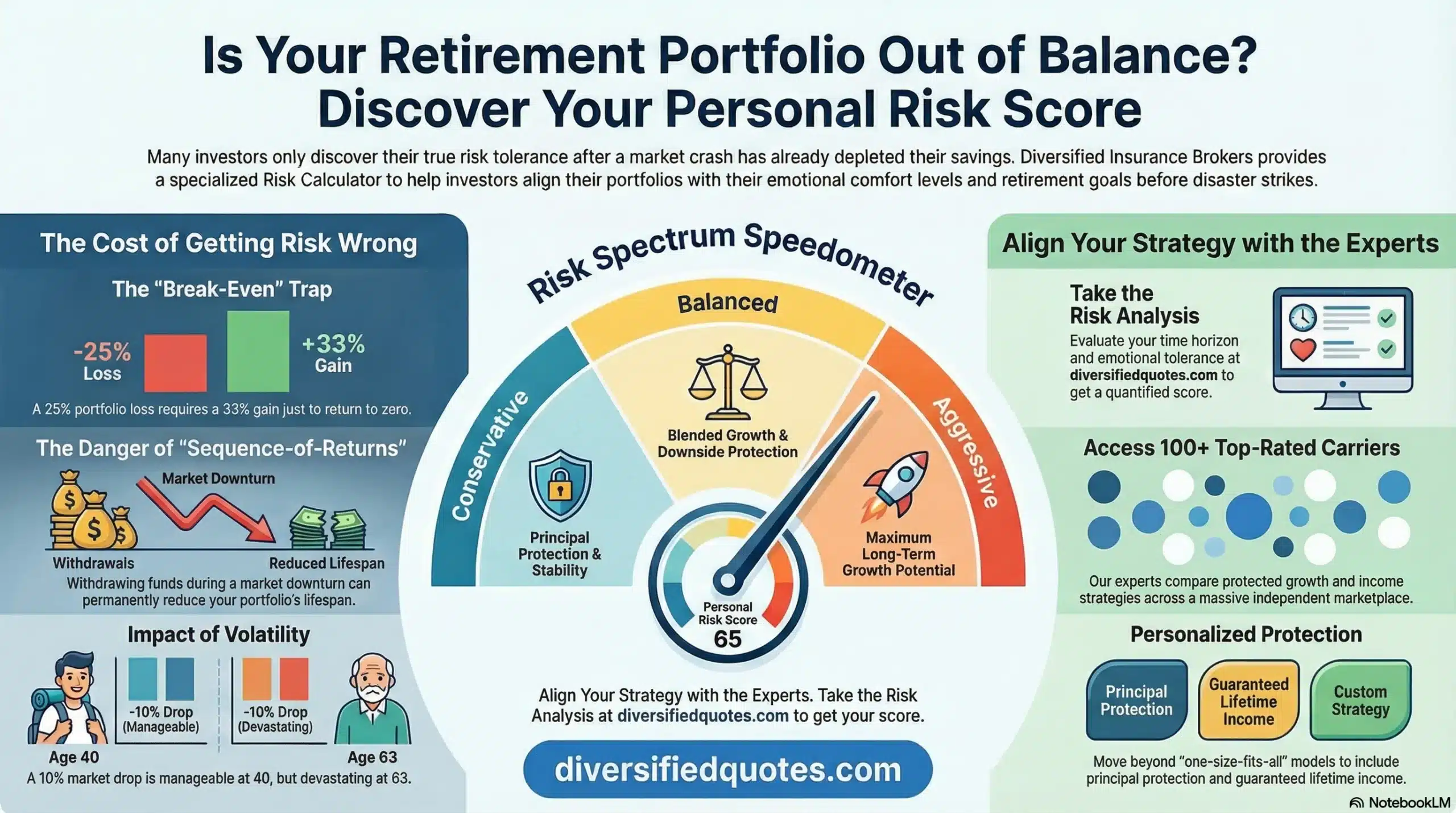
The portfolio risk analyzer tool provides a starting point for evaluating the risk characteristics of a client’s current portfolio structure before an introductory planning conversation. It generates a risk profile that can surface concentration risks, correlation behavior, drawdown characteristics, and other portfolio attributes that are useful starting points for the institutional planning dialogue. The tool is an educational resource — it does not constitute investment advice, a portfolio recommendation, or a guarantee of any outcome. Its purpose is to create a more factual and objective starting point for planning conversations, replacing the questionnaire-based risk tolerance score with data-derived portfolio characteristics that can be evaluated against defined planning objectives.
How do I get started with the qualification review?
Submit the qualification review request form on this page to initiate an introductory conversation. Following the request, an initial conversation will be scheduled to understand your planning objectives, current financial structure, and long-term goals. If the planning frameworks employed by the independent adviser appear appropriate for your situation, an introduction will be facilitated to FamilyWealth Advisers, LLC for formal advisory evaluation. Final eligibility and any advisory engagement terms are determined solely by the independent adviser. Diversified Insurance Brokers facilitates the introduction but does not participate in or direct the advisory relationship that follows.
About the Author:
Jason Stolz, CLTC, CRPC, DIA, CAA and Chief Underwriter at Diversified Insurance Brokers (NPN 20471358), is a senior insurance and retirement professional with more than 25 years of real-world experience helping individuals, families, and business owners protect their income, assets, and long-term financial stability. As a long-time partner of the nationally licensed independent agency Diversified Insurance Brokers, Jason provides trusted guidance across multiple specialties—including fixed and indexed annuities, long-term care planning, personal and business disability insurance, life insurance solutions, Group Health, Travel Medical and Evacuation Insurance, and short-term health coverage. Diversified Insurance Brokers maintains active contracts with over 100 highly rated insurance carriers, ensuring clients have access to a broad and competitive marketplace.
His practical, education-first approach has earned recognition in publications such as VoyageATL, and contributions from his agency featured in Kiplinger and GoBankingRates— highlighting his commitment to financial clarity and client-focused planning. Drawing on deep product knowledge and years of hands-on field experience, Jason helps clients evaluate carriers, compare strategies, and build retirement and protection plans that are both secure and cost-efficient. Visitors who want to explore current annuity rates and compare options across multiple insurers can also use this annuity quote and comparison tool.
Browse More Resources: Return to our complete Wealth Strategies & General Resources guide — covering wealth building, tax strategies, fiduciary, wills & broker resources.
Last Reviewed: June 4, 2026 |
Reviewed by: Jason Stolz, CLTC, CRPC, DIA, CAA
Chief Underwriter, Diversified Insurance Brokers, Inc. | NPN: 20471358 | Diversified Insurance Brokers, Inc. — Licensed in all 50 states
Fact Checked by: Tonia Pettitt, CMIP©
Medicare Specialist, Diversified Insurance Brokers, Inc. | NPN: 14374308 | Diversified Insurance Brokers, Inc. — Licensed in all 50 states
Did you find this content helpful? Leave us a Google review — it helps others find trustworthy guidance too.
Editorial Standards: Diversified Insurance Brokers maintains rigorous editorial standards to ensure accuracy, clarity, and independence in all content. Learn more about our editorial standards and commitment to transparency.
