
How Smart Investors Manage Risk Without Sacrificing Growth
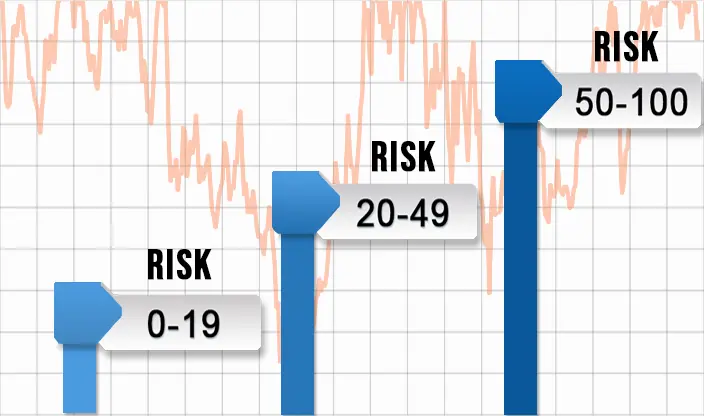
For experienced investors, the question is never simply whether to take risk — but how to define it precisely, measure it objectively, and control it systematically without unnecessarily constraining long-term opportunity. True sophistication in portfolio management lies in risk allocation rather than risk avoidance. Smart investors understand that disciplined exposure sizing, structured liquidity planning, and evidence-based decision processes can support sustainable compounding across full market cycles — without relying on prediction, headline interpretation, or the kind of luck that cannot be systematically reproduced.
Request a Confidential Conversation
If you want to explore how disciplined risk controls can support long-term compounding without unnecessary drawdown stress, begin with a confidential qualification review.
📞 Call us at 800-533-5969
Important: Diversified Insurance Brokers does not provide investment advice, does not provide securities advice, and does not make investment recommendations. This page is educational. Any planning concepts must be evaluated with qualified, independent professionals.
The Real Goal: Growth That Survives the Full Cycle
Most investors say they want growth, but what they genuinely need is growth that survives the full market cycle — expansions, recessions, rate shocks, inflation surprises, volatility spikes, liquidity crises, and the inevitable periods where markets behave in ways that are inconsistent with reasonable expectations. Risk management is the discipline of designing a portfolio and a decision process that can continue functioning effectively across all of those conditions, not just the favorable ones. It is not the same thing as trying to eliminate volatility, which is neither achievable nor desirable — volatility is the normal environment within which long-term returns are generated. The more consequential question is whether volatility forces an investor into actions that permanently impair capital or disrupt long-term objectives in ways that cannot be recovered.
A strategy that looks excellent in calm markets can fail catastrophically when liquidity becomes tight, when correlations between holdings rise simultaneously during stress, or when a drawdown happens to coincide with real-life cash needs — a withdrawal for retirement income, a business obligation, a planned major purchase, or an emergency. Smart investors treat risk as a multi-dimensional problem that requires explicit attention to drawdown depth, recovery time expectations, liquidity windows, ongoing cash-flow requirements, concentration exposure, and behavioral risk under stress. They reduce avoidable vulnerabilities so they can keep compounding when conditions are uncomfortable — which is precisely when the ability to stay invested, rather than being forced to exit, is most valuable for long-term outcomes.
Redefining What Risk Really Means in Practice
Many investors equate risk with short-term price volatility — how much a portfolio’s value fluctuates from week to week or month to month. In practice, the risks that most consistently determine long-term wealth outcomes are more closely tied to permanent capital loss and the inability to meet future cash-flow needs than to normal portfolio fluctuations. A portfolio can experience significant volatility and still be healthy — if it is sized appropriately for the investor’s actual risk tolerance across a full cycle (not just in calm conditions), genuinely diversified across independent risk drivers, and matched to the investor’s real liquidity timeline. Conversely, a portfolio can appear remarkably stable right up until it experiences a severe and sudden disruption — often because hidden concentration, liquidity mismatch, or leverage was embedded in the structure and not visible in normal market conditions.
Smart investors manage risk factors rather than just asset labels. They want exposures that behave differently across different market regimes — economic expansion, contraction, stagflation, deflation, credit crisis — and they care explicitly about the sequence of returns because the timing of losses matters enormously when withdrawals, business needs, or real-life spending commitments interact with the portfolio. This perspective fundamentally shifts the investment goal from chasing returns to preserving optionality — maintaining the ability to make choices rather than being forced into a single path by portfolio stress or liquidity constraints. Risk management, properly understood, protects choices by preventing forced decisions at the moments when available choices are worst.
Evidence Over Emotion: Building a Repeatable Decision Process
Sophisticated investors rely on repeatable, documented, data-driven inputs rather than intuition or current emotional state to make portfolio decisions. They use objective data to understand correlations, volatility clustering, regime shifts, and tail risk across different historical scenarios. They do not need a perfect forecast to make better decisions than average — they need a decision process that is consistent, measurable, transparent, and structurally less vulnerable to emotional interference during the periods when emotional interference is most expensive.
Evidence-based decision frameworks typically emphasize defining explicit risk budgets with measurable thresholds, setting drawdown boundaries that determine when action is required, establishing rebalancing ranges that trigger portfolio adjustments based on measurable drift rather than prediction, and documenting what conditions would justify making an exception to the stated policy. When investors write these rules down in advance — during calm conditions when judgment is most reliable — they substantially reduce the probability of improvising during stress conditions when judgment is least reliable. That is the practical value of documented governance in wealth management: it is not administrative bureaucracy, it is protection from the most financially expensive mistakes that occur when emotional reactions are mistaken for rational analysis at exactly the wrong moments in the market cycle.
Process Before Product: The Foundation of Disciplined Risk Management
Disciplined investors — particularly at the institutional level — define their framework before they select any vehicles to implement it. The framework clarifies exposure sizing relative to the risk budget, expected volatility contributions from each portfolio area, rebalancing frequency and triggers, and the role each allocation plays in the overall portfolio context. This sequencing prevents a common and costly error: building a portfolio around whatever is currently popular or whoever gave the most compelling recent pitch, rather than around a defined objective that is not influenced by current market narratives.
A helpful educational reference for this methodology-first approach is Institutional-Grade Portfolio Construction, which outlines the general discipline of mandate design and governance-first implementation at the portfolio level. When a process is genuinely in place before product selection, investors can consistently ask better and more productive questions: What role should this exposure play? What would have to go wrong for it to fail? How would we respond if it does? Does its liquidity profile align with when we might realistically need the capital? These questions reduce the probability of accepting unintended risk that was embedded in a compelling narrative or recent performance track record.
The Balance Between Growth and Stability: A Design Problem, Not a Trade-Off
A common misconception in portfolio management is that more safety always means less growth — that risk management and return generation are inherently in tension. In practice, the relationship between safety and growth depends entirely on how risk is defined and controlled. If risk control means simply eliminating exposure, it clearly reduces opportunity. But if risk control means preventing the catastrophic drawdowns that force investors to sell long-duration assets at depressed prices, exit strategies at their worst moments, or permanently impair the compounding base through behavioral errors, then effective risk management can actually support long-term growth by keeping the investor in the game through the full cycle.
Many sophisticated frameworks treat risk like a budget — a scarce resource to be allocated intentionally, measured consistently, and rebalanced deliberately. Allocating risk across multiple genuinely independent sources of return, maintaining appropriate liquidity at each level of the portfolio, and keeping behavioral guardrails in place during volatility reduces the probability of the portfolio failing at exactly the moments when staying invested would have been most valuable. This is the core concept behind Quantitative Risk Management, where objective metrics replace intuition and measurement replaces prediction as the primary tool for controlling portfolio uncertainty.
Liquidity as a Strategic Risk Tool
Liquidity planning is not just a defensive measure — it is an active strategic tool that creates optionality and supports long-term compounding. Maintaining appropriate reserves at each liquidity tier ensures that spending needs and near-term obligations can be met without forcing the liquidation of long-duration holdings at inopportune moments. This directly reduces the probability of sequence-of-returns damage — the disproportionate long-term harm that results when large losses occur early in a distribution period before the portfolio has time to recover. It also protects long-horizon holdings from being liquidated at temporarily depressed prices simply because liquidity was not sufficiently planned at shorter time horizons.
Liquidity also creates offensive optionality. When markets dislocate and prices decline significantly, investors with liquid capital available can rebalance into temporarily undervalued exposures rather than being forced to sell alongside distressed sellers. This is one of the structural advantages that patient, liquid, well-governed investors have over investors who are fully invested and lack the flexibility to act when opportunity is greatest. The practical implementation is segmenting liquidity deliberately: near-term needs for spending and obligations, intermediate reserves for known commitments and potential rebalancing, and long-horizon capital that is explicitly committed to less-liquid allocations because it will not be needed for current operations. Matching each tier to its real-world obligations is the essential discipline that separates effective liquidity management from the mere appearance of it.
Adaptability Over Forecasting: Designing for Resilience
Smart investors recognize that no model can reliably predict the future, and that building strategy around a single forecast — however sophisticated — creates fragility when that forecast is wrong. Instead of attempting to predict the next market event, disciplined frameworks use adaptable structures that can recalibrate exposure based on measurable changes in objective risk indicators: rising volatility, correlation shifts, liquidity deterioration, or drawdown boundaries being approached. The goal is not perfect prediction — it is resilience across a wide range of outcomes, including those that are considered unlikely until they occur.
Adaptable frameworks commonly include rebalancing bands that trigger action when allocations drift outside defined ranges, volatility-aware exposure sizing that reduces risk when measured volatility rises above specified thresholds, and documented rules that reduce concentration when any single exposure or risk factor exceeds its risk budget allocation. The more objective and pre-specified these rules are, the less likely the investor is to freeze, improvise, or make emotionally driven decisions during stress periods when clarity of process is most needed and most difficult to maintain. This is also why documentation matters as much as the rules themselves: when the plan is written down in advance, it becomes something to follow when it is most tempting to abandon it.
The Hidden Risk Most Investors Underestimate: Behavior
Many investment portfolios fail not because the underlying holdings were fundamentally wrong or because the strategy was theoretically unsound, but because the investor could not maintain the discipline to hold through periods of uncertainty, underperformance, or intense negative sentiment. Smart investors explicitly treat behavior as a risk factor — one of the most significant risks in any portfolio — and design governance systems and decision structures that reduce the probability that fear, excitement, or overconfidence drives consequential decisions at the worst possible moments in the cycle.
The most common and most costly behavioral errors in investment management follow a predictable and well-documented pattern: buying risk aggressively after strong recent performance when valuations are elevated, selling risk reactively after drawdowns when valuations have improved, and changing strategy entirely after absorbing losses from the prior approach — exactly when the prior approach would statistically have been most likely to recover. Over time, these behavioral decisions create a “behavior gap” between the returns that the portfolio’s underlying investments generated and the returns that the investor actually realized. That gap can be substantial — often larger than the gap between good and average investment selection — and it is almost entirely preventable through governance structures that make process more reliable than emotion as the primary driver of portfolio decisions.
How Smart Investors Think About Drawdowns
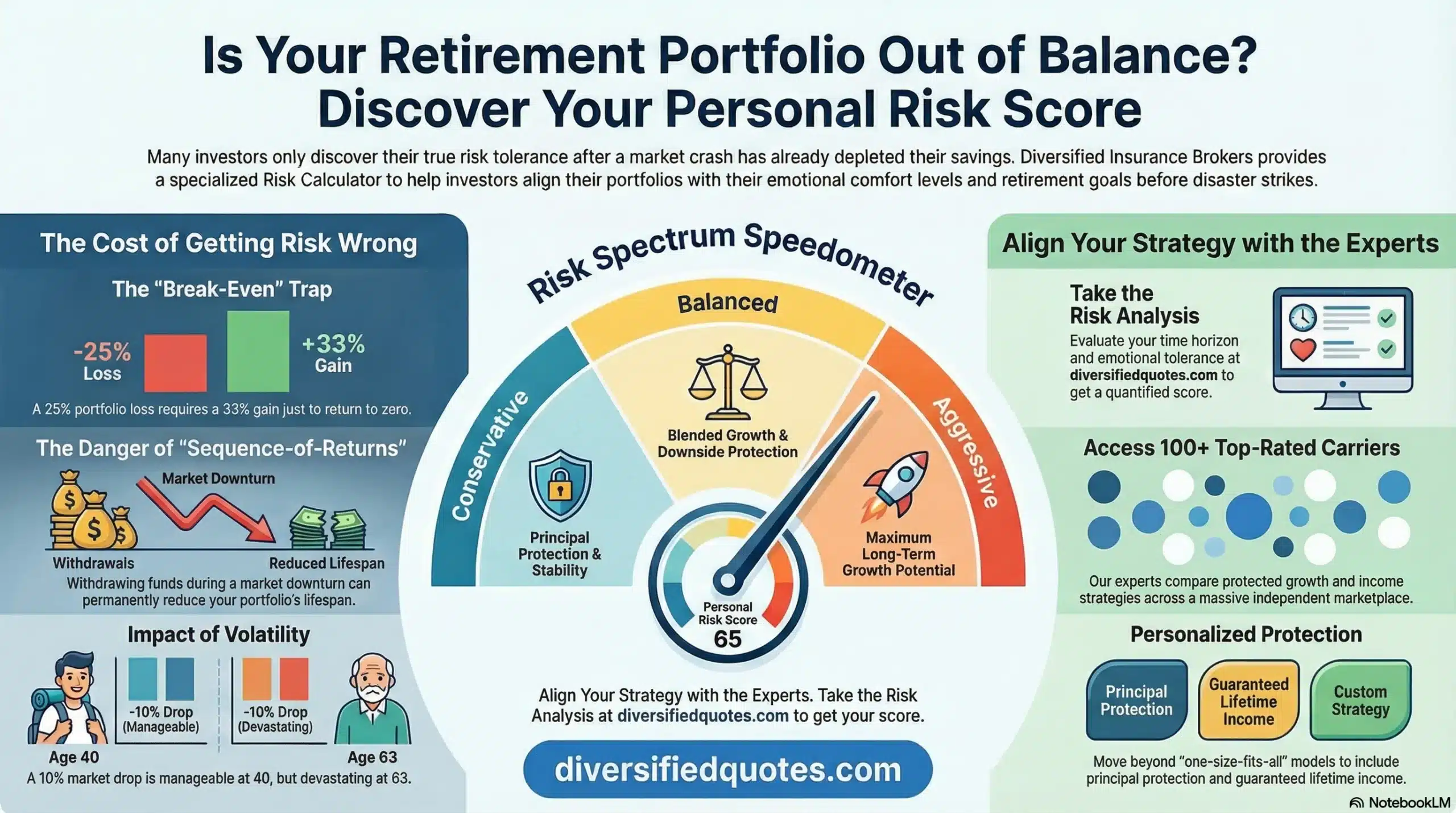
Drawdowns are not only psychologically difficult — they are mathematically asymmetric. A loss of 25 percent requires a subsequent gain of 33 percent to recover to the prior level. A loss of 50 percent requires a subsequent gain of 100 percent. Smart investors therefore ask explicit questions about drawdown exposure before they experience it: How much drawdown can this portfolio realistically tolerate without the investor changing course and locking in the loss? What is the realistic recovery time expectation from a drawdown of that magnitude? Do the portfolio’s liquidity profile and the investor’s actual cash flow needs allow the recovery time that the strategy requires? The answers to those questions should directly shape exposure sizing, liquidity design, and the overall structure of the portfolio — because a “theoretically optimal” allocation that the investor cannot hold through stress is not actually optimal at all. It is simply an allocation that produces the best historical simulated returns, not the best real-world returns for a specific human investor with real emotions, real liquidity needs, and a real inability to hold indefinitely through uncertainty.
Where We Fit In
Through Concierge Wealth Services, our role is to help qualified individuals explore fiduciary, research-driven advisory relationships that apply these disciplined risk management principles in practice. We do not provide securities or investment advice, and we do not make investment recommendations. When appropriate, we facilitate introductions to an independent SEC-registered investment adviser whose process emphasizes quantitative discipline, transparency, and risk-aware portfolio construction under that adviser’s own regulatory framework and fiduciary obligations. For a clear understanding of the introduction and evaluation process before any implementation discussion occurs, see An Invitation to Explore More.
Explore a More Disciplined Risk Framework
If you want to understand how disciplined investors define risk, size exposure, and build governance around decisions, begin with a confidential qualification review.
Request Qualification ReviewDiversified Insurance Brokers does not provide securities or investment advice and does not make investment recommendations.
Related Topics to Explore
Explore adjacent pages connected to disciplined risk design, governance, and long-horizon decision making.
Important Notice: All wealth management and investment advisory services are provided exclusively through our independent SEC-registered investment adviser partner. Our insurance firm does not offer securities or investment advice and does not make investment recommendations. Clients who engage in advisory relationships will be subject to the adviser’s terms, fees, and regulatory framework.
Request a Confidential Conversation
📞 Call us at 800-533-5969
or visit our Contact Page
Important: We do not provide securities or investment advice. If appropriate, we may introduce you to an independent SEC-registered investment adviser for evaluation under their regulatory framework.
How Smart Investors Manage Risk Without Sacrificing Growth — Frequently Asked Questions
No — volatility is one measurable dimension of risk, but it is not the whole picture, and in many contexts it is not the most consequential dimension. Many sophisticated investors define risk more precisely as the probability of permanent capital loss or the inability to meet future cash-flow needs, both of which are meaningfully different from price fluctuation. A portfolio can experience significant short-term volatility and still be healthy — if it is sized appropriately, diversified across genuinely independent risk drivers, and matched to a liquidity timeline that allows it to hold through the volatile periods without forced selling. Conversely, a portfolio can appear remarkably stable in reported terms right up until it suffers a severe, rapid disruption — often because hidden concentration, leverage, or liquidity mismatch was embedded in the structure and was only revealed when conditions changed. Focusing exclusively on volatility as the measure of risk can lead investors to accept structural vulnerabilities that are more dangerous than the volatility they are trying to avoid.
Risk budgeting means intentionally sizing exposures across the portfolio so that the total aggregate risk — measured through objective metrics like portfolio volatility, expected drawdown, or factor concentration — stays within defined limits, rather than allowing risk to accumulate or drift without awareness. The analogy is a financial spending budget: just as a budget allocates resources across categories and tracks whether actual spending matches planned amounts, a risk budget allocates the portfolio’s total risk capacity across different sources of return and tracks whether actual measured risk is staying within agreed parameters. When one area of the portfolio grows through appreciation — increasing its weight and its contribution to overall portfolio risk — or when correlations between holdings rise during market stress, the risk budget may be exceeded without any intentional decision having been made. Risk budgeting discipline triggers rebalancing in those situations based on measurable conditions rather than waiting for a prediction about future performance. For a deeper overview, see Quantitative Risk Management.
Liquidity planning is central to risk management because forced selling during market stress is one of the most reliably and permanently wealth-destructive events in investing. When an investor needs cash at a moment when market prices are depressed — for retirement income, a business obligation, an emergency, or a planned major expense — they may be forced to sell long-duration holdings at temporarily depressed prices, locking in losses that would have recovered if the assets could have been held. The assets themselves may not have been bad investments — the failure was the mismatch between the investor’s liquidity needs and the portfolio’s liquidity profile. Maintaining tiered liquidity reserves — near-term for current spending, intermediate for known commitments, long-horizon for illiquid or growth-oriented allocations — ensures that no tier is forced to fund another under stress. Beyond the defensive benefit, liquidity creates strategic optionality: investors with available liquid capital during market dislocations can rebalance into temporarily undervalued exposures rather than being forced to sell alongside everyone else.
The most durable approach to reducing emotional decision-making is to define the decision rules in advance — during calm, rational conditions — so that when emotional pressure is highest, there is a documented framework to follow rather than a blank slate on which fear or excitement can write any conclusion. Smart investors rely on written investment policies, explicit rebalancing bands, documented drawdown thresholds that trigger specific responses, and measurable risk boundaries that provide objective feedback rather than requiring subjective judgment under stress. When the rules are written and the responses are pre-committed, the investor does not need to decide in the moment whether to sell, hold, or buy more — the framework tells them what conditions are required for each action. This does not eliminate judgment. Judgment is still needed for policy design and for genuinely novel situations that the policy did not anticipate. But it confines judgment to the calm moments when it is most reliable, rather than allowing it to operate during volatile periods when it is least reliable and most expensive. Documentation also helps by creating accountability — it is harder to abandon a written policy than an informal one.
Not necessarily — and the relationship between risk management and long-term returns is more nuanced than the simple trade-off that the question implies. Risk management that prevents catastrophic drawdowns, forces-sale scenarios, or behavioral panic selling can actually support long-term compounding by keeping the investor in the game through the full cycle. The most serious long-term return damage typically comes not from periods of below-average performance but from irreversible events: permanent capital impairment from concentrated losses, forced liquidation at depressed prices, or abandoning a strategy entirely after its worst period and missing the subsequent recovery. Effective risk management reduces the probability of all of those outcomes. What risk management cannot do is convert a portfolio with no expected return into one with strong expected returns — if risk is eliminated entirely by moving to cash, the opportunity for return is also eliminated. The goal is disciplined, intentional risk-taking within defined parameters — accepting the exposures with the most favorable expected return per unit of risk while avoiding the uncompensated risks that come from concentration, liquidity mismatch, or behavioral vulnerability to volatility.
No. Diversified Insurance Brokers does not provide investment advice, does not provide securities advice, and does not make investment recommendations of any kind. All content on this page is provided for educational purposes only and is intended to describe general investment management concepts and frameworks rather than to recommend any specific course of action for any specific individual. Any concepts described here must be evaluated by the individual reader in consultation with qualified, independently licensed professionals — including an SEC-registered investment adviser operating under their own regulatory framework and fiduciary obligations. Our role in the Concierge Wealth Services context is to facilitate educational conversations and, where appropriate, introductions to independent fiduciary professionals for qualified individuals — not to advise on investments, recommend securities, or implement portfolio strategies.
A confidential qualification review is the standard first step for individuals who want to explore whether institutional-style risk management disciplines and an independent fiduciary advisory relationship are appropriate for their specific financial goals and constraints. The review is educational in nature — it is not a commitment to any course of action or an application for any specific product or service. Its purpose is to create a structured conversation about your current situation, your goals, and whether the frameworks described on this page are relevant and potentially beneficial to you. If appropriate after that review, a qualified individual may be introduced to an independent SEC-registered investment adviser for evaluation and potential engagement under that adviser’s own terms, fees, and regulatory framework. You can begin by calling 800-533-5969 or by submitting the qualification review form. For background context on the broader Concierge Wealth process, An Invitation to Explore More is a helpful first read.
About the Author:
Jason Stolz, CLTC, CRPC, DIA, CAA and Chief Underwriter at Diversified Insurance Brokers (NPN 20471358), is a senior insurance and retirement professional with more than 25 years of real-world experience helping individuals, families, and business owners protect their income, assets, and long-term financial stability. As a long-time partner of the nationally licensed independent agency Diversified Insurance Brokers, Jason provides trusted guidance across multiple specialties—including fixed and indexed annuities, long-term care planning, personal and business disability insurance, life insurance solutions, Group Health, Travel Medical and Evacuation Insurance, and short-term health coverage. Diversified Insurance Brokers maintains active contracts with over 100 highly rated insurance carriers, ensuring clients have access to a broad and competitive marketplace.
His practical, education-first approach has earned recognition in publications such as VoyageATL, and contributions from his agency featured in Kiplinger and GoBankingRates— highlighting his commitment to financial clarity and client-focused planning. Drawing on deep product knowledge and years of hands-on field experience, Jason helps clients evaluate carriers, compare strategies, and build retirement and protection plans that are both secure and cost-efficient. Visitors who want to explore current annuity rates and compare options across multiple insurers can also use this annuity quote and comparison tool.
Browse More Resources: Return to our complete Wealth Strategies & General Resources guide — covering wealth building, tax strategies, fiduciary, wills & broker resources.
Last Reviewed: May 11, 2026 |
Reviewed by: Jason Stolz, CLTC, CRPC, DIA, CAA
Chief Underwriter, Diversified Insurance Brokers, Inc. | NPN: 20471358 | Diversified Insurance Brokers, Inc. — Licensed in all 50 states
Fact Checked by: Tonia Pettitt, CMIP©
Medicare Specialist, Diversified Insurance Brokers, Inc. | NPN: 14374308 | Diversified Insurance Brokers, Inc. — Licensed in all 50 states
Did you find this content helpful? Leave us a Google review — it helps others find trustworthy guidance too.
Editorial Standards: Diversified Insurance Brokers maintains rigorous editorial standards to ensure accuracy, clarity, and independence in all content. Learn more about our editorial standards and commitment to transparency.
