
Institutional Investing Secrets the Ultra-Wealthy Use
The ultra-wealthy do not rely on hunches, market headlines, or one-year narratives. They borrow the disciplines of pension plans, university endowments, and large family offices — codifying risk rules, documenting liquidity policies, and using evidence-based processes designed to hold up across multiple market cycles and multiple economic regimes. This page outlines the strategic principles affluent investors emulate, focused on systems, governance, and risk budgeting — not specific products or individualized recommendations.
Request a Confidential Conversation
If you’re exploring institutional-style portfolio design, risk controls, or private market education, start with a confidential qualification review.
📞 Call us at 800-533-5969
Important: This page is educational. We do not provide securities or investment advice. Qualified clients may request introductions to independent fiduciary professionals for evaluation.
The Real “Secret” Is Not a Product — It’s a Playbook
When people ask what the ultra-wealthy “invest in,” they are typically looking for a shortcut: a specific asset class, a fund structure, a tactical signal, or a deal type that appears to separate wealthy investors from everyone else. Institutional investors view that framing as backwards. The durable advantage is rarely the label on a holding. The durable advantage is the playbook that controls how decisions are made, how risk is budgeted, how liquidity is protected, and how governance prevents emotional drift across market cycles that will inevitably include periods of sharp volatility and extended drawdowns.
Institutions assume that uncertainty is permanent. They do not treat markets as a puzzle that can be “solved” with one insight or one model. They treat markets as an environment that must be navigated with repeatable, documented rules — because rules are what carry the organization through periods when emotions, headlines, and short-term performance data all point toward the same wrong decision. That is why written policies, decision documentation, and ongoing measurement matter so much at the endowment and pension level. And that is why high-net-worth families increasingly adopt similar disciplines — because wealth tends to compound most effectively when behavior is engineered to be consistent rather than reactive.
The principles outlined below are best understood as system components. Taken together, they form a structure designed to survive volatility, reduce unforced errors, and keep decision-making aligned with long-term goals regardless of what the news cycle produces on any given week. The point is not to chase the newest opportunity. The point is to build a wealth engine that can keep running through uncertainty — because uncertainty is the only reliable constant in financial markets.
1) Process Before Product
Institutions start with a framework — only then do they select vehicles to implement it. The framework defines how exposures are sized, how risk is measured, when rebalancing is triggered, and what constraints apply. This sequencing reduces the temptation to chase recent performance or react emotionally to short-term noise, because the framework was built in a calm moment and the framework is what governs in the difficult ones. For a deeper look at a methodology-first approach applied to portfolio construction, see Institutional-Grade Portfolio Construction.
A written investment policy clarifies objectives (“what are we trying to achieve?”), constraints (“what can’t we do?”), and governance (“who decides, and under what rules?”). With the policy in place, product selection becomes a means to implement the plan — not the plan itself. This seemingly straightforward shift is one of the most important institutional habits: it forces decisions to flow from the mission rather than from market headlines or the most recent performance rankings. Before capital is allocated, the team documents the role of each exposure — growth, income, inflation hedge, liquidity buffer, or diversifier — along with the acceptable risk range, the conditions that would trigger rebalancing, and the circumstances that would justify an exception. Institutions do not merely buy things. They define the job each holding must do, and they hold it accountable to that job description over time.
Start With the Framework, Not the Headlines
If your portfolio decisions feel reactive, institutional disciplines can help rebuild clarity and consistency.
Request Qualification ReviewEducational evaluation only. No securities or investment advice is provided by our insurance firm.
2) Quantitative Risk Management
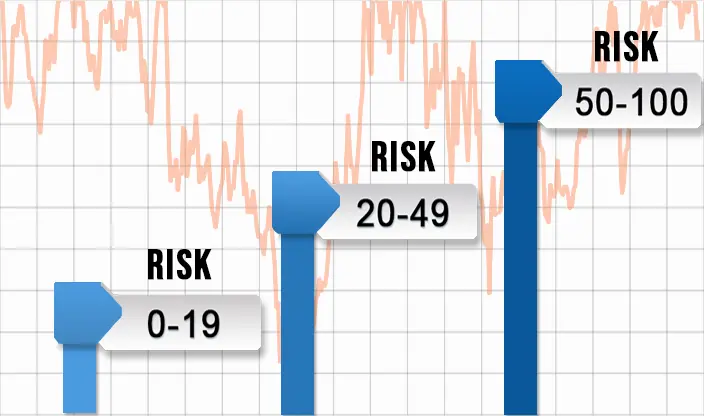
Institutions measure risk with objective, repeatable metrics — volatility bands, drawdown limits, correlation matrices, factor exposure analysis — so that portfolio risk can be evaluated against measurable conditions rather than against forecasts or predictions. The intent is not to outguess markets, but to budget risk deliberately and reduce concentration in any single narrative, regime, or correlated cluster of exposures. A practical way to think about risk budgeting is to treat risk as a scarce resource with a defined capacity. When one area of the portfolio is consuming a disproportionate share of the risk budget — because of appreciation, correlation drift, or new allocation — the institution does not need to predict the next headline to rebalance. It simply recognizes that the portfolio has drifted outside the planned risk posture and brings it back within defined parameters. For a detailed overview of this discipline, see Quantitative Risk Management.
This discipline matters most during the periods when emotion is most intense — in periods of market euphoria when risk quietly increases without anyone noticing because everything is going up, and in periods of fear when investors are tempted to abandon the plan entirely because everything is going down. Quantitative guardrails are designed to create consistency when consistency is hardest to maintain. The guardrails do not guarantee outcomes. They reduce the probability that the portfolio becomes a mirror of the investor’s current emotional state rather than a reflection of the investor’s long-term objectives.
3) Liquidity as a Risk Tool, Not an Afterthought
Sophisticated investors map cash and liquidity needs to defined liquidity windows across the portfolio. The goal is to avoid forced selling in stressed markets — one of the most reliably wealth-destructive events that can happen to an otherwise well-constructed portfolio. When an investor is forced to sell long-duration assets at depressed prices to meet near-term obligations, the damage is both financial and psychological: the asset is liquidated at the worst possible price, and the investor may lose conviction in the strategy at exactly the moment the strategy is most likely to recover.
Institutions typically segment liquidity into distinct tiers with different roles. Immediate liquidity covers near-term spending, obligations, and operational needs. Intermediate liquidity supports known multi-year commitments, potential rebalancing needs, and capital calls on existing commitments. Long-horizon capital can be allocated to less liquid exposures — private markets, long-duration fixed income, illiquid real assets — because it is explicitly not required for near-term operations or cash flow. This segmentation sounds straightforward but is frequently overlooked in personal wealth management, where “well diversified” portfolios sometimes fail not because the holdings are poor but because the investor is forced to sell at precisely the wrong time due to inadequate liquidity planning. A clear liquidity ladder is an insurance policy against bad timing — and bad timing, more than bad security selection, is what most frequently destroys otherwise solid long-term investment plans.
4) Diversification by Risk Drivers, Not Asset Labels
Institutions think in terms of risk drivers — economic growth exposure, inflation sensitivity, interest rate duration, credit risk, liquidity premium, and cash-flow predictability — rather than in terms of simple asset category labels. A portfolio that appears diversified by label can still be severely concentrated if most of its holdings depend on the same underlying macro outcome — for example, if both equity and credit holdings both require continued economic expansion and low volatility to perform. Mapping exposures to their underlying risk drivers helps identify hidden clustering and reduces the chance that a single macro narrative dominates the portfolio’s behavior in stress scenarios.
In practice, this means asking fundamentally different questions than most retail investors ask. Instead of “How many holdings do we own?” or “How many different asset classes are we in?”, the institutional question is “How many genuinely independent sources of return are we relying on, and what would happen to each of them in a severe recession, an inflation shock, or a credit crunch?” If multiple holdings rise and fall together under those scenarios, the portfolio may be far less diversified than it appears on a standard allocation chart. Driver-based diversification also encourages a useful humility: if a strategy has worked because a particular macro regime persisted — low inflation, easy credit, stable rates, or broad risk appetite — it may be structurally fragile when that regime changes. Robust portfolios are designed to have multiple ways to generate returns and multiple ways to defend capital, not just one path that works under favorable conditions.
Institutions Treat Behavior as a Portfolio Variable
One of the most underappreciated institutional disciplines is the explicit treatment of investor behavior as a controllable variable in the portfolio management process. The goal is not to have perfect emotions under stress — that is an unrealistic expectation. The goal is to create governance structures and documented decision rules that reduce the damage imperfect emotions can do when markets are volatile, narratives are intense, and the easiest path is to do something reactive. Institutional systems are explicitly designed to assume that drawdowns will happen, that headlines will become alarming, and that investor confidence will be tested — and the policy exists to carry the organization through those moments without abandoning the strategy at its nadir.
Many investors lose capital not because markets are impossible to navigate but because they repeatedly buy risk late (after strong performance has made it expensive) and sell risk early (after drawdowns have made it cheap). The institutional solution is to define decision rules in advance — during calm conditions when judgment is most reliable — so that the portfolio does not become a mirror of the latest emotional state when judgment is most likely to fail. For additional context on how behavioral patterns silently erode long-term outcomes even in otherwise well-constructed portfolios, see Behavioral Biases That Quietly Destroy Wealth.
Prefer Process Over Pressure
If volatility has made decision-making harder, the right framework can reduce reaction and increase clarity.
Educational evaluation only. No investment recommendations are provided by our insurance firm.
5) Governance That Outlasts Narratives
Institutions formally separate decision rights — who is authorized to decide — from implementation — how decisions are executed — and oversight — how results and process are reviewed against the stated policy. Meeting minutes, policy documentation, formal review cycles, and exception logs create accountability structures that reduce drift from the agreed plan, even across personnel changes, market cycles, and periods of significant organizational stress. This governance infrastructure is not bureaucracy for its own sake. It is a stability mechanism for preserving long-term strategy against the constant pull of short-term pressures, compelling new narratives, and the natural human tendency to prefer different behavior after observing recent results.
When markets become volatile or a compelling new investment thesis appears, governance forces the team to test it against the existing policy and risk budget rather than simply acting on it. If an exception is warranted, it is documented. That documentation matters because it creates accountability for the exception and prevents a series of small “temporary” deviations — each individually justifiable — from accumulating into a portfolio that looks entirely different from the one the policy was designed to build. High-net-worth households can benefit substantially from borrowing this institutional discipline: writing down explicitly how investment decisions will be made, how conflicts between family members will be resolved, and what the long-term financial mission is. Wealth tends to last longer when governance is explicit and documented rather than assumed and informal.
6) Transparent Reporting That Drives Accountability
Clear, repeatable, position-level reporting — encompassing performance attribution, risk metric summaries, fee clarity, and comparison against policy benchmarks — keeps decision-makers aligned on facts rather than on narratives or impressions. The objective is to ensure that the people responsible for governing capital have access to the right information, consistently presented, so they can respond to measurable conditions rather than to headlines or recent performance that may be unrepresentative of underlying portfolio health.
Transparency is a form of risk management in its own right. If the people overseeing a portfolio cannot clearly explain what they own, why they own it in the proportions they hold it, and how each major exposure is expected to behave in different market scenarios, they may not genuinely understand the risk the portfolio is carrying. Institutions insist on this clarity because it reduces surprises — and surprises, particularly negative ones, are what most consistently produce the destructive behavioral responses that create permanent capital impairment. Reporting also reinforces discipline over time. When results are consistently evaluated against stated objectives and documented risk posture, the portfolio becomes easier to govern and improve incrementally. Without systematic reporting, the only feedback loop available is how the investor feels about recent performance — which is a fragile and unreliable foundation for governing any significant pool of capital.
7) Private Markets Used Deliberately Within a Policy
Many affluent investors explore private credit, real assets, direct company stakes, and other less-liquid exposures as part of a comprehensive wealth strategy. The institutional “secret” is not which specific private market deal or fund to access — it is the policy discipline around how private allocations are sized, paced, and governed: pacing commitments across vintage years to avoid concentration in a single economic period, monitoring cash flow dynamics including capital calls and distributions, and ensuring that illiquidity is deliberately aligned with long-horizon goals rather than accepted simply in pursuit of yield. For a broader overview of how we frame access to these types of strategies, see Curated Investment Access.
Institutions are deliberate about why they accept illiquidity in a given allocation. If capital is locked up for multiple years, the expected return premium and the portfolio role must explicitly justify the loss of flexibility — because that flexibility has real option value, especially during market dislocations when having liquid capital available is most advantageous. Sophisticated investors also model commitment pacing carefully — how much is deployed each year across a multi-year private markets program — so they do not accidentally create a liquidity cliff where multiple capital calls demand cash simultaneously at a moment when liquid assets are also under stress. Private allocations are also typically evaluated as multi-year programs rather than as individual point-in-time bets, because dispersion within private markets is significant and consistency of access across cycles is a meaningful driver of long-term program performance.
Designing Around Volatility, Drawdowns, and Sequence Risk
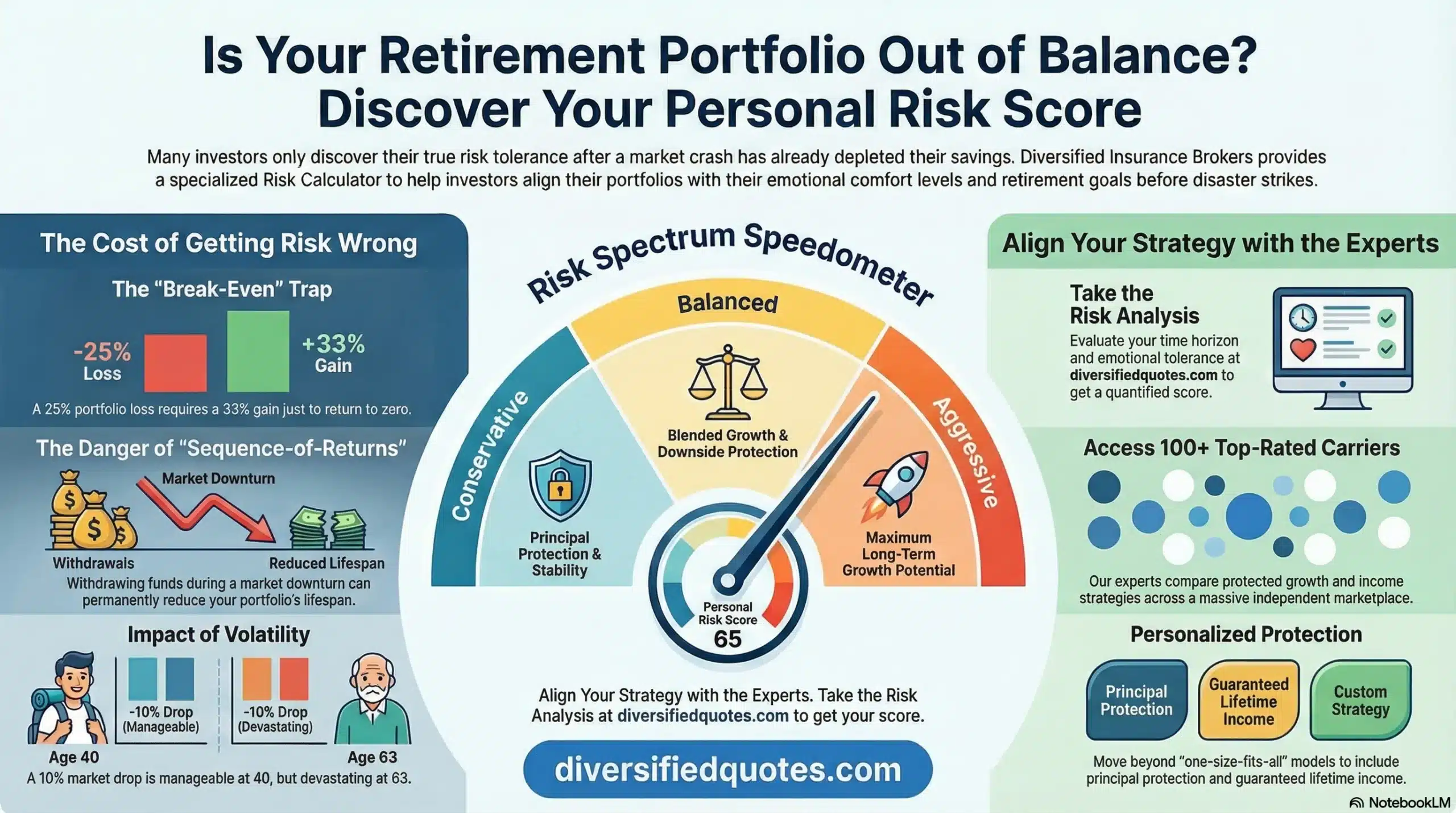
Many affluent investors have a structural advantage that is often underappreciated: the ability to design portfolios explicitly around time. Time is the most powerful compounding asset available to long-horizon investors. But time can only do its work if the portfolio is not permanently impaired by a severe drawdown at a structurally vulnerable moment — particularly during the transition from accumulation to distribution, when withdrawals begin and the portfolio must simultaneously support lifestyle needs and maintain the asset base needed for long-term compounding. For households in that transition, the order of returns matters enormously: a poor sequence of returns in the early years of distribution can do disproportionate long-term damage even when the portfolio’s long-term average return appears reasonable in hindsight. For a deeper conceptual overview of this dynamic, see Sequence of Returns Risk.
Institutions typically respond to these risks with a layered structural design: clearly defined liquidity reserves for near-term spending and obligations, stable income sources that provide predictable cash flow without requiring asset liquidation under pressure, and long-horizon growth capital that can remain invested through volatility without creating forced selling. This layered structure reduces the probability that short-term market stress creates long-term capital damage by forcing the liquidation of long-duration assets at temporarily depressed prices. The discipline of downside planning — designing for survivability across the full range of plausible scenarios rather than optimizing for the median case — is one of the genuine institutional insights that high-net-worth investors can most productively apply to their own wealth management approach.
Where Our Concierge Model Fits
Through Concierge Wealth Services, qualified clients can request a confidential introduction to an independent, SEC-registered adviser that emphasizes institutional disciplines — quantitative risk controls, written policy documentation, and governance-driven implementation. If you’re considering next steps, An Invitation to Explore More explains the introduction and evaluation process before any implementation discussion with the independent adviser occurs. For those new to eligibility criteria, What Is an Accredited Investor? outlines the general SEC thresholds that may apply to certain types of access and evaluation.
The purpose of this concierge model is educational coordination and introduction facilitation — not product placement or investment recommendation. The objective is to help qualified individuals explore whether institutional disciplines and structures are appropriate for their specific goals, constraints, and planning horizon.
Request a Qualification Review
If you want to explore institutional-style portfolio frameworks and independent fiduciary evaluation, begin with a confidential qualification review.
Important: We do not provide securities or investment advice. If appropriate, qualified individuals may be introduced to an independent SEC-registered investment adviser for evaluation under their regulatory framework.
Related Topics to Explore
Continue exploring institutional frameworks, risk discipline, and private market education through these related pages.
Important Notice: This page is provided for educational purposes only. Diversified Insurance Brokers does not provide investment advice, securities recommendations, or portfolio management services. Any wealth management and investment advisory services referenced are provided exclusively through an independent SEC-registered investment adviser. Clients who choose to engage an advisory relationship will be subject to the adviser’s terms, fees, disclosures, and regulatory framework. Any investment decisions should be made in consultation with appropriately licensed professionals operating under their own fiduciary obligations.
Request a Confidential Conversation
📞 Call us at 800-533-5969
or visit our Contact Page
Important: We do not provide securities or investment advice. If appropriate, we may introduce you to an independent SEC-registered investment adviser for evaluation under their regulatory framework.
Frequently Asked Questions
Institutional approaches prioritize written policy, risk budgeting, liquidity planning, and governance structures over product selection and market prediction. The foundational difference is sequencing: institutions define the framework — objectives, constraints, risk parameters, decision rules, and governance — before selecting any vehicles to implement it. This means that when markets become volatile or a compelling new idea appears, the response is determined by the pre-written policy rather than by the emotional state of decision-makers at that moment. For individual investors, this discipline often translates to writing down explicitly what the portfolio is trying to accomplish, what risk level is genuinely acceptable across a full cycle (not just in calm markets), and how major decisions will be made when conditions are stressful. The goal is to create a system that produces consistent, reasonable decisions over time — not to achieve perfect decisions in any single moment.
The core principles — policy discipline, risk budgeting, diversification by risk drivers, liquidity planning, governance documentation, and transparent reporting — can be applied at many different wealth levels, and many of their benefits are available to investors well below family-office scale. What changes with scale is access: certain private market opportunities, minimum investment thresholds, and specific product structures are available only to investors meeting regulatory accreditation or qualification thresholds set by the SEC and individual fund managers. The eligibility framework for certain types of private market access is outlined in our overview of what an accredited investor is. But the governance disciplines, behavioral frameworks, risk budgeting concepts, and process-first decision making that represent the most durable institutional advantages are primarily intellectual and structural — not products — and can be implemented at a wide range of portfolio sizes.
Risk budgeting is the discipline of deciding in advance how much aggregate uncertainty — measured in terms of expected volatility, maximum acceptable drawdown, or similar objective metrics — the portfolio is designed to carry, and then managing allocations to keep the portfolio within those boundaries rather than allowing risk to drift upward without intention. The analogy is a financial budget: just as a household budget allocates spending across categories and monitors whether actual spending exceeds planned amounts, a risk budget allocates exposure across the portfolio and monitors whether actual risk — measured objectively through market data and analytics — is staying within the agreed parameters. When a portion of the portfolio experiences strong appreciation that increases its weight, or when correlations between holdings rise during stress, the risk budget may be exceeded — which triggers rebalancing even without a change in the investor’s view on individual holdings. This approach reduces the common pattern of risk increasing quietly during good times (because no one is measuring it) and then being discovered only when it is too late to rebalance without locking in losses.
Liquidity planning prevents forced selling during market stress — which is one of the most reliably wealth-destructive events that can happen to an otherwise sound long-term portfolio. Many long-term portfolios that fail do not fail because the underlying holdings were poor investments. They fail because the investor needed cash at a moment when asset prices were depressed, forcing liquidation at the worst possible time at prices that locked in losses that the portfolio would have recovered had the investor been able to maintain positions through the stress period. Sophisticated investors segment liquidity into defined tiers — near-term reserves for spending and obligations, intermediate capital for known commitments and potential rebalancing, and long-horizon capital that can genuinely be committed to less-liquid exposures because it will not be needed for current operations. This segmentation creates the ability to endure volatility rather than being forced to react to it, which is the foundation of long-term compounding. Liquidity planning also creates optionality: liquid capital during market dislocations can be deployed for rebalancing or opportunistic positioning rather than being spent on forced sales from other portfolio areas.
Diversifying by risk drivers means organizing the portfolio around the underlying economic forces that actually influence returns — economic growth exposure, inflation sensitivity, interest rate duration, credit risk premium, liquidity premium, and cash-flow predictability — rather than simply around the conventional asset class labels that appear on an allocation chart. The practical importance of this distinction becomes apparent in stress scenarios: a portfolio that holds stocks, high-yield bonds, real estate investment trusts, and emerging market equities may look well diversified by label, but if all of those holdings decline sharply together during a credit crisis because they all depend on continued economic expansion and risk appetite, the portfolio is not genuinely diversified — it is concentrated in a single risk driver. Institutional investors ask whether they have multiple genuinely independent sources of return — exposures that would respond differently to a severe recession, an inflation spike, a credit crunch, or a rate shock — rather than multiple labels that behave similarly when the environment changes. For additional context on how this thinking connects to broader portfolio construction, our Institutional-Grade Portfolio Construction page provides a useful framework.
Institutions generally emphasize preparation over prediction, recognizing that reliable market forecasting is not consistently achievable — and that the attempt to forecast often introduces behavioral biases and overconfidence that actually worsen outcomes relative to a more disciplined, rules-based approach. Instead of trying to predict which direction markets will move, institutional frameworks focus on being well-prepared for a wide range of outcomes: stress testing against recession scenarios, inflation shocks, rate spikes, and credit crunches; maintaining liquidity to avoid forced selling in any of those scenarios; rebalancing according to rules rather than predictions; and keeping risk within documented parameters regardless of what current market sentiment suggests. The goal is to design a portfolio that can navigate uncertainty across the full cycle rather than to optimize it for the most likely single scenario and be poorly positioned for alternatives. This shift from prediction-dependent to preparation-dependent decision making is one of the most practically valuable institutional disciplines that individual investors can adopt.
Private markets — including private credit, private equity, real assets, and direct company investments — are integrated into institutional portfolios deliberately, within a clearly defined policy framework that specifies the allocation target, the commitment pacing schedule, the liquidity alignment, and the role each type of private exposure plays relative to the rest of the portfolio. Institutions accept the illiquidity premium associated with private markets because they can design their liquidity structure to accommodate it — keeping sufficient liquid assets to meet spending, obligations, and rebalancing needs without being forced to sell private positions early. Commitment pacing across multiple vintage years is also an important discipline: rather than making large allocations in a single period, institutions spread commitments across time to diversify exposure to different economic and valuation environments. For the Concierge Wealth framework around how we approach access to these types of strategies, see Curated Investment Access.
Governance defines the structural rules around how investment decisions are made, who is authorized to make them, how outcomes are measured against stated objectives, how exceptions are documented and evaluated, and how the policy evolves over time through formal review rather than informal drift. In an institutional context, governance prevents a series of individually reasonable-seeming decisions — each justified by current conditions — from accumulating into a fundamentally different strategy than the one the policy was designed to implement. It creates continuity through personnel changes, market cycles, and periods of intense emotional pressure. For high-net-worth households and families, written governance — even in a simplified form — produces similar benefits: it reduces the probability that family disagreements, market stress, or a single compelling narrative permanently derails a long-term strategy. Governance is particularly important across generational transitions, where the absence of documented investment philosophy and decision rules frequently leads to the dissipation of wealth that took decades to accumulate.
No. Diversified Insurance Brokers does not provide investment advice, securities recommendations, or portfolio management services. All content on this page is provided for educational purposes only. Qualified individuals who want to explore institutional-style portfolio frameworks and evidence-based investment disciplines may request an introduction to an independent, SEC-registered investment adviser whose process emphasizes these principles. Any engagement with the independent adviser occurs under that adviser’s regulatory framework, terms, fees, and disclosures — not those of Diversified Insurance Brokers. Our role is educational coordination and introduction facilitation for qualified individuals, not investment recommendation or implementation.
A common and productive first step is a confidential qualification review, which helps determine whether institutional-style education and independent fiduciary evaluation are appropriate for your specific financial situation, goals, and constraints. The review is educational in nature — it is not a sales process or a commitment to any particular course of action. It is designed to create clarity about whether the concepts outlined on this page are relevant to your situation and whether an introduction to an independent SEC-registered investment adviser would be a useful next step in your evaluation. You can begin the process by calling us directly at 800-533-5969 or by submitting the qualification review request form. If you want to understand the broader Concierge Wealth framework before that conversation, An Invitation to Explore More provides helpful context on the process and what to expect.
About the Author:
Jason Stolz, CLTC, CRPC, DIA, CAA and Chief Underwriter at Diversified Insurance Brokers (NPN 20471358), is a senior insurance and retirement professional with more than 25 years of real-world experience helping individuals, families, and business owners protect their income, assets, and long-term financial stability. As a long-time partner of the nationally licensed independent agency Diversified Insurance Brokers, Jason provides trusted guidance across multiple specialties—including fixed and indexed annuities, long-term care planning, personal and business disability insurance, life insurance solutions, Group Health, Travel Medical and Evacuation Insurance, and short-term health coverage. Diversified Insurance Brokers maintains active contracts with over 100 highly rated insurance carriers, ensuring clients have access to a broad and competitive marketplace.
His practical, education-first approach has earned recognition in publications such as VoyageATL, and contributions from his agency featured in Kiplinger and GoBankingRates— highlighting his commitment to financial clarity and client-focused planning. Drawing on deep product knowledge and years of hands-on field experience, Jason helps clients evaluate carriers, compare strategies, and build retirement and protection plans that are both secure and cost-efficient. Visitors who want to explore current annuity rates and compare options across multiple insurers can also use this annuity quote and comparison tool.
Explore More Annuity Options: Browse our complete guide to Annuity Strategies & Retirement Income — covering tax strategies, retirement income planning, lifetime income & annuity comparisons from 100+ carriers.
Last Reviewed: May 11, 2026 |
Reviewed by: Jason Stolz, CLTC, CRPC, DIA, CAA
Chief Underwriter, Diversified Insurance Brokers, Inc. | NPN: 20471358 | Diversified Insurance Brokers, Inc. — Licensed in all 50 states
Fact Checked by: Tonia Pettitt, CMIP©
Medicare Specialist, Diversified Insurance Brokers, Inc. | NPN: 14374308 | Diversified Insurance Brokers, Inc. — Licensed in all 50 states
Did you find this content helpful? Leave us a Google review — it helps others find trustworthy guidance too.
Editorial Standards: Diversified Insurance Brokers maintains rigorous editorial standards to ensure accuracy, clarity, and independence in all content. Learn more about our editorial standards and commitment to transparency.
