
Institutional Grade Portfolio Construction
Institutional Grade Portfolio Construction
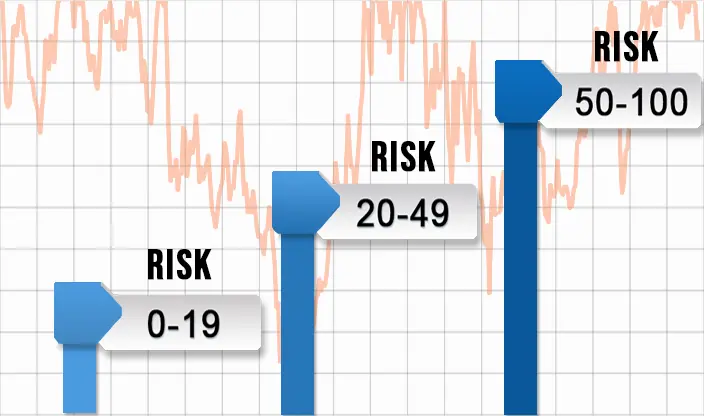
Institutional-grade portfolio construction is not a strategy name or a one-time allocation decision. It is a disciplined process that begins with mandate design, risk capacity analysis, and explicit liquidity planning — and continues through ongoing measurement, governance, and documentation across full market cycles. Large family offices, endowments, and pension plans use frameworks like these because they have learned, often through costly experience, what happens when portfolios are built reactively rather than structurally. Through Concierge Wealth Services, qualified individuals can request an introduction to an independent SEC-registered investment adviser that applies a research-driven, first-principles portfolio process — prioritizing transparency, risk awareness, and structural discipline over headlines, short-term narratives, or product-driven portfolio accumulation. Diversified Insurance Brokers does not provide securities or investment advice. Our role is educational coordination and, where appropriate, introduction to independent fiduciary professionals for evaluation.
The phrase “institutional-grade” is commonly misunderstood as referring to specific product categories — hedge funds, private equity, alternatives. In reality, institutions differentiate themselves through process far more than through products. The discipline shows up in how mandates are defined before capital is deployed, how risk is measured on an ongoing basis, how liquidity is explicitly mapped against anticipated needs, how diversification is built by return driver rather than by asset label, and how every allocation decision is reviewed and documented against consistent criteria. That structural discipline reduces unforced errors — the costly mistakes that occur when investors react emotionally to volatility, chase returns late in a cycle, or allow silent concentration to build during periods of strong performance. A portfolio built on institutional process behaves differently under stress not because it holds different assets, but because every decision was made against a defined standard rather than against the mood of the moment.
Request Information & Qualification Review
Explore whether institutional-grade portfolio construction aligns with your objectives. We’ll confirm fit and, if appropriate, connect you with the adviser to review process, disclosures, and next steps.
📞 Call us at 800-533-5969
Important: This page is educational. Diversified Insurance Brokers does not provide securities or investment advice. Qualified individuals may request introductions to independent fiduciary professionals for evaluation.
The Core Pillars of Institutional Portfolio Construction
While every institution has its own mandate, the most durable institutional portfolios share structural habits that apply regardless of asset size or investment objective. These habits matter not because they guarantee superior returns in any given year, but because they reduce the probability of catastrophic unforced errors that permanently impair compounding. The institutions that preserve and grow wealth across generations are rarely the ones that made the best bets — they are the ones that built the most resilient processes.
Process before product is the foundational habit. Institutions start with mandate design — return goals, drawdown tolerance, liquidity windows, time horizon, and tax profile — then select exposures using documented, repeatable methods. The central question is not which products are currently available or popular. It is how investment decisions are made, sized, and reviewed over time. This directly prevents the “product-driven portfolio,” where holdings accumulate based on marketing, headlines, or recent performance rather than on defined portfolio roles. Each exposure is assigned a specific job: growth engine, stability sleeve, inflation defense, diversifier, or liquidity buffer. If a holding cannot be clearly assigned a role in the mandate, its presence is questioned. That discipline sounds straightforward. Maintaining it through years of market noise and return-chasing pressure is where most portfolios fail.
Quantitative risk management is the second pillar. Objective indicators and scenario analysis inform position sizing and portfolio tilts across different market environments. Drawdown sensitivity, volatility ranges, correlations, and liquidity are measured continuously so the portfolio can remain inside planned risk boundaries rather than drifting beyond them unnoticed. This is not about predicting market movements — it is about detecting and correcting drift before it becomes damage. In strong markets, risk concentration can build without triggering any visible warning, until a correction reveals the true exposure. In stressed markets, fear can cause overcorrection that locks in losses and removes capital from the eventual recovery. Measurable guardrails help decision-makers remain consistent precisely when emotional pressure is highest and consistency matters most.
Purpose-built diversification is the third pillar. Institutions diversify by drivers, not by asset class labels. Two holdings with different names can behave identically under stress if they share the same underlying sensitivity to growth, credit conditions, or liquidity. A portfolio that appears diversified across 20 positions may be highly concentrated if those positions all depend on the same macro regime continuing. Purpose-built diversification aims for genuinely independent return sources — multiple engines that do not stall simultaneously. When environments shift, driver diversification keeps at least some components functional while others absorb pressure. That is what genuine diversification produces. Achieving it requires considerably more analytical work than a standard asset class checklist, but it produces a materially more resilient portfolio across the full range of environments a long investment horizon will eventually encounter.
Mandate Design — The Starting Point Most Investors Skip
Institutional portfolios begin with a mandate — an explicit document that defines what the portfolio is supposed to accomplish and what risks are acceptable in pursuit of that objective. The mandate includes return goals, required distribution schedules, time horizon, drawdown tolerance, liquidity constraints, and tax considerations. Without a mandate, portfolios become reactive by default: they change shape with each new market narrative, each advisor conversation, and each period of volatility, accumulating decisions that were never evaluated against a consistent standard. The result is a portfolio that reflects the history of the market’s moods rather than the investor’s actual objectives.
A well-built mandate forces clarity before capital is deployed. Is the portfolio meant to fund near-term spending? Preserve purchasing power across generations? Support philanthropic commitments? Reduce volatility to match a household’s emotional tolerance during drawdowns? Maintain liquid reserves for business opportunities that require capital on short notice? Institutions answer these questions explicitly because the answers determine the appropriate portfolio structure in ways that are not visible from historical return data alone. A portfolio designed for multi-generational compounding with no near-term distribution need is fundamentally different from a portfolio designed to fund $300,000 in annual distributions beginning in three years — even if both appear to hold similar asset class labels.
Mandate design also addresses one of the most expensive individual investor mistakes: optimizing for the wrong metric. Most investors optimize, consciously or not, for short-term visible performance — because it generates conversations, triggers reporting, and provides emotional feedback. Institutions optimize for mission success, which typically requires risk control, liquidity reliability, and the structural capacity to remain invested through adversity. When the primary measurement shifts from short-term performance to mission success, the entire portfolio management process changes in character — and over time, in outcome.
How Institutional Risk Management Protects Compounding
Institutions treat risk management as a core structural feature — not a defensive add-on that is activated during crises and ignored during bull markets. The reason is mathematical: compounding requires time in the market, and time in the market requires survivability through downturns. A 40% drawdown requires a 67% subsequent gain to recover to the starting point. A 50% drawdown requires a 100% gain. Large unplanned losses do not just set a portfolio back temporarily — they can permanently impair the wealth trajectory, especially when distributions, business cash needs, or behavioral capitulation force selling at the moment of maximum loss. That is why institutional portfolios include explicit risk monitoring, rebalancing rules, and drawdown governance even during periods when risk management feels unnecessary.
Risk management at the institutional level operates across multiple layers simultaneously. Volatility monitoring tracks whether portfolio risk is consistent with the mandate’s stated tolerance. Drawdown sensitivity analysis models how different portions of the portfolio behave under specific stress scenarios. Correlation monitoring detects when holdings that were intended to be independent have begun moving together — a warning sign that hidden concentration has developed. Liquidity mapping confirms that assets can be monetized when needed without forced selling at distressed prices. Scenario stress testing evaluates how the full portfolio behaves under conditions that did not appear in the historical record but could reasonably be contemplated given current environments. Another institutional habit that individual investors frequently underweight is epistemic humility — the structural acknowledgment that no one reliably predicts short-term market movements. Rather than building around a single macro forecast, institutions use guardrails that respond to measurable conditions: when volatility exceeds a defined threshold, the portfolio adjusts; when a position exceeds a concentration limit, it is rebalanced; when correlations shift, the model flags the change for review. The result is a system that adapts to changing environments without requiring the portfolio manager to be correct about the future.
Liquidity Planning — A Structural Advantage Most Portfolios Lack
Many portfolios fail not because the holdings are poorly chosen, but because liquidity needs collide with volatility at the worst possible moment. A household that needs $200,000 per year in distributions owns long-term assets that are down 35% in year two of retirement — and is forced to sell at distressed prices to fund living expenses rather than waiting for recovery. This interaction between spending needs and market timing is one of the most damaging and most preventable sources of permanent wealth impairment. Institutional investors address it by mapping cash needs to liquidity windows and maintaining an explicit liquidity ladder — assets designated for near-term spending and rebalancing that can be accessed without forced selling under stress, while longer-horizon assets remain invested through volatility without disruption.
Liquidity planning also supports opportunistic flexibility. Institutions want the capacity to deploy additional capital during pricing dislocations — when assets become temporarily cheaper than their long-term value supports. Without explicit liquidity reserves, even a well-designed long-term plan can become fully committed at exactly the moment when the most attractive deployment opportunities emerge. For many high-net-worth households, liquidity considerations extend beyond investment distributions to include business needs, tax payments, capital calls on private investments, philanthropic commitments, real estate acquisitions, and other irregular but foreseeable cash requirements. Mapping all of those demands into the portfolio’s structure — not just the investment allocation — is part of the institutional discipline that produces meaningfully better outcomes over time.
Comparing Retail Portfolio Management to Institutional Portfolio Construction
| Dimension | Retail Portfolio Management | Institutional-Grade Construction |
|---|---|---|
| Starting Point | Risk tolerance questionnaire mapped to a model portfolio from an available menu | Written mandate defining specific return objectives, drawdown tolerance, liquidity requirements, time horizon, and tax constraints before any asset is selected |
| Diversification Approach | Asset class labels: stocks, bonds, “alternatives” — often with hidden correlation during stress | Driver-based: growth engine, stability sleeve, inflation defense, liquidity reserve — each with a defined role and measurement framework; independent return sources across macro regimes |
| Risk Management | Periodic rebalancing to target allocation; reactive adjustments based on market commentary or client calls | Continuous monitoring of volatility, drawdown sensitivity, correlation shifts, and liquidity; systematic guardrails that trigger adjustment based on measurable conditions rather than narrative |
| Liquidity Planning | Generally unstated; distributions taken from whatever is available; risk of forced selling during downturns | Explicit liquidity ladder mapped to anticipated spending, tax payments, capital calls, and other foreseeable cash needs; long-horizon assets insulated from near-term liquidity demands |
| Decision Governance | Ad hoc; decisions made case-by-case; difficult to evaluate consistency over time | Documented framework; every decision evaluated against mandate criteria; consistent standard applied across market environments and time periods |
| Performance Measurement | Benchmark comparison; short-term return focus; peer ranking | Mission success: is the portfolio achieving its stated objectives within its stated risk parameters over the appropriate time horizon? |
| Incentive Alignment | Varies widely; product-driven compensation creates structural conflicts in many common advisory arrangements | Fiduciary obligation; fee structures evaluated explicitly for conflicts; accountability enforced through documented governance rather than trusted by assumption |
Operational Diligence and Alignment
Institutional practice extends beyond portfolio construction into the operational infrastructure surrounding it. Consolidated reporting across all accounts and entities allows the full picture of risk, liquidity, and performance to be evaluated in one place rather than pieced together from fragmented statements. Controls on service providers prevent vendor drift and fee creep. Documented governance processes ensure that decisions can be reviewed, challenged, and explained — not simply implemented without accountability or reversed without record. Transparent cost structures allow every dollar of fee to be evaluated against the value it delivers.
At scale, operational risk can matter as much as market risk. Custody arrangements, reporting integrity, fee transparency, and operational controls all create potential exposures if not managed deliberately. Weaknesses in these areas can generate hidden costs and compliance risks that compound quietly over years without triggering obvious warnings. A clean operational foundation also improves governance quality: when reporting is consistent and consolidated, decision-makers respond to facts rather than to incomplete or delayed information from fragmented account relationships across multiple custodians and advisors.
Alignment of incentives is another institutional focus that individual investors frequently underweight. When advisors are compensated through product sales or through assets under management without performance accountability, structural incentives exist that may not align with the client’s long-term interests. Institutional frameworks evaluate explicitly how fees are structured, how outcomes are measured, and how accountability is enforced — creating a governance system designed to support long-term client outcomes rather than short-term provider convenience.
Who This Framework Is Designed For
This framework is most relevant for accredited or otherwise qualified individuals who value documented process, measurable risk controls, and structural accountability over narrative-driven portfolio management. It appeals most naturally to families, entrepreneurs, executives, and professionals who have accumulated meaningful wealth and want drawdown awareness, liquidity planning, and clear governance built into how their capital is managed as an ongoing structural feature — not just activated during periods of market stress.
It is also commonly the right fit when portfolios have become genuinely complex — multiple accounts, entities, trusts, concentrated positions, business cash flows, or long-horizon goals that require structured, documented decision-making to manage coherently. The independent adviser connected through Concierge Wealth Services will determine eligibility, fit, and the appropriate scope of the advisory relationship during their own evaluation process. Diversified Insurance Brokers does not offer securities or provide investment advice. All strategy, fee, and implementation discussions occur exclusively with the adviser under their regulatory and fiduciary framework.
Request a Confidential Conversation
Explore whether institutional-grade portfolio construction aligns with your objectives. We’ll confirm fit and, if appropriate, connect you with the adviser to review process, disclosures, and next steps.
Request Information & Qualification Review
Secure form submission. We’ll follow up with next steps.
Related Topics to Explore
Continue exploring institutional frameworks, diversification, and risk discipline.
Request a Confidential Conversation
📞 Call us at 800-533-5969
or visit our Contact Page
Important: We do not provide securities or investment advice. If appropriate, we may introduce you to an independent SEC-registered investment adviser for evaluation under their regulatory framework.
Frequently Asked Questions: Institutional-Grade Portfolio Construction
What makes a portfolio “institutional-grade” versus a standard managed portfolio?
The difference is primarily in process rather than in product. Standard managed portfolios at the retail level tend to be built from available product menus — a selection of mutual funds, ETFs, or model portfolios — allocated according to a risk tolerance questionnaire and adjusted infrequently. Institutional portfolios are built from a mandate that explicitly defines what the portfolio is supposed to accomplish, what risks are acceptable in pursuit of those goals, and how decisions will be evaluated over time. That mandate drives every subsequent decision: which asset classes to include, how to size each position, when to rebalance, how to measure performance, and how to handle deviations from plan. The institutional approach also involves ongoing risk monitoring, documented governance, and operational discipline that standard managed accounts rarely provide systematically. The result is a portfolio that maintains consistency through market cycles rather than drifting as narratives change — and that is designed to survive adversity rather than only to perform well in favorable conditions.
Do I need to be an accredited investor to access this framework?
Accredited investor status is a relevant consideration for access to certain investment opportunities within an institutional-grade portfolio, particularly private market exposures that are restricted under SEC regulations to investors who meet income or net worth thresholds. The portfolio construction framework itself — mandate design, risk management, diversification by drivers, liquidity planning, and operational governance — is not restricted by investor status. However, the full institutional toolkit, including access to certain alternative strategies and private investments, typically requires qualification. The independent adviser connected through Concierge Wealth Services will evaluate suitability, eligibility, and the appropriate scope of the relationship during their own review process. Requesting a qualification review is the starting point for understanding whether and how this framework applies to your specific situation.
How does mandate design work in practice for a high-net-worth household?
Mandate design begins with a structured conversation about objectives, constraints, and priorities — and produces a written framework that governs the portfolio rather than leaving decisions to be made case-by-case. For a high-net-worth household, the mandate might specify: a primary return objective of preserving real purchasing power while funding $250,000 in annual distributions; a drawdown tolerance of no more than 20% from peak to trough in any 12-month period; a liquidity requirement of at least 18 months of distributions held in assets accessible without penalty; a 15-year time horizon for the illiquid growth portion; and a preference for minimizing ordinary income relative to long-term capital gains for tax efficiency. Each of those specifications directly constrains the portfolio’s construction in ways that are invisible in a standard “moderate risk” or “balanced” model. The discipline is not in the labels — it is in the specificity of the constraints and the consistency with which the portfolio is managed against them over time.
What role does Diversified Insurance Brokers play in this process?
Diversified Insurance Brokers does not provide securities advice, investment recommendations, or portfolio management services. Our role through Concierge Wealth Services is educational coordination and introduction: helping qualified individuals understand what institutional portfolio construction involves, evaluating whether a conversation with our independent adviser partner is appropriate, and facilitating that introduction for individuals who qualify. All strategy discussions, fee disclosures, investment recommendations, and ongoing portfolio management occur exclusively through the independent SEC-registered investment adviser under their own regulatory framework and fiduciary obligations. We may receive compensation in connection with referrals to the adviser, which will be disclosed in accordance with applicable regulations. Our insurance expertise — across annuities, life insurance, disability insurance, and long-term care — complements the investment advisory relationship by addressing the protection and income planning dimensions that sit alongside the investment portfolio in a complete financial plan.
How does institutional risk management differ from typical portfolio risk management?
Typical retail risk management consists primarily of asset allocation — the percentage split between stocks and bonds — adjusted periodically based on market commentary or age-based rules of thumb. Institutional risk management operates across multiple dimensions simultaneously and continuously. Volatility is monitored against the mandate’s stated tolerance, not against an index. Drawdown sensitivity is modeled under specific stress scenarios, not just historical averages. Correlations between holdings are tracked to detect hidden concentration before it becomes visible through losses. Liquidity is mapped against anticipated cash needs to prevent forced selling. Position sizing is governed by rules that prevent any single exposure from becoming large enough to create mandate-level risk regardless of the conviction level behind it. The result is a portfolio that can be evaluated objectively against consistent criteria at any point in time — not one that is managed by feel or explained after the fact by whatever narrative is current. When risk rises above the mandate’s planned range, the portfolio is adjusted. When risk falls below the planned range, the portfolio may be underexposed to growth relative to long-term objectives. The mandate defines the acceptable range; the risk management process keeps the portfolio inside it.
About the Author:
Jason Stolz, CLTC, CRPC, DIA, CAA and Chief Underwriter at Diversified Insurance Brokers (NPN 20471358), is a senior insurance and retirement professional with more than 25 years of real-world experience helping individuals, families, and business owners protect their income, assets, and long-term financial stability. As a long-time partner of the nationally licensed independent agency Diversified Insurance Brokers, Jason provides trusted guidance across multiple specialties—including fixed and indexed annuities, long-term care planning, personal and business disability insurance, life insurance solutions, Group Health, Travel Medical and Evacuation Insurance, and short-term health coverage. Diversified Insurance Brokers maintains active contracts with over 100 highly rated insurance carriers, ensuring clients have access to a broad and competitive marketplace.
His practical, education-first approach has earned recognition in publications such as VoyageATL, and contributions from his agency featured in Kiplinger and GoBankingRates— highlighting his commitment to financial clarity and client-focused planning. Drawing on deep product knowledge and years of hands-on field experience, Jason helps clients evaluate carriers, compare strategies, and build retirement and protection plans that are both secure and cost-efficient. Visitors who want to explore current annuity rates and compare options across multiple insurers can also use this annuity quote and comparison tool.
Browse More Resources: Return to our complete Wealth Strategies & General Resources guide — covering wealth building, tax strategies, fiduciary, wills & broker resources.
Last Reviewed: June 13, 2026 |
Reviewed by: Jason Stolz, CLTC, CRPC, DIA, CAA
Chief Underwriter, Diversified Insurance Brokers, Inc. | NPN: 20471358 | Diversified Insurance Brokers, Inc. — Licensed in all 50 states
Fact Checked by: Tonia Pettitt, CMIP©
Medicare Specialist, Diversified Insurance Brokers, Inc. | NPN: 14374308 | Diversified Insurance Brokers, Inc. — Licensed in all 50 states
Did you find this content helpful? Leave us a Google review — it helps others find trustworthy guidance too.
Editorial Standards: Diversified Insurance Brokers maintains rigorous editorial standards to ensure accuracy, clarity, and independence in all content. Learn more about our editorial standards and commitment to transparency.
