
How the Top 0.1% Control Volatility
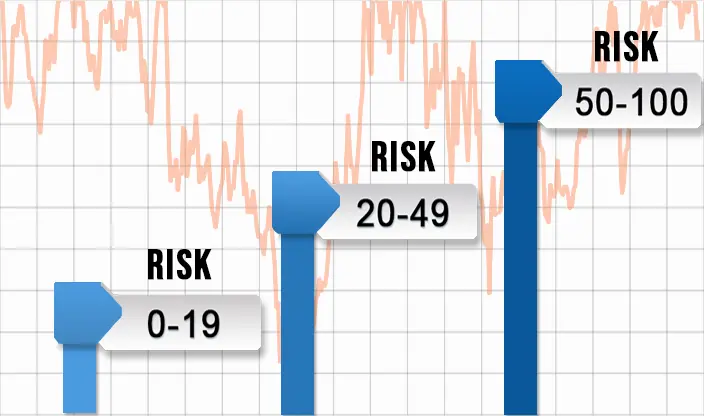
The top 0.1% do not control volatility by predicting markets with greater accuracy than everyone else. They control it by engineering financial systems that remain functional when markets become dysfunctional. The distinction is consequential: prediction-dependent approaches break down precisely when volatility is highest and emotional pressure to act is most intense. Structure-dependent approaches maintain their integrity during stress because the decisions were made before the stress arrived — encoded in written policies, documented risk budgets, pre-set rebalancing rules, and deliberate liquidity design that separates spending money from long-horizon capital. At Diversified Insurance Brokers, Jason Stolz, CLTC, CRPC, DIA, CAA, works with qualified households through the Concierge Wealth Services platform to identify the structural components — insurance, guaranteed income, and protection architecture — that provide the non-market bedrock upon which investment portfolios can be built with greater risk tolerance and less forced-decision vulnerability. Where appropriate, qualified individuals may be introduced to independent SEC-registered investment advisers who provide the investment management and governance coordination at the portfolio level.
The behavioral dimension of volatility management is often underestimated by investors who believe their risk tolerance is higher than it actually is under real-world stress conditions. When a $100,000 portfolio loses 20%, the investor experiences a $20,000 paper loss. When a $5 million portfolio loses 20%, the investor experiences a $1 million paper loss — an identical percentage, but a psychologically different experience that triggers meaningfully more intense pressure to act. The most consistently expensive mistake in wealth management is not picking the wrong stock — it is making a sound long-term decision (holding through a market decline) at the right time and then reversing it at the worst time because the emotional pressure of watching large dollar losses becomes intolerable without a written plan and trusted process to anchor decision-making. Volatility is the trigger; behavior is the cause of permanent damage.
Request a Confidential Qualification Review
Explore volatility-aware frameworks built around risk controls, liquidity design, and documented governance. Educational and introductory — not investment advice.
Request Qualification ReviewImportant: Diversified Insurance Brokers does not offer securities, does not provide investment advice, and does not make investment recommendations. This page is educational. If appropriate, qualified individuals may be introduced to an independent SEC-registered investment adviser for evaluation.
The Framework: Separating Market Movement From Portfolio Damage
The foundational reorientation in how elite investors approach volatility is separating the concept of market movement from the concept of portfolio damage. These are not the same thing. Markets can decline sharply — 20%, 30%, 40% — without permanently damaging a well-structured financial plan. Permanent damage occurs when volatility intersects with one or more structural vulnerabilities: forced selling (selling long-term assets to meet short-term cash needs because liquidity was not pre-planned); margin calls (leverage amplifying the downside until positions must be liquidated at precisely the wrong moment); concentration (a single asset, sector, or narrative comprising most of the household’s net worth); or behavioral capitulation (abandoning a sound long-term plan at a market bottom because the emotional cost of paper losses became greater than the perceived cost of selling).
Elite investors reduce all four structural vulnerabilities through deliberate design, not through superior market forecasting. They pre-fund their liquidity needs so short-term cash requirements never force long-term asset sales. They manage concentration through disciplined diversification and, where necessary, structured unwinding programs for concentrated single-stock positions. They limit leverage to defined boundaries within documented risk budgets. And they reduce behavioral capitulation risk through written investment policy statements, pre-approved rebalancing rules, and structured governance that removes improvisation from the decision framework during volatile periods. Our resource on Concierge Wealth Services covers the integrated advisory framework through which qualified households can access this type of documented governance alongside the insurance and income protection architecture it is built upon.
The Seven Structural Levers of Volatility Control
Understanding how the most sophisticated households manage volatility requires examining each lever in the system. None of these elements is effective in isolation — it is their combination and integration that produces the resilience that appears, from the outside, like the ability to remain calm when others cannot.
The first lever is treating volatility as a systemic input rather than a forecast error. This means designing the portfolio to function across multiple market regimes — growth, contraction, inflation, deflation, credit stress — rather than optimizing it for one expected outcome. Institutions model volatility through quantitative risk metrics, scenario analysis, and stress testing that asks “how does the portfolio behave if X happens?” rather than “what will happen next?” The result is a portfolio that is not dependent on any single forecast being correct. Our resource on why volatility targeting has become a core strategy covers the specific quantitative approach to sizing positions and managing portfolio risk based on measured volatility levels rather than predicted return outcomes.
The second lever is portfolio engineering that assigns distinct roles to distinct sleeves of the portfolio. A growth sleeve accepts higher volatility because its purpose is long-horizon capital appreciation — it is funded with money the household genuinely will not need for a decade or more. A stability sleeve is constructed to dampen drawdowns and provide rebalancing capital when the growth sleeve declines. A liquidity sleeve holds instruments that can be converted to cash quickly to fund spending needs without selling long-horizon assets under duress. When roles are clearly defined and funded separately, a decline in the growth sleeve does not trigger forced selling from the stability sleeve — which is precisely the behavior that turns a temporary paper loss into a permanent realized one. Our resource on how ultra-high-net-worth investors build wealth covers the full portfolio construction framework at the UHNW level.
Volatility Control by Strategy: How Structural Elements Compare
| Structural Element | What It Controls | Failure Mode It Prevents | What Replaces It for Most Investors |
|---|---|---|---|
| Written investment policy statement | Defines risk tolerance, asset allocation ranges, rebalancing rules, and spending policy in writing before stress arrives | Behavioral capitulation — abandoning the plan because the rules were never written | Improvised decisions made under emotional pressure at market extremes |
| Pre-funded liquidity sleeve | Covers two to five years of planned spending from instruments that do not require selling long-horizon assets under pressure | Forced selling — liquidating growth assets at distressed prices to meet cash needs | Cash flow shortfall that forces selling at the worst time |
| Guaranteed income floor | Covers essential living expenses through Social Security, pensions, and annuity income that does not fluctuate with market prices | Spending anxiety that forces conservative positioning and misses long-term compounding | Portfolio withdrawal rates that make the investor sensitive to every market movement |
| Documented rebalancing rules | Defines specific thresholds at which rebalancing occurs, preventing both drift in strong markets and panic selling in weak ones | Portfolio drift — risk creeping upward in bull markets and downward at exactly the wrong time | Reactive decisions triggered by market moves rather than policy |
| Diversification across uncorrelated sources | Reduces dependence on any single asset, sector, or market regime performing well simultaneously | Concentration — a single narrative failure creating outsized portfolio damage | Performance chasing that concentrates in recent winners and maximizes future drawdown exposure |
The Guaranteed Income Floor: The Most Overlooked Volatility Control
For retirement-phase households, the single most powerful structural element of volatility control is a guaranteed income floor — a reliable monthly income stream that covers essential living expenses regardless of what markets are doing. When Social Security, pension income, and lifetime annuity income collectively cover food, housing, utilities, healthcare premiums, and other non-discretionary expenses, the investor’s relationship with portfolio volatility fundamentally changes. A 30% market decline is experienced very differently by a household that must sell portfolio assets to pay the mortgage versus one whose essential expenses are funded by guaranteed income that continues regardless of market conditions.
This is why sophisticated retirement income planners distinguish between “floor” income — guaranteed, non-market-correlated, sufficient to cover essential needs — and “upside” income — portfolio-dependent, variable, used for discretionary spending and legacy accumulation. A household with a strong floor can afford to take more risk with its upside portfolio, hold through deeper drawdowns without behavioral capitulation, and actually benefit from market recoveries rather than needing to sell at depressed prices to fund living expenses. Our resources on annuities as a pension alternative, annuities explained, and maximizing Social Security benefits cover the guaranteed income floor construction tools. The resource on how Social Security and annuities work together addresses the coordination between the two primary guaranteed income sources most retirement households have access to.
Concentration Risk: The Specific Challenge for Founders and Business Owners
For business owners, entrepreneurs, and executives with significant equity compensation, concentration risk is the specific form of volatility exposure that most threatens long-term wealth. UHNW research consistently shows that 30 to 33% of wealth among ultra-high-net-worth individuals is concentrated in private business ownership or direct equity investments — and among founders and company owners, that concentration often exceeds 60% of the private and alternative portfolio in a single company. This concentration reflects the operator’s edge that built the wealth, but it creates a portfolio construction problem that most conventional allocation frameworks do not address.
Managing concentrated positions requires a structured program of diversification that accounts for tax efficiency (minimizing capital gains triggered by position liquidation), legal constraints (lockup periods, Rule 144 trading restrictions, pre-arranged trading plans under Rule 10b5-1), and timing (avoiding forced liquidation that coincides with market or company-specific distress). Insurance plays a meaningful role in the concentration risk framework: key-person life insurance and disability insurance ensure that the human capital driving the concentrated business value is protected against premature death or disability that would trigger forced valuation events at the worst possible time. Our resource on high-risk life insurance services covers insurance solutions for business principals with concentrated equity positions, and our resource on disability insurance services addresses income protection for business owners whose concentration makes disability particularly financially dangerous.
Where Insurance Architecture Intersects With Volatility Control
Insurance and annuities occupy a specific and irreplaceable role in the volatility control framework — not because they replace investment assets, but because they remove certain categories of financial risk from the portfolio’s volatility exposure entirely. Long-term care insurance removes the catastrophic and unpredictable long-term care cost risk from the retirement plan — a risk that, if uninsured, would require holding a large cash reserve in the portfolio to self-fund potential care costs, reducing the capital available for long-horizon investment and creating ongoing psychological pressure about portfolio drawdowns. Our resource on self-insured long-term care covers the financial scenarios under which self-funding is viable versus the scenarios where it creates more financial stress than the insurance premium. The resource on affordable hybrid long-term care policies covers the insurance-annuity hybrids that address LTC risk while also providing a guaranteed income or death benefit component.
Life insurance within the volatility control framework serves two purposes. First, it removes the financial consequence of premature death from the portfolio risk model — a household that holds sufficient life insurance can afford to invest the non-insurance portfolio more aggressively because the insurance handles the specific mortality risk. Second, permanent life insurance with cash value provides a non-correlated asset that accumulates on a tax-deferred basis and can be accessed through policy loans that are not taxable events — a liquidity source that does not require selling market-sensitive assets. Our resource on life insurance as an investment alternative covers this non-correlated accumulation function, and our resources on evaluating Fidelity, evaluating MassMutual, and evaluating Physicians Mutual cover carrier financial strength assessments as part of the due diligence process for long-duration insurance commitments.
Request a Confidential Conversation
📞 Call us at 800-533-5969
or visit our Contact Page
Important: We do not provide securities or investment advice. If appropriate, we may introduce you to an independent SEC-registered investment adviser for evaluation under their regulatory framework.
Frequently Asked Questions: How the Top 0.1% Control Volatility
What does “controlling volatility” actually mean — and what does it not mean?
Controlling volatility does not mean predicting markets, eliminating drawdowns, or achieving consistent positive returns regardless of conditions. It means engineering a financial system that remains functional — spending needs met, long-term plans intact, decisions consistent with written policy — regardless of what markets are doing. Markets will decline. The question is whether the household’s financial system forces it to respond to those declines in ways that permanently impair the plan. The top 0.1% focus on reducing the four structural vulnerabilities that turn temporary volatility into permanent damage: forced selling (no liquidity cushion), leverage (borrowing amplifies losses), concentration (single-asset exposure), and behavioral capitulation (no written plan to anchor decisions under stress). When those vulnerabilities are reduced through design, volatility becomes an inconvenience rather than a crisis. Our resource on why volatility targeting has become a core strategy covers the quantitative approach to measuring and managing portfolio risk level systematically.
Why is a guaranteed income floor so important for managing volatility in retirement?
A guaranteed income floor — Social Security, pension, and lifetime annuity income that covers essential living expenses regardless of market conditions — fundamentally changes how a retirement household experiences portfolio volatility. A household that depends on portfolio withdrawals to pay the mortgage, utilities, and groceries must sell portfolio assets during market declines to meet those obligations, locking in paper losses at the worst possible time and potentially accelerating portfolio depletion. A household whose essential expenses are covered by guaranteed income that does not fluctuate with markets can hold through declines, allow growth assets to recover, and even deploy additional capital when prices are depressed. The income floor also dramatically reduces the psychological pressure that drives behavioral capitulation — when essential needs are guaranteed regardless of market conditions, the investor’s relationship with paper losses is qualitatively different. The practical implication: building the income floor through Social Security optimization and fixed or indexed annuity income is a volatility management strategy, not merely an income planning exercise. Our resources on annuities as a pension alternative and maximizing Social Security benefits cover the primary tools for constructing this floor.
What is an investment policy statement and why do sophisticated investors use them?
An investment policy statement is a written document that defines an investor’s or institution’s goals, risk tolerance, asset allocation target ranges, rebalancing triggers, liquidity requirements, spending policy, and investment restrictions — before market stress arrives. It is the governance document that answers the question “what should we do?” when volatility is high and emotional pressure to do something is intense. Without a written policy, investment decisions during volatile periods are made under emotional pressure using the most recent information as the primary input — which consistently produces the worst outcomes: selling after declines, buying after run-ups, and abandoning long-term plans for short-term relief. With a written policy, the decision has already been made: the document says “when the equity allocation exceeds target by X%, rebalance back,” and that instruction is followed regardless of how uncomfortable the action feels in the moment. Institutions — pension funds, endowments, foundations — universally use investment policy statements because they have long experience with how behavioral failures destroy compounding. Sophisticated individual and family investors adopt the same discipline for the same reason. Our resource on how ultra-high-net-worth investors build wealth covers the full governance framework that surrounds this document.
How does concentration risk create volatility exposure — and how is it managed?
Concentration risk is the exposure that arises when a significant portion of a household’s net worth is tied to the performance of a single asset, company, or sector. For business owners, founders, and executives with equity compensation, concentration in a single company frequently represents 50% or more of total wealth — creating a portfolio that is not diversified across market conditions but instead rises and falls with one company’s fortunes. This concentration is often tax-efficient to create (the basis is low) but tax-expensive to dissolve (selling triggers capital gains on the entire appreciation). The structural danger is that concentration combined with market or company-specific stress creates severe volatility in the household’s total net worth — and if leverage is involved, that volatility can be amplified further. Managing concentration requires a structured, multi-year program that balances diversification pace against tax efficiency, and may involve exchange funds, charitable strategies using appreciated shares, 10b5-1 pre-arranged trading plans, or other mechanisms depending on the asset and the household’s specific situation. Insurance protects the human capital risk underlying the concentrated position: our resources on high-risk life insurance and disability insurance cover protection for business principals whose human capital is the source of the concentrated value.
How do alternative investments help with volatility control — and what are the risks?
Alternative investments — private equity, private credit, real assets, infrastructure, hedge strategies, and similar exposures — can reduce portfolio volatility through lower correlation with public equity markets. When public stocks decline, assets that are not correlated with public markets do not necessarily decline simultaneously, providing a stabilizing effect on total portfolio value. Research on UHNW portfolios shows that investment real estate is the most widely adopted alternative category (64% of HNW investors), while private credit, hedge funds, and private equity have meaningful but smaller adoption rates. The potential return premium from illiquid alternatives — the illiquidity premium — comes at the cost of limited access to capital during the holding period, making liquidity planning essential for any household with alternative allocations. The risks of alternatives include complexity, higher fees, valuation uncertainty (private assets are not marked to market daily), and the possibility that lower correlation under normal conditions may not hold during severe systemic stress. Institutions address these risks through policy-driven pacing (investing consistent amounts over time rather than timing market cycles), governance (documented criteria for manager selection and monitoring), and liquidity management (ensuring alternatives are funded only with capital that genuinely will not be needed during the holding period). Any specific alternative investment discussion for qualified individuals occurs with an independent SEC-registered investment adviser, not through Diversified Insurance Brokers. Our educational resource on common objections to annuities covers the related concept of illiquidity in the context of fixed annuity structures.
Why does rebalancing during market declines produce better long-term outcomes?
Systematic rebalancing — selling assets that have appreciated above their target allocation and buying assets that have declined below target — is one of the most consistently value-adding investment behaviors across market cycles. The mechanism is straightforward: when equity markets decline, a pre-set rebalancing rule directs the investor to buy more equity at lower prices using the stability sleeve’s less-affected assets. When equity markets have risen and the equity allocation has grown above target, the rule directs the investor to sell some equity and buy stability assets — effectively taking profits before the next correction. The psychological barrier is that both directions of rebalancing feel uncomfortable: buying after a decline feels like catching a falling knife, and selling winners feels like leaving money on the table. This is precisely why the rebalancing rule must be written down in advance and followed mechanically — because the only time the rule generates meaningful value is when following it is uncomfortable. Institutions consistently follow written rebalancing policies not because they believe they can time markets, but because they understand that disciplined rebalancing buys low and sells high on a systematic basis without requiring any prediction about what markets will do next. Our resource on the annuity rescue plan covers how existing annuity assets can be repositioned as part of a broader portfolio restructuring when the current structure no longer serves the household’s volatility management goals.
What role does long-term care insurance play in volatility control?
Long-term care insurance addresses a specific and substantial source of financial volatility in the retirement plan: the unpredictable, potentially catastrophic cost of extended care. A nursing home private room costs over $127,000 per year nationally, assisted living approximately $74,400 per year, and the average lifetime long-term care cost for a 65-year-old is approximately $135,000 — with individual outcomes ranging from zero to over $660,000 depending on duration and setting. Without LTC insurance, a household must either self-fund this risk (holding a large reserve that reduces capital available for growth) or accept that an extended care event will deplete portfolio assets on an unpredictable timeline. Both approaches introduce volatility — financial volatility in the case of an actual care event, and opportunity cost volatility in the case of holding a large reserve for a contingency that may never occur. LTC insurance transfers this risk to an insurer for a defined, predictable premium — removing the unpredictable tail risk from the portfolio’s exposure and allowing the household to invest remaining assets with greater confidence. Our resource on self-insured long-term care covers the financial scenarios under which self-funding is rational versus those where it creates more portfolio stress than the insurance premium it avoids.
How does the behavioral component of volatility control work in practice?
Behavioral volatility control works through pre-commitment — making decisions about how to behave during stress before the stress arrives, and encoding those decisions in structures that are harder to override in the moment than an improvised response would be. Written investment policy statements that define rebalancing rules eliminate the “should I sell or hold?” decision during a market decline — the document already made that decision. Pre-funded liquidity sleeves eliminate the financial pressure that would otherwise force portfolio sales during downturns. Guaranteed income floors eliminate the spending anxiety that makes investors ultra-sensitive to paper losses. Regular review meetings with an objective fiduciary advisor create accountability and provide a stabilizing voice during volatile periods. The combination of structural pre-commitment and human accountability is why institutional investors, who have invested in these governance systems over decades, consistently outperform individual investors who rely on willpower and judgment under stress — not because institutions have better information, but because they have better processes. Our resource on insurance and annuity deep dives covers the specific product structures that provide behavioral anchoring through guaranteed contractual commitments that do not require the investor to make ongoing decisions about whether to hold.
About the Author:
Jason Stolz, CLTC, CRPC, DIA, CAA and Chief Underwriter at Diversified Insurance Brokers (NPN 20471358), is a senior insurance and retirement professional with more than 25 years of real-world experience helping individuals, families, and business owners protect their income, assets, and long-term financial stability. As a long-time partner of the nationally licensed independent agency Diversified Insurance Brokers, Jason provides trusted guidance across multiple specialties—including fixed and indexed annuities, long-term care planning, personal and business disability insurance, life insurance solutions, Group Health, Travel Medical and Evacuation Insurance, and short-term health coverage. Diversified Insurance Brokers maintains active contracts with over 100 highly rated insurance carriers, ensuring clients have access to a broad and competitive marketplace.
His practical, education-first approach has earned recognition in publications such as VoyageATL, and contributions from his agency featured in Kiplinger and GoBankingRates— highlighting his commitment to financial clarity and client-focused planning. Drawing on deep product knowledge and years of hands-on field experience, Jason helps clients evaluate carriers, compare strategies, and build retirement and protection plans that are both secure and cost-efficient. Visitors who want to explore current annuity rates and compare options across multiple insurers can also use this annuity quote and comparison tool.
Explore More Annuity Options: Browse our complete guide to Annuity Strategies & Retirement Income — covering tax strategies, retirement income planning, lifetime income & annuity comparisons from 100+ carriers.
Last Reviewed: June 11, 2026 |
Reviewed by: Jason Stolz, CLTC, CRPC, DIA, CAA
Chief Underwriter, Diversified Insurance Brokers, Inc. | NPN: 20471358 | Diversified Insurance Brokers, Inc. — Licensed in all 50 states
Fact Checked by: Tonia Pettitt, CMIP©
Medicare Specialist, Diversified Insurance Brokers, Inc. | NPN: 14374308 | Diversified Insurance Brokers, Inc. — Licensed in all 50 states
Did you find this content helpful? Leave us a Google review — it helps others find trustworthy guidance too.
Editorial Standards: Diversified Insurance Brokers maintains rigorous editorial standards to ensure accuracy, clarity, and independence in all content. Learn more about our editorial standards and commitment to transparency.
