
Why Volatility Targeting Has Become a Core Strategy
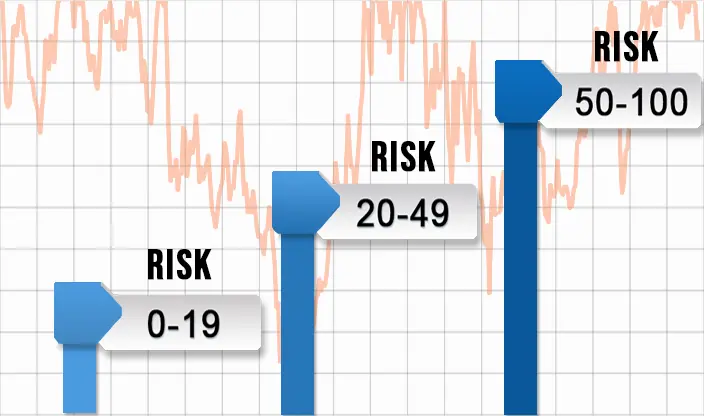
Volatility targeting has become a defining characteristic of modern institutional portfolio construction because it changes the core objective of portfolio design in a fundamental way. Instead of trying to predict markets, forecast economic turning points, or react to headlines and narratives, sophisticated investors focus on controlling how much risk the portfolio is exposed to at any given moment. By adjusting exposure based on observed market volatility rather than market forecasts, portfolios can pursue smoother performance paths, more stable drawdown behavior, and more consistent long-term compounding characteristics across multiple economic regimes — none of which requires getting the market direction right in advance.
At the institutional level, volatility targeting is not viewed as a trading tactic or a market timing tool. It is treated as a structural risk management discipline that allows capital to remain invested in markets while dynamically adjusting the magnitude of that exposure to reflect current market conditions. The objective is consistency of risk experience rather than consistency of market exposure. In volatile environments, risk is reduced automatically by design. In calmer environments, exposure can increase within predefined parameters. The result is a portfolio experience that is process-driven rather than emotionally reactive — and one that can be monitored, measured, and evaluated against specific risk targets rather than subjective market judgments.
This approach reflects the same principles explored in Quantitative Risk Management, where risk is treated as a measurable engineering variable rather than an unpredictable external force. Institutions increasingly view volatility itself as something that can be monitored, budgeted, and controlled — much like liquidity or credit exposure — rather than something that simply happens to a portfolio while investors hope for favorable outcomes.
Why Risk Consistency Often Matters More Than Return Consistency
One of the most misunderstood realities of portfolio behavior is that volatility tends to change faster, and with greater magnitude, than long-term return expectations. Markets may still produce similar average returns over multi-decade horizons, but the specific path those returns take can vary dramatically — and it is the path rather than the average that determines actual investor outcomes when capital is being deployed, rebalanced, or withdrawn along the way. Large drawdowns can permanently damage the compounding process even if markets eventually recover fully, because the capital that was lost during the drawdown is no longer present to participate in the recovery. This asymmetry — the fact that a 50% loss requires a 100% gain simply to return to breakeven — is why many institutional frameworks prioritize limiting severe volatility spikes rather than trying to capture every short-term upside movement.
Volatility targeting addresses this core problem by aligning portfolio exposure with the current risk environment rather than with a static long-term allocation. When observed volatility rises above a target level, exposure is reduced to bring the portfolio’s effective risk back within the defined range. When observed volatility declines, exposure can increase within predefined parameters. The objective is not to avoid volatility entirely — which would require abandoning market participation and its associated long-term return potential — but to maintain volatility inside a defined operating range that allows compounding to remain intact across market cycles. This philosophy aligns with broader institutional frameworks discussed in Institutional-Grade Portfolio Construction, where diversification is designed to behave differently across economic cycles rather than simply spreading assets across categories that may move together during stress.
The practical implication of prioritizing risk consistency is that the portfolio’s volatility budget becomes a more important design parameter than the expected return target. This is a meaningful conceptual shift. Traditional portfolio construction starts with a return objective and works backward to an allocation. Volatility-targeted construction starts with a risk budget — a defined maximum volatility level the portfolio should not systematically exceed — and builds the exposure structure to honor that constraint across different market environments. The return potential follows from the exposure; the risk constraint is the binding design variable.
This shift also changes how performance is evaluated. Rather than measuring success primarily by return against a benchmark, volatility-targeted frameworks evaluate whether the portfolio delivered its return within the defined risk budget, whether drawdowns stayed within acceptable parameters, and whether the overall experience was consistent with what the investor was designed to experience. These metrics are more directly connected to the investor’s actual financial planning objectives than a benchmark comparison that ignores the path of returns entirely.
Behavioral Stability Is Often an Underestimated Advantage
Another reason volatility targeting has become a core strategy is its impact on behavioral decision-making — an area that generates some of the largest and most persistent performance gaps between what markets deliver and what investors actually receive. Many investors struggle most during periods of extreme uncertainty, which are precisely the periods when the temptation to make structural changes to the portfolio is highest and the quality of decisions made under emotional pressure is lowest. Fear during drawdowns can trigger premature de-risking at market lows. Overconfidence during strong markets can lead to excessive risk-taking near peaks. Both behaviors systematically destroy long-term compounding even when the underlying investment strategy is fundamentally sound.
Volatility targeting introduces predefined rules that reduce the need for emotional decision-making during stressful market periods. When market volatility rises, the strategy’s response is predetermined and mechanical — exposure is reduced in accordance with the volatility target — rather than invented under stress by an investor or committee responding to fear, uncertainty, or the pressure of explaining recent performance. When volatility subsides, exposure is restored systematically. Neither decision requires judgment about market direction or timing, which eliminates the most common sources of emotionally driven error.
This concept mirrors the frameworks discussed in How the Top 0.1% Control Volatility. The goal is not to eliminate emotion from the investment process entirely — that would be both unrealistic and unnecessary — but to prevent emotion from driving structural portfolio decisions during the moments of maximum stress when those decisions are most likely to be wrong. By relying on measurable risk metrics rather than market narratives, the volatility-targeting framework maintains discipline precisely when discipline is most difficult and most valuable.
The behavioral advantage compounds over time in a way that is easy to underestimate. Each cycle in which the framework prevents a major emotionally driven error — a premature sell during a recovery, a reckless increase in risk near a peak — adds cumulative value that does not show up in a single-period performance comparison but represents a significant contribution to long-term wealth outcomes. Many of the most damaging investment decisions that affluent households make are not the result of poor security selection or bad market timing in the technical sense — they are the result of behavioral responses to volatility that a well-designed risk management framework would have prevented.
Why Institutional Investors Treat Volatility as a Design Variable
Institutional investors — pension funds, endowments, sovereign wealth funds, and large family offices — rarely treat volatility as something that simply happens to a portfolio while managers hope for the best. Instead, they measure realized volatility continuously and adjust exposure based on predefined policy ranges that reflect both the portfolio’s risk capacity and the institution’s specific liability structure or spending requirements. This allows portfolios to maintain a consistent risk profile regardless of the prevailing market regime, which is a fundamentally different objective than maintaining a consistent allocation regardless of market conditions.
The practical mechanics of institutional volatility targeting vary across implementations, but the common thread is that volatility is monitored as a real-time input rather than a historical description. Realized volatility over a recent trailing period — often rolling 20-day, 60-day, or 90-day windows, depending on the strategy’s time horizon and sensitivity requirements — is compared against the portfolio’s target volatility level. When realized volatility exceeds the target, exposure is reduced. When it falls below the target, exposure may increase toward a maximum allocation constraint. The portfolio’s effective risk level is thereby managed continuously rather than adjusted only at periodic rebalancing dates, which can be too infrequent to respond to rapid changes in market conditions.
This approach is closely tied to broader institutional governance frameworks, where oversight committees require transparency, repeatability, and measurable risk controls that can be reported and evaluated against clear standards. Volatility targeting allows investment committees to monitor whether portfolios are operating inside policy limits without requiring subjective interpretation of market conditions or reliance on forecasts that may prove incorrect. The question “are we within our volatility target” has a definitive answer at any point in time; the question “are markets going to be favorable next quarter” does not. Governance frameworks built on measurable, objective parameters are more durable and more defensible than frameworks built on forecasts and judgments.
Liquidity, Leverage, and Policy Controls
Volatility targeting requires careful coordination with liquidity management and leverage policies because the dynamic nature of exposure adjustment creates demands on the portfolio’s operational infrastructure that static allocation strategies do not face. When volatility rises and exposure must be reduced, the portfolio needs to be able to execute those reductions efficiently without creating adverse liquidity conditions or incurring costs that undermine the strategy’s risk management benefits. This requires maintaining sufficient liquidity buffers to support dynamic adjustments — assets that can be reduced or added to quickly without significant market impact or transaction friction.
Institutional frameworks typically address this through explicit liquidity tiering: a portion of the portfolio is held in highly liquid instruments that can be adjusted rapidly in response to volatility signals, while longer-duration or less liquid positions are managed on a longer adjustment cycle. The liquidity requirements of the volatility management overlay are built into the portfolio’s construction parameters from the outset, rather than discovered only when a rapid adjustment is needed during a market stress event. This integration of liquidity planning with volatility management is one of the most practically important and often underappreciated aspects of implementing the strategy correctly.
Leverage constraints are equally important. Some implementations of volatility targeting use leverage to increase exposure during low-volatility environments — increasing nominal exposure above 100% of capital when risk conditions permit, to fully utilize the risk budget when market volatility is suppressed. This requires explicit leverage ceilings and monitoring to ensure that the leverage-augmented exposure does not create risks that exceed the portfolio’s policy limits when combined with stress scenarios or liquidity requirements. Institutional frameworks document these constraints in investment policy statements and governance documents, ensuring volatility targeting remains part of a broader risk management ecosystem rather than an isolated overlay that can conflict with the portfolio’s other objectives.
These controls and the documentation of the overall risk management framework connect directly to the principles explored in Quantitative Risk Management — where the emphasis is on building repeatable, measurable, and auditable risk processes rather than relying on judgment calls that may be inconsistent over time or across different market environments.
Why High Net Worth Families Are Adopting Institutional Risk Frameworks
Increasingly, high net worth families, multi-generational wealth structures, foundations, and closely held business owners are adopting institutional risk management concepts that were historically reserved for pension funds and large endowments. The primary driver of this adoption is a growing recognition that the frameworks institutions use to manage risk are not just scalable versions of individual portfolio management — they represent a fundamentally different and more rigorous approach to thinking about wealth and its long-term preservation. The behavioral and structural advantages of institutional risk management do not disappear below a certain asset level; they are relevant whenever a household’s financial security over a multi-decade horizon is the primary objective.
Through platforms such as Concierge Wealth Services, qualified investors can request introductions to independent fiduciary advisory firms that implement structured quantitative risk frameworks across diversified portfolios. This access to institutional-grade thinking — including volatility targeting, drawdown management, liquidity design, and governance frameworks — was previously available only through relationships with major private banks or large multi-family offices that required asset levels beyond the reach of most affluent households. The broadening of access to these frameworks reflects both the democratization of sophisticated risk management tools and the growing recognition among wealthy families that long-term wealth preservation requires the same disciplined approach that institutions have refined over decades.
This shift also reflects a broader understanding that long-term wealth outcomes are often driven more by consistency and drawdown management than by short-term return maximization. Institutional investors learned this lesson through experience — pension fund insolvencies, endowment impairments during market dislocations, and the wealth-destroying effects of behavioral error during crisis periods all reinforced the value of disciplined, process-driven risk management. Private capital is now increasingly applying the same frameworks, informed by the same evidence but adapted for the specific circumstances and objectives of affluent families rather than institutional beneficiaries.
How Volatility Targeting Supports Multi-Decade Compounding
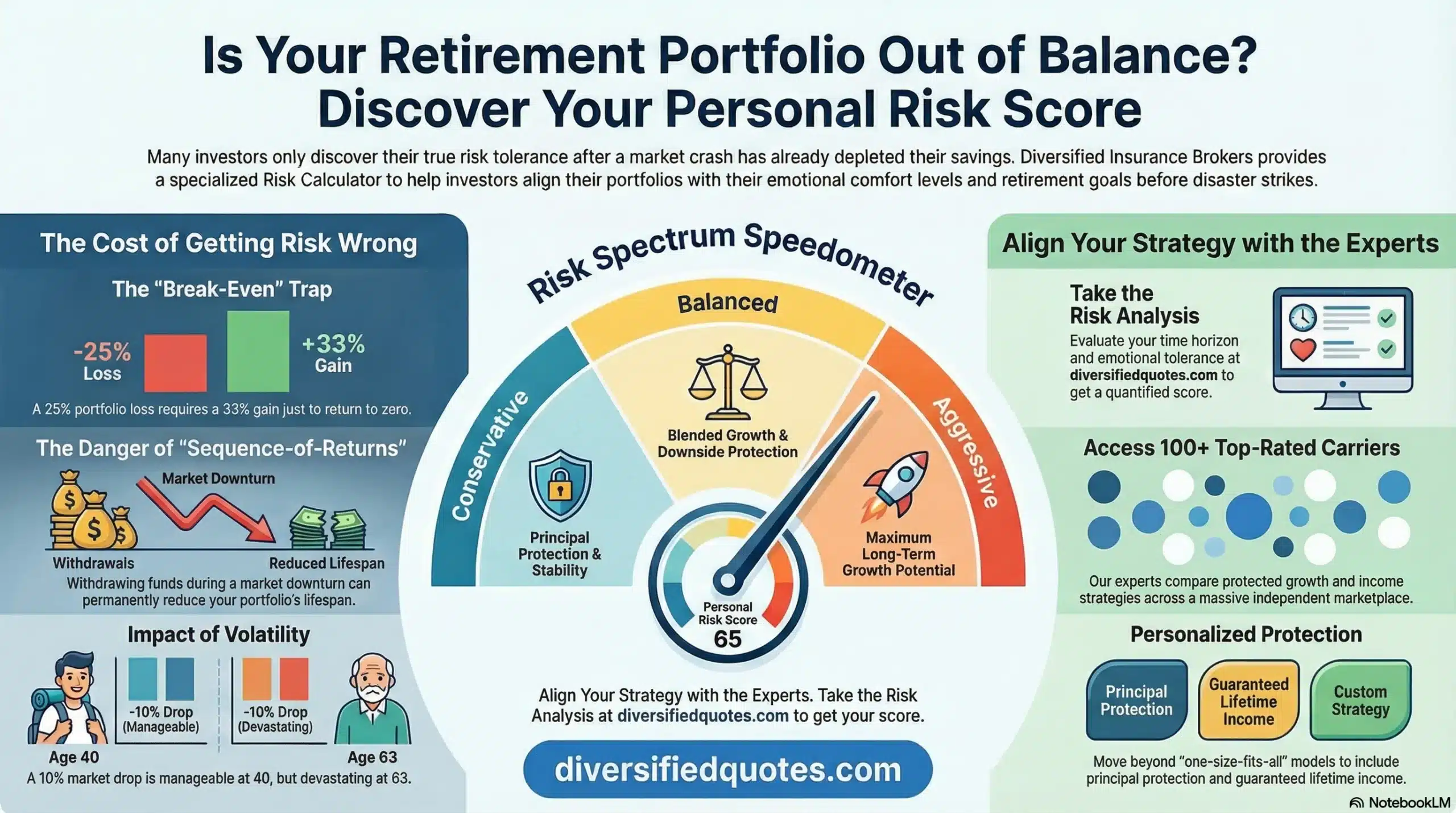
One of the most powerful and counterintuitive benefits of volatility targeting is its potential impact on long-term compounding stability — counterintuitive because a strategy that sometimes reduces exposure in high-volatility environments might be expected to sacrifice return by missing some of the best market days. In practice, the mathematics of compounding creates a strong argument for the opposite conclusion. Severe drawdowns require disproportionately large recoveries: a 25% loss requires a 33% gain to recover, a 40% loss requires a 67% gain, and a 50% loss requires a 100% gain. Avoiding deep drawdowns can therefore have an outsized positive impact on long-term wealth outcomes, because the compounding base is preserved rather than repeatedly rebuilt from a lower starting point.
This is the core mathematical argument for volatility targeting’s potential compounding advantage. If the strategy can reduce the probability and magnitude of severe drawdowns — even at the cost of some participation in rapid upside moves during volatile environments — the long-term geometric return may be higher than a strategy with higher average arithmetic return but deeper drawdowns. The geometric return, which determines actual wealth accumulation over time, is reduced by volatility: two portfolios with the same arithmetic average return will have different geometric returns if one has higher volatility, with the higher-volatility portfolio compounding to less wealth over time despite identical average returns. Controlling volatility is therefore not just a risk preference — it is a compounding optimization in its own right.
Over multi-decade time horizons, the compounding advantage of volatility control can be substantial. Consider a retirement portfolio that experiences two severe drawdowns over a 30-year retirement versus a volatility-targeted portfolio that limits drawdown severity at the cost of some upside during those periods. The difference in final wealth accumulation — driven by the preservation of the compounding base during the drawdown periods — can far exceed the return difference on any individual-year comparison. This long-horizon compounding perspective is why institutional investors with genuinely long time horizons — endowments, sovereign wealth funds, and multi-generational family offices — tend to place so much emphasis on drawdown management relative to short-term return maximization.
Why Volatility Targeting Has Become a Structural Rather Than Tactical Tool
Historically, volatility management was often viewed as a tactical overlay — something applied on top of a core strategic allocation in response to elevated market stress, then removed when conditions normalized. This tactical view treated volatility management as a response to market conditions rather than a structural feature of how the portfolio was designed to operate across all conditions. The evolution toward treating volatility targeting as a structural tool reflects both the theoretical insights that have developed in risk management research and the practical lessons learned from market dislocations across multiple cycles.
The structural view holds that volatility risk is always present in equity and multi-asset portfolios — it simply varies in magnitude over time. A portfolio that is designed to manage volatility only when it is already elevated has already experienced the volatility that triggered the response. A portfolio with structural volatility targeting manages exposure continuously, reducing exposure before the worst periods materialize (because rising volatility is observable in advance of peak stress in many regimes) and restoring exposure systematically as conditions normalize. The structural approach also has the governance advantage of being fully predefined: there are no ad hoc decisions about when to activate or deactivate the volatility management process, because the process runs continuously by design.
This shift has accelerated following repeated market dislocations across multiple asset classes and economic regimes over the past two decades. Each major dislocation has reinforced the lesson that forecast-based risk management — reducing risk when markets are predicted to be dangerous and increasing risk when they are predicted to be safe — is unreliable in practice because the forecasts are often wrong at precisely the moments when accuracy matters most. Volatility targeting does not require forecasting accuracy. It requires only that realized volatility be measured accurately, which is straightforward with standard market data. This distinction makes the strategy robust in a way that forecast-dependent approaches cannot be.
Institutions increasingly prioritize resilience and process stability over short-term outperformance for this reason. Volatility targeting provides a framework for implementing a resilience-first philosophy in a measurable, repeatable way that can be evaluated against objective standards, communicated clearly to stakeholders, and maintained consistently across different market environments and different personnel over time. This combination of measurability, repeatability, and resilience is what has elevated volatility targeting from a tactical tool to a structural design principle in institutional portfolio management — and what is now driving its adoption among sophisticated private investors through platforms like Concierge Wealth Services.
Connecting Volatility Targeting to Broader Institutional Wealth Concepts
Volatility targeting does not exist in isolation — it is one component of a broader institutional approach to portfolio design and risk management that encompasses portfolio construction methodology, liquidity framework, governance structure, behavioral discipline, and long-term wealth preservation strategy. Understanding how volatility targeting fits within that broader ecosystem helps clarify why it has become so central to institutional thinking and why its adoption is spreading to sophisticated private investors.
The portfolio construction dimension is addressed in Institutional-Grade Portfolio Construction, which explores how institutions design portfolios to behave differently across economic regimes rather than optimizing for a single expected scenario. Volatility targeting is one of the tools that supports this multi-regime resilience by preventing the portfolio from becoming dangerously over-exposed to a single risk environment simply because that environment has been stable and profitable recently.
The behavioral dimension connects to How the Top 0.1% Control Volatility, which examines how the most sophisticated investors use structural frameworks to prevent emotional decision-making from undermining long-term plans. Volatility targeting is one of the most practical implementations of this behavioral discipline because it replaces judgment calls during volatile periods with predetermined, measurable responses.
The governance and quantitative infrastructure that supports volatility targeting as a repeatable, auditable process is explored in Quantitative Risk Management, where the emphasis is on building risk management systems that can operate consistently across different personnel, market environments, and time horizons without relying on any single individual’s judgment or forecasting ability. For households and families exploring how institutional risk frameworks apply to their specific situation, Concierge Wealth Services provides a pathway to qualified introductions to independent fiduciary advisers who implement these frameworks for private clients.
The Future of Risk-Managed Portfolio Design
As capital markets become more interconnected and global volatility transmission occurs with increasing speed and intensity, institutional investors are placing greater emphasis on dynamic risk control frameworks that can respond to changing conditions in real time rather than at periodic rebalancing dates. Volatility targeting is likely to remain a core component of institutional portfolio design for the foreseeable future because it addresses one of the most persistent and fundamental challenges in long-term investing: maintaining productive market exposure while managing the uncertainty that is inherent in any market participation.
The alternative — static allocation approaches that maintain fixed exposures regardless of changing risk conditions — relies implicitly on the assumption that the portfolio’s risk level is determined by its allocation rather than by how that allocation interacts with current market conditions. This assumption has been repeatedly challenged by market experience, which demonstrates that the effective risk of a given allocation can vary enormously across different volatility regimes. A 60/40 portfolio in a low-volatility environment with suppressed correlations behaves very differently from a 60/40 portfolio in a high-volatility, high-correlation stress environment — yet both have the same nominal allocation. Volatility targeting makes this difference explicit and responds to it systematically.
Rather than attempting to eliminate volatility, institutions increasingly seek to operate within predefined volatility bands that honor both their risk capacity and their long-term return requirements. This allows portfolios to remain invested in markets — and therefore to capture the long-term return premia that markets offer — while maintaining acceptable risk thresholds that prevent the kind of severe drawdowns that can permanently impair long-term wealth outcomes. The objective is sustainability across the full range of market environments, not optimal performance in any single environment. This sustainability-first philosophy, expressed through quantitative risk controls and structural volatility management, represents the most durable and evidence-supported approach to long-term portfolio management available to sophisticated investors today.
Request a Confidential Conversation
Speak with our team to learn how institutional risk frameworks are evaluated for qualified investors.
Call 800-533-5969Related Topics to Explore
Explore additional institutional wealth and risk strategy concepts below.
FAQs: Why Volatility Targeting Has Become a Core Strategy
What is volatility targeting and how does it work in practice?
Volatility targeting is a portfolio management approach that adjusts investment exposure based on observed market volatility rather than on market forecasts or predictions. In practice, the portfolio continuously measures realized volatility over a recent trailing period — commonly rolling windows of 20 to 90 trading days depending on the strategy’s time horizon — and compares that observed volatility against a predefined target level. When realized volatility exceeds the target, exposure is reduced to bring the portfolio’s effective risk back within the defined range. When realized volatility falls below the target, exposure may increase toward a maximum allocation constraint. The portfolio’s effective risk level is thereby managed continuously, rather than being adjusted only at periodic rebalancing dates that may be too infrequent to respond to rapid changes in market conditions. This creates a portfolio experience that is process-driven and systematic rather than dependent on judgment calls about market direction during periods when emotional pressure is highest and decision quality tends to be lowest.
Why do institutions prioritize volatility management over return maximization?
Institutions prioritize volatility management over return maximization for a combination of mathematical and governance reasons. Mathematically, the asymmetry of losses and recoveries creates a strong argument for drawdown control: a 50% loss requires a 100% gain to recover, and the geometric return that determines actual long-term wealth accumulation is reduced by volatility even when the arithmetic average return is identical between two portfolios. Controlling volatility is therefore not just a risk preference — it is a compounding optimization. Two portfolios with the same average arithmetic return will compound to very different terminal wealth levels if one has materially higher volatility, with the higher-volatility portfolio systematically underperforming over time despite identical average returns. From a governance perspective, institutions face specific liability structures, spending requirements, and stakeholder accountability that make severe drawdowns potentially existential rather than merely uncomfortable. A pension fund that experiences a catastrophic drawdown may not be able to meet benefit obligations; an endowment may not be able to sustain its spending rate during a multi-year recovery. These structural constraints reinforce the prioritization of drawdown control over return maximization, and the evidence over multiple market cycles has validated that approach.
How does volatility targeting help with behavioral decision-making?
Volatility targeting helps with behavioral decision-making primarily by replacing judgment calls during volatile periods with predetermined, systematic responses that do not require the investor to make consequential decisions under emotional pressure. When market volatility rises and the portfolio’s exposure is reduced automatically by the targeting mechanism, there is no need for the investor or adviser to decide whether “this time is different,” whether the decline is temporary or permanent, or whether to act defensively or stay the course — the most cognitively and emotionally demanding questions that arise during market stress. The response is already defined and implemented systematically. This eliminates the most common sources of behavioral error: premature de-risking at market lows (because the mechanism has already reduced exposure in a controlled way), delayed re-risking after recovery (because the mechanism restores exposure systematically as volatility subsides), and reactive changes to the investment strategy during stress (because the strategy’s response to stress is already defined). The compounding benefit of avoiding these behavioral errors over multiple market cycles can be substantial, even if it is difficult to quantify in advance.
Why are private investors adopting institutional risk frameworks?
Private investors — particularly affluent families with long-horizon wealth preservation objectives — are adopting institutional risk frameworks because the underlying problems these frameworks address are not unique to institutional investors. Sequence-of-returns risk, behavioral error during market stress, drawdown impairment of long-term compounding, and the challenge of maintaining discipline across multiple market cycles are universal challenges that affect any investor managing capital over multi-decade horizons. The institutional frameworks developed to address these challenges work because of their structural properties — predefined rules, measurable risk parameters, governance accountability, and process consistency — not because of the scale of the assets being managed. Those structural properties are equally valuable at the family wealth level. The primary barrier to private investor adoption was historically access: institutional risk management frameworks were available primarily through relationships with major private banks or multi-family offices that required very large minimum asset levels. Platforms that provide access to independent fiduciary advisers implementing institutional-grade quantitative frameworks for qualified private investors have lowered that barrier, making these approaches more broadly accessible to sophisticated families who recognize that long-term wealth preservation requires the same disciplined approach that institutions have refined over decades.
About the Author:
Jason Stolz, CLTC, CRPC, DIA, CAA and Chief Underwriter at Diversified Insurance Brokers (NPN 20471358), is a senior insurance and retirement professional with more than 25 years of real-world experience helping individuals, families, and business owners protect their income, assets, and long-term financial stability. As a long-time partner of the nationally licensed independent agency Diversified Insurance Brokers, Jason provides trusted guidance across multiple specialties—including fixed and indexed annuities, long-term care planning, personal and business disability insurance, life insurance solutions, Group Health, Travel Medical and Evacuation Insurance, and short-term health coverage. Diversified Insurance Brokers maintains active contracts with over 100 highly rated insurance carriers, ensuring clients have access to a broad and competitive marketplace.
His practical, education-first approach has earned recognition in publications such as VoyageATL, and contributions from his agency featured in Kiplinger and GoBankingRates— highlighting his commitment to financial clarity and client-focused planning. Drawing on deep product knowledge and years of hands-on field experience, Jason helps clients evaluate carriers, compare strategies, and build retirement and protection plans that are both secure and cost-efficient. Visitors who want to explore current annuity rates and compare options across multiple insurers can also use this annuity quote and comparison tool.
Explore More Annuity Options: Browse our complete guide to Annuity Strategies & Retirement Income — covering tax strategies, retirement income planning, lifetime income & annuity comparisons from 100+ carriers.
Last Reviewed: June 20, 2026 |
Reviewed by: Jason Stolz, CLTC, CRPC, DIA, CAA
Chief Underwriter, Diversified Insurance Brokers, Inc. | NPN: 20471358 | Diversified Insurance Brokers, Inc. — Licensed in all 50 states
Fact Checked by: Tonia Pettitt, CMIP©
Medicare Specialist, Diversified Insurance Brokers, Inc. | NPN: 14374308 | Diversified Insurance Brokers, Inc. — Licensed in all 50 states
Did you find this content helpful? Leave us a Google review — it helps others find trustworthy guidance too.
Editorial Standards: Diversified Insurance Brokers maintains rigorous editorial standards to ensure accuracy, clarity, and independence in all content. Learn more about our editorial standards and commitment to transparency.
