
Quantitative Risk Management
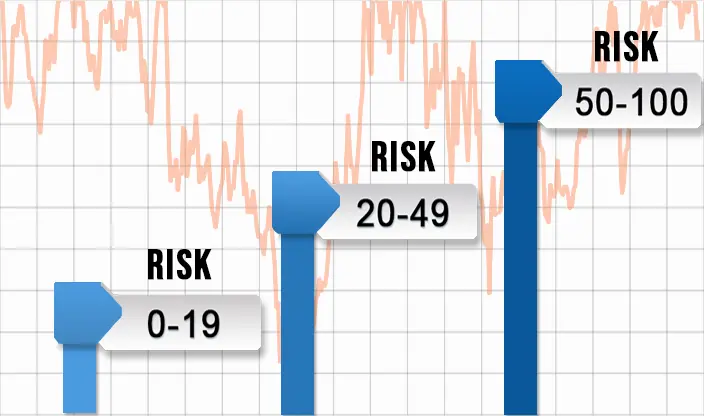
Quantitative risk management is built on the idea that investment decisions should be guided by data, evidence, and measurable risk — not predictions, opinions, or market narratives. Rather than trying to forecast what markets will do next, quantitative frameworks attempt to measure what is happening now and adjust exposures through rules-based processes designed to operate consistently across many different market environments, including stress periods where emotional and reactive decision-making tends to cause the most permanent damage to long-term compounding outcomes. For high-net-worth families, entrepreneurs, and accredited investors, this type of framework is often less about beating markets and more about protecting long-term compounding by managing drawdowns, liquidity risk, volatility clustering, and correlation shocks that can simultaneously undermine what appeared to be a well-diversified portfolio. At Diversified Insurance Brokers, through our Concierge Wealth Services platform, qualified clients may request an introduction to an independent SEC-registered investment adviser who provides these institutional-style frameworks. Institutional-grade portfolio construction provides the complementary framework for how portfolios are built by role and how quantitative risk management layers on top of that design. How diversification works differently for million-dollar portfolios covers why the risk management considerations at this wealth level differ materially from standard retail investment approaches.
Request a Confidential Quantitative Framework Review
If you are evaluating institutional-style risk management frameworks, start with a qualification review to determine fit and eligibility.
Important: We do not provide securities or investment advice. If appropriate, we may introduce you to an independent SEC-registered investment adviser.
A Process Built on Evidence, Not Prediction
Sophisticated investors increasingly rely on documented, rules-based decision frameworks rather than subjective assessments of market direction or macroeconomic forecasting. These frameworks begin with first principles: defining objectives, liquidity needs, spending requirements, time horizons, and true risk capacity — the actual financial and psychological ability to absorb losses without abandoning the investment program. Only after those elements are explicitly defined does portfolio design begin, and only after portfolio design is established does risk management become the operational layer governing ongoing exposures. Quantitative risk management then applies objective, measurable inputs — volatility behavior, drawdown history, correlation shifts, liquidity conditions, and factor exposures — to assess whether the portfolio remains aligned with its intended risk profile. The goal is not to predict markets. The goal is to measure risk conditions as they actually exist and adapt exposures systematically when those conditions change materially.
This approach often becomes especially important during stress periods, when emotional decision-making can permanently damage long-term compounding through poorly timed exits, panic selling, or abandonment of the original investment program. A rules-based structure provides the governance mechanism that keeps investors aligned with long-term objectives even when market volatility creates intense pressure to act reactively. The distinction between a systematic framework that responds to measurable conditions and a discretionary approach that responds to narratives, predictions, and sentiment is one of the most consequential differences in how high-net-worth portfolios are governed over long time horizons. Behavioral biases that quietly destroy wealth covers the psychological and emotional dimensions of investment decision-making that quantitative frameworks are specifically designed to counteract through documented, systematic rules rather than case-by-case judgment under pressure.
What Quantitative Risk Management Typically Measures
Quantitative frameworks typically focus on how risk behaves, not just how returns behave — a distinction that matters enormously because risk and return do not move symmetrically and because the conditions that create drawdowns often differ significantly from the conditions that produce returns. Volatility is monitored because volatility clustering — the tendency for high-volatility periods to follow other high-volatility periods — can increase drawdown risk in ways that simple average volatility estimates do not capture. Correlation structure is monitored because diversification can effectively disappear during crises, when assets that behaved independently under normal conditions suddenly move together in the same direction at the worst possible moment. Liquidity conditions are monitored because forced selling during illiquid markets can permanently impair portfolio value in ways that are not recoverable simply by waiting for markets to recover.
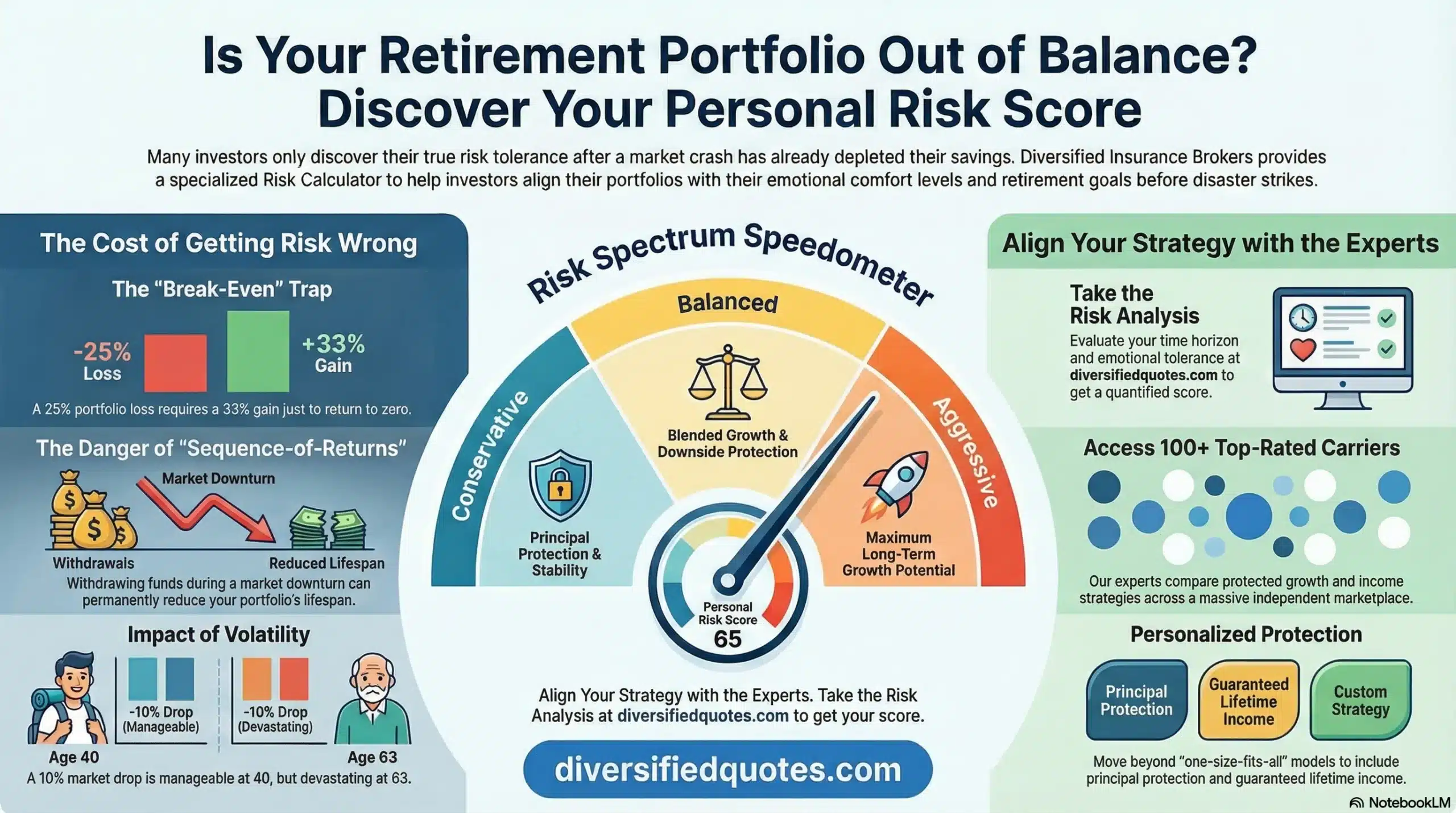
Drawdown behavior is often the most critical metric in quantitative risk assessment, and the one most commonly underestimated by investors. A 50% decline requires a 100% subsequent gain simply to recover to the starting point. A 33% decline requires a 50% gain. These asymmetries mean that preventing large drawdowns contributes more to long-term compounding than generating equivalent upside returns — a mathematical reality that motivates the emphasis on drawdown management within quantitative frameworks. Quantitative risk management incorporates historical stress scenarios — including events like the 2000 to 2002 technology crash, the 2008 to 2009 global financial crisis, and the 2020 pandemic selloff — to understand how a portfolio might behave under conditions that may differ substantially from recent history. This stress-testing process does not guarantee that future drawdowns will resemble historical ones, but it provides a more honest basis for risk capacity assessment than performance simulation under favorable market conditions alone. These measurements are not used to time markets in a speculative sense. They are used to adjust exposure sizing, rebalance risk budgets when allocations drift beyond intended ranges, and maintain alignment between the portfolio’s actual risk profile and the investor’s stated objectives and capacity.
Key Risk Dimensions Monitored in Quantitative Frameworks
| Risk Dimension | What It Measures | Why It Matters | Common Misunderstanding |
|---|---|---|---|
| Volatility clustering | Standard deviation and the tendency for high-volatility periods to follow other high-volatility periods | Elevated volatility environments require different exposure sizing than low-volatility environments — average volatility hides this | Investors assume volatility is randomly distributed over time; in practice it clusters, making stress periods more sustained than expected |
| Correlation under stress | How asset class correlations behave during normal periods versus crisis periods | Correlations that appear low under normal conditions can converge toward 1.0 during crises, eliminating diversification when it is most needed | Historical average correlation may not reflect stress-period behavior — crisis correlation is the number that matters for tail risk management |
| Drawdown depth and duration | Peak-to-trough loss magnitude and the time required for full recovery under historical scenarios | The asymmetric math of losses means drawdown prevention contributes more to compounding than equivalent return generation | Paper recovery does not account for time lost, spending taken during the drawdown, or behavioral responses that caused additional damage |
| Liquidity conditions | Bid-ask spreads, market depth, and the ability to execute at expected prices across portfolio holdings | Forced selling in illiquid conditions can permanently impair value — liquidity risk is invisible in normal markets and acute during stress | Illiquid assets may show lower reported volatility, creating false stability — the smoothed return profile masks the true underlying risk |
| Factor exposures | Unintended concentrations in size, value, quality, momentum, or sector factors across portfolio holdings | A portfolio appearing diversified across asset class labels may have significant hidden concentrations in the same underlying risk factors | Asset class diversification and factor diversification are different — a “diversified” portfolio can still be a concentrated factor bet |
How Quantitative Risk Management Fits Inside Institutional Portfolio Design
Institutions typically build portfolios by role rather than by product — a fundamentally different approach from retail portfolio construction that begins with asset class targets or product categories. Growth exposures exist to compound capital over long time horizons. Stability exposures exist to reduce drawdown severity and duration. Liquidity sleeves exist to fund current spending and near-term commitments without requiring liquidation of long-duration assets at inopportune times. Inflation-sensitive assets exist to protect purchasing power over extended periods. Alternative exposures exist to provide return streams with low correlation to traditional asset classes and to improve the portfolio’s behavior during specific stress scenarios where traditional diversification fails.
Quantitative risk management becomes the monitoring and adjustment system layered on top of this role-based structure. It tracks whether each sleeve is behaving consistently with its intended role — whether growth exposures are providing growth with acceptable volatility, whether stability exposures are actually dampening drawdowns or have become correlated with growth assets under stress, whether liquidity is available when needed without requiring forced selling at disadvantageous prices. When monitoring identifies material drift from intended behavior, systematic rebalancing and exposure adjustment processes bring the portfolio back into alignment without requiring a prediction about future market direction. What the wealthy invest in beyond the stock market covers the alternative asset categories that often provide the low-correlation exposures completing the institutional portfolio structure. The rise of private market opportunities once reserved for institutions covers how access to institutional-quality alternative investments has expanded for qualified investors in ways that directly affect portfolio construction and risk management at the high-net-worth level.
Who Typically Explores Quantitative Risk Frameworks
This type of approach is most often evaluated by accredited or otherwise qualified investors who prefer rules-based governance and documented risk frameworks over discretionary management or passive buy-and-hold approaches that offer no systematic mechanism for managing drawdown risk when conditions deteriorate. It is particularly relevant for families managing concentrated stock exposure — where a single position represents a disproportionate share of total net worth and requires specific risk management strategy rather than simple diversification. Post-liquidity event investors who have recently received large proceeds from a business sale, real estate transaction, or inheritance frequently find that quantitative risk frameworks address the capital preservation and deployment challenges that these events create. Multi-entity balance sheets where wealth is distributed across operating businesses, personal portfolios, family trusts, and estate planning structures require coordination that benefits from systematic, documented risk governance across all components simultaneously.
Investors who have experienced the consequences of undermanaged drawdowns — watching a significant portion of accumulated wealth erode during a market crisis without a structured response framework in place — often become the most motivated explorers of quantitative risk management approaches. The primary motivation is not generating higher returns, but preventing the kind of permanent capital impairment that can occur when large portfolios are managed reactively rather than systematically. If you are unsure about accredited investor status, review what is an accredited investor for the current SEC definition and qualification thresholds.
Our Role: Introduction-Only, Compliance-First
Through Concierge Wealth Services, qualified clients may request an introduction to an independent SEC-registered investment adviser who provides quantitative risk management and institutional-style portfolio design services. That adviser evaluates objectives, liquidity needs, time horizons, accredited investor status, and overall suitability under its own regulatory framework and fiduciary obligations. Our role is limited to facilitating the introduction — we do not provide securities advice, investment recommendations, or portfolio management. All investment advisory services are provided by FamilyWealth Advisers, LLC, an SEC Registered Investment Adviser operating under its own regulatory framework and fiduciary obligations independent of our insurance operations.
The introduction process is designed to be efficient and confidential. Qualified clients submit a brief qualification review request, which allows the adviser to determine whether the relationship is likely to be appropriate before investing significant time in a detailed consultation. To understand how this process works from initial contact through to an adviser relationship, start with An Invitation to Explore More.
Related Risk & Process Pages
Continue exploring institutional risk frameworks, portfolio design, and accredited investor planning.
Request a Confidential Conversation
📞 Call us at 800-533-5969
or visit our Contact Page
Important: We do not provide securities or investment advice. If appropriate, we may introduce you to an independent SEC-registered investment adviser for evaluation under their regulatory framework.
Frequently Asked Questions: Quantitative Risk Management
What is quantitative risk management and how does it differ from traditional investing?
Quantitative risk management is a systematic, rules-based approach to measuring and adjusting portfolio risk exposures using objective, data-driven inputs rather than subjective market predictions or discretionary judgment calls. Traditional active management relies on the manager’s ability to identify mispriced securities or forecast market direction — skill-dependent approaches with highly variable outcomes. Passive investing maintains fixed exposures regardless of market conditions, offering no mechanism for managing drawdown risk when conditions deteriorate. Quantitative risk management does not attempt to predict which securities will outperform or which direction markets will move. Instead, it continuously measures whether current risk conditions — volatility, correlation, liquidity, drawdown momentum — are consistent with the portfolio’s objectives and adjusts exposures systematically when they are not. The governance mechanism this creates is what makes it particularly valuable for high-net-worth portfolios where large drawdowns create compounding damage that simple recovery does not reverse.
Why is drawdown management so central to quantitative frameworks?
Drawdown management is central because the mathematics of losses are asymmetric in a way that makes large drawdowns disproportionately damaging to long-term compounding. A portfolio that declines 50% requires a subsequent 100% gain simply to return to the starting point — and during the extended recovery period, ongoing spending requirements, emotional stress, and potential behavioral responses can cause additional damage beyond the mathematical loss itself. Quantitative frameworks incorporate historical stress scenarios, volatility-adjusted exposure sizing, and systematic rebalancing processes specifically to reduce the frequency and severity of large drawdowns. The goal is not to eliminate all losses, which is impossible, but to prevent the kind of catastrophic drawdown that creates permanent impairment to the long-term compounding trajectory — an outcome that cannot be undone simply by waiting for markets to recover.
Is quantitative risk management the same as market timing?
No — and the distinction is fundamental. Market timing attempts to predict when markets will rise or fall and shifts exposures based on those directional predictions, depending on forecasting accuracy that is consistently difficult to achieve reliably over long periods. Quantitative risk management measures current and recent risk conditions — actual volatility, actual correlation behavior, actual liquidity conditions — and adjusts exposure sizing based on those observable measurements rather than predictions about future market direction. The framework does not need to predict what markets will do; it responds to what risk conditions are currently showing. This is the difference between forecasting and measurement, and it is the core reason quantitative approaches are considered more robust than discretionary market timing as a risk governance mechanism over long time horizons.
Who is this service designed for and how does the introduction process work?
This service is designed for accredited or otherwise qualified investors who prefer documented, rules-based portfolio governance over discretionary management. It is particularly relevant for high-net-worth families managing concentrated stock positions, post-liquidity event wealth from a business sale or real estate transaction, or multi-entity balance sheets where systematic risk governance across all components is needed. The introduction process works as follows: a qualified investor submits a confidential qualification review request, which allows the independent SEC-registered investment adviser to assess whether a relationship is appropriate before committing to a detailed consultation. Our role is introduction-only — we do not provide investment advice, securities recommendations, or portfolio management. All investment advisory services are provided by FamilyWealth Advisers, LLC, an SEC Registered Investment Adviser operating under its own regulatory framework and fiduciary obligations.
How does quantitative risk management relate to insurance and risk transfer?
Quantitative portfolio risk management addresses market risk — volatility, drawdowns, correlation, and factor exposures. Insurance and risk transfer strategies address categorically different risks — mortality, longevity, disability, liability, and estate settlement risk — that are not correlated with market conditions but are equally material to long-term wealth preservation. The two dimensions are complementary rather than competing. High-net-worth families using quantitative risk management for their investment portfolios typically also use life insurance for estate planning and liquidity, irrevocable life insurance trusts for estate tax efficiency, and annuity structures providing guaranteed income that reduces the investment portfolio’s dependence on market returns for meeting spending obligations. The interaction between guaranteed income from insurance and annuity products and the investment portfolio’s risk budget is one of the most important and most often overlooked dimensions of comprehensive high-net-worth wealth management.
About the Author:
Jason Stolz, CLTC, CRPC, DIA, CAA and Chief Underwriter at Diversified Insurance Brokers (NPN 20471358), is a senior insurance and retirement professional with more than 25 years of real-world experience helping individuals, families, and business owners protect their income, assets, and long-term financial stability. As a long-time partner of the nationally licensed independent agency Diversified Insurance Brokers, Jason provides trusted guidance across multiple specialties—including fixed and indexed annuities, long-term care planning, personal and business disability insurance, life insurance solutions, Group Health, Travel Medical and Evacuation Insurance, and short-term health coverage. Diversified Insurance Brokers maintains active contracts with over 100 highly rated insurance carriers, ensuring clients have access to a broad and competitive marketplace.
His practical, education-first approach has earned recognition in publications such as VoyageATL, and contributions from his agency featured in Kiplinger and GoBankingRates— highlighting his commitment to financial clarity and client-focused planning. Drawing on deep product knowledge and years of hands-on field experience, Jason helps clients evaluate carriers, compare strategies, and build retirement and protection plans that are both secure and cost-efficient. Visitors who want to explore current annuity rates and compare options across multiple insurers can also use this annuity quote and comparison tool.
Browse More Resources: Return to our complete Wealth Strategies & General Resources guide — covering wealth building, tax strategies, fiduciary, wills & broker resources.
Last Reviewed: June 16, 2026 |
Reviewed by: Jason Stolz, CLTC, CRPC, DIA, CAA
Chief Underwriter, Diversified Insurance Brokers, Inc. | NPN: 20471358 | Diversified Insurance Brokers, Inc. — Licensed in all 50 states
Fact Checked by: Tonia Pettitt, CMIP©
Medicare Specialist, Diversified Insurance Brokers, Inc. | NPN: 14374308 | Diversified Insurance Brokers, Inc. — Licensed in all 50 states
Did you find this content helpful? Leave us a Google review — it helps others find trustworthy guidance too.
Editorial Standards: Diversified Insurance Brokers maintains rigorous editorial standards to ensure accuracy, clarity, and independence in all content. Learn more about our editorial standards and commitment to transparency.
