
The Rise of Private Market Opportunities Once Reserved for Institutions
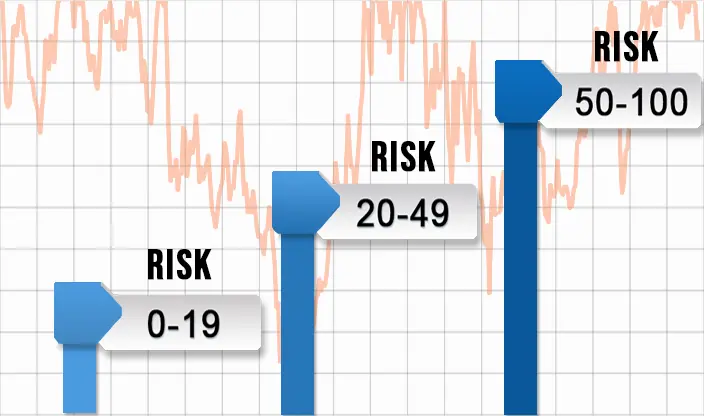
Private equity, private credit, and real assets used to be “institution-only” in a practical sense. The minimums were larger, access was relationship-driven, and due diligence required infrastructure most families did not have. Over the last decade, the access landscape expanded. Qualified investors can now review opportunities that historically sat behind endowments, pensions, and large family offices. But that progress created a new challenge: access is easier, while quality varies more than it ever has.
Institutions do not win because they hear about opportunities first. They win because they run a disciplined decision system that forces clarity on objectives, liquidity needs, governance standards, underwriting criteria, and portfolio role before any capital is committed. This page explains the institutional mindset behind private markets, how the rules of private investing differ from public markets, and what a fiduciary-style review typically examines before a commitment is made. Nothing here is investment advice. It is a framework for understanding the category and the process — so that if you choose to explore private market exposure, you are starting from the right foundation.
Private markets are often described as “less volatile,” but that characterization can mislead. Many private investments simply do not reprice daily the way public stocks and bonds do. The economic risk is still present — it surfaces through different pathways including cash-flow variability, refinancing risk, valuation lag, capital call timing, and liquidity constraints. The institutional edge begins with knowing which risks you are taking, why you are accepting them, and how you will manage them when conditions become uncomfortable.
Request a Private Markets Qualification Review
If you’re exploring private market exposure, we’ll start with objectives, liquidity needs, and risk constraints — then explain next steps under a compliant, introduction-only model.
Important: We do not provide securities or investment advice. If appropriate, we may introduce you to an independent SEC-registered investment adviser for evaluation under their regulatory framework.
What Actually Changed: Access Expanded, But Process Became the Differentiator
The private markets story is not simply “more opportunities exist.” It is that distribution improved. Platforms lowered friction for subscriptions, reporting became more standardized, and strategy categories that once required special relationships became easier to review. At the same time, the expansion increased dispersion across the quality spectrum. Some managers and sponsors operate with institutional controls, rigorous underwriting, and genuine transparency. Others do not — and the difference is not always visible from a marketing presentation.
That dispersion is precisely why institutions put process above story. When an allocator encounters a compelling narrative — strong historical performance, a famous sector, or a charismatic sponsor — the first response is not excitement. It is questions about governance. How is the strategy underwritten? What controls prevent style drift? What is the reporting cadence during adverse conditions? Who can make exceptions to investment criteria, and how are those exceptions documented and reviewed? The narrative answers none of these questions. The due diligence process does.
If you want the mindset that underpins this approach, the institutional framework is explained at a high level in Institutional Investing Secrets the Ultra-Wealthy Use. The core idea is straightforward: access is not the edge — repeatable decision systems are.
Private Markets Are Not One Asset Class
“Private markets” is an umbrella term that describes how you access an investment and how you experience liquidity — not what actually drives returns. Private equity, private credit, and real assets can behave very differently from each other, and even within each category the range across strategies can be enormous.
Private credit, for example, can mean conservative senior secured lending with strong collateral and covenant protections — a relatively lower-risk income strategy — or it can mean higher-risk structures where the lender effectively absorbs equity-like downside when conditions deteriorate. Private equity can mean disciplined operational improvement over a long horizon — the classic value creation story — or it can mean aggressive leverage dependent on capital markets remaining friendly to refinancing. Real assets can mean inflation-sensitive cash-flow streams from essential infrastructure, or they can mean projects whose economics are highly dependent on specific regulatory environments, construction execution, or financing terms that are sensitive to rate changes.
Institutions separate private opportunities by role first, before evaluating individual deals. Is the portfolio role long-horizon growth? Income diversification? Inflation sensitivity? Cash-flow stability? When the role is clearly defined, sizing decisions become rational and manageable. When the role is unclear, private allocations drift into a collection of deals that are difficult to manage as a coherent system — and that can produce unexpected correlations and liquidity complications when markets stress.
The Institutional Sequence: Policy → Liquidity → Underwriting → Sizing → Oversight
Institutions typically do not begin with an offering. They begin with a policy. A policy is not bureaucracy — it is a guardrail that prevents “decision-making by mood” and reduces regret when markets change. A well-constructed policy clarifies the portfolio’s objectives, establishes limits on illiquid exposure, and defines governance rules that control who can make exceptions and under what circumstances. Critically, it defines what the portfolio must be able to do under stress: fund spending commitments, meet obligations, and avoid forced selling of assets at disadvantaged prices.
After policy comes liquidity mapping. Liquidity is not simply “cash on hand.” It is the ability to meet expected and unexpected needs across different time horizons without damaging long-term compounding or being forced into disadvantaged transactions. Institutions map liquidity in layers: immediate reserves for near-term obligations, intermediate-horizon liquidity for foreseeable needs, and longer-horizon capital available for illiquid commitments. Only after the liquidity map is clear do they determine how much illiquidity is genuinely appropriate given the portfolio’s overall obligation structure.
Underwriting follows liquidity planning. Underwriting means translating a compelling narrative into measurable drivers — cash-flow mechanics, leverage sensitivity, downside protection, governance controls, and the consistency of the manager’s process across market environments. Only after underwriting is completed do institutions size exposure. Sizing is where most investors suffer the most damage — not because the investment idea was wrong, but because the exposure was too large relative to liquidity needs and actual risk capacity. A position that makes fundamental sense at 3% of a portfolio can be genuinely disruptive at 15%.
Finally, institutions focus on ongoing oversight. Private markets are not “set it and forget it” — they require periodic re-underwriting, reporting review, and honest assessment of whether the investment continues to fill the portfolio role it was assigned. That oversight mindset is one reason disciplined investors explore frameworks like Quantitative Risk Management to maintain consistency rather than making oversight decisions ad hoc.
Eligibility, Suitability, and Real-Life Fit
Many private offerings require accredited investor status or other SEC eligibility standards. Eligibility is a legal access question — it determines who is permitted to participate in certain offerings under applicable securities regulations. Suitability is a separate and more important question for any investor actually evaluating exposure — whether the investment genuinely matches the person’s objectives, liquidity needs, risk capacity, and time horizon under a fiduciary framework. Sophisticated allocators treat these as distinct steps in sequence, not as the same question.
Real-life fit matters most when withdrawals, taxes, and business or personal financial needs interact with portfolio decisions in ways that are difficult to predict years in advance. If an investor needs liquidity at an inconvenient time — because of a business opportunity, a family need, or a market event that makes public assets unattractive to sell — illiquidity in private positions can force a damaging chain reaction: selling liquid public assets into weakness, reducing future compounding power, or holding an increasingly concentrated position by eliminating only the most liquid holdings. Institutions view this outcome as avoidable damage that results from sizing mistakes rather than market misfortune. For an informational overview of eligibility standards under SEC rules, see What Is an Accredited Investor?
Liquidity: The Hidden Center of Private Markets
The most common and most costly mistake in private market investing is not choosing the wrong strategy. It is underestimating liquidity risk and its interactions with the rest of the portfolio and the investor’s life. Private funds may use capital calls that require investors to fund commitments over a multi-year deployment period, creating cash demand at uncertain times. Distribution patterns are typically not synchronized with the investor’s preferences or needs — some strategies pay little early and more later, others may distribute inconsistently, and many have extension features that can lengthen the investment timeline beyond initial projections.
Institutions address these challenges through two complementary disciplines: liquidity mapping and commitment pacing. Liquidity mapping means projecting all expected and potential obligations across relevant time horizons and ensuring that reserves exist specifically separated from illiquid commitments — not counted together as if a locked private fund position and a money market account provide the same type of financial flexibility. Commitment pacing means spreading capital commitments across multiple vintage years rather than allocating all at once, which reduces economic-window concentration and smooths the cash-flow pattern across time as different strategies deploy and distribute on different schedules.
Valuation cadence adds another dimension of complexity. Private investments may be valued quarterly, semi-annually, or even less frequently, creating the appearance of stability in portfolio statements. Institutions do not confuse infrequent valuation with reduced economic risk — they stress-test exposures based on the actual underlying drivers: leverage levels, refinancing costs, credit spread sensitivity, occupancy or demand variability, and the resilience of cash flows under realistic adverse scenarios. When private markets are used correctly, the liquidity planning makes the allocation sustainable through uncomfortable periods. When they are used incorrectly — sized too large, paced too aggressively, or planned without honest liquidity mapping — liquidity becomes the mechanism through which investors make the most expensive decisions at the worst possible times.
Illiquidity Premium: Real, Conditional, and Not Automatically Captured
One rationale institutions use when allocating to private markets is the potential illiquidity premium — the additional expected return that investors theoretically receive in compensation for accepting reduced access to their capital. But that premium is not guaranteed by illiquidity alone. It depends on underwriting quality, governance discipline, fee structure, manager execution, and the sponsor’s ability to sustain consistent performance across market cycles rather than delivering strong early returns followed by disappointing later vintages. Illiquidity by itself does not generate return — it creates the conditions under which a skilled manager can potentially generate excess return, and an unskilled or misaligned manager can lose it.
Institutions ask a specific question when evaluating any private commitment: “Are we being paid enough for what we are giving up?” They compare likely net outcomes — after fees, expenses, and the cost of illiquidity — to alternatives at similar risk levels, consider the full opportunity cost of the locked capital, and evaluate how the investment behaves when liquidity becomes scarce at the portfolio level or the strategy level. The goal is not to maximize illiquidity for its own sake. The goal is to accept illiquidity intentionally, in measured amounts, with governance that remains functional under adverse conditions. For a plain-language explanation of the concept and its limitations, see What Is Illiquidity Premium?
Underwriting Discipline: Manager Quality, Alignment, and Governance
Institutional underwriting focuses less on compelling narratives and more on the consistency, repeatability, and documentation of the manager’s process. Institutions look for evidence of documented sourcing criteria, repeatable underwriting standards, and risk controls that remain consistent whether markets are favorable or not. They want to understand the manager’s response to deteriorating conditions — what the playbook looks like when a portfolio company faces stress, not only what it looks like during the growth phase.
Alignment receives as much analytical attention as historical performance. Fee structures, incentive design, governance rights that protect investors, the transparency and frequency of reporting, and whether investor protections in the fund documents are real or primarily marketing language — all of these dimensions receive scrutiny from sophisticated allocators. They examine valuation methodology and whether it is defensible and consistently applied. They evaluate audit quality and the depth of position-level reporting rather than accepting high-level aggregate summaries.
Institutions also underwrite the stress path explicitly: how does the strategy perform if refinancing becomes substantially more expensive, credit spreads widen, occupancy or demand weakens, or consumer behavior changes? What covenant structures, reserves, or operational levers exist? If the plan for adversity is vague or dependent on favorable conditions continuing, the investment is not sized responsibly at meaningful exposure. This is also where behavioral discipline becomes relevant — private markets can reduce impulsive trading because liquidity is constrained, but they do not eliminate emotional decision-making. The risk shifts from reactive selling to chasing exceptions, overcommitting after strong periods, or abandoning a disciplined policy when short-term results are disappointing. For a behavioral lens on how these patterns affect investment outcomes, see Behavioral Biases That Quietly Destroy Wealth.
Fees, Friction, and Why Net Outcomes Drive Everything
Private markets often involve layered fee and friction costs that do not exist in the same form in low-cost public market funds. Management fees on committed or invested capital, performance fees on profits above a hurdle rate, expenses at the underlying investment level, and any platform or administrative charges all reduce the gross return the investor experiences. Institutions focus exclusively on net outcomes — after all fees, all expenses, and all friction — because net outcomes determine whether the investor actually captures an illiquidity premium or merely pays for the privilege of owning something illiquid.
Friction extends beyond fees. Complex legal documents, redemption restrictions, gating features that limit withdrawals under stress, reporting lags that delay information, and significant operational demands on investor time and attention all represent real costs that do not appear in performance figures. These frictions can be worth accepting when the portfolio role is clearly defined, the manager is high quality, and the net expected outcome justifies the complexity. They are not worth accepting when the allocation is driven by FOMO, the desire to participate in a popular category, or the mistaken belief that private ownership confers safety. Institutions treat simplicity as a feature when it improves governability — a strategy that can be understood, measured, and overseen consistently over years may be preferable to a more complex structure whose risks are genuinely difficult to monitor and quantify.
Where Private Markets Fit in a Total Portfolio
Institutions view private markets as tools with specific roles — not as a separate category to be maximized or a prestige allocation to be accumulated. The role might be long-horizon growth at higher expected return, income diversification that behaves differently from public fixed income, inflation sensitivity from real assets with pricing power, or cash-flow stability from essential infrastructure. Role clarity is step one. Sizing relative to the total portfolio’s risk budget and liquidity plan is step two. And the interaction between private commitments and public allocations — specifically, whether the liquidity profile of the total portfolio remains functional under stress — is the ongoing constraint that governs both steps.
When private commitments are substantial, public allocations may need to remain more liquid than the investor would otherwise prefer, simply to preserve the flexibility that illiquid positions cannot provide. Institutions accept that tradeoff explicitly only when the expected benefit is compelling and governance is robust. This is why “deal selection” is consistently the wrong starting point for any investor. Deal selection belongs inside a broader construction framework — diversification, liquidity mapping, and risk controls fully established before any individual commitment is evaluated. For the portfolio-as-a-system approach, see Institutional-Grade Portfolio Construction.
What a Fiduciary-Style Review Typically Checks Before Any Commitment
A serious fiduciary-style review begins with the investor’s situation, not with the opportunity. Objectives are clarified specifically — not “growth” as a general aspiration, but what the capital needs to do, over what timeline, with what constraints. Liquidity needs are mapped honestly across short, intermediate, and long-term horizons. Risk constraints are documented and tested against realistic adverse scenarios. Only after that foundation is established does the review turn to evaluating whether private exposure is appropriate at all for this investor’s situation and constraints.
When private exposure appears appropriate, the opportunity itself is evaluated through a consistent set of criteria: what specific role does this serve in the portfolio, what are the liquidity terms and how do they interact with the investor’s mapped liquidity needs, what governance rights does the investor have, what are the fees and how do they affect net expected outcomes, what is the reporting standard and frequency, and how does the strategy behave across a range of adverse scenarios. Operational realities receive the same attention: subscription processes, documentation requirements, ongoing reporting obligations, and the investor’s ability to monitor the position consistently over time. Institutions treat monitoring as part of the investment commitment, not an afterthought — and if the investor cannot practically govern the exposure, the position is sized smaller or declined regardless of how attractive the opportunity appears. For a description of how curated opportunity evaluation works under a compliant introduction model, see Curated Investment Access.
Where We Fit — A Compliant, Introduction-Only Model
We do not provide securities or investment advice. Through Concierge Wealth Services, qualified clients may request a confidential introduction to an independent, SEC-registered investment adviser who evaluates objectives, risk capacity, liquidity needs, and suitability under its own regulatory framework and provides disclosures, fee schedules, and advisory services if applicable. This model keeps roles clear and compliant: our insurance firm facilitates the introduction and organizes the initial qualification conversation, and the SEC-registered adviser handles evaluation, recommendations, and ongoing advisory services under its regulatory obligations. If you want to understand how the introduction process works before deciding whether to proceed, that is described at An Invitation to Explore More.
Start With Policy and Liquidity — Not Headlines
If you want to explore whether private exposure fits your constraints, begin with a qualification review so we can map objectives, liquidity needs, and governance expectations under an introduction-only model.
Important: We do not provide securities or investment advice. If appropriate, we may introduce you to an independent SEC-registered investment adviser for evaluation under their regulatory framework.
Related Private Markets Pages
Explore adjacent concepts on institutional process, liquidity discipline, and the frameworks behind private market decision-making.
Request a Confidential Conversation
📞 Call us at 800-533-5969
or visit our Contact Page
Important: We do not provide securities or investment advice. If appropriate, we may introduce you to an independent SEC-registered investment adviser for evaluation under their regulatory framework.
The Rise of Private Market Opportunities — FAQs
The access expansion in private markets over the last decade has been driven primarily by distribution improvements rather than fundamental changes in the investments themselves. Technology platforms lowered the operational friction for subscriptions and reporting. Regulatory changes in recent years expanded who can access certain offering types and through what channels. The growth of intermediary platforms that aggregate qualified investors created scale that makes smaller individual commitments operationally viable for managers who previously required much larger minimums. And the growth of the registered investment adviser channel created distribution relationships that bring institutional-style strategies to a broader audience of qualified clients. The critical caveat is that easier access did not uniformly improve quality — it increased dispersion. Some managers who are now accessible through retail-adjacent channels operate with genuine institutional discipline. Others do not, and the quality difference is not always visible from marketing materials. Access is now a threshold, not an edge. The edge comes from the process applied to what you can access.
No — and this is one of the most important misconceptions to address clearly. Private investments do not reduce economic risk. They change how risk is experienced and when it becomes visible. Because private positions are valued infrequently — quarterly, semi-annually, or less often — they do not show the daily price fluctuations that characterize public equity and bond markets. This can make a portfolio’s reported volatility appear lower than it actually is, because the risk is present in the underlying economic exposures but not showing up in daily price movements. The real risks in private markets — cash-flow variability from underlying operations, refinancing risk when debt needs to roll in a higher-rate environment, valuation lag that delays recognition of economic deterioration, capital call timing that creates unexpected liquidity demands, and exit risk when markets for private assets are illiquid — are all genuine economic risks. They do not disappear because the position is not publicly traded. Sophisticated investors address private market risk through sizing, pacing, governance, and stress-testing against the actual underlying drivers — not by relying on low reported volatility as evidence of safety.
Institutional investors mitigate behavioral errors primarily through pre-commitment to documented policy and process that governs decisions before conditions activate emotional responses. The policy defines what the portfolio must be able to do, what limits apply to illiquid exposure, and what criteria must be met before any commitment is made. Decision calendars and governance structures create deliberate delays and multi-party review that prevent reactive commitments. Quantitative risk bands establish when conditions require review or adjustment rather than leaving those judgments to real-time emotional assessment. Investment committee structures separate the person analyzing an opportunity from the person approving it, creating an accountability layer that reduces the influence of enthusiasm on decision quality. Behavioral risk in private markets is different from behavioral risk in public markets — illiquidity removes the ability to react impulsively by selling, but it does not remove the temptation to over-commit after strong periods, chase exceptions to the investment policy during FOMO-inducing market narratives, or abandon a disciplined timeline when short-term results are disappointing. The behavioral disciplines that protect against these errors are explored in our resource on behavioral biases that quietly destroy wealth.
The illiquidity premium is the additional expected return that investors theoretically receive in compensation for accepting reduced access to their capital — the idea that giving up the ability to sell quickly should produce higher returns over time because other investors who require liquidity cannot access those opportunities, creating a pricing advantage for long-horizon capital. The premium is real as a concept and is supported by long-term historical evidence in private equity and certain private credit and real asset categories. However, it is emphatically not guaranteed by illiquidity alone. Illiquidity is a necessary but not sufficient condition for capturing an illiquidity premium. The premium requires underwriting quality — selecting the right managers and strategies — governance discipline that prevents the manager from drifting from the stated approach, a fee structure that does not consume the premium through layers of charges, and execution capability that sustains returns across different market environments. An undisciplined or misaligned manager with illiquid capital can destroy value rather than generating premium. The question sophisticated investors ask is “are we being paid enough for what we are giving up” — net of all fees, friction, and the opportunity cost of locked capital. For more context see What Is Illiquidity Premium?
No. Diversified Insurance Brokers does not provide securities or investment advice, make investment recommendations, or manage investment portfolios. The firm does not evaluate specific private funds or recommend specific private market commitments. Through Concierge Wealth Services, qualified clients who want to explore private market exposure may request a confidential introduction to an independent, SEC-registered investment adviser. That adviser conducts its own evaluation of the client’s objectives, risk capacity, liquidity needs, and suitability under its regulatory framework — and provides its own disclosures, fee schedule, and any advisory services under its own regulatory obligations. Any investment decisions, portfolio recommendations, and ongoing advisory services are the responsibility of the SEC-registered adviser, not of Diversified Insurance Brokers. The role of Diversified Insurance Brokers in this process is facilitating the qualified introduction and organizing the initial qualification conversation — not providing investment guidance of any kind.
The best first step is not evaluating specific opportunities — it is establishing clear answers to foundational planning questions that determine whether private market exposure makes sense at all for your specific situation and constraints. What are your investment objectives in concrete terms? What is your realistic liquidity map across different time horizons — what cash demands could arise at 6 months, 2 years, 5 years? What is your genuine risk capacity, and how would you actually respond to a period of extended poor performance or unexpected capital calls? What governance and oversight can you realistically sustain over a multi-year holding period? Only when those questions have honest answers does it make sense to evaluate whether a specific type of private exposure fits within the constraints those answers define. From there, the path is through a qualification review — a conversation that maps objectives, liquidity needs, and governance expectations under an introduction-only model and then explains what next steps look like if private exposure appears appropriate. That process is described at An Invitation to Explore More and Curated Investment Access.
The only number that matters for evaluating a private market investment’s return contribution to the portfolio is the net outcome — after all fees, all expenses at every level, and all friction costs. Gross returns are the number that appears in marketing materials. Net returns are what the investor actually experiences. The difference can be substantial. Private market investments may carry management fees on committed or invested capital, performance fees on profits above a hurdle rate, expenses at the fund level for legal, administration, and custody, expenses at the underlying investment level, and in some cases platform or intermediary charges layered above those. Each of these reduces what the investor receives. Institutions model net expected returns from the outset and compare them against alternatives at similar risk levels — including public market alternatives — to determine whether the private opportunity is genuinely expected to compensate for the fees, friction, and illiquidity it requires. If the net expected return does not clearly justify what the investor is giving up, the investment does not earn its place in the portfolio regardless of how compelling the gross return narrative sounds. Simplicity has real value when it improves the investor’s ability to govern, measure, and oversee an exposure consistently across many years.
About the Author:
Jason Stolz, CLTC, CRPC, DIA, CAA and Chief Underwriter at Diversified Insurance Brokers (NPN 20471358), is a senior insurance and retirement professional with more than 25 years of real-world experience helping individuals, families, and business owners protect their income, assets, and long-term financial stability. As a long-time partner of the nationally licensed independent agency Diversified Insurance Brokers, Jason provides trusted guidance across multiple specialties—including fixed and indexed annuities, long-term care planning, personal and business disability insurance, life insurance solutions, Group Health, Travel Medical and Evacuation Insurance, and short-term health coverage. Diversified Insurance Brokers maintains active contracts with over 100 highly rated insurance carriers, ensuring clients have access to a broad and competitive marketplace.
His practical, education-first approach has earned recognition in publications such as VoyageATL, and contributions from his agency featured in Kiplinger and GoBankingRates— highlighting his commitment to financial clarity and client-focused planning. Drawing on deep product knowledge and years of hands-on field experience, Jason helps clients evaluate carriers, compare strategies, and build retirement and protection plans that are both secure and cost-efficient. Visitors who want to explore current annuity rates and compare options across multiple insurers can also use this annuity quote and comparison tool.
Browse More Resources: Return to our complete Wealth Strategies & General Resources guide — covering wealth building, tax strategies, fiduciary, wills & broker resources.
Last Reviewed: June 17, 2026 |
Reviewed by: Jason Stolz, CLTC, CRPC, DIA, CAA
Chief Underwriter, Diversified Insurance Brokers, Inc. | NPN: 20471358 | Diversified Insurance Brokers, Inc. — Licensed in all 50 states
Fact Checked by: Tonia Pettitt, CMIP©
Medicare Specialist, Diversified Insurance Brokers, Inc. | NPN: 14374308 | Diversified Insurance Brokers, Inc. — Licensed in all 50 states
Did you find this content helpful? Leave us a Google review — it helps others find trustworthy guidance too.
Editorial Standards: Diversified Insurance Brokers maintains rigorous editorial standards to ensure accuracy, clarity, and independence in all content. Learn more about our editorial standards and commitment to transparency.
