
What Do the Wealthy Invest In Beyond the Stock Market?
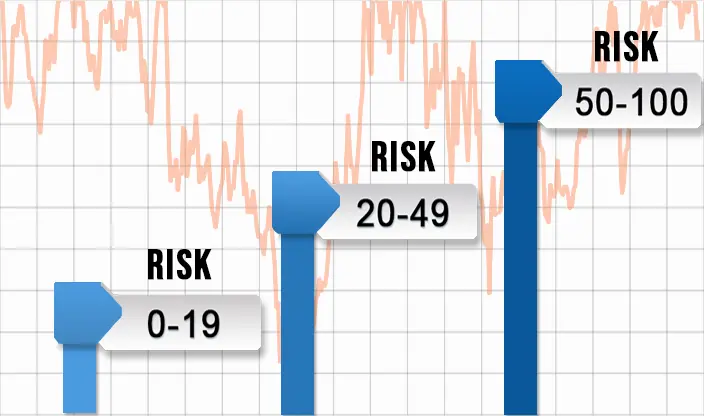
Most portfolios begin with public equity, and for good reason — the stock market provides liquidity, transparency, and long-term growth potential that is difficult to replicate. But the wealthiest households and institutions rarely stop there. They layer exposure across categories that behave differently from public markets, pursue different return drivers, and carry different risk profiles — not because stocks are bad, but because a portfolio built on a single source of outcomes is inherently fragile. When one engine stalls, everything stalls with it.
The question of what wealthy investors allocate beyond the stock market has become more relevant across a broader range of households as private market access has expanded. According to a Goldman Sachs Asset Management survey released in late 2025, adoption of alternatives is accelerating among investors with more than one million dollars in investable assets, with younger wealthy investors allocating at meaningfully higher rates than prior generations. A Bank of America study found that nearly three in four younger wealthy investors believe it is no longer possible to achieve above-average investment returns by investing solely in traditional stocks and bonds — a sentiment that reflects a structural shift in how sophisticated investors think about portfolio construction rather than a short-term reaction to market conditions.
This page is an educational overview of the major categories that wealthy investors regularly evaluate beyond the stock market, why they evaluate them, what the real trade-offs are, and how disciplined frameworks separate productive alternatives allocations from speculative ones. It is not investment advice and is not a solicitation of any specific investment.
Request a Confidential Conversation
If you want to explore whether you may qualify for introductions to an independent SEC-registered investment adviser and learn how their process works, start with a secure qualification review.
📞 Call us at
800-533-5969
Important: Diversified Insurance Brokers does not provide securities or investment advice and does not make investment recommendations. If appropriate, qualified clients may be introduced to an independent SEC-registered investment adviser partner for evaluation under their regulatory framework.
Ensure you are receiving the absolute top rates
Current Fixed Annuity Rates
Compare today’s best fixed annuity rates from top carriers.
Current Bonus Annuity Rates
See which annuities offer the highest upfront bonus today.
Request an Annuity Quote
Submit our annuity request form to get personalized rate options.
Lifetime Income Calculator
Use our calculator to see how much guaranteed income your annuity can provide.
Why Wealthy Investors Look Beyond the Stock Market
Stocks can be a powerful long-term engine for growth, but public equity is only one tool in a complete portfolio. The wealthiest investors typically think in terms of goals and constraints first, then select exposures that fit those parameters. Their objectives frequently include smoothing drawdowns during distribution years, improving diversification across economic regimes, building income with more defined characteristics, managing tax exposure, and maintaining adequate liquidity for opportunities and obligations while the rest of the portfolio is doing its job.
What often surprises people is that the goal is rarely to “beat the market” with exotic ideas. The goal is more often to reduce concentrated dependence on a single driver of outcomes. A portfolio that relies entirely on public stock performance is fully exposed to public market cycles, valuation compression, and investor behavior — when equity markets correct sharply, there is nowhere else in the portfolio to provide ballast. By expanding the opportunity set deliberately and with structure, affluent investors can access exposures that may respond differently to inflation, credit cycles, interest rate regimes, or volatility environments.
Research data supports this allocation pattern. According to a 2024 report cited by The Wealth Advisor, high-net-worth individuals allocate roughly 13% of their portfolios to alternative investments on average — but among ultra-high-net-worth individuals with more than $30 million in assets, that figure can reach 50% of total wealth. The shift is not arbitrary. It reflects the degree to which these households have already satisfied their liquidity needs and can afford to deploy capital into less liquid, longer-horizon exposures where additional return potential and diversification benefits may be available. The concept underlying many of these decisions is explored in depth through what qualifies as accredited investor status and what that eligibility actually opens up.
In other words, “beyond stocks” is less about novelty and more about intentional structure. That mindset — disciplined, objective-first, constraint-aware — is the thread that runs through the allocation decisions described throughout this page and through frameworks like quantitative risk management and institutional-grade portfolio construction.
The Six Categories Wealthy Investors Most Commonly Evaluate
When sophisticated allocators think beyond public equities, the same categories recur across portfolios of different sizes and structures. The difference is rarely which categories are present — it is the implementation quality, the manager selection standards, the governance process, and the way each exposure is integrated with the rest of the portfolio. The table below maps the six primary categories against the dimensions that drive real allocation decisions.
| Category | What It Is | Liquidity Profile | Primary Benefit Sought | Key Risk to Evaluate |
|---|---|---|---|---|
| Private Equity and Venture Capital | Ownership exposure in companies not traded on public exchanges; includes buyout funds, growth equity, and venture stage investments | Illiquid; typical holding periods of 7 to 12 years; capital calls over time rather than upfront deployment | Long-horizon growth potential; access to value creation outside public market reach | Manager dispersion is high; fee structures can be complex; outcomes vary dramatically based on underwriting discipline and economic conditions during the holding period |
| Private Credit | Privately negotiated lending outside public bond markets; includes direct lending, senior secured loans, and asset-backed structures | Illiquid to semi-liquid; lock-up periods typically 3 to 7 years depending on fund structure | Income generation with defined cash flow characteristics; potential for covenant protections not available in broadly traded credit | Credit quality varies; default risk is not eliminated by private nature; liquidity can be constrained precisely when it is most needed |
| Real Estate and Real Assets | Direct property ownership, private real estate funds, infrastructure-like exposures, farmland, and other tangible assets | Generally illiquid; varies significantly by structure and asset type; private funds may restrict redemptions | Inflation sensitivity; income potential; diversification from financial asset performance | Leverage amplifies both gains and losses; occupancy and pricing assumptions may not hold; management quality is a key variable |
| Hedge Funds and Systematic Strategies | Actively managed or systematic strategies designed to generate returns less correlated with public equity; includes market-neutral, managed futures, and volatility-aware approaches | Varies widely; some quarterly or annual redemption windows; others more liquid | Reduced drawdown; diversification during equity stress; different return driver than market beta | Manager dispersion is extreme; fees can be layered; strategy behavior may differ from marketing; requires rigorous due diligence |
| Structured Income Solutions | Outcome-oriented frameworks designed to meet defined income objectives with explicit risk constraints rather than simply maximizing yield | Varies by structure; can range from fully liquid to multi-year commitment depending on implementation | Predictable income behavior; defined downside parameters; reduced reliance on a single macro factor | Complexity requires clear understanding of what the structure is and is not designed to do; mismatched expectations can undermine the benefit |
| Liquidity Reserve Architecture | Deliberate layering of liquid reserves, near-term spending pools, and longer-horizon allocations to eliminate forced selling during market stress | By design: the most liquid layer is immediately accessible; each subsequent layer has a longer time horizon | Portfolio durability; protection from sequence-of-returns damage; behavioral stability during drawdowns | Under-sizing the liquid layer creates forced selling risk; over-sizing reduces long-term growth potential; sizing requires realistic cash flow modeling |
Access, Eligibility, and Why Accredited Investor Status Matters
Many private-market offerings are restricted by regulation to accredited or otherwise qualified investors. An accredited investor under SEC rules is generally an individual with income exceeding $200,000 per year (or $300,000 jointly with a spouse) in each of the two most recent years, or a net worth exceeding $1,000,000 excluding the value of a primary residence, or certain professional credential holders. Qualified purchaser status sets a higher bar still, typically requiring $5,000,000 or more in investments, and opens access to a broader range of private fund structures.
Eligibility is not a recommendation — it is a regulatory category that may permit evaluation of certain offerings through licensed parties. The more important question is not “Can I access it?” but “Should this have a role in my plan given my liquidity needs, risk constraints, timeline, and existing portfolio?” Many accredited investors can access private markets but should not deploy capital there without a disciplined framework that accounts for what those allocations require. A deeper look at what this threshold means in practice is available through what an accredited investor designation actually covers.
Companies are staying private far longer than they did historically. Research cited by InvestmentNews notes that companies now go public after roughly 10 to 12 years on average, compared to approximately 4 years two decades ago. That compression of the public market opportunity — where much of the value creation in a business now happens before it reaches public exchanges — is one structural reason why private equity and venture capital have become more prominent in HNW portfolios. Accessing that earlier stage of growth requires private market participation, and private market participation requires both eligibility and a sound governance process. Understanding the compensation investors receive for accepting reduced liquidity is a foundational concept explored through what the illiquidity premium represents and when it is and is not adequate compensation for the constraints it imposes.
Private Equity, Venture Capital, and Direct Investments
Private equity and venture capital represent ownership exposure in companies that are not traded on public exchanges. These investments can potentially capture long-horizon business growth, operational value creation, and innovation-driven expansion that occurs before — or instead of — a public listing. However, private ownership brings trade-offs that must be evaluated honestly before committing capital: longer holding periods typically running 7 to 12 years, uneven cash flows, capital calls that require ongoing liquidity at unpredictable intervals, meaningful dispersion between managers, and outcomes that depend heavily on underwriting discipline and conditions at both entry and exit.
Disciplined allocators focus less on narratives and more on structure. They evaluate how value is created operationally, how fees are layered and calculated, how conflicts of interest are managed, how capital is paced over time, and how the investment would behave if economic conditions at exit prove less favorable than at entry. A key governance concept is pacing — committing capital across multiple vintage years rather than concentrating deployment based on enthusiasm at a single point in the cycle. This approach reduces concentration risk and smooths the J-curve effect that characterizes early years of private equity performance, where capital is deployed before value has been created or realized.
Private equity should not be treated as a substitute for a liquid equity allocation. Instead, disciplined investors treat it as a complementary layer that must be sized around genuine liquidity needs and time horizon. The question is always: if the capital deployed here were needed in year three, what would the outcome be? If the honest answer is forced liquidation at a discount or an inability to meet an obligation, the sizing is wrong. The broader context of how private market access has expanded beyond institutional investors to qualified individual households is covered through the rise of private market opportunities once reserved for institutions.
Private Credit and Structured Credit
Private credit is lending outside public bond markets. It can include senior secured loans to middle-market businesses, direct lending structures, asset-backed lending, and other privately negotiated debt arrangements. Following the Global Financial Crisis, regulatory changes constrained traditional bank lending — particularly to middle-market companies — and that regulatory shift created an opening that private credit managers have filled. The result is an asset class that has grown substantially and now attracts significant institutional and HNW capital as a source of income with characteristics that differ from publicly traded bonds.
The case for private credit often centers on income generation, covenant protections that are harder to obtain in broadly traded credit markets, and return potential that may include a premium for the illiquidity and complexity involved. PIMCO has estimated the illiquidity premium in private credit at approximately 200 basis points above comparable public market equivalents, though that premium has compressed in certain segments as capital flows into the space have increased. The key point is that the premium should be evaluated relative to the costs it imposes — reduced liquidity, longer lock-up periods, and the need for more sophisticated due diligence than public bond investing requires.
The risks in private credit are real and must be evaluated rigorously. Credit risk is not eliminated because a loan is private — it is simply structured differently. The critical evaluation questions center on whether the structure includes meaningful downside buffers, credible collateral, realistic cash flow assumptions under stress, and liquidity terms that match the investor’s actual needs. Most private credit funds operate as closed-end vehicles with capital locked up for 3 to 7 years. Interval funds and business development companies (BDCs) offer somewhat more liquidity but come with their own structural trade-offs. Skilled allocators evaluate private credit through stress scenarios: what happens to this structure if default rates rise, refinancing markets tighten, or the broader credit cycle turns?
Real Estate, Real Assets, and Inflation-Sensitive Exposure
Real estate is consistently one of the most widely held alternative exposures among HNW households. Investment real estate adoption reaches 64% of respondents in Long Angle’s 2026 HNW asset allocation benchmark report — the highest of any alternative category — with direct residential ownership as the dominant approach, followed by real estate funds and REITs. But “real estate” is not a single investment type. It spans direct property ownership, private real estate funds with institutional structures, commercial and industrial exposure, specialty sectors, and development-oriented versus income-oriented projects. The risk profile of each differs substantially based on leverage, tenant quality, lease duration, financing terms, and asset management capability.
The appeal of real estate in a diversified portfolio often centers on three attributes: income generation through rents and distributions, inflation sensitivity because real asset values and income can rise with the price level, and a return profile that has historically behaved differently from public equity during certain market cycles. Pension funds, sovereign wealth funds, and endowments have allocated to institutional real estate for decades precisely because of these characteristics — private investors were the most active buyers in global commercial real estate markets in the recent cycle, accounting for more than 40% of total volume according to Real Capital Analytics data.
Beyond traditional real estate, some affluent investors evaluate other tangible asset categories — infrastructure-related exposures, farmland, timber, and energy-related holdings — because they can respond differently under inflation or supply constraint environments. The planning question is always the same: does this exposure improve the overall portfolio’s resilience without creating an unacceptable liquidity problem? Without the guardrails of realistic cash flow modeling, sensitivity analysis on interest rates, and stress-tested occupancy or pricing assumptions, real estate can create concentrated risk even for sophisticated households.
Hedge Funds and Alternative Risk Strategies
Some affluent investors evaluate hedge funds or systematic alternative strategies because they want return drivers that are genuinely different from public equity beta. These can include trend-following managed futures strategies, market-neutral approaches that aim to generate returns independent of market direction, volatility-aware frameworks that adjust exposure based on measured risk levels, or other strategies designed to behave differently during specific market environments. The purpose is usually to reduce drawdown severity, smooth the return path, or maintain diversification during periods when traditional stock and bond correlations prove less reliable than historical experience would suggest.
This category requires especially careful evaluation because the dispersion between managers is wider here than in almost any other asset class. A hedge fund strategy that performs well in one environment may perform poorly in another, and the gap between top and bottom quartile managers in certain categories is large enough to produce radically different outcomes from nominally similar strategies. Disciplined evaluation focuses on transparency of the strategy, measurability of the risk controls, documented behavior during adverse market regimes, liquidity terms and gate provisions, and fee structures that are clear and consistent with the value delivered.
For investors most concerned about volatile market behavior and the behavioral cost of emotional decision-making during drawdowns, the mechanics of alternative strategies connect directly to how and why investors make poor decisions under stress. That dimension is explored through behavioral biases that quietly destroy wealth and the documented patterns behind why average investors lose money in volatile markets — both of which are as relevant to alternative strategy selection as to public market decisions.
Structured Income Solutions and Outcome-Oriented Frameworks
Some wealthy investors shift the allocation question from “What is the yield?” to “What outcome do we need, and how do we build toward it with defined risk parameters?” That shift leads to structured income or outcome-oriented frameworks that attempt to specify income characteristics, manage downside exposure, and create more predictable behavior across scenarios rather than maximizing a single metric. This is not about guaranteeing results — it is about building around explicit constraints: acceptable volatility, drawdown tolerance, cash flow timing, and what happens to the plan if the worst reasonable scenario occurs.
The reliability that many investors expected from traditional bond-heavy allocations has not always materialized across different rate and inflation environments. Extended periods of low rates, followed by rapid rate increases, challenged fixed income allocations in ways that simple historical averages did not predict. This has led many investors to evaluate alternative income-generating structures that can support cash flow goals without depending on a single macro factor behaving in a predictable direction. The broader case for why affluent households evaluate structured solutions in place of a simple bond allocation is covered through why the top 1% use structured income solutions instead of bonds.
Many of these frameworks overlap with the institutional concept of volatility targeting — managing the amount of risk a portfolio takes at any given time rather than simply predicting market direction. Instead of forecasting when markets will rise or fall, disciplined allocators define how much volatility the portfolio can absorb and dynamically adjust exposure to stay within those bounds. That approach, which has become more common across institutional and HNW portfolios, is described through why volatility targeting has become a core strategy.
Liquidity Design — The Structural Advantage Most Allocators Underestimate
When people focus on what the wealthy invest in, they often overlook the most consequential structural decision wealthy investors actually make: how they design liquidity. The most durable portfolios do not treat liquidity as an afterthought or a leftover after allocations are made. They build it intentionally in layers — immediate cash reserves sized to meet near-term obligations without touching the portfolio, near-term spending pools invested in shorter-duration or liquid assets, and longer-horizon allocations that can be held through full market cycles without being forced to liquidate at inopportune times.
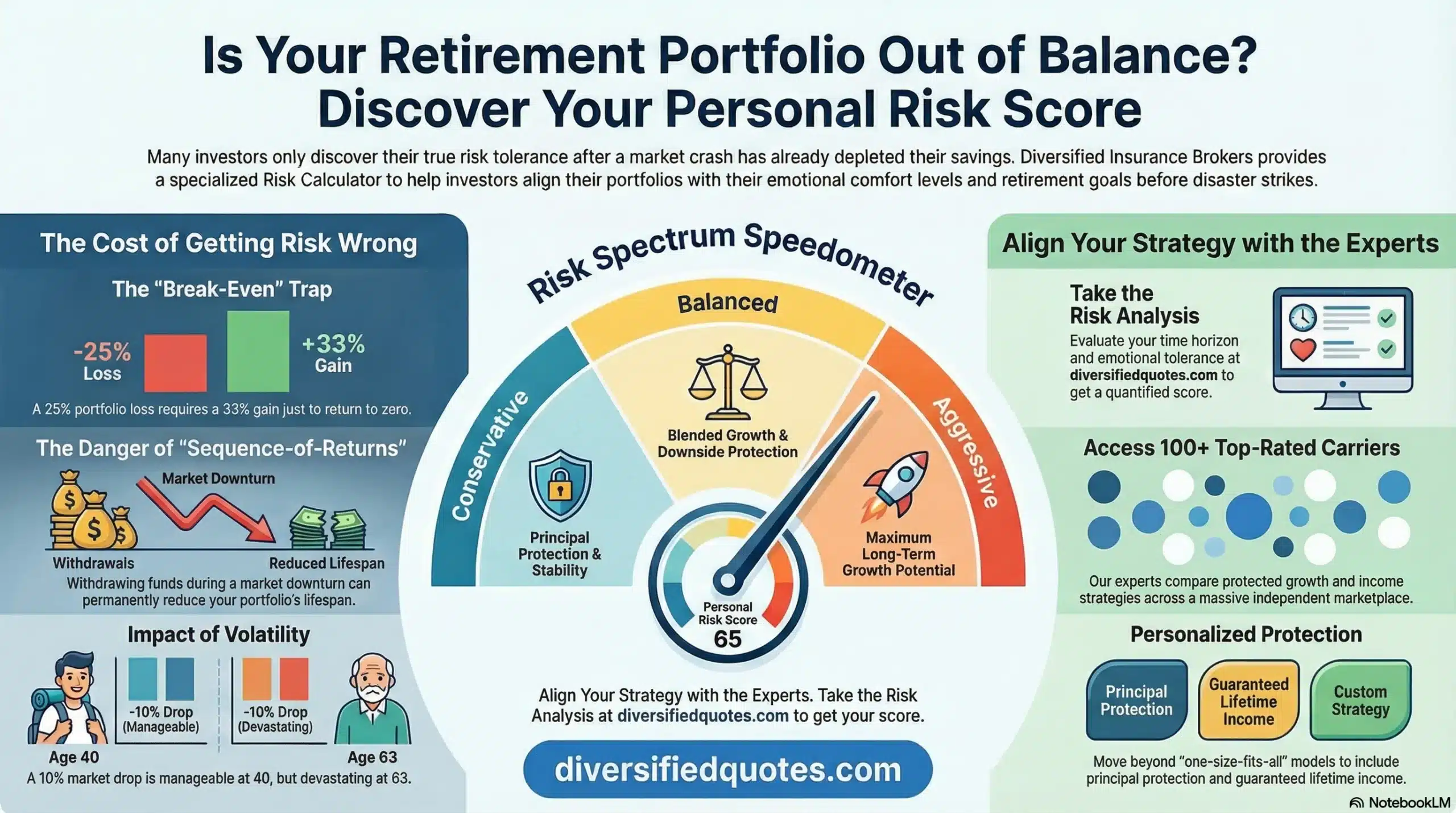
This layered approach matters most during the distribution phase of wealth — retirement or any period when withdrawals are being made from the portfolio rather than contributions being added. During accumulation, a portfolio can absorb volatility and recover from drawdowns because time provides the opportunity for recovery. During distribution, the timing of returns matters in a way it does not during accumulation. Selling depreciated assets to fund withdrawals in the early years of retirement reduces the capital base in a way that permanently impairs long-term portfolio longevity, even if average returns over the full period look acceptable. This problem — known as sequence-of-returns risk — is one of the most significant structural risks retirees face, and it is addressed directly by deliberate liquidity design rather than by trying to predict or avoid market cycles.
The connection between liquidity architecture and capital preservation is also why many retirees and pre-retirees now prioritize protecting the portfolio base as a foundational goal, rather than pursuing maximum growth that may come with maximum drawdown exposure. A portfolio that loses 40% requires a subsequent gain of approximately 67% to return to its prior value — a mathematical reality that makes downside management as important as upside participation for anyone in or approaching the distribution phase. This framework is explored through why capital preservation has become the primary goal for retirees.
What Separates Disciplined Alternatives Allocation From Chasing Returns
Access alone does not produce good outcomes. Many wealthy investors make poor decisions when they chase headline returns without liquidity planning, pursue strategies they do not fully understand, or commit capital in sizes that create real financial hardship if plans change. The advantage in alternatives is not access — it is the combination of access with a disciplined process that starts with clear objectives, defines measurable risk constraints, documents liquidity planning, establishes governance rules that reduce the role of emotion in decisions, and applies an institutional standard of due diligence to both manager selection and ongoing monitoring.
Disciplined allocators in private markets also think carefully about vintage year diversification — spreading commitments across multiple years rather than concentrating in a single period. They model the J-curve effect explicitly rather than being surprised by early underperformance before value is realized. They stress-test liquidity against the possibility that capital calls arrive during a market downturn when liquid assets have also declined. And they evaluate the full fee load of private investments — management fees, carried interest, fund-of-funds layering — to ensure that net-of-fee returns justify the complexity and illiquidity relative to simpler public market alternatives.
The behavioral dimension is also critical. Private market investments that are marked infrequently can create a false sense of stability — the portfolio appears smooth because valuations are updated quarterly or less often, not because the underlying assets are actually stable. Sophisticated investors understand this distinction and do not confuse reporting frequency with true volatility. The broader discipline behind how wealthy households stay wealthy over time — through governance, process, and behavioral consistency rather than constant prediction — is explored through how the wealthy stay wealthy and the broader planning context available through exclusive wealth strategies beyond traditional insurance planning.
Explore the Process — Not a Pitch
If you want to understand how independent fiduciary advisers evaluate alternatives, risk controls, and liquidity design, begin with a confidential qualification review.
Important: Diversified Insurance Brokers does not offer securities or investment advice. Any advisory services are provided exclusively through an independent SEC-registered investment adviser partner.
Related Topics to Explore
Continue exploring institutional-style frameworks, private-market access concepts, and the discipline behind long-term wealth durability.
Disclosures:
Past performance does not guarantee future results. All investments carry risk, including the potential loss of principal. Access to certain investment opportunities may be limited to accredited or qualified investors under SEC guidelines. We may receive compensation or other benefits in connection with referrals made to our investment adviser partner. Any potential conflicts of interest will be disclosed to clients in accordance with applicable regulations. Investment advisory services are provided by FamilyWealth Advisers, LLC, an SEC Registered Investment Adviser. There is no guarantee that any particular asset allocation mix will meet your investment objectives or provide you with a given level of income. We recommend that you consult a tax or financial adviser about your individual situation. Investments in bonds are subject to interest rate, credit, and inflation risk.
Request a Confidential Conversation
📞 Call us at 800-533-5969
or visit our Contact Page
Important: We do not provide securities or investment advice. If appropriate, we may introduce you to an independent SEC-registered investment adviser for evaluation under their regulatory framework.
FAQs: What Do the Wealthy Invest In Beyond the Stock Market?
Why do wealthy investors put money into things other than stocks?
The primary motivation is rarely to find something more exciting than stocks — it is to reduce concentrated dependence on a single driver of outcomes. A portfolio that relies entirely on public equity performance is fully exposed to public market cycles, valuation compression, and investor behavior. When equity markets correct sharply, there is no other part of the portfolio providing ballast. Wealthy investors evaluate alternatives because they want exposures that may respond differently to inflation, interest rate changes, credit cycles, or volatility environments. The goal is structural resilience, not novelty. Research shows that among ultra-high-net-worth individuals, alternative allocations can reach 50% of total wealth — not because public markets are bad, but because these households have satisfied their liquidity needs and can afford to deploy capital into longer-horizon exposures where additional diversification benefits may be available.
What is the biggest risk in private equity and venture capital?
The most consequential risks in private equity and venture capital are manager dispersion and liquidity mismatch. Manager dispersion means the gap between top-performing and bottom-performing managers in private equity is far wider than in public markets — selecting the wrong manager can produce dramatically different outcomes from the asset class average. Liquidity mismatch means the capital committed to private equity is typically locked up for 7 to 12 years, with capital calls arriving at unpredictable intervals. If an investor needs those funds unexpectedly — due to a financial emergency, a changed plan, or market conditions that make liquidating other assets unfavorable — private equity holdings cannot be sold quickly. Sizing private equity allocations around genuine, documented liquidity needs is the most important risk management step. The expansion of private market access has increased opportunity but also increased the risk that investors commit capital without fully understanding these constraints.
Is private credit safer than the stock market?
Not necessarily — it simply carries different risks. Private credit involves lending to companies outside public bond markets, and credit risk is not eliminated because a loan is privately negotiated. The key risks in private credit include default by the borrower, tightening refinancing conditions, liquidity constraints that prevent exit when needed, and valuations that may not accurately reflect underlying stress until it has materially affected the investment. What private credit can offer is a different risk profile from public equity — income-oriented rather than growth-oriented, with potential covenant protections that provide downside buffers if structured well. Whether private credit improves a portfolio depends entirely on the specific structure, the manager’s underwriting discipline, and whether the liquidity terms match the investor’s actual needs. Describing it as “safer” without examining these specifics would be misleading.
What is the illiquidity premium and is it worth accepting?
The illiquidity premium is the additional return an investor expects to receive in exchange for accepting reduced access to their capital over a defined period. Because investors who lock up capital for 5, 7, or 10 years are giving something up — the ability to rebalance, respond to opportunities, or access funds in an emergency — the market theoretically compensates them for that sacrifice through higher expected returns. In private credit specifically, estimates of this premium have historically run at approximately 200 basis points above comparable public market alternatives, though that premium has compressed in segments where capital flows are highest. Whether accepting illiquidity is worth it depends on the investor’s genuine liquidity needs, the quality of the specific investment, and whether the premium is actually present in net-of-fee terms. Illiquidity is a feature when sized correctly and compensated adequately — it becomes a problem when accidental or under-compensated.
Do I need to be an accredited investor to access these alternatives?
Many — though not all — private market offerings are restricted by SEC regulation to accredited investors or qualified purchasers. An accredited investor generally meets one of these thresholds: income exceeding $200,000 per year individually ($300,000 jointly with a spouse) in each of the two most recent years, or net worth exceeding $1,000,000 excluding the primary residence, or certain professional credential holders. Qualified purchaser status requires $5,000,000 or more in investments and opens access to a broader range of fund structures. These thresholds exist because private market investments carry complexity, reduced liquidity, and disclosure standards that differ from public securities. Some alternatives — including certain REITs, business development companies, and interval funds — are available to non-accredited investors with different structures and regulatory protections. Meeting the accredited investor threshold is not a recommendation to invest — it is simply a regulatory category that may permit evaluation of certain offerings through licensed parties.
What is liquidity design and why do wealthy investors prioritize it?
Liquidity design is the deliberate structuring of a portfolio into layers with different time horizons and accessibility levels — immediate cash reserves for near-term needs, shorter-duration liquid investments for medium-term spending, and longer-horizon illiquid allocations for capital that can genuinely be held through full market cycles. Wealthy investors prioritize this structure because failing to plan liquidity explicitly leads to forced selling during market downturns — selling depreciated assets to fund withdrawals or meet obligations, which permanently impairs the portfolio’s long-term value. This problem is especially acute for retirees and others in a distribution phase, where the sequence of returns — the timing of gains and losses relative to withdrawals — can destroy portfolio longevity even when long-term average returns look adequate. Liquidity design is not a conservative or defensive posture. It is a mathematical prerequisite for allowing the illiquid portions of the portfolio to do their job without being disrupted by near-term cash needs.
How does Diversified Insurance Brokers help clients who are interested in these strategies?
Diversified Insurance Brokers does not provide securities or investment advice and does not make investment recommendations. For clients who are interested in exploring whether alternative investment strategies may be appropriate for their situation, qualified individuals may be introduced to an independent SEC-registered investment adviser partner who evaluates clients under their own regulatory framework and fiduciary standard. The introduction process begins with a confidential qualification review to determine whether the advisory relationship is a potential fit. All investment advisory services — including portfolio construction, alternatives evaluation, and ongoing investment guidance — are provided exclusively by that independent adviser, not by Diversified Insurance Brokers. Clients who wish to begin that process can call 800-533-5969 or submit a qualification request through the contact options on this page.
About the Author:
Jason Stolz, CLTC, CRPC, DIA, CAA and Chief Underwriter at Diversified Insurance Brokers (NPN 20471358), is a senior insurance and retirement professional with more than 25 years of real-world experience helping individuals, families, and business owners protect their income, assets, and long-term financial stability. As a long-time partner of the nationally licensed independent agency Diversified Insurance Brokers, Jason provides trusted guidance across multiple specialties—including fixed and indexed annuities, long-term care planning, personal and business disability insurance, life insurance solutions, Group Health, Travel Medical and Evacuation Insurance, and short-term health coverage. Diversified Insurance Brokers maintains active contracts with over 100 highly rated insurance carriers, ensuring clients have access to a broad and competitive marketplace.
His practical, education-first approach has earned recognition in publications such as VoyageATL, and contributions from his agency featured in Kiplinger and GoBankingRates— highlighting his commitment to financial clarity and client-focused planning. Drawing on deep product knowledge and years of hands-on field experience, Jason helps clients evaluate carriers, compare strategies, and build retirement and protection plans that are both secure and cost-efficient. Visitors who want to explore current annuity rates and compare options across multiple insurers can also use this annuity quote and comparison tool.
Browse More Resources: Return to our complete Wealth Strategies & General Resources guide — covering wealth building, tax strategies, fiduciary, wills & broker resources.
Last Reviewed: June 19, 2026 |
Reviewed by: Jason Stolz, CLTC, CRPC, DIA, CAA
Chief Underwriter, Diversified Insurance Brokers, Inc. | NPN: 20471358 | Diversified Insurance Brokers, Inc. — Licensed in all 50 states
Fact Checked by: Tonia Pettitt, CMIP©
Medicare Specialist, Diversified Insurance Brokers, Inc. | NPN: 14374308 | Diversified Insurance Brokers, Inc. — Licensed in all 50 states
Did you find this content helpful? Leave us a Google review — it helps others find trustworthy guidance too.
Editorial Standards: Diversified Insurance Brokers maintains rigorous editorial standards to ensure accuracy, clarity, and independence in all content. Learn more about our editorial standards and commitment to transparency.
