
Why Capital Preservation Is the New Goal for Retirees
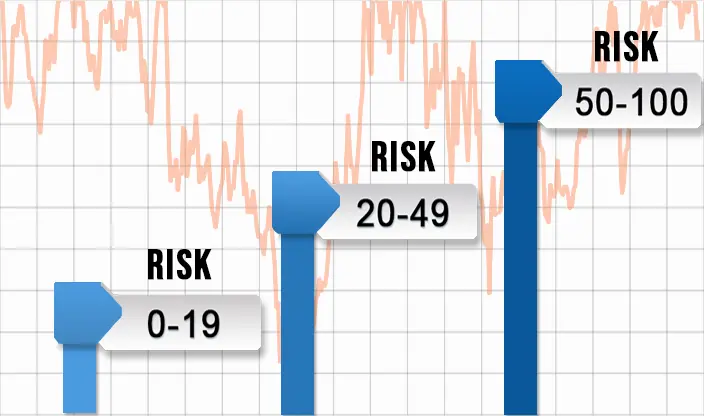
In today’s uncertain markets, many retirees are shifting from a growth-first mindset to a preservation-first mindset. This is not about fear or giving up on opportunity. It is about recognizing that the math of retirement is fundamentally different from the math of accumulation. Once withdrawals begin, drawdowns become more damaging, recovery becomes harder, and the range of outcomes widens — especially when inflation and interest-rate regimes can shift quickly. Capital preservation becomes less of a conservative preference and more of a practical requirement for retirees who want longevity, optionality, and a plan that can withstand stress without forcing reactive decisions at the worst possible moments.
The key idea is simple: retirees do not need the highest return. They need a durable plan. Durability comes from controlling downside, maintaining liquidity, managing the sequence of returns, and designing withdrawals so that temporary market volatility does not become permanent impairment. This page explains why capital preservation has become a core objective for sophisticated retirees, how institutional-style thinking applies to household wealth, and what practical guardrails support steadier outcomes across a retirement that may span 25 to 35 years.
Request a Confidential Conversation
If you’re focused on preserving retirement capital while still keeping long-term flexibility, request a qualification review to learn how institutional-style guardrails are commonly evaluated by affluent households.
📞 Call us at
800-533-5969
Important: Diversified Insurance Brokers does not provide securities or investment advice. If appropriate, qualified clients may be introduced to an independent SEC-registered investment adviser for evaluation under their regulatory framework.
Retirement Changes the Rules: Outcomes Depend on the Path, Not Just the Average
During working years, volatility can feel like an inconvenience. Contributions continue, time is on your side, and a downturn can even be an opportunity to accumulate shares at lower prices. In retirement, that logic reverses completely. Withdrawals introduce a new constraint that changes the relationship between volatility and outcomes: when the portfolio is down, selling assets to fund lifestyle needs locks in losses and permanently reduces the capital available for recovery. This is why retirees often discover that long-term average returns are not the most important metric in retirement planning. The path of returns — the specific order in which good and bad years arrive — can matter more than the average, particularly in early retirement when the portfolio is at its largest and most vulnerable.
This is the core of sequence-of-returns risk. If negative years happen early, the combination of withdrawals and drawdowns can permanently lower the portfolio’s future earning power in ways that a later recovery may not fully repair. A retiree who experiences a 30% decline in year two of retirement and is simultaneously withdrawing 4% per year for living expenses has lost a compounding base that cannot simply be replaced by waiting for markets to recover — because the withdrawn capital is no longer present to participate in that recovery. Preserving capital is not just a conservative preference; it is a tool for preventing forced selling and maintaining the flexibility that distinguishes resilient retirement plans from fragile ones.
Another reason retirees emphasize preservation is that retirement is a one-directional transition with no built-in correction mechanism. There is no new paycheck arriving to replace major portfolio errors. A portfolio may still recover mathematically after a deep drawdown, but the retiree’s lifestyle often cannot wait for a multi-year recovery timeline. Capital preservation is, in practical terms, a way to ensure that time remains an ally rather than becoming an enemy — and that the retirement plan does not depend on markets behaving favorably in precisely the years when the retiree is most financially exposed.
1) Why Drawdowns Destroy Retirement Outcomes
Drawdowns have a unique mathematical and psychological impact in retirement that differs fundamentally from their impact during the accumulation phase. Mathematically, they reduce the base that compounding operates on while withdrawals continue — creating a double compression of capital that is genuinely difficult to recover from. Psychologically, they create uncertainty about the sustainability of the plan and often trigger the emotional responses that produce the most damaging investment decisions: selling at the bottom, delaying reinvestment during recovery, or restructuring the portfolio in ways that create new fragility in response to old stress.
A key concept retirees benefit from internalizing is that recoveries require asymmetry. A portfolio that declines 20% needs a 25% gain to return to breakeven. A portfolio that declines 40% needs roughly 67% to recover. A portfolio that declines 50% needs a full 100% gain — a doubling — just to get back to where it started. That recovery burden becomes significantly more difficult when distributions continue throughout the recovery period, because the portfolio must recover not only the lost value but also replace the withdrawn capital that is no longer present to participate in the rebound. This asymmetry is why many retirement frameworks center on downside control rather than upside maximization.
The planning objective in a preservation-first framework becomes: minimize the probability of deep drawdowns that force lifestyle changes or create irreversible damage to long-term sustainability. This does not mean eliminating all market exposure or pursuing zero-growth strategies — it means sizing risk exposures so that the worst plausible outcome for the drawdown-sensitive portion of the portfolio is something the retiree can absorb without changing their lifestyle or liquidating assets at inopportune prices. Many retirees exploring this framework find the concepts in downside protection strategies in bear markets directly applicable to the design of their withdrawal-supporting portfolio segments. The goal is not to predict the next downturn — it is to build a plan that can absorb downturns without breaking.
It is also important to recognize that the drawdown trap is not limited to equities. Fixed income can experience significant drawdowns as well, particularly when interest rates move sharply or when credit spreads widen during economic stress. In certain market regimes — rising rates, recessionary credit cycles, or macro dislocations — multiple parts of a diversified portfolio can struggle simultaneously. That is one reason retirees increasingly emphasize resilience as a framework concept: a plan designed to remain functional across different market environments, not one that assumes a particular correlation structure will hold.
Preservation-First Planning Starts With Constraints
If your goal is to reduce the probability of forced decisions during volatility, we can outline the common questions affluent retirees ask about drawdowns, liquidity, and withdrawal sustainability.
Important: Diversified Insurance Brokers does not provide securities or investment advice. If appropriate, qualified clients may be introduced to an independent SEC-registered investment adviser partner.
2) Preservation Versus Growth: A New Balance for a New Reality
Retirement planning used to be framed as a simple shift from stocks to bonds: reduce volatility, increase income, and rely on fixed income to provide stability while equity exposure declined with age. Many retirees still use versions of that framework, and it remains appropriate for some situations. But modern conditions have introduced variables that make a one-dimensional allocation shift less reliable as a standalone strategy. Inflation can persist at levels that erode fixed-income purchasing power. Interest rates can move quickly in both directions, creating drawdowns in bond portfolios that conventional wisdom suggested were safe. Asset class correlations can change in stress environments — the diversification that worked during normal conditions may not hold when it is needed most. And longevity horizons are longer than they were a generation ago, meaning retirees must still consider growth over multi-decade periods — just not at the expense of plan durability in the near and medium term.
That is why many retirees shift to a preservation-first philosophy rather than a low-risk-only philosophy. These two orientations are meaningfully different. Low-risk-only means minimizing volatility without a clear framework for what is being protected and why. Preservation-first means defining what must be protected — the lifestyle spending that cannot be interrupted, the liquidity that prevents forced selling, the risk capacity that allows the plan to continue functioning across different market regimes — and then building everything else around those protections. Preservation-first does not mean avoiding growth permanently. It means sizing growth exposure so that essential spending needs remain protected even if markets experience extended volatility, and making sure the retiree is not dependent on perfect market behavior to maintain the lifestyle they have designed retirement around.
This balance is often described as stability over volatility — but it is more accurate to describe it as durability over optimization. The retiree may still pursue growth, but the plan is built so that volatility does not threaten the core objective: sustainable, predictable lifestyle support across a retirement that may span 30 years or more. Many affluent households explore frameworks similar to those described in how smart investors manage risk without sacrificing growth, where the emphasis is on managing risk exposures explicitly and deliberately rather than simply “taking less risk” without a defined framework for what that means in practice.
The preservation-first approach also requires acknowledging what it does not protect against. Holding very low-risk assets for too long can create a different kind of risk: the risk that purchasing power erodes over a 30-year retirement because the portfolio’s real return is insufficient to keep pace with inflation. Preservation-first planning addresses this by distinguishing between the portion of the portfolio that must be protected for near-term stability and the portion that can pursue real growth over longer horizons without creating existential risk to the retirement plan’s essential functions. The layering approach discussed in a later section of this page is one common way to operationalize that distinction.
3) Liquidity as a Safety Buffer: The Hidden Role of Cash and Near-Cash Reserves
Liquidity is a form of safety that is frequently underestimated in retirement planning discussions that focus primarily on asset allocation and return assumptions. Retirees often think of liquidity as convenience — a matter of keeping enough cash on hand for expected expenses. In practice, liquidity functions as both a behavioral and mathematical shock absorber with a specific and important role in preventing sequence-of-returns damage. When markets are down and liquid reserves are adequate to fund near-term spending, the retiree does not need to sell volatile assets at depressed prices. That prevents the permanent impairment that comes from converting temporary market volatility into realized losses that cannot participate in the subsequent recovery.
A well-designed liquidity buffer supports better decision-making in ways that are easy to underestimate in favorable market conditions and impossible to overstate in unfavorable ones. When a retiree knows that near-term obligations are fully funded — tax payments, insurance premiums, home maintenance, planned travel, healthcare costs, and any other known near-term cash needs — they are significantly less likely to panic during volatility and make decisions that prove costly in retrospect. Liquidity therefore plays two distinct roles simultaneously: it reduces sequence-risk exposure mathematically, by eliminating the need to sell at the wrong time, and it reduces emotional selling pressure behaviorally, by giving the retiree concrete evidence that their lifestyle is not immediately threatened by market conditions.
Sophisticated retirees tend to structure liquidity in layers rather than treating cash as a single undifferentiated bucket. The near-term layer — typically covering 12 to 24 months of planned spending — provides immediate coverage and behavioral stability. An intermediate layer — assets that are relatively stable in value and accessible within a short timeframe if needed — provides a secondary buffer that extends the runway before the growth-oriented portions of the portfolio must be accessed. The core principle is that near-term obligations should not depend on favorable market conditions for any part of that chain. Once that principle is operationalized, the retiree can be more intentional about where and how to take risk in the longer-horizon portion of the plan, because the foundation beneath that risk is explicitly protected.
4) Layering for Optionality: Protect the Base, Size the Upside Intentionally
Many affluent retirees think in layers rather than in single portfolio allocations. The layered approach divides the portfolio’s function rather than treating all assets as interchangeable contributors to a blended return target. The base layer is designed to preserve lifestyle and protect essential withdrawals against the full range of plausible market scenarios. The growth layer is designed to support long-term purchasing power, legacy goals, or discretionary objectives over time horizons long enough for that growth to be achieved without threatening core stability. The distinction between the two is not about which assets sit in which bucket — it is about what each layer is designed to accomplish and what failure means in each case.
The key architectural principle is that the growth layer is sized intentionally so that the retiree is not forced to depend on it for essential cash flow during the worst market moments. This is what separates a layered approach from a standard diversified allocation: the layered approach explicitly defines which assets can be allowed to fluctuate and which assets must be protected. When markets are down, the retiree can continue spending from the protected layer and allow time for the growth layer to recover without being forced to liquidate it at a loss to fund current expenses. When markets are strong, the retiree can replenish reserves, rebalance toward target exposures, or pursue planned discretionary goals. This maintained ability to choose — regardless of market conditions — is optionality in the most practical sense.
Optionality is one of the most underrated and most important properties of a resilient retirement plan. It means the retiree retains meaningful choices even during unfavorable market regimes. Fragile retirement plans lose optionality when they are most needed — when markets are down, the retiree is simultaneously most stressed and most constrained in their choices, because the assets they need to sell are exactly the ones that have lost value. Resilient plans preserve optionality by design: the retiree has something to draw on that does not require favorable market conditions, which preserves their ability to make considered decisions rather than forced ones. Retirees with larger portfolios often apply a governance mindset to this layering approach, defining exposure limits, monitoring risk, and using predetermined decision rules rather than ad hoc reactions during stress. That institutional discipline is explored in quantitative risk management, where process and constraints create consistency that ad hoc decision-making rarely achieves.
5) Quantitative Risk Controls: Borrowing Institutional Discipline Without Needing Prediction
Institutions rarely rely on intuition or market predictions during volatility. They rely on constraints — predefined rules that govern how much risk can be held, how quickly exposures can change, what conditions trigger a review, and what actions are permitted within what parameters. Those constraints may include drawdown thresholds, volatility corridors, correlation regime awareness, and risk budgets that define the maximum acceptable uncertainty across different portfolio segments. When conditions deteriorate, institutions do not need to guess what will happen next. They reduce risk systematically within predefined parameters — a process that removes the emotional decision-making that produces the worst outcomes in volatile environments.
Retirees can apply the same conceptual framework without institutional scale or complexity. The objective is not to build a complicated system. The objective is to achieve clarity before volatility arrives: define what triggers a review, what actions are permitted in different scenarios, how quickly changes can occur, and what the plan is designed to protect. This can be as simple as defining a maximum acceptable drawdown for the withdrawal-supporting portion of the portfolio — and having a clear, pre-agreed response when that threshold is approached — or as sophisticated as building volatility-aware exposure bands that adjust allocations based on market regime signals.
Volatility targeting is one of the most practical institutional concepts that retirees and advisers can adapt. Rather than maintaining fixed allocations that let effective risk drift with market conditions — which causes portfolios to be most aggressive exactly when markets are most dangerous — volatility targeting adjusts exposures to keep portfolio risk within a defined range across market regimes. The concept explained in plain language is covered at why volatility targeting has become a core strategy. The reason retirees care is straightforward: when risk is kept within a defined range rather than allowed to drift with markets, retirement spending becomes easier to sustain, and the probability of forced lifestyle changes during extended drawdowns can be meaningfully reduced.
The broader principle behind quantitative risk controls is that they replace reactive decision-making with proactive design. A retiree who has defined their acceptable drawdown threshold, their liquidity buffer size, their review triggers, and their response protocols before a market decline occurs is in a fundamentally different position than a retiree who encounters a market decline without a framework and must invent a response under stress. Pre-defined rules do not need to be perfect. They need to be consistent, clearly understood, and applied without the emotional interference that markets are specifically designed — through their inherent uncertainty and loss aversion dynamics — to generate in human investors. For the context of how institutional investors approach this kind of structural discipline, institutional investing practices used by the ultra-wealthy provides useful perspective on how constraints and governance operate at scale.
6) Governance and Policy Review: Make Decisions Before Volatility Forces Them
Governance is an uncomfortable word for many households, but it is one of the most practically valuable retirement concepts available — and one of the most underused. Governance simply means having an agreed framework for how decisions will be made before those decisions are required. Who reviews the plan? How often? What triggers an immediate review outside the regular schedule? What are the defined boundaries that must not be crossed? What happens if markets fall sharply in a defined period? What is the process for rebalancing after risk has been reduced? And how are decisions documented so that the plan remains consistent over time rather than drifting toward reactivity during stress?
When retirees have no governance framework, decisions during volatility tend to be driven by emotion rather than analysis. That emotional decision-making most commonly manifests as selling at the wrong time during a downturn, delaying reinvestment during the early stages of a recovery, shifting risk in ways that create new exposures in response to old stresses, or abandoning a carefully designed plan in favor of a simpler but less appropriate alternative during a period of maximum market discomfort. These behaviors are not irrational from a psychological perspective — they are predictable responses to uncertainty and loss aversion — but they systematically undermine retirement outcomes in ways that are difficult to recover from when withdrawals are ongoing.
With governance in place, retirees do not need to make perfect decisions during volatility. They simply need to follow the framework they designed during calmer conditions when they were thinking clearly about what matters most to their long-term plan. Consistency in applying a reasonable framework tends to outperform emotionally driven ad hoc responses over long time horizons, particularly when withdrawals are occurring simultaneously with market stress. The behavioral dimension of this governance principle is explored in behavioral biases that quietly destroy wealth, which explains how predictable cognitive patterns can undermine even well-designed plans when they are not explicitly managed.
The governance framework also serves an important communication function in households where multiple family members are involved in or affected by retirement planning decisions. When the framework is documented and agreed upon in advance, conversations during market stress are about “are we following the plan” rather than “what should we do now” — a fundamentally different and more productive question. The plan becomes the reference point rather than the current market price, which reduces the probability that a temporary market condition produces a permanent portfolio change.
7) The Behavioral Layer: Why Smart Retirees Plan for Their Own Reactions
One of the most counterintuitive insights in retirement planning is that investment outcomes often have less to do with the sophistication of the investment strategy than with the behavioral consistency of the investor implementing it. A technically excellent preservation-first framework that is abandoned during the first meaningful market decline produces worse outcomes than a simpler plan that is consistently followed through volatility. This is why sophisticated retirement planning increasingly incorporates behavioral design — not just portfolio design — as a core element of the overall approach.
Behavioral design means building a plan that accounts for how the retiree will actually respond to market stress, not just how they plan to respond during calmer conditions. It means creating liquidity buffers large enough to eliminate the felt pressure to act during downturns. It means defining governance triggers that shift the conversation from “should I change the plan” to “has the trigger been met” — a much easier and less emotionally loaded question. It means having a clear understanding of which losses are temporary and which represent genuine risk to the retirement plan’s essential functions, so that market volatility does not produce the same response as genuine impairment. And it means periodically reviewing both the portfolio and the behavioral framework during stable conditions, when clear thinking is easiest, rather than only addressing these questions during stress when it is hardest.
The investment perspective on managing risk without unnecessary performance sacrifice is explored in how smart investors manage risk without sacrificing growth. The risk management perspective that applies quantitative discipline to these decisions is covered in quantitative risk management. And the specific downside context that makes these behavioral design principles urgent in retirement is covered in downside protection strategies in bear markets. Together, these frameworks support a retirement plan that is designed not just for favorable markets but for the full range of conditions — including the ones that feel most threatening and produce the most pressure to react.
Build a Retirement Plan That Can Withstand Stress
If you want a preservation-first framework that prioritizes durability and optionality, request a confidential conversation to learn how affluent households evaluate constraints, liquidity, and downside control.
Important: Diversified Insurance Brokers does not provide securities or investment advice. If appropriate, qualified clients may be introduced to an independent SEC-registered investment adviser partner.
Where Concierge Wealth Services Fits
Through Concierge Wealth Services, qualified clients may request introductions to independent fiduciary advisers who focus on durable planning frameworks — including capital preservation priorities, liquidity design, drawdown management, and risk constraints that support long-term sustainability. If you are exploring whether this approach is relevant for your specific situation and asset level, a helpful starting point is An Invitation to Explore More, which explains the orientation and qualification process at a high level without commitment.
The purpose of this page is to clarify why retirees increasingly prioritize preservation and what that shift implies in practice: fewer assumptions about market behavior, more explicit guardrails against downside scenarios, more intentional liquidity planning, and a stronger focus on plan durability rather than peak return potential. For many retirees, that shift is the difference between a plan that functions well under stress and one that requires reactive decisions during the worst possible moments. Capital preservation, understood properly, is not about giving up — it is about designing a plan that does not require perfection to succeed.
Related Topics to Explore
Keep exploring institutional-style retirement concepts — risk constraints, volatility control, and planning frameworks designed for durability.

FAQs: Why Capital Preservation Is the New Goal for Retirees
What is capital preservation and why does it matter in retirement?
Capital preservation in retirement refers to a planning orientation that prioritizes protecting the existing value of assets — particularly the assets funding near-term and medium-term spending needs — over maximizing total return. It matters in retirement for a specific mathematical reason: once withdrawals begin, the order in which investment returns arrive matters as much as the average return level, because selling assets to fund spending during a market decline permanently reduces the capital available to participate in the subsequent recovery. A retiree who experiences large losses early in retirement and continues withdrawing faces a compounding problem that a later recovery may not fully repair. Capital preservation is the design principle that reduces the probability of this sequence-of-returns damage by controlling drawdowns in the portions of the portfolio that must fund near-term spending, maintaining liquidity that eliminates the need to sell at depressed prices, and creating explicit guardrails that keep the plan functional across a range of market environments rather than only in favorable ones.
Does capital preservation mean giving up growth?
No — capital preservation as a retirement planning philosophy does not mean eliminating growth exposure or accepting returns below inflation permanently. It means defining what must be protected — the lifestyle spending that cannot be interrupted, the liquidity that prevents forced selling, the risk capacity that allows the plan to function across different market regimes — and then building growth exposure around those protections rather than treating all assets identically. A well-designed preservation-first framework typically divides the portfolio’s function: a base layer designed for stability and protection that funds near and medium-term spending needs, and a growth layer designed to support long-term purchasing power and discretionary goals over time horizons long enough for growth to be achieved without threatening core stability. The growth layer is sized so that the retiree is not dependent on it for essential spending during adverse market conditions — which preserves the optionality to let it recover rather than being forced to liquidate it at the worst moment. Preservation-first is about durability over optimization, not about eliminating opportunity.
What is sequence-of-returns risk and how does it threaten retirement plans?
Sequence-of-returns risk is the risk that the specific order in which investment returns arrive can damage a retirement plan’s long-term sustainability, even when the average return over the full period would have been sufficient to support the plan if experienced in a different order. During the accumulation phase, poor returns early can be partially offset by continued contributions and time. In retirement, poor returns early — when the portfolio is at its largest and withdrawals are occurring simultaneously — are uniquely destructive because selling assets to fund spending during a decline permanently removes capital from the portfolio before it can participate in the recovery. A retiree who experiences a 30% decline in year three of a 30-year retirement and continues withdrawing 4% per year is in a materially worse position than a retiree who experiences the same 30% decline in year 25 — even if the total average return over 30 years is identical. Managing sequence-of-returns risk typically involves maintaining liquidity buffers that fund near-term spending without requiring asset sales during downturns, controlling drawdowns in the withdrawal-supporting portion of the portfolio through explicit risk limits, and designing a plan that does not require favorable market conditions in any specific early period to remain sustainable across the full retirement horizon.
What are quantitative risk controls and how do they apply to retirement planning?
Quantitative risk controls are predefined rules that govern how much risk a portfolio can hold, what conditions trigger a review or adjustment, and what actions are permitted in response to specific market conditions — replacing ad hoc emotional decision-making with systematic, process-driven responses. Institutions use these controls extensively: they define drawdown thresholds, volatility corridors, and risk budgets that keep portfolio risk within acceptable ranges across different market environments. The value of these controls is not that they predict market movements — they don’t — but that they create consistency. When a defined trigger is reached, the response is predetermined and applied systematically rather than invented under stress. Retirees can adapt the same principle without institutional scale: defining a maximum acceptable drawdown for the withdrawal-supporting portion of the portfolio, establishing how quickly and by how much risk should be reduced if that threshold is approached, setting conditions for when reserves should be replenished, and documenting the governance process so that decisions are evaluated against the plan rather than against current market emotion. Volatility targeting — which keeps portfolio risk within a defined range by adjusting exposures as market volatility changes — is one specific application of this principle that has become increasingly relevant for retirees seeking to manage sequence-of-returns risk more explicitly.
About the Author:
Jason Stolz, CLTC, CRPC, DIA, CAA and Chief Underwriter at Diversified Insurance Brokers (NPN 20471358), is a senior insurance and retirement professional with more than 25 years of real-world experience helping individuals, families, and business owners protect their income, assets, and long-term financial stability. As a long-time partner of the nationally licensed independent agency Diversified Insurance Brokers, Jason provides trusted guidance across multiple specialties—including fixed and indexed annuities, long-term care planning, personal and business disability insurance, life insurance solutions, Group Health, Travel Medical and Evacuation Insurance, and short-term health coverage. Diversified Insurance Brokers maintains active contracts with over 100 highly rated insurance carriers, ensuring clients have access to a broad and competitive marketplace.
His practical, education-first approach has earned recognition in publications such as VoyageATL, and contributions from his agency featured in Kiplinger and GoBankingRates— highlighting his commitment to financial clarity and client-focused planning. Drawing on deep product knowledge and years of hands-on field experience, Jason helps clients evaluate carriers, compare strategies, and build retirement and protection plans that are both secure and cost-efficient. Visitors who want to explore current annuity rates and compare options across multiple insurers can also use this annuity quote and comparison tool.
Explore More Annuity Options: Browse our complete guide to Annuity Strategies & Retirement Income — covering tax strategies, retirement income planning, lifetime income & annuity comparisons from 100+ carriers.
Last Reviewed: June 20, 2026 |
Reviewed by: Jason Stolz, CLTC, CRPC, DIA, CAA
Chief Underwriter, Diversified Insurance Brokers, Inc. | NPN: 20471358 | Diversified Insurance Brokers, Inc. — Licensed in all 50 states
Fact Checked by: Tonia Pettitt, CMIP©
Medicare Specialist, Diversified Insurance Brokers, Inc. | NPN: 14374308 | Diversified Insurance Brokers, Inc. — Licensed in all 50 states
Did you find this content helpful? Leave us a Google review — it helps others find trustworthy guidance too.
Editorial Standards: Diversified Insurance Brokers maintains rigorous editorial standards to ensure accuracy, clarity, and independence in all content. Learn more about our editorial standards and commitment to transparency.
