
Investment Risk Analysis
Investment Risk Analysis

Jason Stolz CLTC, CRPC, DIA, CAA
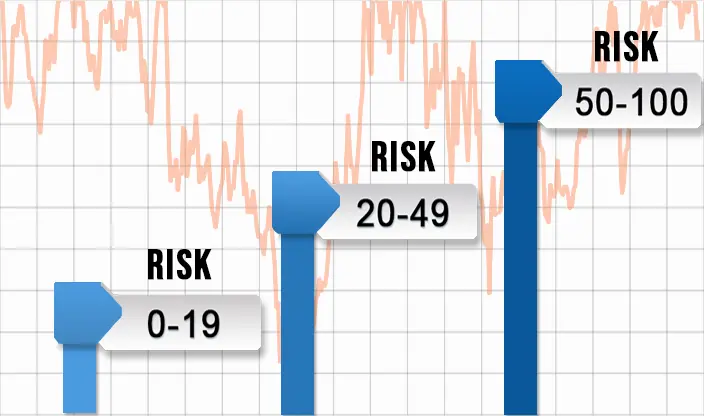
At Diversified Insurance Brokers, we believe understanding the true level of risk in your investment portfolio is just as important as pursuing returns. Many investors focus primarily on performance numbers, but long-term outcomes are usually determined by how portfolios behave during stress — when markets drop, interest rates change quickly, inflation spikes, or a retirement income plan is forced to operate during a down cycle. The Investment Risk Analysis Tool is designed to help uncover how much risk you are truly taking so you can align your strategy with your retirement timeline, income needs, and long-term goals.
Risk analysis is not about fear. It is about clarity. When you understand what could happen in a range of environments, decisions become proactive instead of reactive. That shift is often the difference between staying disciplined during volatile markets and making emotional moves at exactly the wrong time. Risk awareness also helps you identify hidden vulnerabilities that may not show up when markets are calm — like concentrated exposures, correlation clusters, and income fragility that only becomes visible when conditions change.
This page explains what investment risk really is, why most investors underestimate it, and how a proper risk review can lead to smarter adjustments without turning your plan upside down. If you are approaching retirement, already retired, or simply want to know whether your portfolio risk matches your comfort level, this tool gives you a faster path to answers. Jason Stolz, CLTC, CRPC, DIA, CAA, uses risk analysis as the starting point for every investment and retirement income conversation at Diversified Insurance Brokers precisely because it replaces vague concern with specific, actionable knowledge.
Investment Risk Analyzer
See how much volatility your portfolio truly carries and uncover hidden exposure risks.
Analyze My RiskThe Reality of Investment Risk Most Investors Never See
Most investors think of risk as a simple concept: the market goes up and down. But the risk that disrupts real financial plans is more specific. It is the risk that forces you to change your behavior — selling when you did not want to sell, cutting income when you did not want to cut income, or delaying retirement when you did not want to delay. Those disruptions are usually caused by a mismatch between your portfolio’s true risk profile and your timeline, income needs, or psychological tolerance for drawdowns. Understanding how diversification actually works across different portfolio sizes is often the first insight that changes how investors think about their exposure.
One of the biggest misconceptions in investing is the belief that diversification automatically equals safety. Diversification is important, but it does not guarantee protection during systemic stress. Many portfolios that look diversified on the surface are actually concentrated beneath the surface when you analyze correlation, sector overlap, factor exposure, and sensitivity to the same economic drivers. During a strong market, that hidden concentration is easy to ignore. During a downturn, it becomes very obvious.
It is common for an investor to hold multiple mutual funds and ETFs and feel confident because they see several fund names on a statement. But those funds may share similar underlying holdings, similar growth tilts, similar technology exposure, or similar sensitivity to interest rates. In a broad equity selloff, those positions often behave like one large position — just in different wrappers. The Investment Risk Calculator is built to help identify those hidden overlaps so your risk can be evaluated the way it actually behaves, not the way it looks on paper.
Why Risk Matters More as You Approach Retirement
When you are decades away from retirement, volatility is uncomfortable but often manageable because time can be used as a recovery tool. As retirement approaches, time becomes less flexible. Losses sustained in the five to ten years before retirement — and especially during the first several years after retirement — can permanently alter the sustainability of your income plan. That vulnerability is one reason many investors think about how to avoid running out of money, but simply becoming “more conservative” is not the precise answer. The smarter move is to be intentional about which risks you keep, which you reduce, and which you shift into contractual structures.
Risk analysis becomes practical rather than theoretical at this stage. You are not trying to predict next month’s market movement. You are trying to understand what could happen if a stressful scenario occurs and whether your plan is built to survive it without forcing an emotionally or financially damaging decision. Retirement changes the objective entirely — from “grow the account” to “fund the lifestyle.” A portfolio that is technically diversified can still be inappropriate if its drawdown profile and volatility profile are likely to disrupt cash flow during downturns. A portfolio you can hold confidently through a bad year is often more effective than one that looks optimal in theory but causes panic in practice.
Many investors begin exploring more stable income structures as they enter this stage. Some look at the current annuity rate environment while thinking about how to create more predictability in the portion of assets that needs to fund essential expenses. Others look at whether their 401(k) or other retirement account is positioned appropriately given their timeline — something worth evaluating closely once the accumulation phase is over.
How the Investment Risk Analysis Tool Evaluates Your Portfolio
The analyzer evaluates portfolios across multiple dimensions because real risk is multidimensional. A single “risk score” is rarely enough to explain what can happen. The goal is to create an understandable map of how a portfolio may behave across different environments and stress scenarios. Depending on the data you provide, the analysis can include volatility patterns, historical drawdown behavior, correlation and overlap risk, concentration by sector and factor, macro sensitivity to rates and inflation, and the impact of market stress on income reliability.
The result is a clearer picture of what your portfolio is built to do — and what it might do in conditions that are uncomfortable but realistic. This matters because many investors accidentally build portfolios that are optimized for good markets while ignoring the environments that cause long-term damage. A risk analysis helps answer questions that matter: How could this portfolio behave if equities experience a sharp decline? How exposed is it to interest rate shifts? Is it likely to move as one block during stress? If income is being withdrawn, how sensitive is the plan to early drawdowns? These are exactly the questions the quantitative risk management framework is designed to answer.
Sequence-of-Returns Risk — The Retirement Risk That Ruins Good Plans
One of the most important concepts in retirement investing is sequence-of-returns risk. Two investors can earn the same average return over time and end up with very different outcomes if the timing of returns differs. If a portfolio experiences a significant decline early in retirement while withdrawals are occurring, the plan can be permanently damaged because you are selling assets when values are down and reducing the portfolio’s ability to recover later.
This is why risk analysis is particularly valuable for retirees and near-retirees. It connects portfolio behavior to cash flow reality. A portfolio that looks fine on average can still be fragile if it cannot handle a down cycle at the wrong time. Risk awareness helps you design an income strategy that does not depend on perfect market timing. Many income-focused investors compare different tools for stability when thinking about how much income should be contractual versus market-dependent. Some explore the tradeoffs in lifetime income annuity drawbacks as part of deciding how to build a stable income floor that does not rely entirely on market performance. Others evaluate whether guaranteed income belongs in the strategy at all and what role it plays alongside the investment portfolio.
Correlation Risk — Why “Many Holdings” Can Still Be One Risk
Correlation is one of the most overlooked drivers of portfolio behavior. When correlations rise, diversification falls. In stress environments, correlations often rise across risk assets, meaning multiple positions decline together even if they seemed independent in calmer periods. That is why a portfolio can look diversified and still behave like a single large equity bet in a selloff.
The tool’s value is that it does not simply list positions. It helps reveal how those positions may behave together during stress. If too many assets are likely to move in the same direction at the same time, the portfolio is more fragile than it appears. Identifying that fragility early allows you to decide whether to reduce overlap risk or maintain it intentionally because it fits your goals and tolerance. This is also the domain where institutional-grade portfolio construction differs most from conventional retail approaches — the correlation analysis goes deeper than what most statements or simple allocation pie charts ever reveal.
Not sure how much risk you’re really taking?
Run the analyzer and see stress-test scenarios and concentration flags in minutes.
Run My Portfolio Risk AnalysisInterest Rate Sensitivity — The Silent Risk Inside Conservative Allocations
Many investors assume that moving toward bonds or income funds automatically reduces risk. Sometimes it does. But interest rate sensitivity can create meaningful drawdowns in portfolios that investors believed were safe, especially when rates change quickly. A risk review should include more than equity volatility — it should include rate sensitivity and how fixed income behaves under different conditions.
When interest rates rise, bond prices fall. Depending on duration, credit exposure, and structure, the decline can be significant. If the investor is drawing income at the same time, that decline can affect the plan the same way equity drawdowns do — through forced selling and reduced recovery capacity. Risk analysis helps reveal whether a portfolio is balanced across rate environments or implicitly dependent on falling rates to maintain value. Fixed annuities protect against that volatility differently than bonds do, which is why some investors treat them as a distinct category rather than a bond substitute when interest rate risk is a concern.
Risk and Retirement Income Stability — Building a Plan That Can Keep Paying
For retirees, the question is not how the portfolio did this year. The question is whether the portfolio will keep funding life. That requires planning for essential spending, discretionary spending, inflation impact, and longevity. It also requires planning for the possibility that markets do not cooperate early in retirement. Many retirees find that creating an income floor reduces anxiety and improves discipline. An income floor can come from Social Security, pensions, contractual income, or structured income designs that are less dependent on market returns. When essential expenses are covered by predictable sources, the investment portfolio can serve its highest purpose — growth, flexibility, and discretionary spending — without the constant pressure of having to generate income through withdrawals regardless of market conditions.
Some investors look at protected growth designs to reduce downside risk while still keeping upside potential. Fixed indexed annuities protect against market downturns using a structure that credits interest based on index performance without exposing principal to market loss. If you are exploring how that category works as part of a broader stability layer, FIAs with guaranteed rates and FIAs with income riders represent two distinct approaches to that protection — one focused on accumulation, the other on generating predictable lifetime income. The full landscape of fixed income alternatives worth comparing includes both traditional bond structures and insurance-based alternatives that behave differently under rate and equity stress.
Behavioral Risk — The Risk Most Investors Never Measure
Behavior is a major risk driver, and it is often more damaging than market volatility itself. The most common investing mistakes — panic selling, chasing performance, abandoning a plan during a downturn — are usually caused by misunderstanding risk before the downturn happens. If an investor believed a portfolio could only drop a little and then it drops far more than expected, fear takes over. That is why understanding your true downside exposure is so valuable before a market event, not during one. When your expectations match reality, you are far more likely to stay disciplined. Risk analysis creates psychological stability by replacing vague fear with specific knowledge. Instead of asking “what if everything falls apart,” you can ask “if a down cycle happens, what would likely occur and what would I do” — and have a real answer.
Tax Risk and the Part of Planning That Is Easy to Overlook
Risk is not only market risk. It can also include tax risk — the chance that your withdrawal strategy produces unexpected tax outcomes or forces you into higher brackets when conditions change. Good planning connects investment behavior, income planning, and taxes so the plan is efficient across different environments. This is one reason many retirees want to understand how different income tools are taxed and how cost basis works across different structures. If annuities are part of the conversation, understanding annuity cost basis matters for distribution planning in ways that are not always obvious at the time of purchase. Tax-aware planning does not eliminate market risk, but it can reduce unnecessary friction and help the retirement income plan feel more predictable. Roth conversions are another dimension of tax risk management that often makes sense to evaluate alongside an investment risk review — particularly during lower-income years before required minimum distributions begin.
Risk Awareness for Business Owners and Concentrated Positions
Business owners, professionals, and executives often have unique risk profiles. They may have concentrated holdings in company stock, concentrated exposure to a single industry, or liquidity events that change the plan quickly. Concentration can create large upside, but it can also create fragility if it becomes too large relative to the rest of the plan. A risk analysis can help quantify how concentration affects overall outcomes so decisions are made intentionally — not forced by market timing. The key question is: what percentage of the retirement plan depends on one driver, and what happens if that driver experiences stress? Accessing curated investment structures that reduce concentration risk without eliminating growth potential is one of the decisions that often follows that analysis. Another is whether an annuity rescue plan makes sense if existing portfolio structures are no longer aligned with the income and protection needs of the retirement phase.
Why Risk Analysis Is the Starting Point, Not the Last Step
We use risk analysis because our process is built around transparency. As an independent, national firm, the goal is not to push a product first. The goal is to understand what you currently have, what you need it to do, and whether your current risk profile supports your timeline and income plan. When you start with a clear view of risk, strategy decisions become cleaner and easier to justify. Sometimes the review confirms you are positioned appropriately. Sometimes it reveals you are taking far more risk than you thought. Sometimes it reveals that your portfolio is actually more stable than you feared and you can stop second-guessing a plan that was never broken.
When adjustments are appropriate, they are usually incremental. The objective is rarely “change everything.” The objective is to improve resilience so the plan can survive real-world market behavior without forcing a stressful decision at the worst possible time. That might mean adding a stability layer through annuities designed for conservative investors, reducing a sector concentration that drifted higher during a bull run, or coordinating a 401(k) rollover into a guaranteed structure as part of a broader income plan. The details depend on the analysis. The starting point is always: what does this portfolio actually look like under stress?
Prepare Before the Next Market Cycle
Know how your portfolio could behave during stress environments before they happen.
Start My Risk Review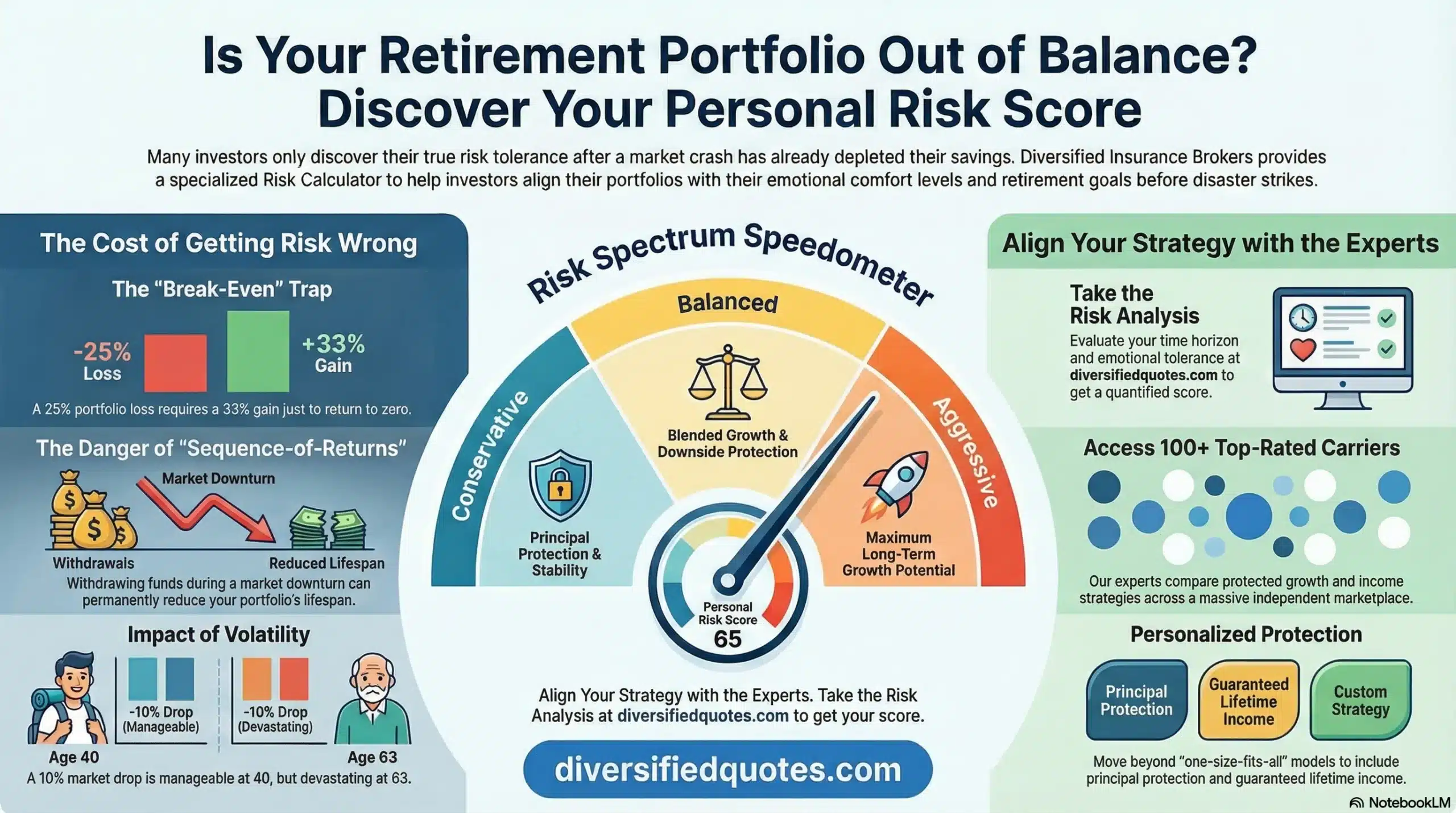
Talk With an Advisor Today
Choose how you’d like to connect—call or message us, then book a time that works for you.
Schedule here:
calendly.com/jason-dibcompanies/diversified-quotes
Licensed in all 50 states • Fiduciary, family-owned since 1980
Frequently Asked Questions: Investment Risk Analysis
What is the difference between volatility and real investment risk?
Volatility measures how much prices move in a given period. Real investment risk is the probability that your financial plan breaks — that you are forced to sell at a loss, cut income when you did not want to, or fall short of long-term goals because the portfolio required conditions that did not occur. A portfolio can be highly volatile and still be suitable for a long-timeline investor with stable income and the discipline to hold through drawdowns. A portfolio can also appear stable on paper while carrying concentrated systemic risk that has not been tested recently. The distinction matters because managing volatility alone does not protect a retirement income plan from sequence-of-returns damage, forced selling, or the behavioral spiral that starts when reality diverges too far from expectations. Risk analysis looks at both — how much a portfolio moves in normal times, and how it might behave when the environment turns genuinely stressful.
What is sequence-of-returns risk and why does it matter in retirement?
Sequence-of-returns risk is the danger that poor investment returns early in retirement — while withdrawals are occurring — permanently damage a portfolio’s ability to sustain income later. Two investors with the same average return over 20 years can have dramatically different outcomes depending on whether good years or bad years arrived first. If a significant market decline happens in year two of retirement while you are withdrawing 4% or 5% annually, you are selling assets at depressed values and reducing the portfolio’s recovery capacity for the decades ahead. The damage is asymmetric: it is far harder to recover from early losses under withdrawal conditions than from the same losses during accumulation. This is why the five years before and after retirement are often called the “fragile decade” — and why understanding what a portfolio could do during a stress scenario matters so much more at that point than at any other stage of the financial plan. Building a guaranteed income floor that reduces dependence on market-driven withdrawals during vulnerable years is one of the most direct responses to this risk.
Why can a “diversified” portfolio still behave like one concentrated bet?
Because diversification across fund names is not the same as diversification across risk factors. A portfolio holding ten mutual funds can be highly concentrated if those funds share similar sector exposures, similar factor tilts — such as growth, momentum, or technology — or similar sensitivity to the same macroeconomic drivers like interest rates or earnings multiples. In normal markets, those funds may move somewhat independently. In a stress scenario, correlations tend to rise sharply, and assets that appeared to diversify one another in calm periods move together when volatility spikes. This is correlation risk, and it is one of the most common sources of unpleasant surprise during a market downturn. Investors who held what they believed were diversified portfolios during broad market selloffs often discovered that most of their positions fell simultaneously because they were all exposed to the same underlying driver. A proper risk analysis maps the actual factor exposures and stress correlations across holdings — not just the names on the statement.
Does moving into bonds and income funds eliminate risk?
Not necessarily. Interest rate sensitivity is a real and often underestimated risk inside conservative allocations. When interest rates rise, bond prices fall — and depending on the portfolio’s duration, credit quality, and structure, that decline can be substantial. During periods of rapid rate increases, long-duration bond funds can lose as much value as moderate equity allocations, creating drawdowns in portfolios that were positioned to be “safe.” If the investor is drawing income simultaneously, those declines affect the plan the same way equity drawdowns do — through forced selling at depressed values and reduced recovery capacity. A risk analysis that focuses only on equity volatility misses this. The full picture needs to include rate sensitivity, how different fixed income categories behave under rate stress, and whether the portfolio’s stability assumptions hold under the conditions that are most likely to challenge them — not just the ones that were most common in the recent past.
Does a risk review always lead to major portfolio changes?
No — and that is an important point. Many risk reviews confirm that a portfolio is appropriately positioned for the investor’s timeline, income needs, and risk tolerance. In those cases, the value of the analysis is confidence: you stop second-guessing a plan that is working. When adjustments are indicated, they are usually incremental — reducing a sector concentration that has drifted upward during a bull market, adding a contractual income layer to reduce dependence on market-driven withdrawals during the fragile years around retirement, or rebalancing to bring exposures back in line with the original design. The objective is never “change everything.” It is to improve the plan’s resilience so that a bad market cycle does not force a stressful decision at the worst possible time. Small structural improvements made during calm markets are almost always easier and less expensive than reactive changes forced by drawdowns. Risk analysis is how you identify those opportunities before they become problems.
About the Author:
Jason Stolz, CLTC, CRPC, DIA, CAA and Chief Underwriter at Diversified Insurance Brokers (NPN 20471358), is a senior insurance and retirement professional with more than 25 years of real-world experience helping individuals, families, and business owners protect their income, assets, and long-term financial stability. As a long-time partner of the nationally licensed independent agency Diversified Insurance Brokers, Jason provides trusted guidance across multiple specialties—including fixed and indexed annuities, long-term care planning, personal and business disability insurance, life insurance solutions, Group Health, Travel Medical and Evacuation Insurance, and short-term health coverage. Diversified Insurance Brokers maintains active contracts with over 100 highly rated insurance carriers, ensuring clients have access to a broad and competitive marketplace.
His practical, education-first approach has earned recognition in publications such as VoyageATL, and contributions from his agency featured in Kiplinger and GoBankingRates— highlighting his commitment to financial clarity and client-focused planning. Drawing on deep product knowledge and years of hands-on field experience, Jason helps clients evaluate carriers, compare strategies, and build retirement and protection plans that are both secure and cost-efficient. Visitors who want to explore current annuity rates and compare options across multiple insurers can also use this annuity quote and comparison tool.
Explore More Annuity Options: Browse our complete guide to How Much Does an Annuity Pay? — covering annuity payout calculators, income amounts & interest rates by investment size from 100+ carriers.
Last Reviewed: June 13, 2026 |
Reviewed by: Jason Stolz, CLTC, CRPC, DIA, CAA
Chief Underwriter, Diversified Insurance Brokers, Inc. | NPN: 20471358 | Diversified Insurance Brokers, Inc. — Licensed in all 50 states
Fact Checked by: Tonia Pettitt, CMIP©
Medicare Specialist, Diversified Insurance Brokers, Inc. | NPN: 14374308 | Diversified Insurance Brokers, Inc. — Licensed in all 50 states
Did you find this content helpful? Leave us a Google review — it helps others find trustworthy guidance too.
Editorial Standards: Diversified Insurance Brokers maintains rigorous editorial standards to ensure accuracy, clarity, and independence in all content. Learn more about our editorial standards and commitment to transparency.
