
Life Insurance for Cancer Survivors

Jason Stolz CLTC, CRPC
Life insurance for cancer survivors is absolutely possible—but the right outcome depends on the type of cancer, the stage and grade at diagnosis, how long you’ve been stable, and how clean your follow-up documentation is today. Many people assume that a cancer history automatically triggers a decline, but that’s not how most underwriting works. Carriers typically do not “decline because of the word cancer.” They decline because the file looks too recent, too unclear, too high-risk, or too unpredictable based on what’s documented.
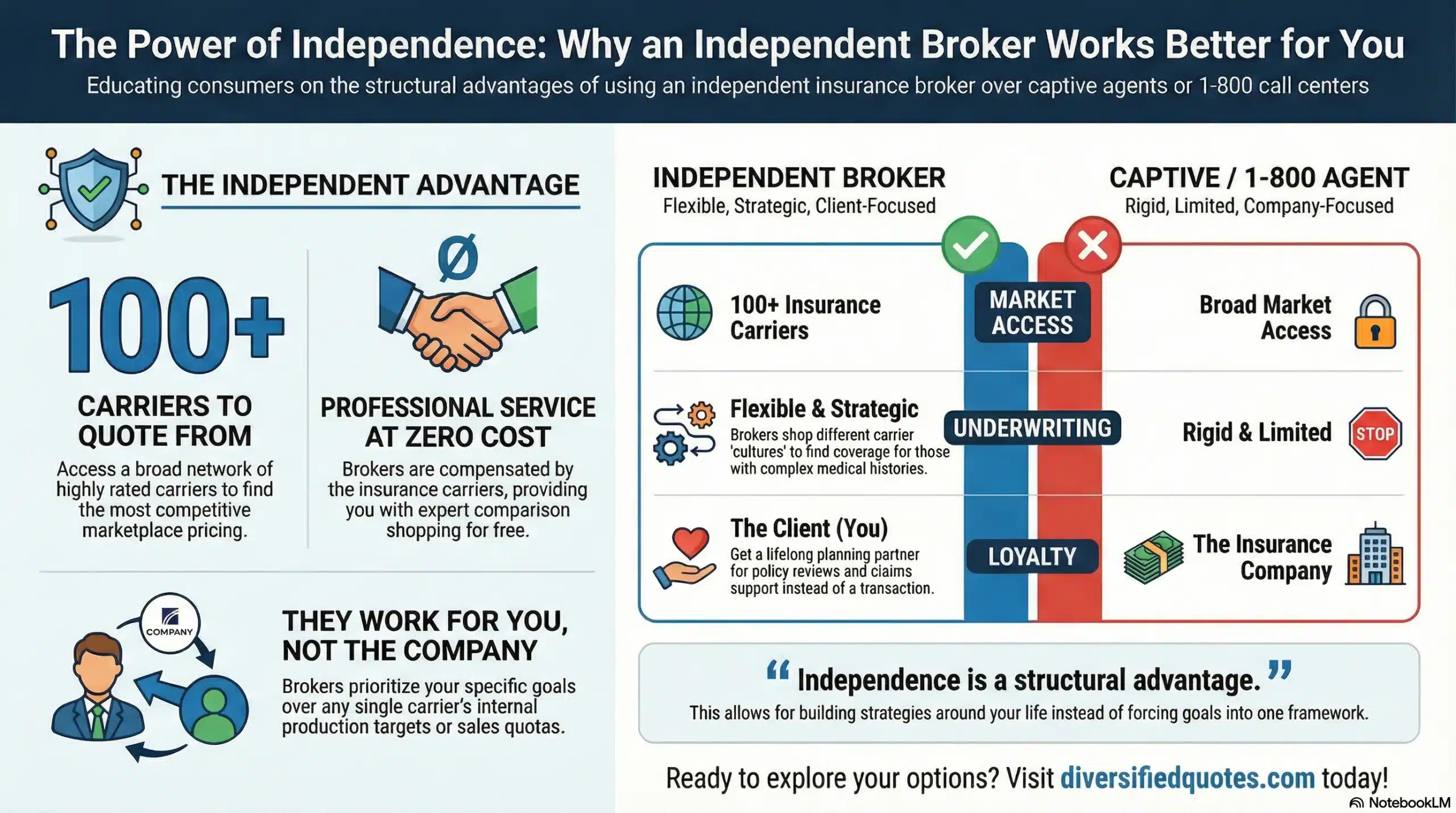
At Diversified Insurance Brokers, we help cancer survivors secure meaningful coverage through our network of 100+ top-rated carriers. We specialize in cases that don’t fit neatly into an online quoting box. If you’ve already been rated higher than expected, postponed, or declined, our job is to step back, look at your full file, and match you to carriers that evaluate cancer history with the most realistic underwriting lens.
Here’s the most important thing to understand: cancer underwriting is not a single rule. Every carrier has its own appetite, waiting periods, and internal risk guidelines. Two survivors with the same diagnosis can receive very different outcomes depending on what the underwriter sees in the medical timeline, what the follow-up pattern looks like, and whether the case is “clean” enough to feel predictable.
This page breaks down how life insurance companies underwrite cancer survivors, what documentation helps most, which policy types are typically available, and how to avoid the most common mistakes that cause unnecessary declines. If you’re also dealing with other medical issues beyond cancer, you may want to review our broader guide to life insurance with pre-existing conditions because many files are evaluated as a cumulative risk profile—not a single diagnosis.
Life Insurance for Cancer Survivors
We’ll match your cancer history to carriers that regularly consider survivorship cases—so you can see realistic options without guessing.
Talk with an advisor who understands post-cancer underwriting and carrier differences.
Can Cancer Survivors Get Life Insurance?
Yes—many cancer survivors qualify for life insurance, including traditional term and permanent policies. The deciding factor is not simply whether you had cancer, but what your cancer history looks like now in terms of risk and stability. Most carriers want a clear diagnosis and treatment timeline, predictable follow-up care, and a stable period where medical records show no evidence of recurrence.
Even when a survivor is eligible, the price can vary widely depending on the carrier. One insurer might treat your history conservatively and offer a heavier rating, while another might view your stability more favorably and offer a better class. That’s why working with an independent agency matters. A single carrier’s response is not the market. It’s one company’s risk appetite.
If you’re exploring the “big picture” of how underwriting works, and why results differ so much between companies, our guide to underwriting for medical conditions is a strong companion resource—especially for cancer survivors with multiple diagnoses, prescriptions, or other long-term monitoring.
Why Cancer Underwriting Is More Nuanced Than People Expect
Cancer is one of the most heavily underwritten categories in life insurance because carriers are trying to evaluate long-term recurrence risk. But underwriters are not making decisions based on fear or assumptions—they’re evaluating the medical record and applying guidelines that reflect probability and time-based stability.
There are three big reasons cancer underwriting becomes nuanced:
First, “cancer” includes a massive range of diagnoses—from early-stage cancers treated surgically with low recurrence risk, to aggressive cancers requiring complex treatment and long-term monitoring.
Second, the same cancer type can look very different depending on stage, grade, pathology results, and whether the cancer was localized or spread beyond the primary site.
Third, cancer has a time component. Many cases improve over time as stability increases. An application that gets postponed at year one may be approved at year three. A case rated heavily in early survivorship may become much more affordable after additional cancer-free years.
What Life Insurance Companies Look At for Cancer Survivors
Underwriters evaluate cancer survivors using practical questions that translate into risk. They’re not looking for perfection. They’re looking for clarity, stability, and predictable follow-up. Here are the factors that usually matter most:
1) Type of Cancer
Different cancers are treated differently by insurers. Some cancers have more favorable survivorship expectations. Others carry higher relapse or mortality assumptions. This is why the “type” matters so much before anyone can give a realistic quote expectation.
For example, survivors who are also researching cancer-specific pages may find these helpful depending on their history:
- Life Insurance for Breast Cancer Survivors
- Life Insurance After Bladder Cancer
- Life Insurance After Colon Cancer
Even within one cancer type, underwriting outcomes can shift based on stage, grade, and treatment course. That’s why we always advise survivors to avoid generic “cancer quotes” until the diagnosis details are clear.
2) Stage, Grade, and Pathology Details
Stage describes how far the cancer progressed at diagnosis. Grade describes how aggressive or abnormal the cancer cells appeared. Underwriters pay close attention to both because they often correlate with recurrence risk and long-term prognosis.
In general, earlier stages underwrite better than advanced stages. Localized cancer histories are usually treated more favorably than cancers that involved lymph nodes, metastasis, or complex multi-region treatment.
Pathology reports and surgical notes matter more than many survivors realize. Underwriters often rely on pathology information to confirm what the cancer was, what the margins looked like, and whether there were additional risk markers that change long-term expectations.
3) Time Since Treatment Completion (and Time Since Remission)
Carriers often apply a “waiting period” concept for cancer survivorship, but that waiting period is not universal across carriers. Some cancers require more time than others. Some carriers are more flexible when documentation is clean and the overall health file is strong.
What matters is whether the file reflects meaningful stability: clean follow-up, no recurrence signals, and consistent medical oversight. The longer the stable period, the more likely it is that stronger policy options open up.
4) Recurrence History and Follow-Up Monitoring
Recurrence history has one of the biggest impacts on underwriting outcomes. Even if recurrence does not automatically mean a decline, it usually changes the carrier’s timeline and pricing assumptions.
Underwriters want to see a normal follow-up routine that matches the cancer type. This can include oncology notes, imaging, labs, and specialist visits. A record that shows consistent surveillance and stable outcomes tends to underwrite better than a record with gaps, missed follow-ups, or unclear results.
5) Treatment Type and Treatment Response
Underwriters also look at what treatment was required and how intensive it was. They often differentiate between cases treated surgically with a clean follow-up, and cases that required multi-line therapy or long-term ongoing treatment.
Treatment types that underwriters commonly review include:
- Surgery (including margin status and scope)
- Chemotherapy (including regimen and completion date)
- Radiation therapy
- Immunotherapy or targeted therapy
- Hormone therapy (ongoing medication monitoring)
It’s important to understand that being on ongoing maintenance medication does not automatically mean you cannot qualify. But it does change how the carrier frames stability and timing.
6) Overall Health Profile and Compounding Underwriting Factors
Even with a stable cancer history, underwriters still price the full file. That includes build (height and weight), blood pressure, cholesterol, diabetes, tobacco use, sleep apnea, cardiac history, and more.
This is especially important because cancer survivors sometimes focus only on the cancer, but forget that a carrier can still rate the policy based on other health factors. In many cases, the best way to improve your life insurance outcome is to have the cancer history stabilized and the overall health file cleaned up as much as possible.
What Types of Life Insurance Are Available After Cancer?
Cancer survivors often have more options than they expect—especially if enough time has passed and medical follow-ups look clean. The most common policy categories include:
Term Life Insurance for Cancer Survivors
Term life insurance is usually the first place we start when the goal is straightforward: protect your family during peak earning years, cover debt obligations, or replace income if something happens early. Term coverage generally offers the most death benefit per premium dollar, which is why it’s often the cleanest fit for cancer survivors who qualify at an acceptable class.
Carriers may still apply a rating depending on stage and timing, but many survivors are surprised to learn they can lock in meaningful coverage even if the pricing isn’t “preferred.” The goal is to secure the right coverage amount at a premium that makes sense for the years it needs to protect.
If you’re trying to understand what the exam process may look like, and why some survivors are asked for more documentation, you may also want to read: What Is a Life Insurance Exam?.
Permanent Life Insurance (Whole Life and Universal Life)
Permanent coverage can be an option for survivors who want lifelong protection, estate planning structure, or coverage that doesn’t expire. Some survivors choose permanent coverage because they want to secure it while stable, rather than risk future insurability changes.
Permanent coverage can be more expensive, and underwriting can be conservative depending on cancer type and timing. But when structured correctly, it can still be a valuable tool—especially for clients who want stability and long-term certainty.
If you’ve been thinking about whether life insurance is “worth it” as part of a broader strategy, you may find value in: Is Life Insurance a Good Investment?.
Simplified Issue and Guaranteed Issue Options
If you do not currently qualify for traditionally underwritten coverage, simplified issue or guaranteed issue coverage may still be available. These plans can be helpful when you need immediate coverage, but the cancer history is too recent or too complex for full underwriting.
These policies often offer smaller face amounts and may cost more per dollar of coverage, but they can still provide meaningful protection. For some survivors, a smaller guaranteed plan serves as a temporary bridge until they become eligible for larger coverage later.
Another option many cancer survivors explore—especially if traditional underwriting is not available—is final expense coverage. You can learn more here: Burial Insurance for Cancer Survivors.
Who Usually Qualifies for the Best Post-Cancer Life Insurance Outcomes?
There isn’t one universal answer, but in practice, the strongest cases often share similar characteristics: stable follow-up, clean records, and a low-risk overall health profile. Many of the best outcomes happen for survivors who:
- Completed treatment and have remained stable over time
- Have clear oncology follow-up notes and monitoring history
- Show no evidence of recurrence in recent records
- Have good control of blood pressure, cholesterol, and other health markers
- Do not currently use tobacco (and have a consistent non-tobacco history)
Even if you don’t check every box above, coverage may still be possible. But those categories help explain why underwriting outcomes can vary widely between survivors.
Why Many Cancer Survivors Get Declined (Even When They Shouldn’t)
Most avoidable declines come down to process. Survivors often get declined because the application went to a carrier that is not receptive to that cancer history, the file lacked staging and treatment clarity, the case was submitted too soon after treatment, or the carrier was forced to “assume risk” because documentation was incomplete.
Another common problem is using a direct-to-consumer quoting platform that doesn’t understand survivorship nuance. Those systems are often built for simplified underwriting assumptions, not complex medical files. That can lead to “automatic no” outcomes even when other carriers would consider the case.
If you’ve already experienced a decline and want to understand next steps, this guide is useful: What If You’re Denied Life Insurance? Here’s What to Do Next.
How Diversified Insurance Brokers Shops Cancer Survivor Cases
We don’t take a cancer survivor file and “throw it at one carrier.” That’s one of the fastest ways to create a frustrating experience. Instead, we focus on carrier selection, documentation clarity, and realistic underwriting expectations before we ever submit a formal application.
Because we’re independent and work with 100+ top-rated carriers, we can compare underwriting philosophies across the market. Some companies treat certain cancers more favorably than others. Some accept earlier survivorship windows. Some are simply more consistent in how they interpret follow-up monitoring and stability.
Our goal is not to “sell a policy at any cost.” Our goal is to help you secure coverage that actually fits your timeline and budget—while avoiding unnecessary declines that can complicate future options.
Start a Cancer Survivor Quote Review
We’ll review your diagnosis timeline and follow-up stability and match you to carriers that regularly consider survivorship cases.
Related Pages
More resources that pair well with cancer survivorship underwriting and high-risk approvals.
Compare Term Life Insurance Lengths
Explore different term periods to find coverage that best matches your timeline and budget.
Talk With an Advisor Today
Choose how you’d like to connect—call or message us, then book a time that works for you.
Schedule here:
calendly.com/jason-dibcompanies/diversified-quotes
Licensed in all 50 states • Fiduciary, family-owned since 1980
FAQs: Life Insurance for Cancer Survivors
Can cancer survivors get life insurance?
Yes—many cancer survivors can still qualify for life insurance. Approval and pricing usually depend on the cancer type, stage/grade at diagnosis, time since treatment ended, and your current health and follow-up history.
What factors do insurers evaluate for survivors?
Carriers typically review the specific cancer type, stage and grade, treatment details, time since last treatment, recurrence history, current surveillance and test results, and overall health factors like tobacco use, build, blood pressure, and other conditions.
How long should I wait after remission to apply?
There isn’t a single rule, but many carriers look for a period of stability after treatment—often 2–5 years for many cancers. Some low-risk cancers may be considered sooner, while higher-risk cancers may require more time and stronger documentation.
What insurance policies are typically available?
Depending on your history, you may be eligible for medically underwritten term life insurance or permanent coverage (whole life or universal life). If traditional underwriting isn’t available yet, simplified issue, guaranteed issue, or final expense policies may still provide coverage—usually with lower face amounts and higher cost per dollar of benefit.
What rate or classification differences might I see?
Cancer survivors commonly see Standard or table-rated offers, especially in the years immediately after treatment. As more cancer-free time passes and follow-ups remain clear, offers can improve. Different carriers also interpret cancer history differently, so shopping matters.
How can I improve my chances of better offers?
Strong outcomes usually come from complete records and documented stability: pathology and staging details, a clear treatment summary, current follow-up notes and test results, consistent surveillance, no tobacco use, and good control of other health factors. Working with an independent broker who can match your profile to the right carriers can also reduce declines and improve pricing.
About the Author:
Jason Stolz, CLTC, CRPC and Chief Underwriter at Diversified Insurance Brokers (NPN 20471358), is a senior insurance and retirement professional with more than two decades of real-world experience helping individuals, families, and business owners protect their income, assets, and long-term financial stability. As a long-time partner of the nationally licensed independent agency Diversified Insurance Brokers, Jason provides trusted guidance across multiple specialties—including fixed and indexed annuities, long-term care planning, personal and business disability insurance, life insurance solutions, Group Health, and short-term health coverage. Diversified Insurance Brokers maintains active contracts with over 100 highly rated insurance carriers, ensuring clients have access to a broad and competitive marketplace.
His practical, education-first approach has earned recognition in publications such as VoyageATL, highlighting his commitment to financial clarity and client-focused planning. Drawing on deep product knowledge and years of hands-on field experience, Jason helps clients evaluate carriers, compare strategies, and build retirement and protection plans that are both secure and cost-efficient. Visitors who want to explore current annuity rates and compare options across multiple insurers can also use this annuity quote and comparison tool.
