
Life Insurance for Race Car Driving

Jason Stolz CLTC, CRPC
At Diversified Insurance Brokers, we help both professional and recreational race car drivers secure affordable, high-quality life insurance—even when other agents or direct carriers struggle to place coverage. Motorsports are often categorized as a high-risk avocation by insurers, which can lead to inflated premiums, restrictive terms, or outright declines when the application is not handled strategically.
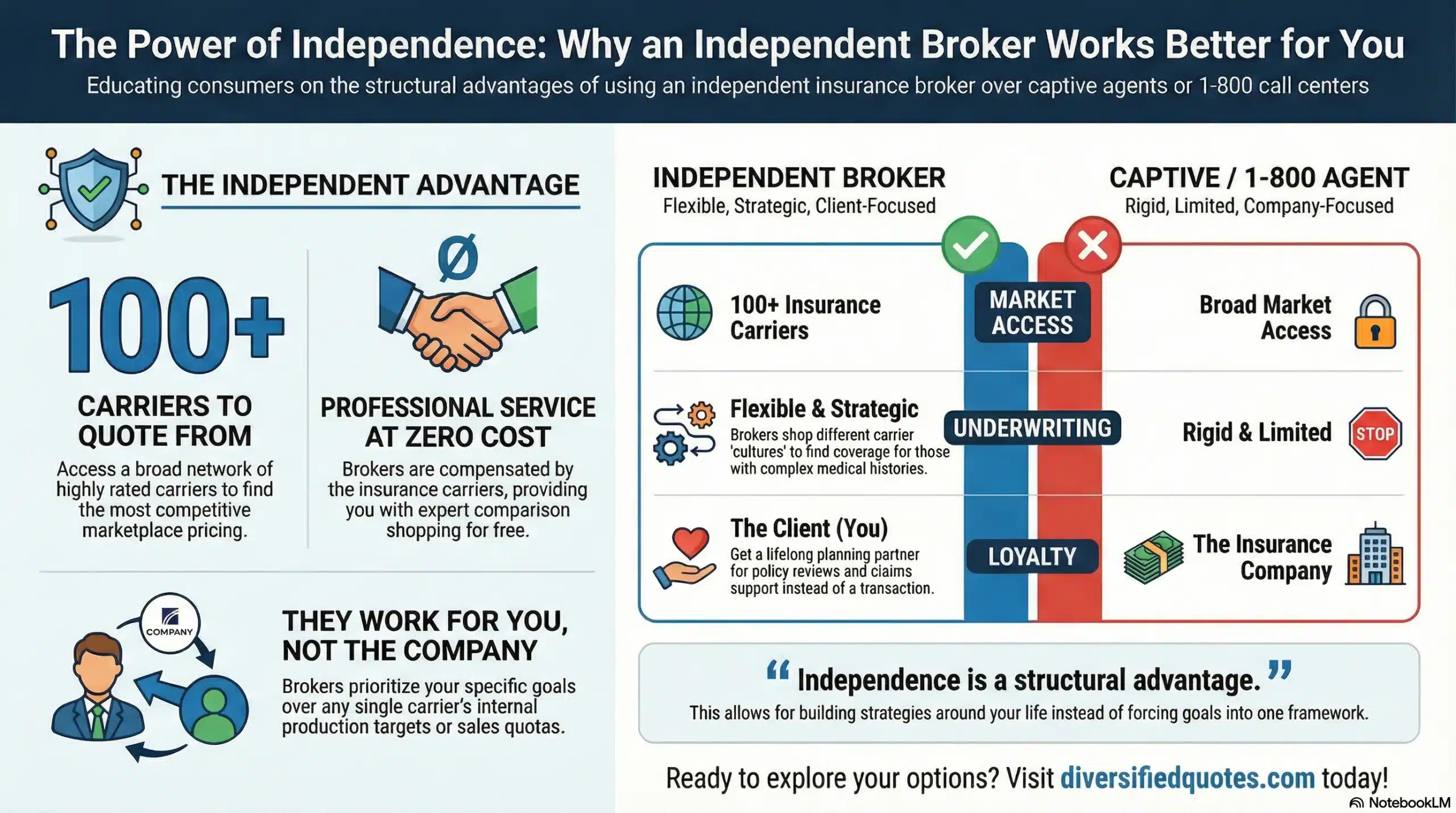
As an independent brokerage with access to more than 100 A-rated insurance companies, we specialize in high-risk underwriting scenarios. That includes motorsports, where underwriting outcomes vary dramatically depending on how a driver’s experience, safety practices, and competition level are presented. Our role is not just to find coverage, but to match your racing profile with insurers that evaluate motorsports fairly and realistically—and to structure the submission so an underwriter can classify the risk accurately instead of defaulting to worst-case assumptions.
Whether you race occasionally as a hobby, compete regularly in organized leagues, or participate professionally, the right underwriting strategy can make a significant difference in both approval and cost. For many drivers, the “problem” isn’t their racing. The problem is that the first submission was sent to a carrier that doesn’t differentiate between track-day participation and professional circuit exposure, or it was submitted without the documentation that helps an underwriter price the risk appropriately.
Life Insurance for Race Car Drivers
Racing does not mean you are uninsurable. We help motorsports participants obtain coverage that reflects real-world risk—not blanket assumptions.
Get a Race Car Driver Life Insurance Quote Compare Rates Now
Work with advisors who understand motorsports underwriting.
Why Race Car Driving Triggers Additional Underwriting
Life insurance companies classify race car driving as a higher-risk avocation due to inherent exposure to speed, mechanical failure, and collision risk. Underwriters also consider factors that are specific to motorsports: the potential for high-impact trauma, the variability of track conditions, and the reality that “racing” can range from tightly controlled amateur track events to professional-level competition with frequent seat time.
However, underwriting is not one-size-fits-all. Insurers distinguish between casual hobby racers and individuals engaged in frequent or professional competition—at least the carriers with more modern guidelines do. The issue is that not every company spends the time to separate those categories, and some underwriting systems default to conservative assumptions whenever they see the word “racing” on an application.
This is one reason many race car drivers receive unfavorable quotes through direct-to-consumer platforms. Those systems often ask broad questions, route the application through a generic workflow, and never give you a chance to clarify the details that actually matter. A driver who races a handful of weekends per year at a certified track can be quoted the same way as a driver competing year-round in more hazardous conditions, simply because the nuance was never captured.
Our approach is to make the nuance unmistakable. We help you frame your activity in underwriting terms—frequency, level, safety practices, equipment, track standards, and experience—so a carrier can classify the risk appropriately. When the underwriting story is clear and documented, many drivers have options beyond “decline” or “guaranteed issue only.”
The Factors Underwriters Evaluate for Race Car Drivers
Motorsports underwriting usually starts with two questions: what exactly do you do, and how often do you do it? From there, underwriters evaluate multiple layers of detail that can influence whether racing results in an added premium, a flat extra charge, a policy exclusion, or no change at all.
Type of racing and environment is one of the first considerations. Drag racing, stock car racing, open-wheel competition, karting, off-road racing, drifting, track-day events, and autocross are not identical risk profiles. Some insurers treat them similarly; others categorize them separately. Even within a category, “where” you race matters: sanctioned tracks and regulated events are typically easier to underwrite than informal street racing (which is usually uninsurable under traditional carriers).
Frequency and seat time often drives pricing. Underwriters look at how many events you participate in per year, how many days you are on track, and whether you race competitively or participate in controlled instruction/track-day settings. A driver with limited annual participation may be reviewed more favorably than a driver with frequent exposure.
Competition level matters because it often correlates with speed, intensity, and risk tolerance. Local amateur events are typically viewed more favorably than national circuits or professional competition. That doesn’t mean professional drivers are uninsurable; it means the insurance company needs to price the increased exposure in a predictable way.
Experience and driving history within motorsports can help. Many carriers ask for years of experience, any serious accidents, and whether you have a history of injuries related to racing. A stable racing history with strong safety habits can improve how an underwriter perceives the overall risk.
Safety practices and compliance can meaningfully influence outcomes. Underwriters often respond better when racing is conducted under structured rules and sanctioned safety standards. Items that can help include certified tracks, roll cages where applicable, HANS devices, current helmets, fire-retardant suits, harness systems, vehicle inspections, pit crew discipline, and evidence of participation in regulated leagues or organizations with clear safety rules.
Vehicle class and modifications can also matter. Underwriters may ask about the type of vehicle, performance characteristics, and whether the vehicle is built to the safety specifications required for your class. Some carriers don’t go deep here; others do, especially when they’re deciding between a modest flat extra and a more conservative approach.
Off-track driving record can affect the overall picture. A clean personal driving record can help underwriting confidence. Conversely, a pattern of reckless driving citations can raise broader risk concerns even if your racing is controlled and documented.
Finally, carriers still underwrite the fundamentals: age, overall health, medical history, tobacco/nicotine use, and build. Racing is typically an added layer on top of standard underwriting, not a replacement for it. If you have medical history in addition to motorsports exposure, it’s helpful to understand how insurers approach life insurance with pre-existing conditions so you can anticipate what will matter most.
How Different Types of Racing Are Viewed by Insurers
In underwriting, the phrase “race car driver” is too broad to be useful. The best underwriting outcomes happen when we translate your motorsports activity into a clear category with measurable risk controls. While carrier guidelines vary, insurers often think about racing in groupings that align with speed exposure, impact risk, and environmental control.
Track-day and instructional events are often easier to position, particularly when the activity is conducted at certified tracks under structured rules. These events can still be rated by some carriers, but the underwriting conversation is usually more manageable when frequency is limited and safety standards are clear.
Autocross and lower-speed competition formats can sometimes be viewed more favorably because speeds are lower and the environment is controlled. Some carriers still apply a blanket rating, but others may be more flexible depending on frequency and competition level.
Stock car racing and organized leagues are commonly underwritten using frequency and competition tier as the main drivers. If the racing is amateur and infrequent, the added cost may be a modest flat extra. If the activity is frequent, the underwriter may apply heavier pricing.
Drag racing can be treated conservatively by many insurers because of speed and impact dynamics. That said, the underwriting outcome still depends on how often you compete, whether the events are sanctioned, and what safety measures are in place. A structured, certified environment with limited annual participation can be positioned far differently than frequent high-stakes competition.
Open-wheel racing is often treated more conservatively due to exposure and impact risk. Not all carriers will consider it for traditional coverage, but some will—particularly with sufficient documentation and a clear track record.
Off-road racing introduces additional environmental unpredictability, which can narrow the carrier pool. Again, outcomes vary widely by insurer, which is why “carrier selection is the strategy” matters more for motorsports than it does for many other hobbies.
If your racing profile overlaps with other avocations insurers view as higher-risk, it can help to see how carriers approach similar categories. Many race car drivers compare underwriting to activities like skydiving or technical scuba diving. The key takeaway is that many carriers can be reasonable when risk is controlled, documented, and clearly described.
How Racing Affects Pricing: Tables vs. Flat Extras vs. Exclusions
One of the most frustrating parts of motorsports underwriting is that pricing can be applied in different ways—and the “way” it’s applied can change the long-term cost more than drivers realize. Underwriters may use a table rating, a flat extra, an exclusion, or a combination, depending on the carrier and the profile.
Table ratings adjust the base premium class. This is often used when the carrier views the overall risk profile as elevated in a way that affects longevity expectations. Table ratings can increase the cost across the entire premium, and they remain part of the policy pricing.
Flat extras are extremely common for racing and other high-risk avocations because the carrier is pricing a specific additional exposure. A flat extra typically adds a dollar amount per $1,000 of coverage per year, which means it scales with the face amount. For example, a flat extra might add a fixed charge per thousand of coverage rather than shifting the entire policy into a higher class.
Because flat extras are so common in motorsports cases, understanding how they work is important when comparing offers. This guide explains what a flat extra is in life insurance and why two quotes can look “similar” while being priced in very different ways.
Exclusions are less common in modern individual life insurance for mainstream underwriting, but they can still appear, especially with certain carriers or certain racing profiles. An exclusion can limit benefits if death occurs during a racing activity. Our job is to review carrier language carefully so you know exactly what you’re buying and whether the coverage matches the purpose of the policy.
Why quote comparisons can be misleading is simple: one carrier may offer a lower base premium but add a flat extra, while another offers a higher base rate class but no flat extra. The best choice depends on your face amount, term length, and how long you plan to keep the coverage. That’s why we compare offers side by side and explain the mechanics, not just the monthly payment.
It’s also worth noting that racing is not the only factor in final pricing. Traditional underwriting factors like build, blood pressure, cholesterol, family history, and lab results still matter. If you’re unfamiliar with what carriers evaluate during underwriting, this page on what a life insurance exam is explains what’s typically collected and why it affects rates.
How to Improve Approval Odds and Reduce Cost
When racing is part of your lifestyle, the goal is not to “hide” it. The goal is to present it correctly so you’re not priced as if you’re doing something far riskier than you actually are. Underwriters respond best to clarity, consistency, and documentation.
Be specific about what you do. “I race cars” is too vague. It leaves the carrier guessing. A clearer statement might describe the racing type, the track environment, whether events are sanctioned, and how often you participate. This reduces the chance that the underwriter assumes the highest-risk version of racing.
Document frequency honestly. Underwriters often care more about how many events you do per year than the fact that you do motorsports at all. A driver with limited annual participation can often be priced far differently than a driver with frequent exposure.
Highlight safety practices. Safety doesn’t eliminate risk, but it demonstrates discipline and reduces uncertainty. Details that can help include track certification, sanctioned league participation, required safety gear, inspections, and a consistent approach to risk management.
Keep the rest of your file clean. Racing is one layer of risk. If there are other avoidable red flags—uncontrolled blood pressure, inconsistent follow-ups for medical issues, undisclosed tobacco use, or poor build metrics—those can compound the rating. If you have a medical condition in addition to racing, a structured approach to pre-existing condition underwriting becomes even more important.
Avoid unnecessary “trial” applications. Motorsports cases can be carrier-sensitive. Submitting to the wrong carrier can result in a decline that you then have to disclose. We prefer to pre-evaluate and submit only when the target carriers match your profile. This reduces delays and improves outcomes.
Consider the right face amount and structure. Because flat extras scale with face amount, some drivers choose a layered strategy: a larger term policy with a modest flat extra, plus a smaller permanent policy for lifelong coverage needs. That structure can balance cost while still protecting the core financial goal.
Choosing the Right Policy Strategy for Motorsports Participants
Race car drivers typically choose between term coverage, permanent coverage, or a blended strategy depending on what they want the policy to accomplish. The “best” approach is the one that creates meaningful protection you can keep in force—without paying for more coverage than your household needs.
Term life insurance is often the first choice when the goal is income replacement, mortgage protection, or protecting a family during the years when financial responsibilities are highest. Term insurance can be very cost-effective, and many drivers can qualify even with motorsports exposure—though the final pricing may include a flat extra depending on the case.
Permanent life insurance can be useful when the goal includes lifelong coverage, legacy planning, or ensuring the policy is designed to stay in force regardless of future insurability. Some race car drivers like permanent coverage as an “anchor” policy, then add term coverage for additional temporary needs.
Layering coverage is often the most practical strategy for high-risk avocations. For example, a driver might secure a 20-year term policy to cover major obligations and add a smaller permanent policy for long-term stability. This allows you to protect the family’s core needs while keeping monthly cost manageable.
If you currently have group coverage through an employer or association, you’ll also want to understand how long that coverage stays with you and whether it follows you through career transitions. This comparison of group vs. individual life insurance explains why many clients use both.
Finally, if you’re planning to start with term but want flexibility later, the ability to convert term coverage can matter. This page explains term conversion and why it can be valuable if health changes in the future.
Best Time to Apply and What to Expect During Underwriting
Motorsports applicants often ask whether they should apply “during the season” or “off-season.” There isn’t a universal rule, but there are practical best practices that can reduce friction and improve underwriting clarity.
Underwriting goes more smoothly when you can provide clean, consistent information about your racing calendar and participation level. If your racing activity varies dramatically year to year, it helps to describe an average and clarify your current expectations. Carriers dislike uncertainty. Clear expectations reduce the chance of conservative assumptions.
From a medical standpoint, applying when your overall health profile is stable is typically beneficial. If you recently had a major medical evaluation, updated labs, or you’ve improved key health metrics, that can help you pursue a better base underwriting class—then the racing component is priced on top of that baseline.
In most traditional underwriting cases, the process includes an application, medical history review, possible paramed exam (depending on amount/age), and review of your avocation details. If you want a quick overview of what a carrier typically collects, this guide explains what a life insurance exam is and why results affect pricing.
For some drivers, simplified underwriting options may be available, but racing can still trigger follow-up questions. That’s why the simplest and fastest path is often to start with a short intake, match the case to the right carriers, and then decide which underwriting lane fits your goals and your timeline.
Real-World Race Car Driver Case Example
A 40-year-old amateur stock car driver racing approximately six weekends per year was initially quoted with a severe table rating through a direct carrier. The insurer focused primarily on the motorsports label without fully evaluating the context of the activity, the limited frequency, and the strong safety profile.
By repositioning the application with a carrier that differentiates between recreational and professional competition—and by documenting safety equipment, track certification, and a clean driving record—we secured a $250,000 20-year term policy with only a modest flat extra. The result was a savings of more than $500 per year compared to the original offer, while still providing meaningful family protection that aligned with the client’s goals.
This is a common pattern in motorsports cases: the best outcome is often not about changing the racing activity. It’s about selecting the carrier that evaluates racing appropriately and presenting the file in a way that makes the underwriter’s job easy.
If you participate in motorsports and want coverage that reflects your actual risk—not generic assumptions—the right underwriting strategy is essential. The first step is a quick intake so we can match your racing profile to the carriers most likely to produce a fair, competitive offer.
Want a Quote That Matches Your Actual Racing Profile?
We’ll compare motorsports-friendly carriers and explain pricing clearly—including whether a flat extra is likely.
Compare Life Insurance Rates for Race Car Drivers
View real-time quotes and then let us help you confirm which carriers handle motorsports underwriting most favorably.
Get Expert Help From Motorsports-Savvy Advisors
Share your racing type and frequency, and we’ll match you with carriers that evaluate motorsports fairly.
Compare Term Life Insurance Lengths
Explore different term periods to find coverage that best matches your timeline and budget.
Talk With an Advisor Today
Choose how you’d like to connect—call or message us, then book a time that works for you.
Schedule here:
calendly.com/jason-dibcompanies/diversified-quotes
Licensed in all 50 states • Fiduciary, family-owned since 1980
Can I get life insurance if I race cars?
Yes. Both recreational and professional race car drivers can obtain life insurance, though underwriting depends on racing type, frequency, safety measures, and driving history.
Does the type of racing affect underwriting?
Yes. Drag racing, stock car racing, open-wheel, karting, and off-road racing are evaluated differently by insurers.
How do safety measures impact premiums?
Use of certified tracks, safety equipment, and documented protocols can positively influence underwriting outcomes.
What is a flat extra?
A flat extra is a fixed dollar amount added per $1,000 of coverage to account for higher-risk activities like racing.
What if I was declined before?
A prior decline does not mean coverage is impossible. Different insurers apply different underwriting guidelines.
About the Author:
Jason Stolz, CLTC, CRPC and Chief Underwriter at Diversified Insurance Brokers (NPN 20471358), is a senior insurance and retirement professional with more than two decades of real-world experience helping individuals, families, and business owners protect their income, assets, and long-term financial stability. As a long-time partner of the nationally licensed independent agency Diversified Insurance Brokers, Jason provides trusted guidance across multiple specialties—including fixed and indexed annuities, long-term care planning, personal and business disability insurance, life insurance solutions, Group Health, and short-term health coverage. Diversified Insurance Brokers maintains active contracts with over 100 highly rated insurance carriers, ensuring clients have access to a broad and competitive marketplace.
His practical, education-first approach has earned recognition in publications such as VoyageATL, highlighting his commitment to financial clarity and client-focused planning. Drawing on deep product knowledge and years of hands-on field experience, Jason helps clients evaluate carriers, compare strategies, and build retirement and protection plans that are both secure and cost-efficient. Visitors who want to explore current annuity rates and compare options across multiple insurers can also use this annuity quote and comparison tool.
