
Life Insurance for Truck Drivers

Jason Stolz CLTC, CRPC
Life insurance for truck drivers is not only possible—it is often far more affordable than most drivers expect when underwriting is handled correctly. While trucking is considered a higher-risk occupation due to increased time on the road, long hours, fatigue exposure, and accident statistics, life insurance carriers do not treat all truck drivers the same. Pricing and approval outcomes depend heavily on how the risk is documented, how the occupation is classified, and which insurers are approached. At Diversified Insurance Brokers, we specialize in navigating these underwriting nuances to help truck drivers secure coverage that protects their families, income, and businesses without unnecessary surcharges.
A common misconception among truck drivers is that their profession automatically disqualifies them from competitive life insurance rates. In reality, trucking is not a single underwriting category. A local delivery driver with predictable routes and a clean CDL profile is underwritten very differently from a long-haul owner-operator hauling hazardous materials across multiple states. The difference between a standard-rated policy and an expensive, heavily loaded policy often comes down to how clearly the occupational risk is explained and whether the carrier evaluating the case truly understands commercial driving exposure.
This underwriting-first approach mirrors how we handle other complex cases across our high-risk life insurance practice. The occupation alone rarely tells the full story. When trucking risk is framed accurately—rather than broadly assumed—many drivers qualify for far better outcomes than they were initially told.
Why Life Insurance Matters More for Truck Drivers Than Most Professions
Truck driving is one of the most economically vital professions in the country, but it is also one of the most physically and mentally demanding. Long shifts, irregular sleep schedules, time pressure, and extended isolation all contribute to elevated accident and health risks over time. From an actuarial standpoint, this increased exposure is exactly why life insurance becomes more critical for drivers and their families.
If a truck driver passes away unexpectedly, the financial consequences often extend well beyond the loss of household income. Many families depend on trucking income to service mortgages, vehicle loans, health insurance costs, and day-to-day living expenses. In the case of owner-operators, the financial impact can be even more severe. Business debt, equipment leases, and contractual obligations do not disappear when income stops. Life insurance provides immediate liquidity that allows surviving family members to stabilize finances, avoid forced asset sales, and make decisions from a position of strength rather than urgency.
This same income-replacement logic applies across other physically demanding or higher-exposure professions we insure, including construction, aviation, and energy sector roles. Truck drivers, however, face a unique combination of occupational risk and financial dependency that makes properly structured life insurance foundational rather than optional.
How Trucking Occupations Are Actually Underwritten
Life insurance underwriting does not rely on job titles alone. When an underwriter sees “truck driver” on an application, the next step is not automatic pricing—it is clarification. Insurers want to understand the specific nature of the driving exposure because risk varies widely within the profession.
Underwriting typically focuses on several interconnected factors. These include whether the driver operates locally, regionally, or long-haul; whether they are an employee or owner-operator; how many miles and hours are driven annually; the type of cargo hauled; and the overall safety profile reflected in driving records and compliance history. A driver hauling standard consumer goods on predictable routes presents a very different risk profile than one transporting hazardous materials or operating under extreme schedules.
When these details are not clearly documented, underwriters are forced to assume broader exposure. That uncertainty often results in unnecessary premium increases or conservative rating decisions. One of the most common reasons truck drivers are overcharged is not because of their actual risk, but because the carrier lacked sufficient clarity and defaulted to worst-case assumptions.
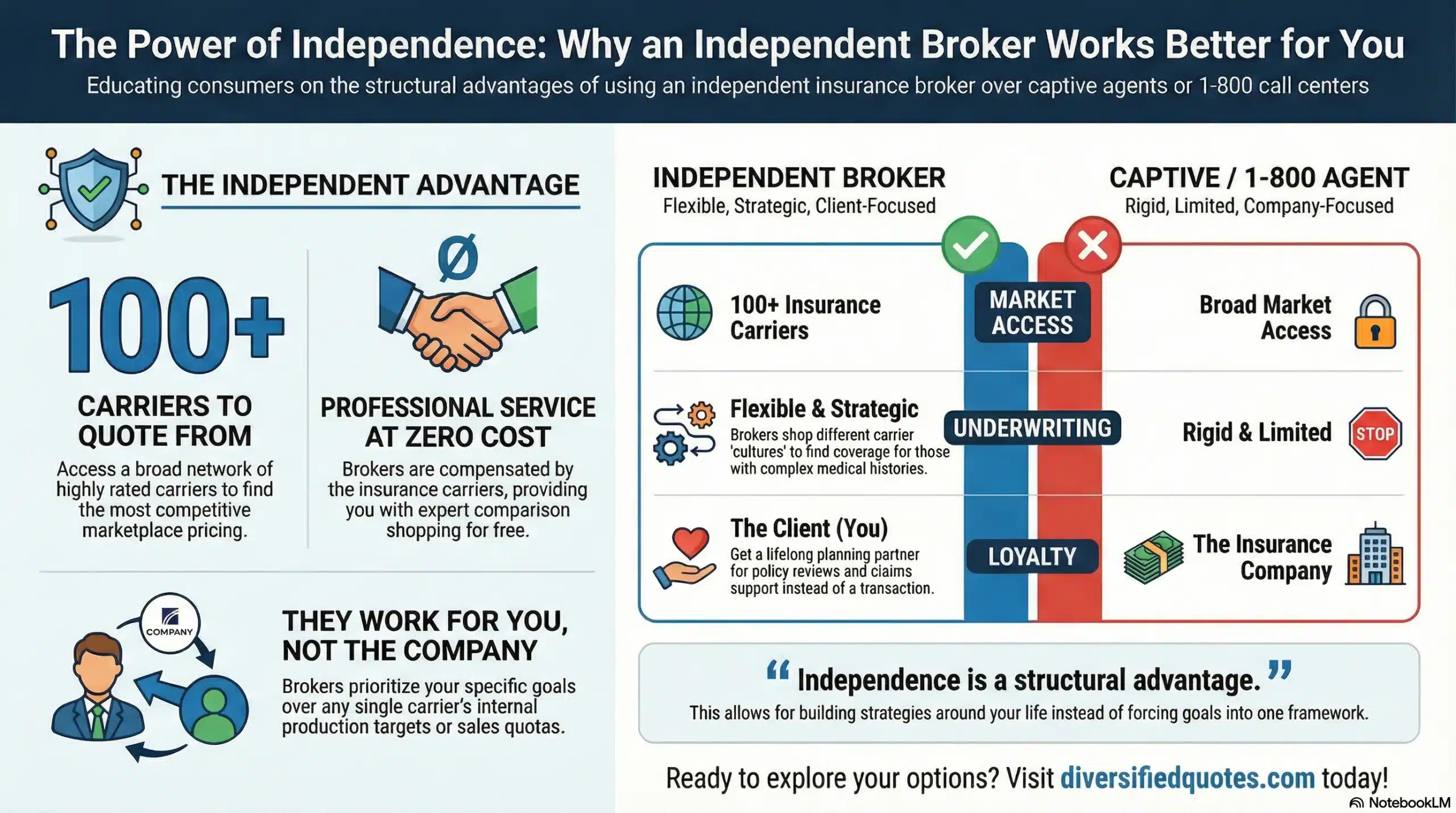
This is where working with an independent brokerage matters. Some insurers maintain conservative blanket guidelines for commercial driving, while others have underwriting teams experienced in evaluating trucking exposure more precisely. Matching the right profile to the right carrier frequently determines whether a policy is competitively priced or unnecessarily expensive.
Company Drivers vs Owner-Operators: Why the Distinction Matters
From an underwriting perspective, company drivers and owner-operators are often evaluated differently. Company drivers typically operate under established safety programs, maintenance schedules, and regulatory oversight. This structured environment can work in their favor when properly documented, especially when the driver has a stable employment history and a clean CDL record.
Owner-operators, on the other hand, introduce additional layers of complexity. While they may have greater control over routes, schedules, and equipment maintenance, they also carry direct responsibility for business operations. Underwriters may look more closely at mileage, cargo contracts, and financial stability. That does not mean owner-operators are penalized automatically, but it does mean that documentation becomes even more important.
In many cases, owner-operators benefit from higher coverage amounts because life insurance is being used not only for family protection but also for business continuity. Policies are often structured to help pay off truck loans, settle outstanding obligations, or provide working capital to surviving partners or family members. These business-planning considerations frequently overlap with broader strategies discussed in self-employed and small business insurance planning.
Health, Lifestyle, and Their Interaction With Trucking Risk
Occupational risk is only one component of life insurance underwriting. Health history, lifestyle habits, and age remain critical pricing factors, particularly for truck drivers. Long hours on the road can make it more difficult to maintain consistent exercise routines, healthy diets, and regular medical checkups. Conditions such as high blood pressure, sleep apnea, diabetes, and elevated cholesterol are more common among long-haul drivers, and these factors can compound occupational risk if not managed properly.
That said, controlled health conditions do not automatically disqualify drivers from coverage. Many carriers are willing to offer competitive rates when conditions are well-managed and documented. This is especially true when medical records demonstrate compliance with treatment and stable follow-up care. We routinely help drivers navigate underwriting when trucking exposure overlaps with health considerations outlined in our broader life insurance with pre-existing conditions resources.
Transparency plays a critical role here. Incomplete disclosures or inconsistent medical histories tend to raise more red flags than controlled conditions themselves. Clear documentation allows underwriters to assess actual risk rather than speculate.
Choosing the Right Type of Life Insurance as a Truck Driver
Truck drivers are not limited to a single type of life insurance. The most appropriate policy depends on how long coverage is needed, what financial obligations exist, and whether the goal is pure income replacement or long-term planning.
For most working drivers, term life insurance provides the most efficient solution. Term policies offer substantial death benefits at relatively low cost and are commonly structured for 10, 20, or 30 years. These durations align well with income-earning years, mortgage timelines, and business debt horizons. Because term life focuses on protection rather than savings accumulation, it tends to deliver the highest coverage per premium dollar.
Permanent life insurance, including whole life and other lifelong policies, serves a different purpose. Some drivers use permanent coverage for estate planning, legacy protection, or to ensure coverage remains in force regardless of age or future health changes. While premiums are higher, these policies offer guaranteed death benefits and, in many cases, cash value growth over time.
Final expense insurance is often appropriate for older drivers or retirees who no longer need large coverage amounts but want to ensure funeral and burial costs are handled without burdening family members. These policies typically involve simplified underwriting and lower face amounts, making them accessible even when health or age would complicate traditional policies.
The Role of Accidental Death Coverage in Trucking Profiles
Because trucking inherently involves greater accident exposure, some drivers choose to supplement their life insurance with accidental death coverage. An accidental death policy provides an additional payout if death results from a covered accident, offering an extra layer of financial protection for families concerned about roadway risks.
It is important to understand that accidental death insurance is not a substitute for life insurance. Most fatalities are illness-related rather than accident-related, even in higher-risk occupations. However, when used appropriately, accidental death coverage can complement a traditional policy by increasing total benefits in worst-case scenarios.
How Driving Records Influence Pricing and Approval
A driver’s CDL history plays a significant role in underwriting outcomes. Clean driving records with minimal violations, no recent accidents, and consistent compliance with regulations materially improve approval odds and pricing. Conversely, multiple violations or recent serious incidents can lead to rating adjustments or additional scrutiny.
Importantly, not all violations are weighted equally. Underwriters distinguish between administrative issues, minor infractions, and serious safety events. Context matters. A single isolated incident years in the past may have little impact, while patterns of behavior raise greater concern. This is another area where accurate documentation and explanation can materially influence underwriting decisions.
Why Independent Carrier Access Matters for Truck Drivers
One of the biggest mistakes truck drivers make is assuming that a quote from one insurer reflects the entire market. Life insurance underwriting is not standardized across carriers. Each company maintains its own actuarial assumptions, occupational guidelines, and tolerance for commercial driving exposure.
Some carriers take a conservative approach to trucking and apply automatic surcharges. Others evaluate risk more granularly and may offer significantly better pricing for the same applicant. Without access to multiple carriers, drivers are often left with suboptimal options. As an independent brokerage, Diversified Insurance Brokers compares underwriting perspectives across dozens of insurers to identify where a given trucking profile fits best.
Long-Term Planning Considerations for Truck Drivers
Life insurance planning for truck drivers should evolve over time. Coverage needs often change as income grows, debts decrease, and business structures shift. Owner-operators may initially prioritize debt protection and income replacement, then later focus on estate planning or legacy goals. Company drivers may reassess coverage as family circumstances change or retirement approaches.
Revisiting coverage periodically ensures that policies remain aligned with actual financial exposure rather than outdated assumptions. This long-term planning mindset is especially important in physically demanding professions where health or occupational status can change more quickly than in desk-based roles.
Related Pages
Helpful life insurance resources for higher-risk occupations, medical histories, and coverage planning.
Financial Protection Essentials
Compare Term Life Insurance Lengths
Explore different term periods to find coverage that best matches your timeline and budget.
Talk With an Advisor Today
Choose how you’d like to connect—call or message us, then book a time that works for you.
Schedule here:
calendly.com/jason-dibcompanies/diversified-quotes
Licensed in all 50 states • Fiduciary, family-owned since 1980
FAQs: Life Insurance for Truck Drivers
Can truck drivers qualify for life insurance?
Yes. Truck drivers can qualify for life insurance, although underwriting considers driving type, frequency, safety record, and overall health.
What affects underwriting risk for truck drivers?
Carriers review driving record, accident history, cargo type, long-haul vs local routes, hours driven, and whether the driver is an owner-operator.
Is term or whole life better for truck drivers?
Most truck drivers choose term life for affordability and high coverage amounts. Whole life may be appropriate for long-term planning or estate needs.
Is accidental death insurance useful for truck drivers?
Yes. Accidental death coverage can supplement life insurance by providing an extra payout if death results from a covered accident.
Do owner-operators need more coverage?
Often yes. Owner-operators typically insure income replacement, equipment loans, and business obligations, which increases coverage needs.
Does a clean driving record help with pricing?
Absolutely. A clean CDL record with minimal violations significantly improves underwriting outcomes and premiums.
Will a medical exam be required?
For larger policies or permanent coverage, yes. Some smaller or final expense policies may offer simplified underwriting.
What if I was declined before?
Declines are often carrier-specific. Working with an independent broker can open options with insurers that underwrite trucking more favorably.
About the Author:
Jason Stolz, CLTC, CRPC and Chief Underwriter at Diversified Insurance Brokers (NPN 20471358), is a senior insurance and retirement professional with more than two decades of real-world experience helping individuals, families, and business owners protect their income, assets, and long-term financial stability. As a long-time partner of the nationally licensed independent agency Diversified Insurance Brokers, Jason provides trusted guidance across multiple specialties—including fixed and indexed annuities, long-term care planning, personal and business disability insurance, life insurance solutions, Group Health, and short-term health coverage. Diversified Insurance Brokers maintains active contracts with over 100 highly rated insurance carriers, ensuring clients have access to a broad and competitive marketplace.
His practical, education-first approach has earned recognition in publications such as VoyageATL, highlighting his commitment to financial clarity and client-focused planning. Drawing on deep product knowledge and years of hands-on field experience, Jason helps clients evaluate carriers, compare strategies, and build retirement and protection plans that are both secure and cost-efficient. Visitors who want to explore current annuity rates and compare options across multiple insurers can also use this annuity quote and comparison tool.
