
LTC Insurance with Lifetime Benefits

Jason Stolz CLTC, CRPC
One of the hardest long-term care questions is also the simplest: “What if I need care for a long time?” Most long-term care planning is built around a benefit period because that matches what many claims look like in real life. Two-year, three-year, and five-year designs are common because they can cover a meaningful portion of typical care needs. The challenge is that averages don’t protect families from the outliers. A long-duration claim can turn into a slow financial drain that changes everything about retirement—cash flow, taxes, investment strategy, spousal lifestyle, and even where you live. Long term care insurance with lifetime benefits is designed for the scenario that creates the most strain: a claim that keeps going when a limited benefit policy would stop.
Lifetime benefits are not the right fit for every household, and they are not the only way to reduce long-duration risk. But they are one of the clearest answers to the “what if this lasts longer than expected?” problem. When lifetime benefits are designed correctly—meaning the monthly benefit is meaningful, inflation is considered, and the waiting period fits your plan—this type of coverage can act like a financial guardrail that prevents a long claim from becoming the dominant retirement story.
At Diversified Insurance Brokers, we help families compare lifetime benefit designs alongside strong limited-duration plans and hybrid alternatives so you can choose the approach that protects what you care about most. If you want a broader overview first, start with our main page on Long-Term Care Insurance, then come back here to pressure-test whether lifetime benefits are the right “ceiling” of protection for your household.
Get a Quote for Lifetime LTC Coverage
Compare lifetime benefit designs and strong alternatives so you don’t have to gamble on how long care might last.
Request a QuoteWhat Is Long Term Care Insurance with Lifetime Benefits?
Long term care insurance with lifetime benefits is a policy design where the benefit period is not capped at a set number of years. Instead of paying for 24 months, 36 months, or 60 months and then ending, a lifetime benefit design is intended to keep paying as long as you remain eligible under the policy’s claim triggers. In plain English, it’s built for the “this didn’t go the way we hoped” scenario—when care needs become long-term and ongoing rather than transitional.
It’s also important to understand how “lifetime” works in real policy language. Lifetime doesn’t mean unlimited spending with no structure. Most designs are still anchored by a monthly benefit (or daily benefit), and you still have standard claim requirements—often tied to needing help with activities of daily living and/or cognitive impairment criteria. The big difference is that you remove the “clock” problem. You’re not trying to predict whether a claim will last 18 months or 8 years. You’re designing coverage so the benefit period doesn’t become the failure point in a long-duration scenario.
When families hear “lifetime,” they often assume the policy is only relevant for a tiny number of people. That’s not the right lens. Lifetime benefits are less about “probability” and more about “impact.” A long-duration claim might not be the most likely outcome, but it is often the most financially disruptive outcome. Planning is not just about what’s likely—it’s about what would be hardest to absorb if it happens.
Why Lifetime Benefits Matter More Than People Expect
Most households don’t get financially wrecked by short rehab stays or a few months of home assistance. The pressure builds when care becomes ongoing: memory care supervision, progressive neurologic conditions, repeated events that reduce independence, or a situation where a spouse needs daily support that simply doesn’t stop. This is why lifetime benefits are frequently discussed by households that want maximum protection against cognitive decline and extended claims.
Even if you never need care for “a lifetime,” lifetime benefit coverage can provide a unique kind of peace of mind because it removes the hardest planning guess. You’re not trying to estimate your claim duration. You’re structuring coverage so a long claim doesn’t force you into a series of escalating decisions: sell assets, increase withdrawals, change living arrangements, shift care to family members, or apply for Medicaid under pressure.
Many clients also like lifetime benefits because they protect the healthy spouse. A long claim doesn’t just impact the person receiving care; it reshapes the entire household. The healthy spouse may reduce lifestyle spending, stop traveling, delay home repairs, and shift retirement income decisions to cover care costs. If your priority is protecting the spouse who remains independent, lifetime benefits can provide a stronger financial “floor” in the longest, hardest scenarios.
How LTC Claims Actually Become “Long Duration”
Most people imagine long-term care as a single event: something happens, care starts, and then it ends. In practice, long-duration claims often develop in stages. It might start with intermittent help at home, then increase to daily assistance, then transition to assisted living or memory care as needs evolve. The “length” of a claim isn’t always obvious at the beginning, which is exactly why the benefit period risk is so hard to manage with short designs. By the time a family realizes the care need is long-term, they may already be deep into the financial impact.
Cognitive supervision is one of the most common reasons claims become long duration. When memory or judgment changes are part of the picture, the need for supervision can extend for years. Families often assume their savings will cover “a couple years” and then realize that the timeline is longer than expected. That’s why some households choose lifetime benefits: they want to eliminate the risk that the policy ends while the care need continues.
Another driver of long-duration claims is the “two spouse timeline.” If one spouse becomes a caregiver, that can work for a period, but it can become unsustainable. When the caregiving spouse’s own health changes, care often becomes professional and ongoing. A lifetime design can help keep professional care on the table longer without forcing a sudden depletion of assets.
The Core Mechanics: Monthly Benefit, Triggers, and Waiting Period
Lifetime benefit coverage only matters if the benefit is meaningful. That sounds obvious, but it’s the most common planning mistake: focusing on benefit period and ignoring benefit amount. Lifetime benefits are designed to protect you from duration risk, but duration risk is only manageable if the monthly benefit meaningfully offsets real care costs. A low monthly benefit with lifetime duration can still create a large out-of-pocket gap.
Most policies use claim triggers tied to functional or cognitive impairment, and most use a waiting period (elimination period) before benefits begin. How you choose that elimination period matters because it defines your early out-of-pocket exposure. Some designs count elimination periods differently, and those details affect how quickly benefits begin if care starts intermittently and ramps up. If you want the clearest explanation of how elimination periods work and why it matters, see LTC Elimination Periods Explained.
Claim experience is also shaped by care coordination support. Some policies include care coordination features that help families navigate claim logistics, documentation, and care planning, which can reduce friction when you actually need the benefits. If that matters to you, this companion topic can help: LTC Care Coordination Benefits.
Lifetime Benefits vs Limited Benefit Periods: The Real-World Tradeoff
Limited benefit policies are priced around probability. Many claims fall within a predictable range, so carriers can price benefit periods like three or five years efficiently. That’s why these designs are common. Lifetime benefits are designed for tail risk—the long-duration claims that keep going after limited coverage ends. When lifetime benefits are appropriate, you are paying more to remove the risk of the plan ending at the worst possible time.
The tradeoff is premium. Lifetime benefits generally cost more because the insurer is taking on more duration risk. For some households, that extra premium is worth it because the financial damage from a long-duration claim is far greater than the incremental premium. For other households, a well-designed five-year policy with a strong monthly benefit, inflation protection, and a thoughtful elimination period can reduce risk enough while keeping premiums manageable.
The right decision is rarely “lifetime vs not lifetime” in isolation. The right decision is about what you want to protect. Are you protecting retirement income? Protecting a spouse? Protecting a legacy? Protecting home equity? Or protecting flexibility to choose care settings? Those priorities drive the design.
Inflation Protection: The Feature That Makes Lifetime Benefits Work
If you buy coverage in your 50s or early 60s, inflation protection can matter as much as lifetime duration. Without inflation, the monthly benefit can become less meaningful over time. A benefit that covers a strong portion of costs today may cover a smaller portion decades later. That can turn a “lifetime” policy into a policy that lasts a lifetime but doesn’t meaningfully reduce expenses later.
Inflation protection also interacts with planning goals. If your goal is to keep the policy relevant in later years, inflation protection is often part of the solution. If your goal is to keep premium lower and you have other assets earmarked for later costs, you might choose a different inflation approach. The point is that lifetime benefits should not be selected without an inflation conversation—because the benefit period isn’t the only “time problem” in long-term care planning. Benefit adequacy over time is just as important.
Who Should Consider Lifetime Benefits?
Lifetime benefits can be a fit for households that want to remove long-duration risk and are willing to pay for that certainty. People who worry about cognitive decline often find lifetime benefits compelling because memory care and supervision needs can extend for years. Couples who prioritize protecting the healthy spouse often consider lifetime benefits because the financial impact of a long claim can reshape the survivor’s retirement.
Lifetime benefits can also be relevant for people who are intentionally protecting assets. If you have done the math and realized that a multi-year care claim can draw down accounts faster than you expected, lifetime benefits can reduce the chance that care becomes an ongoing liquidation event. This is especially important for households that want to preserve retirement accounts or other assets for a surviving spouse, for family support goals, or for legacy planning.
Finally, lifetime benefits may be a fit for people who prefer simplified decision-making. When care begins, families are already under emotional strain. A plan that reduces financial uncertainty can reduce the number of hard “what now?” decisions later.
When Lifetime Benefits Might Not Be the Best Fit
Lifetime benefits are not automatically superior. If premiums would create financial strain or force you to underinsure the monthly benefit, the result may be worse than a strong limited benefit plan. A better solution can be a well-designed five-year policy with a meaningful monthly benefit and inflation protection that fits the household budget.
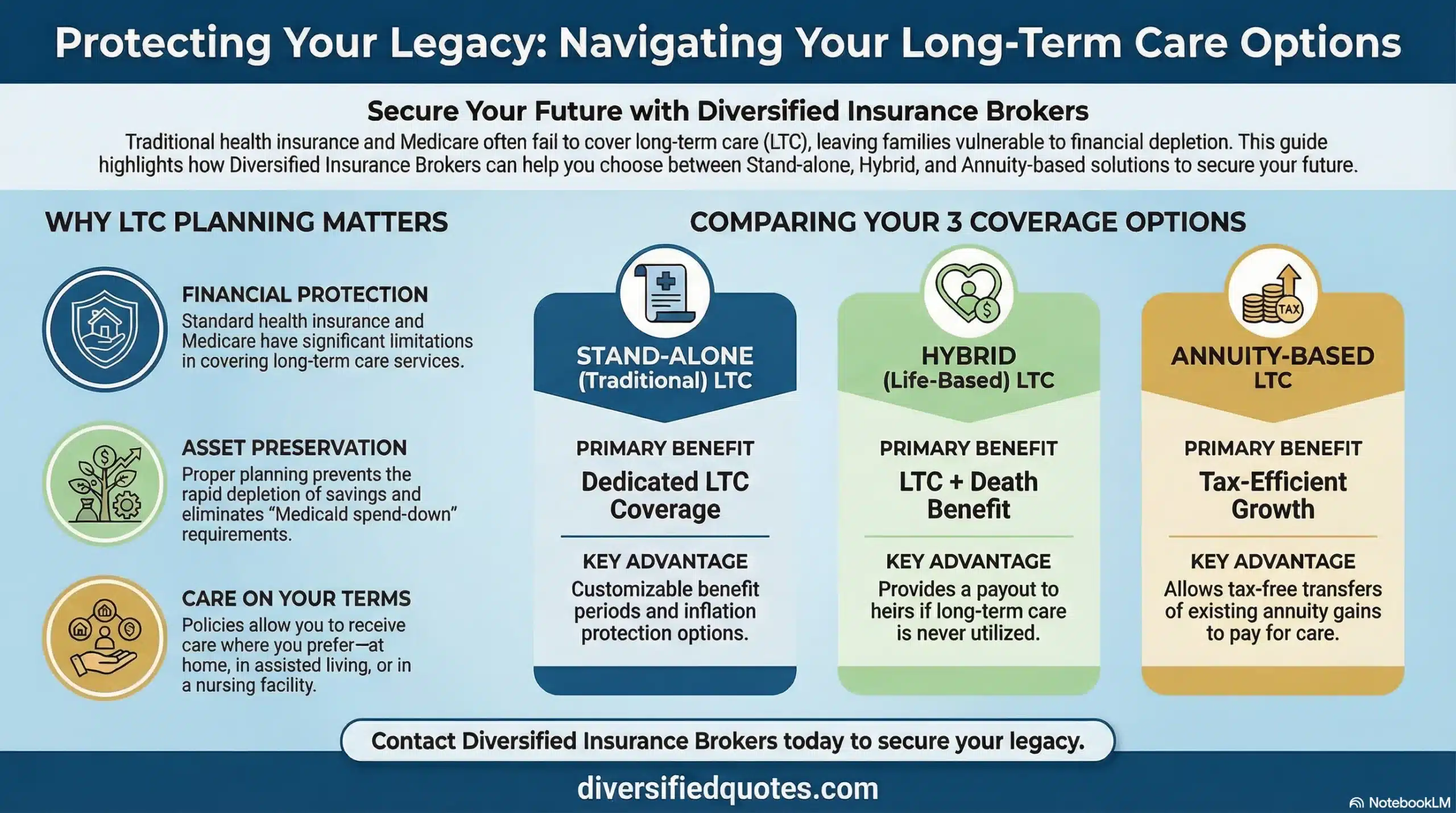
Some households also prefer strategies that provide “value either way.” Traditional LTC can feel like you pay for a benefit you may never use. For people who dislike that structure, hybrid life/LTC or annuity-based designs can feel more comfortable because they preserve some form of value if long-term care is never needed. This does not make them “better,” but it can make them more aligned with a household’s preferences.
Alternatives That Can Create Lifetime-Like Protection
Not every household needs a traditional lifetime benefit LTC policy to reduce long-duration risk. In many cases, you can create “lifetime-like” protection through layered planning. One example is pairing a strong limited benefit policy with assets earmarked as a secondary layer if the claim outlasts coverage. The policy reduces the probability of needing to tap those assets, and the earmarked assets become the tail-risk layer. The key is that the earmarked assets must be identified intentionally, not assumed vaguely.
Another alternative is using hybrid designs that create large benefit pools, sometimes with extension-of-benefits features. These can provide long-duration coverage for some claims even if the benefits are not technically “lifetime.” If you’re comparing hybrids, it’s often helpful to start with a full framework on the differences and tradeoffs: Hybrid Life vs. Traditional Long-Term Care Insurance.
Some families also explore annuity-based LTC strategies. These approaches can appeal to people who want to reposition an asset rather than pay ongoing premiums. The details vary by design, but the concept is often a leveraged benefit pool that becomes available for qualified long-term care needs. If you want the broader retirement context for annuity strategies, you can review Annuities.
There are also strategies that focus on Medicaid-linked planning in the worst-case scenario. If your goal includes understanding how private coverage can coordinate with Medicaid protections, partnership planning is a relevant companion topic: Partnership Qualified Long-Term Care Insurance. Partnership planning does not replace lifetime benefits, but it’s another way some households structure protection for catastrophic-duration outcomes.
Compare Lifetime Benefits vs Strong 3–5 Year Designs
We’ll show side-by-side options so you can balance premium, benefit amount, inflation, and long-duration protection.
Request My ComparisonHow to Evaluate Lifetime Benefit Quotes the Right Way
When comparing lifetime benefit options, the best approach is to focus on the levers that change real outcomes rather than getting stuck on the word “lifetime.” The monthly benefit should be meaningful for the care setting you’re most likely to use. If you want to prioritize home care, make sure the policy supports that and that the benefit is adequate for meaningful help. If you want facility flexibility, make sure the benefit reflects that reality.
Next, evaluate the elimination period, because it defines your early out-of-pocket exposure and affects the “ease” of getting benefits started if care begins gradually. This is one reason elimination period education matters: LTC Elimination Periods Explained.
Then evaluate inflation protection based on your age and the time horizon before you expect the policy to matter. Inflation can be the difference between a policy that remains relevant and a policy that lasts but doesn’t meaningfully reduce cost. Finally, evaluate the policy’s support features, such as care coordination, because claims are real life, not just math. Care coordination can reduce friction when it matters most: LTC Care Coordination Benefits.
Planning for Couples: Lifetime Benefits and Spousal Protection
Couples often view long-term care through a household lens rather than an individual lens, and that is the correct way to think about it. If one spouse needs long-term care, the other spouse is still living life, paying bills, and trying to preserve lifestyle and stability. A long claim can reduce the healthy spouse’s options, not just the insured person’s options.
Lifetime benefits can act as a stronger household stabilizer because they reduce the risk that benefits end while care continues. But couples also have other planning tools, including shared benefit approaches that stretch resources across two lives. If you want to compare that household flexibility concept, see Long-Term Care Insurance with Shared Benefits.
In many couple designs, the “best” approach is not one single feature; it’s a thoughtful structure: meaningful monthly benefit, inflation protection aligned with age, elimination period aligned with cash reserves, and a household plan for the long-duration scenario. Lifetime benefits can be part of that structure, but they should be evaluated in the context of the full plan rather than as a stand-alone badge.
Where Lifetime Benefits Fit in the Bigger Retirement Plan
Long-term care planning is not a separate box from retirement planning. It directly affects withdrawal strategy, tax planning, and investment risk. A long-duration care claim can force larger withdrawals at the wrong time and can make it harder to keep a plan stable. This is why many households coordinate LTC decisions with broader retirement tools and income stability planning.
For some households, annuity planning is part of the conversation because guaranteed income can stabilize the “baseline” retirement plan while LTC coverage addresses the care shock risk. If annuities are part of your retirement plan, the broader context is here: Annuities. The right structure depends on household goals, liquidity needs, and risk tolerance, but the theme remains: LTC planning is about preventing care costs from hijacking the retirement plan.
Some households also consider the tax and planning advantages of LTC structures. If you want to see how tax advantages can influence the value of coverage, review Tax Benefits of Long-Term Care Insurance. Even when tax benefits are not the “main reason” someone buys coverage, they can improve overall economics and make the premium decision easier.
How Diversified Insurance Brokers Helps You Compare Lifetime Designs
Long-term care underwriting and product design have evolved repeatedly over the years. Carriers have different appetites, different design strengths, and different ways of structuring benefits. That is why shopping the market matters. We don’t start with one product and try to force a fit. We start with your goals and the risk you want to remove, then compare designs that solve that problem—lifetime benefits when appropriate, strong limited benefit designs when they provide better value, and hybrid/annuity-based alternatives when the household prefers that structure.
We also pressure-test the details that drive outcomes. What does “lifetime” mean under the contract and claim structure? How does inflation protection work and how does it impact premium? How does the elimination period change early out-of-pocket exposure? Are you trying to protect a spouse, protect assets, protect cash flow, or protect flexibility? Those answers determine whether lifetime benefits are the right tool or whether a different design provides a better result.
If you want the broad overview of LTC coverage types first, start here: Long-Term Care Insurance. If you want to compare strategies designed for catastrophic-duration scenarios, partnership planning is a useful companion topic: Partnership Qualified Long-Term Care Insurance.
Protect Yourself with Lifetime LTC Benefits
If you want coverage designed for long-duration claims, we’ll compare lifetime benefit policies and strong alternatives side-by-side.
Request a QuoteRelated Pages
Explore additional long-term care planning topics and related protection strategies.
Talk With an Advisor Today
Choose how you’d like to connect—call or message us, then book a time that works for you.
Schedule here:
calendly.com/jason-dibcompanies/diversified-quotes
Licensed in all 50 states • Fiduciary, family-owned since 1980
FAQs: LTC Insurance with Lifetime Benefits
What does “lifetime benefits” mean for LTC insurance?
Lifetime benefits generally means the policy is designed without a fixed benefit period cap (like 2, 3, or 5 years). Benefits can continue as long as you remain eligible under the policy’s claim triggers and terms.
How is lifetime coverage different from a 3-year or 5-year benefit period?
A limited benefit period ends after a defined number of years once benefits start. Lifetime coverage is designed for long-duration claims where care continues beyond common benefit periods.
Who is a good candidate for lifetime LTC benefits?
People who want maximum protection against long-duration claims—often those concerned about extended cognitive decline, couples protecting a healthy spouse, or households focused on preserving assets and reducing worst-case care risk.
Does lifetime LTC mean the monthly benefit is unlimited too?
No. Most designs still use a defined monthly (or daily) benefit amount. “Lifetime” typically refers to how long benefits can be paid, not that the monthly amount is uncapped.
Are lifetime benefit policies always the best choice?
Not always. Lifetime benefits typically cost more. For many households, a strong limited-duration plan or a hybrid strategy can be a better balance between protection and premium cost.
What features matter most when evaluating lifetime LTC designs?
Key factors usually include the monthly benefit amount, inflation protection, elimination period, benefit triggers, and any built-in support services like care coordination that help families manage claims.
Can annuities with LTC riders be an alternative to lifetime LTC coverage?
Sometimes. Some annuities with LTC riders can create leveraged benefits if care is needed and may appeal to people who want a defined contract value if care is never used. The “best” approach depends on goals, health, and budget.
About the Author:
Jason Stolz, CLTC, CRPC and Chief Underwriter at Diversified Insurance Brokers (NPN 20471358), is a senior insurance and retirement professional with more than two decades of real-world experience helping individuals, families, and business owners protect their income, assets, and long-term financial stability. As a long-time partner of the nationally licensed independent agency Diversified Insurance Brokers, Jason provides trusted guidance across multiple specialties—including fixed and indexed annuities, long-term care planning, personal and business disability insurance, life insurance solutions, Group Health, and short-term health coverage. Diversified Insurance Brokers maintains active contracts with over 100 highly rated insurance carriers, ensuring clients have access to a broad and competitive marketplace.
His practical, education-first approach has earned recognition in publications such as VoyageATL, highlighting his commitment to financial clarity and client-focused planning. Drawing on deep product knowledge and years of hands-on field experience, Jason helps clients evaluate carriers, compare strategies, and build retirement and protection plans that are both secure and cost-efficient. Visitors who want to explore current annuity rates and compare options across multiple insurers can also use this annuity quote and comparison tool.
