
Bonus Annuity with Lifetime Income

Jason Stolz CLTC, CRPC
A bonus annuity with lifetime income is designed for individuals who want to create dependable retirement income while also receiving an upfront premium enhancement that can increase future payout potential. Unlike traditional investments that fluctuate with market volatility, this type of annuity focuses on principal protection, tax-deferred growth, and contractually guaranteed income. When structured properly, it can serve as a personal pension alternative that provides predictable cash flow regardless of market conditions. Many retirees exploring conservative income strategies compare these contracts to both traditional fixed annuities and income-focused indexed annuities before making a final decision.
The defining feature of a bonus annuity is the upfront premium credit. Depending on the carrier and surrender schedule, that bonus can range from modest single-digit percentages to more substantial double-digit credits. It is critical to understand how the bonus is applied. In many contracts, the bonus enhances the income benefit base rather than the fully liquid account value. That means the bonus directly impacts future guaranteed income but may not be entirely available for immediate withdrawal. For clarity on how different income bases work, it can be helpful to review how a GLWB works and how lifetime withdrawal percentages are calculated.
Compare Fixed and Bonus Annuities for Lifetime Income
See how premium bonuses, roll-up structures, and guaranteed income riders compare across top-rated carriers.
Request Your Personalized Annuity QuoteAlso review current options:
Current Fixed Annuity Rates | Current Bonus Annuity Rates
Lifetime Income Calculator
Estimate how much guaranteed lifetime income your annuity could provide based on your age and premium amount.
How a Bonus Annuity With Lifetime Income Works
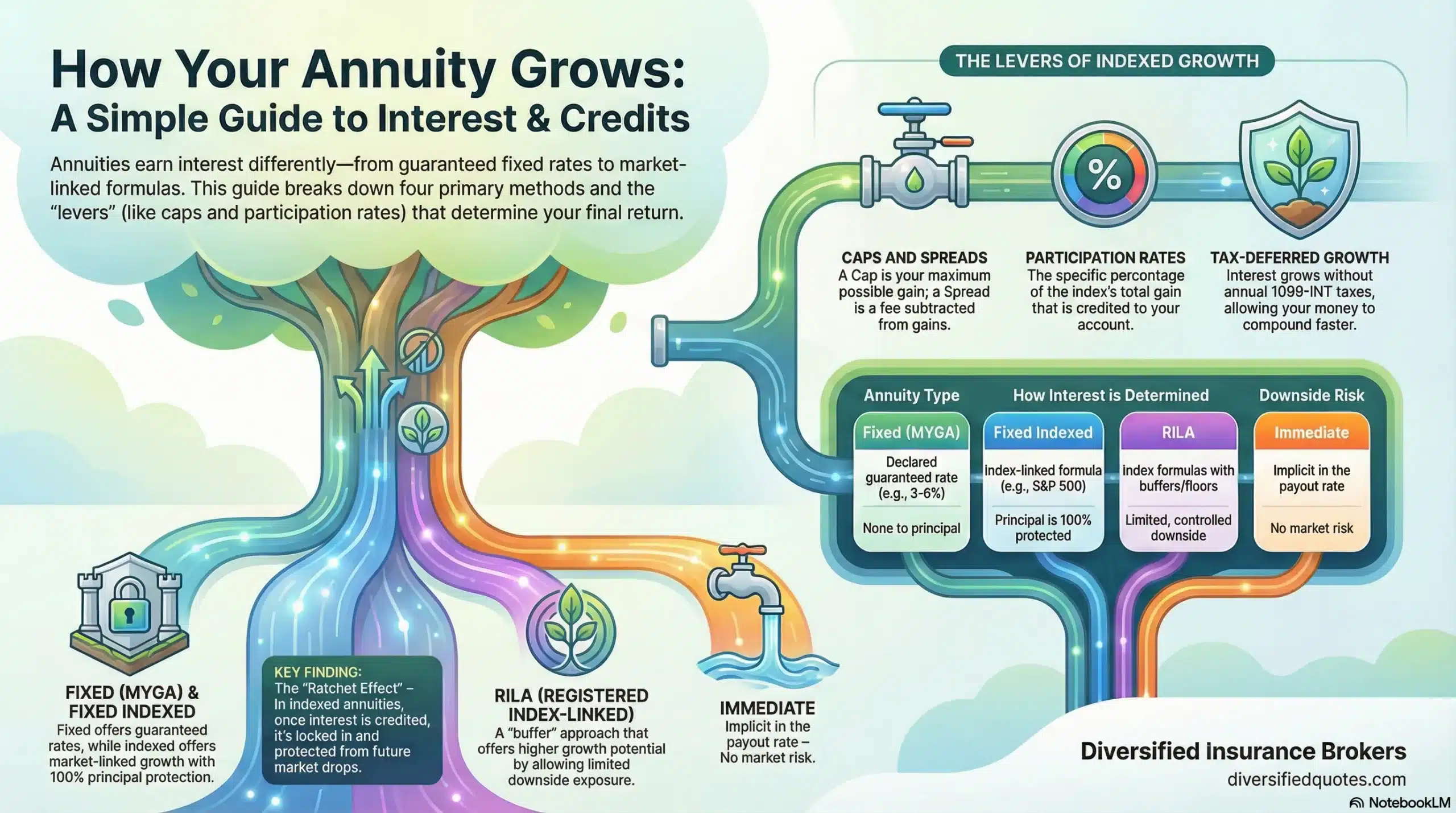
When you fund a bonus annuity, the insurance company immediately applies a premium credit according to the contract terms. This credit may enhance either the accumulation value or, more commonly, the income benefit base that determines future guaranteed withdrawals. Over time, the income base may continue to grow through either interest credits or contractual roll-up rates, depending on the rider structure. Because these contracts are often fixed indexed annuities, they allow for index-linked growth potential without exposing principal to direct market losses. If the selected index declines, the contract typically credits zero rather than a negative return, preserving the base for future income calculations.
When you decide to begin withdrawals, the insurance company applies an age-based payout percentage to the income base. That calculation determines the annual lifetime income amount. Once activated, those withdrawals continue for life, even if the accumulation value is reduced due to income distributions. For married couples, joint lifetime options ensure that payments continue for as long as either spouse is living, providing income security that can be difficult to replicate using traditional investment portfolios.
If you are comparing income-focused contracts, it is also worth reviewing retirement income annuity strategies to understand how immediate and deferred income options differ from bonus-based structures.
How Bonus Annuities Compare to Fixed MYGAs
Some retirees evaluating bonus annuities are also considering multi-year guaranteed annuities that provide fixed interest rates for set periods. A MYGA offers predictable accumulation growth without index exposure, making it attractive for conservative savers who prioritize simplicity. However, MYGAs typically do not include lifetime income riders with income base bonuses. If income security is the primary goal rather than short-term yield, bonus annuities may provide stronger long-term payout potential. To evaluate guaranteed-rate alternatives, you can review best MYGA annuity rates and compare them to income-enhanced indexed options.
Important Structural Considerations
While the appeal of an upfront bonus is clear, it is essential to understand surrender schedules and liquidity rules. Many bonus annuities include longer surrender periods, and early withdrawals above the contract’s free-withdrawal allowance may trigger charges. Some policies include a Market Value Adjustment that can either increase or decrease surrender value depending on prevailing interest rates at the time of withdrawal. For a deeper explanation, review what a Market Value Adjustment means and how it can affect contract value.
Income riders typically carry annual fees that are deducted from the accumulation value. These costs should always be weighed against the projected income benefit. In many cases, the value of guaranteed lifetime income outweighs the rider expense, especially for individuals concerned about longevity risk or market volatility during retirement. Understanding these trade-offs is essential before committing capital to a long-term income strategy.
When a Bonus Annuity With Lifetime Income Makes Sense
This strategy often appeals to individuals who are within five to ten years of retirement and want to establish a secure income foundation while still allowing time for the income base to grow. It can also make sense for recent retirees who want predictable income layered alongside Social Security or pension benefits. Because the contract protects against market losses, it may reduce overall portfolio volatility and improve retirement income stability. For those seeking a broader overview of annuity structures, you may want to revisit how annuities work to ensure alignment with your long-term financial goals.
Design a Guaranteed Income Strategy That Fits Your Retirement
We’ll compare fixed annuities, bonus annuities, and lifetime income riders to create a plan tailored to your timeline and goals.
Start Your Personalized QuoteExplore additional resources:
Fixed Annuity Rates | Bonus Annuity Rates
Related Topics
Compare current annuity rates, evaluate bonus structures, and explore income-focused retirement strategies before selecting a contract.
Financial Protection Essentials
Carrier reviews, travel protection options, and specialized underwriting resources to help protect long-term financial stability.
Talk With an Advisor Today
Choose how you’d like to connect—call or message us, then book a time that works for you.
Schedule here:
calendly.com/jason-dibcompanies/diversified-quotes
Licensed in all 50 states • Fiduciary, family-owned since 1980
Frequently Asked Questions
What is a bonus annuity with lifetime income?
A bonus annuity with lifetime income is typically a fixed indexed annuity that provides an upfront premium bonus and includes an income rider that guarantees lifetime withdrawals. The bonus may enhance the income base used to calculate future payouts, while the lifetime income rider ensures payments continue for as long as you live, regardless of market performance.
How does the premium bonus actually work?
The premium bonus is applied according to the contract terms and may increase either the accumulation value or the income benefit base. In many cases, the bonus primarily enhances the income base, which determines future guaranteed withdrawal amounts. It is important to review whether the bonus is fully available for cash surrender or is designed specifically for income calculations.
Are lifetime income payments truly guaranteed?
Yes, lifetime income payments are contractually guaranteed by the issuing insurance company, provided all rider terms are met. Once income is activated, payments continue for life—even if the underlying accumulation value declines due to withdrawals—based on the insurer’s claims-paying ability.
Can I access my money if I need it?
Most bonus annuities allow annual penalty-free withdrawals, often up to 10% of the contract value. Withdrawals beyond that amount during the surrender period may trigger surrender charges or a market value adjustment. Liquidity provisions vary by carrier and contract design.
Is a bonus annuity better than a fixed annuity or MYGA?
It depends on your goals. A fixed annuity or MYGA focuses on guaranteed interest accumulation over a set term, while a bonus annuity with lifetime income emphasizes long-term income guarantees. If lifetime income security is your primary objective, a bonus annuity may provide stronger payout potential. If short-term yield and simplicity are the focus, a MYGA may be appropriate.
Who is a good candidate for this strategy?
Bonus annuities with lifetime income are often suitable for individuals within five to ten years of retirement or those already retired who want predictable income layered alongside Social Security or pension benefits. They may also appeal to conservative investors seeking principal protection and tax-deferred growth.
About the Author:
Jason Stolz, CLTC, CRPC and Chief Underwriter at Diversified Insurance Brokers, is a senior insurance and retirement professional with more than two decades of real-world experience helping individuals, families, and business owners protect their income, assets, and long-term financial stability. As a long-time partner of the nationally licensed independent agency Diversified Insurance Brokers, Jason provides trusted guidance across multiple specialties—including fixed and indexed annuities, long-term care planning, personal and business disability insurance, life insurance solutions, and short-term health coverage. Diversified Insurance Brokers maintains active contracts with over 100 highly rated insurance carriers, ensuring clients have access to a broad and competitive marketplace.
His practical, education-first approach has earned recognition in publications such as VoyageATL, highlighting his commitment to financial clarity and client-focused planning. Drawing on deep product knowledge and years of hands-on field experience, Jason helps clients evaluate carriers, compare strategies, and build retirement and protection plans that are both secure and cost-efficient.
