
Disability Income for Professional Athletes

Jason Stolz CLTC, CRPC
Disability income insurance for professional athletes is one of the most important financial tools in sports because an injury or illness can end a career instantly—and the financial impact is usually much larger than fans realize. An athletic career is not a standard paycheck that grows over decades. It is often a short window of peak earning power, and that window can close overnight. A serious injury can eliminate future contracts, performance bonuses, playoff shares, appearance fees, and endorsement income long before an athlete reaches their prime earning years.
At Diversified Insurance Brokers, we help professional and elite collegiate athletes protect income, bonuses, and sponsorship revenue through customized disability plans built around your sport, contract structure, and career stage. The goal is practical: if you lose the ability to compete at your prior level, you still have a funded financial plan instead of being forced to make rushed decisions about investments, business ventures, or long-term obligations.
Protect Your Contract & Future Earnings
High-limit disability plans for professional and draft-eligible athletes—built around your sport, income, and risk profile.
Why Athletes Need Disability Income Protection
Athletes face a level of physical risk that most other high-income professionals never experience. Your earning power depends on your body performing at an elite level, in public, against opponents who are also elite, under high-speed, high-impact, high-pressure conditions. Even “routine” injuries can have outsized financial consequences because the athletic calendar is unforgiving. Miss games, miss training cycles, miss qualifying events, miss roster opportunities, and future income can change quickly.
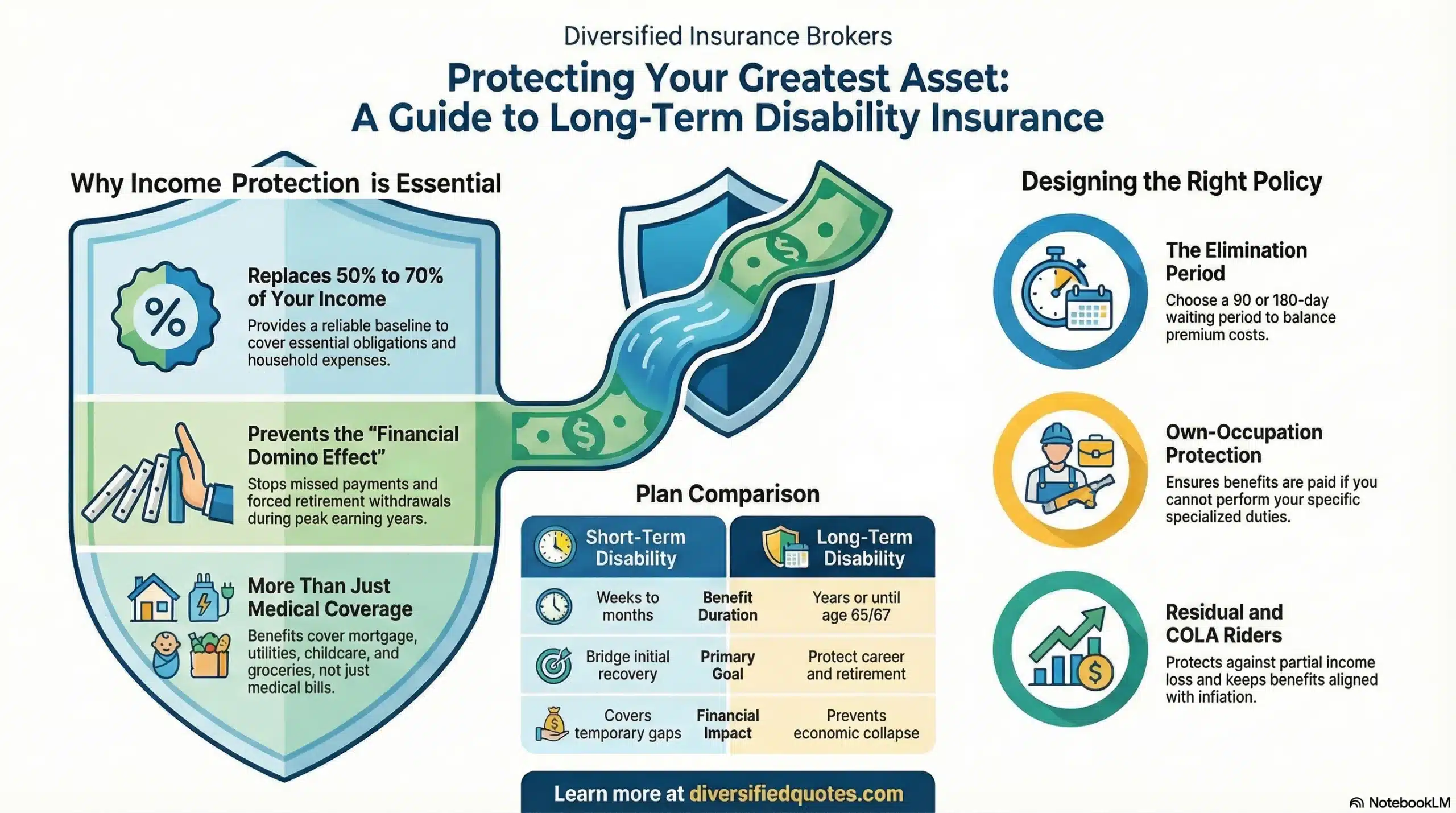
Disability income insurance is designed to bridge the gap between a medical event and the financial reality that follows. It can create a monthly benefit during recovery, a lump sum for permanent loss of playing ability, or structured benefits that address the specific way athletes earn: contracts, guaranteed vs. non-guaranteed pay, bonuses, incentives, appearance fees, and endorsements. The right plan gives you time and options—time to recover fully, time to evaluate next steps, and time to protect your long-term financial security without panic.
This is also why disability planning for athletes often includes more than a basic policy. Athletes frequently need higher limits, clearer definitions, and design features that reflect the reality of career risk. In many cases, it’s not just “can you work in any job?” It’s “can you perform at the level required to earn your contract income?” That difference matters.
What Athlete Disability Insurance Can Cover
Disability insurance for athletes can be structured to provide benefits when an injury or illness prevents you from competing, fulfilling your contract obligations, or maintaining the level of performance required to earn your income. The most common triggers are tied to loss of ability to play, loss of ability to perform in a specialized role, or long-term disability that eliminates your ability to earn in your sport.
Common covered risk categories include serious orthopedic injuries (knee, shoulder, back), concussion and neurological impacts, spinal injuries, chronic conditions that reduce performance, and other medical events that create long-term restrictions. Some plans focus on a “career-ending” outcome, while other designs provide partial benefits when performance or availability is materially impacted. The right structure depends on whether you need a pure catastrophic backstop or a policy that also addresses extended recovery and time away from the sport.
Benefits can be designed as a monthly income benefit, a lump sum benefit, or a combination. A monthly structure can help stabilize cash flow during rehabilitation and preserve your financial plan. A lump sum structure is often used when the objective is to fund long-term security if a career ends unexpectedly. Many high-end athlete plans are built specifically to align with how the athlete’s financial obligations work in real life—housing, family support, taxes, training expenses, agents/representation, and the long-term plan that was built around expected earnings.
High-Limit Disability Insurance for Elite Athletes
Traditional disability coverage caps rarely match the income reality for elite athletes. A standard policy that replaces a few thousand dollars per month may be meaningful for many careers, but it can be completely inadequate for an athlete earning high six figures or seven figures annually—especially when contract income is only part of the picture. High-limit disability insurance is designed to extend protection beyond typical caps and can be structured for much larger benefit amounts when the athlete’s income supports it.
High-limit coverage is often used as a supplemental layer on top of any team, league, or association disability program. League programs can be helpful, but they may be limited in benefit amount, limited in eligibility, tied to roster status, or restricted in how disability is defined. A private policy can create more control over coverage design and allow the athlete to build a plan around their actual income profile rather than a one-size group structure.
For example, an athlete with a large contract may still have meaningful exposure due to incentives, performance bonuses, postseason shares, and endorsement income that is not guaranteed. A supplemental high-limit policy can create a separate, privately owned safety net that isn’t dependent on the athlete remaining with a particular team or staying in a particular program.
Draft Protection and “Loss of Value” Planning
Draft-eligible athletes and elite collegiate athletes often face a unique problem: a serious injury can reduce future earning potential before the first professional contract is signed. In that scenario, the risk isn’t just missing a season—it’s losing draft position, losing contract value, or losing the ability to turn collegiate performance into a professional career. This is why disability planning is common in the run-up to the draft, major showcases, and high-exposure competitions.
“Loss of value” concepts vary by program design, but the underlying objective is consistent: protect the athlete’s expected future earnings if an injury materially reduces professional prospects. That can be especially important in sports where a single injury can change speed, explosiveness, throwing mechanics, endurance, or durability in ways that scouts and teams treat as long-term risk.
Because draft planning often involves families, agents, and advisors, disability policy design must be straightforward and clearly documented. You want clarity on what triggers benefits, how value is evaluated, how waiting periods work, and how the plan fits alongside any team or collegiate program coverage that may exist.
How Athlete Disability Claims Are Typically Evaluated
Disability insurance is only valuable if it performs when you need it, and performance depends on definitions and documentation. In most cases, a claim will focus on whether the injury or illness meets the policy definition of disability, whether you’ve satisfied any waiting period requirements, and whether medical documentation supports the inability to compete or perform at the necessary level.
Athlete claims tend to be heavily tied to objective medical evidence—imaging, physician restrictions, surgical notes, rehab documentation—and functional limitations relative to the athlete’s sport. In other words, it’s not just “are you injured?” It’s “does this injury prevent you from performing the duties required to earn your income in your sport?” A good plan is designed so that the definition aligns with that real-world standard rather than forcing a generic “any occupation” approach that doesn’t reflect athletic earning power.
Because athletes often have specialized training and recovery teams, it’s also important that a policy’s requirements for care and documentation are understood in advance. When a claim occurs, you want a clear process for what evidence is needed, how long it takes, and what triggers a benefit payment so you’re not fighting uncertainty while recovering.
Key Design Decisions That Change the Quality of Coverage
Two athlete disability policies can look similar at a glance and perform very differently in real life. The difference usually comes down to policy definition, benefit structure, waiting periods, benefit duration, and how the plan treats partial limitations or reduced performance.
Definition matters. Athletes need definitions that reflect the reality of specialized performance. If the definition is too broad or too generic, it can create gaps where an athlete is unable to compete but still not considered “disabled” under the contract language.
Waiting periods matter. Some designs are intended only for permanent or career-ending outcomes, which may involve longer waiting periods. Other designs incorporate shorter waiting periods for income replacement during recovery. The correct choice depends on what problem you’re solving: “I want a catastrophic backstop” versus “I want protection during longer recovery windows.”
Benefit structure matters. Monthly benefits help stabilize cash flow. Lump sums are often used for long-term security and to fund life after sport if the career ends unexpectedly. Some athletes prefer a combination because their financial life has both short-term and long-term obligations.
Coordination matters. If an athlete has team or league coverage, the private policy should be designed to coordinate with existing benefits so you understand what is primary, what is supplemental, and how benefits interact. This is the difference between “I think I’m covered” and “I know exactly what happens if something goes wrong.”
Tax Treatment and Ownership Considerations
The tax treatment of disability benefits typically depends on who owns the policy and who pays the premium. When an individual pays premiums personally, benefits are often received in a more favorable way than when a team or organization pays premiums. However, athlete income structures can be complex—especially when endorsement income is managed through business entities, when agents or business managers coordinate coverage, or when multiple income sources need to be protected in a coordinated strategy.
The most important point is not chasing a simplistic tax outcome. It’s ensuring ownership, premium payment, and beneficiary/benefit arrangements match the athlete’s actual financial structure and compliance needs. When needed, our advisors coordinate with agents, accountants, and business managers so the plan is structured clearly and intentionally.
Who Can Qualify for Athlete Disability Coverage?
Eligibility varies by sport, career level, and underwriting guidelines, but disability income coverage is commonly considered for professional athletes, draft-eligible collegiate athletes, elite amateur competitors, and Olympic-level athletes. Some programs also extend planning concepts to coaching staff, executives, or high-income personnel whose compensation is materially performance-based.
Underwriting typically considers sport risk, position/role, injury history, current health, income documentation, and the structure of contracts or projected earnings. Because athletic risk is inherently higher, placing the right coverage often involves selecting carriers and programs that are designed for high-risk, high-income profiles rather than treating the athlete like a standard applicant.
How This Fits with Other Disability Strategies
Athlete disability coverage can work alongside other plans, such as league-provided benefits or privately owned supplemental coverage. Many athletes also explore broader income strategies as they transition into business ownership, media careers, or post-sport professional roles. In those cases, disability planning can blend into “high income professional” planning, where coverage is designed around sustained earnings, business obligations, and longer career horizons.
If you’re comparing options beyond athlete-specific planning, you may also find these pages helpful: High Income Disability Insurance and Guaranteed Issue Disability Insurance. For athletes who later become business owners, planning topics like Business Overhead Disability Insurance can become relevant when overhead expenses and staff payroll become part of the risk picture.
Protecting Your Future Earnings
Your earning potential is your greatest asset. A well-designed disability income policy helps ensure that an unexpected injury doesn’t erase your financial security. The goal isn’t to predict injury—it’s to acknowledge the reality of athletic risk and protect the financial plan you’ve built around your career.
At Diversified Insurance Brokers, we understand the practical realities of athlete income: the difference between guaranteed and non-guaranteed pay, the importance of bonuses and incentives, and the financial impact of losing a season or a career. We tailor coverage to your sport, league, income structure, and risk profile so you have a clear plan if something unexpected happens.
Request a Disability Income Quote
Protect your athletic career and future income with coverage customized for your sport, contract, and earning potential.
Related Topics to Explore
Explore other disability solutions that often complement athlete income protection.
Talk With an Advisor Today
Choose how you’d like to connect—call or message us, then book a time that works for you.
Schedule here:
calendly.com/jason-dibcompanies/diversified-quotes
Licensed in all 50 states • Fiduciary, family-owned since 1980
FAQs: Disability Income for Professional Athletes
- What sports are eligible for athlete disability coverage?
Coverage is available for most professional and collegiate sports, including football, baseball, basketball, hockey, golf, and tennis. - Can I insure my future contract value?
Yes. “Loss of value” policies protect future contract negotiations or draft rankings if you’re injured before signing. - Are benefits taxable?
If premiums are paid personally, benefits are typically tax-free. If your team or sponsor pays, benefits are usually taxable. - What’s the difference between temporary and permanent disability?
Temporary coverage pays during recovery; permanent coverage provides a lump-sum if you can never return to competition. - Can multiple players be covered under one policy?
Yes. Teams or organizations can establish multi-life or guaranteed issue plans for groups of athletes.
About the Author:
Jason Stolz, CLTC, CRPC, is a senior insurance and retirement professional with more than two decades of real-world experience helping individuals, families, and business owners protect their income, assets, and long-term financial stability. As a long-time partner of the nationally licensed independent agency Diversified Insurance Brokers, Jason provides trusted guidance across multiple specialties—including fixed and indexed annuities, long-term care planning, personal and business disability insurance, life insurance solutions, and short-term health coverage. Diversified Insurance Brokers maintains active contracts with over 100 highly rated insurance carriers, ensuring clients have access to a broad and competitive marketplace.
His practical, education-first approach has earned recognition in publications such as VoyageATL, highlighting his commitment to financial clarity and client-focused planning. Drawing on deep product knowledge and years of hands-on field experience, Jason helps clients evaluate carriers, compare strategies, and build retirement and protection plans that are both secure and cost-efficient.
