
Life Insurance for the Military

Jason Stolz CLTC, CRPC
Life insurance for military members is one of the most important—and most frequently misunderstood—parts of building a complete financial protection plan. Active-duty service members, reservists, National Guard members, veterans, and military families face a unique mix of risk, mobility, and life changes that most civilians never have to plan around. Deployments, hazardous duty assignments, field training, flight status, constant relocations, and physically demanding work can all create uncertainty, both for the service member and for the family at home. At Diversified Insurance Brokers, we specialize in helping military members secure private life insurance that works alongside government benefits while providing long-term coverage that doesn’t disappear when service ends.
Many military families rely heavily on Servicemembers’ Group Life Insurance (SGLI) and assume they are “covered” without realizing what happens later. SGLI is a valuable benefit, but it’s not built to be a lifelong solution. Coverage is tied to service status, and many members don’t realize how expensive life insurance can become after separation or retirement if they wait too long. Even when Veterans’ Group Life Insurance (VGLI) is available, premiums typically increase with age and can become a long-term budget problem. Private life insurance fills these gaps by providing stability, portability, and long-term cost control—three things military families depend on as careers evolve and life changes accelerate.
Diversified Insurance Brokers is a family-owned, fiduciary insurance agency founded in 1980 and licensed in all 50 states. We work with more than 75 top-rated carriers and regularly assist active-duty military personnel, reservists, veterans, and military spouses nationwide. Our role isn’t simply to quote a policy and send you on your way. It’s to design coverage that fits military life—before, during, and after service—while helping you avoid common mistakes that lead to expensive policies, delays, or preventable underwriting problems.
Life Insurance for Military Members
Compare private life insurance options designed for active-duty service members, veterans, National Guard, and military families.
Private life insurance becomes especially critical in the military because pay, benefits, and family responsibilities can change quickly. A PCS move can alter housing costs and childcare logistics. A promotion can increase income and the amount of financial responsibility your family carries. A deployment can amplify the need for household stability and income replacement planning. And separation or retirement changes everything—especially when your benefits shift from active-duty-based programs to civilian coverage and long-term retirement income strategies.
Unlike SGLI, which is tied to service status, private life insurance stays with you regardless of where you live, whether you deploy, whether you separate, or whether you move into a civilian job with entirely different benefits. That portability matters because military life is inherently transitional. A policy you control is often more valuable than a benefit you “rent” through service status—especially when your health and age can change over time.
One of the most common mistakes we see is waiting until separation or retirement to look at private coverage. By then, service members may be older, may have developed service-related conditions, or may be managing long-term wear-and-tear issues that complicate underwriting. When you apply earlier—while you’re healthy and while your medical record is cleaner—many applicants lock in lower rates and wider carrier options that can stay in place for decades.
Military eligibility for private life insurance is broader than most people realize. Active-duty members from every branch—including Army, Navy, Air Force, Marines, Coast Guard, and Space Force—are routinely approved for private life insurance. Reservists and National Guard members typically qualify as well, even if they have periodic deployments. Veterans who have transitioned into civilian life can often qualify under standard civilian underwriting rules, depending on their current health profile. Military spouses and dependents frequently secure their own independent coverage to build household stability—especially when the service member’s job includes significant travel or deployment risk.
How Life Insurance Underwriting Works for Military Members
Life insurance underwriting for military members is not simply “military equals high risk.” Underwriters assess risk based on the actual exposure in your current situation. Some carriers treat military roles with a broad brush and apply conservative assumptions. Other carriers use military-specific underwriting guidelines that recognize the difference between occupational title and true risk exposure. Choosing the right carrier is often the difference between smooth approval at a fair rate and a frustrating experience that feels unnecessarily complicated.
Military underwriting usually focuses on several practical details. Are you currently active duty, reserve, Guard, or separated? Are you deployed now, deployable, or assigned to a combat zone? Do you have flight status, special operations responsibilities, or hazardous duty assignments? What is your MOS or occupational specialty, and does it involve elevated physical risk? Are you currently stationed overseas? Are you expected to deploy within a defined window? These questions allow the insurer to evaluate present and near-term risk without assuming every military role is the same.
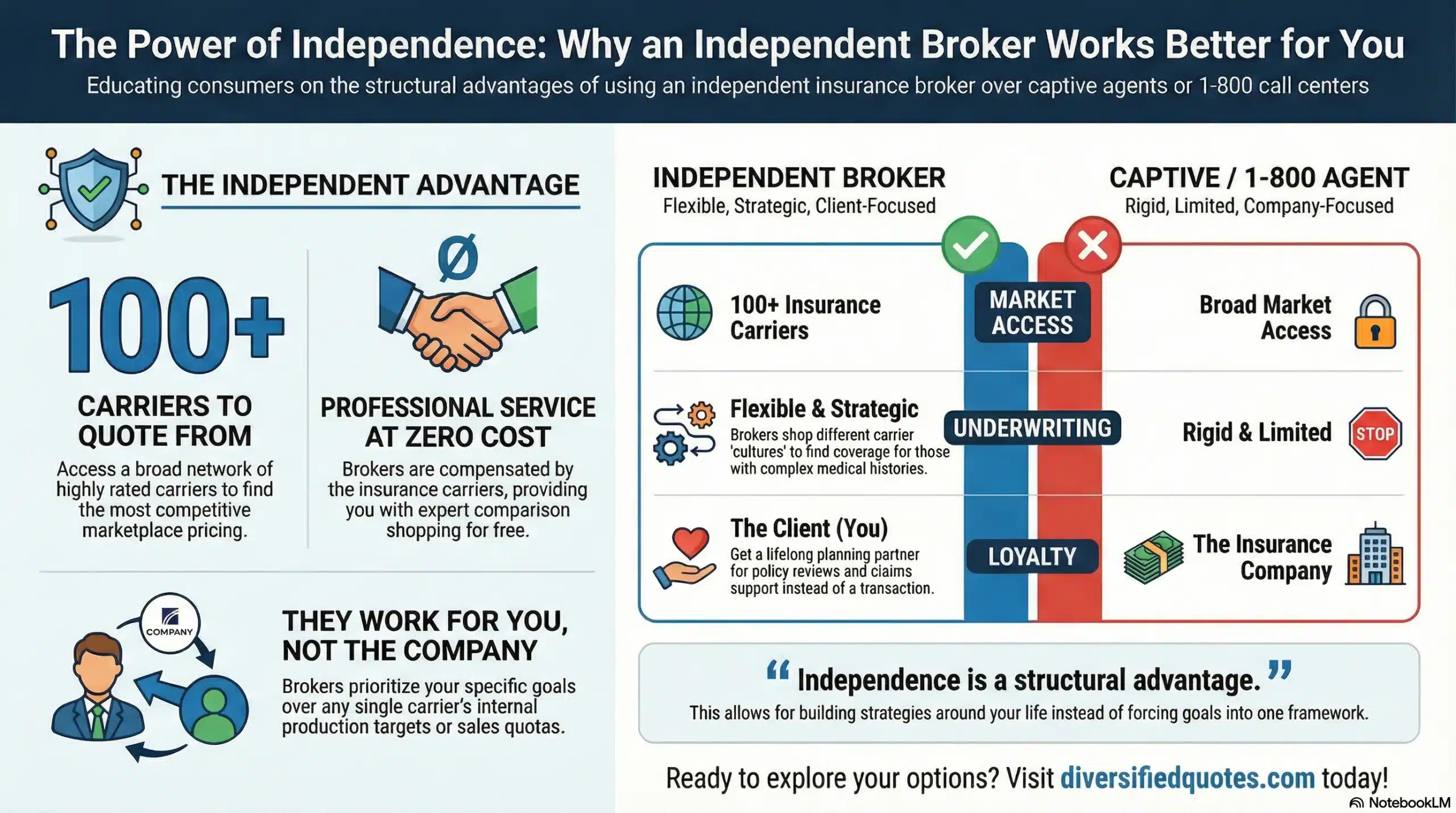
This is where working with an independent agency matters. We don’t submit every military case to the same carrier. We match your profile to companies whose military underwriting philosophy fits your real situation. If you’re in a higher-risk operational role, we focus on carriers that can handle it correctly. If you’re in a support or administrative specialty, we focus on carriers that won’t penalize you simply for serving.
Deployment Concerns: Does Private Life Insurance Cover You During Deployment?
Deployment is one of the biggest concerns military families bring up when applying for private coverage. There’s a common assumption that civilian life insurance won’t pay if you die during a deployment, or that there are “war exclusions” that automatically deny claims. The truth is more nuanced, and the details depend on the carrier and the policy contract. Some policies remain fully in force during deployment, including in combat zones, without exclusions. Others may have specific limitations depending on travel, location, or hazardous activity exposure.
The key is selecting a carrier that has a clear approach to military service and confirming the coverage provisions in writing. We help military members understand exactly what their policy does and doesn’t cover. That clarity matters because the goal isn’t to buy a policy that looks good on paper. The goal is to own a policy you can trust when it matters most.
Another important point is timing. It’s often easier to secure the broadest options before deployment begins. Even when deployment doesn’t disqualify you, underwriting can become slower or more complicated when someone is already overseas. If you’re trying to lock in a policy and you know a deployment is coming, it’s often smart to start the process early, so underwriting and approval can be completed before your schedule changes.
SGLI vs. VGLI vs. Private Life Insurance: What Military Families Need to Know
Most service members start with SGLI, and that’s understandable. It’s easy to enroll, it’s affordable, and it’s available without medical underwriting. But what military families often miss is that SGLI is not designed to follow you through every phase of life. It’s a strong baseline benefit, not a comprehensive long-term plan.
SGLI coverage is tied to military service. When service ends, SGLI ends. VGLI may allow conversion without medical underwriting, but that doesn’t automatically mean it’s the best long-term solution. VGLI premiums generally rise with age and can become expensive. Over time, families may find themselves paying far more than they expected to keep coverage in place, especially if they rely on VGLI as the “forever plan.”
Private life insurance works differently. It’s individually owned. It stays with you when you transition. It can be structured with long-term pricing consistency. And it can be layered on top of SGLI, rather than replacing it. Many families use SGLI as the foundation and then supplement it with private coverage to reach a higher total death benefit, or to lock in coverage that stays in force long after the military career ends.
Private coverage can also help reduce dependence on conversion options later. If you lock in a large private term policy while you’re still healthy, you can avoid being forced into expensive alternatives later. This is especially relevant for members who anticipate service-related medical issues, or who already have early indicators in their record that could make future underwriting harder.
When Should Military Members Buy Private Life Insurance?
There is no single “perfect time” for every service member, but there is a consistent theme we see in real-world cases: earlier is often easier and cheaper. Age matters in life insurance pricing. Health history matters. And military service can introduce new medical documentation over time, even when you’re doing well. Things that seem minor while you’re active duty can become underwriting friction later if you wait.
Many families explore private coverage around major life milestones such as marriage, the birth of a child, buying a home, or taking on larger financial responsibilities. Others explore coverage during career transitions such as promotions, reclassifications, or preparing for separation. The best approach is to treat life insurance as part of a financial readiness plan that evolves with your responsibilities—not as something you buy once and ignore until it expires.
A common example is a service member who plans to retire in five to ten years. They may have SGLI and feel covered, but they’re approaching an age range where premiums rise and medical records become more complex. If they wait until retirement, their options may narrow and costs may jump. If they secure private coverage while still active, they can lock in long-term affordability while their health profile is strong.
Best Types of Life Insurance for Military Members
Military families tend to use life insurance in a very practical way. Most want coverage that replaces income, pays off a mortgage, funds education, and provides long-term stability if the unexpected happens. The best policy depends on how long you need protection, how much coverage you need, and whether your goal is temporary income replacement or lifelong planning.
Term Life Insurance for Military Families
Term life insurance is the most common choice for military families because it provides high coverage amounts at lower cost. Term policies are typically designed for a specific duration, such as 10, 20, or 30 years. They are well suited for covering income replacement during working years, protecting children until they’re grown, paying off a mortgage, and funding long-term household stability.
Term insurance is also easy to layer with SGLI. Many service members keep SGLI and add a private term policy to increase total coverage. This can help families avoid being underinsured, especially when children, housing, and future expenses grow faster than people expect.
Because term coverage is often the biggest “bang for the buck,” it’s frequently the first private policy military families add. Then, as income and goals evolve, families may add permanent coverage or adjust term length to match real timelines.
Permanent Life Insurance for Lifelong Planning
Permanent life insurance is designed to stay in force for life, and it can be useful for military families who want coverage that does not expire. Permanent policies are often used for estate planning, legacy goals, long-term family protection, or creating predictable coverage beyond retirement.
Whole life insurance offers guaranteed premiums, guaranteed death benefits, and cash value accumulation that is not tied to market performance. It can be a strong option for families who want stability and predictability without ongoing changes in pricing or coverage structure.
Universal life insurance can offer additional flexibility in premium structure and death benefit design. That flexibility can matter in the military because income and benefits can shift during deployments, transitions, and career changes. While universal life needs to be structured carefully, it can be an effective tool in the right plan when designed for long-term sustainability.
Final Expense Life Insurance for Veterans and Retirees
Final expense life insurance can be a useful option for older veterans or retirees who want to ensure burial and funeral costs are covered. These policies often have smaller face amounts and simpler underwriting options. For many families, final expense coverage is not a replacement for larger protection planning—it’s a complement that ensures end-of-life costs don’t create financial stress for surviving family members.
If you’re evaluating permanent coverage for long-term stability, we often help compare how the policy fits alongside other goals like retirement income planning and legacy planning. Many military retirees want to know how insurance fits into the bigger picture, especially once pensions and retirement accounts become the main financial engine for the household.
How Much Life Insurance Does a Military Family Need?
Coverage amount is one of the most important decisions a military family makes, and it’s where people often underestimate what’s required. General guidelines suggest seven to ten times annual income, but military pay is not always as simple as civilian pay. Housing allowances, special duty pay, hazardous duty pay, expected civilian income after separation, retirement pensions, survivor benefits, and future education costs can all shift the true coverage need.
For many families, a better approach is to build a coverage plan around specific responsibilities. How long does your spouse need income replacement? Is there a mortgage or major debt that should be paid off? Are you planning to fund college for children? Do you want to create long-term stability even after retirement? When you build the plan around real objectives, the coverage amount becomes much clearer—and far more tailored to the family.
It is also common for military families to layer coverage. For example, you may have SGLI plus a private term policy for income replacement, and a smaller permanent policy for long-term coverage. This layered approach can be more efficient than trying to force one policy to do everything.
Service-Related Medical Conditions and VA Ratings: Can You Still Qualify?
Military applicants often worry that service-related injuries, VA disability ratings, and medical documentation will automatically disqualify them. In reality, many carriers evaluate health concerns based on severity, stability, and functional impact—not the label alone. A VA rating is not automatically a decline. It’s simply part of the underwriting story. Carriers want to understand what the condition is, how stable it is, what treatment is required, and whether it affects daily function or long-term prognosis.
Some military members have common service-related issues such as orthopedic wear and tear, mild sleep concerns, controlled anxiety, or prior injuries that are stable. Those cases are often insurable with the right approach. Other cases involve more complex conditions that require strategic underwriting and careful carrier selection.
If you have medical history concerns or you’ve been told you may be difficult to insure, this is one of the most relevant pages to review: Life Insurance with Pre-Existing Conditions. It explains how underwriters typically view stability, compliance, and documentation—and why carrier selection changes outcomes dramatically.
Why Carrier Selection Matters More for Military Cases
Military underwriting outcomes can vary widely between carriers. One company might treat deployability as a major concern, while another may have specific military guidelines designed to evaluate risk more fairly. One company may overreact to a job code, while another may focus on the real duty exposure. This is why it’s risky to assume “a quote is a quote.” The carrier that looks cheapest online might not be the carrier that gives the best final offer once underwriting is complete.
This is also why military families can get frustrated when they apply directly through a single company. If that company has conservative military rules, you can lose time, create an unnecessary decline in your application history, or end up with pricing that doesn’t reflect your actual profile. An independent approach helps avoid that. We identify the carriers most favorable to military members based on your branch, role, deployment status, and health picture.
If you’re evaluating whether it makes sense to use an independent agency for a nuanced case, this resource is helpful: Best Independent Insurance Agent.
Realistic Military Life Insurance Scenarios
Scenario one is the mid-career officer with a spouse and two children who relies primarily on SGLI. As retirement approaches, the officer starts worrying about what happens when SGLI ends and whether VGLI will be affordable long-term. This is one of the most common planning gaps we see. By securing a large private term policy while still active and still in good health, the service member locks in stable pricing that stays in place through retirement and civilian life, regardless of future changes.
Scenario two is the reservist or Guard member with periodic overseas deployments. This service member wants reassurance that coverage remains valid regardless of assignment. By matching the case to a carrier with clear military underwriting guidelines and strong deployment provisions, we can often secure uninterrupted protection. For the family at home, that certainty matters as much as the death benefit itself.
Scenario three is the service member transitioning into a civilian career and realizing their employer benefits are different than expected. Some employers offer small group life coverage, but it may not be portable or sufficient. In those cases, private life insurance becomes the foundation for long-term household stability, while employer benefits serve as supplemental coverage.
Scenario four is the veteran with a service-related health history who assumes they can’t qualify for private coverage. Many of these cases are still insurable, especially when conditions are stable and well documented. The strategy is to match the file to carriers who evaluate the real risk rather than defaulting to a conservative assumption.
Military Life Insurance Should Evolve as Your Life Changes
Life insurance is not a one-time purchase for most military families. It should be reviewed as responsibilities evolve, because military life is full of major transitions that change the financial picture quickly. Promotions, marriage, children, PCS moves, deployments, separation, and retirement all affect what coverage you need and how long you need it.
We encourage service members to treat life insurance like a readiness asset. It should be checked and adjusted during the same types of planning windows where you review household budgets, update beneficiaries, and adjust savings plans. Our advisors provide ongoing support, so your coverage continues to match real-world needs—not old assumptions.
We also help military families compare underwriting outcomes and planning strategies against other service-oriented professions. For example, underwriting frameworks often overlap with roles like life insurance for firefighters and life insurance for paramedics. That broader perspective helps us consistently match clients to carriers that treat service-related risk fairly.
Compare Military Life Insurance Rates
View real-time quotes from top-rated carriers serving active-duty service members, veterans, and military families.
Whether you are currently serving, preparing for deployment, or transitioning into civilian life, life insurance is one of the most important ways to protect your family’s future. With the right plan, military members can secure affordable coverage that remains reliable well beyond the years of active service.
Protect Your Family With Military Life Insurance
Our advisors compare policies from 75+ carriers to find the best life insurance options for military members and veterans nationwide.
Related Pages
Explore these next if you’re comparing underwriting, policy types, and coverage options for service-oriented careers.
Compare Term Life Insurance Lengths
Explore different term periods to find coverage that best matches your timeline and budget.
Talk With an Advisor Today
Choose how you’d like to connect—call or message us, then book a time that works for you.
Schedule here:
calendly.com/jason-dibcompanies/diversified-quotes
Licensed in all 50 states • Fiduciary, family-owned since 1980
FAQs: Life Insurance for the Military
Do active-duty service members need private life insurance?
Yes. SGLI ends when you separate or retire, so private coverage ensures your family stays protected long term.
Can deployed service members get life insurance?
Yes. Some carriers offer policies that remain active even during deployment, depending on the assignment and location.
What happens to SGLI when I leave the military?
SGLI ends 120 days after separation unless converted to VGLI, which can become expensive as you age.
Can veterans apply for private life insurance?
Yes. Veterans are eligible for individual life policies that often cost less than VGLI and include more options.
Does military service make coverage more expensive?
Not necessarily. Rates depend more on your health, duties, and deployment history than your branch of service.
Can I have both SGLI and private life insurance?
Yes. Many service members use both — SGLI for basic coverage and private life insurance for long-term family protection.
What if I was declined in the past?
You can reapply through an independent broker that works with carriers experienced in military underwriting.
About the Author:
Jason Stolz, CLTC, CRPC and Chief Underwriter at Diversified Insurance Brokers (NPN 20471358), is a senior insurance and retirement professional with more than two decades of real-world experience helping individuals, families, and business owners protect their income, assets, and long-term financial stability. As a long-time partner of the nationally licensed independent agency Diversified Insurance Brokers, Jason provides trusted guidance across multiple specialties—including fixed and indexed annuities, long-term care planning, personal and business disability insurance, life insurance solutions, Group Health, and short-term health coverage. Diversified Insurance Brokers maintains active contracts with over 100 highly rated insurance carriers, ensuring clients have access to a broad and competitive marketplace.
His practical, education-first approach has earned recognition in publications such as VoyageATL, highlighting his commitment to financial clarity and client-focused planning. Drawing on deep product knowledge and years of hands-on field experience, Jason helps clients evaluate carriers, compare strategies, and build retirement and protection plans that are both secure and cost-efficient. Visitors who want to explore current annuity rates and compare options across multiple insurers can also use this annuity quote and comparison tool.
