
What is a Life Insurance Exam
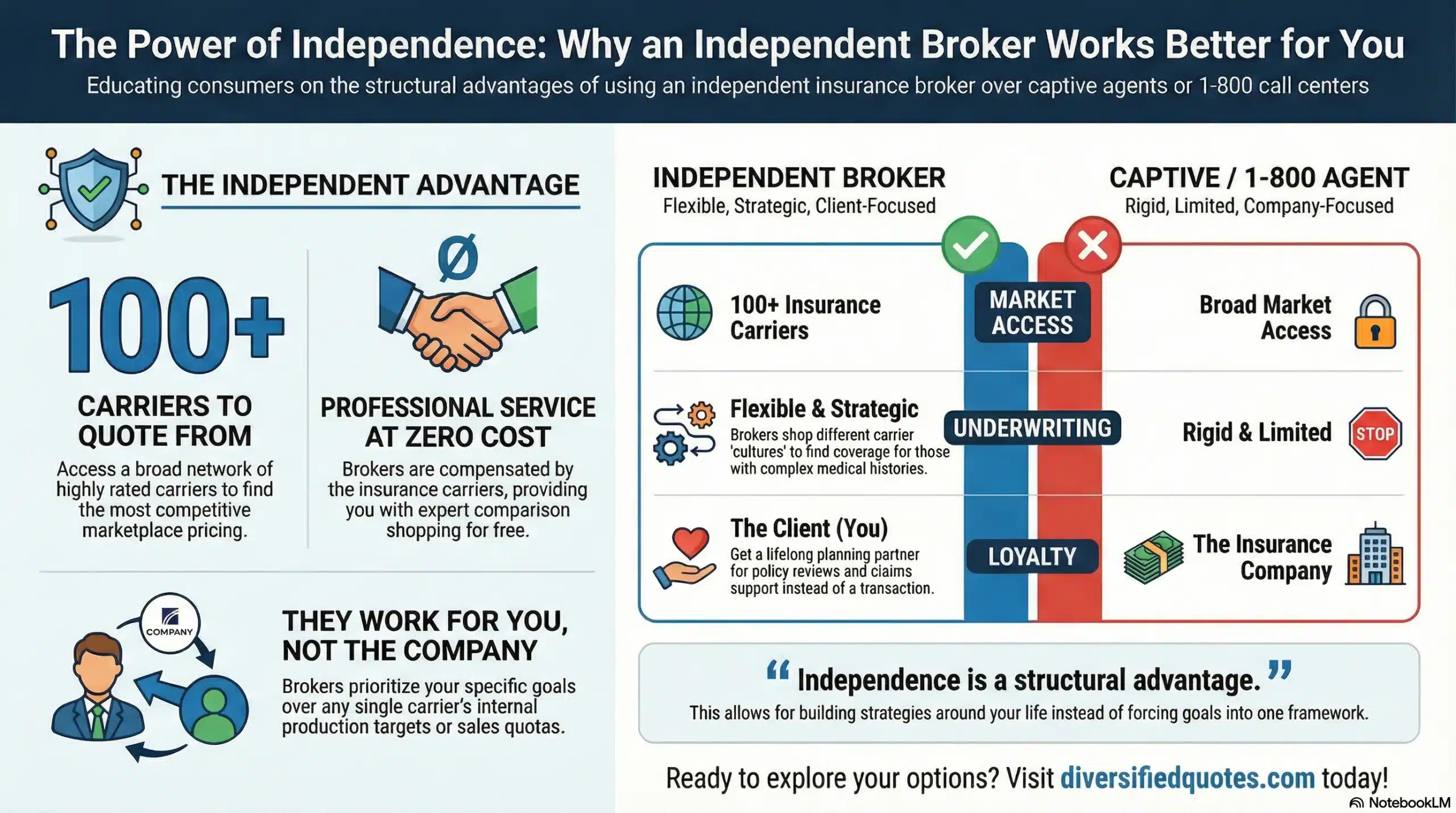
As an Independent Life Insurance Broker, we compare rates across 100+ carriers and prescreen every application before submission.
What is a Life Insurance Exam

Jason Stolz CLTC, CRPC, DIA, CAA
A life insurance exam is one of the most misunderstood parts of the underwriting process, yet it is also one of the most important factors in determining your final premium. When you apply for fully underwritten coverage, the insurance company wants to verify your health profile so it can assign you to the most accurate rate class possible. The exam is not designed to disqualify you — in fact, for many applicants it is the key to qualifying for significantly lower premiums. At Diversified Insurance Brokers, we guide clients through this process every day, helping them compare exam-based and no-exam policies side by side so they can make an informed decision before scheduling anything. For most applicants, the exam is brief, convenient, and completely free. A licensed paramedical professional comes to your home or office at a scheduled time, collects basic vitals and lab samples, and submits everything directly to the carrier. The results are confidential and used strictly for underwriting purposes. In many cases, strong exam results can improve an applicant’s initial quote and qualify them for Preferred or even Preferred Plus pricing. Understanding why insurers require the exam — and what each component measures — helps you prepare intelligently rather than approaching the process with anxiety. If you want to see how pricing varies by health class before moving forward, you can review how much life insurance costs and then compare real-time options using the quoter further below. For a foundational understanding of why people purchase this coverage in the first place, our resource on the primary reason people buy life insurance covers the financial protection motivation that underlies the entire underwriting process.
Compare Medical vs. No-Exam Life Insurance
See which carriers offer the strongest underwriting classes based on your health profile and goals.
Request a Free Personalized Quote Call 800-533-5969Life Insurance Quoter
Use the quoter below to see real-term rates side by side at different coverage amounts and term lengths. The quoter gives you a useful baseline — and understanding how exam results affect rate class placement helps interpret what you see.
See Real-Term Rates Side by Side
Life Insurance Exam — What Is Tested and Why
The exam covers a specific set of standardized measurements and lab tests that insurance carriers use to assess your current health status objectively. Every component serves a defined underwriting purpose — none of it is diagnostic in the clinical sense, but all of it informs how the carrier categorizes your risk. The table below maps each exam component to what it measures, what underwriters look for, and what findings may prompt additional review.
| Exam Component | What Is Measured | Underwriting Purpose | Favorable Finding | May Prompt Additional Review |
|---|---|---|---|---|
| Blood Pressure & Pulse | Systolic and diastolic BP; resting heart rate | Cardiovascular risk indicator; hypertension is the most commonly evaluated condition in life insurance underwriting | Consistently below 140/90; resting heart rate 60-100 BPM; readings consistent with disclosed medications | Readings significantly above treatment target; severe resting tachycardia or bradycardia; readings inconsistent with disclosed medication regimen |
| Height, Weight & BMI | Measured height and weight used to calculate BMI; compared against carrier build charts by age and gender | Build charts vary by carrier and age — heavier applicants face increasing premium adjustments but are not automatically disqualified; build is evaluated alongside overall health profile | BMI within the carrier’s Preferred or Standard build table ranges; weight consistent with what was disclosed on the application | Significant variance from disclosed weight; BMI outside the carrier’s Standard build chart thresholds; significant weight change since prior policy |
| Cholesterol Panel (Lipids) | Total cholesterol, LDL, HDL, triglycerides; total cholesterol-to-HDL ratio is often the most heavily weighted single lipid metric | Cardiovascular disease risk; elevated LDL and unfavorable cholesterol-to-HDL ratio indicate increased long-term cardiac risk | Total cholesterol below 200 mg/dL; total-to-HDL ratio below 5.0; LDL well within normal range; values consistent with disclosed statin or lipid-lowering therapy | Total cholesterol above 300 mg/dL; very low HDL; elevated triglycerides; unfavorable ratios despite reported medication treatment |
| Blood Glucose & A1C | Fasting or non-fasting blood glucose; A1C (glycated hemoglobin reflecting 90-day average blood sugar) | Diabetes screening and control assessment; undiagnosed diabetes or poorly controlled known diabetes are significant mortality risk factors | Non-fasting glucose below 200 mg/dL; fasting glucose below 100 mg/dL; A1C below 7.0% for known diabetics indicates good long-term control | Elevated glucose suggesting undiagnosed diabetes; A1C consistently above 8-9%; worsening A1C trend in known diabetics suggesting poorly controlled disease |
| Liver Function (AST, ALT, GGT) | Liver enzyme levels indicating inflammation, damage, or disease; GGT is particularly sensitive to alcohol use | Screens for liver disease, hepatitis, alcohol abuse, and fatty liver; elevated enzymes prompt investigation into cause and severity | All values within normal reference ranges; values consistent with disclosed medications known to mildly affect liver enzymes (statins, methotrexate) | Significantly elevated ALT or AST without explanation; elevated GGT suggesting regular alcohol use; pattern suggesting progressive liver disease |
| Kidney Function (Creatinine, BUN) | Serum creatinine and blood urea nitrogen; eGFR calculated from creatinine to estimate glomerular filtration rate | Renal function assessment; particularly important for applicants with hypertension or diabetes where kidney disease is a common complication | Creatinine within normal range; eGFR above 60 mL/min; stable values consistent with any prior kidney history disclosed | Elevated creatinine; eGFR below 60 suggesting CKD Stage 3+; declining trend compared to prior records; protein or blood in urinalysis consistent with kidney pathology |
| Nicotine / Cotinine Testing | Cotinine is the primary nicotine metabolite; detected via blood or urine; nicotine replacement products and e-cigarettes also produce positive cotinine results | Tobacco use is the most heavily rated lifestyle risk factor in life insurance; most carriers require 12-24 months of tobacco abstinence before non-smoker rates apply | Negative cotinine consistent with disclosed non-tobacco status; some carriers allow cotinine-positive results with proof of marijuana-only use if state laws permit and cannabis rate classes apply | Positive cotinine when non-tobacco status was disclosed — misrepresentation triggers serious underwriting consequences and can void coverage at claim time |
| Complete Blood Count (CBC) | Red cell count, white cell count, hemoglobin, hematocrit, platelet count | General health marker; anemia, immune dysfunction, and blood disorders can be identified; significant abnormalities trigger medical records review | All values within normal reference ranges; mild variations explained by disclosed conditions or medications | Unexplained anemia; significantly elevated white count suggesting infection or inflammatory condition; platelet abnormalities requiring clinical explanation |
| EKG (Selected Cases) | Resting electrocardiogram measuring electrical activity of the heart; required for most applicants over 40-50 seeking larger coverage amounts (thresholds vary by carrier) | Identifies cardiac rhythm abnormalities, conduction defects, and evidence of prior cardiac events not previously disclosed; particularly important for larger face amounts | Normal sinus rhythm; normal intervals; no evidence of prior infarction or significant conduction abnormality inconsistent with disclosed history | Rhythm abnormalities not previously disclosed; EKG findings inconsistent with disclosed cardiac history; conduction defects requiring cardiologist review |
| Urinalysis | Dipstick screen for protein, glucose, blood, and other markers; cotinine also typically measured from urine | Kidney health, diabetes screening, and nicotine verification; protein in urine signals possible kidney damage from hypertension or diabetes | No protein (or minimal trace consistent with known condition); no glucose; no blood; cotinine negative if non-tobacco status was disclosed | Significant proteinuria; glucose without prior diabetes disclosure; blood requiring investigation; cotinine inconsistency with disclosed tobacco status |
What Happens During the Exam
During the exam itself, the paramedical professional verifies your identification, records your height and weight, checks blood pressure and pulse, and collects a small blood and urine sample. These samples are used to evaluate standard lab markers such as cholesterol levels, glucose and A1C, liver and kidney function, and nicotine presence. For higher coverage amounts or older applicants, an EKG may also be required. The entire process typically takes less than thirty minutes. Once completed, the results are securely transmitted to the underwriting department for review. Insurance companies require this screening because pricing in life insurance is based on measurable risk factors. The difference between a Preferred Plus and a Standard rating can translate into thousands of dollars in premium savings over the life of a policy. If you have a condition such as diabetes, prior cardiac history, or tobacco use, the exam provides objective data that may help secure a better offer than an automated system would initially assume. For applicants who want to understand the cost implications of different health classifications, our resource on whether life insurance is expensive covers how health rating directly drives premium levels.
Exam-Based vs. No-Exam Underwriting — Choosing the Right Path
| Feature | Traditional Fully Underwritten | Accelerated Underwriting | Simplified Issue | Guaranteed Issue |
|---|---|---|---|---|
| Medical exam required? | Yes — full paramed exam including blood draw, urine, BP, and weight | No — uses electronic health records, Rx database, and MVR instead | No — health questions only, no physical exam | No exam, no health questions |
| Coverage amounts available | Highest — millions of dollars available; no face amount ceiling at most carriers | High — up to $1-3M at many carriers for qualifying applicants | Moderate — typically up to $25K-$500K depending on carrier | Low — typically $5K-$25K; graded benefit period applies |
| Approval timeline | 2-6 weeks — exam plus medical records review; longer when records are complex | Days — often 1-7 business days for qualifying applicants | Days — typically 1-5 business days after application | Often same-day or next-day; approval guaranteed within eligible age range |
| Best rate class achievable | Preferred Plus — the best available rate class; exam results directly drive classification | Preferred or Standard — some carriers cap at Preferred without full exam | Standard — simplified issue products do not offer preferred class pricing | No rate class system — flat pricing with graded benefit |
| Premium level (relative) | Lowest per dollar of coverage for qualifying applicants — full underwriting rewards good health | Competitive — often comparable to full underwriting for healthy applicants | Higher than fully underwritten — carrier prices for reduced health data | Highest per dollar of coverage — guaranteed acceptance priced for maximum risk |
| Best suited for | Applicants in good-to-excellent health seeking larger coverage amounts at the lowest available premiums; applicants willing to wait a few weeks for final approval | Healthy applicants seeking fast approval without scheduling a nurse visit; younger applicants under 50 with clean health profiles | Applicants with moderate health concerns who want faster approval; those who prefer no physical exam; smaller coverage amount needs | Applicants who cannot qualify for traditional or simplified underwriting; final expense or burial protection needs; applicants with serious prior declines |
How Exam Results Translate to Rate Classes and Premiums
Understanding underwriting classes is central to understanding the exam. Most carriers group applicants into Preferred Plus, Preferred, Standard Plus, Standard, or table-rated categories. The difference between these classifications is based on a combination of lab results, build charts, medical history, lifestyle risks, and sometimes family history. For applicants in excellent health with no tobacco use and strong lab markers, Preferred Plus can deliver the lowest available premiums — often 30-50% lower than Standard pricing for the same coverage amount. For those with moderate health concerns, Standard pricing is common and still competitive. When more significant risk factors are present, table ratings may apply, which incrementally increase premiums to reflect higher risk. Understanding why people buy life insurance also clarifies why getting the exam right — and achieving the best possible rate class — matters practically: better pricing over a 20-30 year term can represent tens of thousands of dollars in premium savings.
For applicants who want to understand in detail how table ratings work and what each table level costs relative to Standard pricing, our resource on life insurance table ratings explained covers the A-through-P table rating scale used by most carriers and how each step translates to premium impact. For applicants with complex health histories where the exam may reveal conditions that affect pricing, understanding the underwriting framework in advance is essential. Our resource on best life insurance for pre-existing conditions covers the carrier selection strategies that matter most when exam results reveal conditions that require careful placement rather than generic carrier submission. Applicants who want to understand whether their existing life insurance could be more affordable through a policy review should also know that what deaths are not covered by life insurance covers the policy limitation context that is equally important to rate class for understanding what any policy actually delivers.
Preparing for Your Life Insurance Exam — A Practical Guide
Preparation can meaningfully influence your results, and the changes required are simple. In the 24 to 48 hours before the exam, getting adequate sleep — 7 to 8 hours the night before — helps stabilize blood pressure and general vitals. Staying well hydrated with water makes blood draws easier and helps kidney function markers read accurately. Avoiding alcohol for at least 24 hours removes the temporary blood pressure-elevating and liver enzyme-affecting impact of alcohol consumption. Avoiding caffeine for at least 4 to 6 hours before the exam reduces transient blood pressure elevation from stimulants. Avoiding heavy exercise for 24 hours is equally important — vigorous aerobic activity raises creatinine levels and blood pressure temporarily, and a hard workout the morning before the exam can produce falsely elevated kidney markers. Some carriers request fasting for cleaner glucose readings — if fasting is requested in your case, we will let you know when scheduling. Eating a light meal rather than a heavy one on exam morning is generally recommended even when fasting is not required. Avoid nicotine products entirely for at least 48-72 hours if you are a non-tobacco applicant who occasionally uses products — cotinine levels decline slowly and a recent exposure can trigger a tobacco classification even if use is extremely infrequent. Timing your exam for mid-morning rather than early morning or late afternoon may produce the most consistent blood pressure readings for many applicants, since BP tends to be lowest in mid-morning for most people under standard circadian patterns. These preparation steps are not medically significant — they are simply good practice for representing your true baseline health picture rather than an artificially stressed or depleted state.
Nicotine, Marijuana, and the Exam — Specific Guidance
Nicotine and tobacco testing through cotinine screening is one of the most consequential parts of any life insurance paramed exam, because the pricing difference between tobacco and non-tobacco rate classes is typically the largest single premium variable in life insurance underwriting. Most carriers classify any cotinine-positive result as “tobacco use” regardless of the product type — cigarettes, cigars, pipe tobacco, chewing tobacco, nicotine patches, nicotine gum, e-cigarettes, and vaping products all produce detectable cotinine. The only common exception is marijuana use without other nicotine exposure, which some carriers now evaluate under separate rate class frameworks. Our resource on whether marijuana use qualifies for non-smoker rates covers exactly how carrier policies vary on cannabis, since the answer differs significantly between companies — some treat marijuana similarly to tobacco, some allow non-smoker classification for infrequent cannabis-only users, and some have developed specific cannabis rate classes. Misrepresenting tobacco status on a life insurance application — by disclosing non-smoker status while testing positive for cotinine — is considered material misrepresentation, which can void the policy at claim time regardless of how many premium payments were made. Accuracy on tobacco disclosure protects the coverage that the entire application process is designed to create. For applicants exploring policies that do not require the exam at all and therefore avoid the tobacco testing component entirely, our resource on how to buy instant decision life insurance covers the no-exam accelerated underwriting pathway that many applicants prefer.
The No-Exam Alternative — When to Consider It
Some applicants prefer to avoid the exam entirely. No-exam life insurance relies on prescription databases, motor vehicle reports, prior insurance records, and digital underwriting tools instead of lab work. Approval can happen in days rather than weeks. This option can be ideal for younger, healthy applicants or those who simply want fast coverage without scheduling a nurse visit. If you are unsure whether you qualify, we can review your profile and determine whether accelerated underwriting or simplified issue options are appropriate. Individuals who have struggled to obtain approval in the past may also find helpful guidance at what to do if nobody will insure you for life insurance — a resource that covers the systematic approach to finding coverage when standard applications have produced adverse results. The key tradeoff with no-exam coverage is pricing: for applicants in excellent health, fully underwritten coverage with an exam almost always produces better per-dollar premium than no-exam alternatives, because the exam provides objective data that allows carriers to confidently classify the applicant at a better rate class. For applicants with health concerns where the exam might reveal unfavorable findings, no-exam coverage avoids that risk — but also limits coverage amounts and typically restricts the best available rate class to Standard or below. Understanding how to choose the right policy structure is covered in our resource on how to choose the right life insurance policy. For applicants who want to apply for term coverage online without an exam right now, our guide on how to buy term life insurance online walks through the self-directed application process at carriers that offer this pathway.
What the MIB Database Is and Why It Matters
The Medical Information Bureau (MIB) is a data clearinghouse used by most U.S. life insurance carriers to share information about prior insurance applications. When you apply for life insurance and undergo a paramed exam, the results and any significant health disclosures are often reported to the MIB as a coded entry. Future carriers can query the MIB as part of their underwriting review to identify undisclosed conditions or inconsistencies between applications. The MIB exists to protect carriers from information asymmetry — situations where an applicant knows material health facts that the carrier does not. For applicants, understanding the MIB is important for two reasons: first, any significant medical finding from the exam or records review that appears on your MIB record will be visible to future carriers; second, prior adverse actions on previous applications can surface in MIB queries at future carriers, which is why applying to the wrong carrier first — and generating a decline — is a meaningful strategic concern. Our resource on what is MIB in insurance covers how the database works, what is and is not reportable, and how applicants can request and review their own MIB file. This context is particularly relevant for applicants who plan to apply for coverage with complex medical histories where the prescreening strategy matters most.
The Exam Timeline — From Scheduling to Approval
The timeline from exam to approval varies by carrier but typically ranges from two to six weeks for fully underwritten applications. After the application is submitted, the exam is scheduled at your convenience — most exam providers can accommodate same-week or next-week scheduling at a location of your choice. Lab results are typically analyzed within 7 to 10 business days of the blood draw. If medical records are also requested from your physician — which happens when the health questionnaire or exam results indicate a condition the carrier wants to verify — that records request can add another 1 to 3 weeks depending on the physician’s practice turnaround time. Once all records and exam results are in the underwriter’s hands, the formal review and rate class decision typically takes a few additional business days. For applicants with complex health histories, the underwriting review may include internal medical consultation before a decision is issued. Once you receive the formal offer and accept it by placing the policy in force with the first premium payment, coverage becomes active. The exam-to-coverage timeline for clean files with no medical records complications is often 3-4 weeks; complex files with multiple conditions and extensive records may take 6-8 weeks.
When Exam Results Can Improve Your Initial Quote
One of the most valuable — and least understood — aspects of the paramed exam is that it can produce a better outcome than an automated digital underwriting system initially assigned. Many instant-decision online platforms place applicants at Standard or below simply because they cannot access real-time lab data, and the system defaults to conservative assumptions for any disclosed health history. When the full exam results come in and reveal well-controlled metrics across all categories, the underwriter may upgrade the applicant to a more favorable rate class than the initial algorithm suggested. This improvement opportunity is one reason why choosing fully underwritten coverage with an exam is often worth the extra few weeks for larger coverage amounts — the premium savings over a 20-year policy term from a Preferred Plus versus Standard classification can be substantial. Applicants who have a chronic illness rider component in their policy design may find the exam especially important, as the qualifying health threshold for accelerated benefit eligibility is often more favorable in fully underwritten policies than in simplified issue alternatives. For those interested in understanding what specific types of coverage are most relevant for their situation, our resource on guaranteed universal life insurance covers one of the permanent policy structures that often requires full underwriting to access its most competitive pricing.
Life Insurance Planning in a Broader Financial Context
It is important to recognize that life insurance planning rarely exists in isolation. Many clients evaluating coverage are simultaneously reviewing retirement income strategies, business insurance decisions, or long-term care planning. Business owners comparing group health insurance for construction firms or volunteer organizations exploring group health insurance options often coordinate those decisions alongside key person or executive life insurance. Families thinking about extended care needs may also explore best long-term care insurance rates or connect with a best independent long-term care insurance broker to integrate planning holistically. For parents and grandparents, permanent policies such as Gerber Children’s Whole Life may be part of a broader legacy conversation. Others evaluating guaranteed income later in life may look ahead to topics like guaranteed income at age 65 or how long retirement savings might last, as discussed in how long a solo 401(k) will last in retirement. For those interested in how annuity income can coordinate with life insurance premium payments — particularly useful when managing premium obligations on a fixed retirement income — our resource on whether annuity payments can fund life insurance premiums covers that financial integration approach. If you are comparing insurance carriers themselves, company overviews such as Is Securian a Good Insurance Company?, Is Zurich a Good Insurance Company?, or Is Bankers Life a Good Insurance Company? can be useful — carrier selection can matter just as much as underwriting class when evaluating long-term financial strength and product fit. The tax treatment of life insurance benefits is also relevant context for comprehensive planning: our resource on whether life insurance benefits are taxable covers the tax framework that applies to death benefit proceeds.
Ultimately — The Exam Is a Tool, Not an Obstacle
The life insurance exam is simply a mechanism for producing objective data. For many applicants, it unlocks better pricing and stronger offers than any automated underwriting pathway could provide. For others, accelerated or simplified underwriting may be more convenient and produce adequate coverage at an acceptable premium. The key is comparing both paths before deciding. Our team reviews more than one hundred carriers nationwide and matches your profile to the underwriting philosophy most likely to deliver competitive results — whether that means scheduling a paramed exam, using accelerated digital underwriting, or exploring a simplified issue pathway that avoids the medical visit entirely. For applicants with specific conditions who want to understand how the exam findings from their health history are evaluated in the broader impaired-risk underwriting context, our resources on individual conditions — from cardiovascular disease and diabetes to respiratory and neurological conditions — cover that specialized underwriting framework in detail alongside the general exam guidance on this page. Understanding life insurance for Hepatitis A or life insurance for divorcees — depending on which situation applies — illustrates how specific circumstances intersect with the standard underwriting exam process that all fully underwritten applicants go through. For applicants who may need coverage for conditions that affect transplant or organ donation history, our resource on life insurance for organ transplant recipients covers the post-transplant underwriting framework that applies when exam results include transplant-related medications.
Ready to Move Forward?
Tell us a few details about your goals, health history, and coverage amount. We’ll match you to the strongest underwriting option available.
Contact Us for a Personalized Comparison Call 800-533-5969Related Planning & Insurance Topics
Additional resources covering coverage types, specialty situations, and supplemental insurance options.
Financial Protection Essentials
No-exam alternatives, pre-existing condition strategy, prescreening guidance, and rate class resources that complement the exam education on this page.
Compare Term Life Insurance Lengths
Explore different term periods to find coverage that best matches your timeline and budget.
Talk With an Advisor Today
Choose how you’d like to connect—call or message us, then book a time that works for you.
Schedule here:
calendly.com/jason-dibcompanies/diversified-quotes
Licensed in all 50 states • Fiduciary, family-owned since 1980
FAQs: Life Insurance Exams
How long does the life insurance exam take?
Most exams take 20 to 30 minutes from start to finish, including paperwork, identity verification, vitals measurement, and sample collection. Add a few minutes if an EKG is required — EKGs are typically required for applicants over age 40-50 seeking larger face amounts, and the thresholds vary by carrier. The paramed professional brings all necessary equipment to your location, so there is no travel time on your end. Scheduling is typically flexible — most providers offer morning, afternoon, or evening appointments, and weekends are often available. The preparation steps you take before the exam (sleep, hydration, avoiding caffeine and alcohol) matter more to the accuracy of results than the exam duration itself.
Do I need to fast before the exam?
Not always, but fasting can improve the clarity of glucose readings and lipid panels for some applicants and some carriers. If fasting is recommended or required for your specific application, we will communicate that when scheduling. When fasting is not explicitly required, eating a light, balanced meal rather than a heavy meal is generally good practice. Avoiding high-fat, high-sugar, or high-salt foods in the 24 hours before the exam produces more representative baseline readings than fasting would for many applicants. Staying well hydrated — drinking adequate water in the 24-48 hours before the exam — is more consistently important than fasting, as good hydration makes blood draws easier and supports accurate kidney function markers.
What do they test for in the life insurance exam?
The standard paramed exam tests a specific set of markers: cholesterol panel (total, LDL, HDL, triglycerides, and the total-to-HDL ratio), blood glucose and A1C for diabetes screening and control assessment, liver function enzymes (AST, ALT, GGT), kidney function markers (creatinine, BUN, with eGFR calculated), complete blood count (red cell count, white cell count, hemoglobin, platelets), and nicotine/cotinine for tobacco use verification. Urinalysis screens for protein, glucose, and blood alongside cotinine. Blood pressure, pulse, and height/weight measurements complete the physical component. For larger coverage amounts or older applicants, an EKG is also typically required. The goal is to verify your health profile as disclosed on the application — not to diagnose conditions or serve as a substitute for clinical medical care.
Will nicotine or marijuana use affect my rates?
Yes, both can affect rates, but in different ways depending on the carrier. Nicotine from any source — cigarettes, cigars, e-cigarettes, vaping, patches, or gum — produces cotinine that most carriers classify as tobacco use, which triggers tobacco rate classes that are typically 50-100% higher than non-tobacco rates for the same coverage. Marijuana use varies significantly by carrier: some treat cannabis the same as tobacco (cotinine from cannabis does not trigger the test, but disclosure matters), some allow non-smoker classification for infrequent marijuana-only users who test negative for cotinine, and some have developed specific cannabis rate classes. Our resource on whether marijuana qualifies for non-smoker rates covers the carrier-by-carrier variation in detail. Misrepresenting tobacco status on the application while testing positive for cotinine is material misrepresentation and can void the policy.
Can I get approved without an exam?
Yes — many carriers offer accelerated or no-exam underwriting using digital health data sources including prescription history databases, medical information bureau records, motor vehicle reports, and electronic health record access. These pathways can produce coverage in days rather than weeks and are increasingly common for applicants under 50 seeking moderate coverage amounts. The tradeoff is that no-exam coverage typically does not offer Preferred Plus pricing (since objective lab data is what justifies that classification), and face amount maximums are typically lower than fully underwritten policies. For smaller coverage amounts and applicants who value speed and convenience over the lowest possible premium, no-exam is often the right choice. For larger amounts and applicants with strong health who want to maximize pricing, the exam often pays for itself in premium savings over the policy term.
Who pays for the life insurance exam?
The insurance carrier pays for the exam — including the paramedical professional’s visit, the blood draw, urine collection, lab analysis, EKG if required, and all associated processing. There is no cost to you whatsoever. The exam is part of the insurance company’s underwriting process, and they contract with national paramedical service firms that operate in all major metropolitan areas and most rural areas. If scheduling in your immediate area is difficult, options typically include mobile exam providers who travel to your home or workplace. The cost-free nature of the exam is worth emphasizing for applicants who might otherwise avoid it — there is no financial barrier to getting fully underwritten coverage, and the financial benefit of better pricing from a good exam can be substantial over the life of the policy.
Can I review my exam results?
Yes — you can request a copy of your lab results directly from the paramedical exam provider. Most exam companies have an online portal or a standard request process for applicants to access their results. You are legally entitled to receive your own lab data. We can also help you understand what the results mean in the context of your underwriting file and how they translate to the rate class the carrier assigns. If results reveal a finding that was previously unknown to you — an elevated glucose, for example, that suggests undiagnosed prediabetes — that information is medically significant beyond the insurance application context, and we would encourage you to share it with your primary care physician. The exam provides a useful health snapshot even for applicants who do not ultimately purchase coverage.
What if I’m sick on exam day?
Reschedule without hesitation. Illness, dehydration, poor sleep, or a stressful week can all temporarily elevate blood pressure, affect white blood cell counts, and impact other markers in ways that do not reflect your baseline health. Testing when you feel ill or significantly depleted can produce results that underwrite at a worse rate class than your actual health would support — and once those results are submitted, they become part of your file. There is no penalty for rescheduling, and exam providers are accustomed to rescheduling on short notice. The small delay involved in rescheduling is almost always worth it. The same logic applies to exam morning: if you had very poor sleep the night before, significant stress, or any unusual health event, contact us before the exam and we can discuss whether rescheduling makes sense for your specific case.
Will prescriptions or medical records be reviewed alongside the exam?
Often, yes. Most carriers access prescription history databases as a standard part of the underwriting review — these databases reflect your pharmacy-filled prescriptions going back several years and help carriers verify that medical disclosures on the application are consistent with the medications in your history. If the exam results or prescription history reveal conditions that require more detail, carriers will typically request medical records from your physician. Records requests are common for any condition that requires specialist care, has a complex treatment history, or where the exam finding differs from what was disclosed. Providing accurate, complete information on the application — and ensuring your medication list is current and accurate — prevents the delays and complications that arise when pharmacy data reveals undisclosed conditions after the exam is complete.
How quickly can I be approved after the exam?
For clean files where no medical records are needed and lab results are straightforward, approval can come within two to three weeks of the exam. For files that require medical records — the most common source of delay — the timeline extends by however long the physician’s office takes to respond to the records request, which varies from a few days to several weeks depending on the practice. We actively track our clients’ pending files and follow up on records requests to keep the process moving. If approval timeline is critical — for example, you need coverage in place before a specific date — we can discuss whether a no-exam policy as interim coverage makes sense while the fully underwritten policy processes. No-exam cases frequently approve within a week, and coverage is active immediately when the first premium is paid.
What is the MIB and how does it affect my exam-based application?
The Medical Information Bureau (MIB) is a data clearinghouse used by most U.S. life insurance carriers to share coded entries about prior insurance applications and underwriting findings. When you apply for coverage and undergo a paramed exam, significant health findings may be reported to the MIB as a coded record. Future carriers can query this record to identify undisclosed conditions or inconsistencies between applications. The MIB is not a medical records repository — it contains coded entries about insurance applications, not actual medical records — but it is a meaningful part of the underwriting ecosystem that makes accuracy and consistency across applications important. Our resource on what is MIB in insurance covers how the database works in detail. Understanding the MIB reinforces why applying strategically — with the right carrier selection before formal submission — protects both your current application and your future application history.
Can I use exam results from one application at a different carrier?
Generally no — each carrier orders their own paramed exam through their own contracted provider, and results are owned by the issuing carrier rather than the applicant. However, some carriers participate in shared exam programs for certain accelerated underwriting pathways where electronic health data can reduce the need for a new physical exam within a defined timeframe. In practice, when you apply with multiple carriers in quick succession — which we sometimes do when shopping your case for the best offer — we typically time applications to minimize duplicate exams. If exam results from one carrier reveal a finding that affects all carriers, we would factor that into how we approach the remaining applications. For the most complex cases, understanding the right submission sequence before any exam is scheduled is part of the strategic value of working with an experienced independent broker.
About the Author:
Jason Stolz, CLTC, CRPC, DIA, CAA and Chief Underwriter at Diversified Insurance Brokers (NPN 20471358), is a senior insurance and retirement professional with more than 25 years of real-world experience helping individuals, families, and business owners protect their income, assets, and long-term financial stability. As a long-time partner of the nationally licensed independent agency Diversified Insurance Brokers, Jason provides trusted guidance across multiple specialties—including fixed and indexed annuities, long-term care planning, personal and business disability insurance, life insurance solutions, Group Health, Travel Medical and Evacuation Insurance, and short-term health coverage. Diversified Insurance Brokers maintains active contracts with over 100 highly rated insurance carriers, ensuring clients have access to a broad and competitive marketplace.
His practical, education-first approach has earned recognition in publications such as VoyageATL, and contributions from his agency featured in Kiplinger and GoBankingRates— highlighting his commitment to financial clarity and client-focused planning. Drawing on deep product knowledge and years of hands-on field experience, Jason helps clients evaluate carriers, compare strategies, and build retirement and protection plans that are both secure and cost-efficient. Visitors who want to explore current annuity rates and compare options across multiple insurers can also use this annuity quote and comparison tool.
Explore More Life Insurance Options: Browse our complete guide to Life Insurance Buying & Cost Education — covering how to buy, costs, calculators, rates & buying guides from 100+ carriers.
Last Reviewed: May 31, 2026 |
Reviewed by: Jason Stolz, CLTC, CRPC, DIA, CAA
Chief Underwriter, Diversified Insurance Brokers, Inc. | NPN: 20471358 | Diversified Insurance Brokers, Inc. — Licensed in all 50 states
Fact Checked by: Tonia Pettitt, CMIP©
Medicare Specialist, Diversified Insurance Brokers, Inc. | NPN: 14374308 | Diversified Insurance Brokers, Inc. — Licensed in all 50 states
Did you find this content helpful? Leave us a Google review — it helps others find trustworthy guidance too.
Editorial Standards: Diversified Insurance Brokers maintains rigorous editorial standards to ensure accuracy, clarity, and independence in all content. Learn more about our editorial standards and commitment to transparency.
