
Best Short-Term MYGA Annuities

Jason Stolz CLTC, CRPC
Best Short Term MYGA Annuities are designed for savers who want higher yields than traditional bank CDs, full principal protection, and a clearly defined timeline that typically ranges from two to five years. A Multi-Year Guaranteed Annuity locks in a fixed interest rate for a specific period, allowing you to grow your money without market volatility while maintaining more flexibility than longer-duration contracts. For retirees, pre-retirees, and conservative investors, short-term MYGAs can function as a strategic parking place for cash, a laddering component inside a broader income strategy, or a safe alternative to bonds during uncertain rate cycles. If you are comparing options, it is important to understand how MYGAs differ from other types of annuities and how they fit within your overall retirement income framework.
Compare Today’s Fixed MYGA Rates
Review competitive 2-year, 3-year, and 5-year guaranteed rates from top-rated carriers.
Why Short Term MYGAs Are Gaining Popularity
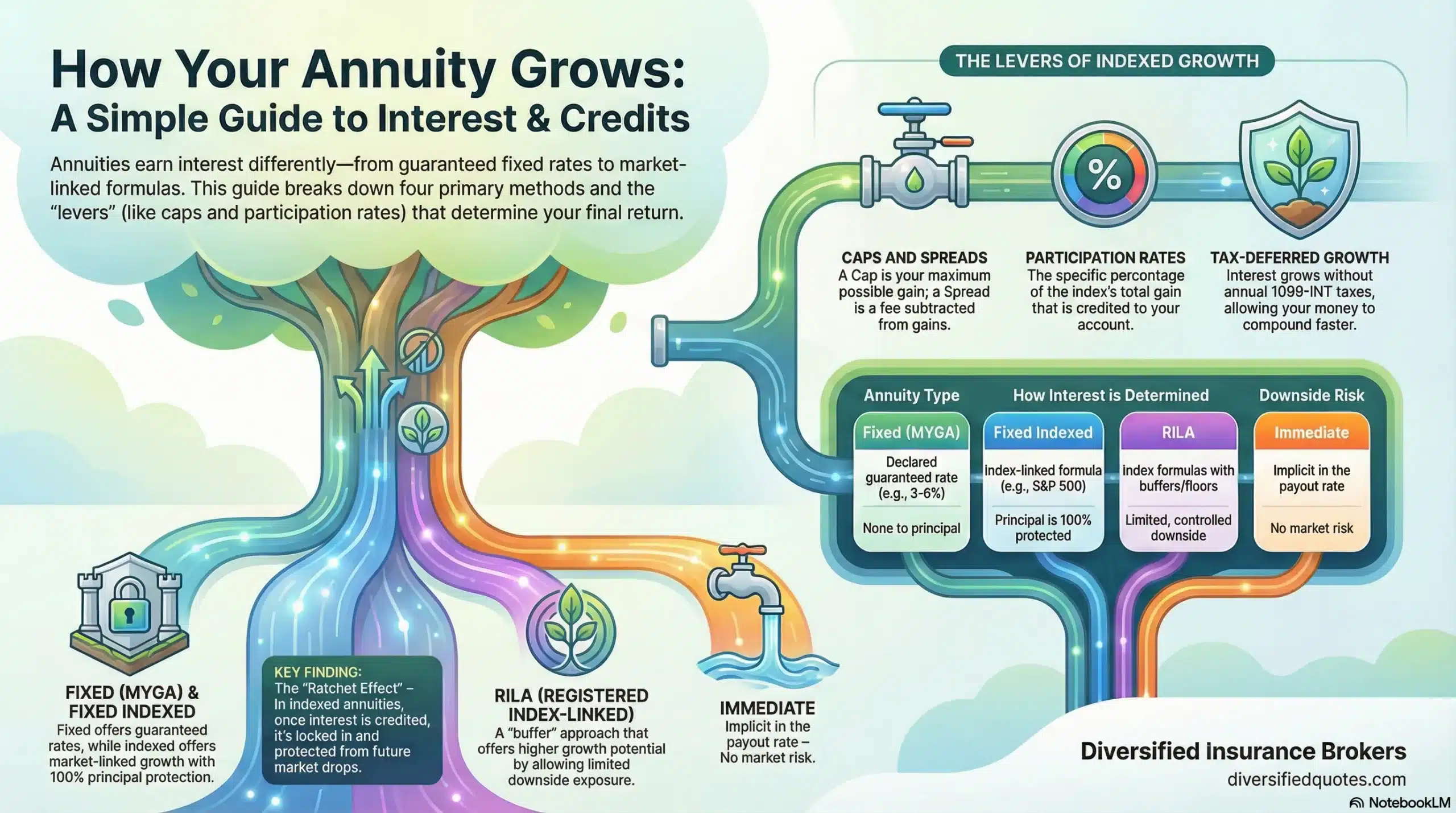
In today’s interest rate environment, many investors want the certainty of a guaranteed yield without committing funds for seven to ten years. Short-term MYGAs provide a defined return window that allows you to reposition assets sooner if rates improve or if income needs change. Unlike bond funds, which fluctuate in value when rates move, MYGAs credit a declared rate and protect principal from market swings. This predictability makes them appealing to conservative investors who value stability over speculation. Additionally, MYGAs grow tax-deferred, meaning you do not pay taxes annually on interest the way you would with CDs or Treasuries. Over even a two-to-five-year period, this deferral can meaningfully enhance effective yield. For those evaluating fixed guarantees versus enhanced crediting strategies, comparing them alongside bonus annuity options can help determine whether upfront incentives justify longer surrender schedules.
Understanding the 2-Year, 3-Year, and 5-Year Differences
A two-year MYGA generally prioritizes liquidity and shorter commitment, making it ideal for funds that may be redeployed in the near future. Three-year contracts often strike a middle ground, providing slightly higher yields while still keeping the time horizon manageable. Five-year MYGAs typically offer the strongest guaranteed rates among short-term contracts, but that additional yield comes with a longer surrender schedule. The key is aligning the guarantee period with your anticipated cash flow timeline. If you expect to transition into income within a few years, staggering multiple short-term contracts can reduce reinvestment risk and smooth rate exposure. Many retirees combine these shorter guarantees with structured income planning tools such as an annuity payout calculator to visualize how accumulated funds may later convert into lifetime income streams.
Surrender Schedules and Liquidity Considerations
Every MYGA includes a surrender period during which withdrawals above the free allowance may trigger charges. Most short-term contracts allow penalty-free withdrawals of up to ten percent annually after the first year, though terms vary by carrier. Understanding these provisions is essential because accessing funds early can reduce overall return. It is equally important to evaluate whether a contract includes a Market Value Adjustment and how that feature behaves if interest rates rise. While surrender charges decline each year, investors should never commit funds they anticipate needing unexpectedly. A thoughtful liquidity plan ensures that your guaranteed yield remains intact and that emergency funds remain accessible outside the annuity contract.
Tax Advantages and Compounding Efficiency
One of the most overlooked benefits of MYGAs is tax-deferred growth. Interest compounds within the contract without annual taxation, allowing earnings to build more efficiently. For investors in moderate or higher tax brackets, this advantage can narrow or even reverse yield comparisons against taxable alternatives. When held inside qualified accounts such as IRAs, MYGAs maintain their conservative structure while complementing long-term retirement savings strategies. Over time, this structured compounding can serve as the foundation for predictable retirement income. If you are planning to convert guaranteed accumulation into income later, reviewing retirement income annuity options can help map out the transition phase.
Strategic MYGA Laddering
Rather than placing all funds into a single contract, many investors build a ladder using multiple short-term MYGAs. For example, dividing funds across two-year, three-year, and five-year terms creates staggered maturity dates that improve flexibility. As each rung matures, you can reinvest at prevailing rates, roll into income, or shift funds elsewhere without penalty. This strategy reduces the risk of being locked into a lower rate environment and provides natural checkpoints for reassessment. Laddering is particularly effective when interest rates are volatile because it balances yield optimization with reinvestment opportunities.
Compare Bonus and Promotional Annuity Offers
See how upfront bonuses and enhanced crediting strategies compare to traditional MYGA guarantees.
Projecting Future Income from Short-Term Guarantees
While MYGAs focus on accumulation, many investors ultimately use them as stepping stones toward income generation. When a short-term contract matures, funds can be repositioned into lifetime income annuities or structured payout options. Modeling this transition in advance helps clarify how today’s guaranteed yield translates into tomorrow’s paycheck. Evaluating accumulation and income together creates a more comprehensive retirement strategy rather than treating them as separate decisions.
Estimate Future Guaranteed Income
Project how today’s MYGA balance could convert into reliable retirement income later.
How to Choose the Best Short Term MYGA
The best short-term MYGA for you depends on your timeline, tax bracket, liquidity needs, and long-term income objectives. Investors who prioritize flexibility may favor shorter guarantees even if yields are slightly lower. Those confident in their time horizon may step up to five-year contracts for incremental rate improvement. Comparing carrier strength, surrender terms, and renewal provisions is just as important as comparing interest rates. A disciplined evaluation process ensures that the selected contract supports both present stability and future income planning.
Related Pages
Financial Protection Essentials
Travel risk solutions, legal funding tools, and specialized underwriting resources to support long-term financial protection.
Talk With an Advisor Today
Choose how you’d like to connect—call or message us, then book a time that works for you.
Schedule here:
calendly.com/jason-dibcompanies/diversified-quotes
Licensed in all 50 states • Fiduciary, family-owned since 1980
FAQs: Best Short Term MYGA Annuities
What qualifies as a short-term MYGA?
Typically guarantee periods of 2 to 5 years—shorter than traditional long-term strategies, but long enough to lock in growth.
Can I access funds early?
Yes, within free-withdrawal allowances (often 10%) otherwise surrender charges and possibly MVAs apply.
Is a bonus rate better?
Bonus or rate-hold offers may boost yields initially—but check when they expire or how they affect renewal rates.
Do I need multiple MYGAs?
Many use laddering across 2, 3, and 5 years so you always have a rung maturing for cash or reinvestment.
Are MYGAs safe?
Yes for principal stability, but guarantees depend on insurer strength. Confirm ratings and contract terms.
What happens at maturity?
You can renew at prevailing rates, roll into another MYGA, annuitize, or move funds elsewhere (subject to liquidity rules).
Do MYGAs earn more than CDs?
Often—because tax deferral and insurer crediting let MYGAs offer higher effective yields for similar terms after taxes.
Can I combine with income riders?
You may choose to layer a lifetime income rider after a short MYGA to turn accumulated value into guaranteed paychecks.
Are there renewal risks?
Yes—renewal yields may be significantly lower than original rates, especially in falling rate environments.
How do I choose the right MYGA?
Match term to your cash-flow timeline, verify free-withdrawal rules, compare yield vs surrender risk, and confirm carrier strength.
About the Author:
Jason Stolz, CLTC, CRPC and Chief Underwriter at Diversified Insurance Brokers (NPN 20471358), is a senior insurance and retirement professional with more than two decades of real-world experience helping individuals, families, and business owners protect their income, assets, and long-term financial stability. As a long-time partner of the nationally licensed independent agency Diversified Insurance Brokers, Jason provides trusted guidance across multiple specialties—including fixed and indexed annuities, long-term care planning, personal and business disability insurance, life insurance solutions, and short-term health coverage. Diversified Insurance Brokers maintains active contracts with over 100 highly rated insurance carriers, ensuring clients have access to a broad and competitive marketplace.
His practical, education-first approach has earned recognition in publications such as VoyageATL, highlighting his commitment to financial clarity and client-focused planning. Drawing on deep product knowledge and years of hands-on field experience, Jason helps clients evaluate carriers, compare strategies, and build retirement and protection plans that are both secure and cost-efficient. Visitors who want to explore current annuity rates and compare options across multiple insurers can also use this annuity quote and comparison tool.
