
Disability Insurance for Physicians

Jason Stolz CLTC, CRPC
As a physician, your most valuable asset isn’t your home or investments—it’s your ability to earn an income. A sudden illness or injury can interrupt years of training and dramatically reduce lifetime earnings, even if you can still work in some limited capacity. At Diversified Insurance Brokers, we help physicians structure disability coverage designed for medical specialties, with options that can protect current income, future raises, student loan obligations, and long-term retirement momentum.
Physicians face a unique “risk imbalance”: a highly specialized skill set tied to physical and cognitive performance, a long runway of earning years, and a career where small limitations can create large income losses. That’s why the best physician disability plan is rarely the cheapest plan—it’s the one with the most protective contract language for your specialty, the right riders for partial disability, and the right long-term architecture to keep pace with your career growth.
Physician Disability Insurance Quotes
Compare true own-occupation options, residual riders, and physician-focused benefit structures—built around your specialty.
Tip: If you’re in training, ask us about resident/fellow discounts and future increase options.
Why Physicians Need True Own-Occupation Coverage
Own-occupation disability insurance is built around the reality that a physician’s income is often tied to a narrow set of duties. A surgeon with a hand injury, an anesthesiologist with neuropathy, an interventional specialist with tremors, or an ER physician with post-concussion cognitive limitations may be unable to safely perform key tasks—even if they can still teach, consult, do administrative work, or shift into a different medical role.
That distinction matters because not all “own-occupation” policies are equal. In true own-occupation designs, benefits can be payable when you can’t perform the material and substantial duties of your specialty—even if you work elsewhere and earn income. In weaker versions, benefits may be reduced or stopped if you take another job. Physicians tend to benefit most from the strongest definition possible because your specialty is the economic engine of your career.
If you want a broader overview of the product category first, you can start with our main Disability Insurance page, then come back here for physician-specific strategy and contract detail.
Why “Partial Disability” Is Often the Real Risk
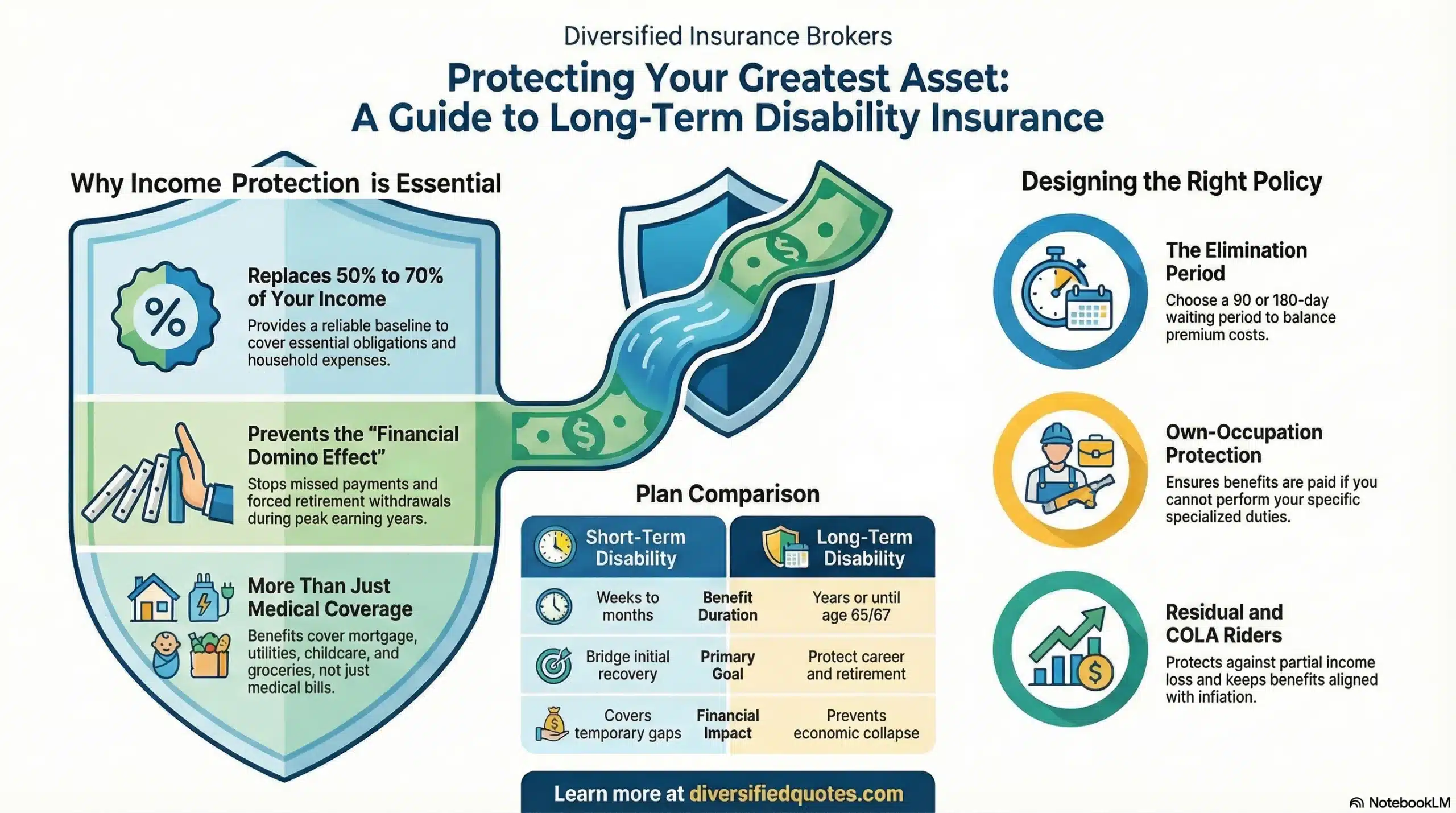
Many physician claims are not a clean “can’t work at all” scenario. More often, you can work—but not at full capacity. You may reduce call, cut procedural hours, limit patient load, or transition to lower-compensation duties. That’s why the Residual/Partial Disability rider is typically one of the most important features physicians choose. It can provide benefits when you have a measurable loss of income or time due to a covered condition, even if you’re still working.
This is especially relevant for physicians in procedural and high-acuity roles, where a modest limitation can materially reduce productivity-based compensation. A well-designed residual rider helps prevent the “gray zone” where you’re not totally disabled but are losing a meaningful portion of income.
Want Specialty-True Language and Strong Residual Benefits?
We’ll help you compare contract definitions and rider details so the policy matches the real-world risks physicians face.
Key Features Physicians Should Evaluate (And Why They Matter)
Physician disability insurance is not just about the monthly benefit amount. Contract language and riders can dramatically change how the policy performs during a real claim. The features physicians most commonly evaluate include:
True Own-Occupation Definition: The foundation of physician coverage. The more precise the specialty wording, the more your benefits align with your real-world risk.
Residual/Partial Disability Rider: Often the most utilized rider in physician claim scenarios because many impairments reduce capacity rather than eliminate it.
Future Increase Options: A must-have for residents, fellows, and early attendings. This allows you to increase coverage as income grows, often with limited or no additional medical underwriting.
Cost-of-Living Adjustment (COLA): If a claim lasts years, inflation can erode purchasing power. COLA can increase benefits while on claim, helping your protection keep pace.
Catastrophic Disability Rider (CAT): Adds an additional benefit if you suffer a severe impairment that affects independence (commonly tied to activities of daily living).
Student Loan Protection: Some physicians prefer a dedicated benefit that helps cover training-related loan obligations during disability, particularly earlier in the career.
Retirement Protection: Designed to help maintain retirement contributions or long-term savings momentum while on claim.
Mental/Nervous Coverage Terms: These vary widely by carrier. Many policies include limitations; understanding the carrier’s language matters before you apply.
Typical Physician Benefit Design (Illustrative Only)
Illustrative only. Actual eligibility, pricing, and limits vary based on specialty, income, state, age, and carrier underwriting.
Physician DI is typically structured to replace a meaningful portion of your earned income while fitting within carrier financial underwriting guidelines. Many physicians start with a strong baseline policy during training or early practice, then expand benefits as income increases.
Monthly benefit: Many physicians target $10,000–$20,000+ per month depending on income and existing coverage. Higher-income specialists may use supplemental structures to close gaps created by carrier limits.
Elimination period: A 90-day waiting period is common. A 180-day option may reduce premium but requires stronger savings to bridge the gap.
Benefit period: Commonly to age 65/67 or to age 70. Longer benefit periods typically cost more but protect against career-ending disabilities.
How Physician DI Coordinates With Employer Group LTD
Many physicians have group LTD through an employer. Group LTD can be valuable, but it often includes benefit caps, offsets for other income, variable renewability, and a definition that may not be specialty-true. If the employer pays the premiums, benefits are often taxable—so a “60% benefit” may net much less.
An individual policy can be designed to stack on top of group LTD to help you reach a more realistic income-replacement level, and it stays with you if you change employers. If you are self-employed, partner-owned, or have variable compensation, individual coverage often becomes the primary layer of protection.
For physicians who own a practice, there’s also business risk: overhead continues even when you can’t work. In that scenario, physician DI planning may include Business Overhead Expense (BOE) Insurance to reimburse fixed expenses like rent, staff wages, and utilities while you recover.
Underwriting Tips Physicians Can Use to Improve Outcomes
Document compensation clearly: If you have base pay plus production, call pay, or bonuses, income needs to be presented in a way carriers recognize. Owners may require K-1 and business financials.
Apply early in training when possible: Residents and fellows can often lock in discounts and future increase options before income rises. Disability pricing is strongly tied to age and health at issue.
Confirm specialty wording fits reality: Procedural and interventional specialties should pay close attention to how the policy defines occupation and specialty duties.
Be proactive with medical documentation: Clear, stable documentation often underwrites better than vague or incomplete history.
Common Mistakes Physicians Make (And How to Avoid Them)
Assuming employer LTD is enough: Benefit caps and taxability can create a large gap between what you earn and what you’d actually receive on claim.
Choosing weaker occupational definitions: “Own-occupation” language is not uniform. The wrong definition can turn a specialty risk into an “any job” test at claim time.
Skipping residual benefits: Many physician claims are partial. If you omit residual coverage, you may miss the rider that matters most.
Waiting until after a diagnosis: The best time to lock in coverage is when health is strongest. Waiting can create exclusions, ratings, or limited options.
Our Physician-Friendly Process
Step 1 — Needs analysis: We estimate your real protection gap using your specialty, compensation structure, and career stage (training vs. attending vs. partner/owner).
Step 2 — Carrier and contract comparison: We compare definitions, residual benefits, future increase structures, and optional riders in plain English so you understand trade-offs.
Step 3 — Underwriting coordination: We organize requirements, clarify documentation needs, and pursue discounts when available.
Step 4 — Ongoing servicing: We help you update benefits as income changes or roles shift so coverage stays aligned with your reality.
Related Pages
More disability resources that help physicians compare definitions, underwriting paths, and business-owner planning.
Financial Protection Essentials
Burial insurance comparisons, travel protection planning, carrier reviews, and post-heart attack life insurance guidance.
Talk With an Advisor Today
Choose how you’d like to connect—call or message us, then book a time that works for you.
Schedule here:
calendly.com/jason-dibcompanies/diversified-quotes
Licensed in all 50 states • Fiduciary, family-owned since 1980
FAQs: Disability Insurance for Physicians
What is “own-occupation” disability insurance for physicians?
“True own-occupation” coverage can pay benefits when you can’t perform the material and substantial duties of your medical specialty—even if you work in another role or earn income elsewhere.
How is true own-occ different from modified or any-occupation?
True own-occ can pay even if you’re working elsewhere. Modified own-occ may reduce/stop benefits if you become gainfully employed in another job. Any-occupation typically requires you to be unable to work in any reasonable occupation, which can be much harder for physicians.
Which riders matter most for physicians?
Physicians commonly prioritize Residual/Partial Disability, Future Increase Options, COLA, and sometimes Catastrophic Disability. Student loan and retirement protection riders can also be valuable depending on career stage and goals.
How much monthly benefit can I qualify for?
Benefits are based on earned income and existing coverage. Residents and fellows may start with preset amounts and expand later through future increase options. Attendings and owners typically qualify based on verified income (W-2, K-1, tax returns, and/or financials).
Is my hospital group LTD enough by itself?
Group LTD can be helpful but often has caps, offsets, and definitions that may be less protective for specialties. It may also be taxable if the employer pays premiums. Many physicians use individual DI to close gaps and keep coverage portable.
What elimination and benefit periods should I consider?
A 90-day elimination period is common. Benefit periods often go to age 65/67 or age 70. The right design depends on savings, cash flow, and how much long-term risk you want covered.
Are mental/nervous conditions covered?
Many policies cover mental/nervous claims but may include a lifetime limit (often 24 months). Terms can vary, so it’s important to review how each carrier defines and limits these claims.
Can residents and fellows get discounts?
Often, yes. Training discounts and future increase options can allow physicians to lock in favorable pricing and expand benefits later as income increases.
Should practice owners also consider BOE coverage?
If you own a practice with recurring overhead expenses, Business Overhead Expense (BOE) coverage can reimburse fixed costs like rent, staff wages, and utilities while you’re disabled—separate from your personal income replacement.
About the Author:
Jason Stolz, CLTC, CRPC and Chief Underwriter at Diversified Insurance Brokers, is a senior insurance and retirement professional with more than two decades of real-world experience helping individuals, families, and business owners protect their income, assets, and long-term financial stability. As a long-time partner of the nationally licensed independent agency Diversified Insurance Brokers, Jason provides trusted guidance across multiple specialties—including fixed and indexed annuities, long-term care planning, personal and business disability insurance, life insurance solutions, and short-term health coverage. Diversified Insurance Brokers maintains active contracts with over 100 highly rated insurance carriers, ensuring clients have access to a broad and competitive marketplace.
His practical, education-first approach has earned recognition in publications such as VoyageATL, highlighting his commitment to financial clarity and client-focused planning. Drawing on deep product knowledge and years of hands-on field experience, Jason helps clients evaluate carriers, compare strategies, and build retirement and protection plans that are both secure and cost-efficient.
