
How to Protect Your Mortgage with Life Insurance

Jason Stolz CLTC, CRPC
For most families, the mortgage is the biggest monthly bill—and the biggest financial promise you’ve ever made. If something happens to you, would your spouse or partner be able to keep the home on a single income? Or would they be forced to sell, move, or drain savings just to stay current on the loan?
That’s where term life insurance comes in. A properly structured term policy can be one of the most efficient ways to protect your mortgage, your family’s lifestyle, and the equity you’ve built over time. It creates immediate liquidity at the exact moment your household is most vulnerable, so the people you love can keep the home (or sell it on their own timeline) instead of making rushed decisions under financial pressure.
And today, you don’t have to meet with an agent, schedule a medical exam, or wait weeks just to find out whether you qualify. With modern instant decision life insurance platforms like Ladder, many applicants can apply online in minutes and get coverage designed to match the length and size of a mortgage—often with flexible features that let you adjust your coverage over time.
Protect Your Mortgage with Instant Decision Term Life
Apply online with Ladder for up to $3,000,000 in term life coverage—fast decisions and flexible coverage you can adjust as your mortgage changes.
Why your mortgage needs its own protection plan
Your mortgage payment doesn’t stop if you pass away. Your lender still expects the same payment every month, regardless of what your family is going through. If your household depends on two incomes—or if one income covers most of the fixed expenses—a premature death can turn a manageable mortgage into a crisis within a few billing cycles.
When there isn’t a plan, families often fall into a handful of painful “forced moves.” They may sell the home quickly, which often means accepting a lower offer because time is working against them. They may relocate to reduce expenses, which can disrupt children’s school and support systems right when stability matters most. Or they may use credit cards and drain savings intended for retirement or college, which can create a second crisis later even if the mortgage is kept current in the short term.
A well-designed mortgage protection strategy uses life insurance to create a pool of immediate cash at the moment it’s needed most. That death benefit can be used to pay off the mortgage, reduce the balance dramatically, or simply create enough breathing room that your spouse can keep the home without panic while they sort through everything else.
Why term life insurance is usually the best fit for mortgage protection
Mortgage protection is a time-bound need. In most cases, the risk you’re trying to protect is “What happens if I die while the mortgage is still a major burden?” That makes term life a natural match because term coverage is designed to provide a large death benefit for a defined period—10, 15, 20, 25, or 30 years—at a cost that is usually far lower than permanent insurance.
Another advantage is flexibility. A level term policy keeps the death benefit the same throughout the term, even as your mortgage balance declines. That means your family often has extra cushion beyond the loan payoff amount, which can help cover other costs that show up immediately after a death—like income disruption, childcare changes, relocation costs, or just the reality that grief reduces productivity for a while.
If you’re still comparing policy styles and want to understand where term fits versus other approaches, it can help to read broader strategy pages like life insurance strategies the wealthy use. Even though those strategies are not “mortgage-only,” they help clarify why term often solves a specific, high-impact problem extremely efficiently.
How Ladder’s instant decision term supports mortgage protection
Ladder is built for people who want a fast, online path to meaningful coverage without turning the process into a project. Many applicants answer a set of health and lifestyle questions online and receive a decision quickly. For mortgage protection, that speed matters because life insurance often becomes urgent at the exact moments when life is already busy: buying a house, refinancing, having a child, changing jobs, or trying to get finances organized after a major life event.
Ladder also fits mortgage protection well because it is designed around the idea that your insurance needs change over time. Early in a mortgage, the balance is high and the risk to the family is bigger. Ten years later, the balance is lower, household income may be higher, savings may be stronger, and kids may be older. With a flexible structure, you can reduce coverage as the mortgage shrinks so you’re not paying for protection you no longer need. That “laddering” concept is one reason many homeowners consider it alongside other no exam life insurance options when speed and convenience are priorities.
If you’ve ever wondered whether instant decision term life insurance is expensive, mortgage protection is a good lens to use because you’re matching coverage to a specific liability. When the purpose is clear, it becomes easier to choose a reasonable coverage amount and term length, which often makes premiums feel more manageable.
How much life insurance do you need to protect a mortgage?
There are two common ways to size mortgage protection, and both can be valid depending on your goals and your household’s financial flexibility. The first approach is “mortgage payoff coverage,” where the death benefit is roughly equal to the remaining loan balance (sometimes with extra room for final expenses, moving costs, or a short income buffer). The second approach is “payment protection coverage,” where the death benefit is designed to cover several years of payments so the surviving spouse has time to adjust, rebuild income, or sell the home on their timeline.
A practical way to choose between these is to look at your household’s cash flow. If your spouse could likely afford the payment on their income—especially after Social Security survivor benefits and a smaller household budget—then payment protection may be enough. If the payment would be difficult or impossible on one income, payoff coverage tends to provide clearer relief and more certainty.
If you want a quick way to run the numbers and see what coverage amounts do to premium, tools like a term life insurance calculator can help you connect the dots between mortgage size, term length, and monthly cost. Many families also like to sanity-check their decision against other big financial buckets—especially retirement savings—so if you’re coordinating protection with your broader plan, it can be useful to revisit how a 401(k) works and how easily a surviving spouse could access funds without disrupting long-term goals.
Choosing the right term length
The goal with mortgage protection is simple: you want coverage in place during the years when losing your income would put the home at risk. For a brand-new 30-year mortgage, many families lean toward a 30-year term because it keeps protection in place for nearly the full mortgage timeline. If you’re already partway through the loan, a 15- or 20-year term often aligns well with the remaining years and keeps premiums efficient.
For homeowners closer to retirement, term length is often a decision about “bridge protection.” You might choose a shorter term that covers your highest-risk years, while you also pay down the mortgage and strengthen retirement assets. In those cases, the term policy is not meant to be permanent—it’s meant to ensure your spouse can keep the home until the mortgage is no longer a major strain, or until retirement income sources are fully established.
What if you have health issues?
Many homeowners assume that health conditions automatically mean they can’t get affordable coverage. In reality, underwriting outcomes vary by condition, stability, and the carrier’s appetite for certain risks. Some instant decision products can still offer meaningful coverage for applicants with managed conditions, especially when treatment is consistent and there are no recent complications. If you’re not sure how your health history might affect pricing or eligibility, it helps to understand the basics of life insurance with pre-existing conditions.
It’s also useful to understand the difference between “no exam” and “no underwriting.” No-exam products often still underwrite using health questions, prescription history, and data sources. That can still be faster and simpler than a fully traditional process involving labs and vitals, but accuracy matters. If you’ve been through traditional underwriting before, you may recognize the steps described in what is a life insurance exam. Ladder can often streamline that process, but the right fit still depends on your health profile and coverage needs.
Coordinating mortgage protection with the rest of your plan
Mortgage protection is often the starting point because it’s tangible and immediate: keep the house. But most families also have other obligations that don’t disappear—income replacement for a spouse, childcare needs, final expenses, and sometimes long-term goals like college or retirement security for the surviving spouse.
In practice, many families use one of two structures. Some buy a single term policy large enough to handle the mortgage and broader needs at the same time. Others layer coverage by purpose, such as a base policy sized for income replacement plus a “mortgage layer” that exists specifically to protect the home during the highest-risk years. Layering can reduce costs because you can make the mortgage layer shorter in duration, while keeping base income protection in place longer if needed.
If you want a broader framework for thinking about how to structure coverage—and how to avoid the common mistake of buying “a random amount” because it feels like the right number—pages like best independent insurance agent can be helpful. The goal is not complexity; it’s clarity. When the coverage purpose is clear, it’s easier to maintain the policy long term and to adjust it as your mortgage and your family’s needs change.
How to protect your mortgage with Ladder
If Ladder is a good fit for your mortgage protection, the process is simple, but you’ll get better outcomes if you do a quick planning pass first. Start by deciding whether your primary goal is mortgage payoff or payment protection. Then match your term length to your mortgage timeline and your highest-risk years. If your mortgage is 28 years from payoff but you plan to downsize or pay it off aggressively within 15 years, your term selection can reflect that plan.
Once you have a target, the application flow is designed to be straightforward. You’ll complete health and lifestyle questions, review the offer if you qualify, and confirm the coverage amount and term. Over time, as your mortgage balance drops or your income rises, you can reassess whether the coverage still matches the risk you’re protecting. That ongoing alignment is the real “mortgage protection advantage,” because the right plan isn’t just purchased—it’s maintained and updated as life changes.
Ready to Match Coverage to Your Mortgage?
Choose a term and coverage amount that fits your home, your budget, and your payoff timeline—then apply online in minutes.
When mortgage protection isn’t the only priority
Some homeowners already have workplace coverage and are trying to decide whether it’s “enough.” The challenge is that employer life insurance is often tied to your job, may be limited to a multiple of salary, and can disappear when you change employers. That can leave a gap right when the mortgage is still large. If your mortgage protection plan depends on work coverage, it’s worth stress-testing what would happen if you left your job, took a pay cut, or became self-employed.
Other homeowners have a policy but haven’t reviewed it since they bought the home. If you refinanced into a larger balance, moved into a higher-cost house, or expanded your family, the original death benefit may no longer match the risk. Conversely, if your mortgage has dropped significantly and your savings have grown, you may be able to reduce coverage and lower premiums without sacrificing the core goal of keeping the home safe.
Putting it all together
Protecting your mortgage with life insurance is not just about paying off a loan. It’s about keeping your family in their home, preserving stability during a difficult time, and giving your loved ones options instead of pressure. Term life insurance is often the most cost-effective tool for that job because it provides a large death benefit during the years your mortgage is still a major obligation.
Using an instant decision platform like Ladder can make the process simpler and faster, and for many homeowners it also makes coverage easier to keep aligned with the reality of life. As your mortgage declines and your obligations change, your plan can change too—without losing sight of the purpose: protecting the home and the people in it.
Protect Your Home with One Simple Policy
Use term life insurance to back up your mortgage, safeguard your family’s home, and create financial breathing room if the unexpected happens.
Related Pages
Talk With an Advisor Today
Choose how you’d like to connect—call or message us, then book a time that works for you.
Schedule here:
calendly.com/jason-dibcompanies/diversified-quotes
Licensed in all 50 states • Fiduciary, family-owned since 1980
FAQs: Protecting Your Mortgage with Life Insurance
How does life insurance protect my mortgage?
Life insurance creates a tax-efficient lump sum that your beneficiaries can use to pay off the mortgage or cover several years of payments. Instead of relying on savings or selling the home quickly, your family has immediate funds to keep the house or make a decision on their timeline.
Is term life the best option for mortgage protection?
For most homeowners, yes. Term life is generally the most affordable way to get enough coverage to match a mortgage. You choose a term length and coverage amount that fits your loan and budget, making it ideal for protecting a specific liability like a 15–30 year mortgage.
How much life insurance do I need to cover my mortgage?
Many people start with a death benefit equal to the remaining mortgage balance. Others choose a higher amount to cover property taxes, insurance, and other debts. You can also add income replacement so your family has flexibility beyond just the house payment.
Should I buy mortgage insurance from my lender instead?
Lender-provided mortgage insurance typically protects the bank—not your family—and often has limited flexibility. A personal term life policy usually offers level coverage, lets you choose your own beneficiary, and is portable if you move or refinance, making it more versatile than most lender plans.
Can I get instant decision coverage to protect my mortgage?
Yes. Platforms like Ladder offer instant decision term life insurance with an online application and no medical exam in many cases. This makes it easier to align coverage with a new home purchase or refinance without waiting weeks for traditional underwriting.
What if my mortgage balance goes down over time?
Your mortgage will decrease as you make payments. With flexible term policies like Ladder’s, you may be able to reduce your coverage over time and lower your premium, so you are not paying for more coverage than you need as your loan balance shrinks.
Can I still protect my mortgage if I have health issues?
Often, yes. Eligibility and pricing depend on your age, health, and the severity of any conditions. Some applicants with well-managed issues can still qualify for affordable coverage. If you do not qualify online, a traditional underwritten policy might still be an option through an independent agency.
Do I have to pay off the full mortgage with the life insurance benefit?
No. Your beneficiaries can decide how to use the proceeds—pay off the loan, make payments for several years, or combine funds with other assets. The flexibility of a personal policy is one of the main advantages over more restrictive lender-based protections.
About the Author:
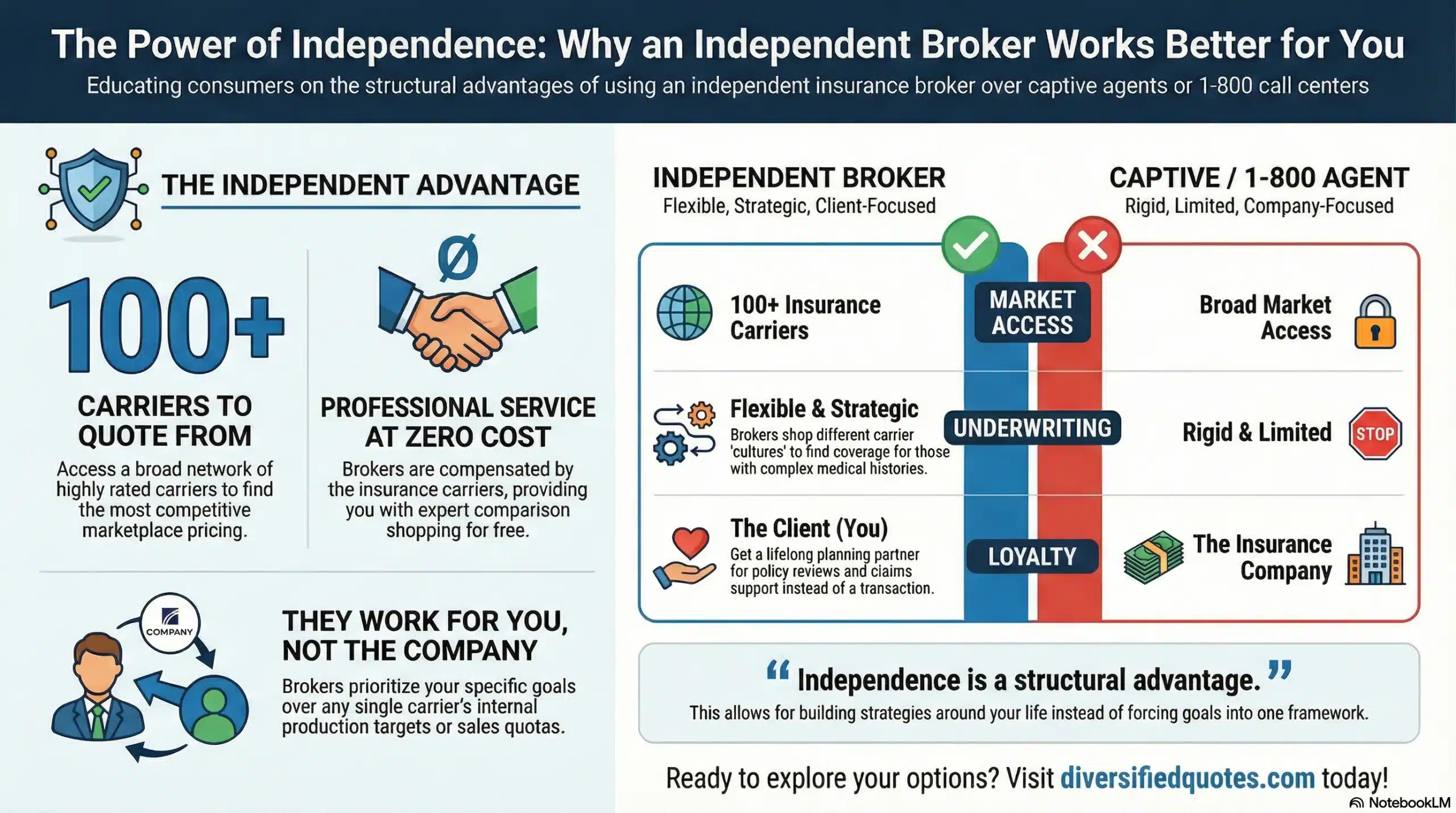
Jason Stolz, CLTC, CRPC and Chief Underwriter at Diversified Insurance Brokers (NPN 20471358), is a senior insurance and retirement professional with more than two decades of real-world experience helping individuals, families, and business owners protect their income, assets, and long-term financial stability. As a long-time partner of the nationally licensed independent agency Diversified Insurance Brokers, Jason provides trusted guidance across multiple specialties—including fixed and indexed annuities, long-term care planning, personal and business disability insurance, life insurance solutions, Group Health, and short-term health coverage. Diversified Insurance Brokers maintains active contracts with over 100 highly rated insurance carriers, ensuring clients have access to a broad and competitive marketplace.
His practical, education-first approach has earned recognition in publications such as VoyageATL, highlighting his commitment to financial clarity and client-focused planning. Drawing on deep product knowledge and years of hands-on field experience, Jason helps clients evaluate carriers, compare strategies, and build retirement and protection plans that are both secure and cost-efficient. Visitors who want to explore current annuity rates and compare options across multiple insurers can also use this annuity quote and comparison tool.
