
Is American Family a Good Insurance Company?

Jason Stolz CLTC, CRPC

At Diversified Insurance Brokers, we help clients evaluate insurers beyond just price—focusing on long-term durability, guarantee strength, and how well the company aligns with real-world retirement strategies. If you’re asking, “Is American Family a good insurance company?” the short answer is yes: American Family has a solid reputation, a long operating history, and a broad range of insurance products. But whether it’s the right company for you depends on what you actually need. If your goal is maximizing retirement income or selecting the best guaranteed-income annuity contract, we’ll show why it’s wise to compare American Family’s retirement offerings with carriers that specialize in retirement income annuities, fixed annuities, and fixed indexed annuities (FIAs).
Compare American Family vs. Other Carriers
Explore fixed and fixed-indexed annuity options, compare features and guaranteed income across multiple carriers.
Lifetime Income Calculator
Get a projection of guaranteed lifetime income based on your age, premium, start date and feature options.
Company Snapshot: Who Is American Family Insurance?
American Family Insurance (often called “AmFam”) is a long-standing U.S. insurer founded in 1927 and headquartered in Madison, Wisconsin. It’s historically best known for household protection—auto, home, renters, umbrella, and small-business lines—supported by a broad network of local agents. Over time, American Family expanded product offerings and distribution, and many households think of AmFam first as the company that helps them protect what they already own: the home, the vehicles, the business operations, and day-to-day risk exposures.
That matters because the phrase “good insurance company” can mean very different things depending on the product. A great auto/home carrier isn’t automatically a top retirement-income annuity carrier, and a life insurance carrier that excels in underwriting “high-risk” medical cases may not be the best company for supplemental benefits or Medicare plans. When we evaluate any carrier—including American Family—we separate the conversation into two buckets:
Bucket #1: Protection insurance (auto/home/umbrella/business). Here, the “best” company often comes down to claims handling, policy language, service responsiveness, and competitive pricing for your specific ZIP code and risk profile.
Bucket #2: Long-term guarantees (annuities, lifetime income riders, certain permanent life designs). Here, the “best” company is the one that can deliver contractual guarantees at strong terms—income factors, caps/participation rates on indexed crediting, liquidity provisions, and predictable rider costs—while maintaining the financial strength to honor long-duration promises.
American Family generally scores well in Bucket #1, and may be a reasonable fit in Bucket #2 depending on your state and the specific contract being evaluated. But if your goal is retirement income optimization, our approach is simple: compare American Family side-by-side with carriers that focus heavily on annuity income engineering. That’s exactly how you avoid leaving long-term value on the table.
What “Good” Means for Retirement Planning (Not Just Insurance Shopping)
Most consumers judge an insurance company the same way they judge a utility provider: “Are they reliable, are they easy to work with, and do they pay when something goes wrong?” That’s a fair frame for auto and homeowners claims. But retirement planning is different because annuity guarantees are not a one-time claim event. They are ongoing contractual promises that can last 10, 15, 20, or 30+ years—and in lifetime income planning, the promise can extend for the rest of your life.
So when someone asks us, “Is American Family a good insurance company?” we translate it into a more useful set of questions:
1) Can the company honor long-term obligations? Financial strength matters because annuities are long-duration liabilities.
2) Is the contract competitive for your goal? “Competitive” means different things for different retirees. Some want maximum guaranteed lifetime income. Others want principal protection plus reasonable growth potential. Others want a steady fixed rate for a defined number of years.
3) Are the policy mechanics transparent? We want clarity on liquidity rules, surrender schedules, rider charges, and what triggers income step-ups or resets.
4) Is the product available in your state with the features you’re being shown? Annuity features can vary by state. The only contract that matters is the one you can actually buy where you live.
This is why our retirement-focused comparisons start with a benchmark. We often begin with a scan of current annuity rates, then narrow the field based on your timeline and income goals. For many families, the most important decision is not “which brand do I recognize,” but “which contract gives me the strongest income floor, with clear access rules and predictable costs.”
Ensure you are receiving the absolute top rates
Current Fixed Annuity Rates
Compare today’s best fixed annuity rates from top carriers.
Current Bonus Annuity Rates
See which annuities offer the highest upfront bonus today.
Request an Annuity Quote
Submit our annuity request form to get personalized rate options.
Lifetime Income Calculator
Use our calculator to see how much guaranteed income your annuity can provide.
Where American Family Typically Performs Well
American Family’s reputation is built on everyday protection—helping households manage the risks that can derail finances quickly. In that world, being “good” often means practical service, strong agency support, and dependable claims behavior. Many clients like the fact that they can bundle policies, have a local point of contact, and keep their household coverage under one roof.
From a retirement perspective, that matters because insurance is rarely isolated. Your retirement plan sits in the middle of your full financial life: housing costs, healthcare exposure, income needs, and what happens if a spouse passes early. For some households, it’s convenient to keep property/casualty lines with a company like American Family and then evaluate retirement-income assets separately.
That’s not a knock against American Family. It’s simply recognizing that annuities and retirement income strategies are specialized. When you’re building an “income floor,” the contract details drive the outcome. If the objective is income, you compare income designs. If the objective is accumulation with protection, you compare crediting options and access rules. In either case, you want the best available contract terms for your exact age and timeline.
How American Family May Fit Into a Retirement Strategy
A common and practical strategy for pre-retirees looks like this: keep the household protection plan stable, then build a separate retirement-income foundation designed to withstand market volatility and longevity risk. Some families use a fixed annuity for steady growth or a fixed indexed annuity for growth potential with principal protection. Others prioritize lifetime income—often through an income-focused FIA with a withdrawal benefit rider or an immediate income annuity structure depending on timing.
The reason annuities come up so often is that they solve two problems simultaneously: they can create predictable income and they can reduce the emotional and financial impact of market swings. When markets drop, retirees who rely entirely on investments may feel pressure to withdraw at the wrong time. That’s why we often discuss portfolio stability concepts and how fixed annuities can help protect against volatility, including the way certain retirees combine guaranteed income with disciplined withdrawals. If you want a deeper framework for stability planning, you can review our broader retirement protection guide here: How to Protect Your Funds in Retirement.
For many households, the decision is not “annuities or no annuities.” It’s “how much guaranteed income do we want, and which contract delivers it most efficiently?” That’s why we benchmark. A strong benchmark starts with defining the retirement objective:
If your objective is guaranteed lifetime income: you compare income rider structures, payout factors, and how the benefit base behaves under different crediting outcomes.
If your objective is principal protection with predictable growth: you compare fixed rates (including multi-year guarantee structures) against indexed crediting designs, focusing on liquidity provisions and surrender charges.
If your objective is flexibility and access: you make sure the free-withdrawal provisions and contract mechanics match your reality. This matters more than most people expect, which is why we encourage clients to review the practical rules here: Annuity Free Withdrawal Rules.
How to Evaluate an Annuity Carrier Beyond the Brand Name
Brand recognition can be comforting, but annuity value is mostly a math-and-contract question. Two carriers can have strong reputations, yet one delivers materially better income outcomes for your age and goal. This is also where people get confused: they assume annuity value is just about “rates.” In reality, the value of an income annuity or income rider can be driven by a mix of factors: payout multipliers, roll-up features, rider charges, how step-ups are credited, and how the policy handles income on one life versus two.
We typically walk clients through a structured comparison that starts with the basics:
Financial durability: Is the company strong enough to keep its promises for decades? (This is part of the reason people lean toward companies with long operating histories.)
Contract guarantees: What is guaranteed vs. what is “illustrated”? The guarantees matter most in retirement planning because they create the floor.
Liquidity rules: How do penalty-free withdrawals work? How do surrender charges work? What happens if you need access earlier than expected?
Income mechanics: If it’s an income rider design, how is the “income base” calculated, and what conditions must be met to maximize the payout?
Real-world usability: Is the contract straightforward enough for you to understand and maintain confidence in, year after year?
This approach applies to American Family the same way it applies to annuity specialists. You can absolutely evaluate American Family’s retirement offerings—just be sure you’re evaluating them on the same “income engineering” criteria as every other carrier you’re considering.
American Family: Strength in Household Coverage vs. Income Engineering
If you talk to long-time American Family customers, you’ll often hear the same theme: they appreciate service relationships and bundled convenience. That’s valuable in personal insurance. But retirement income is where you want the highest-quality contract terms available at the time you’re making the decision.
Think about it like this: your household protection plan is a set of guardrails. Your retirement-income plan is a paycheck. The paycheck has to last. This is why we often begin income conversations with a guiding page that frames the objective clearly: What Is the Best Retirement Income Annuity?. That page exists because the “best” annuity isn’t a brand—it’s a solution that matches your timeline, risk tolerance, and income needs.
So yes, American Family can be “good,” but the more helpful question is: “Is American Family the best contract for what I’m trying to accomplish?” If you’re building retirement income, it’s rarely wise to stop the search at the first acceptable option. Compare first, then decide.
Understanding the Two Common Retirement-Use Annuity Types
Most retirees evaluating carriers will end up comparing two categories:
Fixed annuities: These typically provide a declared interest rate for a period of time and are often used for stability, predictable growth, and principal protection. If your priority is the steady “sleep-well-at-night” portion of your plan, fixed annuities can play that role well. If you want a foundational explanation, start here: What Is a Fixed Annuity?.
Fixed indexed annuities (FIAs): These also protect principal from market losses, but interest crediting is linked to an index strategy (with caps, participation rates, or spreads depending on the contract). FIAs can be used for accumulation with protection, and many retirees evaluate FIAs for lifetime income riders as well. If you want the clear “how it works” overview, start here: What Is a Fixed Indexed Annuity?.
American Family may offer products that touch parts of this landscape depending on state availability. Regardless of the issuer, the evaluation process should be the same: you compare contract terms across multiple carriers at the time you’re shopping. Rates and features change. The market moves. Product design evolves. You want today’s strongest set of options, not last year’s.
Why Side-by-Side Comparisons Matter More Than People Expect
Many people assume that annuity carriers are mostly the same. They’re not. Even when two contracts look similar on the surface, small differences can produce big changes in outcomes over time. For example, one contract may have more favorable access rules, while another may provide stronger income payout factors. One may favor single-life income; another may be more competitive on joint income. Some are built for accumulation; others are clearly engineered for income. This is why “rate shopping” alone is insufficient.
When we compare carriers, we are not just looking for “the highest number.” We’re looking for a match between the contract and your real retirement plan. That often includes how the contract coordinates with Social Security timing, pensions, or existing household protection needs. If you already have the “guardrails” handled through a company like American Family, you can be more surgical about choosing the best retirement-income vehicle available for your situation.
A Practical Retirement Scenario (How We Think About It)
Let’s use a simple but realistic planning scenario to explain why this comparison mindset matters. Imagine a household in the 60–67 age range. They want three things: first, a predictable income floor that will still pay if markets are down; second, a portion of principal they can access annually for surprises; and third, a plan that does not require perfect market timing.
In that scenario, we usually model a combination approach. That might include a fixed annuity allocation for steady growth, and a fixed indexed annuity with a lifetime income rider for the income floor. The details will change depending on health, assets, and the desired start date for income, but the goal is consistent: create a paycheck foundation that reduces stress and improves plan durability.
Then we test the plan against the real rules. What are the free withdrawal limits? How do surrender schedules interact with liquidity needs? What happens if income needs start earlier than expected? These questions matter, which is why we reference the rule framework here: Annuity Free Withdrawal Rules. When the rules match the plan, the plan becomes durable.
Now we introduce American Family into the picture. If American Family is your household protection provider, it may remain so. But the retirement-income plan should be selected based on contract strength and fit—whether that’s American Family’s offering in your state or a specialist annuity carrier offering stronger income mechanics at the time you’re applying.
Balanced Pros and Potential Trade-Offs
Below is a balanced view, but we’ll keep it practical and retirement-focused.
Where American Family Can Be a Strong Choice
American Family is often viewed favorably for household protection lines and for clients who value the convenience of agency-based service. Their long operating history and broad footprint can provide confidence to consumers who prefer established names and local support. If your needs are centered around auto/home/bundling and you like working through a relationship model, AmFam can be a very reasonable choice.
From a retirement standpoint, American Family can also be part of a stable insurance ecosystem: keep the home and auto protection consistent, reduce the risk of coverage gaps, and build retirement-income assets separately with a best-available contract approach.
Where Comparison Is Especially Important
If your main goal is guaranteed retirement income, you should be careful not to assume that a strong household insurer automatically provides the strongest annuity income contract available. Annuity value is often driven by specialized product design. Contract features can also vary by state, and the “best” option can change year to year as carriers adjust crediting and rider structures.
In other words: American Family may be “good,” but you still want to confirm that the specific contract you’re reviewing is competitive for your exact objective—income, growth with protection, liquidity, or a blend.
The Key Questions to Ask Before You Commit
If you’re reviewing an American Family retirement product—or any carrier’s annuity—these are the questions that keep people from making expensive mistakes later. Notice that these are contract-and-outcome questions, not marketing questions.
What is guaranteed, and what is illustrated? If the income number depends on index performance, ask what the worst-case guaranteed outcome looks like and whether rider charges can change over time.
What are the surrender charge years and the free-withdrawal rules? If you might need access, confirm the annual access provisions and how they work. The general framework is explained here: Annuity Free Withdrawal Rules.
If this is an income rider, how does the benefit base grow? Understand whether growth is guaranteed, whether it’s tied to crediting, and what triggers step-ups.
How does this compare to the strongest options available today? This is where we run the comparison. It’s the difference between “good enough” and “best available.” Starting points: Current Annuity Rates and the broader income-focused guide: Best Retirement Income Annuity.
Is the contract available in my state with these exact terms? Always confirm. State variations are real.
How Diversified Insurance Brokers Helps (Even If You Like American Family)
Many of our clients already have household coverage with a company they like. Our role is not to disrupt what’s working. Our role is to optimize what matters most: your retirement outcomes and the guarantees you’ll rely on later. That’s why we approach these pages as “carrier evaluation tools,” not brand endorsements.
When we help you evaluate American Family, we look at the insurer in context: how does it fit within the broader retirement plan? Does it offer the strongest guarantee for the objective you care about? If not, what alternative provides stronger contract value at the time you’re applying? We bring clarity to the comparison so the decision is easy and defensible.
Most importantly, we help you avoid the two biggest retirement-income mistakes we see:
Mistake #1: Choosing a contract based on brand familiarity rather than measurable income outcomes.
Mistake #2: Ignoring liquidity and surrender mechanics because the illustration “looks good.”
When the goal is stability and lifetime income, the contract should be evaluated like a long-term paycheck—not like a short-term rate offer.
Final Verdict: Is American Family a Good Insurance Company?
Yes—American Family is widely viewed as a good insurance company, particularly for household protection and bundled coverage through a relationship-based agent model. If you value local service, broad product availability, and a long-standing U.S. brand, American Family can be an excellent fit for many protection needs.
For retirement income and guaranteed-income annuity planning, the best next step is a comparison—not because American Family is weak, but because retirement-income outcomes are contract-driven and the “best” carrier can change depending on your age, timeline, and state. If your priority is maximizing guaranteed lifetime income or securing the strongest protected growth design, we recommend benchmarking American Family against annuity specialists and selecting the contract that best matches your goals.
Related Pages
Talk With an Advisor Today
Choose how you’d like to connect—call or message us, then book a time that works for you.
Schedule here:
calendly.com/jason-dibcompanies/diversified-quotes
Licensed in all 50 states • Fiduciary, family-owned since 1980
FAQs: Is American Family a Good Insurance Company?
Is American Family financially strong?
Yes. As a long-standing mutual company, American Family has built a strong financial foundation and serves a broad customer base across multiple lines of insurance.
Does American Family offer retirement-income solutions?
They do offer life insurance and retirement planning products, including annuities in some states. But you’ll want to compare features carefully if your focus is guaranteed income.
Are American Family’s annuity payouts as competitive as other carriers?
Not always. While the company offers good service and stability, some specialized carriers may offer higher income factors, better riders or more flexible terms for retirees.
Can I bundle auto, home and life with American Family?
Yes. Bundling with AmFam can simplify your insurance and often lead to discounts—making it a convenient option for overall insurance planning.
What should I ask before buying an annuity with American Family?
Ask about the lifetime income factor, any bonus credits, surrender charge years, state availability, and how the contract compares with other carriers in your retirement timeline.
About the Author:
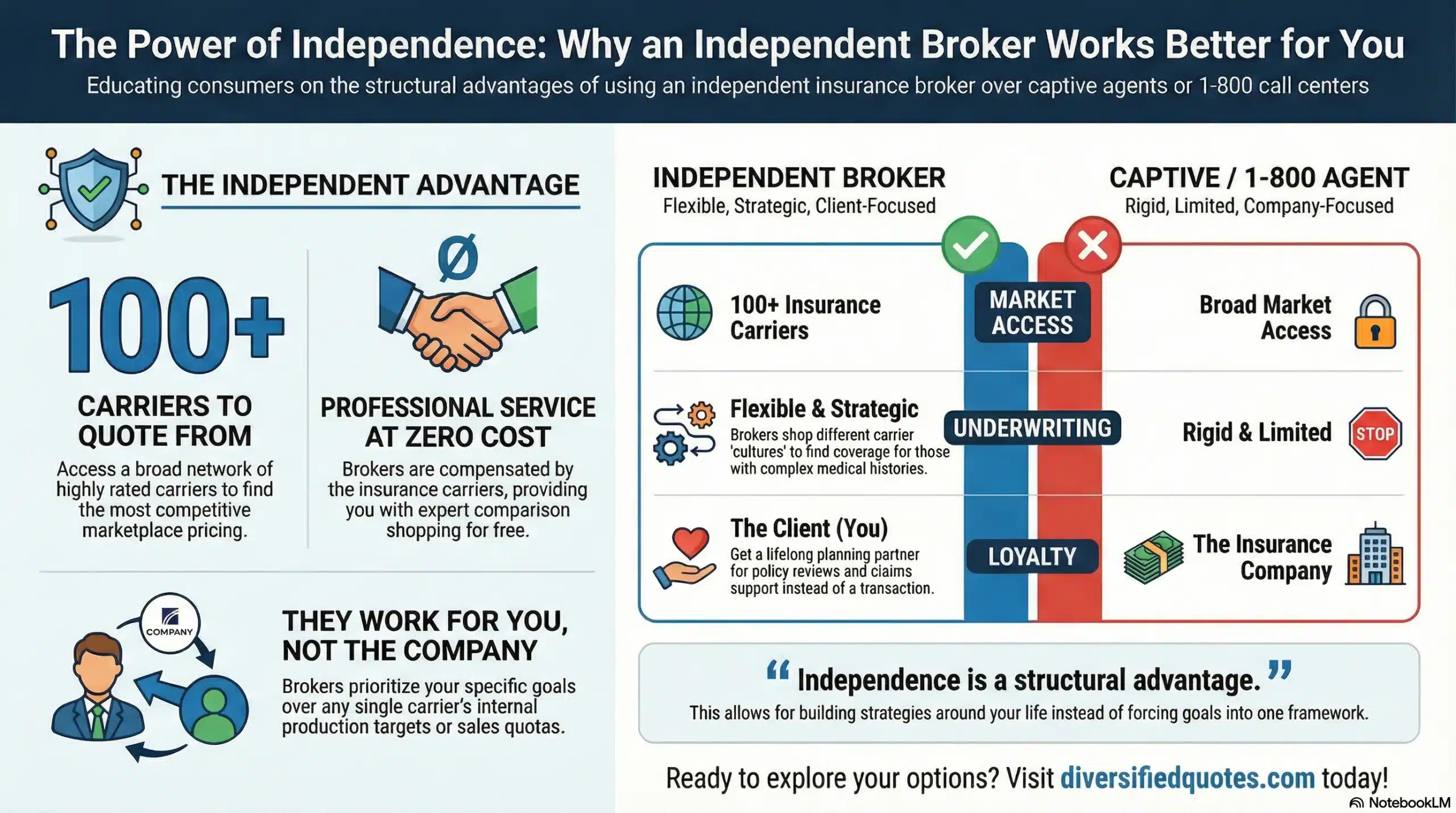
Jason Stolz, CLTC, CRPC and Chief Underwriter at Diversified Insurance Brokers, is a senior insurance and retirement professional with more than two decades of real-world experience helping individuals, families, and business owners protect their income, assets, and long-term financial stability. As a long-time partner of the nationally licensed independent agency Diversified Insurance Brokers, Jason provides trusted guidance across multiple specialties—including fixed and indexed annuities, long-term care planning, personal and business disability insurance, life insurance solutions, and short-term health coverage. Diversified Insurance Brokers maintains active contracts with over 100 highly rated insurance carriers, ensuring clients have access to a broad and competitive marketplace.
His practical, education-first approach has earned recognition in publications such as VoyageATL, highlighting his commitment to financial clarity and client-focused planning. Drawing on deep product knowledge and years of hands-on field experience, Jason helps clients evaluate carriers, compare strategies, and build retirement and protection plans that are both secure and cost-efficient.
