
Is Lincoln Financial a Good Insurance Company?

Jason Stolz CLTC, CRPC

At Diversified Insurance Brokers, we help retirees and pre-retirees evaluate insurers for safety, income potential, and long-term reliability. If you’re asking, “Is Lincoln Financial a good insurance company?” the short answer is often yes—Lincoln Financial Group (The Lincoln National Life Insurance Company and affiliates) is a long-established insurer with broad capabilities across annuities, life insurance, retirement plans, and employee benefits. But “good” is only meaningful when it is tied to your goal. A strong brand and long operating history matter, but your outcome depends on whether the specific product you’re considering fits your timeline, liquidity needs, risk tolerance, and income plan.
Lincoln comes up frequently in retirement conversations because it offers a wide menu: fixed and fixed indexed annuities for principal protection, variable annuities for market exposure with optional benefits, and life insurance solutions that can support family protection, legacy planning, or long-term strategies. For households thinking beyond just annuities, Lincoln is also commonly evaluated alongside linked-benefit and long-term care planning concepts, especially when clients want a plan that protects both income and family needs.
This page is built to help you make a decision the right way: not based on marketing, and not based on one headline rate. We’ll walk through how Lincoln is positioned as a carrier, what to look for when evaluating financial strength and contract obligations, where Lincoln tends to stand out, and what trade-offs matter most when you’re comparing annuities and life insurance designs. We’ll also give you a clear way to compare Lincoln against other carriers so you can confirm whether Lincoln belongs in your plan.
Ensure You’re Receiving the Absolute Top Rates
Current Fixed Annuity Rates
Compare today’s fixed annuity rates from top carriers.
Current Bonus Annuity Rates
See which annuities may offer an upfront bonus today.
Request an Annuity Quote
Submit the request form to get personalized illustrations.
Estimate Guaranteed Lifetime Income
Use the calculator to preview guaranteed lifetime income based on age, premium, and start date. Exact results vary by product, state, timing, and options selected.
Compare Lincoln Financial Annuity Options
If you’re considering Lincoln, the fastest way to gain confidence is to compare it side-by-side with other carriers using the same premium, same age, and same income start date.
Company Overview and What “Good” Should Mean
Lincoln Financial is widely viewed as a mainstream, household-name insurer with deep roots in the retirement and protection marketplace. When most people ask whether Lincoln is “good,” they’re usually trying to answer two practical questions. First: “Will the company still be around decades from now to honor the promise I’m buying?” Second: “Is the product I’m considering designed well enough that I won’t regret the decision later?” Those are the right questions, because insurance and annuity contracts are not short-term purchases—they are long-term financial agreements.
At a high level, Lincoln’s footprint matters. The company participates across multiple business lines, which can support stability through different economic conditions. For retirement planning clients, Lincoln is often evaluated for annuities—especially when a client wants a recognizable brand—but Lincoln is also evaluated for life insurance, retirement plan solutions, and other long-term risk management needs. That breadth is part of why many clients feel comfortable putting Lincoln on the shortlist.
Still, a “good company” can produce a “bad fit” if the product is mismatched to your timeline. An annuity with a long surrender schedule is not inherently bad, but it can be wrong if you need more liquidity. A fixed indexed annuity can be a strong solution for principal protection, but it can disappoint someone who expects stock-market-like upside. A life insurance policy can be powerful for protection, but it can feel frustrating if it is purchased with the wrong structure or unnecessary features. So rather than relying on a general brand conclusion, we encourage you to evaluate Lincoln in the context of your planning objective.
Financial Strength and Long-Term Reliability
For an insurance or annuity contract, financial strength is not marketing—it is the foundation of the promise. Insurance companies are regulated and required to maintain reserves, but the practical consumer question is whether the company appears positioned to support long-dated obligations through varying interest-rate environments, market cycles, and claims environments. Lincoln is commonly viewed as a financially serious, long-tenured insurer with the operational maturity expected of a major carrier.
It is also normal for ratings and outlooks to move over time across the industry, especially as interest rates, capital markets, and product mix change. That is why the best practice is to verify current ratings at the moment you are making a purchase decision. The verification step matters less because people think Lincoln is likely to “suddenly disappear,” and more because small changes can influence how conservative you want to be when you are placing a large premium into a long-term contract. For many retirees, that is simply part of making a disciplined decision.
If you’re comparing carriers broadly, it can also help to see how Lincoln stacks up against other names you may already be familiar with. Some shoppers compare Lincoln against annuity-centric brands; others compare it against broad insurers. The key is to compare outcomes in your scenario, not just letter grades or reputation.
Where Lincoln Often Stands Out
Lincoln’s biggest advantage for many households is range. If you prefer to work within one ecosystem, Lincoln can offer multiple solution types that cover different roles in a plan. In the annuity space, Lincoln is commonly evaluated for fixed and fixed indexed annuities when the objective is principal protection, predictable crediting rules, or building a reliable income foundation. Lincoln is also considered in variable annuity conversations when a client wants market exposure with optional benefits, although the value of those benefits depends heavily on costs, contract design, and how long you plan to hold the product.
On the life insurance side, Lincoln is often included in term and permanent policy comparisons, especially when families want strong coverage options, conversion flexibility, or long-term protection. For individuals dealing with more complex underwriting concerns, carrier selection can be meaningful. For example, if a consumer is navigating health history questions, it can be helpful to see carrier underwriting behavior across conditions and to compare structures that may be more forgiving for a particular profile. Some families also compare term options for coverage and budget planning while using permanent coverage for a long-term objective.
For people whose planning extends beyond income and death benefit, Lincoln is sometimes considered as part of a broader approach that includes long-term care risk. Some households explore LTC-related strategies through the lens of couples planning, and the ability to blend protection goals can be appealing. If long-term care planning is part of your decision, it helps to understand the structure and trade-offs of those designs rather than assuming they function like a traditional annuity or life policy.
Annuities: How to Think About Lincoln’s Lineup
When clients evaluate Lincoln annuities, we usually start with the role the annuity will play. For some clients, the annuity is primarily a “safe money” anchor—a place to hold principal with guardrails, often as a complement to market-based holdings. For other clients, the annuity is a “paycheck engine,” meant to help cover essential expenses and reduce reliance on portfolio withdrawals. For others, it is a blend: principal protection now, income later. The contract you choose should match the role.
If you are exploring fixed and fixed indexed annuities, what matters most is not just the concept of protection, but the details: the surrender schedule, the free withdrawal amount, how interest is credited, and how realistic your expectations are for the growth potential relative to the constraints. This is where many shoppers benefit from seeing real contract illustrations. Two annuities can look similar, but the one that fits your plan is the one that matches your timeline, liquidity needs, and income objective.
Lincoln also participates in product categories that can be more complex. Complexity is not automatically bad, but it must be justified by benefit. Optional features can add costs, reduce credited rates, or create restrictions. If you are considering optional benefits, you want to understand how the benefit is calculated, how it changes over time, and whether you actually intend to use it. In retirement planning, the goal is to pay for what you will use, and to avoid paying for complexity that does not produce real value in your scenario.
If you want an example of how Lincoln positions certain annuity designs, you can review a Lincoln-focused annuity page such as this overview of a Lincoln fixed indexed annuity concept. The larger point is not that one model is always best, but that different designs match different goals. That is why comparison is central to making a confident decision.
Life Insurance: Term, Permanent, and Planning Use Cases
For many families, Lincoln enters the conversation through life insurance, not annuities. Life insurance is still one of the most straightforward ways to protect a spouse, protect children, and protect a plan from disruption. Term insurance is commonly used for time-bound needs such as income replacement during working years or mortgage protection. Permanent insurance is used when the need is long-term or when there is a strategic objective such as estate liquidity, legacy planning, or special family considerations.
Carrier choice matters when underwriting complexity exists, and when you want a policy that behaves predictably over decades. For shoppers who are evaluating life insurance while navigating real-life medical questions, it can be helpful to look at condition-specific education and the way underwriting can influence rates and approvals. If you are searching because health history is part of the challenge, reviewing educational resources like life insurance considerations for prostate cancer history can clarify what information tends to matter most in underwriting conversations.
Lincoln can be a good fit for households that value a broad carrier, but the same “fit rules” apply. The best life insurance policy is not the one with the most features. It is the one with the right amount of coverage, the right term length or structure, and a premium that remains comfortable under real-life budget conditions.
Long-Term Care and Linked-Benefit Planning Considerations
For many retirees and pre-retirees, long-term care is not just a “future problem”—it is one of the most common planning anxieties. The reason is simple: extended care can be expensive, and it can disrupt retirement income strategies and family plans if it is not planned for. Some households prefer a traditional LTC policy. Others prefer a linked-benefit design that combines life insurance or annuity structures with long-term care features. What is “best” depends on health, budget, and priorities.
If you and your spouse are planning together, LTC planning often becomes a “household balance sheet” decision. The goal is usually not to predict the future perfectly, but to reduce the chance that a long care event forces a destructive outcome, such as liquidating assets at the wrong time or putting strain on a surviving spouse. If that planning is relevant, it may help to explore couples-focused planning concepts such as long-term care insurance planning for couples. Even if you do not choose a linked-benefit solution, understanding the planning logic strengthens your overall retirement decision-making.
Pros and Cons: The Practical Version
Potential strengths: Lincoln’s biggest strengths are brand longevity, broad product capabilities, and relevance across multiple retirement and protection needs. Many clients like the fact that Lincoln can be evaluated for annuities and life insurance within a familiar ecosystem. For some shoppers, that “one carrier can do multiple roles” idea simplifies decision-making and servicing. Lincoln is also often included in comparisons because it is a mainstream insurer with a long history of operating in the retirement marketplace.
Potential trade-offs: A broad lineup can also mean product complexity in certain categories. Optional riders, features, and benefit structures may increase cost or reduce certain crediting opportunities. In annuities, surrender schedules and liquidity rules must be evaluated carefully, because a mismatch can cause frustration later even if the product is otherwise sound. In indexed designs, the trade-off is especially important: downside protection typically means giving up unlimited upside, and results depend on the specific crediting method and contract terms available in your state.
In other words, Lincoln can absolutely be “good,” but the “best” decision is made by comparing contracts and choosing the one that fits your use case—not by assuming any major brand is automatically optimal for every retirement objective.
Who Lincoln Financial Is Often a Good Fit For
Lincoln often fits well for retirees and pre-retirees who want a well-known insurance brand and who value a broad menu of options. If your plan includes principal protection, predictable income planning, and a desire to work with a carrier that participates across multiple categories, Lincoln may belong on your shortlist. Lincoln can also make sense for families that want to evaluate both annuities and life insurance in one conversation, especially when the planning objective extends beyond “growth” and includes long-term reliability and protection.
Lincoln can also be a strong fit for households that want a structured approach: a base of guarantees and a plan that reduces reliance on portfolio withdrawals. Many retirees find confidence in building an “income floor” that is easier to budget around. When done correctly, this can reduce stress and create clearer decision-making around discretionary spending, travel, and major purchases.
Example Planning Scenario (How Lincoln Could Be Used)
Here is a simple planning example that illustrates how Lincoln might appear in a retirement strategy. A couple in their mid-60s is retiring within the next two years. They want to protect a portion of assets from market volatility while creating a dependable income stream to cover essentials. They also want to protect the surviving spouse from lifestyle disruption if one spouse passes away.
In a strategy like this, the couple may compare fixed or fixed indexed annuity options to build a protected base and evaluate income mechanics that coordinate with Social Security. Separately, they may evaluate life insurance solutions for protection objectives and family continuity. If long-term care risk is a significant concern, they may also explore linked-benefit strategies and compare the trade-offs across multiple carriers. In this type of approach, Lincoln may be a contender because it can participate in multiple parts of the discussion, but the final decision would still be based on the best contract fit and the best numbers for the couple’s specific timeline.
How to Make the Decision With Confidence
If you are considering Lincoln, the most reliable way to decide is to compare apples-to-apples scenarios across multiple carriers. That means the same premium, the same age, the same income start date, and comparable options. When you see the side-by-side numbers, the decision becomes clearer. Sometimes Lincoln is the best fit. Sometimes another carrier’s contract design produces higher guaranteed income or a better liquidity structure. The point is that you do not have to guess.
At Diversified Insurance Brokers, we do this comparison work every day. If you want to see how Lincoln stacks up against other carriers in the exact scenario you care about, submit a request using the quote form above. If you want to talk it through directly, call us at 800-533-5969.
Want personalized options? We’ll compare Lincoln against other carriers and show clear, side-by-side scenarios.
See Current Rates Submit a Quote Request
Or call 800-533-5969
Related Pages
Talk With an Advisor Today
Choose how you’d like to connect—call or message us, then book a time that works for you.
Schedule here:
calendly.com/jason-dibcompanies/diversified-quotes
Licensed in all 50 states • Fiduciary, family-owned since 1980
FAQs: Is Lincoln Financial a Good Insurance / Annuity Company?
Is Lincoln Financial generally considered a good insurance company?
For many consumers, yes. Lincoln is widely viewed as a long-established insurer with broad retirement and protection capabilities. The better question is whether a specific Lincoln product fits your goal, timeline, and liquidity needs.
What does Lincoln Financial sell?
Lincoln participates across annuities, life insurance, retirement plan services, and related benefits. Many shoppers evaluate Lincoln for fixed and fixed indexed annuities, variable annuities, and both term and permanent life insurance options.
Is Lincoln a good choice for retirement income planning?
It can be, depending on the product and the goal. For retirement income planning, the decision should be based on contract design, guaranteed income results, surrender schedule, and withdrawal flexibility—not just the brand name.
Should I compare Lincoln to other carriers before buying an annuity?
Yes. Annuity outcomes can vary meaningfully across carriers even with the same premium and income start date. A side-by-side comparison helps confirm whether Lincoln is the best fit for your scenario.
What are the most common trade-offs with annuities?
The most common trade-offs are liquidity restrictions during the surrender period, differences in how interest is credited, and additional cost/complexity when optional benefits or riders are included.
Does Lincoln offer long-term care or linked-benefit solutions?
Many consumers evaluate Lincoln within broader retirement planning that may include long-term care risk management. If LTC planning is part of your goal, it is important to compare structure and trade-offs across available solutions.
Is Lincoln better for “safe money” or for market-style growth?
Lincoln can appear in both conversations depending on product type, but many retirement-focused buyers evaluate Lincoln for principal protection and structured retirement planning. The right choice depends on whether you want protection, income, market exposure, or a blend.
How do I get a Lincoln quote and a comparison at the same time?
Submit a quote request and ask for a side-by-side comparison using the same premium, age, and income start date. That approach makes the differences between carriers easy to see.
About the Author:
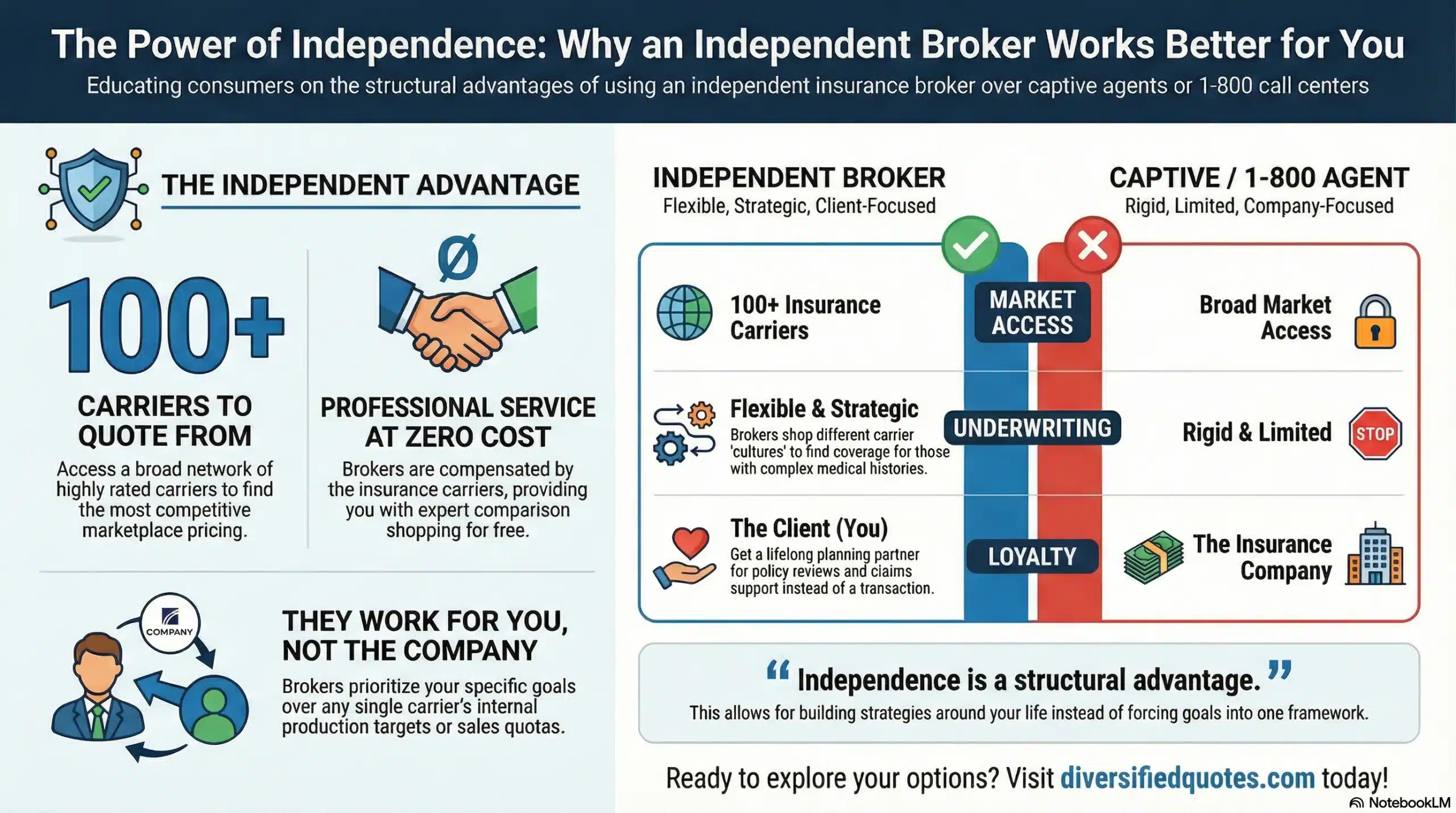
Jason Stolz, CLTC, CRPC and Chief Underwriter at Diversified Insurance Brokers, is a senior insurance and retirement professional with more than two decades of real-world experience helping individuals, families, and business owners protect their income, assets, and long-term financial stability. As a long-time partner of the nationally licensed independent agency Diversified Insurance Brokers, Jason provides trusted guidance across multiple specialties—including fixed and indexed annuities, long-term care planning, personal and business disability insurance, life insurance solutions, and short-term health coverage. Diversified Insurance Brokers maintains active contracts with over 100 highly rated insurance carriers, ensuring clients have access to a broad and competitive marketplace.
His practical, education-first approach has earned recognition in publications such as VoyageATL, highlighting his commitment to financial clarity and client-focused planning. Drawing on deep product knowledge and years of hands-on field experience, Jason helps clients evaluate carriers, compare strategies, and build retirement and protection plans that are both secure and cost-efficient.
