
Is Symetra a Good Insurance Company?

Jason Stolz CLTC, CRPC
At Diversified Insurance Brokers, we work with more than 100 top-rated carriers to help retirees, pre-retirees, and families secure the right annuity and life insurance solutions. If you’re asking, “Is Symetra a good insurance company?” the answer is often yes—especially for people who value strong financial backing, competitive annuity design, and practical products that fit real retirement timelines. Symetra Life Insurance Company was founded in 1957 and is headquartered in Bellevue, Washington. Over time, Symetra has built a reputation for stability and has become particularly well-known for its fixed indexed annuities (FIAs), multi-year guaranteed annuities (MYGAs), and select life insurance offerings designed for protection and long-term planning.
When most people say “good,” they usually mean, “Will this company be there when I need it?” That’s a fair question, and it’s also the right place to start. But a smart carrier decision goes one layer deeper: a company can be financially solid and still be a poor fit for your specific goal if the contract design doesn’t match your timeline, liquidity needs, or income objective. That’s why our approach is simple. We evaluate Symetra in two parallel ways: first, the company itself (stability, operational reliability, long-term intent), and second, the product you are actually buying (fees, surrender schedule, free-withdrawal rules, rider mechanics, and how the guarantees work in real life).
Symetra is also widely recognized as a subsidiary of Sumitomo Life, a major life insurer. In plain English, that matters because retirement-focused products are long-term promises. Strong ownership and long-term capital support can be a meaningful plus when you’re evaluating the kind of guarantees that are designed to last decades. With that said, the best decision is still a product-level decision. A “good” company can offer multiple annuities and life policies, and only one or two of them may be the best fit for your specific plan. Our job is to help you compare Symetra’s strongest options against the best alternatives in the market—using the same assumptions and the same timeline—so you can make a confident decision.
Ensure you are receiving the absolute top rates
Compare today’s strongest fixed and bonus annuity opportunities, then request a personalized quote/illustration so you can see real numbers for your age and state.
Note: The calculator accepts premiums up to $2,000,000. If you’re investing more, results increase in direct proportion — for example, doubling your premium roughly doubles the guaranteed income at the same age and options.
What Symetra Is Known For
Symetra tends to show up in conversations where the priority is stability and retirement planning outcomes—especially fixed indexed annuities designed for principal protection and potential interest crediting without direct market loss exposure, and MYGAs designed for predictable fixed-rate accumulation over a defined period. For people comparing conservative options, the annuity category often becomes the focal point because it’s where Symetra is most frequently positioned. If you want a plain-English explanation of how annuities generate crediting and income guarantees, start with how annuities earn interest.
That said, “known for annuities” does not mean “every Symetra annuity is a perfect fit.” The details matter. Two annuities in the same category can behave very differently depending on the surrender schedule, the free-withdrawal rules, the available crediting options, and whether the contract includes an income rider. If your objective is income, rider mechanics and payout factors matter more than headline marketing language. If your objective is accumulation, you want to understand how crediting is calculated and what trade-offs exist between higher potential crediting and restrictions like caps or participation rates (depending on the strategy).
How We Evaluate Whether Symetra Is “Good”
We evaluate Symetra the same way we evaluate every insurer: a carrier-level review and a product-level review. The carrier-level review focuses on financial stability, long-term positioning, and operational reliability. The product-level review focuses on what you actually sign: how the guarantees work, how fees and surrender charges function, and how your plan looks if you need liquidity or if your timeline changes. Most regret in annuity decisions does not come from choosing a “bad company.” It comes from choosing a contract that doesn’t match how the money will be used.
At the product level, we specifically look at: (1) the surrender schedule and whether an MVA (market value adjustment) applies, (2) the exact penalty-free withdrawal language and how it works in practice, (3) how interest is credited and whether the choices are simple or complex, (4) whether there is an income rider—and if so, how the rider charge is calculated and how the payout is determined, and (5) how beneficiary and death benefit provisions work based on the product category, which is why we also review annuity beneficiary death benefits during comparisons.
If you’re comparing multiple insurers, it can also help to understand the “why” behind differences in results. Many clients assume all carriers in the same category offer essentially the same contract with different branding. In reality, small changes in surrender schedules, rider charges, and payout factors can produce very different guaranteed outcomes over time. That’s why we run side-by-side comparisons using consistent assumptions rather than mixing brochures and guesswork.
Symetra Ownership and Long-Term Backing
One of Symetra’s strongest “company-level” positives is its broader corporate backing. In long-term retirement products, ownership and capitalization matter because annuities are built around long-duration promises. A stable ownership structure can align well with policyholder-focused promises, especially when clients are looking for guarantees that can last 10, 20, or 30 years. For most clients, we translate this into a simple planning idea: if you’re buying long-term guarantees, you want a company that has a long-term mindset.
That doesn’t mean ownership alone makes a product “good” for you. You still want to confirm that the product you’re buying has the right liquidity design and the right income mechanics for your plan. Think of carrier stability as the foundation. The product design is the house you build on that foundation. You need both for a strong retirement outcome.
Symetra Annuities: Where They Can Fit Best
Symetra is most frequently evaluated in two annuity lanes: fixed indexed annuities (FIAs) and multi-year guaranteed annuities (MYGAs). FIAs are commonly used when a client wants principal protection paired with a defined interest crediting strategy that can produce interest based on index-linked formulas. MYGAs are used when a client wants a straightforward fixed rate for a set period—often in the same conversation as CD alternatives, but with tax-deferred growth advantages for non-qualified dollars. If you are comparing ultra-conservative choices, it can also help to review what the safest type of annuity is so you can confirm whether a MYGA-style design or a different structure makes more sense for your comfort level and goals.
Where Symetra can shine is when you want a balance between competitive positioning and practical product design. Some clients do not want exotic crediting options or complicated rider mechanics. They want a plan that is easy to understand, matches the timeline, and produces reliable outcomes. In those scenarios, a well-designed fixed annuity or a straightforward fixed indexed annuity can be a strong fit. But again, it must be judged product-by-product, and it must be compared against the strongest alternatives available in your state.
Income planning is a separate conversation. If your primary goal is guaranteed lifetime income, the details of the income rider (if used) matter more than most people realize. The guaranteed “income base” is not the same as the account value, and the rider charge can meaningfully affect performance. If you want the rider concepts explained in plain terms, our guide to what a GLWB is helps you understand how lifetime withdrawal benefits are structured and what you should compare from one carrier to another.
What to Watch Closely in Any Symetra Annuity Contract
If you are considering a Symetra annuity, the best way to avoid surprises is to focus on four items: liquidity, surrender schedule, rider cost (if applicable), and how crediting is calculated. Liquidity is not a “nice-to-have.” It is what prevents regret. Even if you believe you will not need access to the money, most families prefer options that allow some level of penalty-free withdrawals each year in case of unexpected needs.
Start with the surrender schedule and whether the contract includes an MVA. An MVA can create a different surrender value than many consumers expect if interest rates move significantly and you exit early. That’s why we always explain surrender charges and MVA in the context of the exact contract being illustrated, not as a generic concept. Next, confirm the penalty-free withdrawal rules: how much can be withdrawn, when, and under what conditions. That is covered in free withdrawal rules, but the key is verifying your specific product and term.
If income is the plan, then rider mechanics are the priority. You want to know: what is the rider fee, how is it charged, how does the income base increase (if it increases), what triggers the payout, and what happens if you take withdrawals early. The more clearly that is defined, the easier it is to compare Symetra to alternatives and select the best guaranteed outcome for your timeline.
Finally, confirm beneficiary provisions. Even when the plan is income, most families care about what happens if death occurs early in the plan. Understanding the contract’s death benefit and beneficiary rules is essential, and we often reference annuity death benefit rules as part of the comparison process so the plan aligns with both income goals and family goals.
Symetra Life Insurance: How It Fits into the Picture
Although Symetra is frequently discussed for annuities, it also offers life insurance solutions that can be appropriate depending on your goal. The right life insurance conversation usually starts with the objective: temporary protection for income replacement, permanent coverage for long-term planning, or coverage designed to support a broader financial strategy. If you’re still clarifying how life insurance works and how to think about policy types, it can help to begin with a general education resource like how life insurance works before comparing carriers.
For many families, life insurance is still the most efficient tool for a guaranteed death benefit, especially if the primary goal is income replacement or legacy planning. For others, it is a complement to annuity planning—annuities can provide the lifetime income baseline, while life insurance can provide a separate guarantee for beneficiaries. This is especially relevant in households where one spouse is focused on income security and the other spouse is focused on ensuring a clear, predictable legacy plan for the family.
As with annuities, product and underwriting details matter. The best life insurance fit depends on health profile, age, policy type, and desired coverage period. If you’ve had trouble qualifying or you anticipate underwriting complexity, you’ll want to take a strategy-first approach, which is why resources like life insurance with pre-existing conditions can be helpful for framing how carrier selection and case presentation can change outcomes.
Get Symetra Life Insurance Quotes
Compare life insurance rates instantly and find the right coverage for your needs.
Who Symetra May Be a Good Fit For
Symetra can be a strong fit for retirees and pre-retirees who prioritize principal protection, stable long-term planning, and guarantees they can understand. Many Symetra buyers are looking for a conservative allocation that supports a retirement paycheck plan without exposing the account to direct market losses. In those situations, Symetra’s annuity lineup can be worth a serious side-by-side comparison—especially when the objective is predictable outcomes rather than chasing the highest hypothetical return.
Symetra can also be a fit for people repositioning money from bank products into longer-term retirement guarantees. The biggest difference is usually not a single interest number. It’s the blend of term length, surrender schedule, liquidity access, and what you want the money to do. If the money is primarily “sleep-well” money, a simpler fixed-rate lane can be ideal. If the money is intended to support income later, then rider mechanics and payout factors become the priority. We help you decide which lane fits first, then we select the best product in that lane.
For families that want to coordinate annuity income with life insurance protection, Symetra may also be part of a broader plan. But the key is not forcing one company to do everything. The best planning outcome often comes from using the best tool for each job—annuity guarantees for income stability and life insurance guarantees for beneficiary protection—then aligning everything with your timeline and budget.
Strengths We Commonly See with Symetra
Symetra’s strengths tend to cluster around three areas: stable backing and long-term intent, competitive retirement-focused products in key categories, and generally practical product design. Many clients appreciate carriers that do not rely on excessive complexity. They want clarity: what is guaranteed, how access works, and what the plan looks like if circumstances change. When Symetra’s products match those expectations, the experience can be very positive.
Another strength is that Symetra is often evaluated as a “serious competitor” rather than a niche carrier. That matters because for most retirees, the question is not whether a company exists, but whether it offers contract mechanics that are competitive enough to justify choosing it over a top alternative. The only reliable way to answer that is to compare the actual illustration and contract terms to other carriers using the same assumptions.
Considerations Before You Choose Symetra
Even when a company is well-regarded, there are still practical items to review. First, product availability and features vary by state, and a contract that looks great in one state may not be the same in another. Second, annuity products can include long surrender schedules, and that is not inherently “bad,” but it must match your plan. If you might need more flexibility, we’ll prioritize options with more favorable liquidity rules or shorter commitments.
Third, if an income rider is involved, we treat it as its own product decision. Riders are not all created equal. The “roll-up” mechanics, the rider fee structure, and the payout factors can produce very different outcomes from one carrier to another—even if the products are both called “fixed indexed annuities.” That’s why we use consistent assumptions and show you which product actually produces the better guaranteed income for your timeline.
Finally, customer experience can vary. Any large insurer can have occasional servicing delays or communication issues depending on the circumstance. The practical way to reduce friction is to make sure paperwork is clean, beneficiaries are properly named, and expectations are set correctly before you purchase. We handle that process carefully so you’re not guessing later.
How Diversified Insurance Brokers Helps You Compare Symetra
Our role is to turn a carrier conversation into a decision you can defend. We don’t rely on brand recognition alone. We compare Symetra to strong alternatives in the same product lane and show you how the numbers change when you adjust age, premium, and income timing. If you want fixed-rate accumulation, we’ll compare Symetra against the broader rate environment and show how it stacks up against the best fixed-rate options available now. If you want indexed growth with income features, we’ll focus on the rider mechanics and illustrate what your income could look like under multiple carriers—using the same assumptions so the comparison is fair.
We also help you avoid two common mistakes. The first is choosing a carrier because it “sounds safe” without confirming the contract is actually the best fit. The second is comparing products using inconsistent assumptions—different terms, different income start dates, different withdrawal patterns—so the comparison becomes misleading. We keep assumptions consistent, highlight the differences that matter (liquidity, surrender schedule, rider cost, payout factors), and help you choose the contract that best matches your plan.
Our Take
Symetra is widely viewed as a strong, credible insurer and is often a solid option to include in a competitive comparison—especially for retirees and pre-retirees looking at fixed indexed annuities and MYGA-style guarantees. The best way to decide whether Symetra is “good for you” is to compare it side-by-side with other strong carriers using your actual retirement timeline, liquidity needs, and income goals. If you want to explore your options, we can run illustrations that include Symetra and multiple alternatives and help you select the strongest guaranteed outcome for your plan.
Compare Symetra to the Best Alternatives
Request illustrations so you can see guaranteed income and accumulation outcomes side-by-side for your age and state.
Related Annuity Guides
If you’re comparing Symetra for retirement income or safe accumulation, these pages help you evaluate contract mechanics and the strongest categories.
Related Company Reviews and Comparisons
Continue comparing financially strong insurers and planning resources that support better decisions.
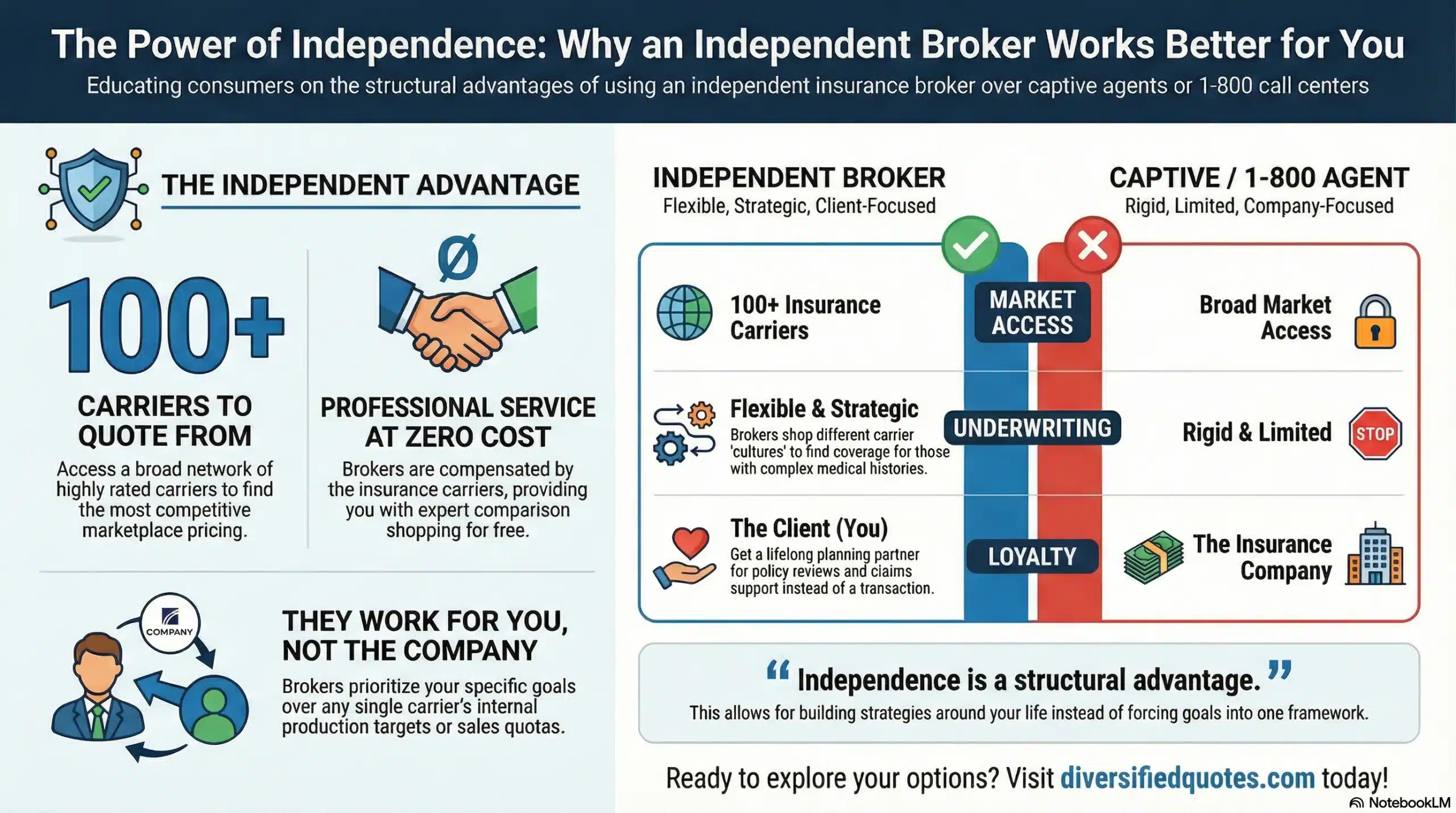
Talk With an Advisor Today
Choose how you’d like to connect—call or message us, then book a time that works for you.
Schedule here:
calendly.com/jason-dibcompanies/diversified-quotes
Licensed in all 50 states • Fiduciary, family-owned since 1980
FAQs: Is Symetra a Good Insurance Company?
Is Symetra a financially strong insurance company?
Symetra is generally viewed as financially stable and is widely recognized for its long-term focus in the annuity and life insurance space. When we evaluate “financial strength,” we look at the carrier’s rating profile, ownership support, and long-term ability to meet policyholder obligations, then we confirm how that aligns with the specific product you’re considering.
Who owns Symetra, and why does ownership matter?
Symetra is owned by a large, well-established life insurance parent company. Ownership matters because annuities and life insurance are long-duration promises, so strong backing can support long-term stability and capital support over time.
What types of annuities does Symetra offer?
Symetra is commonly evaluated for fixed indexed annuities (FIAs) and multi-year guaranteed annuities (MYGAs), and it may also offer income-focused annuity solutions depending on state availability. The best fit depends on whether your goal is accumulation, lifetime income, or a blend of both.
Are Symetra annuities good for guaranteed lifetime income?
They can be, but it depends on the exact contract and whether an income rider is used. For income-focused planning, we compare payout factors, rider charges, withdrawal rules, and surrender schedules across multiple carriers to confirm which product delivers the strongest guaranteed income for your timeline.
What should I check before buying a Symetra annuity?
Focus on the surrender schedule, any market value adjustment (MVA), the penalty-free withdrawal rules, and how interest is credited. If an income rider is involved, confirm how the rider fee is charged, how the income base works, and what happens if you take withdrawals before income begins.
Does Symetra offer life insurance too?
Yes. Symetra offers life insurance solutions in addition to annuities. The “best” life policy depends on the coverage goal (term vs. permanent), your health profile, and how quickly you need coverage issued.
Is Symetra a good choice if I’ve been declined elsewhere?
Possibly, but approvals and rates are driven more by underwriting fit than brand name. If you have health history or complexity, the key is matching your profile to the right carrier and presenting records clearly so underwriting can evaluate the risk accurately.
How does Symetra compare to other annuity carriers?
Symetra is often competitive, but results vary by state, product line, and timing. In many cases, the right move is to benchmark Symetra against other specialist carriers and choose the contract that offers the best combination of guarantees, liquidity, and income mechanics for your plan.
What’s the simplest way to decide if Symetra is “good for me”?
Run side-by-side illustrations using the same assumptions: your age, premium amount, income start date, and withdrawal needs. That apples-to-apples comparison is the most reliable way to see whether Symetra’s product design is the best match for your retirement goals.
About the Author:
Jason Stolz, CLTC, CRPC and Chief Underwriter at Diversified Insurance Brokers, is a senior insurance and retirement professional with more than two decades of real-world experience helping individuals, families, and business owners protect their income, assets, and long-term financial stability. As a long-time partner of the nationally licensed independent agency Diversified Insurance Brokers, Jason provides trusted guidance across multiple specialties—including fixed and indexed annuities, long-term care planning, personal and business disability insurance, life insurance solutions, and short-term health coverage. Diversified Insurance Brokers maintains active contracts with over 100 highly rated insurance carriers, ensuring clients have access to a broad and competitive marketplace.
His practical, education-first approach has earned recognition in publications such as VoyageATL, highlighting his commitment to financial clarity and client-focused planning. Drawing on deep product knowledge and years of hands-on field experience, Jason helps clients evaluate carriers, compare strategies, and build retirement and protection plans that are both secure and cost-efficient.
