
Partnership Qualified Long-Term Care Insurance

Jason Stolz CLTC, CRPC
Partnership-qualified long-term care insurance is one of the most powerful planning tools for people who want to protect retirement assets while still keeping a realistic backstop if a long-term care event lasts longer than expected. Most families do not plan to rely on Medicaid for care. They plan to pay their own way, preserve control, and protect their spouse. The challenge is that long-term care costs can rise faster than expected, last longer than expected, and show up right when a household’s retirement income plan is most vulnerable. A partnership-qualified LTC policy is designed to reward proactive planning by combining private insurance benefits with a special Medicaid asset-protection feature that can help preserve savings if a policy’s benefits are exhausted.
At Diversified Insurance Brokers, we help clients understand how partnership-qualified long-term care plans work, how they differ from non-partnership LTC policies, and how they can be used to protect both your financial independence and your family’s long-term security. Partnership qualification is not “another kind” of long-term care insurance in the way hybrid or annuity-based options are different product categories. Instead, it is a specific certification that certain traditional LTC policies can meet, and that certification is what unlocks the Medicaid-linked asset protection benefit. If the words “Partnership Qualified” sound like government jargon, that is exactly why this topic matters: the rules are nuanced, but the payoff can be very meaningful when a care event turns into a multi-year claim.
Request a Partnership LTC Quote
See partnership-qualified options available in your state and compare benefits, inflation choices, and premiums.
What Is a Partnership Qualified LTC Policy?
A Partnership-qualified long-term care insurance policy is a state-approved LTC policy that meets specific consumer-protection and inflation-protection requirements established under the Long-Term Care Partnership Program. If a policy meets those requirements and is issued as “Partnership Qualified” in your state, it can provide an additional benefit that most people do not realize exists until they need it: dollar-for-dollar asset protection for Medicaid eligibility purposes.
In practical terms, partnership qualification is about what happens if the cost of care outlasts the private insurance policy. Traditional long-term care insurance is designed to provide benefits for a defined period or defined pool of money. If a claim is longer than expected and those benefits are exhausted, families often face a hard transition point. At that moment, they must choose between continuing to self-fund care (and potentially depleting assets quickly) or applying for Medicaid, which typically requires “spending down” assets to meet eligibility rules. A partnership-qualified policy changes that spend-down dynamic by allowing you to protect assets equal to the amount the policy paid in benefits.
This is why partnership policies are frequently described as a “bridge” between private planning and a public backstop. The private policy helps you maintain control, protect choice, and reduce family stress while benefits are available. The partnership feature becomes relevant only if you still need care after your private benefits are exhausted and you seek Medicaid assistance. The key advantage is that you can qualify for Medicaid while preserving more of your assets than you normally could under standard Medicaid eligibility rules.
How Partnership LTC Policies Work (Plain English)
The easiest way to understand a partnership-qualified LTC policy is to walk through the timeline. First, you purchase a long-term care policy that is certified as Partnership Qualified in your state. The policy is still “regular” LTC insurance in the sense that it pays benefits for covered care once you meet benefit triggers. Those triggers are typically tied to needing help with activities of daily living or having cognitive impairment. If you want a foundational explanation of benefit triggers and how policies are structured, it can help to review the broader planning framework in How to Find, Evaluate, and Apply for Long-Term Care Insurance.
Second, if you later need long-term care, you use your policy benefits to pay for eligible services. Those services may include home care, assisted living, or skilled nursing, depending on the contract. During this phase, the most important outcome is that you are not paying entirely out-of-pocket. Your policy benefits are paying a meaningful share of costs, which can reduce the need to liquidate investments, increase retirement account withdrawals, or change the healthy spouse’s lifestyle.
Third, if your care needs continue and you exhaust the policy’s benefits, you may decide to apply for Medicaid long-term care assistance. This is the point where partnership qualification matters. With a partnership policy, the amount your policy paid in benefits becomes the amount of assets you can protect from Medicaid spend-down rules, generally on a dollar-for-dollar basis. The protected assets are excluded from the Medicaid asset calculation up to that amount, allowing you to qualify for Medicaid while preserving more savings for yourself, your spouse, or your heirs.
Many people hear “Medicaid” and immediately think of limited facility choice or restrictive eligibility. That concern is not wrong, and partnership planning is not designed to make Medicaid “easy.” It is designed to prevent a common retirement nightmare: paying for years of care, exhausting your policy, then being forced to spend down nearly everything before qualifying for help. Partnership qualification does not eliminate rules, but it can improve outcomes when care becomes long-duration and expensive.
Why Partnership Qualification Exists (And Why It Matters)
Partnership programs were created to encourage private long-term care planning. Without an incentive, many families delay planning and then rely on Medicaid when care becomes unavoidable. States and the federal government have a strong interest in encouraging people to use private insurance first, because it reduces strain on public programs. The Partnership Program is an attempt to reward responsible planning while still preserving a Medicaid safety net for catastrophic long-duration claims.
From a family’s standpoint, partnership qualification is really about protecting “middle retirement wealth.” People with very low assets may already qualify for Medicaid, though their care choices may be limited. People with very high assets may decide to self-fund. But many households fall in the middle, with meaningful savings they want to protect and a strong desire to avoid spending down everything they’ve built. Partnership-qualified LTC insurance is often designed for that middle zone—people who want a real private plan but also want a better outcome if a long claim stretches beyond the plan.
That is why partnership planning is often discussed alongside broader asset protection topics such as shared-benefit designs for couples, return-of-premium structures, and hybrid alternatives. Each approach is trying to solve a similar problem: how to fund care without turning a long-term care event into a financial collapse. If you are planning as a couple, it may also be useful to understand household-based flexibility through Long-Term Care Insurance with Shared Benefits.
Inflation Protection and Partnership Qualification
Inflation protection is not a “nice to have” in partnership planning. It is often a requirement for partnership qualification, and it is also a practical necessity because long-term care costs can rise over time. Care is labor-intensive. Staffing, licensing, and specialized services all contribute to cost increases that can outpace normal consumer inflation. When people buy long-term care coverage in their 50s or early 60s, the plan they buy today must still function decades later. Inflation protection is the mechanism that helps benefits keep pace.
Partnership inflation requirements vary by age at purchase and by state rules, but the general principle is consistent: younger buyers typically must choose compound inflation protection to qualify, while older buyers may have more flexible requirements. Rather than relying on a table, the key takeaway is that partnership qualification is tied to buying an inflation structure that keeps benefits meaningful. If you want partnership certification, you must usually accept inflation protection requirements that prevent benefits from becoming outdated.
It is also important to understand that inflation protection affects both value and premium. Higher inflation protection typically increases premium because it increases expected future benefits. But it also increases the probability that the policy will still be relevant later. A plan without inflation protection might look affordable today, but it can create a false sense of security if the benefit is too small to cover meaningful care costs in the future. In partnership planning, inflation is not a side detail—it is central to whether the plan works and whether it qualifies.
Dollar-for-Dollar Asset Protection: What It Means in Practice
The phrase “dollar-for-dollar” sounds technical, but the concept is simple. If a partnership-qualified LTC policy pays $250,000 in long-term care benefits over the life of a claim, you can generally protect $250,000 of assets from Medicaid spend-down calculations when applying for Medicaid long-term care assistance. That does not mean Medicaid writes a check for your assets. It means those assets are disregarded in the eligibility calculation up to the amount of benefits paid by the policy.
This feature can change the planning conversation in a meaningful way. Many retirees fear that a long-term care event will force them to liquidate assets they intended to preserve for a spouse or heirs. Partnership protection is one of the few planning tools that explicitly links private planning to an asset-protection outcome if Medicaid becomes part of the long-duration care picture.
For some households, the most important benefit is not the theoretical “inheritance” outcome. It is spousal security. A surviving spouse often needs stable housing, stable income, and the ability to maintain lifestyle spending. When one spouse has a long care claim, the healthy spouse can become financially vulnerable. Partnership protection may help preserve assets that support the healthy spouse later, rather than forcing total spend-down.
What Partnership Qualification Does Not Do
Partnership-qualified LTC insurance is powerful, but it is not a magic solution. It does not guarantee Medicaid approval regardless of circumstances. Medicaid still has income rules, eligibility requirements, and state-specific procedures. Partnership asset protection generally applies to the asset side of the equation, not necessarily the income side. It also does not guarantee unlimited facility choice under Medicaid. Medicaid programs can have limitations depending on state rules and provider participation.
Partnership qualification also does not replace the need for a well-designed private insurance plan. The private policy is the primary tool that pays benefits and provides flexibility. Partnership protection is the “back-end” feature that applies if care becomes catastrophic in duration. If the private policy benefit is too small, has too short a benefit period, or is not aligned with your intended care setting, partnership certification alone will not make the plan effective.
That is why partnership planning should be done as part of a full LTC design conversation—benefit amount, benefit duration, elimination period, inflation, and household budget all matter. Partnership is a feature of the plan, not the plan itself.
Who Should Consider Partnership Qualified Long-Term Care Insurance?
Partnership-qualified coverage is often most relevant for individuals and couples who have meaningful assets but do not want to self-fund unlimited long-term care risk. Many households with retirement savings, home equity, and investment accounts are in the “planning gap” where they have too much to qualify for Medicaid easily, but not enough to absorb years of high-cost care without significant financial damage. Partnership-qualified coverage can be a fit for that gap because it provides private coverage first and then offers better asset outcomes if Medicaid becomes necessary later.
It can also be relevant for people who strongly prioritize protecting a spouse. If one spouse has a long claim and private benefits are exhausted, partnership protection may help preserve assets that support the healthy spouse’s lifestyle later. For couples, the “household” lens matters. Long-term care is rarely just an individual event. It is a household event that affects income, spending, taxes, and family support.
Finally, partnership-qualified coverage is often considered by people who value structured planning. They want to know: “If this happens, what do we do next?” Partnership creates a clearer pathway because it ties the private policy to a known asset protection concept if Medicaid becomes part of the later-stage funding plan.
How Partnership Policies Compare to Other LTC Strategies
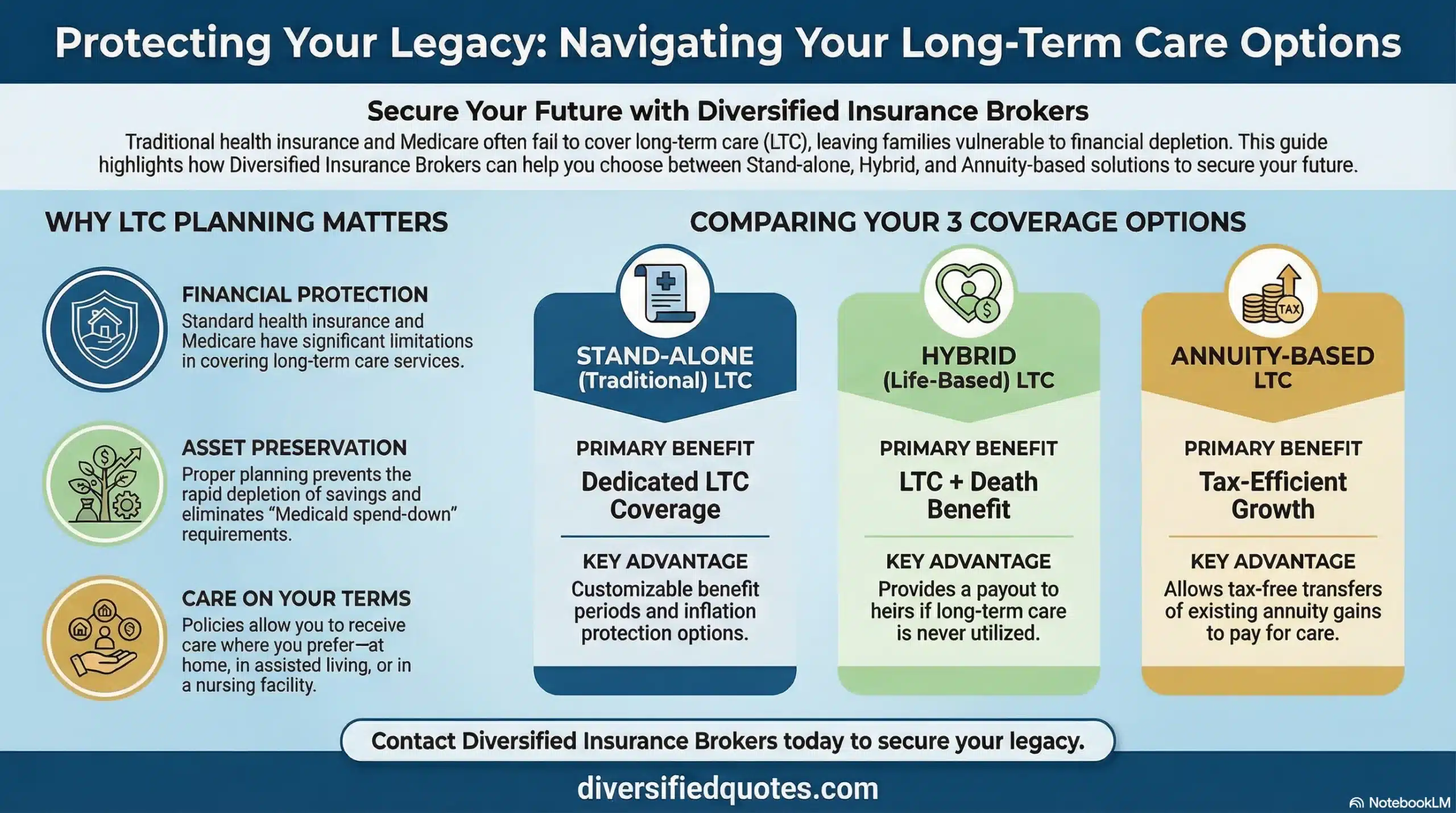
Partnership-qualified LTC policies are typically traditional long-term care insurance policies. That is important because many consumers compare partnership planning to hybrid life/LTC or annuity-based strategies. Hybrid strategies can be excellent for people who want “value either way,” such as a death benefit if care is never needed. Annuity-based strategies can be useful for repositioning assets and potentially creating tax-efficient long-term care funding under certain rules. However, many hybrid and annuity-based LTC structures are not partnership-qualified in the same way traditional LTC policies can be, and the Medicaid-linked asset protection feature is often a specific feature of the Partnership Program tied to qualifying traditional LTC designs.
This does not mean hybrid or annuity-based options are inferior. It means the decision should be made based on what you want the plan to accomplish. If partnership asset protection is your priority, you generally want to evaluate partnership-certified traditional policies first. If “value either way,” premium guarantees, or asset repositioning are higher priorities, you may evaluate hybrid strategies such as Affordable Hybrid Long-Term Care Policies and compare them to traditional options.
Many households also blend strategies. Some choose a partnership-qualified traditional policy for baseline protection and then use other tools for additional flexibility. Others choose a hybrid plan and accept that their Medicaid-linked planning looks different. The correct approach is the one that matches your household goals, not the one that sounds best in isolation.
How Taxes Fit into Partnership Planning
Tax considerations are often part of the partnership planning conversation because LTC insurance can have tax advantages. Benefits are generally received tax-free when paid for qualified long-term care services. Premiums may be deductible within IRS limits depending on age, tax filing status, and whether the coverage is part of a business structure. Understanding how these tax elements work can help clarify the “net” cost of coverage, especially for households that can deduct a portion of premiums.
If you want a deeper explanation of how LTC premiums and benefits are typically treated, the most useful companion topic is Tax Benefits of Long-Term Care Insurance. Tax treatment varies by situation, but understanding the framework helps households evaluate the value of coverage more accurately. In many plans, the goal is not simply to buy insurance. The goal is to buy insurance in a way that integrates with retirement income and tax planning so the household remains stable during a care event.
How to Verify a Policy Is Partnership Qualified
The most important verification step is ensuring the policy is explicitly issued as “Partnership Qualified” for your state. Partnership certification is state-specific. A policy that qualifies in one state may not qualify in another if rules differ. Carriers typically include required partnership disclosure language and state-specific forms when a policy is issued as partnership-qualified. You should not assume a policy is partnership-qualified simply because it is a well-known LTC carrier or because it includes inflation protection. Partnership is a certification, not a brand reputation.
If you already own an older long-term care policy, partnership qualification is not always straightforward. Some older policies were issued before partnership rules were widely adopted, and they may not meet the current certification standards. In some cases, changes or riders may bring a policy into alignment, but that depends on carrier rules and state requirements. The practical approach is to review the policy details and confirm whether it is partnership-certified in your state rather than guessing based on issue date.
Planning Scenarios Where Partnership Qualification Can Matter Most
Partnership planning often becomes most meaningful in “extended claim” scenarios. Many households can handle short-term care expenses or even a year or two of care with a combination of insurance benefits and normal retirement income. The catastrophic scenarios are multi-year claims, especially those involving cognitive supervision, where care can last much longer than families assume. In these cases, even well-funded retirees can see rapid asset depletion, and the transition to Medicaid becomes a possibility.
Partnership protection is designed for that transition point. It is not just about preserving inheritance; it is about preserving financial options. Assets preserved under partnership rules can help support a spouse, maintain housing stability, and reduce the need for children to step in financially. It can also help preserve the household’s ability to make choices rather than being forced into a spend-down trajectory.
For couples, partnership planning can also be evaluated alongside household flexibility strategies like shared benefit pools. If you are building a couple-based plan and want more household flexibility, consider reviewing Long-Term Care Insurance with Shared Benefits as a companion planning concept.
Confirm Partnership Eligibility in Your State
We’ll verify partnership certification requirements and show plans that meet state standards, including inflation rules.
What to Compare When Evaluating Partnership Policies
When comparing partnership-qualified LTC policies, it helps to focus on the levers that change real-world outcomes. Benefit amount and benefit duration determine how much private funding is available before Medicaid becomes relevant. The elimination period determines how long you pay out of pocket before benefits begin. Inflation protection determines whether the plan remains meaningful over time. And optional riders can change how the policy behaves during claim, including premium waiver, survivorship features, or return-of-premium structures.
Many households start by picking a benefit period that feels reasonable—often several years—and then adjust based on budget. Partnership planning adds another lens: if the household wants a higher “protected asset” amount, it may choose a plan with a larger pool because the pool paid is what creates the dollar-for-dollar protection later if Medicaid becomes part of the plan. That does not mean you should always choose the biggest pool possible. It means you should understand the relationship between private benefits and potential protected assets.
For some households, a return-of-premium structure also plays a role in decision-making because it changes the emotional feel of “paying for something you might not use.” If that is a concern for your household, a useful companion page is Long-Term Care Insurance with Return of Premium, which covers how refund-oriented designs are structured.
Combining Partnership Planning With Hybrid or Annuity Solutions
Some households explore partnership-qualified traditional coverage as a core plan and then look at hybrid or annuity-based strategies for additional flexibility. Others start with hybrid options because they strongly prefer “value either way” outcomes. Hybrid LTC strategies can be an excellent fit for certain households, especially when premium guarantees and legacy planning are priorities. A practical entry point for comparing these strategies is Affordable Hybrid Long-Term Care Policies.
Some households also explore annuity-based strategies as part of retirement planning more broadly, especially if they are repositioning assets for predictable outcomes. If your plan includes annuities, the broader annuity planning hub at Current Annuity Rates can be a helpful retirement context page. It is also common for households to compare how different retirement tools address “sequence risk,” income stability, and liquidity—because long-term care risk is often a cash flow risk as much as it is an insurance risk.
The key point is that partnership qualification is one specific asset-protection feature tied to qualifying traditional LTC plans. Hybrid and annuity strategies may solve different problems, and in some cases, the strongest plan is a layered plan where each tool has a job: private benefits for control, partnership certification for back-end asset protection, and retirement income planning tools to stabilize the household during a long claim.
Why Work With Diversified Insurance Brokers?
We are an independent, fiduciary insurance agency that helps clients compare long-term care strategies across traditional, hybrid, and annuity-based planning. Because partnership certification is state-specific and carrier rules vary, households benefit from working with advisors who can compare multiple carriers and verify that a policy is actually partnership-qualified where you live. We help clients evaluate benefit design, inflation requirements, premium structure, and household outcomes, so you are not buying coverage in a vacuum.
We also help clients integrate LTC decisions into broader retirement planning, including how a long-term care event can affect investment withdrawals, tax planning, and spousal security. The goal is not only to “get a policy.” The goal is to build a plan that still works when life is messy—because long-term care needs rarely arrive on a neat schedule.
Get a Partnership-Qualified LTC Comparison
See which plans in your state qualify for partnership protection and how much asset protection they could create.
Related Topics to Explore
Continue learning about long-term care strategies, tax advantages, and household planning options.
Talk With an Advisor Today
Choose how you’d like to connect—call or message us, then book a time that works for you.
Schedule here:
calendly.com/jason-dibcompanies/diversified-quotes
Licensed in all 50 states • Fiduciary, family-owned since 1980
FAQs: Partnership Qualified Long-Term Care Insurance
What makes a policy partnership-qualified?
It must meet both federal and state standards for consumer protection, including guaranteed renewability and inflation protection, and be certified by your state’s Department of Insurance.
How does partnership LTC insurance protect my assets?
It provides dollar-for-dollar asset protection. For every dollar your policy pays in benefits, an equal amount of your assets is shielded from Medicaid spend-down rules.
Do partnership LTC policies cost more?
They are priced similarly to traditional LTC policies, though inflation protection requirements can make them slightly higher in premium. The added asset protection often outweighs the difference.
Can hybrid LTC policies qualify for partnership programs?
In most states, hybrid life or annuity-based LTC plans do not qualify directly; however, they offer similar benefits and may be more flexible for estate planning.
Is the asset protection guaranteed nationwide?
Partnership reciprocity agreements exist between most states, but the protection amount and Medicaid rules vary. Always confirm your state’s reciprocity before moving or applying.
About the Author:
Jason Stolz, CLTC, CRPC and Chief Underwriter at Diversified Insurance Brokers (NPN 20471358), is a senior insurance and retirement professional with more than two decades of real-world experience helping individuals, families, and business owners protect their income, assets, and long-term financial stability. As a long-time partner of the nationally licensed independent agency Diversified Insurance Brokers, Jason provides trusted guidance across multiple specialties—including fixed and indexed annuities, long-term care planning, personal and business disability insurance, life insurance solutions, Group Health, and short-term health coverage. Diversified Insurance Brokers maintains active contracts with over 100 highly rated insurance carriers, ensuring clients have access to a broad and competitive marketplace.
His practical, education-first approach has earned recognition in publications such as VoyageATL, highlighting his commitment to financial clarity and client-focused planning. Drawing on deep product knowledge and years of hands-on field experience, Jason helps clients evaluate carriers, compare strategies, and build retirement and protection plans that are both secure and cost-efficient. Visitors who want to explore current annuity rates and compare options across multiple insurers can also use this annuity quote and comparison tool.
