
Single Premium Deferred Annuity (SPDA) with Inflation Protection

Jason Stolz CLTC, CRPC
A single premium deferred annuity (SPDA) with inflation protection is designed for individuals who want to deposit a lump sum today, allow it to grow on a tax-deferred basis, and then convert it into income in the future—while helping guard against the long-term effects of rising costs. Unlike an immediate annuity, income does not begin right away. Instead, the contract accumulates value during a deferral period, and you choose when to activate guaranteed income. Adding inflation protection means that once income begins, payments are structured to increase over time, either by a fixed percentage or another cost-of-living method.
For many pre-retirees, the biggest concern is not simply generating income—it is generating income that still feels meaningful 10, 15, or 20 years from now. Inflation quietly erodes purchasing power, especially over long retirements. Housing, insurance, healthcare, and everyday living costs rarely stay flat. An SPDA with inflation protection attempts to address this risk by pairing disciplined accumulation with structured, increasing income later.
At Diversified Insurance Brokers, we help clients compare deferred annuity contracts across highly rated carriers nationwide. We evaluate growth rates, income rider structures, inflation adjustment methods, and long-term payout projections. The objective is not just to quote a number—it is to design an income stream aligned with your retirement timeline, tax situation, and expected expenses.
Ensure you are receiving the absolute top rates
Want to see how inflation protection changes lifetime income? Use the calculator below to compare payout assumptions, ages, and income patterns.
💡 Note: The calculator accepts premiums up to $2,000,000. If investing more, income scales proportionally at the same age and rider structure.
How a Single Premium Deferred Annuity With Inflation Protection Works
An SPDA begins with a single lump-sum deposit. During the deferral period, the contract grows tax-deferred. Depending on the product structure, growth may be based on a fixed interest rate, a multi-year guaranteed rate, or a fixed indexed strategy. If you are evaluating fixed-rate accumulation options, you can review the broader rate environment on our best MYGA annuity rates page. Those products focus strictly on guaranteed interest growth during the accumulation phase.
When inflation protection is included in a deferred annuity, it typically applies to the future income rider rather than the accumulation rate itself. In other words, the account value grows during deferral, but the inflation-adjusted component impacts how the lifetime income base increases once income is activated. This distinction is important. Inflation protection inside an SPDA is usually about structuring a rising income stream later—not changing how interest credits today.
At the end of the deferral period, you may choose to activate guaranteed lifetime income. That income can be level or structured to increase annually. Fixed annual increases, compounding income roll-ups, or CPI-linked adjustments are common structures. The tradeoff, as with immediate annuities, is that increasing income structures generally start lower than level-payment alternatives. The benefit is stronger purchasing power protection later in retirement.
Why Inflation Protection Matters During the Deferral Stage
Deferred annuities are often purchased five to fifteen years before retirement. During that window, inflation continues to affect your future income needs. A retirement that looks affordable today may look tighter in ten years if costs rise steadily. By incorporating inflation protection into the income rider design, you create a structure that anticipates those higher future expenses.
Many retirees rely on Social Security, which includes cost-of-living adjustments. However, Social Security rarely covers all essential expenses. If your essential budget exceeds Social Security income by a meaningful margin, building an inflation-aware private income source can reduce the long-term strain on investment withdrawals. If you are coordinating annuity planning with Social Security timing decisions, our guide on delayed retirement credits and Social Security payout increases may help frame the broader picture.
Healthcare is another critical variable. Even retirees who downsize housing often find healthcare costs rise in later years. A deferred annuity structured for increasing income can help offset that trend without requiring aggressive market exposure during retirement.
The Tradeoff: Starting Income vs. Rising Income
Every inflation-adjusted annuity involves a tradeoff. If income is scheduled to increase annually, the initial payout will typically be lower than a comparable level-income contract. That reduction is not a penalty—it reflects the cost of future increases. The correct evaluation question is not “Which pays more today?” but “Which structure better matches my long-term expense path?”
For example, someone retiring at age 62 with a long family longevity history may prioritize compounding income growth because the retirement horizon could span three decades. Someone retiring at age 72 with higher immediate income needs may prioritize stronger starting payments and accept flatter income. In some cases, blending strategies—allocating part of assets to level income and part to inflation-adjusted income—can balance both priorities.
Comparing projections side by side is critical. That is why we encourage using the calculator above and then requesting personalized quotes. Real carrier illustrations often reveal crossover points where an increasing income surpasses a level-income alternative over time.
Accumulation Options Before Income Begins
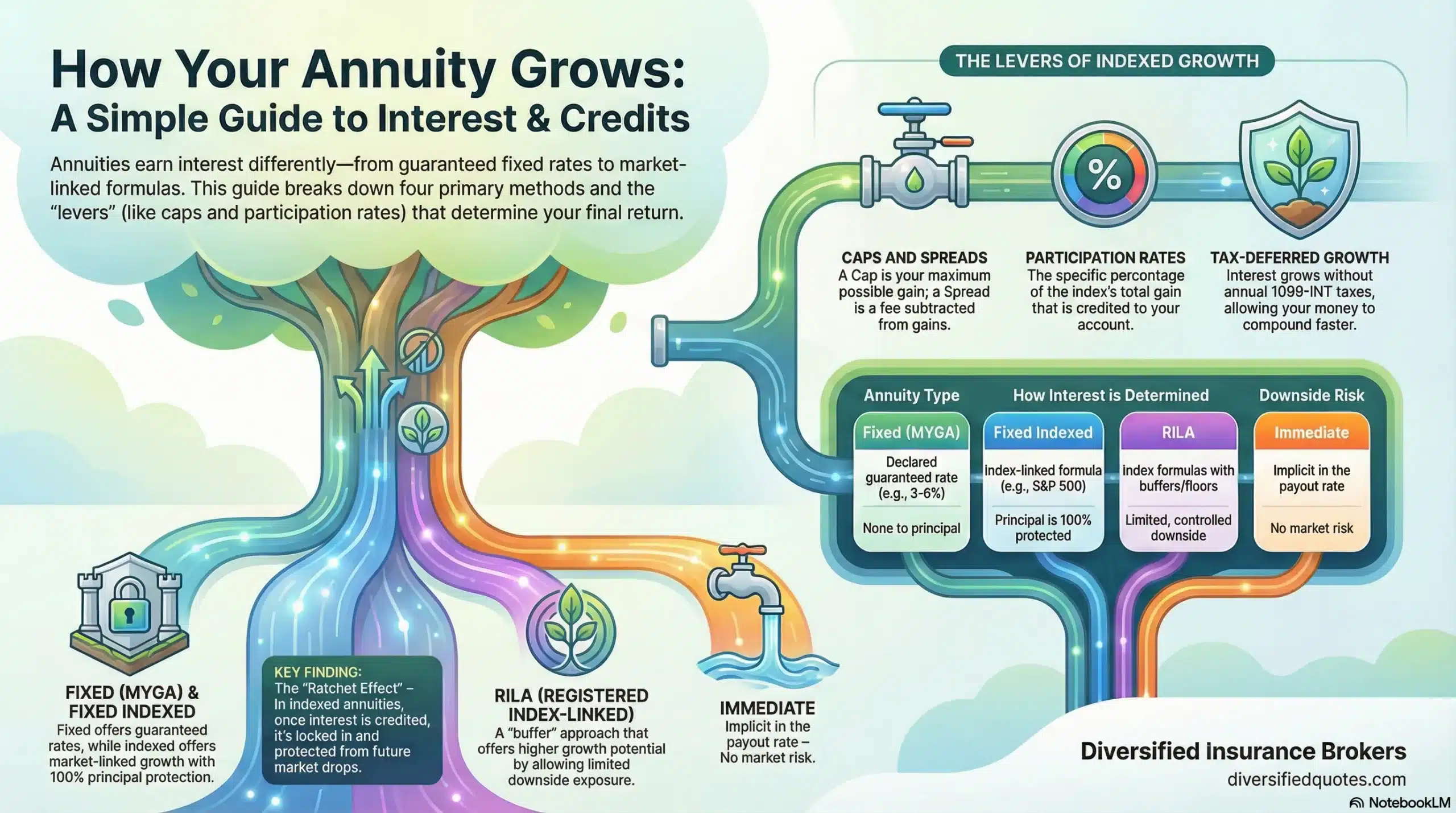
SPDA contracts may accumulate using fixed interest rates or fixed indexed strategies. Fixed annuities provide guaranteed interest rates for defined periods. Fixed indexed annuities link interest credits to a market index, subject to caps, spreads, or participation rates. If you are exploring indexed approaches, reviewing current offerings on our highest bonus FIA rates page can provide additional context.
During the deferral period, the objective is typically steady, tax-deferred growth rather than aggressive speculation. The inflation protection component becomes more relevant when income begins, but accumulation performance still influences the overall income base used for rider calculations.
Tax Treatment of a Deferred Annuity With Inflation Protection
Tax treatment depends on whether the annuity is funded with qualified or non-qualified dollars. Qualified annuities, such as those inside an IRA, distribute income that is generally taxed as ordinary income. Non-qualified annuities apply an exclusion ratio during annuitization, meaning part of each payment represents a return of principal and part represents taxable earnings.
Inflation-adjusted income can influence long-term tax planning because higher payments later in retirement may affect marginal brackets, Medicare premium thresholds, or taxation of Social Security benefits. Reviewing projected after-tax income is often more useful than comparing gross payment figures alone.
Liquidity and Planning Considerations
Deferred annuities provide accumulation flexibility early on but become more rigid once lifetime income is activated. After annuitization or rider activation, payments follow contract terms and cannot usually be reversed. For this reason, we encourage maintaining separate liquidity outside the annuity for emergencies or unexpected opportunities.
An SPDA is best viewed as a dedicated income engine—not an all-purpose financial account. Proper planning means determining how much capital should be allocated to guaranteed income versus flexible investment accounts. For broader context on annuity structures, you may find our overview at annuities helpful.
Who Is a Strong Candidate for an SPDA With Inflation Protection?
This strategy is often appropriate for individuals who are five to fifteen years from retirement, want tax-deferred growth, value guaranteed lifetime income, and are concerned about long-term purchasing power. It can also fit retirees who expect extended longevity and want income that becomes more meaningful later in life rather than remaining static.
It may be less appropriate for individuals who require high immediate liquidity or who anticipate needing large lump-sum access shortly after income begins. Each situation is unique, which is why side-by-side comparisons are essential before making a commitment.
Build a Rising Income Plan for Retirement
Compare fixed, indexed, and inflation-adjusted income options side by side. See how different structures affect both starting income and long-term purchasing power.
Why Work With Diversified Insurance Brokers
Diversified Insurance Brokers is a family-owned, fiduciary insurance agency licensed nationwide. We compare more than 75 A-rated carriers and focus on matching product structure to retirement objectives—not steering clients toward a single company. When evaluating a single premium deferred annuity with inflation protection, our role is to clarify tradeoffs, model long-term projections, and help you make a confident decision grounded in numbers rather than assumptions.
If you are evaluating whether guaranteed income fits your broader retirement strategy, additional educational resources such as are annuities worth it and annuity beneficiary death benefits may provide helpful context.
Related Annuity Pages
Explore additional retirement-income resources and planning tools.
Talk With an Advisor Today
Choose how you’d like to connect—call or message us, then book a time that works for you.
Schedule here:
calendly.com/jason-dibcompanies/diversified-quotes
Licensed in all 50 states • Fiduciary, family-owned since 1980
Frequently Asked Questions
What is a single premium deferred annuity (SPDA) with inflation protection?
An SPDA with inflation protection is a deferred annuity funded with one lump-sum deposit that grows tax-deferred until you begin income. When income starts, payments are structured to increase over time—either by a fixed annual percentage or another cost-of-living method—helping protect purchasing power during retirement.
How is an SPDA different from an immediate annuity?
A deferred annuity accumulates value for a period of years before income begins. An immediate annuity typically starts paying income within 30 days of funding. An SPDA with inflation protection focuses on future retirement income, not immediate payouts.
Does inflation protection reduce my starting income?
Yes, in most cases. If your income is structured to increase annually, the initial payment will usually be lower than a level-payment option. The tradeoff is higher income later in retirement to help offset rising living costs.
How do inflation increases work inside a deferred annuity?
Inflation protection typically applies to the income rider. Increases may be fixed (such as 2%–3% annually), compounding, or tied to an index like CPI depending on the contract. The exact method varies by carrier and product design.
Is the growth during the deferral period affected by inflation protection?
Usually no. Accumulation growth is determined by the annuity’s interest structure (fixed or indexed). Inflation protection typically affects the future income payments rather than the credited interest during deferral.
Are SPDA payments taxable?
Tax treatment depends on whether the annuity is qualified (pre-tax funds) or non-qualified (after-tax funds). Qualified distributions are generally taxed as ordinary income. Non-qualified contracts use an exclusion ratio so part of each payment may be considered return of principal.
Who should consider an SPDA with inflation protection?
Individuals 5–15 years from retirement who want tax-deferred growth and guaranteed lifetime income may benefit. It is especially attractive for those concerned about long-term purchasing power and rising healthcare or living costs.
About the Author:
Jason Stolz, CLTC, CRPC and Chief Underwriter at Diversified Insurance Brokers (NPN 20471358), is a senior insurance and retirement professional with more than two decades of real-world experience helping individuals, families, and business owners protect their income, assets, and long-term financial stability. As a long-time partner of the nationally licensed independent agency Diversified Insurance Brokers, Jason provides trusted guidance across multiple specialties—including fixed and indexed annuities, long-term care planning, personal and business disability insurance, life insurance solutions, Group Health, and short-term health coverage. Diversified Insurance Brokers maintains active contracts with over 100 highly rated insurance carriers, ensuring clients have access to a broad and competitive marketplace.
His practical, education-first approach has earned recognition in publications such as VoyageATL, highlighting his commitment to financial clarity and client-focused planning. Drawing on deep product knowledge and years of hands-on field experience, Jason helps clients evaluate carriers, compare strategies, and build retirement and protection plans that are both secure and cost-efficient. Visitors who want to explore current annuity rates and compare options across multiple insurers can also use this annuity quote and comparison tool.
