
Disability Insurance for Dentists

Jason Stolz CLTC, CRPC
As a dentist, your hands are your livelihood—and protecting your ability to earn an income is essential. Disability insurance for dentists is designed to safeguard your paycheck, your practice, and your financial future if an illness or injury prevents you from working. At Diversified Insurance Brokers, we help dental professionals across the country secure customized protection that fits the way dentists actually work and earn.
Dentistry is a specialty occupation where fine motor skills, posture, stamina, and precision matter every day. A “minor” issue in another career can be a major interruption in a dental practice. That’s why the structure and wording inside the policy—especially the definition of disability and the quality of partial benefits—often matters more than a small difference in premium.
Get a Disability Insurance Quote for Dentists
Compare own-occupation and simplified options built for dental professionals—so your income is protected if you can’t perform procedures.
Independent comparison • Dentist-friendly underwriting • No obligation
Why Dentists Need Disability Insurance
Dentistry is a highly specialized, hands-on profession. Even a minor injury or medical condition can change your ability to practice or perform procedures. That’s why disability insurance is often one of the most important coverages a dentist can own during working years—because it protects the income you rely on while you’re alive and building wealth.
After years of dental school and training, many dentists graduate with meaningful student loan debt and limited cash reserves. If disability strikes, those obligations don’t pause just because you can’t work. Disability insurance replaces a portion of your income so you can keep household finances stable, continue paying key obligations, and avoid draining savings at the worst possible time.
How Dentist Disability Insurance Works
A professional disability policy pays monthly benefits if you can’t work due to a covered illness or injury. For dentists, policy language is everything—because the “right” contract recognizes that your profession depends on precision and procedure performance, not just being able to do some kind of work.
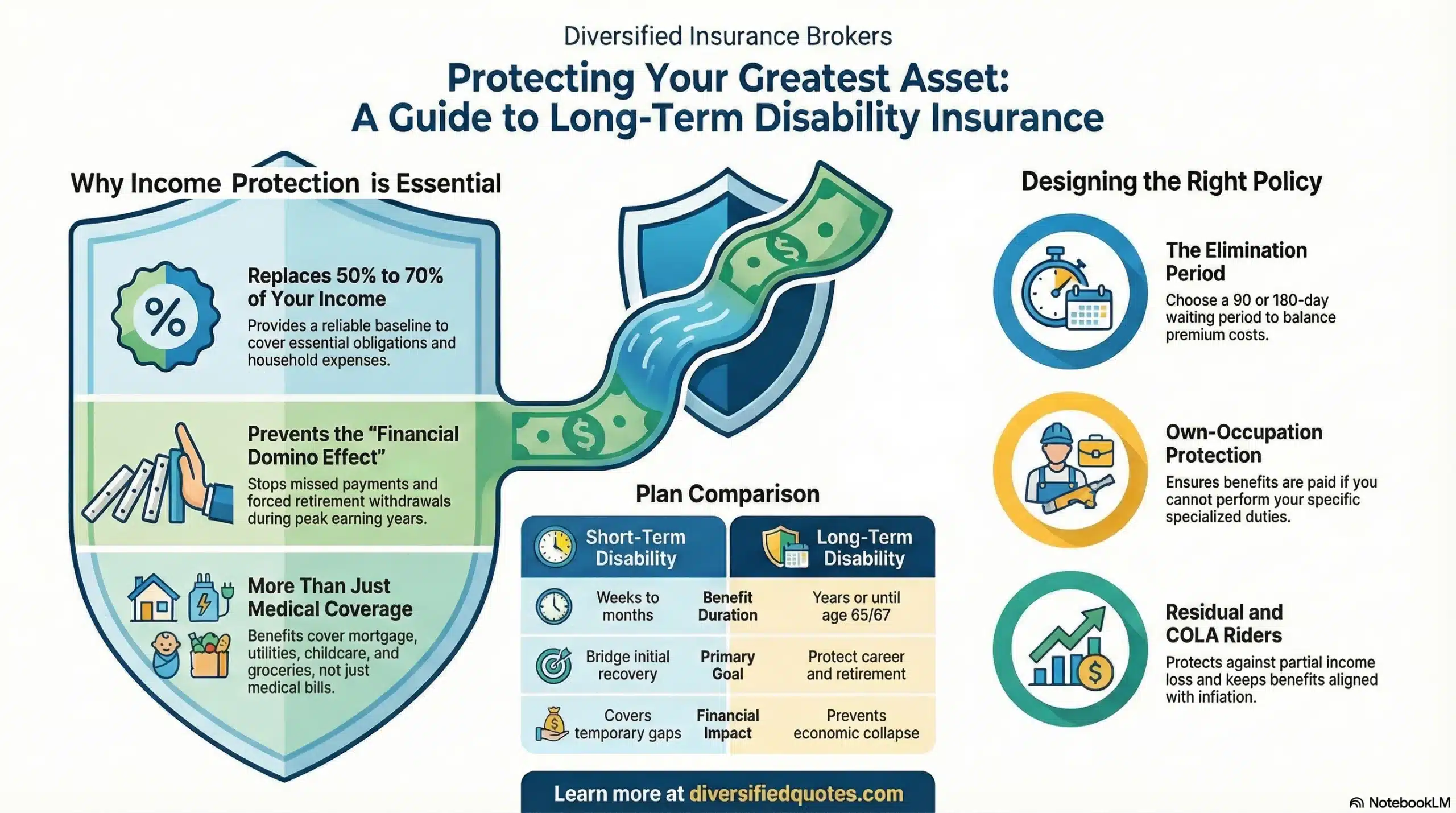
The centerpiece for many dentists is an own-occupation definition. In practical terms, this means you can receive benefits if you can’t perform the material duties of your occupation as a practicing dentist—even if you remain capable of working in another role. That distinction becomes critical when an injury affects fine motor skills, posture tolerance, visual strain, or endurance in the operatory.
Most dentist policies also live or die by how they handle partial work capacity. A good plan anticipates reality: many claim situations involve reduced procedures, reduced days, or lower production before work stops entirely. That’s where partial and residual benefits matter.
- Own-Occupation Coverage: Designed to pay if you can’t perform your specific duties as a dentist, even if you can work in another field.
- Partial / Residual Disability: Helps replace income if you’re working but your production drops due to reduced hours or limited procedures.
- Future Increase Option: Lets you expand coverage as your income grows, often without new medical underwriting.
- Loan Protection Concepts: Some designs can help you keep critical loan obligations on track during a disability.
At Diversified Insurance Brokers, we compare options across multiple carriers so you can see how definitions and riders differ side-by-side—because two policies that “look similar” can behave very differently in a real claim.
No Exam and Simplified Options
For many dentists, getting coverage placed quickly matters. Through qualifying programs, some applicants can access No Exam Disability Insurance with streamlined underwriting. These pathways can be useful when time is tight, the schedule is packed, or you want fewer steps in the application process.
It’s still important to compare streamlined options against fully underwritten policies, especially on definition strength and partial benefits. Sometimes simplified options are an excellent fit; other times, the best long-term value comes from a stronger contract even if underwriting takes longer.
Tax Treatment and Why It Changes the “Right” Benefit Amount
When you purchase disability insurance with after-tax dollars, benefits are typically tax-free. That means each dollar of monthly benefit is designed to replace spendable income directly, without being reduced by income taxes. By contrast, some employer-paid arrangements can create taxable benefits. The difference matters because a benefit that looks adequate in gross terms can feel too small after taxes.
If your practice is incorporated, structuring premiums can be more nuanced depending on how the arrangement is set up. The cleanest approach is to size coverage based on real after-tax household needs so you know what level of benefit would keep life stable if your clinical income stopped.
Coverage for Dental Practice Owners
Many dentists own or co-own a practice, which creates exposures beyond personal income. Disability can affect not only your paycheck, but also staffing, rent, leases, equipment financing, and the stability of the business itself. That’s why many practice owners explore “two-layer” planning: personal income protection plus business-focused coverage built to keep the practice from becoming a financial emergency during recovery.
Owner planning can also include strategies to protect business value and continuity, which is a major reason many dentists coordinate disability planning with the broader “guarantee and protection” mindset they apply in other parts of their financial life. If you want to see that concept applied in other areas, you can review how guaranteed features work in contracts like Annuity Beneficiary Death Benefits and how some people think about bonus-style guarantees in Bonus Annuities.
Specialty Occupation Coverage for Dental Professionals
Dentists are commonly treated as “specialty occupation” professionals because the work requires precision, fine-motor control, posture tolerance, and sustained concentration. That’s also why true own-occupation language is so important. We generally want a contract that aligns the definition of disability with your real professional duties, rather than a weaker “any occupation” approach that can reduce claim certainty.
Whether you are a general dentist, a specialist, or a practice owner with multiple revenue sources, the goal is the same: choose language and riders that match how your income is earned—and how it would realistically be disrupted.
Want Own-Occupation Coverage That Matches Dentistry?
We’ll compare definitions, residual benefits, and benefit structures so the policy is designed for procedures—not generic work ability.
Request OptionsExample Scenario
Dr. Smith is a 36-year-old dentist earning $180,000 annually with significant student loan obligations. A wrist injury prevents her from performing procedures for nine months. With an own-occupation disability policy, she receives a monthly, tax-free benefit designed to keep personal expenses and core obligations stable during recovery—without forcing early retirement withdrawals or a cash-flow crisis.
Integrating Disability into a Bigger Financial Strategy
Disability coverage is strongest when it fits into your wider plan. Some dentists coordinate disability protection with cash-flow and liquidity strategies, particularly when income is high and obligations are fixed. If you are exploring longer-term income planning, you can also review how guaranteed income tools are structured on our Current Annuity Rates page, or how people think about liquidity and control in The Be Your Own Banker Strategy Explained.
For dentists who are high income, business owners, or planning around broader investment goals, our Concierge Wealth Services page is designed to support high-income professionals with advanced planning needs.
Why Work with Diversified Insurance Brokers
Diversified Insurance Brokers is a family-owned fiduciary agency licensed in all 50 states. We help dentists compare carrier definitions, identify which riders matter most in real claim scenarios, and structure benefits that align with your income and practice realities. The goal is simple: when you need the policy, it should work the way you expect it to work.
Related Disability Pages
Explore additional disability and protection topics that dentists often review.
Related Planning Pages
More planning resources dentists sometimes coordinate with income protection.
Financial Protection Essentials
Burial insurance comparisons, travel protection planning, carrier reviews, and post-heart attack life insurance guidance.
Talk With an Advisor Today
Choose how you’d like to connect—call or message us, then book a time that works for you.
Schedule here:
calendly.com/jason-dibcompanies/diversified-quotes
Licensed in all 50 states • Fiduciary, family-owned since 1980
FAQs: Disability Insurance for Dentists
What type of disability policy is best for dentists?
A true own-occupation policy is ideal because it pays benefits if you cannot perform your specific duties as a dentist, even if you can work in another field.
Do dentists qualify for No Exam Disability Insurance?
Yes. Many carriers offer simplified underwriting up to $8,000/month without medical exams or income verification, depending on age and occupation.
What is Business Overhead Expense coverage?
It reimburses fixed business expenses such as rent, staff salaries, and utilities while you’re disabled, keeping your practice open until you recover or sell.
Are benefits from disability insurance taxable?
If you pay premiums personally with after-tax dollars, your benefits are generally tax-free. If your practice pays the premiums, benefits may be taxable.
How long can benefits last?
Benefit periods range from 1 year up to age 67, depending on your policy and selected options.
Can I increase coverage as my income grows?
Yes, many dentist-specific policies offer a future increase option that allows you to raise coverage without new medical underwriting.
Does student loan coverage come standard?
Some policies include a loan protection rider that covers dental school or practice loans during a disability period. Others offer it as an optional add-on.
How soon can I qualify for benefits?
Most policies have elimination periods between 30 and 180 days, depending on your needs and premium preferences.
Is coverage available nationwide?
Yes. Diversified Insurance Brokers is licensed in all 50 states and offers coverage for general dentists, specialists, and practice owners across the U.S.
About the Author:
Jason Stolz, CLTC, CRPC and Chief Underwriter at Diversified Insurance Brokers (NPN 20471358), is a senior insurance and retirement professional with more than two decades of real-world experience helping individuals, families, and business owners protect their income, assets, and long-term financial stability. As a long-time partner of the nationally licensed independent agency Diversified Insurance Brokers, Jason provides trusted guidance across multiple specialties—including fixed and indexed annuities, long-term care planning, personal and business disability insurance, life insurance solutions, Group Health, and short-term health coverage. Diversified Insurance Brokers maintains active contracts with over 100 highly rated insurance carriers, ensuring clients have access to a broad and competitive marketplace.
His practical, education-first approach has earned recognition in publications such as VoyageATL, highlighting his commitment to financial clarity and client-focused planning. Drawing on deep product knowledge and years of hands-on field experience, Jason helps clients evaluate carriers, compare strategies, and build retirement and protection plans that are both secure and cost-efficient. Visitors who want to explore current annuity rates and compare options across multiple insurers can also use this annuity quote and comparison tool.
