
Inflation Protected Income Annuity

Jason Stolz CLTC, CRPC
An inflation protected income annuity is designed for one specific retirement challenge: maintaining purchasing power over a lifetime that could last 20, 30, or even 40 years. Many retirees enter retirement focused on securing guaranteed income, but far fewer think carefully about how that income behaves decades into the future. A flat payment that feels comfortable at age 65 can feel tight at age 85 if it never increases. Inflation does not need to be dramatic to cause problems. Even modest long-term cost increases in housing, food, insurance, utilities, and especially healthcare can steadily erode the real value of fixed income streams.
This is where an inflation-protected structure becomes valuable. Instead of taking the largest possible starting payout, you intentionally accept a lower initial payment in exchange for income that rises over time. The goal is not to “beat” inflation perfectly every year, but to create income durability. At Diversified Insurance Brokers, we help retirees compare rising income structures across carriers so they can see how guaranteed income evolves over time rather than focusing only on the first-year payout.
Many retirees begin their research by understanding foundational payout structures such as life-only annuities, which pay the highest starting income but never increase. From there, the natural question becomes whether that level income will still feel sufficient decades later. That long-view perspective is what drives interest in inflation-adjusted annuity income.
Compare Inflation-Protected Lifetime Income
See how different increase structures affect income over 10, 20, and 30 years.
Request a Personalized ComparisonUnderstanding the Real Risk: Inflation Over Time
Inflation is often described as the “quiet threat” to retirement because it rarely shocks you all at once. Instead, it compounds gradually. A three percent annual increase in expenses may not feel severe year to year, but over two decades it can significantly reduce what a fixed income stream can actually purchase. When retirement spans multiple decades, this compounding effect matters.
Healthcare is a particularly important factor. Retirees often experience rising medical expenses later in life, precisely when fixed income sources remain flat. This mismatch between rising needs and static income is why many retirees explore strategies that build income increases directly into their annuity structure rather than relying entirely on portfolio withdrawals. For those coordinating guaranteed income streams, understanding how Social Security and annuities work together can help frame how inflation-adjusted income layers fit within the broader retirement plan.
How Inflation-Protected Income Is Structured
Inflation-protected income annuities are typically structured in one of several ways, but the unifying concept is automatic payment growth. The most common approach uses a fixed annual increase percentage, such as two, three, or four percent per year. This structure offers predictability because you know in advance how your income will grow regardless of market conditions or official inflation measures. The tradeoff is a lower starting payment compared to a level income option.
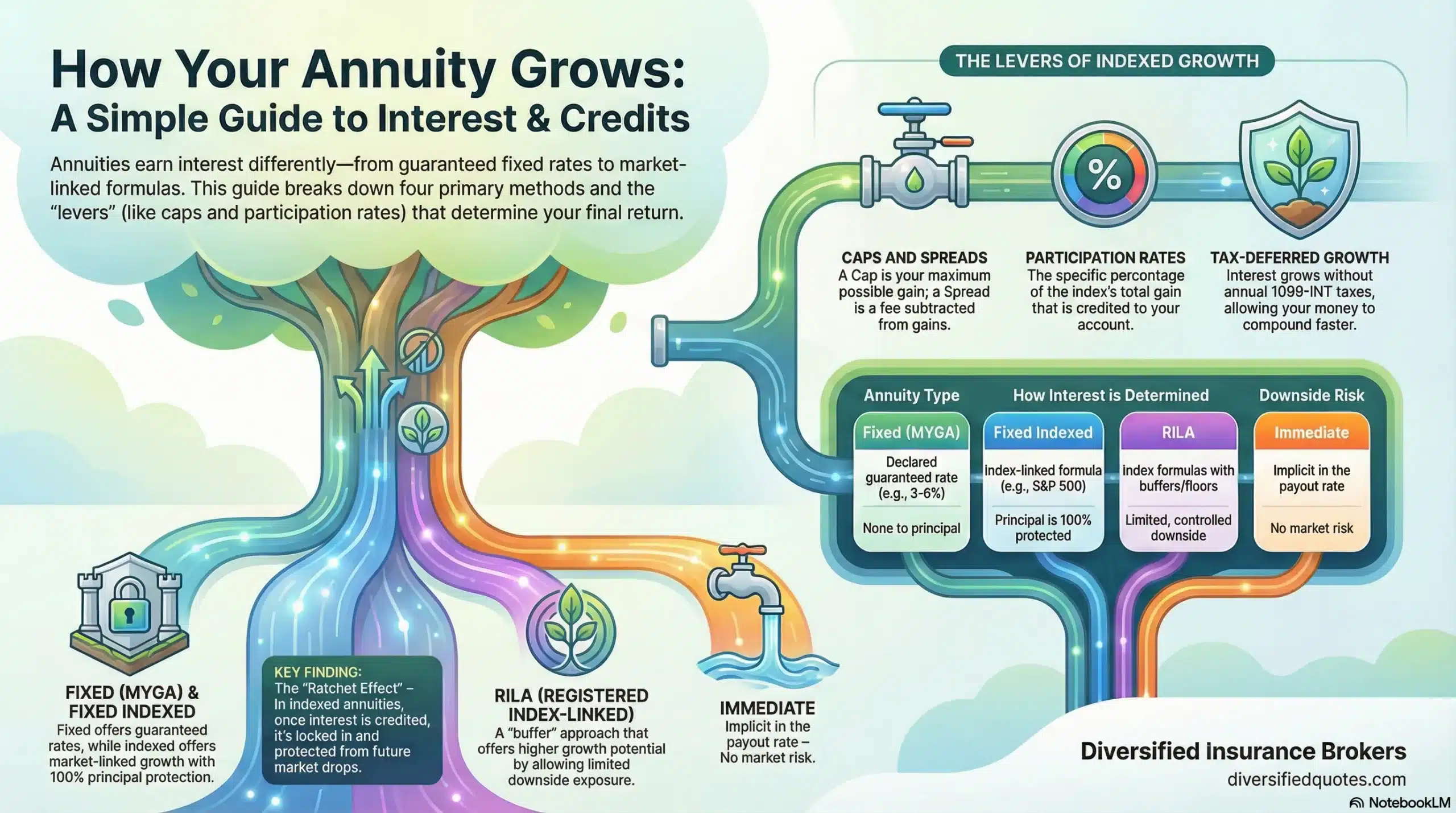
Some contracts use cost-of-living style adjustments that attempt to reflect broader economic conditions. These may provide increases that more closely track inflation in certain years, though the growth can vary. Other designs link increases to index performance within a protected structure. If you are exploring those approaches, reviewing how a fixed indexed annuity works can clarify how indexing methods influence long-term income behavior.
The key principle remains consistent across designs: you are exchanging some early retirement income for greater long-term income resilience. Whether that tradeoff is appropriate depends heavily on age, health, household structure, and overall retirement resources.
Comparing Rising Income to Level Lifetime Income
When comparing annuity payout options, retirees often focus on the size of the first check. A level-payment annuity produces the highest immediate income because it does not build in future increases. In contrast, an inflation-protected annuity starts lower but grows over time. The break-even point between the two depends on the increase percentage, longevity, and timing of income start.
For retirees expecting a long retirement, rising income can provide stronger long-term stability. For those needing maximum cash flow immediately, a level structure may feel more appropriate. Exploring whether annuities pay income for life helps clarify how longevity protection works regardless of increase structure.
Some retirees also compare these options to rider-based income strategies within deferred annuities. Riders can offer different growth and payout mechanics. Understanding what an income rider is and reviewing whether income riders have fees can help determine which structure aligns best with your goals.
Deferred Versus Immediate Rising Income
Inflation-protected income can begin immediately or after a deferral period. A deferred structure allows the income base to grow before payments begin, potentially increasing future payout levels. Retirees considering delayed income may benefit from understanding what a deferred income annuity is and how waiting can impact long-term income projections.
The timing decision often depends on coordination with Social Security, pension start dates, and required minimum distributions. A well-designed plan layers income sources strategically so that guaranteed income increases align with expected expense patterns.
Lifetime Income Calculator
Before selecting any structure, it is helpful to model how guaranteed income changes over time. Use the calculator below to estimate lifetime income based on age and premium. From there, we can compare level versus inflation-adjusted designs side by side.
Note: The calculator accepts premiums up to $2,000,000. Larger premiums scale proportionally.
Ensuring Competitive Rates and Payouts
Carrier differences matter. Payout factors, increase percentages, and contract language vary significantly. Before committing to any strategy, reviewing current market offerings is critical. You can compare today’s leading options by reviewing current fixed annuity rates and current bonus annuity rates to see how accumulation strategies differ before income is activated.
Some retirees begin by requesting personalized comparisons through our annuity quotes page, which allows us to evaluate rising income structures available in their specific state.
Get a Customized Rising Income Comparison
We’ll show how income grows year by year under different increase structures.
Related Pages
Talk With an Advisor Today
Choose how you’d like to connect—call or message us, then book a time that works for you.
Schedule here:
calendly.com/jason-dibcompanies/diversified-quotes
Licensed in all 50 states • Fiduciary, family-owned since 1980
FAQs: Inflation Protected Income Annuities
How does an inflation-protected income annuity increase payments?
Payments increase automatically each year through a fixed percentage, CPI-based adjustments, or index-linked performance depending on the contract.
Why do inflation-protected annuities start with lower income?
Because the contract is designed to grow over time. The insurer shifts more payout into future years to support long-term inflation protection.
Is CPI-based inflation protection better than fixed increases?
CPI tracks real inflation and adjusts accordingly, while fixed increases provide predictability. The right choice depends on your tolerance for variability.
Do all income annuities offer inflation protection?
No. Only specific designs—like COLA annuities or income riders—provide increasing payments. Most standard immediate annuities offer level income unless upgraded.
Can inflation protection be added later?
No. Inflation protection must be built into the contract at the time of purchase. It cannot be added after income begins.
About the Author:
Jason Stolz, CLTC, CRPC and Chief Underwriter at Diversified Insurance Brokers, is a senior insurance and retirement professional with more than two decades of real-world experience helping individuals, families, and business owners protect their income, assets, and long-term financial stability. As a long-time partner of the nationally licensed independent agency Diversified Insurance Brokers, Jason provides trusted guidance across multiple specialties—including fixed and indexed annuities, long-term care planning, personal and business disability insurance, life insurance solutions, and short-term health coverage. Diversified Insurance Brokers maintains active contracts with over 100 highly rated insurance carriers, ensuring clients have access to a broad and competitive marketplace.
His practical, education-first approach has earned recognition in publications such as VoyageATL, highlighting his commitment to financial clarity and client-focused planning. Drawing on deep product knowledge and years of hands-on field experience, Jason helps clients evaluate carriers, compare strategies, and build retirement and protection plans that are both secure and cost-efficient.
