
Lawsuit Loans – Fast Funding with the Highest Payouts Available

Jason Stolz CLTC, CRPC
When you’re involved in a lawsuit, the wait for a settlement can put significant strain on your finances. Medical bills, rent, transportation costs, and day-to-day living expenses don’t pause just because your case is still pending. Lawsuit loans—often referred to as pre-settlement funding—are designed to give plaintiffs access to cash now based on the expected value of their case, so they can cover critical expenses while their attorney works toward the best possible outcome.
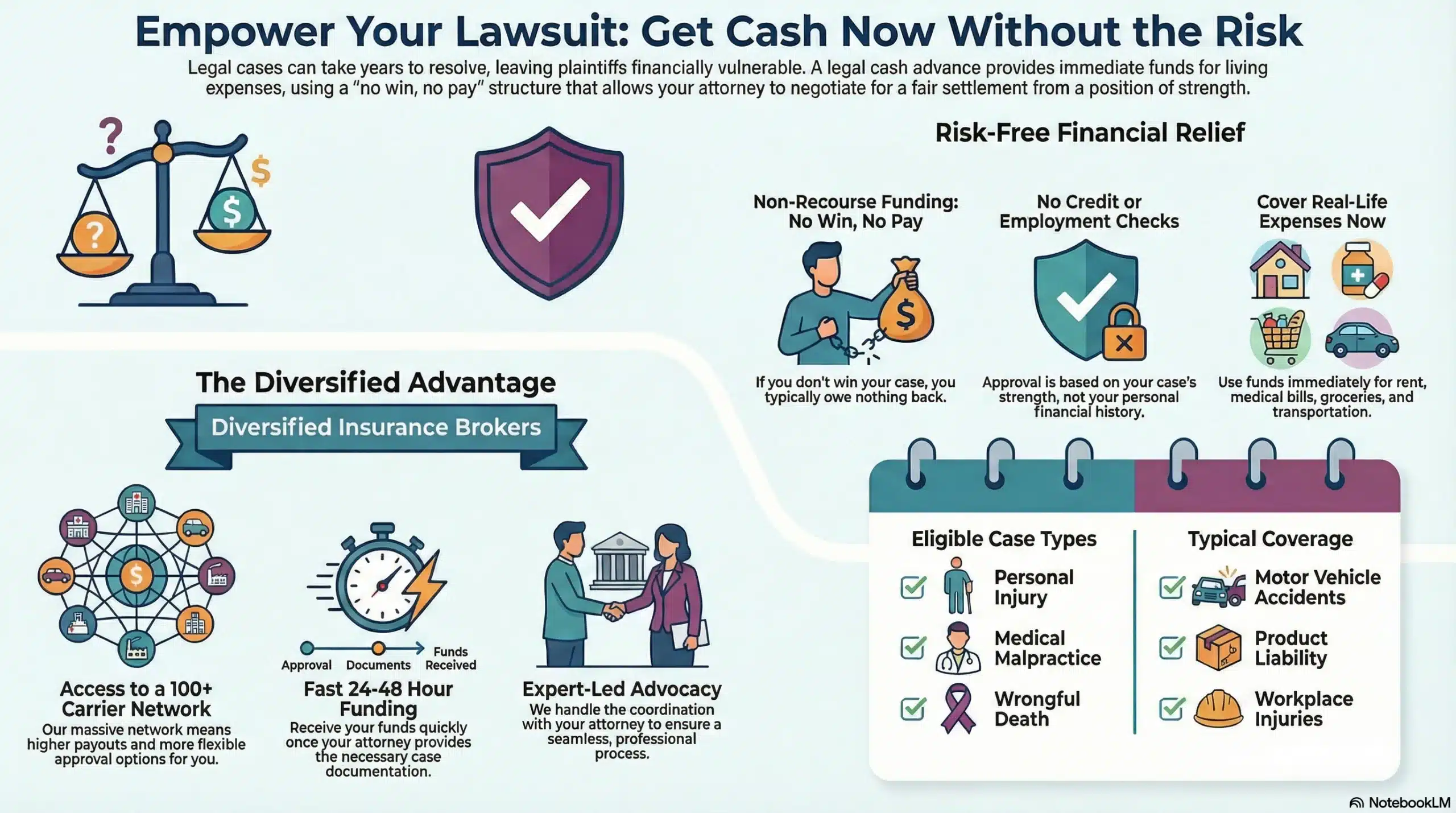
It’s important to understand what a lawsuit loan actually is. In most cases, it is not a traditional loan with monthly payments or credit checks. Instead, it’s typically structured as a non-recourse cash advance tied to your case’s outcome. That means repayment usually occurs only if your case resolves with a settlement or award. When used responsibly, this type of funding can relieve pressure, prevent financial emergencies, and help you avoid settling early for less than your claim may be worth.
We work with one of the largest funding networks in the country, which allows us to compare offers, push for competitive terms, and secure higher advance amounts than many single-source providers. Our process is attorney-friendly and built around documentation and verification, which helps keep funding decisions fast and smooth for everyone involved.
Below, we’ll break down how lawsuit loans work, who typically qualifies, what costs to evaluate, and how to use this type of funding strategically—so you can protect your net settlement while you get the cash you need today.
Apply for a Lawsuit Loan Today
Fast approvals and higher payouts so you can stay financially secure during your case.
What Are Lawsuit Loans?
Lawsuit loans—sometimes called legal funding, pre-settlement funding, or litigation financing—are typically cash advances you can receive while your case is ongoing. They are generally offered to plaintiffs who are represented by an attorney and have a claim with a reasonable expectation of recovery. The funding amount is based on the estimated value of the case, the strength of liability, and the expected timeline to resolution.
Because lawsuit loans are usually non-recourse, you generally do not make monthly payments. Instead, repayment is handled at settlement or judgment, typically through your attorney’s trust account, after the case resolves. If there is no recovery, many agreements provide that you owe nothing—one of the reasons plaintiffs consider this option when they can’t (or don’t want to) take on a monthly-payment loan.
In practice, lawsuit funding is meant to bridge the gap between “case pending” and “case paid.” It can help cover basic expenses like rent, utilities, groceries, childcare, transportation, and medical costs—especially when injuries reduce your ability to work or when treatment costs pile up while negotiations drag on.
How Lawsuit Loans Work Step by Step
The best lawsuit funding experiences are simple, transparent, and attorney-friendly. While every case is different, the process usually follows the same steps:
1) Submit a short application
You provide basic case information—your name, the type of case, where the case is pending (if filed), and your attorney’s contact information. The application is typically quick and designed to get the funder the core facts needed to begin review.
2) Attorney verification and document review
Your attorney confirms representation and provides documents that help evaluate the claim. These may include a case summary, accident reports, medical records, medical bills, demand packages, and insurance information. This step is critical because funding decisions are based on case facts—not credit or employment.
3) Case evaluation
The funding team evaluates liability, damages, coverage, and expected timeline. They may consider how far along the case is, whether treatment is complete, and whether the case is likely to settle sooner or later. A case closer to resolution may sometimes be easier to price and fund responsibly than a case in very early stages.
4) Offer and acceptance
If approved, you receive an offer that outlines the advance amount and the repayment terms. This is the most important moment to slow down and make sure everything is clear: what you receive today, what you may owe later at different timeframes, and what fees (if any) apply.
5) Funds disbursed
Once documents are signed, funds are sent—often quickly after verification. Timing depends on how fast documentation is provided and how quickly the attorney’s office can confirm the needed details.
Throughout the process, the goal is to minimize friction for your attorney and to keep everything clean, documented, and predictable. That is what helps approvals move quickly.
Why Choose Our Lawsuit Loan Services
Many plaintiffs apply directly to a single funding company and accept the first offer because they urgently need help. The downside is that a single provider only offers its own pricing model and risk appetite. We operate differently because we can compare offers within a broad funding network—helping you find a better fit for your case profile and timeline.
Clients choose us because we focus on speed, clarity, and competitive offers:
- Access to one of the largest funding networks in the U.S.
- Consistently higher loan offers than most competitors because we can source multiple options
- Fast, simple application and approval process built around attorney verification
- No repayment required if you lose your case when structured as non-recourse funding
- Transparent terms so you understand what you’re agreeing to before you sign
We also emphasize responsible funding. The goal is not to advance the maximum amount possible at any cost. The goal is to provide a practical, sustainable advance that helps you stay stable today while protecting your net settlement tomorrow.
Eligible Case Types
We provide lawsuit loans for many case types. In general, the best candidates are attorney-represented claims where liability and damages can be documented and where recovery is reasonably expected. Common qualifying categories include:
- Personal injury claims
- Motor vehicle accident cases (car, truck, motorcycle)
- Workplace injury lawsuits (outside of standard workers’ comp structures)
- Medical malpractice suits
- Wrongful death claims
- Product liability cases
If you are unsure whether your case qualifies, the application process is designed to confirm eligibility quickly. In many cases, attorney participation is required to verify case details and support a responsible offer.
What Determines Your Approval and Funding Amount?
Unlike traditional lending, lawsuit loans are usually based on the merits of your claim. Funding teams evaluate the case like an asset with risk. The most common approval and sizing factors include:
- Liability clarity: Strong evidence and clear fault generally improves approval odds.
- Documented injuries and treatment: Medical records, diagnostics, and ongoing care documentation help establish damages.
- Insurance coverage / collectability: Policy limits and defendant resources affect the likelihood of a collectible recovery.
- Case posture and timing: Cases closer to negotiation or resolution may support cleaner evaluation.
- Attorney responsiveness: Funding depends on document access and verification; cooperative attorney offices help speed the process.
- Existing obligations: Prior funding, medical liens, and other settlement deductions affect what is safe to advance.
Because of these factors, advances are typically a portion of expected recovery—not the full expected settlement. This conservative approach helps protect the settlement from being over-encumbered.
Understanding Costs, Fees, and “Rates”
One of the most important parts of lawsuit funding is understanding the cost structure. You may hear people talk about “rates,” but pre-settlement funding is often priced differently than a bank loan. You might see:
- Payoff schedules: a table showing what you owe at 3, 6, 9, and 12+ months
- Simple pricing: charges based on the original advance amount
- Compounding pricing: charges that grow over time as costs are assessed on the balance
- Fees: administrative, processing, underwriting, or origination fees, depending on provider
The key is not the headline number—it’s what you owe when the case settles. Many plaintiffs regret funding because they did not review the payoff at multiple timeframes. A case that takes longer than expected can change the total cost significantly, especially if pricing compounds.
Before you sign, you should know:
- What you receive today (net amount)
- What you owe at realistic timeframes (for example 6 months, 12 months, and 18 months)
- Whether pricing is simple or compounding
- Any fees that reduce what you receive or increase what you repay
Responsible funding means taking what you need for essentials and confirming that you are comfortable with the payoff under conservative timelines—not just best-case timelines.
Why Plaintiffs Use Lawsuit Loans
Settlement negotiations can be slow for many reasons: investigation time, treatment timelines, insurance review, litigation, discovery, depositions, and court schedules. Meanwhile, injured plaintiffs are often dealing with reduced income and increased expenses. Lawsuit funding is typically used for:
- Rent or mortgage payments
- Utilities and essential household bills
- Groceries and basic living expenses
- Transportation costs and car payments
- Childcare and family support
- Medical bills and treatment-related expenses
Another common reason is negotiation leverage. Financial strain can pressure people into accepting early, discounted offers. Funding can provide breathing room so you and your attorney can continue pursuing a fair result without emergency pressure.
Why It’s Different from a Traditional Loan
Lawsuit loans are typically structured as non-recourse advances. This creates a different risk profile than a bank loan:
- No monthly payments: repayment is generally made from settlement proceeds.
- No credit underwriting: approval is based on the case, not your credit score.
- Outcome-based repayment: repayment usually occurs only if there is a recovery.
This structure is the reason lawsuit funding can be accessible when traditional credit is not. However, outcome-based repayment is also why costs can be higher than a bank loan. The provider is taking on case risk and timing risk. The best way to manage that is to keep the advance amount reasonable and make sure the payoff schedule is transparent.
How to Use a Lawsuit Loan Strategically
The smartest approach is usually “essentials first.” Borrow enough to stabilize your household, not so much that your settlement becomes heavily burdened by repayment obligations. When you treat funding as a short-term bridge for necessities, it tends to do what it’s supposed to do: reduce stress without creating long-term regret.
It also helps to plan for timing uncertainty. Even strong cases can take longer than expected. Ask your attorney what a conservative timeline looks like, then review your payoff schedule at that longer timeline. If the payoff feels too high, consider reducing the advance amount or exploring a structure that is easier to forecast.
Finally, if your injury affects your ability to work, consider whether additional protections make sense while the case is pending. Many clients review options like short-term health insurance for medical cost gaps, disability coverage for income protection, or life insurance for family protection. The goal is stability during a period that can be unpredictable.
Secure the Money You Need While You Wait
Waiting for a settlement doesn’t have to mean financial hardship. Lawsuit loans can provide fast access to cash so you can stay current on essential bills and reduce pressure during negotiations. With access to a large funding network, we can help you compare options, seek competitive offers, and move quickly once your attorney verifies the case details. Because funding is typically non-recourse, repayment generally occurs only if your case resolves with a recovery—helping you avoid taking on monthly-payment debt during a difficult time.
If you’re considering this option, the next step is simply to request funding so we can review the basics and coordinate with your attorney. You will be able to see the offer terms clearly before you accept anything.
Get Your Lawsuit Loan Started
Apply now for a fast, high-payout cash advance on your pending settlement.
Related Pages
Explore settlement funding options, case types, safety, and how to compare offers.
Talk With an Advisor Today
Choose how you’d like to connect—call or message us, then book a time that works for you.
Schedule here:
calendly.com/jason-dibcompanies/diversified-quotes
Licensed in all 50 states • Fiduciary, family-owned since 1980
FAQs: Lawsuit Loans
What is a lawsuit loan / pre-settlement funding?
A lawsuit loan (also called pre-settlement funding or litigation financing) is typically a non-recourse cash advance for plaintiffs expecting a settlement or court award. You receive money now for essential expenses, and repayment generally occurs only if the case results in a recovery.
How do lawsuit loans work?
You submit an application, the funding team verifies case details with your attorney, and if approved you receive a portion of the expected recovery as an advance. Repayment is typically handled from settlement proceeds through your attorney’s trust account.
Who qualifies for a lawsuit loan?
Qualification usually requires attorney representation and a claim with a reasonable expectation of recovery. Funding decisions are generally based on case strength, documentation, and expected timeline rather than credit score.
What are the costs, fees, and risks?
Costs can include a pricing rate or payoff schedule and may include fees depending on the provider. If a case takes longer than expected, repayment can increase—especially if pricing compounds. Always review the payoff schedule at multiple timelines with your attorney.
What happens if I lose my case?
With true non-recourse funding, you typically owe nothing if there is no recovery. Confirm this is clearly stated in the written agreement.
How fast can I get the funds?
Timing varies by case and attorney responsiveness, but many approvals fund quickly after documentation is verified and agreements are signed.
Does a lawsuit loan affect my credit score?
In most cases, funding decisions are case-based and do not rely on credit checks. These advances are typically not reported like traditional consumer debt.
What should I consider before taking a lawsuit loan?
Compare payoff schedules, confirm whether pricing is simple or compounding, take only what you need for essentials, and have your attorney review the agreement before you sign.
About the Author:
Jason Stolz, CLTC, CRPC and Chief Underwriter at Diversified Insurance Brokers, is a senior insurance and retirement professional with more than two decades of real-world experience helping individuals, families, and business owners protect their income, assets, and long-term financial stability. As a long-time partner of the nationally licensed independent agency Diversified Insurance Brokers, Jason provides trusted guidance across multiple specialties—including fixed and indexed annuities, long-term care planning, personal and business disability insurance, life insurance solutions, and short-term health coverage. Diversified Insurance Brokers maintains active contracts with over 100 highly rated insurance carriers, ensuring clients have access to a broad and competitive marketplace.
His practical, education-first approach has earned recognition in publications such as VoyageATL, highlighting his commitment to financial clarity and client-focused planning. Drawing on deep product knowledge and years of hands-on field experience, Jason helps clients evaluate carriers, compare strategies, and build retirement and protection plans that are both secure and cost-efficient.
