
Pre-Settlement Funding vs Lawsuit Loans: What’s the Difference?

Jason Stolz CLTC, CRPC
Pre-Settlement Funding vs Lawsuit Loans: What’s the Difference? The terms are often used interchangeably, but they are not the same thing — and understanding that difference can protect you financially while your case is pending. If you are involved in a personal injury lawsuit, employment dispute, wrongful termination claim, or another civil case, you may be facing months (or even years) of waiting before a settlement is reached. During that time, bills do not stop. Rent, mortgage payments, utilities, car notes, medical expenses, and daily living costs continue. When financial pressure builds, many plaintiffs search for “lawsuit loans,” not realizing that what they are actually looking for is typically pre-settlement funding — a non-recourse cash advance based on the strength of their legal claim. The distinction matters because traditional loans create personal repayment liability, while properly structured pre-settlement funding does not.
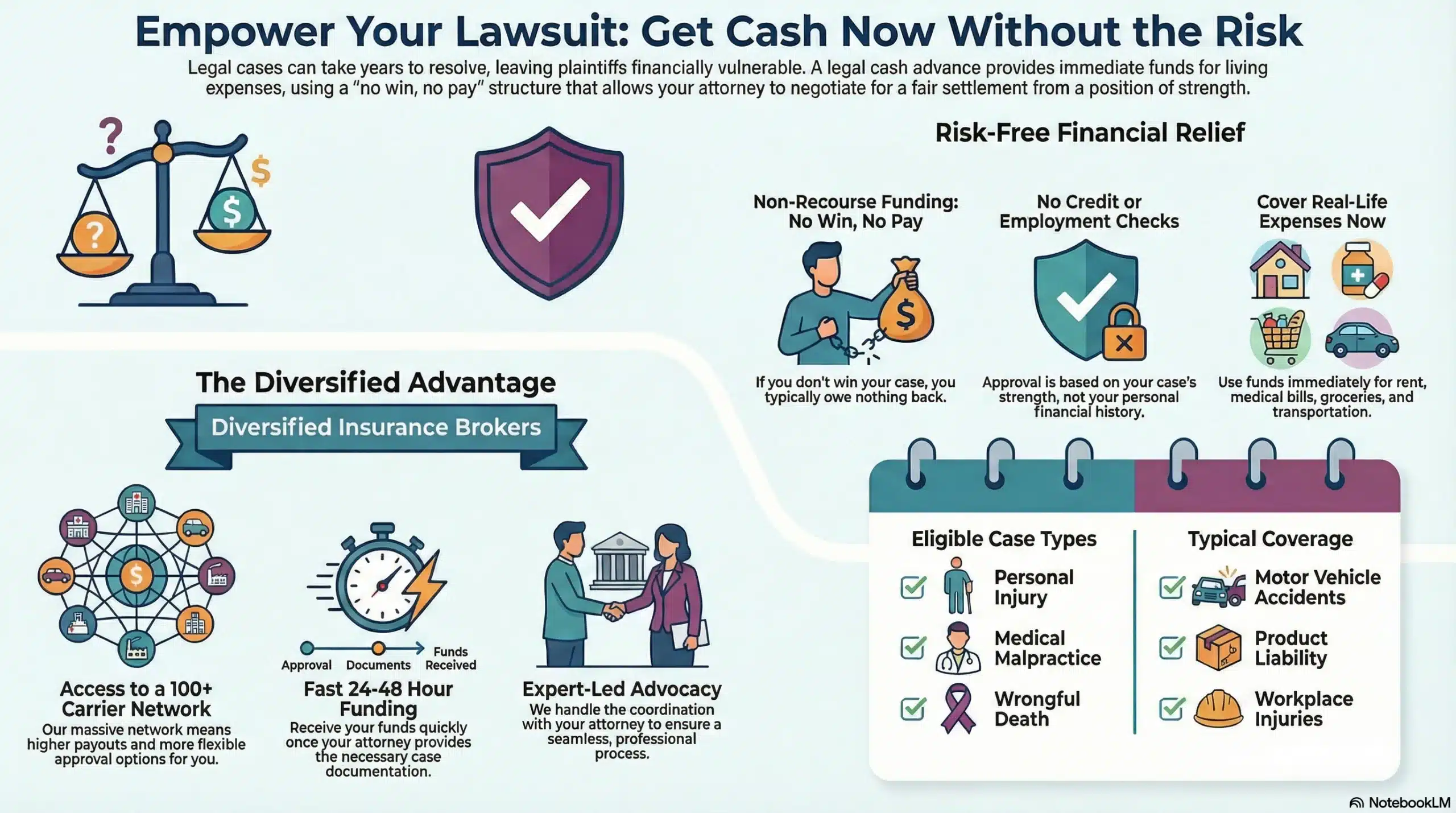
At its core, pre-settlement funding is not a loan in the traditional sense. It is a cash advance against a potential future settlement. Approval is based primarily on the merits of your case, not your credit score, employment history, or debt-to-income ratio. If your case is successful, the funding company is repaid from the settlement proceeds. If you lose, repayment is typically not required. That non-recourse structure is what separates legitimate lawsuit funding from consumer loans. To better understand how the process works from start to finish, you can review How Pre-Settlement Funding Works, which walks through evaluation, approval, and repayment mechanics in detail.
By contrast, a traditional lawsuit loan — if structured as a loan — may involve personal repayment responsibility regardless of outcome. Some financial products marketed as “lawsuit loans” may function more like consumer credit, with fixed repayment obligations. That means even if your case does not settle favorably, you could still owe money. This difference is critical. Non-recourse funding shifts risk to the funding company. Loans shift risk back to you.
Get a Free Case Evaluation for Pre-Settlement Funding
Find out how much you may qualify for with non-recourse lawsuit funding. No upfront costs. No obligation.
Apply for Pre-Settlement FundingAnother major difference involves underwriting. Banks evaluate creditworthiness. Funding companies evaluate case strength. When reviewing a funding request, the provider will typically consult with your attorney to assess liability, damages, insurance coverage limits, and expected settlement range. That evaluation is similar in principle to how financial risk is assessed in other structured financial arrangements — for example, retirement strategies like laddering annuities, where timing and payout expectations influence structure. In both scenarios, the focus is forward-looking: what is likely to happen, and how secure is the expected outcome?
Because repayment depends on the case outcome, funding amounts are typically conservative relative to estimated settlement value. Many providers limit advances to a percentage of projected net recovery. If you want a deeper breakdown of how approval amounts are calculated, How Much Can You Get from Pre-Settlement Funding? explains the evaluation factors that influence funding size.
Cost structure is another area where confusion arises. Pre-settlement funding often uses time-based fee models rather than traditional interest rates. Some agreements use flat fees; others compound periodically. That is why transparency is essential. Plaintiffs should request a clear payoff schedule that shows how the repayment amount grows over time. For a full benefit breakdown, Pre-Settlement Funding Amounts outlines the variables that affect total repayment.
Many critics use the word “loan” to describe all lawsuit funding, which can be misleading. The more accurate distinction is this: a loan requires repayment regardless of outcome; non-recourse funding does not. That structural difference is what makes funding viable for plaintiffs who cannot qualify for traditional credit or who want to avoid personal liability risk. If you are comparing funding to other borrowing options, Pre-Settlement Funding vs. Personal Loans highlights how risk allocation differs between products.
Financial pressure during litigation can significantly impact decision-making. Insurance carriers understand that prolonged hardship may push plaintiffs toward early settlements. Funding can reduce that pressure, allowing your attorney to negotiate without immediate financial strain influencing timing. This strategic leverage component is one reason many plaintiffs explore options like Get Cash Before Your Case Settles when delays extend longer than expected.
Still, funding is not automatically the right choice in every situation. It is important to evaluate alternatives, including structured repayment planning, short-term credit, or asset reallocation. Financial decision-making during uncertainty has parallels in retirement planning — for instance, understanding payout timing in products like What Is a QLAC? requires similar clarity about delayed benefits and risk transfer. In both contexts, timing and cost determine long-term value.
Some plaintiffs worry about tax implications. While lawsuit funding itself is generally not treated as taxable income because it is an advance rather than earned income, settlement taxation can vary depending on case type. For broader financial structuring discussions involving payouts and tax treatment, resources like Annuity Exclusion Ratio Explained illustrate how payout taxation works in other financial frameworks — reinforcing why professional guidance matters when large sums are involved.
Another misconception is that plaintiffs can repeatedly borrow unlimited amounts. In reality, additional advances depend on updated case evaluations and existing balance exposure. For those considering staggered advances, understanding incremental funding logic is critical — similar in concept to staged financial strategies such as Annuity vs. 401(k): Which Is Better for Retirement?, where allocation decisions evolve over time.
Ultimately, the difference between pre-settlement funding and lawsuit loans comes down to structure, risk, and repayment obligation. Non-recourse funding ties repayment strictly to case success. Loans do not. If your case appears strong and financial hardship is mounting, funding can provide breathing room without personal liability exposure. If affordable credit is available elsewhere, comparison shopping may reduce costs. For a comprehensive overview of benefits and drawbacks, Pros and Cons of Pre-Settlement Funding provides balanced analysis.
Avoid Confusion Between Loans and Funding
Understand your options before signing any agreement. Compare structures, costs, and repayment obligations clearly.
Request Funding InformationIf you are actively evaluating options, the safest approach is transparency: review the agreement carefully, confirm non-recourse terms, understand fee growth timelines, and consult your attorney before proceeding. The right funding structure can provide stability and negotiation leverage. The wrong structure can create unnecessary financial burden. Knowing the difference between pre-settlement funding and lawsuit loans ensures you make that decision with clarity rather than urgency.
Talk With an Advisor Today
Choose how you’d like to connect—call or message us, then book a time that works for you.
Schedule here:
calendly.com/jason-dibcompanies/diversified-quotes
Licensed in all 50 states • Fiduciary, family-owned since 1980
In most cases, no. Pre-settlement funding is structured as a non-recourse advance rather than traditional debt. Repayment is typically contingent on winning or settling your case.
No. Approval is usually based on the strength of your legal claim, not your credit score or employment status. Funding companies evaluate liability and potential settlement value.
With properly structured non-recourse funding, you generally owe nothing if you lose your case. This is one of the key differences between funding and traditional loans.
Yes. Funding amounts are typically based on a percentage of your projected net settlement value after attorney fees and costs. Each case is reviewed individually.
Approval can often occur within 24 to 48 hours once your attorney provides necessary documentation. Speed depends on case clarity and communication.
About the Author:
Jason Stolz, CLTC, CRPC and Chief Underwriter at Diversified Insurance Brokers, is a senior insurance and retirement professional with more than two decades of real-world experience helping individuals, families, and business owners protect their income, assets, and long-term financial stability. As a long-time partner of the nationally licensed independent agency Diversified Insurance Brokers, Jason provides trusted guidance across multiple specialties—including fixed and indexed annuities, long-term care planning, personal and business disability insurance, life insurance solutions, and short-term health coverage. Diversified Insurance Brokers maintains active contracts with over 100 highly rated insurance carriers, ensuring clients have access to a broad and competitive marketplace.
His practical, education-first approach has earned recognition in publications such as VoyageATL, highlighting his commitment to financial clarity and client-focused planning. Drawing on deep product knowledge and years of hands-on field experience, Jason helps clients evaluate carriers, compare strategies, and build retirement and protection plans that are both secure and cost-efficient. Visitors who want to explore current annuity rates and compare options across multiple insurers can also use this annuity quote and comparison tool.
