
Short Term Care Insurance Alternatives

Jason Stolz CLTC, CRPC
Short term care insurance alternatives are becoming an increasingly important part of retirement planning conversations because many families discover that short-duration coverage alone does not fully address the financial risks associated with extended care needs. Short-term care (STC) policies are typically designed to help pay for care during recovery periods, often lasting less than a year. While this can be valuable for surgical recovery, rehabilitation, or temporary mobility limitations, many long-term care events do not follow a short timeline. Chronic illness, cognitive decline, and progressive mobility conditions can create care needs that last for years rather than months. Because of this, many retirees begin researching alternatives to short term care insurance that can provide stronger long-term protection and better coordination with retirement income planning.
At Diversified Insurance Brokers, many clients begin their research assuming short-term care coverage will be enough. However, when they begin modeling real-world care timelines, they often discover that the largest financial risk is not the first six months or even the first year of care. The largest financial risk usually occurs when care extends into multiple years, creating sustained monthly cash flow demands that can dramatically accelerate retirement asset withdrawals. When this happens, retirement planning shifts from managing investment growth to managing asset survival. That transition is where many families begin evaluating traditional long-term care insurance, hybrid life and long-term care policies, and annuity-based long-term care funding solutions.
Short-term care coverage can still serve a valuable role. It can act as a bridge during recovery from surgery or illness. It can provide flexibility for temporary in-home care. But most retirees eventually recognize that retirement protection requires planning for the possibility of extended care needs. That realization is what drives interest in long-term solutions designed to protect retirement income, preserve spousal financial stability, and reduce the probability that long-term care costs will drain investment accounts.
Compare Long Term Care Alternatives
Explore stronger protection options than short-term care insurance and protect retirement savings long term.
Request LTC Planning OptionsWhy Many Families Look Beyond Short Term Care Insurance
The primary limitation of short-term care insurance is duration. Most STC policies are structured to cover care needs for a limited period, often around one year or less. While this timeframe can align well with recovery events, it does not always align with real-world long-term care patterns. Many care events evolve slowly. What begins as occasional home assistance can gradually transition into daily care support, assisted living, or memory care. When coverage expires, families are often forced to transition to self-funding strategies at exactly the moment financial pressure increases.
Another major factor is retirement income sustainability. Many retirees design retirement income plans assuming predictable withdrawal rates. Extended care costs can disrupt these plans quickly. When investment accounts are forced to support long-term care expenses, retirees may experience sequence-of-return risk, where withdrawals occur during market downturns. This can permanently reduce portfolio longevity. For retirees who rely on structured retirement accounts, understanding distribution mechanics—such as reviewing how an IRA works—can help illustrate how unexpected care expenses may accelerate required withdrawals.
Many couples also evaluate care risk through the lens of survivorship planning. When one spouse experiences a long-term care event, the financial impact extends beyond care costs alone. The healthy spouse must maintain housing, lifestyle, and personal health expenses while potentially losing Social Security or pension income tied to the ill spouse. This is one of the reasons couples often evaluate coordinated coverage structures such as shared benefit long-term care planning.
The Practical Difference Between Short-Term Care and Long-Term Protection
From a planning standpoint, short-term care insurance is usually designed for recovery events, while long-term care planning strategies are designed for progressive health events. Recovery events are typically predictable in duration. Progressive conditions are not. Progressive conditions include neurological diseases, degenerative mobility conditions, and cognitive disorders that often require increasing levels of care over time.
Families who initially choose short-term coverage often revisit their strategy when they begin evaluating the long-term cost curve of care. Early-stage care may involve limited home support. Mid-stage care often includes assisted living or structured in-home care. Advanced-stage care may involve full-time supervision or skilled nursing support. Each stage typically increases cost and care intensity.
When evaluating longer-duration protection, some retirees explore policies designed for lifetime care scenarios, including options such as long-term care insurance with lifetime benefits. These designs are not always necessary for every retiree, but they demonstrate how long-term care planning can be structured differently than short-term recovery protection.
Major Categories of Short Term Care Insurance Alternatives
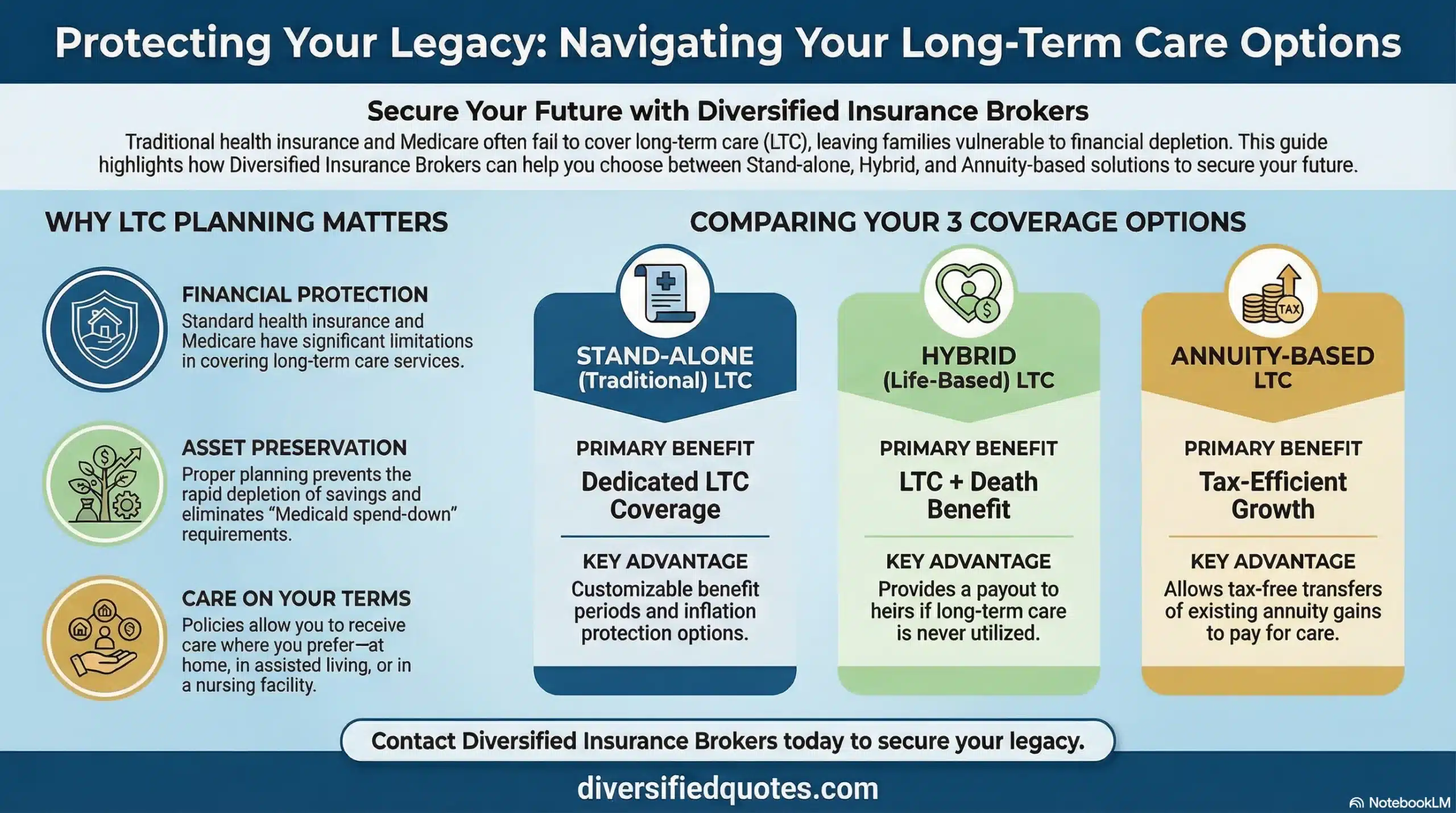
There is no universal “best” alternative to short-term care insurance. The right strategy depends on health history, asset structure, retirement income sources, and planning priorities. However, most alternatives fall into three primary planning categories: traditional long-term care insurance, hybrid life and long-term care policies, and annuity-based long-term care funding strategies.
Traditional Long-Term Care Insurance
Traditional long-term care insurance is designed specifically to fund extended care events. These policies typically provide monthly or daily benefit limits, elimination periods, and total benefit pools designed to last multiple years. Many policies allow inflation protection riders that help benefits keep pace with rising care costs.
Traditional LTC insurance is often strongest when underwriting is favorable and when applicants want maximum insurance leverage relative to premium. These policies can be particularly effective for individuals focused on protecting retirement assets against catastrophic multi-year care events. Many retirees also evaluate tax efficiency alongside coverage structure. In certain scenarios, reviewing resources such as tax advantages of long-term care insurance can help illustrate how LTC coverage may integrate into broader retirement tax planning.
Hybrid Life Insurance and Long-Term Care Policies
Hybrid policies combine permanent life insurance with long-term care benefits. The core appeal is dual-use value. If long-term care is needed, the policy provides LTC benefits. If care is never needed, beneficiaries receive a death benefit. Many hybrid policies also emphasize premium stability, which is attractive for retirees who prefer predictable long-term planning.
Some hybrid structures are funded through scheduled premiums. Others allow repositioning assets into single-pay or limited-pay structures. These designs often appeal to retirees who want to reposition lower-yield assets into multi-purpose protection strategies. Some families compare these options alongside strategies such as return-of-premium long-term care planning to evaluate different “value preservation” approaches.
Annuities With Long-Term Care Riders or Multipliers
Annuity-based long-term care strategies are another major category of short-term care alternatives. These designs typically involve repositioning an existing asset into an annuity structure that can increase available benefits when qualified long-term care is needed. Instead of paying ongoing premiums for pure insurance, retirees often reposition existing assets into structures that can create larger care benefit pools.
For many retirees, the appeal is asset retention. The annuity remains an asset with potential growth or income functionality. The LTC component enhances available benefits during care events. For retirees already evaluating retirement income strategies, reviewing broader annuity planning concepts through resources such as the annuities planning hub can help illustrate how annuities can integrate into retirement income and care funding simultaneously.
The Role of Self-Funding in Long-Term Care Planning
Some retirees choose to self-fund care costs using designated retirement assets. Self-funding can work well when asset levels are high enough to absorb multi-year care events without compromising retirement income security. However, many retirees underestimate care duration risk and overestimate how comfortable large withdrawals feel during market volatility.
When self-funding is used effectively, it is typically part of a structured plan. Assets designated for care are identified in advance. Tax consequences are modeled. Spousal income protection is evaluated. Self-funding is most effective when it is intentional rather than reactive.
Build a Stronger Long-Term Care Plan
Compare traditional LTC, hybrid policies, and annuity-based strategies side by side.
Request LTC Planning OptionsInflation and Long-Term Care Cost Planning
One of the most underestimated factors in long-term care planning is inflation. Care costs historically increase faster than general inflation because care is labor-intensive. Staffing ratios, regulatory compliance, and specialized care training all contribute to rising costs over time. Policies that include benefit growth features can help maintain purchasing power decades into retirement.
How Long-Term Care Planning Supports Retirement Income Stability
Long-term care planning works best when integrated into retirement income design. Some retirees pair LTC coverage with guaranteed income strategies. Others use LTC coverage to protect investment assets so those assets can remain allocated toward growth or income generation rather than emergency care funding.
Many retirees evaluate how care planning interacts with government retirement programs and structured retirement accounts. Reviewing retirement income sources such as TSP retirement income mechanics can help illustrate how care events may change withdrawal strategies over time.
Choosing the Right Alternative Strategy
The right long-term care strategy depends on multiple factors, including age, health, retirement income stability, asset levels, and planning priorities. Some retirees prioritize maximum insurance leverage. Others prioritize asset repositioning. Others prioritize dual-use value structures that provide benefits regardless of care need outcomes.
Comparing strategies side by side is often the fastest way to determine which approach aligns with long-term planning goals. Many retirees evaluate benefit duration, premium structure, underwriting complexity, inflation options, and legacy planning outcomes when comparing alternatives.
Protect Retirement Assets From Long-Term Care Risk
Build a personalized strategy using traditional LTC, hybrid solutions, or asset-based planning.
Request LTC Planning OptionsRelated Long-Term Care Planning Pages
Explore additional strategies for protecting retirement income and long-term care funding.
Talk With an Advisor Today
Choose how you’d like to connect—call or message us, then book a time that works for you.
Schedule here:
calendly.com/jason-dibcompanies/diversified-quotes
Licensed in all 50 states • Fiduciary, family-owned since 1980
Short-Term Care Insurance Alternatives — FAQs
What is short-term care insurance?
Who is a good fit for short-term care or its alternatives?
What are the best alternatives to short-term care insurance?
• Hybrid life + LTC policies (LTC benefits plus a death benefit if care isn’t used).
• Annuity + LTC solutions with care multipliers or LTC riders.
• Self-funding with earmarked assets (best with a clear plan).
• Chronic/critical illness strategies (useful in some cases, but not always a full LTC substitute).
How do hybrid life + LTC policies compare to short-term care?
How does an annuity + LTC solution work?
Are critical or chronic illness policies useful for care costs?
What about self-funding or using savings?
How do underwriting and eligibility differ?
What features should I compare across options?
Can I layer multiple strategies?
About the Author:
Jason Stolz, CLTC, CRPC and Chief Underwriter at Diversified Insurance Brokers (NPN 20471358), is a senior insurance and retirement professional with more than two decades of real-world experience helping individuals, families, and business owners protect their income, assets, and long-term financial stability. As a long-time partner of the nationally licensed independent agency Diversified Insurance Brokers, Jason provides trusted guidance across multiple specialties—including fixed and indexed annuities, long-term care planning, personal and business disability insurance, life insurance solutions, Group Health, and short-term health coverage. Diversified Insurance Brokers maintains active contracts with over 100 highly rated insurance carriers, ensuring clients have access to a broad and competitive marketplace.
His practical, education-first approach has earned recognition in publications such as VoyageATL, highlighting his commitment to financial clarity and client-focused planning. Drawing on deep product knowledge and years of hands-on field experience, Jason helps clients evaluate carriers, compare strategies, and build retirement and protection plans that are both secure and cost-efficient. Visitors who want to explore current annuity rates and compare options across multiple insurers can also use this annuity quote and comparison tool.
