
The Role of Life Insurance in Modern Estate Planning
Most people think of life insurance as simple income replacement—but for affluent families, retirees, and business owners, it can be one of the most powerful estate planning tools available. In today’s tax and regulatory environment, life insurance is not just about protecting dependents; it is about creating liquidity, preserving wealth, transferring assets efficiently, and ensuring your legacy passes exactly the way you intend. When structured properly, permanent life insurance can provide tax-advantaged growth, creditor protection in many states, estate equalization, charitable leverage, and strategic flexibility that few other financial tools can match. The key is not just owning a policy—but designing it correctly within the context of your broader financial plan.

High-net-worth families often face a common problem: illiquid estates. Real estate holdings, closely held businesses, retirement accounts, and investment portfolios may create significant value on paper—but taxes and expenses can come due immediately at death. Without proper planning, heirs may be forced to liquidate assets at unfavorable times. A properly structured permanent life insurance policy can create immediate liquidity at death, providing funds to pay estate taxes, settle debts, fund trusts, or equalize inheritances between children who may or may not be involved in a family business. For example, one child may inherit the operating company, while another receives life insurance proceeds of equal value—avoiding conflict while preserving the business intact.
Business owners in particular rely on life insurance as a strategic planning cornerstone. Policies are commonly used to fund buy-sell agreements, ensuring that if one partner dies, the surviving owners can purchase the deceased partner’s shares without financial strain. Life insurance is also used for key-person protection, providing capital to stabilize operations, reassure lenders, and recruit replacement leadership. For succession planning, permanent coverage can provide liquidity to transition ownership in a tax-efficient manner. If you are evaluating how coverage integrates into business planning, you may also want to compare structures such as Group vs. Individual Life Insurance to understand ownership and portability considerations.
Estate planning strategies frequently involve irrevocable life insurance trusts (ILITs), dynasty trusts, and charitable planning vehicles. When life insurance is owned outside of your taxable estate, proceeds may pass income-tax free and potentially estate-tax free, depending on structure. This creates a powerful multiplier effect—transforming premium dollars into significantly larger tax-advantaged wealth transfers. For individuals concerned about insurability due to medical history, underwriting strategy matters. Conditions that once limited approval may still qualify today depending on carrier guidelines. We routinely assist clients navigating complex underwriting cases such as Life Insurance with Pre-Existing Conditions to secure competitive offers.
Permanent life insurance also offers meaningful living benefits. Unlike term coverage, policies such as whole life or indexed universal life can accumulate cash value that grows tax-deferred. When structured appropriately and managed carefully, that cash value can be accessed through policy loans, creating supplemental retirement income without triggering traditional income tax in many cases. This strategy is sometimes used alongside retirement vehicles or as a hedge against future tax increases. For clients evaluating protection amounts and term options before transitioning into permanent coverage, tools like the Term Life Insurance Calculator can help establish a baseline.
Beyond retirement income, policy cash values may provide emergency liquidity, bridge funding opportunities, or supplemental long-term care planning flexibility. While life insurance is not a replacement for comprehensive long-term care coverage, certain policy riders can help offset care-related expenses. For individuals in higher-risk professions who may be concerned about underwriting outcomes, reviewing options such as Life Insurance for High-Risk Occupations can clarify how carriers assess occupational risk.
Another powerful application is estate equalization. When estates contain concentrated assets—such as commercial real estate, farms, or private businesses—dividing those assets evenly may be impractical. Life insurance can provide equalizing cash distributions so that heirs receive equitable value without forcing asset sales. Similarly, charitable individuals can leverage policies to amplify gifts. By naming a charity as beneficiary or funding policies within charitable structures, donors can often create a larger legacy gift than direct contributions alone.
For retirees, life insurance may also serve as pension maximization protection. When electing a single-life pension payout for higher monthly income, a permanent life policy can protect the surviving spouse if the pension stops at death. Likewise, for individuals evaluating annuity income strategies, reviewing current fixed options at Current Annuity Rates can help coordinate guaranteed income planning alongside legacy objectives.
Underwriting and policy design are critical. Premium structure, rider selection, loan provisions, and ownership details all influence long-term performance. Policies must be stress-tested against interest rate fluctuations, funding changes, and longevity assumptions. Many individuals own older policies that may benefit from review—either due to internal cost shifts or because modern products offer stronger guarantees and flexibility. A second opinion can often uncover opportunities to improve efficiency or reduce risk.
Protect Your Legacy With a Customized Strategy
At Diversified Insurance Brokers, we take a holistic approach to Life Insurance Services. We collaborate with estate attorneys, CPAs, and financial advisors to ensure policies integrate seamlessly into your broader financial architecture. Whether your objective is estate tax mitigation, business continuity, charitable planning, or retirement income efficiency, our role is to design coverage that aligns with measurable goals—not generic assumptions.
Related Pages
Financial Protection Essentials
Explore annuity interest examples across different investment sizes along with professional disability insurance options and long-term care planning resources.
Talk With an Advisor Today
Choose how you’d like to connect—call or message us, then book a time that works for you.
Schedule here:
calendly.com/jason-dibcompanies/diversified-quotes
Licensed in all 50 states • Fiduciary, family-owned since 1980
FAQs: Life Insurance in Estate Planning
How does life insurance help in estate planning?
Life insurance provides immediate, tax-free liquidity that can pay estate expenses, debts, and taxes without forcing heirs to sell assets. It can also equalize inheritances among beneficiaries and create a guaranteed legacy.
Is life insurance included in my taxable estate?
Yes—unless it is owned by an Irrevocable Life Insurance Trust (ILIT). Many families use ILITs to remove the death benefit from their taxable estate. Your advisor can help determine whether an ILIT fits your goals.
What type of life insurance is best for estate planning?
Permanent policies such as whole life and guaranteed universal life are commonly used because they provide lifetime coverage. Indexed universal life may also be used when cash value accumulation is desirable.
Can life insurance help cover estate taxes?
Yes. Life insurance is one of the most efficient ways to fund estate taxes, providing heirs with tax-free cash exactly when it’s needed. Many high-net-worth families use policies specifically for tax-liquidity planning.
What is a survivorship (second-to-die) life insurance policy?
This type of policy insures two people—usually spouses—and pays out after the second death. It is often used for estate tax planning because liabilities typically arise after both spouses have passed.
Can life insurance be used to equalize inheritances?
Yes. Life insurance can provide an equal value to heirs when one child receives a business, property, or other illiquid asset. This avoids conflict while keeping the estate intact.
Can life insurance protect a family business?
Absolutely. Policies can fund buy-sell agreements, ensure smooth ownership transitions, and provide cash to keep operations running. Learn more on our Key Person Insurance page.
How do I know how much coverage I need for estate planning?
Your coverage amount depends on projected estate taxes, liquidity needs, business considerations, and legacy goals. Many families use life insurance calculators to estimate needs and then review options with an advisor.
About the Author:
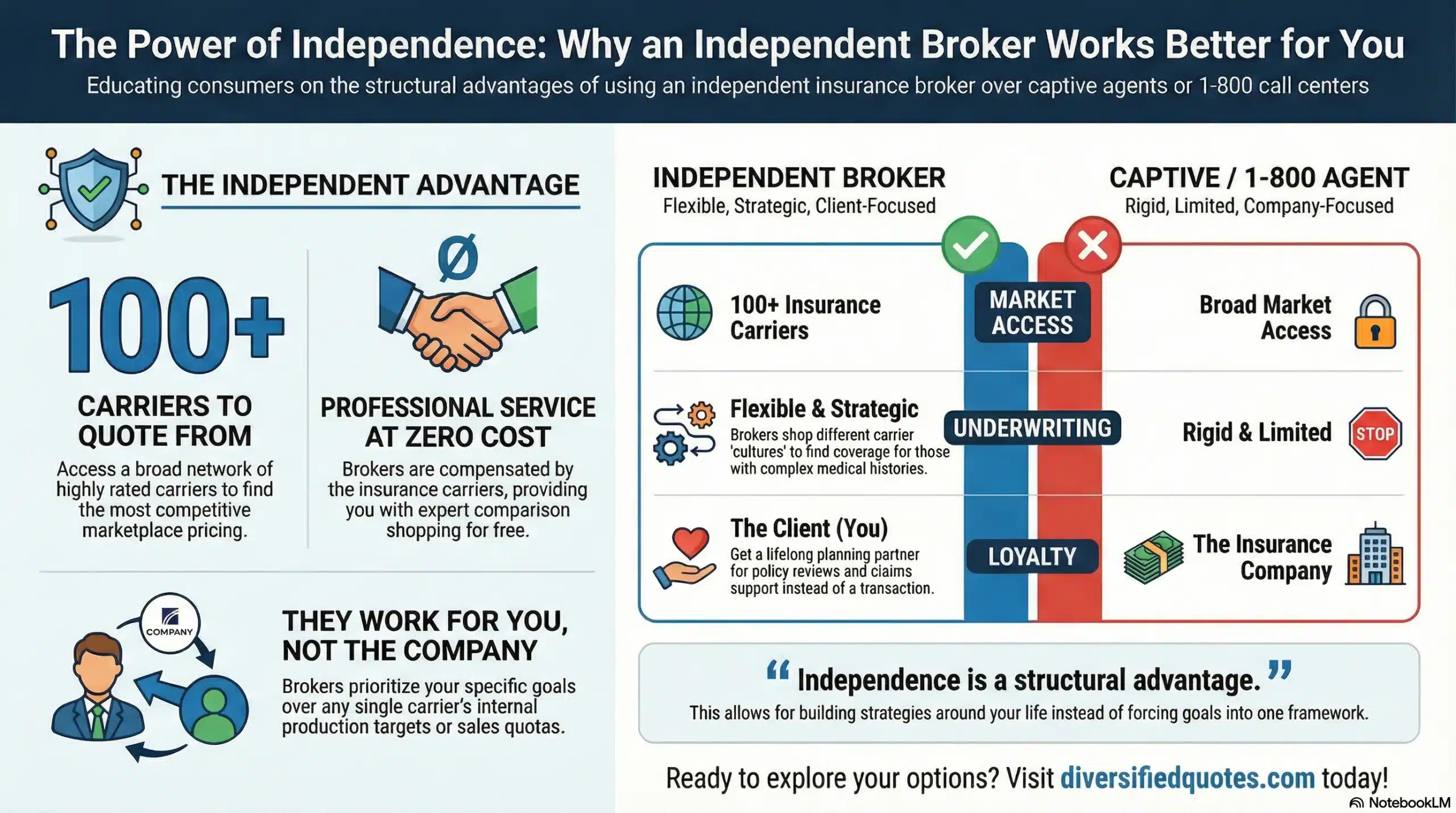
Jason Stolz, CLTC, CRPC and Chief Underwriter at Diversified Insurance Brokers (NPN 20471358), is a senior insurance and retirement professional with more than two decades of real-world experience helping individuals, families, and business owners protect their income, assets, and long-term financial stability. As a long-time partner of the nationally licensed independent agency Diversified Insurance Brokers, Jason provides trusted guidance across multiple specialties—including fixed and indexed annuities, long-term care planning, personal and business disability insurance, life insurance solutions, and short-term health coverage. Diversified Insurance Brokers maintains active contracts with over 100 highly rated insurance carriers, ensuring clients have access to a broad and competitive marketplace.
His practical, education-first approach has earned recognition in publications such as VoyageATL, highlighting his commitment to financial clarity and client-focused planning. Drawing on deep product knowledge and years of hands-on field experience, Jason helps clients evaluate carriers, compare strategies, and build retirement and protection plans that are both secure and cost-efficient. Visitors who want to explore current annuity rates and compare options across multiple insurers can also use this annuity quote and comparison tool.
