
Best Independent Group Health Broker

Jason Stolz CLTC, CRPC
Best independent group health broker is not a title you earn by quoting one carrier faster than another. It is earned by helping employers make smarter decisions in a marketplace that changes constantly—without pushing a one-size-fits-all plan or forcing a renewal increase to feel “inevitable.” Group health insurance is often the single largest employee benefit expense for a business, and it can also be one of the most emotional decisions leadership teams face. When premiums rise year after year, employees get frustrated. When plans are confusing, employees disengage. When networks change unexpectedly, trust erodes. The right broker makes group health easier to manage, easier to explain, and more sustainable over time.
At Diversified Insurance Brokers, we operate as an independent group health brokerage. That independence matters because it changes who we work for. Our loyalty is to your business and your workforce, not to a carrier’s production targets or a limited carrier shelf. We compare plans across multiple carriers and funding models, and we help employers choose a plan structure that fits their goals today while still giving them options at renewal. In other words, we don’t treat group health like a once-a-year transaction. We treat it like a long-term strategy that influences employee retention, company culture, and financial stability.
This page explains what an independent group health broker actually does, why independence matters, how the best brokers approach renewals, how funding models such as level funding and partial self-funding can change outcomes, and what to look for when choosing a broker you can stay with long term. If you are tired of surprise renewals, limited plan choices, or brokers who “disappear” after open enrollment, the goal here is to give you a clearer framework for choosing a broker that operates as an advocate—not a salesperson.
Compare Group Health Options With an Independent Broker
Tell us your goals and what’s frustrating about your current plan. We’ll show the carrier and funding options that may fit better.
Request a Group Health ReviewWhat Does an Independent Group Health Broker Do?
An independent group health broker acts as your advocate in the employer health insurance marketplace. The role is broader than “finding a plan.” A strong broker helps you evaluate the structure of your current benefits, explains why costs are moving, markets your plan to appropriate carriers, and helps you select a design that balances premium, out-of-pocket exposure, and employee experience. Independence matters because a broker who is not tied to one carrier can bring you more than one answer when your plan stops working.
In practice, an independent broker’s job includes gathering accurate census information, understanding your workforce demographics, confirming eligibility and participation requirements, helping you choose employer contribution strategy, comparing plan designs, and supporting enrollment logistics. It also includes ongoing service—answering employer questions, helping employees navigate benefits, and supporting plan changes or life events. Most importantly, it includes renewal planning that starts early rather than becoming a last-minute scramble.
At Diversified Insurance Brokers, we also help employers understand how different plan structures change long-term outcomes. Some employers want the simplicity of a fully insured group plan. Some employers want greater transparency and more control over how claims dollars are used. Some employers want alternative funding models that preserve comprehensive coverage while improving predictability. Because we are independent, we can bring those options to the table instead of forcing every employer into the same template.
If you want a broader overview of employer coverage structures, start with Group Medical Insurance, which provides a foundational view of how group options differ from individual coverage approaches.
Why Independence Matters in Group Health Insurance
Many businesses believe they are working with an “independent broker” when the broker is effectively tied to one or two carriers. Sometimes that relationship exists because the broker only has limited appointments. Other times it exists because the broker is influenced by internal agreements, volume incentives, or service models that make it inconvenient to shop more broadly. The employer experiences the result as limited choices, slow quoting, and renewal conversations that feel pre-determined.
Independence matters because group health is not static. Carrier appetite changes. Network competitiveness changes. Underwriting and rating models shift. A plan that was strong two years ago can become uncompetitive quickly. A captive or constrained broker may have no practical alternative other than asking the employer to accept increases or reduce benefits. An independent broker can market the plan more broadly and evaluate multiple strategies when the current carrier stops being the best fit.
Independence also matters when a company wants to explore different funding approaches. Many employers never hear about level-funded or partially self-funded options because their broker does not present them or does not have a process for explaining them clearly. The best independent brokers present options in plain language and help employers decide whether the added strategy is worth it.
Group Health Planning Is More Than Picking a Policy
Employers often approach group health with one urgent question: “How do we lower premiums?” That question matters, but the best outcome usually comes from asking better questions: What benefits does the workforce actually value? Where is the plan creating friction? Are employees avoiding care because of out-of-pocket exposure? Are network limitations causing dissatisfaction? Is prescription coverage driving unexpected costs? Are deductibles too high for your workforce profile? Are renewal increases happening because of plan structure, claims trends, or market competition?
An independent group health broker helps employers answer these questions by starting with how the plan is being used. That may include reviewing plan design, identifying benefit pain points, and understanding employee distribution across states or regions. From there, the broker can compare alternative plan designs, alternative networks, and alternative funding structures that better fit the employer’s goals.
This is also where the employer’s contribution strategy matters. A plan that is technically “affordable” on paper can still feel unacceptable if employees believe it is confusing or hard to use. The best brokers help employers design a plan that employees understand and value, because employee engagement is a major factor in long-term satisfaction and retention.
How Independent Brokers Evaluate Funding Models
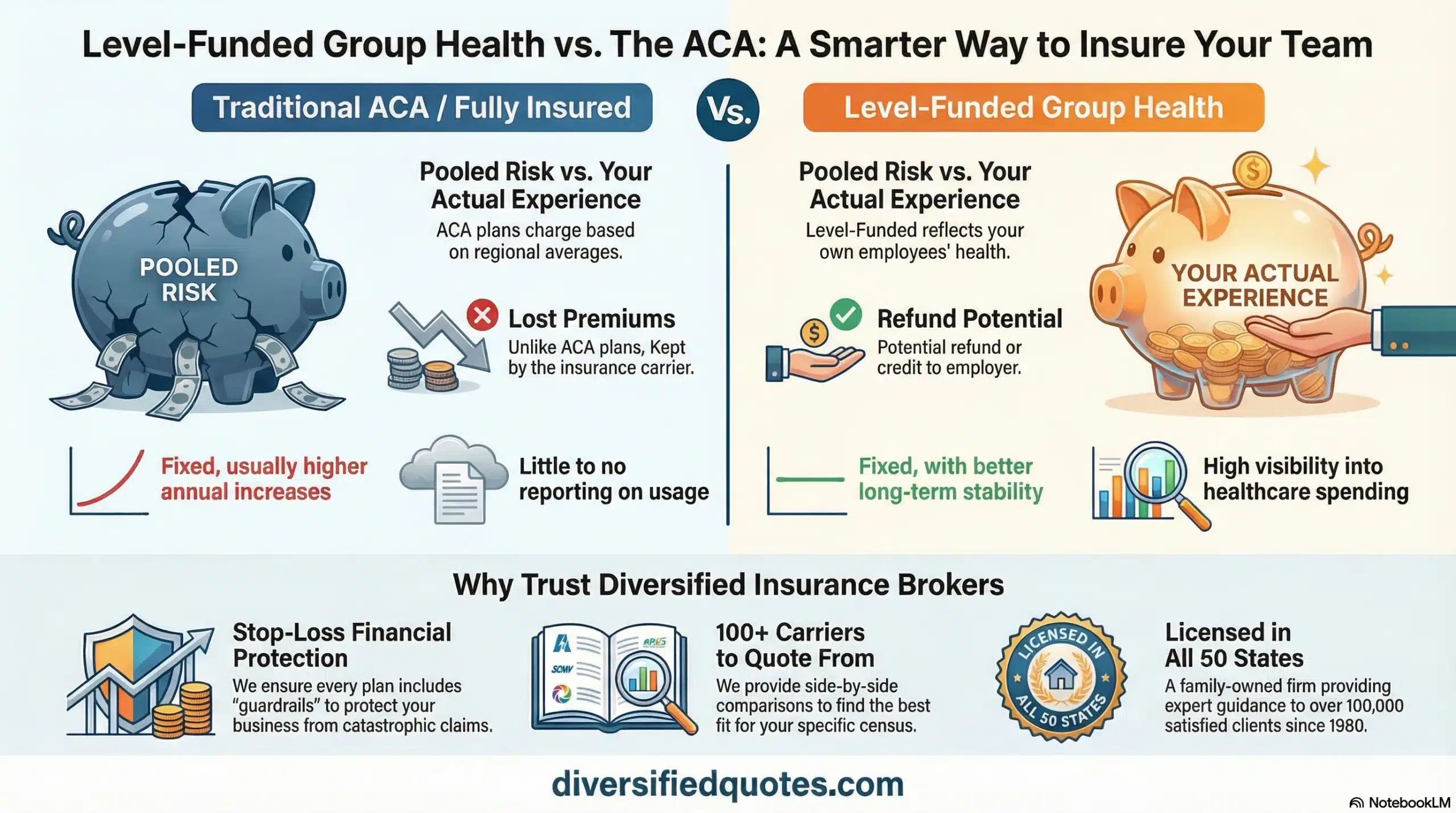
Many employers assume group health means fully insured coverage. Fully insured plans can be a solid fit, especially for employers that want maximum simplicity and predictable monthly costs. However, the fully insured structure also bundles claims risk pricing, carrier margin, and administrative costs into one premium. Employers often feel like they have little control over that bundle, especially when renewals increase without a clear explanation.
This is why many independent brokers present modern funding models, such as level-funded and partially self-funded plans, as alternatives. These designs preserve the group health structure while changing how claims dollars are treated and how risk is managed. Employers often like these options because they can improve transparency and sometimes create opportunities to benefit when claims run favorably.
If you want the foundational explanation of alternative funding structures, review What Is Self-Funded Group Health Insurance?. It explains the mechanics clearly and helps employers understand why these models are often positioned as a path to more control.
Many employers also want to understand the practical reason for choosing level funding. The page Why Choose Group Level Funding provides context on why some employers prefer a structure that combines predictable monthly payments with self-funded mechanics.
Why Employee Experience and Retention Matter
Group health is not only a cost item. It is one of the strongest signals employees receive about how the company values them. When benefits are confusing, employees assume the company “checked a box” rather than offering a thoughtful plan. When networks are too narrow, employees feel trapped. When out-of-pocket exposure is too high, employees delay care and become frustrated. When renewal changes are not communicated clearly, employees blame the employer—even if the employer had limited options.
The best independent group health brokers focus on how employees actually experience their benefits. That means evaluating provider access, prescription design, common utilization patterns, and the employee’s understanding of the plan. It also means helping employers communicate benefits in plain language so employees know what they have and how to use it.
Employee experience also connects directly to retention. When employees are comparing job offers, healthcare is often one of the top decision factors. A strong group health plan can reduce turnover, especially in competitive labor markets. The cost of replacing employees is often higher than modest benefit improvements. The best brokers help employers frame group health decisions as part of overall retention strategy rather than treating benefits as an isolated expense.
Supporting Compliance and Employer Responsibility
Group health benefits come with real responsibilities. Eligibility definitions, participation thresholds, required notices, and enrollment documentation all matter. Employers that treat group health as “set it and forget it” can create compliance and administrative risk without realizing it. That is why broker support matters beyond quoting.
An independent broker helps employers keep the plan running smoothly throughout the year, not just during open enrollment. That includes helping with onboarding and terminations, qualifying life events, dependent changes, and plan questions that arise as employees use benefits. It also includes helping the employer maintain clean plan records and navigate changes when the business grows, adds locations, or expands into additional states.
For employers who are still determining when group coverage becomes feasible or what minimum thresholds apply, Minimum Employees for Group Health Insurance can help clarify how eligibility is usually evaluated.
Renewal Strategy and Long-Term Cost Control
The most common employer frustration in group health is renewal shock. Employers get a rate increase late in the year, there is little time to respond, and the only options feel like “pay more” or “reduce benefits.” A strong independent broker approaches renewals differently. Renewals are treated as a process that starts early, not a document that arrives in the mail.
Strong brokers review plan performance and market competitiveness well before the renewal deadline. They help employers understand what is driving increases, whether claims trends are truly the issue, and whether the carrier is still competitive in the market. If the current plan is no longer the best fit, an independent broker can market the group to alternative carriers and evaluate plan designs that could reduce volatility. The broker can also evaluate funding model changes if the employer wants more control.
Employers often want clarity on common questions that come up during plan selection and renewal. The resource Top Questions Employers Ask About Group Health Insurance can be helpful for setting expectations and understanding what the broker should be addressing proactively.
How to Identify the Best Independent Group Health Broker
If you are searching for the best independent group health broker, it helps to know what to look for beyond marketing claims. The best brokers explain plan differences in plain language. They show their work. They present multiple strategies rather than one quote. They discuss renewal planning early. They can support multi-state needs if your workforce is distributed. They know how participation and contribution rules affect eligibility. They can explain level funding and stop-loss without turning the conversation into a technical lecture. They have a process for employee communication so the plan is actually used effectively.
It also matters how the broker supports you after enrollment. Many employers have experienced the “vanishing broker” problem, where the broker is responsive during quoting but difficult to reach after the plan is issued. The best brokers provide ongoing service and treat the employer relationship as long term.
Independence also means the broker is comfortable telling you the truth. Sometimes a plan is not the right fit. Sometimes a funding model is too aggressive. Sometimes the best move is to simplify. The best brokers are not trying to force a product. They are trying to build a sustainable benefit strategy.
Who Benefits Most From an Independent Group Health Broker?
Independent brokerage is valuable for employers of all sizes, but it becomes especially valuable when the employer feels “stuck.” Stuck can mean rising premiums, limited carrier options, poor service, confusing plan designs, or a workforce that is changing faster than the current plan can accommodate. Growing companies often benefit because their eligibility and plan options expand as headcount increases, and they need a broker who can adjust strategy as the business evolves.
Multi-state employers benefit because network considerations and plan administration become more complex. Employers with diverse workforce demographics benefit because one plan design rarely fits everyone equally well. Employers who want transparency benefit because independent brokers can explain the pricing, the funding model, and the tradeoffs in a way that supports better decisions.
Independent brokerage is also valuable for micro-groups that need eligibility confirmation and documentation support. Some of the strongest value a broker can provide to small teams is preventing wasted time by confirming what the carrier will require before quoting begins.
Why Businesses Choose Diversified Insurance Brokers
Diversified Insurance Brokers is a family-owned insurance agency founded in 1980. We serve businesses nationwide and focus on building group health strategies that balance cost control, employee satisfaction, and long-term sustainability. Our independence allows us to compare across carriers and funding models, and our consultative approach helps employers understand their options without being pressured into a one-carrier answer.
Employers choose us because we explain complex issues in plain language and help them build plans they can actually keep. We also focus heavily on renewal strategy, because the real value of group health is not getting issued—it is renewing with confidence. When a business works with an independent broker who plans ahead, the employer can avoid last-minute surprises and make decisions on purpose.
If you are looking for a broker who treats group health as a strategic business decision, the next step is a structured comparison. We’ll start with your goals, confirm eligibility and participation realities, then show you what the market can actually offer.
Improve Your Renewal Strategy
If your renewal increases feel inevitable, we’ll show the market options and funding designs that can change the conversation.
Request a Renewal ReviewWhat to Expect When Working With an Independent Broker
A strong broker relationship begins with discovery. The employer’s goals matter. A plan built for the lowest possible premium may not support retention. A plan built for the richest benefits may not be financially sustainable. The best approach is usually a balance: a structure the company can afford, employees can understand, and leadership can renew without constant disruption.
From there, a good broker markets the plan strategically. That means selecting carriers and funding models that are realistic given the employer’s size and geography. It also means presenting options in a way that supports decision-making rather than overwhelm. The goal is to help the employer choose with clarity, not to drown the employer in spreadsheets without context.
Once the plan is selected, the broker helps implementation go smoothly. Employee communication matters. Enrollment logistics matter. Clean documentation matters. And after the plan is active, ongoing service matters. The best broker is available when employees have questions and when leadership needs to make changes throughout the year.
Finally, the best brokers manage renewals proactively. That means planning months in advance, reviewing market competitiveness, and ensuring the employer never feels trapped by timing.
Work With an Independent Advocate
Get clear options, better service, and a benefits strategy you can renew with confidence.
Start a Group Health ConversationRelated Group Health Pages
Explore more employer health planning topics and group funding strategies.
Financial Protection Essentials
Core strategies to protect income, navigate Social Security benefits, and secure financial stability through every stage of life.
Talk With an Advisor Today
Choose how you’d like to connect—call or message us, then book a time that works for you.
Schedule here:
calendly.com/jason-dibcompanies/diversified-quotes
Licensed in all 50 states • Fiduciary, family-owned since 1980
FAQs: Best Independent Group Health Broker
What is an independent group health broker?
An independent group health broker represents multiple insurance carriers and works on behalf of the employer, not a single insurance company. This allows for unbiased plan comparisons and broader access to coverage options.
Is there a cost to use a group health broker?
In most cases, broker compensation is built into group health premiums, meaning employers do not pay additional fees for brokerage services.
Can a broker help reduce group health insurance costs?
Yes. Independent brokers can compare carriers, adjust plan design, and explore alternative funding strategies to help control long-term costs.
Do brokers assist after enrollment?
Ongoing support is a key benefit of working with an independent broker. This includes plan changes, claims support, renewals, and compliance assistance.
Can small businesses use a group health broker?
Absolutely. Small businesses often benefit the most from independent guidance, especially when navigating first-time group coverage or rising renewal rates.
About the Author:
Jason Stolz, CLTC, CRPC and Chief Underwriter at Diversified Insurance Brokers (NPN 20471358), is a senior insurance and retirement professional with more than two decades of real-world experience helping individuals, families, and business owners protect their income, assets, and long-term financial stability. As a long-time partner of the nationally licensed independent agency Diversified Insurance Brokers, Jason provides trusted guidance across multiple specialties—including fixed and indexed annuities, long-term care planning, personal and business disability insurance, life insurance solutions, Group Health, and short-term health coverage. Diversified Insurance Brokers maintains active contracts with over 100 highly rated insurance carriers, ensuring clients have access to a broad and competitive marketplace.
His practical, education-first approach has earned recognition in publications such as VoyageATL, highlighting his commitment to financial clarity and client-focused planning. Drawing on deep product knowledge and years of hands-on field experience, Jason helps clients evaluate carriers, compare strategies, and build retirement and protection plans that are both secure and cost-efficient. Visitors who want to explore current annuity rates and compare options across multiple insurers can also use this annuity quote and comparison tool.
