
Divorced Spousal Benefits Timing

Divorced spousal benefits timing can dramatically influence your lifetime Social Security income if you were married for at least ten years and are now divorced. Divorced spousal benefits timing determines not only how much you may receive monthly, but also how benefits interact with your own retirement benefit, earnings, Medicare enrollment, and long-term retirement income stability. Many people assume divorced Social Security benefits are automatic or simple, but divorced spousal benefits timing is one of the most misunderstood areas of retirement planning. Small timing decisions can permanently change benefit levels for life.
Divorced spousal benefits timing is especially important today because Social Security rules changed for most modern retirees. Strategies that worked for earlier generations may no longer apply because of deemed filing rules. However, exceptions still exist for certain birth years, and survivor benefit rules operate differently. Understanding how divorced spousal benefits timing works today is essential to avoid accidentally locking into lower lifetime income.
For many households, divorced spousal benefits timing is not just about Social Security itself. It becomes a broader retirement income decision. Timing can influence when you withdraw from retirement accounts, when you enroll in Medicare, how taxes affect your income, and how stable your guaranteed income floor is during retirement. That is why divorced spousal benefits timing is often evaluated alongside retirement income planning rather than treated as a standalone decision.
Review Your Divorced Spousal Benefits Timing Strategy
We verify eligibility, model filing ages, and coordinate Social Security with Medicare, taxes, and retirement income planning.
Social Security Planning Services Maximize Social Security Benefits
Divorced Spousal Benefits Timing: Eligibility Requirements
Divorced spousal benefits timing starts with eligibility. To qualify for divorced spousal benefits, your marriage must have lasted at least ten years. The ten-year rule is strict. Even a difference of a few months can eliminate eligibility. This makes divorced spousal benefits timing especially important for people who divorced near the ten-year mark.
Divorced spousal benefits timing also depends on your current marital status. In most cases, you must be currently unmarried to claim divorced spousal benefits based on a living former spouse. If you remarry, divorced spousal benefits eligibility typically ends. However, divorced spousal benefits timing interacts differently with survivor benefits, where remarriage rules can change eligibility depending on age.
Another key factor in divorced spousal benefits timing is age. You generally must be at least age 62 to claim divorced spousal benefits. Your former spouse must also be at least 62. If you have been divorced for at least two years, you may qualify as an independently entitled divorced spouse. This allows divorced spousal benefits timing flexibility because you can claim even if your former spouse has not yet filed for Social Security.
How Divorced Spousal Benefits Timing Determines Benefit Amount
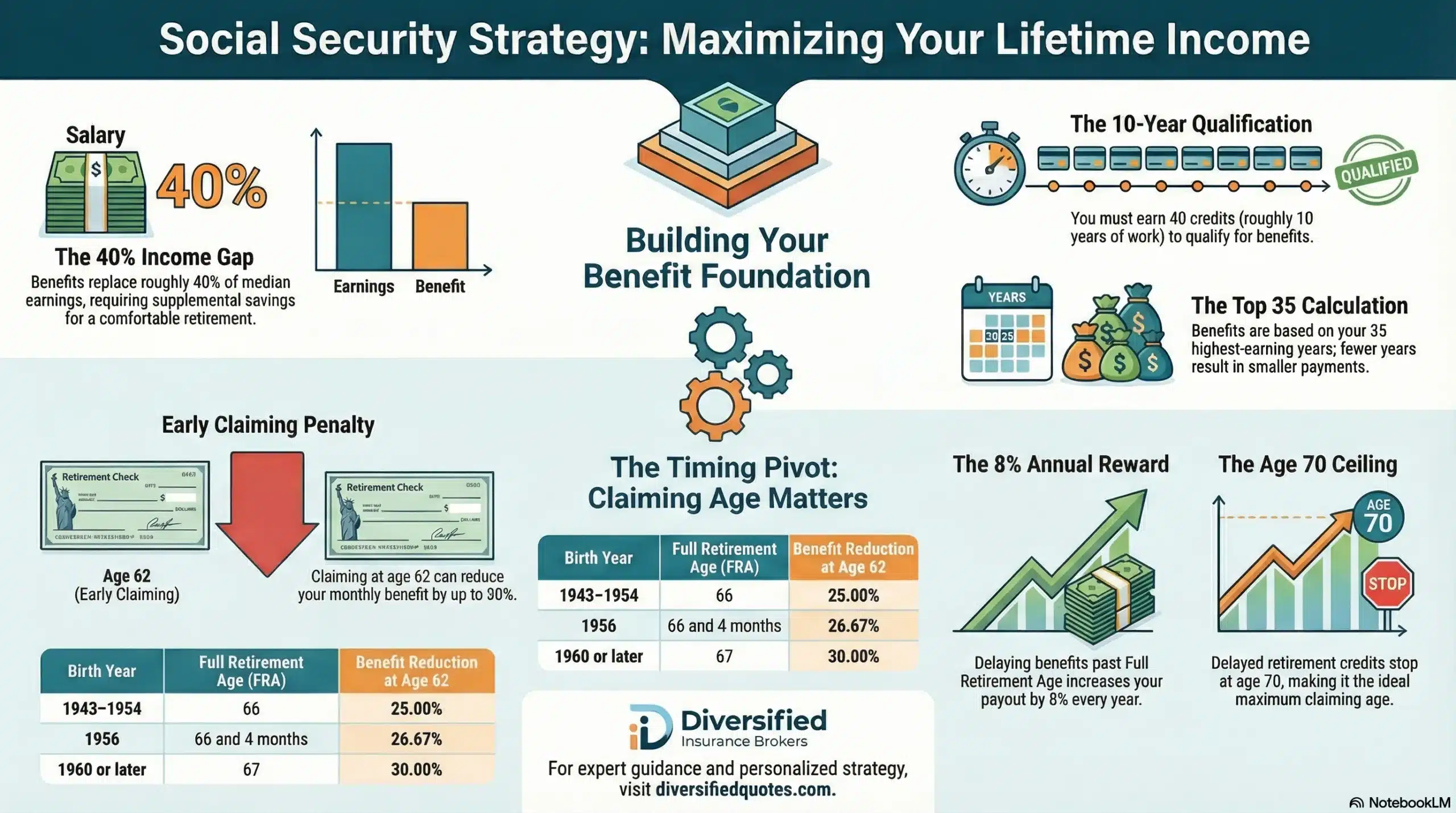
Divorced spousal benefits timing determines how much you receive monthly because Social Security reduces benefits if you claim before Full Retirement Age. At Full Retirement Age, divorced spousal benefits can reach up to fifty percent of your former spouse’s Primary Insurance Amount. This is based on their Full Retirement Age benefit amount, not what they actually receive if they claim early or delay.
If divorced spousal benefits timing leads you to claim early, Social Security permanently reduces your spousal benefit amount. These reductions never reverse. That is why divorced spousal benefits timing decisions should be evaluated carefully rather than based only on short-term income needs.
Divorced spousal benefits timing also determines whether work income can reduce benefits. If you claim before Full Retirement Age while still working, the earnings test may temporarily reduce benefits. After Full Retirement Age, the earnings test no longer applies. This is why divorced spousal benefits timing often depends on retirement date planning.
Divorced Spousal Benefits Timing and Deemed Filing Rules
Modern divorced spousal benefits timing must account for deemed filing rules. For most people born January 2, 1954 or later, filing for one Social Security benefit is treated as filing for all available benefits. This means divorced spousal benefits timing cannot usually be separated from your own retirement benefit timing.
This rule significantly changed divorced spousal benefits timing strategies. In the past, some retirees could claim only spousal benefits while delaying their own retirement benefit to grow with delayed retirement credits. Today, most retirees cannot do this.
To understand how deemed filing rules affect divorced spousal benefits timing, review: Deemed Filing Rules for Social Security
Restricted Application and Divorced Spousal Benefits Timing
Restricted application strategies may still exist for certain older retirees. If you were born January 1, 1954 or earlier, divorced spousal benefits timing may allow you to claim only spousal benefits at Full Retirement Age while allowing your own retirement benefit to grow until age 70.
Because restricted application rules are complex, divorced spousal benefits timing must be confirmed carefully before filing. Filing incorrectly can permanently eliminate strategic options.
Additional restricted application details are available here: Restricted Application Eligibility
Confirm Your Divorced Spousal Benefits Timing Before Filing
We compare spousal timing, retirement benefit timing, and lifetime income outcomes side by side.
Working and Divorced Spousal Benefits Timing
Divorced spousal benefits timing often depends on whether you are still working. If you claim before Full Retirement Age while working, Social Security earnings limits may temporarily reduce benefits. If your income exceeds annual limits, Social Security may withhold part of your benefit. This is not lost money, but it can affect cash flow planning.
After Full Retirement Age, divorced spousal benefits timing becomes more flexible because the earnings test no longer applies. Many retirees intentionally delay until Full Retirement Age if they plan to continue working.
More details about earnings test rules are available here: Earnings Test After FRA
Remarriage and Divorced Spousal Benefits Timing
Remarriage can significantly change divorced spousal benefits timing. In most cases, remarriage eliminates eligibility for divorced spousal benefits based on a living former spouse. However, survivor benefit rules can differ, which makes divorced spousal benefits timing and survivor benefit timing separate planning decisions.
If remarriage is part of your future planning, review how remarriage affects Social Security eligibility here: How Remarriage Affects Social Security Benefits
Divorced Spousal Benefits Timing vs Survivor Benefit Timing
Divorced spousal benefits timing and survivor benefit timing operate under different rules. Divorced spousal benefits are typically capped at fifty percent of the former spouse’s Full Retirement Age benefit. Survivor benefits can reach one hundred percent depending on timing and eligibility.
Survivor planning resources are available here: Social Security Survivor Strategies
Medicare Coordination and Divorced Spousal Benefits Timing
Divorced spousal benefits timing should always be coordinated with Medicare enrollment. Social Security filing decisions do not automatically determine Medicare enrollment timing. Some retirees mistakenly delay Medicare when delaying Social Security, which can lead to penalties depending on employer coverage status.
Medicare coordination details are available here: How Medicare and Social Security Work Together
How to File Based on Your Divorced Spousal Benefits Timing Plan
Divorced spousal benefits timing filing requires documentation including proof of age, Social Security number, marriage certificate, divorce decree confirming ten-year marriage length, and ideally identifying information for your former spouse. Filing can be completed online or through Social Security appointments.
Choosing the correct filing month is often more important than simply choosing the correct filing year. Because Social Security calculations occur monthly, divorced spousal benefits timing can sometimes be optimized down to the exact month you file.
Optimize Your Divorced Spousal Benefits Timing
We model filing now versus waiting and show lifetime income differences across multiple scenarios.
Related Social Security Planning
Financial Protection Essentials
Specialized underwriting guidance, Medicare planning resources, travel medical protection, and lawsuit funding education.
Schedule a Free Social Security Consultation
We’ll review your work income, claiming month options, Medicare timing, and tax impact—so you can file with confidence.
FAQs: Divorced Spousal Benefits Timing
Quick answers to the most common timing and eligibility questions we see after divorce.
About the Author:
Jason Stolz, CLTC, CRPC and Chief Underwriter at Diversified Insurance Brokers (NPN 20471358), is a senior insurance and retirement professional with more than two decades of real-world experience helping individuals, families, and business owners protect their income, assets, and long-term financial stability. As a long-time partner of the nationally licensed independent agency Diversified Insurance Brokers, Jason provides trusted guidance across multiple specialties—including fixed and indexed annuities, long-term care planning, personal and business disability insurance, life insurance solutions, Group Health, and short-term health coverage. Diversified Insurance Brokers maintains active contracts with over 100 highly rated insurance carriers, ensuring clients have access to a broad and competitive marketplace.
His practical, education-first approach has earned recognition in publications such as VoyageATL, highlighting his commitment to financial clarity and client-focused planning. Drawing on deep product knowledge and years of hands-on field experience, Jason helps clients evaluate carriers, compare strategies, and build retirement and protection plans that are both secure and cost-efficient. Visitors who want to explore current annuity rates and compare options across multiple insurers can also use this annuity quote and comparison tool.
