
How to Prescreen a Life Insurance Application

Jason Stolz CLTC, CRPC
Prescreening a life insurance application is one of the most important—and most misunderstood—steps in the underwriting process. Done correctly, a prescreen can be the difference between a clean approval at a competitive rate and an unnecessary decline, postponement, or heavily rated offer that follows you for years. At Diversified Insurance Brokers, prescreening is not a shortcut or a guess. It is a structured underwriting workflow designed to reduce surprises, improve outcomes, and protect your insurability before a formal application is submitted.
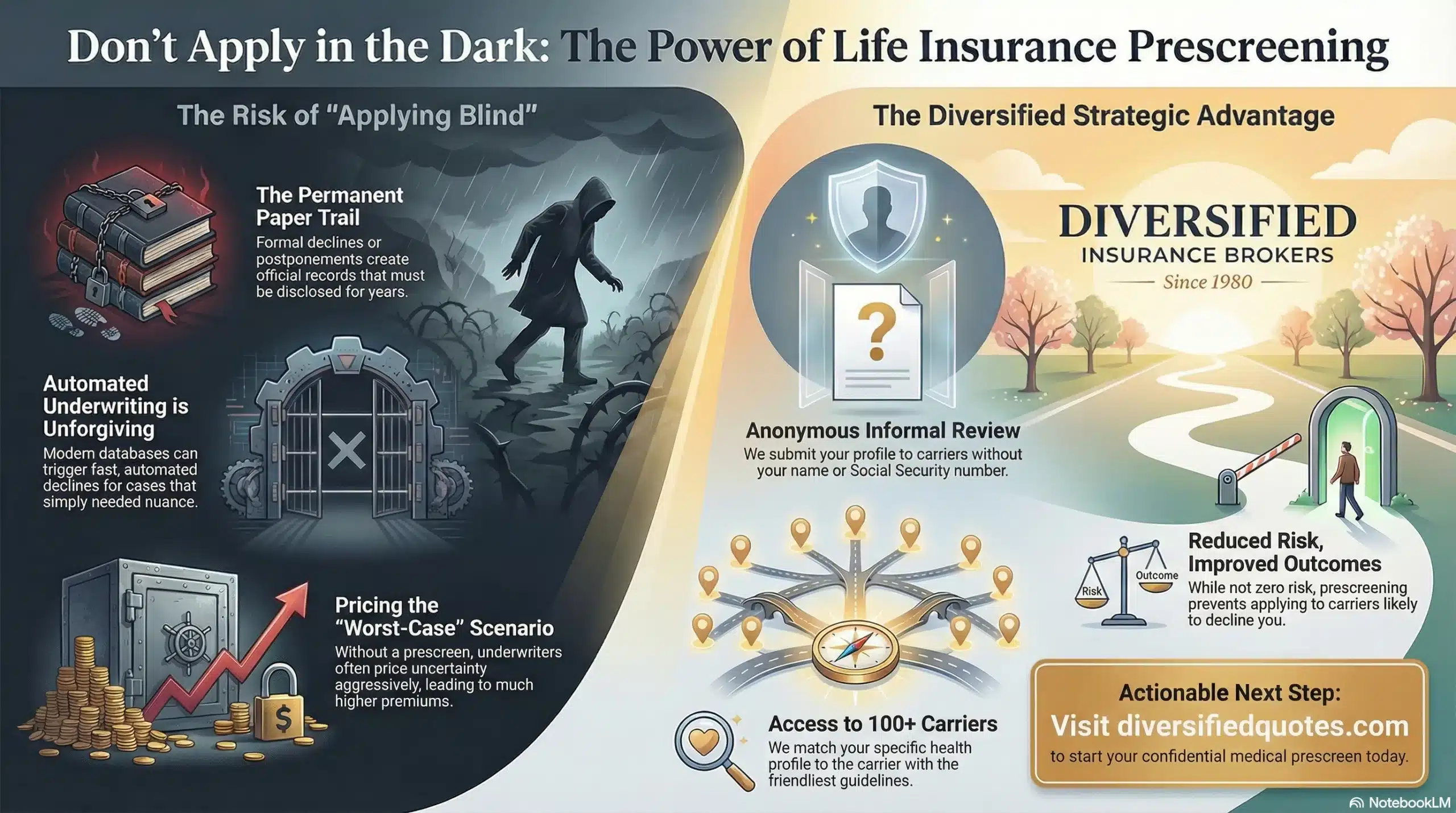
Instead of “apply first and ask questions later,” a professional prescreen slows the process down at the beginning. It gathers a full snapshot of the case, anonymizes the medical and lifestyle details, and presents the profile to multiple underwriting teams for informal review. Only after receiving feedback from real underwriters do we recommend which carrier to apply with and how the application should be structured. This approach dramatically reduces the risk of unnecessary declines or conservative underwriting decisions that can create a permanent record.
For applicants with any level of medical complexity, prescreening provides clarity before the formal underwriting process begins. The goal is not simply to obtain an approval. The goal is to obtain the strongest possible approval available based on your current health profile and risk factors.
Start a Confidential Life Insurance Prescreen
Submit your case securely and we will prescreen anonymously with multiple carriers to determine the best underwriting path.
Start Medical PrescreenWhat Is a Life Insurance Prescreen?
A life insurance prescreen is an informal underwriting review completed before submitting a formal application. Instead of triggering official underwriting databases immediately, a prescreen allows an underwriter to review your case anonymously without identifying details such as your name, Social Security number, or address.
The purpose of this process is straightforward. Underwriters evaluate the medical profile and provide an opinion on how the case would likely be classified if a formal application were submitted. If a carrier would postpone or decline the case, that feedback remains informal and does not create a permanent underwriting record.
This strategy is especially valuable when working with high-risk life insurance cases, because it allows brokers to determine which carriers are most receptive before a formal submission occurs. Instead of submitting multiple applications and creating unnecessary underwriting history, the prescreen process identifies the best carrier first.
Why Prescreening Matters More Today
Modern underwriting technology has made life insurance approvals faster, but it has also made the process less forgiving. Electronic health records, prescription databases, MIB reports, and predictive risk models are often reviewed within minutes of an application being submitted. While this speed benefits simple cases, it can cause complications when medical histories contain nuance or incomplete documentation.
A single unresolved medical detail can influence underwriting classification. For example, a recent lab test without follow-up documentation or a medication adjustment that appears unresolved can cause an underwriter to take a more conservative view of the case.
Prescreening allows time to clarify these details before underwriting begins. Instead of discovering issues during underwriting, the applicant can address them proactively. In many cases, waiting several months for additional stability or updated medical documentation can improve the final rate class significantly.
This process is particularly important if you are applying for life insurance after a prior decline. Once an application has been declined, it can complicate future underwriting submissions if not handled strategically.
Who Should Use a Life Insurance Prescreen
Not every applicant needs a prescreen. Younger individuals with no medical diagnoses, no prescriptions, and straightforward health histories often qualify for accelerated underwriting. However, complexity increases with age and with the presence of ongoing medical management.
Applicants with conditions such as diabetes, fluctuating lab markers like elevated A1C levels, sleep apnea, mental health histories such as depression treatment, cardiac conditions, or autoimmune disorders like lupus often benefit from prescreening.
Other factors that can influence underwriting outcomes include kidney disease, higher BMI levels, or occupational risk such as dangerous professions. Even applicants without formal diagnoses may benefit from prescreening if past medical tests showed abnormal results.
How a Professional Prescreen Is Conducted
A strong prescreen begins with detailed information. Underwriters evaluate timelines, medication history, specialist visits, hospitalizations, and current health stability. Providing accurate dates of diagnosis, medication dosages, and treatment history allows underwriters to evaluate the case properly.
The prescreen summary reads like an underwriting memo. Each condition is documented clearly with current status and supporting details. This structured presentation allows carriers to evaluate the risk efficiently and provide realistic underwriting feedback.
Different insurance companies evaluate medical conditions differently. One carrier may be more flexible with metabolic conditions, while another may price cardiac histories more conservatively. Prescreening helps identify which underwriting philosophy aligns best with the applicant’s profile.
If you want to understand how carriers evaluate health information, reviewing what happens during a life insurance exam can provide helpful insight into the underwriting process.
Avoiding Unnecessary Declines
One of the most important benefits of prescreening is avoiding unnecessary underwriting declines. A formal decline can remain in underwriting databases and may complicate future applications. By conducting an informal review first, applicants gain insight into how carriers will interpret their profile before creating an official underwriting record.
This approach protects long-term insurability and prevents applicants from being forced into higher-cost coverage unnecessarily. In many cases, the prescreen process identifies a carrier willing to offer standard or even preferred classifications when other carriers might decline the case.
For applicants exploring simplified issue options such as no exam burial insurance, prescreening can determine whether traditional underwriting may actually produce stronger pricing and higher face amounts.
Confidential Medical Prescreen
Avoid unnecessary declines by prescreening anonymously with experienced underwriting guidance.
Start Medical PrescreenRelated Pages
Talk With an Advisor Today
Choose how you’d like to connect—call or message us, then book a time that works for you.
Schedule here:
calendly.com/jason-dibcompanies/diversified-quotes
Licensed in all 50 states • Fiduciary, family-owned since 1980
What is a life insurance prescreen?
A prescreen is an informal, anonymous underwriting review used to evaluate insurability, likely rate class, and carrier fit before submitting a formal application.
Does prescreening affect my MIB or insurance record?
No. Proper prescreens are anonymous and do not trigger MIB reporting, prescription database checks, or underwriting records.
Who should consider a prescreen?
Anyone with medical conditions, prior declines, medications, abnormal labs, occupational risk, or concerns about pricing should prescreen before applying.
How accurate are prescreen results?
While not binding, prescreen feedback is highly predictive when done correctly and interpreted by experienced brokers with underwriting relationships.
Can a prescreen guarantee approval?
No. Prescreens guide strategy and carrier selection but final approval always depends on formal underwriting.
How long does the prescreen process take?
Typically a few business days once complete information is submitted and underwriters respond.
About the Author:
Jason Stolz, CLTC, CRPC and Chief Underwriter at Diversified Insurance Brokers (NPN 20471358), is a senior insurance and retirement professional with more than two decades of real-world experience helping individuals, families, and business owners protect their income, assets, and long-term financial stability. As a long-time partner of the nationally licensed independent agency Diversified Insurance Brokers, Jason provides trusted guidance across multiple specialties—including fixed and indexed annuities, long-term care planning, personal and business disability insurance, life insurance solutions, Group Health, and short-term health coverage. Diversified Insurance Brokers maintains active contracts with over 100 highly rated insurance carriers, ensuring clients have access to a broad and competitive marketplace.
His practical, education-first approach has earned recognition in publications such as VoyageATL, highlighting his commitment to financial clarity and client-focused planning. Drawing on deep product knowledge and years of hands-on field experience, Jason helps clients evaluate carriers, compare strategies, and build retirement and protection plans that are both secure and cost-efficient. Visitors who want to explore current annuity rates and compare options across multiple insurers can also use this annuity quote and comparison tool.
