
Life Insurance for Sleep Apnea
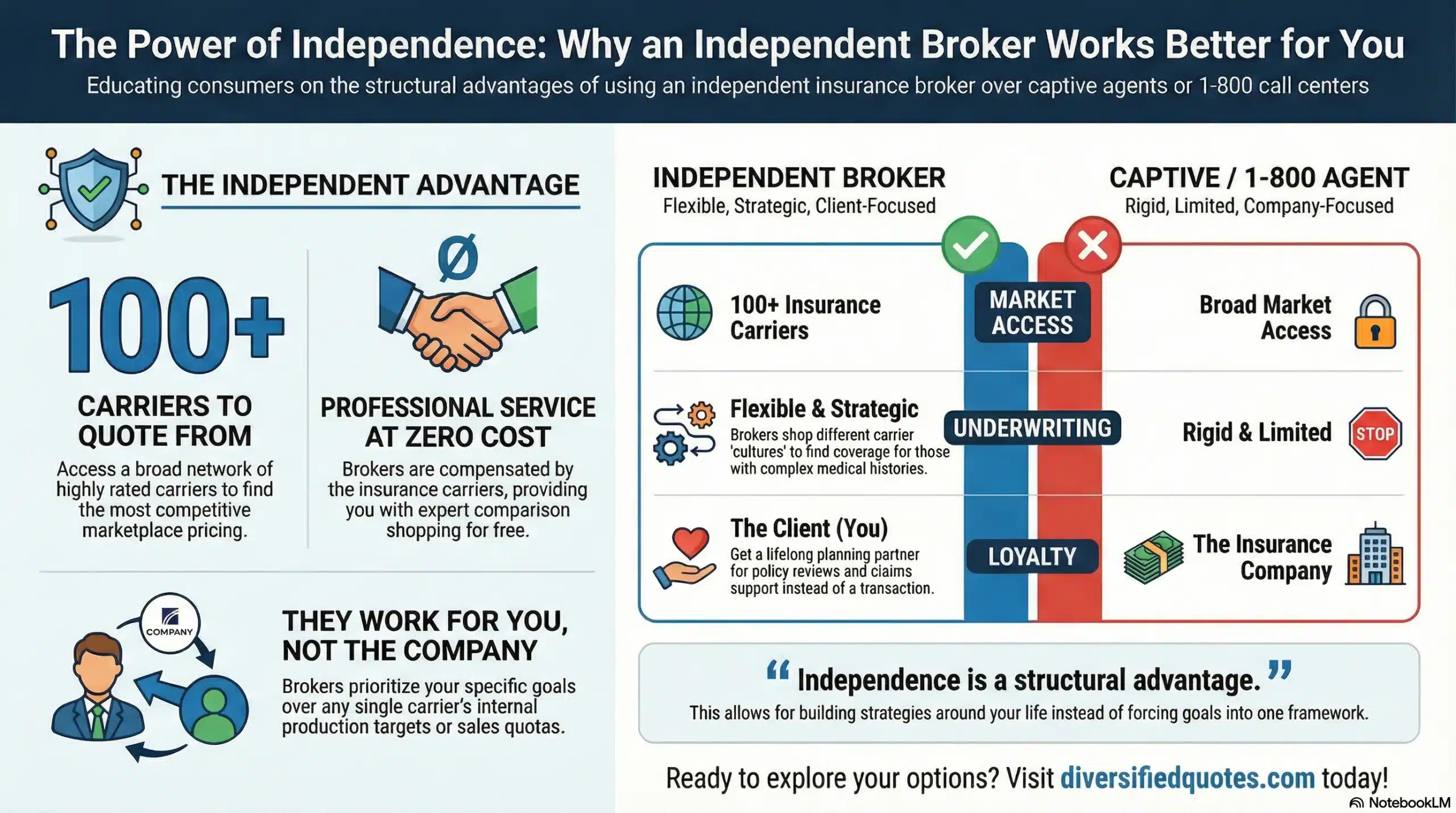
As an Independent Life Insurance Broker, we compare rates across 100+ carriers and prescreen every application before submission.
Life Insurance for Sleep Apnea

Jason Stolz CLTC, CRPC, DIA, CAA
At Diversified Insurance Brokers, we help clients with sleep apnea secure affordable life insurance by shopping coverage across 100+ top-rated carriers and matching your profile to the companies that underwrite sleep apnea most favorably. If you use CPAP, APAP, or BiPAP, have mild symptoms, or your condition is stable and well-managed, sleep apnea does not automatically mean expensive coverage or limited choices. The outcome usually comes down to how the carrier interprets severity, treatment compliance, and the health factors that often travel with sleep apnea — like high blood pressure, build and BMI, and cardiovascular risk markers. Sleep apnea underwriting is rarely one-size-fits-all. Some carriers place heavy emphasis on your sleep study numbers, while others focus more on whether the condition is treated and controlled today. Some want detailed compliance reports; others accept a physician note confirming regular use and improved symptoms. Our job is to package the story the way underwriters actually think — clear timeline, clear treatment, and clear proof of stability — then place the case with the carriers most likely to deliver a strong offer.
The gap between Table 2 and Table 4 on a $500,000 20-year term policy is approximately $22 per month — $264 per year, $5,280 over the life of the policy. That difference is not driven by your AHI score alone; it is driven by which carrier receives your application and how the file is presented. Two applicants with identical sleep study results, the same CPAP compliance history, and the same overall health profile can receive offers two table ratings apart simply because one was matched to the right carrier and one was not. This is why carrier selection and case presentation matter more for sleep apnea cases than for standard health applications. Our resource on life insurance rates covers how health class and table ratings translate into actual premium differences, and our resource on why work with an independent life insurance broker covers the structural advantage of comparing across the full market rather than submitting to a single carrier’s underwriting guidelines.
Many applicants assume the biggest factor is simply whether they have sleep apnea. The bigger story for underwriting is the downstream risk picture: oxygen desaturation, daytime impairment, blood pressure control, insulin resistance, atrial fibrillation risk, and the overall pattern of health behaviors that affect long-term outcomes. Underwriters are trying to determine whether your sleep apnea is actively increasing risk today or whether it is a known condition that is being controlled in a stable, measurable way. When the file answers that question clearly and favorably, coverage is often more accessible — and more affordable — than applicants expect.
Life Insurance With Sleep Apnea
We match your compliance profile, AHI score, and overall health picture to carriers that underwrite sleep apnea most favorably. Confidential, no obligation.
Sleep Apnea Underwriting — AHI Severity, Treatment Status, and Typical Carrier Response
The table below maps the most common sleep apnea clinical presentations against typical underwriting outcomes across the carrier market. Actual results vary by carrier, comorbidities, overall health profile, and documentation quality — but these patterns reflect general market behavior and help applicants understand where their profile is likely to fall before any submission is made.
| AHI Severity | Treatment Status | Typical Underwriting Response | Key Factors That Improve Outcome | Key Factors That Worsen Outcome |
|---|---|---|---|---|
| Mild (AHI 5-14) | Treated (CPAP/APAP/BiPAP or oral appliance) | Most favorable — Standard or Standard Plus at most carriers; Preferred rates possible at favorable carriers when overall health profile is clean | 6+ hours CPAP nightly; documented compliance; physician note confirming symptom improvement; controlled blood pressure; normal BMI range | Uncontrolled hypertension; elevated BMI; poor compliance; cardiac history; no follow-up documentation |
| Mild (AHI 5-14) | Untreated or watchful waiting | Generally Standard; some carriers accept untreated mild OSA at standard rates because the cardiovascular risk at this severity level is lower | Normal oxygen saturation; no daytime impairment documented; physician follow-up showing stability; clean overall health markers | Documented daytime sleepiness; significant oxygen desaturation; elevated build; uncontrolled comorbidities |
| Moderate (AHI 15-30) | Treated — good CPAP compliance (4+ hours/night) | Standard to Table 2 at most carriers; stronger compliance documentation often distinguishes Standard from a table rating | Compliance data from CPAP machine; 3-6 months of usage records; oxygen saturation maintained above 90%; stable physician follow-up; controlled comorbidities | BMI above 40; uncontrolled hypertension; cardiac history; compliance under 4 hours/night; missing or outdated follow-up documentation |
| Moderate (AHI 15-30) | Untreated — diagnosed but not using therapy | Table 2-6 range; many carriers postpone applications until treatment begins and compliance is established; traditional Preferred and Standard rates unlikely | Initiating and documenting CPAP use is the single most impactful step; even 30-90 days of documented compliance can change the outcome | Active diagnosis without treatment signal; significant oxygen desaturation on sleep study; elevated cardiovascular risk markers |
| Severe (AHI 30+) | Treated — excellent CPAP compliance (6+ hours/night) | Table 2-4 at most carriers; some favorable carriers can reach Table 2 or Standard for well-documented cases with clean comorbidity profile; carrier selection critical | Excellent documented compliance; physician note confirming symptom resolution; oxygen saturation normalized with therapy; all comorbidities well-controlled; no cardiac history | Significant oxygen desaturation even with CPAP; cardiac comorbidities; uncontrolled hypertension; BMI above 40; atrial fibrillation history |
| Severe (AHI 30+) | Untreated or poorly compliant (under 4 hours/night) | Decline at most traditional carriers; some carriers postpone for 6-12 months of documented compliance; final expense and guaranteed issue products typically available as immediate options | Initiating CPAP and establishing 6-12 months of compliance before reapplying to traditional carriers is the recommended path | Active unmanaged severe OSA; significant desaturation events; multiple uncontrolled comorbidities; recent cardiac events |
| Central Sleep Apnea (CSA) or Complex Apnea | Any treatment status | More underwriting scrutiny than OSA at same AHI — carriers evaluate underlying cause; cardiac or neurologic CSA adds significant complexity; outcomes are carrier-specific and vary widely | Clear documentation of underlying cause; stable cardiac or neurologic function; successful ASV or other therapy documentation; specialist notes confirming stability | Opioid-induced CSA; cardiac-related CSA with ejection fraction concerns; neurologic CSA with functional deficits; unstable or difficult-to-treat pattern |
Underwriting outcomes are not guaranteed and vary by carrier, individual medical history, and documentation quality. The patterns above reflect general market behavior and do not represent the specific guidelines of any individual carrier. Oxygen saturation events below 90% typically add additional rating pressure across all severity categories. Work with an independent broker experienced in sleep apnea underwriting before submitting any application to avoid unnecessary adverse MIB entries.
How Sleep Apnea Affects Life Insurance Underwriting
Insurers view sleep apnea as a risk factor primarily because untreated or poorly controlled sleep apnea can increase the likelihood of cardiovascular events, metabolic issues, and daytime impairment. Underwriting is typically most favorable when the condition is treated, symptoms are controlled, and any related health concerns are also well-managed. In practical terms, a treated moderate case can sometimes look better to an underwriter than an untreated mild case — because treatment demonstrates stability and active risk reduction. Most carriers will want to understand the type of sleep apnea, how severe it is based on the sleep study AHI score, whether you are compliant with therapy, and whether there are complications like heart disease or uncontrolled hypertension. Obstructive sleep apnea (OSA) is the most common type and is generally underwritten more predictably than central sleep apnea (CSA), which can be tied to neurologic or cardiac issues and may require more documentation. Underlying cardiovascular risk is one of the most consequential factors carriers evaluate alongside sleep apnea — atrial fibrillation is a particular concern because both untreated OSA and cardiac arrhythmia independently increase mortality risk, and when they appear together, the combined underwriting picture is evaluated more cautiously. Our resource on life insurance for atrial fibrillation covers how carriers evaluate AFib when it appears alongside sleep apnea, and our resource on life insurance for type 2 diabetes covers the metabolic comorbidity that frequently accompanies moderate to severe OSA — since insulin resistance and metabolic syndrome are common in the sleep apnea population and can further complicate underwriting.
OSA vs. CSA vs. Complex Apnea — Why the Type Matters
Obstructive sleep apnea (OSA) is typically the most straightforward type from an underwriting standpoint because it is common, well-studied, and often responds well to CPAP or APAP therapy. When treated and stable, OSA underwriting can be surprisingly reasonable at many carriers. Our companion resource on life insurance for CPAP users covers the specific documentation and carrier approach for applicants who are actively using CPAP therapy. Central sleep apnea (CSA) often triggers more underwriting questions because it can be associated with neurologic conditions, cardiac function issues, opioid use, or certain chronic medical problems. CSA does not mean automatically uninsurable, but the carrier will want more documentation about the cause and current stability — and may evaluate the file in the context of the underlying condition driving the CSA. Complex or mixed sleep apnea can also require deeper review, particularly if treatment has been difficult to stabilize or if ongoing symptoms persist despite therapy. In these scenarios, we focus heavily on documentation and on targeting carriers that are more flexible when a case is controlled today, even if early treatment required adjustments.
What Underwriters Actually Want to See
For most sleep apnea cases, underwriters focus on a few consistent signals. First is the sleep study data — AHI/RDI severity and oxygen desaturation. Second is the current treatment plan — CPAP/APAP/BiPAP settings, how long you have been on therapy, and whether symptoms improved. Third is objective compliance proof when available, because compliance tends to correlate with reduced cardiovascular risk. Finally, underwriters evaluate the broader health picture: build, blood pressure control, cholesterol, glucose and A1C, and any history of cardiac or pulmonary conditions. In practical terms, underwriters are asking: Was the sleep apnea mild, moderate, or severe at diagnosis? Was oxygen saturation significantly low? Is therapy being used consistently? Has therapy reduced symptoms like daytime sleepiness or morning headaches? Are there related conditions that appear uncontrolled? When your documentation answers those questions cleanly, underwriting is simpler. When those questions are left open, carriers often assume the most conservative reasonable interpretation — and pricing reflects that. Our resource on high-risk life insurance playbook covers the overall case presentation framework that applies when complex health histories need to be structured for underwriting review. Our resource on best high-risk life insurance companies covers the carrier landscape and which insurers have demonstrated the most consistent willingness to underwrite sleep apnea cases at competitive rates.
How CPAP Compliance Can Change Your Rate Class
CPAP is often the turning point in sleep apnea underwriting. Consistent use suggests symptom control, reduced daytime sleepiness, and lower cardiovascular strain. Many carriers view compliant CPAP use as evidence that the condition is being actively managed — similar to how insurers look at well-controlled blood pressure with documented physician follow-ups. If you have a compliance report, even a recent 30-90 day download from the machine’s built-in data tracking can be helpful. If you do not have a formal compliance report, a physician note confirming ongoing use, symptom improvement, and stable follow-ups can still move the needle with the right carriers. Compliance is not just a yes/no checkbox — it is a practical way to show stability that distinguishes a lower-risk well-managed case from a nominally “treated” case without the documentation to support it. A common issue we see is an applicant using CPAP regularly but lacking documentation at the point of application, which slows underwriting and can create a conservative rating while the carrier waits for follow-up evidence. When we help clients prepare a clear compliance summary before submission, underwriting decisions tend to move faster and pricing is often more competitive. The CPAP compliance impact on rate class is also measurable: compliance of 6+ hours nightly typically produces Standard or better results; 4-6 hours produces Standard to Table 2 at most carriers; under 4 hours creates significant pricing pressure and limits carrier options.
Build, Blood Pressure, Labs — The Factors That Travel With Sleep Apnea
Sleep apnea underwriting rarely stands alone. Carriers treat it as a risk factor that interacts with other health variables — especially blood pressure, BMI and build, cholesterol, and glucose markers. When those factors are controlled, sleep apnea underwriting is often more favorable. When those factors are uncontrolled, carriers may view the total risk profile as elevated even if CPAP is being used. An applicant with moderate OSA who is compliant with CPAP, has well-controlled blood pressure, and stable labs may be viewed more favorably than an applicant with mild OSA who is untreated and has uncontrolled hypertension. Underwriters care about how the risk behaves today — and control plus stability are the language that insurers price best. Some carriers will heavily weight build and automatically apply more conservative ratings if BMI is elevated, while others evaluate build more holistically when CPAP compliance is excellent and labs are stable. When weight is part of the story, it is often useful to coordinate sleep apnea underwriting with how the carrier treats build categories so that multiple factors are not stacked unnecessarily when the total risk picture is actually well-managed. Our resource on what will disqualify me from life insurance covers the specific combinations of factors that most commonly produce declines or the most conservative table ratings — including the comorbidity patterns that create the most underwriting resistance in sleep apnea cases.
When Sleep Apnea Can Become More Challenging
Sleep apnea tends to get harder to underwrite when it is severe and untreated, when there are frequent symptoms suggesting poor control, or when significant related conditions are present — such as uncontrolled hypertension, cardiac arrhythmias, or advanced metabolic issues. Central sleep apnea also requires more underwriting scrutiny depending on its cause. Severe oxygen desaturation, ongoing daytime impairment, or poor treatment adherence can lead carriers to assume a higher probability of cardiovascular events over time. This does not always mean a decline, but it can lead to conservative table ratings or product limitations depending on the carrier. Our resource on life insurance table ratings explained covers how table ratings work and what each level means for actual premium costs — essential context for evaluating any rated offer in a sleep apnea case. In some scenarios where traditional underwriting produces a conservative or unfavorable outcome, no-exam life insurance through simplified underwriting may provide an alternative pathway that sidesteps the most complex underwriting friction points, and final expense life insurance with simplified or guaranteed issue underwriting can provide immediate protection as a bridge while the traditional case is repositioned or while a stability window is being established.
Coverage Amount — How Much Should You Apply For?
Sleep apnea does not limit the coverage amount you can apply for in most cases — it limits the health class you will receive, which determines the premium for any given coverage amount. The right coverage amount should be based on what you are actually protecting: income replacement, mortgage balance, debt obligations, education funding, and the financial needs of your dependents. Our resource on how much life insurance do I need covers the DIME method and income multiplier framework for sizing coverage correctly — a conversation that is separate from the underwriting discussion but equally important. In sleep apnea cases, some buyers choose to start with a coverage amount that is achievable at favorable rates and add coverage over time as their documented compliance history strengthens and their underwriting picture improves. This staged approach — starting with meaningful protection now and adding more later — is often better than waiting for the “perfect” rate class before applying at all.
After a Decline or Heavy Rating — What Comes Next
If you have been declined or rated heavily in the past for sleep apnea, that outcome is not necessarily final. Declines in sleep apnea cases often happen because the application went to a carrier that was not a good match for the profile — one that was conservative on build, required stricter compliance documentation, or weighted the AHI severity more heavily than the current controlled state. They also happen when documentation was incomplete, when a compliance record was missing, or when related comorbidities were not presented in their most favorable light. Our resource on life insurance with a prior decline covers how prior declines are recorded in the MIB, how they affect future applications, and how to reposition a case after an adverse outcome. The process is targeted rather than blanket: identify what drove the decline, determine whether better documentation or a longer stability window changes the picture, and then select carriers that are known to be more reasonable for the specific sleep apnea profile. Our resource on get a 2nd opinion on your life insurance quote covers the independent review process for buyers who have received an offer or decline and want to verify they are seeing the most competitive outcome available for their specific health profile before accepting or abandoning the application.
Who This Coverage Is Best For
Life insurance with sleep apnea is often a strong fit for applicants who are treating the condition and can demonstrate stability — especially those using CPAP consistently and those with mild-to-moderate severity that has improved on therapy. It is also a strong fit for people who were discouraged by a past quote and want a true market comparison across multiple carriers rather than one insurer’s view of the risk. Even if your sleep apnea is more severe, you may still have meaningful options depending on your overall health profile and your documented compliance history. The best path is a targeted approach rather than blanket applications — especially if there are other factors like pre-existing conditions that could complicate underwriting if handled without a coordinated strategy.
How We Shop 100+ Carriers for Sleep Apnea Cases
Our process starts by identifying which carriers are most favorable for your specific scenario — your sleep study severity, treatment type, compliance profile, and the related underwriting factors that often drive pricing, including build, blood pressure, labs, and cardiac history. From there, we package a concise, underwriter-friendly summary and select the carriers most likely to respond well. This match-first, submit-second approach helps avoid unnecessary declines, excessive ratings, and wasted time. We also watch for underwriting friction points that can derail otherwise good cases — missing follow-up notes, unclear treatment start dates, or assumptions about compliance that a proactive documentation summary could eliminate. Small documentation improvements can create meaningful pricing differences when paired with the right carrier appetite. If your case overlaps with other conditions, we coordinate strategy with carrier strengths in those categories — such as cardiac underwriting for cases where heart disease or atrial fibrillation is part of the picture, or metabolic underwriting for cases involving type 2 diabetes. The complete process is covered in our high-risk life insurance services hub, and the broader underwriting philosophy behind it is described in our quantitative risk management approach.
Ready to Compare Carriers for Your Sleep Apnea Profile?
Submit your case details and we will shop the market for the most favorable underwriting outcome across 100+ top-rated carriers.
Submit Your Sleep Apnea Life Insurance RequestCompare Term Life Insurance Lengths
Explore different term periods to find coverage that best matches your timeline and budget.
Talk With an Advisor Today
Choose how you’d like to connect—call or message us, then book a time that works for you.
Schedule here:
calendly.com/jason-dibcompanies/diversified-quotes
Licensed in all 50 states • Fiduciary, family-owned since 1980
FAQs: Life Insurance for Sleep Apnea
Can I get life insurance if I have sleep apnea?
Yes — many people with sleep apnea qualify for traditional life insurance, often at standard or near-standard rates. The outcome depends on AHI severity at diagnosis, current treatment status, CPAP compliance documentation, and the overall health profile including any comorbidities like blood pressure, build, and cardiovascular history. Mild sleep apnea that is treated and stable frequently qualifies for Standard or better rates. Moderate sleep apnea with good CPAP compliance typically produces Standard to Table 2 outcomes. Severe sleep apnea requires carrier-specific matching and strong documentation but is insurable at many carriers with excellent compliance history.
Does using a CPAP machine help me get better life insurance rates?
Often yes — significantly. Consistent CPAP use demonstrates active disease management and risk reduction, which underwriters respond to favorably. Carriers differentiate between compliant and non-compliant CPAP users when assigning rate classes. Compliance of 6+ hours nightly typically supports Standard or better rates; 4-6 hours produces Standard to Table 2 at most carriers; under 4 hours creates meaningful pricing pressure and limits carrier options. CPAP compliance reports downloaded from the machine’s built-in tracking are the strongest documentation, though a physician note confirming consistent use and symptom improvement can also move the needle with favorable carriers.
What AHI score is considered mild, moderate, or severe?
The Apnea-Hypopnea Index (AHI) measures the number of breathing interruption events per hour during sleep. Across most carriers, mild is generally AHI 5-14, moderate is AHI 15-30, and severe is AHI above 30. The severity classification from the sleep study is a starting point for underwriting, but what matters more is whether the condition is being effectively treated today. A well-documented, compliant CPAP user with an original AHI of 40 can underwrite more favorably than an untreated patient with an AHI of 20 — because underwriters are evaluating current risk status, not just historical severity numbers.
What makes a sleep apnea case difficult to insure?
The most commonly challenging scenarios are: untreated or poorly compliant severe sleep apnea (AHI 30+); significant oxygen desaturation events below 90%; central sleep apnea associated with cardiac or neurologic conditions; uncontrolled comorbidities especially hypertension, atrial fibrillation, or elevated BMI above 40; and incomplete documentation that leaves underwriters filling gaps with conservative assumptions. These factors do not always mean a decline — they mean the case requires careful carrier matching and documentation strategy to produce the best possible outcome. Cases that received a decline in the past often improve when resubmitted to a better-matched carrier with more complete compliance documentation.
Does obstructive sleep apnea underwrite differently than central sleep apnea?
Yes, meaningfully so. Obstructive sleep apnea (OSA) is the most common type, is well-studied, and typically responds predictably to CPAP therapy — carriers have established underwriting guidelines for OSA at each severity level. Central sleep apnea (CSA) often triggers more underwriting scrutiny because it can be caused by neurologic conditions, cardiac dysfunction, opioid medications, or other underlying medical problems. Underwriters want documentation about the underlying cause, its stability, and whether treatment has been effective. The same AHI score in CSA typically produces more conservative outcomes than in OSA, and the case requires specific carrier matching rather than a standard submission approach.
What if I was declined or rated heavily for sleep apnea in the past?
A prior decline or heavy rating is not a permanent outcome. Declines in sleep apnea cases most commonly occur because the application went to a carrier that was not the right match for the profile, because compliance documentation was missing or incomplete, or because related comorbidities were not presented in their most favorable context. Prior adverse outcomes are recorded in the Medical Information Bureau (MIB) and visible to future carriers — which is why the resubmission strategy matters. The right approach is to identify what drove the original outcome, improve documentation where possible, and target carriers known to be more favorable for the specific sleep apnea and comorbidity profile before reapplying.
About the Author:
Jason Stolz, CLTC, CRPC, DIA, CAA and Chief Underwriter at Diversified Insurance Brokers (NPN 20471358), is a senior insurance and retirement professional with more than 25 years of real-world experience helping individuals, families, and business owners protect their income, assets, and long-term financial stability. As a long-time partner of the nationally licensed independent agency Diversified Insurance Brokers, Jason provides trusted guidance across multiple specialties—including fixed and indexed annuities, long-term care planning, personal and business disability insurance, life insurance solutions, Group Health, Travel Medical and Evacuation Insurance, and short-term health coverage. Diversified Insurance Brokers maintains active contracts with over 100 highly rated insurance carriers, ensuring clients have access to a broad and competitive marketplace.
His practical, education-first approach has earned recognition in publications such as VoyageATL, and contributions from his agency featured in Kiplinger and GoBankingRates— highlighting his commitment to financial clarity and client-focused planning. Drawing on deep product knowledge and years of hands-on field experience, Jason helps clients evaluate carriers, compare strategies, and build retirement and protection plans that are both secure and cost-efficient. Visitors who want to explore current annuity rates and compare options across multiple insurers can also use this annuity quote and comparison tool.
Explore More Life Insurance Options: Browse our complete guide to Life Insurance for Cardiovascular & Respiratory Conditions — covering heart attack, heart disease, stroke, blood clots, COPD, and sleep apnea from 100+ carriers.
Last Reviewed: June 15, 2026 |
Reviewed by: Jason Stolz, CLTC, CRPC, DIA, CAA
Chief Underwriter, Diversified Insurance Brokers, Inc. | NPN: 20471358 | Diversified Insurance Brokers, Inc. — Licensed in all 50 states
Fact Checked by: Tonia Pettitt, CMIP©
Medicare Specialist, Diversified Insurance Brokers, Inc. | NPN: 14374308 | Diversified Insurance Brokers, Inc. — Licensed in all 50 states
Did you find this content helpful? Leave us a Google review — it helps others find trustworthy guidance too.
Editorial Standards: Diversified Insurance Brokers maintains rigorous editorial standards to ensure accuracy, clarity, and independence in all content. Learn more about our editorial standards and commitment to transparency.
