
How Much Life Insurance Do I Need
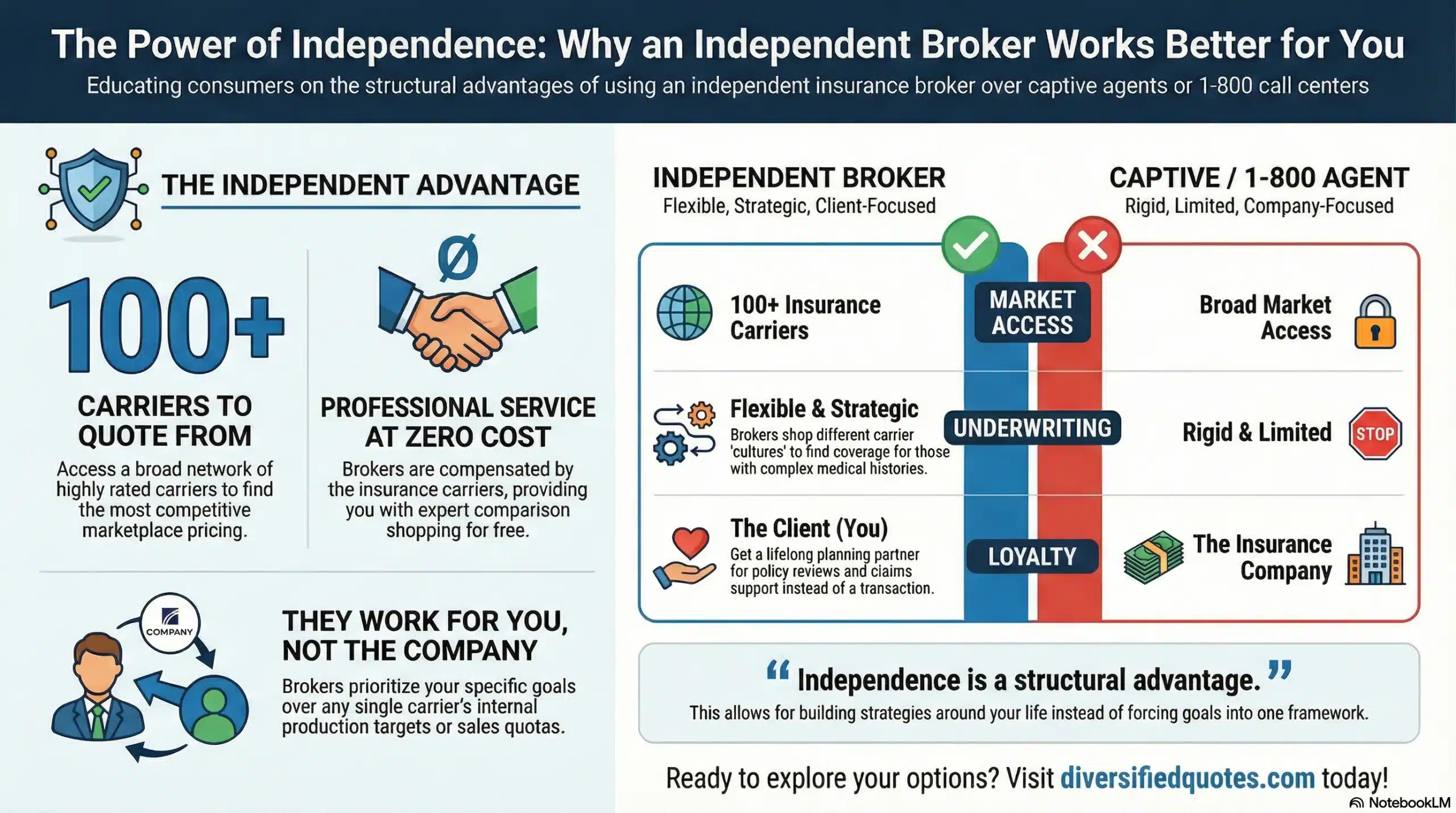
As an Independent Life Insurance Broker, we compare rates across 100+ carriers and prescreen every application before submission.
How Much Life Insurance Do I Need

Jason Stolz CLTC, CRPC, DIA, CAA
How much life insurance do you need? It is a simple question with life-changing consequences if answered wrong in either direction. Too little coverage forces survivors into decisions they should never face — selling a home, draining retirement accounts, reducing a child’s opportunities, or taking on debt just to maintain household stability. Too much coverage wastes premium dollars that could serve other planning priorities. The goal is not a “big number.” The goal is the right number — coverage that protects the people who depend on you financially for exactly as long as they need it, matched to the obligations that actually exist, at a cost that fits your budget. Our resource on life insurance services covers the full life insurance landscape across all product types, and our resource on what is term life insurance covers the product structure that most buyers use for income replacement — the foundation of any coverage sizing conversation.
The average size of a new individual life insurance policy purchased in the United States in recent years is approximately $209,000 — a number that almost certainly falls far short of what most insured households actually need. A dual-income household with a mortgage, two young children, and significant financial obligations needs a fundamentally different coverage amount than a single person with no dependents and minimal debt. Rules of thumb that suggest a single coverage multiple for all buyers are useful as starting points only. The practical work of life insurance planning is connecting coverage amounts and term lengths to the specific financial obligations that would be disrupted by an early death — debts, income dependency duration, childcare costs, education funding, and the timeline of those risks. At Diversified Insurance Brokers, we help families and business owners build clear, practical life insurance plans by starting with a needs analysis and turning that analysis into a structured coverage design. This page walks through that process step by step.
Coverage Sizing Frameworks — How Each Method Works and What It Misses
Three primary frameworks are used to size life insurance coverage needs. Each produces a different result and serves a different level of planning precision. The table below maps each against its method, strengths, limitations, and the buyer profile it fits best.
| Framework | How It Works | What It Captures | What It Misses | Best Fit |
|---|---|---|---|---|
| Income Multiplier (10-15×) | Multiply annual gross income by a factor — commonly 10x as the baseline; some planners use 12-15x for younger earners, or age-adjusted multipliers (30x at 18-40; 20x at 41-50; 15x at 51-60) | Produces a quick, directional coverage estimate; reflects the broad income replacement goal; easy to communicate and explain | Ignores the mortgage balance, existing savings, spouse income, specific debts, education funding goals, and duration of income need; the same multiplier applied to a 30-year-old with three children and a 58-year-old with no dependents produces meaningless results for both | Quick first estimate; single individuals with simple finances; anyone who needs a starting point before doing a more detailed calculation |
| DIME Method | Debt (all debt except mortgage) + Income (annual income × years of replacement needed) + Mortgage (full remaining balance) + Education (estimated college costs per child) — subtract existing coverage and liquid assets for net need | Addresses the four largest financial obligations for most households individually; forces specific thinking about each category; produces a more accurate number than the multiplier for most family situations | Does not account for the economic value of a non-working spouse’s contributions; does not adjust for investment return on the lump sum benefit; does not account for a surviving spouse’s earnings; typically does not include final expenses or childcare costs | Most households with a mortgage, dependent children, and specific debts; provides the most practical balance of accuracy and simplicity for typical family coverage planning |
| Human Life Value / Investment Approach | Divide annual income by a conservative assumed rate of return (commonly 4-5%) — e.g., $80,000 income ÷ 4% = $2,000,000 coverage; the idea is that the death benefit, when invested conservatively, generates the annual income indefinitely without depleting the principal | Treats the death benefit as an income-generating asset rather than a one-time payment; appropriate when the goal is to create a lasting financial legacy rather than just bridge a fixed-year gap | Produces the largest and most expensive coverage numbers; ignores specific debts, mortgage, and education costs individually; may significantly overinsure buyers whose income dependency window is shorter than their lifetime | High-income earners, primary breadwinners with significant lifestyle dependencies, or buyers focused on permanent income replacement as a legacy goal rather than time-limited income bridge |
| Net Needs Analysis (Obligations Minus Assets) | Calculate total financial obligations (income replacement + debts + mortgage + education + childcare) and subtract existing liquid assets, investments, and existing life insurance coverage for the true gap | Most precise method; accounts for existing assets that would serve survivors; avoids the overinsurance that comes from ignoring what is already in place | Most complex to calculate accurately; requires honest accounting of all assets and liabilities; can underinsure if assets are illiquid, concentrated, or at risk of market decline at the time of claim | Buyers with significant existing assets, mature households nearing retirement, or business owners with complex balance sheets where the simple multiplier would substantially overstate the true gap |
Coverage sizing frameworks above are educational starting points. Individual coverage needs depend on specific household obligations, existing assets, survivor earning capacity, and planning priorities that no formula fully captures. Work with a licensed advisor to translate any framework calculation into a coverage recommendation specific to your situation.
Why “10× Income” Is a Starting Point, Not an Answer
You will often hear rules of thumb like “buy ten times your income” or “buy enough to pay off the mortgage.” Those shortcuts can be helpful for quick thinking, but they are incomplete because they do not address duration or purpose. A 42-year-old with three children, a single household income, and a 25-year mortgage faces a categorically different risk profile than a 42-year-old with no dependents, a paid-off home, and significant savings. Both may earn the same income. Their life insurance needs can be radically different. What you are truly measuring is financial dependency — if you were gone tomorrow, what financial value disappears, and what obligations remain? For most households the biggest dependency is income, but there are also specific debts, childcare costs, education planning, and the desire to protect a survivor from forced decisions in a moment of grief. When you design life insurance around those real-world realities, the coverage amount and term length become much clearer.
Step 1 — Calculate Income Replacement in a Way That Matches Real Life
Income replacement is the foundation of most life insurance planning. The question is not simply “how much do I make?” — it is “how long would my family rely on my income to maintain stability?” That timeframe is usually tied to children reaching adulthood, a spouse reaching retirement, or a major debt being paid down. Many families want to replace income for 15, 20, or 25 years because those timeframes align with the years they are most financially exposed. A common approach is to target a replacement range of 10-12x annual income as a starting estimate, then adjust based on debts, savings, and the stability goals of the survivor. For a $100,000/year earner who wants 20 years of income replacement, the income component of the DIME calculation alone might be $1,500,000-$2,000,000 — a number that surprises many buyers who expected a simpler calculation. It is also worth considering how a surviving spouse would realistically respond. Many survivors return to work sooner or change their work hours. The right coverage amount is the one that supports a realistic transition without forcing immediate lifestyle changes, not a number calculated to assume no adaptive response whatsoever.
Step 2 — Add Debts and Obligations That Would Change a Survivor’s Life
After income replacement, debts are the most common factor. The mortgage is the single largest debt in most households. Some buyers want life insurance to pay off the mortgage entirely so the family can remain in the home without financial stress. Others prefer partial mortgage coverage, using the insurance benefit to cover payments while keeping assets invested. Either approach works — the key is understanding what the mortgage payment represents in the household budget and how painful it would be to sustain without the primary earner’s income. Our resource on mortgage protection vs. term life insurance covers the specific comparison between products designed exclusively for mortgage payoff and standard level-term policies that provide more flexible protection. Student loans, credit balances, auto loans, and personal loans can also matter significantly, especially if they would fall to a spouse or co-signer at death. For business owners, life insurance needs can include personally guaranteed business debts — obligations that survive the owner and directly burden a surviving spouse or business partner. Those liabilities are not always obvious, which is why many owners also evaluate their employer plan coverage limitations through resources like group vs. individual life insurance.
Step 3 — Include Childcare and the Economic Value of a Non-Working Spouse
Life insurance is not only for the person who earns the paycheck. A stay-at-home parent provides enormous economic value through childcare, scheduling, meal planning, household management, transportation, and day-to-day logistics. The estimated annual replacement cost of a stay-at-home parent’s services runs $35,000-$60,000 or more, depending on the household’s needs and local market rates for childcare and household services. If that parent were gone, the surviving working spouse might need to pay for full-time childcare, reduce work hours, or hire household help — costs that can persist for many years, especially with younger children. This is why insuring both spouses typically makes sense even when one is not working outside the home. Coverage on a non-working spouse is less about replacing wages and more about replacing services and preserving flexibility. Most advisors recommend $250,000-$500,000 for a stay-at-home spouse, sized to cover childcare and household costs until children are financially independent. The amounts differ between spouses but the planning purpose is equally important.
Step 4 — Decide How Much (If Any) to Allocate to Education Funding
Education funding is a frequent component of life insurance conversations, particularly for households with young children. Current estimates for a four-year public university run approximately $100,000-$150,000 in total; private universities can exceed $300,000 for four years. For a household with two children, full education funding could add $200,000-$600,000 to the coverage calculation. Some families want education fully protected because it is a high priority and they want certainty regardless of what happens. Others prefer to prioritize household stability and let education decisions adapt to circumstances — a rational choice if the family’s income replacement coverage is already substantial. Some families use permanent life insurance vehicles specifically for education planning because of the unique funding advantages they can offer. Our resource on using indexed universal life for college funding covers how permanent life insurance can serve as an education funding vehicle. The most important principle for education in the needs analysis is intentionality — include a specific education amount if it is a priority, rather than vaguely assuming it will work out.
Step 5 — Choose the Right Term Length Based on When the Risk Declines
Coverage amount is only half the decision. Term length is the other half, and matching the term to the actual risk window is as important as sizing the coverage correctly. Most life insurance financial obligations are temporary — children grow up, mortgages get paid down, retirement accounts grow, and the household becomes less financially dependent on any single income. The 20-year term is the most widely purchased length in the market because it aligns with the most common risk window: until children reach adulthood, until the mortgage is substantially paid, or until a surviving spouse can sustain the household independently. Our resource on 20-year term life insurance covers this most common option in detail. For buyers with longer horizons — those with very young children, longer mortgages, or late-career purchase timing — the 30-year term extends protection through nearly an entire working lifetime. Our resource on 30-year term life insurance covers this longest-standard option. Return of premium term offers a different value proposition — if you outlive the policy, premiums are refunded in full. Our resource on term life insurance with return of premium covers whether that premium is worth paying. And our resource on at what age should you stop buying term life insurance covers the older-buyer context where the term and coverage calculation changes fundamentally. Many families also use a ladder strategy — two policies with different term lengths — so coverage steps down as obligations shrink, reducing long-term premium cost while maintaining strong protection through the peak exposure years. For buyers thinking about moving from term to permanent coverage later, our resource on convert term to permanent life insurance covers how conversion works and which carriers have the strongest conversion provisions.
Step 6 — Understand Underwriting, Because Rate Class Changes Everything
Two buyers can purchase the same coverage amount and term length and pay completely different premiums — sometimes dramatically so. Life insurance is priced primarily by underwriting class: age, build, blood pressure, cholesterol, family medical history, nicotine use, medications, driving record, and other risk factors combine to determine whether an applicant qualifies at Preferred Plus, Preferred, Standard Plus, Standard, or a substandard (rated) tier. The difference between the top health class and a standard class can be 30-60% in premium or more for the same policy. This is why shopping across carriers is as important as choosing the right amount and term length — different carriers treat different risk factors differently, and the carrier that offers the best rate for one applicant’s profile may not offer the best rate for another’s. Some buyers qualify for accelerated underwriting that may skip the paramedical exam entirely for certain coverage amounts and health profiles. Our resource on what is a life insurance exam covers what the traditional underwriting exam involves, what insurers check, and how to avoid decisions that can negatively affect rate class. Our resource on no-exam life insurance covers the carriers and products available to buyers who qualify for accelerated underwriting, and our resource on life insurance rates covers how pricing varies across age, health class, term, and coverage amount.
Step 7 — Tax Treatment and Beneficiary Design
Life insurance is designed to create immediate financial stability at the moment it is most needed. That stability is enhanced by the tax treatment of death benefits — in most circumstances, life insurance proceeds are received by beneficiaries free of federal income tax, allowing the full face amount to be available immediately without reduction. Our resource on is life insurance death benefit taxable covers the specific scenarios and exceptions where death benefits can have tax implications. Beneficiary designation is equally important — an outdated or incorrectly structured beneficiary designation can send the death benefit to the wrong person, delay distribution, or create estate complications. Review beneficiary designations after every major life change: marriage, divorce, birth of a child, business changes, or estate plan updates. If riders that allow the insured to access a portion of the death benefit during their lifetime — for terminal illness, chronic illness, or critical illness — are relevant to your planning, our resource on life insurance with living benefits covers how these features work and when they provide meaningful additional value.
A Practical Example of Building the Right Coverage
Consider a household with two young children, a $350,000 mortgage balance, $40,000 in other debt, one primary income of $120,000, and a non-working spouse. Using the DIME method: the income component (20 years × $120,000) = $2,400,000; the mortgage component = $350,000; the debt component = $40,000; education for two children at public university rates = $250,000. Total DIME coverage need before offsetting existing assets and coverage: approximately $3,040,000. A family in that situation with no significant liquid assets might reasonably target $2.5-3 million in coverage — a number that shocks many buyers until they price it. A healthy 35-year-old non-smoker in a preferred health class can often obtain $2-3 million in 20-year term coverage for a premium that falls comfortably within a reasonable household budget. Contrast that household with someone closer to retirement — older children, a mostly paid mortgage, substantial retirement savings, and a working spouse with their own income. Their coverage need may be $500,000 or less, and the term length may be 10 or 15 years rather than 20 or 30. The right coverage amount is always a function of the real obligations it is designed to protect, not a formula applied uniformly regardless of circumstances.
When Employer Life Insurance Is Not Enough
Many people assume their employer-provided life insurance resolves the coverage question. It is a valuable benefit, but it has consistent structural limitations. Most employer plans provide only 1-2 times annual salary — a fraction of the 10-15x recommended coverage for families with significant obligations. Employer-provided coverage is also tied to employment — it ends when you change jobs, are laid off, or retire, and conversion options at termination are often limited and expensive. It typically cannot be tailored to your specific needs, and it provides no coverage continuity across career transitions. Employer life insurance is best treated as a supplement to a personal policy, not the foundation of a family’s coverage plan. Our resource on group vs. individual life insurance covers the structural differences in detail. Additionally, income protection planning extends beyond life insurance — if disability disrupts income while you are still alive, which is statistically more likely during working years than premature death, a separate income protection strategy is needed. Our resource on disability insurance services covers that companion planning layer.
Business Uses for Life Insurance
For business owners, life insurance coverage needs frequently extend beyond personal household protection into business continuity. A buy-sell agreement — the legal contract that governs what happens to a business owner’s interest if they die — is commonly funded with life insurance so surviving partners have immediate liquidity to purchase the deceased’s share without disrupting business operations. Our resource on buy-sell life insurance covers this critical application. Business-owned policies also protect against the financial disruption of losing a key employee — a producer, technical specialist, or executive whose loss would materially damage revenue or operations. SBA loan requirements frequently mandate life insurance on the borrower as a loan condition. These business planning needs are distinct from personal household coverage needs and typically require their own separate analysis.
How Your Plan Should Evolve Over Time
The life insurance need today will not be identical ten years from now, and the biggest planning mistake is buying a policy and never reviewing it. As debts decrease, children become financially independent, and retirement assets grow, coverage needs typically decline — and a layered strategy that allowed smaller policies to expire gracefully has already addressed this. On the other hand, if obligations grow faster than anticipated — a new child, a larger mortgage, a business expansion — coverage may need to increase. The most effective approach is to build coverage with the evolution in mind from the beginning: ladder policies strategically, understand each policy’s conversion window for future permanent needs, and revisit coverage after every major life event. Our resource on best term life insurance policy covers how to evaluate and compare term policies at any life stage, and our resource on final expense life insurance covers the simplified issue permanent coverage that often serves as the last layer of protection as major obligations retire and a smaller death benefit for end-of-life costs becomes the primary remaining need. Our resource on get a 2nd opinion on your life insurance quote covers the review process for buyers who already have coverage and want to verify it is properly sized and competitively priced.
Talk With an Advisor Today
Choose how you’d like to connect—call or message us, then book a time that works for you.
Schedule here:
calendly.com/jason-dibcompanies/diversified-quotes
Licensed in all 50 states • Fiduciary, family-owned since 1980
FAQs: How Much Life Insurance Do I Need?
Is 10 times my income enough life insurance?
Ten times income is a reasonable starting estimate for single-income households with young children and significant debt, but it can be too much or too little depending on your specific situation. The multiplier ignores your mortgage balance, specific debts, spouse income, education funding goals, and the duration of income dependency. A buyer with three young children and a $400,000 mortgage may need 15-20x income. A buyer whose children are grown, mortgage is nearly paid, and spouse earns a substantial income may need far less. Use the multiplier as a quick first check, then apply the DIME method for a more specific number.
What is the DIME method for calculating life insurance?
DIME stands for Debt, Income, Mortgage, and Education — the four largest financial obligations for most households. Add up all debt excluding the mortgage (D), multiply annual income by the years of replacement needed (I), add the full remaining mortgage balance (M), and add estimated education costs per child (E). The total represents the gross coverage need. Subtract any existing liquid assets and life insurance coverage to find the net gap. For a $120,000/year earner needing 20 years of replacement with a $350,000 mortgage, $40,000 in debt, and two children, the DIME calculation produces a coverage need approaching $3 million — a number that surprises many buyers until they price it and discover how affordable that level of protection can be at younger ages in good health.
Does a non-working spouse need life insurance?
Yes, in most households with children. A stay-at-home parent provides services — childcare, household management, transportation, scheduling — valued at $35,000-$60,000 or more per year. If that parent died, the surviving working spouse would need to pay for childcare, reduce work hours, or hire household help for years. Most advisors recommend $250,000-$500,000 in coverage for a non-working spouse, sized to cover these replacement costs until children are financially independent. The coverage amount is smaller than the working spouse’s policy, but the planning purpose is equally important: it preserves the working spouse’s ability to maintain employment and financial stability.
How often should I review my life insurance coverage?
Review coverage after any major life change — marriage, divorce, birth of a child, home purchase, business formation, significant income increase, or approaching retirement — and at least every three to five years otherwise. Coverage needs change as debts decline, children grow, and assets accumulate. Policies purchased 10 years ago may be oversized if the obligations they were designed to protect have been substantially retired, or undersized if new obligations have grown faster than anticipated. The goal is to maintain the right amount of protection for your current situation, not to hold a policy indefinitely without review.
Is my employer-provided life insurance enough?
For most families, no. Employer-provided group life insurance typically covers only 1-2 times annual salary — a fraction of the 10-15x coverage most households with significant obligations actually need. It also ends when employment ends, cannot be tailored to specific needs, and provides no coverage continuity if you change jobs or retire. Treat employer coverage as a supplement to personal coverage, not the primary protection layer. Calculate your total needs using the DIME method, subtract your employer coverage and any existing liquid assets, and purchase a personal policy to fill the gap.
What if I can’t afford the amount of coverage I actually need?
Start with what you can afford and prioritize the most critical coverage first — income replacement and mortgage protection are typically the highest-priority components. A policy that covers the most dangerous gap (mortgage and several years of income) is dramatically better than waiting years for perfect coverage with no protection in place. As income grows, add coverage through future increase options or new policies. Term life insurance is specifically designed to provide the most coverage per premium dollar, which means a meaningful amount of protection is accessible at lower cost than most buyers expect. A healthy 35-year-old can often secure $1 million in 20-year term coverage for less than most monthly car payments.
About the Author:
Jason Stolz, CLTC, CRPC, DIA, CAA and Chief Underwriter at Diversified Insurance Brokers (NPN 20471358), is a senior insurance and retirement professional with more than 25 years of real-world experience helping individuals, families, and business owners protect their income, assets, and long-term financial stability. As a long-time partner of the nationally licensed independent agency Diversified Insurance Brokers, Jason provides trusted guidance across multiple specialties—including fixed and indexed annuities, long-term care planning, personal and business disability insurance, life insurance solutions, Group Health, Travel Medical and Evacuation Insurance, and short-term health coverage. Diversified Insurance Brokers maintains active contracts with over 100 highly rated insurance carriers, ensuring clients have access to a broad and competitive marketplace.
His practical, education-first approach has earned recognition in publications such as VoyageATL, and contributions from his agency featured in Kiplinger and GoBankingRates— highlighting his commitment to financial clarity and client-focused planning. Drawing on deep product knowledge and years of hands-on field experience, Jason helps clients evaluate carriers, compare strategies, and build retirement and protection plans that are both secure and cost-efficient. Visitors who want to explore current annuity rates and compare options across multiple insurers can also use this annuity quote and comparison tool.
Explore More Life Insurance Options: Browse our complete guide to Life Insurance Buying & Cost Education — covering how to buy, costs, calculators, rates & buying guides from 100+ carriers.
Last Reviewed: September 16, 2026 |
Reviewed by: Jason Stolz, CLTC, CRPC, DIA, CAA
Chief Underwriter, Diversified Insurance Brokers, Inc. | NPN: 20471358 | Diversified Insurance Brokers, Inc. — Licensed in all 50 states
Fact Checked by: Tonia Pettitt, CMIP©
Medicare Specialist, Diversified Insurance Brokers, Inc. | NPN: 14374308 | Diversified Insurance Brokers, Inc. — Licensed in all 50 states
Did you find this content helpful? Leave us a Google review — it helps others find trustworthy guidance too.
Editorial Standards: Diversified Insurance Brokers maintains rigorous editorial standards to ensure accuracy, clarity, and independence in all content. Learn more about our editorial standards and commitment to transparency.
