
Life Insurance for Overweight Applicants
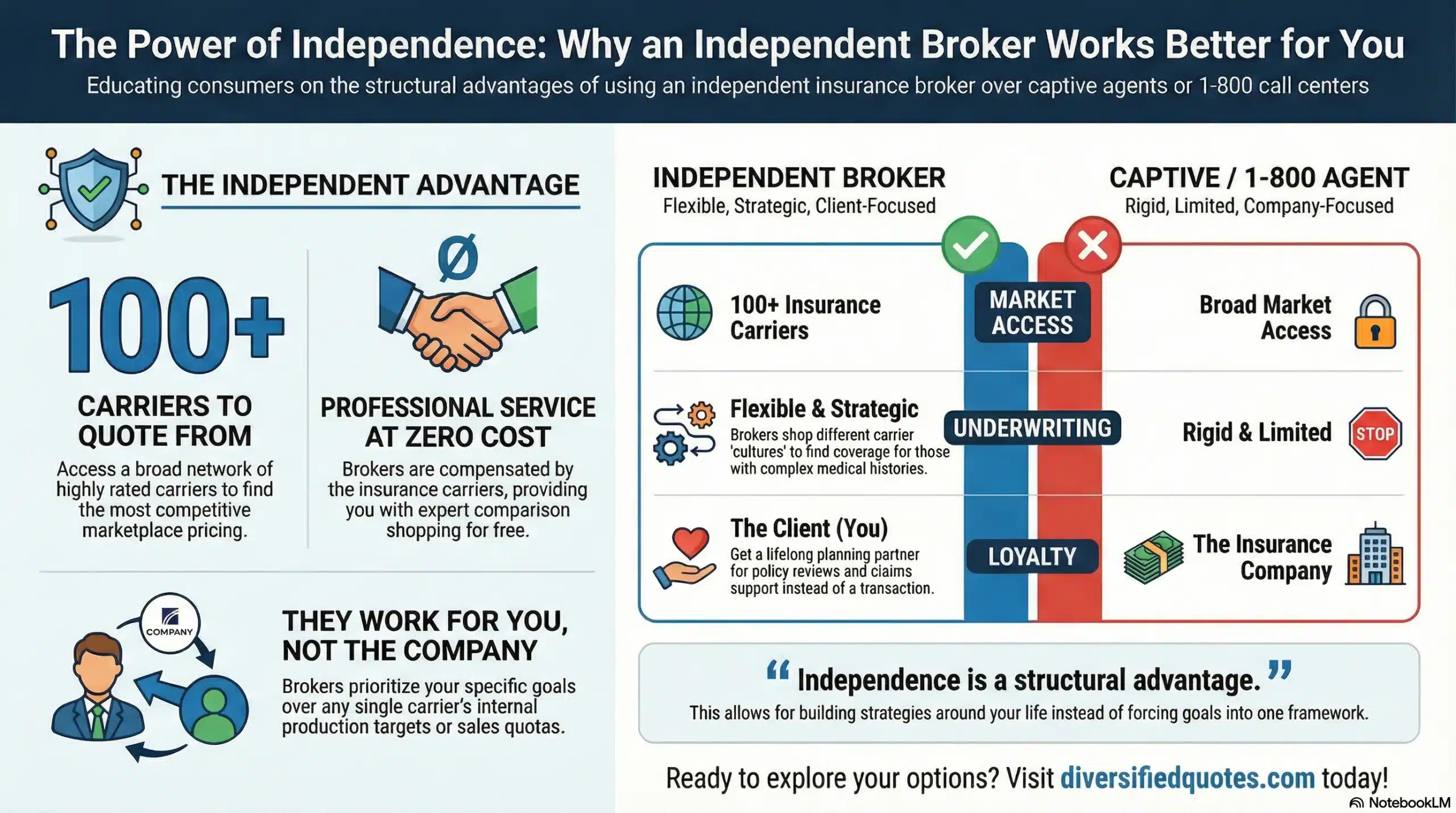
As an Independent Life Insurance Broker, we compare rates across 100+ carriers and prescreen every application before submission.
Life Insurance for Overweight Applicants

Jason Stolz CLTC, CRPC, DIA, CAA
Life insurance for overweight applicants is one of the most widely misunderstood segments of the life insurance market — primarily because most overweight applicants assume that weight alone controls the outcome when it genuinely does not. Approximately three out of four American adults are clinically overweight or obese by BMI standards, yet the vast majority of them can and do qualify for meaningful life insurance coverage. The real issue is not whether coverage is available — it usually is — but which carrier’s build chart and overall underwriting philosophy produces the best result for a specific applicant’s height, weight, and health profile. Build charts, the height-and-weight tables that carriers use to classify applicants, are not standardized. One carrier may approve a 5’10” applicant weighing 250 pounds at a Standard non-smoker rate; another carrier may apply a table rating to the identical applicant profile. This spread — between the most favorable and least favorable carrier for the same body size — often represents thousands of dollars in annual premium difference and sometimes the difference between approval and postponement. The solution for life insurance for overweight applicants is not luck; it is carrier matching combined with complete, accurate documentation that lets the underwriter evaluate the full health picture rather than defaulting to the most conservative interpretation of the weight number alone.
At Diversified Insurance Brokers, Chief Underwriter Jason Stolz has guided overweight and obese applicants through the life insurance underwriting process since 1980 — identifying which carriers have the most favorable build charts for specific height-weight profiles, how to frame the application to highlight metabolic health and stability, and when comorbidities like sleep apnea, hypertension, or diabetes affect the carrier strategy. Our resource on high-risk life insurance services covers the complete independent brokerage approach for any complex underwriting profile, and our resource on best life insurance for pre-existing conditions covers the broader carrier-comparison approach for applicants whose health profile involves more than build alone.
Compare Life Insurance Rates for Overweight Applicants
Life Insurance Quoter
Get Matched to the Right Carrier for Your Build Profile
We compare build charts and underwriting philosophies across 100+ top-rated carriers and identify which company treats your specific height-weight-health combination most favorably — before any application is submitted.
Explore Your Coverage OptionsWhy Life Insurance for Overweight Applicants Is a Carrier-Matching Problem
The fundamental insight that changes outcomes for life insurance for overweight applicants is that build chart standards are not uniform across the industry. Every carrier maintains its own proprietary height-and-weight table — and those tables set different maximum weights for each health class. What one carrier classifies as Standard Non-Smoker, another carrier classifies as Table 2. What one carrier classifies as Table 2, another carrier accepts as Standard. These differences are not trivial: each table rating typically adds approximately 25% to the base premium, meaning a Table 4 rating produces a premium roughly double what Standard rates would cost for the same face amount and term. Moving from Table 4 to Table 2 through better carrier matching can reduce the annual premium by 25 to 40% without any change in the applicant’s health. Moving from Table 2 to Standard Non-Smoker can reduce it by another 25%. The premium difference between the worst-matching and best-matching carrier for the same overweight applicant can easily reach $1,000 to $2,000 or more annually on a $500,000 policy.
Beyond build chart differences, carriers also differ in how heavily they weigh build relative to other risk factors. Some carriers are “build-sensitive” — they apply conservative underwriting to any applicant whose weight exceeds their preferred range, regardless of how clean the labs, blood pressure, and medical history look. Other carriers take a more holistic approach — they consider whether weight is the only concern or whether it compounds with metabolic risk factors, and they give meaningful credit for excellent metabolic health markers even in heavier applicants. For life insurance for overweight applicants with otherwise excellent health profiles, identifying a holistic carrier can produce underwriting outcomes that surprise both the applicant and the agent who previously submitted to the wrong company.
How Build Charts Work — and Why They Vary
Build charts are the height-and-weight tables that insurance carriers use to classify applicants’ body size as part of the underwriting process. Each row in a build chart corresponds to a height, and each column (or range) corresponds to a maximum weight for a specific underwriting class at that height. An applicant whose height and weight falls within the carrier’s Preferred range can qualify for Preferred or Preferred Plus pricing if other health factors support it. An applicant whose height and weight falls within the Standard range qualifies for Standard pricing. An applicant whose weight exceeds the Standard range enters table-rated territory, with each table adding approximately 25% to the standard premium. An applicant whose weight significantly exceeds even the table-rated ranges may be declined for traditional fully underwritten coverage at that carrier.
What most applicants do not realize is that carriers set these ranges independently — and the ranges can differ by 20 to 40 pounds or more for the same height at the same health class. A 5’6″ woman at 190 pounds might fall within the Standard range at one carrier and the Table 2 range at another. A 6’0″ man at 265 pounds might be Standard at one carrier and Table 4 at another. These are not small edge-case differences — they represent a significant portion of the overweight population who could qualify for meaningfully better pricing simply by being matched to the right carrier.
Some carriers also adjust build chart standards by age — allowing slightly higher weights at older ages because the mortality risk differential associated with excess weight decreases somewhat for older applicants. Others use separate tables for men and women, with different maximum weights at each height class reflecting differences in typical body composition. Still others use a unisex build chart, which can be more favorable for women who might otherwise face stricter weight limits under a gender-differentiated table. Understanding these nuances is part of the carrier matching process for life insurance for overweight applicants that produces materially better outcomes than simply submitting to the most familiar carrier name.
How BMI and Build Interact With Health Class Assignment
| BMI Range | CDC Classification | Typical Life Insurance Class Range | Key Modifying Factors | Best Strategy |
|---|---|---|---|---|
| Under 18.5 | Underweight | Standard to substandard depending on cause and labs | Reason for low weight; any digestive or metabolic conditions; labs | Medical records supporting healthy low weight; physician confirmation |
| 18.5–24.9 | Normal weight | Preferred Plus to Standard; build is not an underwriting concern | Labs, blood pressure, family history, and other health factors | Standard competitive carrier comparison |
| 25–29.9 | Overweight | Usually Preferred to Standard; build alone rarely affects class at this range | Metabolic health markers; blood pressure; labs; age | Emphasize strong metabolic markers; carrier matching for build chart limits |
| 30–34.9 | Class I Obesity | Standard to Table 4 range at most carriers; some allow Standard with clean metrics | Blood pressure control; absence of diabetes/sleep apnea; clean labs | Holistic carrier matching; prioritize carriers with favorable charts at this range |
| 35–39.9 | Class II Obesity | Table 4–6 common; some carriers decline; carrier selection critical | Any comorbidities significantly compound rating; clean labs can moderate outcome | Independent broker essential; pre-screening before submission to avoid MIB declines |
| 40+ | Class III / Severe Obesity | Table 6–8 or decline at most carriers; some select carriers consider; simplified/GI as alternatives | Comorbidities, age, and full health picture; complication severity paramount | Simplified issue or guaranteed issue may be primary realistic pathway; independent specialist required |
The table provides directional guidance — not guaranteed outcomes, since carrier build charts and underwriting guidelines vary, and individual health profiles affect classification within each range. The most important take-away is that the BMI range alone does not determine the final outcome. Metabolic health markers, absence of comorbidities, documented stability, and carrier matching all shift the actual result within each BMI range, sometimes by several table classes. Our resource on how much life insurance do I need covers the coverage sizing decision that should precede any carrier selection for life insurance for overweight applicants.
Six Comorbidities That Most Directly Compound Weight Risk
Life insurance for overweight applicants is rarely evaluated in a vacuum. Underwriters know that excess weight correlates with specific metabolic and cardiovascular conditions, and they evaluate the complete health picture for evidence of whether those correlations have materialized into actual complications. The presence or absence of each comorbidity meaningfully affects what outcome is realistic for any given build profile.
Sleep apnea is the single most common comorbidity that affects life insurance for overweight applicants because its prevalence increases significantly with excess weight and because untreated sleep apnea creates independent cardiovascular risk that stacks on top of the weight-related risk. The critical underwriting distinction is between treated and untreated sleep apnea. Applicants with diagnosed and compliantly treated obstructive sleep apnea — using CPAP, BiPAP, or similar therapy with documented adherence — are evaluated meaningfully differently from applicants with untreated sleep apnea. Compliant treatment reduces the cardiovascular risk profile that untreated apnea creates, and underwriters give appropriate credit for documented adherence. Our resource on life insurance for sleep apnea covers the sleep apnea underwriting framework in detail and how to document compliant treatment effectively.
High blood pressure (hypertension) is the second most common comorbidity and is evaluated heavily because it represents a cardiovascular risk factor that is directly quantifiable and directly modifiable. Well-controlled hypertension — blood pressure readings consistently at or below target values with stable medication management — is evaluated far more favorably than uncontrolled or labile hypertension. The lab results and medical record pattern showing consistent blood pressure control can meaningfully improve the underwriting outcome even when build places the applicant in a substandard territory. Our resource on life insurance for high blood pressure covers the hypertension underwriting factors and carrier-specific approaches to this common condition.
Type 2 diabetes and pre-diabetes represent the third major comorbidity category. The underwriting evaluation for diabetic applicants focuses on A1C trend, medication stability, presence or absence of complications (neuropathy, retinopathy, nephropathy, cardiovascular disease), and how long the diabetes has been diagnosed and managed. The combination of obesity and diabetes creates a compound risk profile that produces more conservative underwriting than either condition alone. Our resource on life insurance for diabetics with complications covers this specific intersection.
Cardiovascular disease — including coronary artery disease, prior heart attacks, atrial fibrillation, or heart failure — in combination with obesity creates the most challenging underwriting profile among the common comorbidities. Each cardiovascular event or diagnosis carries its own underwriting implications, and the combination with significant excess weight compounds the risk assessment significantly. Our resource on life insurance for heart disease covers the cardiovascular underwriting framework that applies when cardiac history is part of the complete picture.
Non-alcoholic fatty liver disease (NAFLD or NASH — now more commonly called MASLD/MASH) is an increasingly evaluated factor in obesity underwriting because its prevalence has grown substantially as obesity rates have increased. Carriers evaluate the severity of hepatic involvement — ranging from simple steatosis (liver fat) that is generally not a major underwriting concern, to NASH with significant fibrosis, which can attract more conservative underwriting. Labs showing liver enzyme elevation alongside an obese build prompt underwriters to investigate further, and the specific findings — whether documented on imaging or biopsy — affect the ultimate classification.
Joint disease (severe osteoarthritis requiring joint replacement) and mobility limitations are evaluated less for direct mortality risk and more for what they imply about activity level and functional status. Moderate joint disease rarely drives a substandard rating on its own, but it contributes to the overall clinical picture that underwriters assess when evaluating life insurance for overweight applicants with multiple active conditions.
GLP-1 Medications — What Ozempic, Wegovy, and Mounjaro Mean for Life Insurance Underwriting
The explosion of GLP-1 receptor agonist medications — semaglutide (Ozempic, Wegovy), tirzepatide (Mounjaro, Zepbound), and similar drugs — has created a new and frequently asked underwriting question for life insurance for overweight applicants: how does being on one of these medications affect the application? The answer depends entirely on why the medication was prescribed.
When a GLP-1 medication was prescribed primarily for weight loss — for an applicant who does not have Type 2 diabetes — underwriting generally follows the build guidelines for the applicant’s current height and weight. The medication itself is not a red flag. However, there is an important averaging provision that most carriers apply: if the applicant has been taking the GLP-1 medication for less than 12 months and has lost weight as a result, many carriers will average the prior weight and current weight rather than accepting the current post-medication weight at full credit. This prevents the scenario where an applicant loses 40 pounds over three months of medication use, applies at the new lower weight, and then regains the weight after the policy is issued. After 12 months of stable maintenance at the new weight while on the medication, most carriers will credit the current weight fully.
When a GLP-1 medication was prescribed for Type 2 diabetes management — where the medication’s primary purpose is blood sugar control — underwriting follows the diabetes guidelines rather than just the build guidelines. Diabetes underwriting typically involves additional scrutiny of A1C levels, complication history, and medication stability, and often produces different outcomes than build-only evaluation. The distinction between “prescribed for weight loss” and “prescribed for diabetes” is therefore material to how the file is presented and which underwriting framework the carrier applies. Accurate disclosure of the prescribing indication — confirmed by the prescribing physician’s records — is the clearest way to ensure the right framework is applied.
Bariatric Surgery and Life Insurance — The 12-Month Window
Bariatric surgery — including gastric bypass (Roux-en-Y), sleeve gastrectomy, and gastric banding — has become a common intervention for severe obesity and carries specific underwriting implications for life insurance for overweight applicants that both applicants and advisors should understand before any post-surgery application is submitted.
Most carriers apply a waiting period of approximately 12 months following bariatric surgery before they will issue traditionally underwritten life insurance. This waiting period reflects the elevated short-term complication risk associated with any major abdominal surgery, including the potential for post-surgical complications requiring additional procedures. During this 12-month window, guaranteed issue or final expense coverage can provide foundational protection without requiring the carrier to accept the post-surgical risk. Our resource on life insurance after bariatric surgery covers the specific underwriting framework for post-bariatric applicants in full detail.
After the 12-month window has passed without major complications, applicants who have lost substantial weight through bariatric surgery can typically pursue traditionally underwritten coverage. However, the weight-averaging principle applies here too: during the first 12 months after reaching a new stable weight post-surgery, many carriers credit only half the weight lost. An applicant who was 350 pounds pre-surgery and has stabilized at 220 pounds 18 months post-surgery — a 130-pound loss — may find that carriers treat them as weighing approximately 285 pounds rather than the current 220 for underwriting purposes. After 12 full months of stable weight at the lower level, the full weight improvement is generally credited.
Recent Weight Loss — The Averaging Rule and Its Practical Impact
Recent weight loss — whether from dietary change, medication, surgery, or exercise — is evaluated with a specific averaging framework by most carriers evaluating life insurance for overweight applicants. The purpose of this framework is straightforward: underwriters want to see that weight loss is durable before crediting it fully, because short-term weight loss that reverses after the policy is issued does not meaningfully reduce the long-term risk they are pricing. The averaging framework typically works as follows: if weight was lost within the 12 months prior to the application date, many carriers will add back approximately half of the weight lost rather than accepting the current application weight at face value. If the current weight has been stable for 12 or more months, the current weight is typically credited fully.
This averaging approach has practical implications for timing life insurance for overweight applicants applications. An applicant who lost 30 pounds over the past 6 months through consistent lifestyle change and whose current weight is stable has meaningfully reduced their risk profile — but the underwriter may treat them as if they had lost only 15 pounds for purposes of build chart classification. Waiting until the new lower weight has been maintained for 12 full months before submitting a traditional application typically produces a better outcome. During the waiting period, existing coverage, simplified issue options, or guaranteed issue coverage can bridge the protection gap for the family.
Policy Type Options for Life Insurance for Overweight Applicants
The right policy structure for life insurance for overweight applicants depends on where the applicant falls in the build and health classification spectrum and what the coverage goal is. Three primary options exist across the severity spectrum, and the right choice is the one that provides the most meaningful protection at the most sustainable premium given the applicant’s realistic underwriting outcome.
Fully underwritten term and permanent life insurance — where the carrier conducts a complete medical review including a paramedical exam, blood and urine labs, prescription database check, and medical record review — provides the largest coverage amounts at the most competitive pricing when the outcome is Standard or mild table ratings. For overweight applicants with BMI in the 25 to 35 range and clean metabolic health markers, this is often the most cost-effective path even though the premium may be slightly higher than what a normal-weight applicant at the same age would pay. Our resource on term life insurance calculator provides a starting point for estimating coverage amounts and premiums across different term lengths. Our resource on convert term to permanent life insurance covers the conversion privilege that allows term policyholders to upgrade to permanent coverage without new underwriting — a valuable option for overweight applicants who expect their health profile to improve over time.
No-exam or simplified issue life insurance — which uses database verification and health questions rather than a full paramedical examination — can serve as a faster pathway for applicants whose BMI is in a range where traditional underwriting might produce a table rating and who prefer to avoid the exam process. Our resource on no-exam life insurance covers how accelerated underwriting works and when it may produce comparable or better outcomes than traditional underwriting for overweight applicants.
Final expense and guaranteed issue coverage provides the most accessible path for severely obese applicants whose BMI or comorbidity profile makes traditional underwriting impractical or cost-prohibitive. Face amounts are smaller and premiums are higher per unit of coverage, but the protection is real and permanent. Our resource on burial insurance for overweight people covers the final expense and guaranteed issue options specifically available for larger-build applicants in the senior and near-senior market.
Muscular Build and the BMI Limitation — When Weight Is Misleading
One underwriting scenario that specifically affects life insurance for overweight applicants is the muscular applicant whose BMI falls in the overweight or obese range due to lean muscle mass rather than excess body fat. A 5’11” competitive athlete or physically active tradesman who weighs 235 pounds may have a BMI of approximately 33 — which falls squarely in the Class I obesity range — but their actual body composition may be far leaner than that BMI suggests. Standard BMI calculations do not distinguish between fat mass and lean mass, which means muscle-heavy applicants can be systematically disadvantaged by pure height-weight classification without additional context.
Some carriers address this limitation by considering additional measurements — waist circumference, hip-to-waist ratio, or specific build notes in the attending physician statement — that help distinguish a muscular heavy build from a metabolically unhealthy obese build. Providing the underwriter with a physician’s note that documents muscular build and confirms that excess weight reflects lean mass rather than adiposity can meaningfully improve outcomes at carriers that consider this context. Not all carriers provide this accommodation, which is again why carrier matching for build-sensitive cases requires knowledge of which companies are most receptive to non-standard build documentation. Our resource on best high-risk life insurance companies covers the carrier landscape for build-sensitive and other complex medical profiles.
Practical Tips for the Life Insurance Medical Exam
For life insurance for overweight applicants who are pursuing traditionally underwritten coverage that requires a paramedical examination, the exam itself can be optimized in ways that produce the most accurate and favorable possible readings. These are not gaming strategies — they are practical steps that eliminate avoidable artificial inflation of readings that would otherwise not reflect the applicant’s typical health status.
Scheduling the exam for the morning produces lighter weight readings than afternoon appointments, because hydration and food consumption through the day add weight. Most people weigh 2 to 5 pounds less first thing in the morning compared to later in the day. Wearing light clothing on the day of the exam and avoiding shoes during weighing similarly reduces measured weight modestly without misrepresentation — the weight reported on the application should reflect the applicant’s true current weight, and the exam measurements should be consistent with that reported weight.
Avoiding high-sodium foods and large meals for 24 hours before the exam reduces both blood pressure readings and temporary water retention that can artificially elevate weight. Staying adequately hydrated before the exam — particularly before the blood draw — makes venipuncture easier and reduces the likelihood of a repeated draw that can increase exam anxiety and temporarily elevate blood pressure. Avoiding caffeine and tobacco (for those who smoke) on the morning of the exam similarly reduces temporary blood pressure elevation that can produce readings higher than the applicant’s typical baseline.
Why a Prior Decline Does Not Define Your Final Answer
One of the most important messages for anyone who has already been declined for life insurance for overweight applicants is that a prior decline at one carrier does not represent the full market’s response. Different carriers have different build charts, different levels of willingness to consider holistic health profiles alongside build, and different product offerings that may serve specific overweight profiles more effectively. A decline at one carrier — particularly a carrier known for conservative build underwriting — may coexist with approval at a carrier whose build chart is more generous or whose underwriting philosophy credits strong metabolic health markers even when weight is elevated.
The key is avoiding the cascading decline problem: each declined application for traditionally underwritten life insurance becomes part of the MIB record that future carriers see when reviewing new applications. A pattern of multiple declined applications creates an underwriting signal that complicates future submissions even when the underlying health profile has not worsened. Working with an independent specialist who pre-screens cases before formal submission — identifying the most build-favorable carrier for the specific profile before generating any application — prevents this cascading effect and produces better first-attempt outcomes. Our resource on what to do if you’ve been denied life insurance covers the strategy path after any prior decline, and our resource on getting a second opinion on your life insurance quote covers how to evaluate whether a prior quote or outcome represents the best the market could produce.
Find the Best Life Insurance Carrier for Your Build Profile
We compare build charts and underwriting philosophies across 100+ top-rated carriers — then match your specific height, weight, and health profile to the carrier most likely to produce the strongest approval at the most affordable premium.
Explore Your Life Insurance OptionsRelated Life Insurance Resources for Overweight Applicants
Explore specific condition resources and coverage options that apply most commonly alongside overweight underwriting.
Financial Protection Essentials
Explore the complete life insurance planning landscape — coverage sizing, term lengths, carrier reviews, and conversion strategies.
Compare Term Life Insurance Lengths
Explore different term periods to find coverage that best matches your timeline and budget.
Talk With an Advisor Today
Choose how you’d like to connect—call or message us, then book a time that works for you.
Schedule here:
calendly.com/jason-dibcompanies/diversified-quotes
Licensed in all 50 states • Fiduciary, family-owned since 1980
Frequently Asked Questions: Life Insurance for Overweight Applicants
Does being overweight disqualify me from getting life insurance?
No. Being overweight or obese does not automatically disqualify you from life insurance. Approximately three out of four American adults are classified as overweight or obese by BMI standards, and the vast majority can qualify for meaningful life insurance coverage. The impact of excess weight is primarily on the underwriting class and premium rather than on approval itself — particularly for applicants in the BMI 25 to 35 range with otherwise clean metabolic health markers. Even at higher BMI levels, table-rated traditional coverage or simplified issue and guaranteed issue options often remain available. The critical factor for life insurance for overweight applicants is carrier matching — different carriers have materially different build charts that produce very different outcomes for the same height and weight.
What is a build chart and why does it vary between carriers?
A build chart is a proprietary height-and-weight table that each insurance carrier uses to classify applicants’ body size as part of underwriting. Each row corresponds to a height, and each range corresponds to a maximum weight for a specific underwriting class. Carriers set these ranges independently, which is why the same height-weight combination can produce different health class assignments at different companies. A 5’10” applicant at 240 pounds may fall within the Standard range at one carrier and the Table 2 range at another. These differences translate directly into premium differences — each table rating adds approximately 25% to the base premium — making carrier selection the most impactful strategic decision for life insurance for overweight applicants.
How do GLP-1 medications like Ozempic or Wegovy affect my life insurance application?
It depends on why the medication was prescribed. If prescribed solely for weight loss, underwriting generally follows the build guidelines for your current height and weight. However, most carriers apply a weight-averaging provision: if you started the GLP-1 medication within the past 12 months, many carriers will average your current and prior weight rather than accepting the full weight loss at face value. After 12 months of stable weight maintenance at the new level, most carriers credit the current weight fully. If the GLP-1 medication was prescribed for Type 2 diabetes management, underwriting follows the diabetes guidelines rather than just the build guidelines — which typically involves additional scrutiny of A1C, complication history, and medication stability.
How does recent weight loss affect my life insurance application?
Most carriers apply a weight-averaging provision for recent weight loss: if weight was lost within the 12 months prior to the application date, many underwriters add back approximately half the weight lost rather than accepting the current weight fully. An applicant who lost 30 pounds in the past 6 months may be treated as having lost only 15 pounds for build chart purposes. After the new lower weight has been maintained for 12 full months, most carriers credit the current weight without adjustment. This averaging approach is designed to ensure that short-term weight loss that reverses after policy issuance does not produce a permanently favorable underwriting classification that no longer reflects the actual risk.
What happens if I’ve already been declined for life insurance due to weight?
A prior decline at one carrier does not represent the full market’s response. Different carriers have different build charts and different levels of willingness to consider holistic health profiles alongside build. A carrier that declined your application may use stricter build standards than others. The most important step after a prior decline for life insurance for overweight applicants is to avoid submitting additional applications without a strategy — each declined application becomes part of the MIB record that subsequent carriers see. Working with an independent specialist who pre-screens your case against carriers with more favorable build charts and underwriting philosophies before any formal submission is the correct path to achieving a better outcome.
Does sleep apnea make it harder to get life insurance if I’m also overweight?
Sleep apnea is a complicating factor when combined with excess weight because it creates an independent cardiovascular risk profile that compounds the weight-related risk. However, the underwriting treatment differs significantly based on treatment status: compliant, documented CPAP or BiPAP use reduces the cardiovascular risk profile that untreated sleep apnea creates, and underwriters give meaningful credit for documented treatment adherence. An overweight applicant with diagnosed but compliantly treated sleep apnea typically faces better underwriting outcomes than one with untreated or non-compliant treatment. Providing documentation of consistent therapy use — from CPAP data reports or physician follow-up notes — is one of the most important steps in positioning this combination for the best possible outcome.
What if I’m muscular with a high BMI but low body fat?
This is a recognized limitation of BMI-based underwriting. Muscular applicants whose weight reflects lean mass rather than adipose tissue can be disadvantaged by standard height-weight classification. Some carriers address this by considering additional measurements — waist circumference, hip-to-waist ratio, or build notes from attending physicians — that help distinguish muscular build from metabolically unhealthy obesity. Providing the underwriter with a physician’s note documenting muscular build and confirming that excess weight reflects lean mass rather than body fat can meaningfully improve outcomes at carriers receptive to this context. Carrier selection is particularly important for muscular overweight applicants because not all carriers accommodate this distinction.
About the Author:
Jason Stolz, CLTC, CRPC, DIA, CAA and Chief Underwriter at Diversified Insurance Brokers (NPN 20471358), is a senior insurance and retirement professional with more than 25 years of real-world experience helping individuals, families, and business owners protect their income, assets, and long-term financial stability. As a long-time partner of the nationally licensed independent agency Diversified Insurance Brokers, Jason provides trusted guidance across multiple specialties—including fixed and indexed annuities, long-term care planning, personal and business disability insurance, life insurance solutions, Group Health, Travel Medical and Evacuation Insurance, and short-term health coverage. Diversified Insurance Brokers maintains active contracts with over 100 highly rated insurance carriers, ensuring clients have access to a broad and competitive marketplace.
His practical, education-first approach has earned recognition in publications such as VoyageATL, and contributions from his agency featured in Kiplinger and GoBankingRates— highlighting his commitment to financial clarity and client-focused planning. Drawing on deep product knowledge and years of hands-on field experience, Jason helps clients evaluate carriers, compare strategies, and build retirement and protection plans that are both secure and cost-efficient. Visitors who want to explore current annuity rates and compare options across multiple insurers can also use this annuity quote and comparison tool.
Explore More Life Insurance Options: Browse our complete guide to Life Insurance for Diabetes, Weight & Metabolic Conditions — covering Type 1 and Type 2 diabetes, high blood pressure, and weight-related underwriting from 100+ carriers.
Last Reviewed: June 15, 2026 |
Reviewed by: Jason Stolz, CLTC, CRPC, DIA, CAA
Chief Underwriter, Diversified Insurance Brokers, Inc. | NPN: 20471358 | Diversified Insurance Brokers, Inc. — Licensed in all 50 states
Fact Checked by: Tonia Pettitt, CMIP©
Medicare Specialist, Diversified Insurance Brokers, Inc. | NPN: 14374308 | Diversified Insurance Brokers, Inc. — Licensed in all 50 states
Did you find this content helpful? Leave us a Google review — it helps others find trustworthy guidance too.
Editorial Standards: Diversified Insurance Brokers maintains rigorous editorial standards to ensure accuracy, clarity, and independence in all content. Learn more about our editorial standards and commitment to transparency.
