
29-Year Term Life Insurance
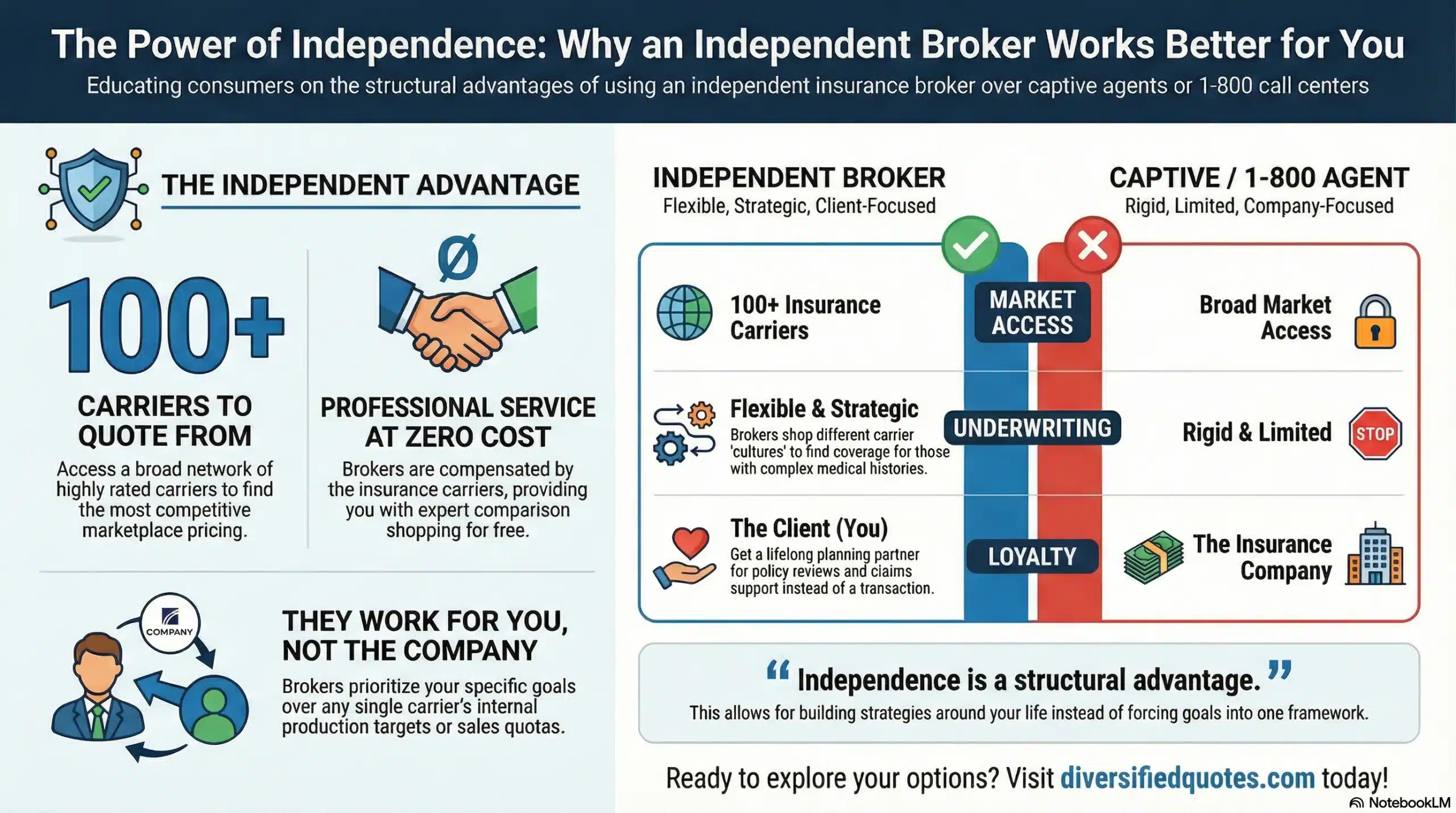
As an Independent Life Insurance Broker, we compare rates across 100+ carriers and prescreen every application before submission.
29-Year Term Life Insurance

Jason Stolz CLTC, CRPC, DIA, CAA
29 year term life insurance is the final non-standard term length before the most universally available, most broadly recommended long-term standard in the term life market. Its position in the non-standard term series mirrors the position of 19-year term in the mid-range corridor: just as 19-year sits one year below the most popular standard option at 20 years, 29-year sits one year below the most popular long-term standard at 30 years. In both cases, the premium difference between the non-standard choice and the adjacent standard is the smallest in its respective range — approximately $5 to $10 per month for most preferred applicant profiles at standard coverage amounts. In both cases, the standard’s universal carrier availability and one-year buffer make it the compelling default for most households whose obligations are approximately rather than specifically timed. And in both cases, the non-standard option is the right answer — not a convenient approximation — for applicants who can specifically confirm that their obligation ends at the twenty-nine-year mark rather than at thirty.
The three scenarios that most commonly generate a genuine 29-year coverage need are: a 38-year-old planning to retire at Social Security Full Retirement Age (67), where 38 + 29 = 67; a homeowner whose 30-year mortgage was originated approximately one year ago and now has 29 years of payments remaining; and a parent of a one-year-old child who wants income-replacement protection through the child’s age 30. These are not approximations or planning conventions — they are verifiable, calendar-confirmed timelines that align precisely with the twenty-nine-year coverage window and that the standard 30-year term over-covers by exactly one year at a modest but real premium cost. At Diversified Insurance Brokers, Jason Stolz, CLTC, CRPC, DIA, CAA helps applicants determine whether 29 year term life insurance is the genuinely right match or whether the standard 30-year alternative is the more practical choice — a question that requires honest comparison of the one-year premium differential against the full set of structural advantages that universal carrier availability provides. Our resource on how does life insurance work covers the term life foundation, and our resource on best term life insurance policy covers the decision criteria for matching term length to actual household obligations.
See Real-Term Rates Side by Side
Life Insurance Quoter
Compare 29 Year Term Life Insurance Options
We confirm which carriers offer 29 year term life insurance for your profile, compare the actual premium differential against the standard 30-year alternative just one year longer, and give you a direct assessment of which choice fits your specific timeline — or whether the 30-year standard produces the better outcome for your household.
Request My 29 Year Term QuoteHow 29 Year Term Life Insurance Works
29 year term life insurance is a level-premium, fixed-death-benefit policy providing pure life insurance protection for exactly twenty-nine years from the policy issue date. The premium is set at policy issue based on the underwriting class assigned and remains guaranteed and level for the full twenty-nine-year period. If the insured dies during the coverage window, the carrier pays the full death benefit to named beneficiaries, typically income-tax-free. If the insured outlives the term, the policy expires with no cash value accumulated. Most policies include a conversion privilege and annual renewal provision at sharply increasing post-term rates.
29 year term life insurance is available through carriers that offer custom term lengths through select-a-term style product lines — not from all major carriers. This is the fundamental structural difference from the standard 30-year term: while 30-year coverage is universally available from every major carrier in the market with maximum competitive underwriting and pricing, 29-year custom term is restricted to carriers whose product lines specifically support non-standard year increments. This availability constraint is the central consideration in every 29-versus-30 comparison, and it is the primary reason the standard 30-year term is the more practical choice for most applicants who think they need 29 years. Our resource on 30 year term life insurance covers the standard alternative with full detail.
The 29 vs. 30 Decision — The Narrowest Non-Standard Gap
| Term Option | Coverage Period | Carrier Availability | Expiration Age (38-Year-Old Applicant) |
Monthly Premium Range $500K Preferred 38M (sample) |
Position vs. 29-Year Obligation |
|---|---|---|---|---|---|
| 25-Year Term | 25 years | Universal | Age 63 — 4 years before FRA; 4-year gap | ~$75–90 | 4-year shortfall — significant gap for 29-year obligations |
| 28-Year Term | 28 years | Select carriers | Age 66 — 1 year before FRA; 1-year gap | ~$88–105 | 1-year gap — misses FRA by 1 year |
| 29-Year Term ← This Page | 29 years | Select carriers with custom terms | Age 67 — FRA; 30-year mortgage 1 year in paid off; 1-year-old to age 30 | ~$95–115 | Exact match for confirmed 29-year obligations |
| 30-Year Term | 30 years | Universal — every major carrier | Age 68 — 1-year post-FRA buffer; 1 year of retirement-period over-coverage | ~$105–125 — typically $5–10/mo. more than 29-year | 1-year buffer — universal availability; almost always the better choice when timeline is approximate |
Sample premium ranges for illustrative comparison based on market benchmarks for a 38-year-old preferred non-smoker male with $500,000 of coverage. Actual premiums depend on carrier, health class assigned, state, exact age, and full underwriting details. Use the quote tool above for carrier-specific pricing.
The table makes the defining reality of the 29-versus-30 decision explicit. The monthly premium difference between 29-year custom term and the standard 30-year term is approximately $5 to $10 for most preferred applicant profiles at standard coverage amounts — the smallest differential of any adjacent pair in the entire 25-to-30 non-standard corridor. Over a 29-year coverage period, that differential accumulates to approximately $1,740 to $3,480 in total premium savings. For households whose 29-year obligation is specifically confirmed, this savings is real. For households whose timeline is approximately twenty-nine years but not precisely confirmed — where the mortgage might get modified, the retirement date could shift, or the dependency window could extend — the standard 30-year term’s universal carrier availability and one-year buffer produce a materially better outcome than the $5-10/month savings justifies. Our resources on 28 year term life insurance and 25 year term life insurance cover adjacent options for households whose confirmed obligation falls at those specific durations.
Three Specific Scenarios That Generate a Genuine 29-Year Need
The households for whom 29 year term life insurance is the genuinely right answer share one defining characteristic: a specific, calendar-verifiable financial obligation that ends at the twenty-nine-year mark. Three scenarios generate this alignment with meaningful real-world frequency.
The first and most planning-significant is the 38-year-old professional targeting Social Security Full Retirement Age as their income-transition milestone. For Americans born after 1960, Full Retirement Age is 67. A 38-year-old today who wants income-replacement protection through the activation of full unreduced Social Security benefits needs exactly 29 years of coverage: 38 + 29 = 67. At FRA, Social Security income activates fully, retirement savings has had twenty-nine additional years of contribution and growth, and the primary income-replacement justification for the life insurance policy has been transferred to retirement income streams. A 25-year policy for the same 38-year-old expires at 63 — four years before FRA. A 30-year policy expires at 68 — one year into retirement when the income-replacement function has already been resolved. 29 year term life insurance is the exact FRA-aligned choice for 38-year-old applicants, covering the complete remaining working career through income activation without one year of unnecessary retirement-period coverage. Our resource on at what age should you stop buying term life insurance covers how retirement income activation should drive coverage end-point decisions.
The second scenario is the homeowner whose 30-year mortgage was originated approximately one year ago and now has 29 years of payments remaining. This is among the most common real-world sources of a 29-year coverage need, and it is particularly relevant in the current market: millions of Americans purchased or refinanced homes in 2024 — one of the most active years for home transactions in recent history — and those homeowners are approaching the one-year mark of their mortgage and conducting their first comprehensive financial review. A homeowner who closed on a 30-year mortgage in 2024 has approximately 29 years of payments remaining from a 2025 review date. 29 year term life insurance aligned to that remaining balance provides coverage precisely through the final mortgage payment — the policy expires when the home is owned free and clear, and the surviving household is never managing a substantial loan balance without the protection the policy provided. Our resource on mortgage protection vs term life insurance covers how traditional term life compares to dedicated mortgage protection products, and our resource on how to protect your mortgage with life insurance covers the planning framework directly.
The third scenario is a parent of a one-year-old child who defines full financial independence as occurring at the child’s age 30 — the milestone associated with completion of graduate education, establishment of independent income, and departure from parental financial support in households with extended educational expectations. A parent purchasing 29 year term life insurance today when their child is one year old will be covered through the child’s 30th birthday, providing income-replacement protection through the complete dependency horizon including potential graduate school, early career establishment, and the gradual progression to genuine financial independence. Our resource on life insurance for new parents covers how parents with young children should approach the dependency-window calculation, and our resource on life insurance for single parents covers the heightened stakes of this decision for single-income households where the insured income is the only household income stream.
When the Standard 30-Year Term Is the Better Choice
The standard 30-year term is the better choice for most applicants who initially consider 29 year term life insurance. This is the same structural conclusion that the 19-year page reached relative to the 20-year standard: when the premium differential is small, when the obligation timeline is approximate rather than confirmed, and when the universal carrier availability of the standard option provides meaningful underwriting market advantages, the standard term wins for most households.
For the 29-year decision, the one-year gap between 29 and 30 is the narrowest in the series. The $5-10/month premium savings accumulated over 29 years is real but modest. More importantly, restricting the carrier selection to only those offering a 29-year custom term — rather than accessing the full universe of major carriers competing in the standard 30-year market — can produce an inferior underwriting outcome for applicants whose health profile would benefit most from broad carrier competition. An applicant with a managed health condition that specific carriers evaluate more favorably than others loses access to those favorable carriers if the 29-year custom term requirement eliminates them from consideration. The $5-10/month premium savings does not compensate for a worse health class assignment at the remaining carrier pool.
The three conditions that must simultaneously be true for 29 year term life insurance to win over the 30-year standard are identical to those established for the 19-year versus 20-year comparison: the obligation must be specifically confirmed at 29 years (FRA alignment for a 38-year-old, verified mortgage one year in, or another confirmed milestone); the premium savings must be meaningful in the household budget; and the applicant must be confident in their timeline precision such that the one-year gap risk — if the obligation extends to year 30 — is acceptable. When the timeline is approximate, the standard 30-year term is the more forgiving and often better-priced choice across a broader carrier market.
Who Is 29 Year Term Life Insurance Best For?
29 year term life insurance is the right structure for applicants who can name and verify the specific financial milestone that falls at the twenty-nine-year mark. Beyond the three primary scenarios described above, additional households with genuine 29-year needs include: business owners with a buy-sell agreement, commercial loan, or key-person obligation running specifically twenty-nine years from today; professionals at 38 years old planning an early retirement at 67 tied to a pension activation date rather than Social Security; and households where a specific savings milestone — a defined retirement portfolio target calculated to be reached in twenty-nine years at a specified contribution rate — creates a verifiable coverage end date. Our resource on buy-sell life insurance for business and our resource on partnership buy-sell agreement insurance cover the business life insurance context where the most precisely timed obligation windows are generated.
Three Strategies for Achieving 29-Year Coverage
Applicants with confirmed 29-year obligations have three practical paths to achieving coverage that matches this specific duration. The first strategy is locating a carrier directly offering a 29-year custom term through a select-a-term product — the cleanest execution when available and competitive for the applicant’s profile, providing one policy, one premium, and one expiration date aligned to the obligation. The second strategy is choosing the standard 30-year term as a one-year-buffered proxy — exchanging $5-10/month in premium efficiency for universal carrier availability, maximum underwriting market competition, and a built-in one-year buffer against timeline uncertainty. For the majority of applicants, this is the right choice. The third strategy is a laddering approach: combining a standard 30-year policy at the full face amount with a shorter supplemental policy that provides additional coverage during the early years when obligations are highest, then steps down as the mortgage is paid and children approach independence. Our resource on laddering strategies covers the coverage layering concept applied across financial products.
Rates and Underwriting for 29 Year Term Life Insurance
29 year term life insurance is underwritten through the same process as all term lengths — carriers evaluate mortality risk across the twenty-nine-year window and assign a health class based on age, tobacco status, overall health and medical history, build, family history, and driving record. The premium falls between 28-year and 30-year standard rates, with the 30-year differential of $5-10/month reflecting one additional year of mortality exposure at the applicant’s age. Underwriting class assignment produces far more premium variation than the one-year term length difference: the spread between Preferred Plus and Standard for the same 38-year-old, same face amount, and same carrier can be 40-60% of the Preferred Plus premium — dwarfing the $5-10/month difference between 29-year and 30-year coverage for a given health class.
This pricing reality reinforces the case for prioritizing carrier fit over term length precision for applicants with any health complexity. Our resource on life insurance with pre-existing conditions covers how managed conditions affect carrier selection and health class outcomes. Our resource on life insurance for cardiomyopathy illustrates how specific health conditions are evaluated across different carriers — the same analysis framework that applies to any condition affecting underwriting. Our resource on no-exam life insurance covers accelerated underwriting availability, and our resource on what is a life insurance exam covers the traditional path for applicants where full medical documentation produces a better health class.
Conversion and End-of-Term Planning
Many 29 year term life insurance policies include a conversion privilege allowing exchange to a permanent policy from the same carrier without new medical underwriting. For a 38-year-old purchasing 29-year coverage, the policy expires at age 67. Conversion at or before that point — if health changes occurred during the coverage period and permanent coverage is desired — would be executed at the original health class rather than at current health, potentially providing access to permanent coverage at rates significantly lower than a fresh age-67 application would generate.
Conversion deadlines, eligible products, and conversion mechanics vary significantly by carrier. Our resource on convert term to permanent life insurance covers conversion mechanics, deadlines, and carrier variation in full detail. Our resource on life insurance with living benefits covers the accelerated death benefit and living benefit provisions that many term policies include alongside conversion rights.
Coverage Amount for 29 Year Term Life Insurance
The coverage amount for 29 year term life insurance is sized to prevent the maximum financial disruption the household would face if the insured died today across the full twenty-nine-year coverage window. The calculation begins with income replacement — the income stream that needs to be replaced for the household to maintain financial stability — and debt payoff — the outstanding obligations that would strain the surviving household on reduced income. These two components define the core coverage need for most households. Our resource on term life insurance calculator provides a structured needs-analysis tool, and our resource on high-risk life insurance playbook covers coverage amount and carrier selection strategies for applicants with health history that affects underwriting complexity.
Get Your Best 29 Year Term Life Insurance Options
We confirm carrier availability for 29 year term life insurance, compare the actual premium differential against the standard 30-year term just one year longer, give you a direct assessment of which choice fits your confirmed timeline, and structure your application for the strongest underwriting outcome across 100+ carriers.
Request My 29 Year Term QuoteFinancial Protection Essentials
Connect 29 year term life insurance to related coverage guides, underwriting resources, and planning tools.
Compare Term Life Insurance Lengths
Explore different term periods to find coverage that best matches your timeline and budget.
Talk With an Advisor Today
Choose how you’d like to connect—call or message us, then book a time that works for you.
Schedule here:
calendly.com/jason-dibcompanies/diversified-quotes
Licensed in all 50 states • Fiduciary, family-owned since 1980
Frequently Asked Questions: 29 Year Term Life Insurance
What is 29 year term life insurance and who genuinely needs it?
29 year term life insurance provides level premiums and a fixed death benefit for exactly twenty-nine years — the final non-standard term before the universally available 30-year standard. It is the right choice when a specific financial obligation ends at the twenty-nine-year mark: a 38-year-old planning retirement at Social Security Full Retirement Age (67), where 38 + 29 = 67; a homeowner whose 30-year mortgage was originated approximately one year ago with 29 years of payments remaining; or a parent of a one-year-old wanting income-replacement protection through the child’s age 30. It is available through carriers offering custom term lengths, not universally from all major carriers.
Should I choose 29 year term or the standard 30-year term?
For most applicants, the standard 30-year term is the better practical choice. The premium difference between 29-year and 30-year coverage is typically $5-10 per month — the smallest gap in the entire non-standard term series between 25 and 30 years. The 30-year standard’s universal carrier availability provides access to the full competitive underwriting market; restricting carrier selection to those offering 29-year custom terms can produce an inferior underwriting outcome for applicants with any health complexity whose preferred carriers do not offer the custom term. The 29-year custom term wins only when the obligation is specifically confirmed at 29 years, the premium savings are meaningful in the household budget, and the applicant is confident enough in their timeline precision that the one-year gap risk is acceptable.
How does a 30-year mortgage 1 year in create a 29-year term need?
A homeowner who originated a 30-year mortgage approximately one year ago has approximately 29 years of payments remaining. For homeowners who purchased or refinanced in 2024 — a large transaction volume year — and are now conducting their first annual financial review, 29 year term life insurance aligned to the remaining mortgage balance provides exact coverage through payoff: the policy expires when the final mortgage payment is made, ensuring a surviving household never manages a substantial loan balance without the income-replacement protection the policy provides. A 25-year policy creates a 4-year coverage gap; a 30-year policy extends one year past payoff. Only the 29-year term provides exact alignment for this specific cohort of 2024 homeowners.
Is 29 year term life insurance available from all major carriers?
No. 29 year term life insurance is available through carriers offering custom term lengths through select-a-term product lines — not universally from all major carriers. Standard 30-year term is available from every major carrier in the market, benefiting from maximum competitive pricing. This availability gap is the most significant structural consideration in the 29-versus-30 comparison: if no carrier competitive for the applicant’s health profile offers 29-year term, the decision defaults to the 30-year standard, which delivers universal availability and a one-year buffer at a modest additional premium. Working with an independent broker who simultaneously checks multiple carriers is the most efficient approach to confirming 29-year availability.
What are the three scenarios that specifically generate a 29-year coverage need?
Three scenarios produce a genuine 29-year alignment. First, a 38-year-old planning to retire at Social Security Full Retirement Age (67) — where 38 + 29 = 67 — needs exactly 29 years of income-replacement protection through the point at which Social Security fully activates and the income-replacement function of life insurance is transferred to retirement income streams. Second, a homeowner one year into a 30-year mortgage has exactly 29 years of payments remaining and can match the policy expiration to the mortgage payoff date. Third, a parent of a one-year-old child who defines financial independence as occurring at age 30 needs exactly 29 years of income-replacement protection through that full dependency horizon.
Why is the health class assignment more important than the 1-year term difference?
The premium spread between health classes at the same age and coverage amount is far larger than the $5-10/month premium difference between 29-year and 30-year coverage. A 38-year-old who qualifies as Preferred rather than Standard for $500,000 of 29-year or 30-year coverage pays 40-60% less premium — a difference of $40-60/month — compared to the $5-10/month variation between term lengths. This pricing reality means that for applicants with any health complexity, choosing the term length that provides access to the broadest carrier market — where the most favorable underwriting guidelines for their specific health profile exist — is far more valuable than saving one year of premium at a narrower carrier pool. For most applicants, the 30-year standard’s universal carrier availability is worth more than the 29-year custom term’s modest premium savings.
About the Author:
Jason Stolz, CLTC, CRPC, DIA, CAA and Chief Underwriter at Diversified Insurance Brokers (NPN 20471358), is a senior insurance and retirement professional with more than 25 years of real-world experience helping individuals, families, and business owners protect their income, assets, and long-term financial stability. As a long-time partner of the nationally licensed independent agency Diversified Insurance Brokers, Jason provides trusted guidance across multiple specialties—including fixed and indexed annuities, long-term care planning, personal and business disability insurance, life insurance solutions, Group Health, Travel Medical and Evacuation Insurance, and short-term health coverage. Diversified Insurance Brokers maintains active contracts with over 100 highly rated insurance carriers, ensuring clients have access to a broad and competitive marketplace.
His practical, education-first approach has earned recognition in publications such as VoyageATL, and contributions from his agency featured in Kiplinger and GoBankingRates— highlighting his commitment to financial clarity and client-focused planning. Drawing on deep product knowledge and years of hands-on field experience, Jason helps clients evaluate carriers, compare strategies, and build retirement and protection plans that are both secure and cost-efficient. Visitors who want to explore current annuity rates and compare options across multiple insurers can also use this annuity quote and comparison tool.
Explore More Life Insurance Options: Browse our complete guide to How Life Insurance Works — covering term life, whole life, final expense, annuity alternatives & more from 100+ carriers.
Last Reviewed: May 25, 2026 |
Reviewed by: Jason Stolz, CLTC, CRPC, DIA, CAA
Chief Underwriter, Diversified Insurance Brokers, Inc. | NPN: 20471358 | Diversified Insurance Brokers, Inc. — Licensed in all 50 states
Fact Checked by: Tonia Pettitt, CMIP©
Medicare Specialist, Diversified Insurance Brokers, Inc. | NPN: 14374308 | Diversified Insurance Brokers, Inc. — Licensed in all 50 states
Did you find this content helpful? Leave us a Google review — it helps others find trustworthy guidance too.
Editorial Standards: Diversified Insurance Brokers maintains rigorous editorial standards to ensure accuracy, clarity, and independence in all content. Learn more about our editorial standards and commitment to transparency.
