
Best Term Life Insurance Policy
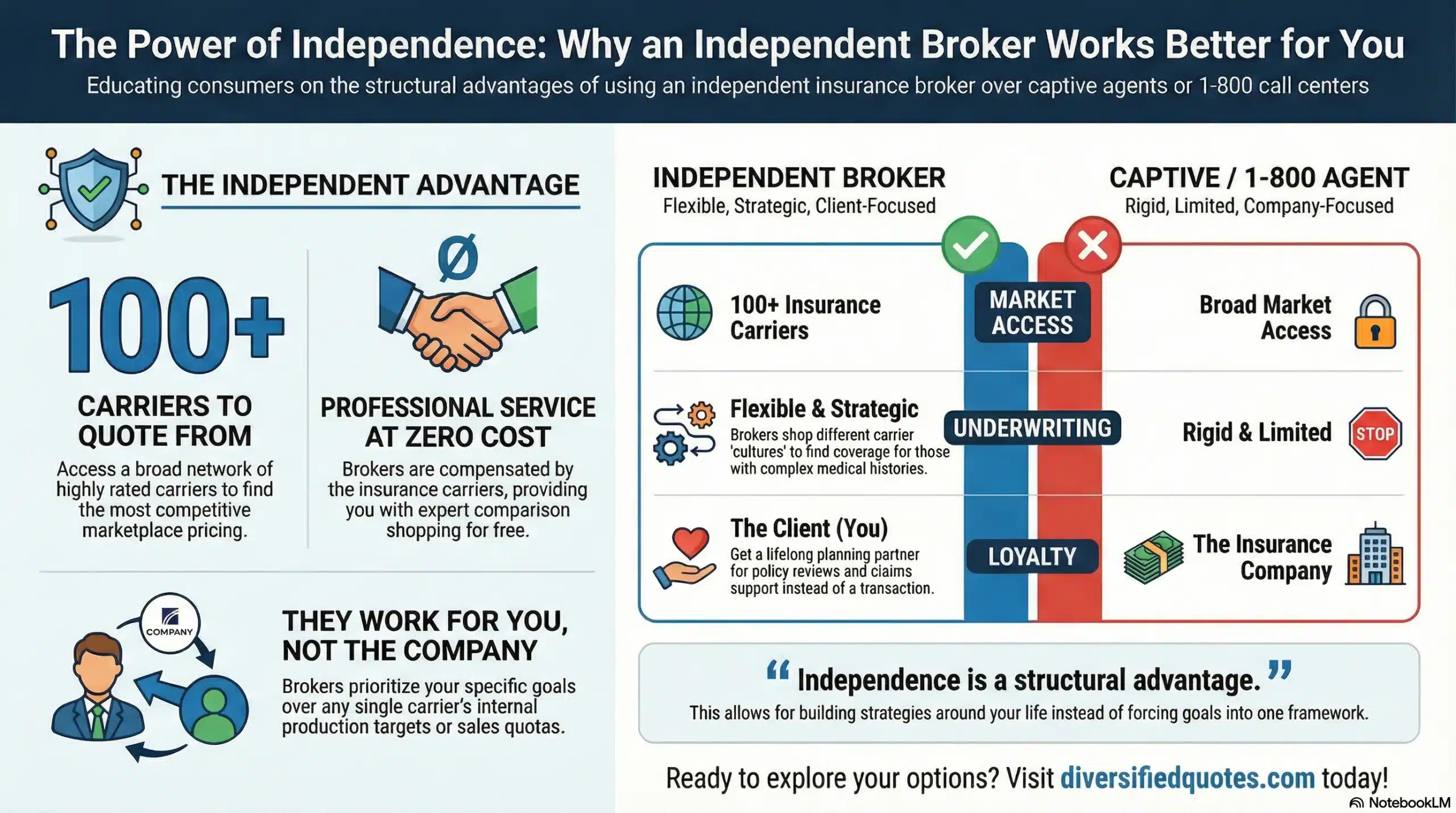
As an Independent Life Insurance Broker, we compare rates across 100+ carriers and prescreen every application before submission.
Best Term Life Insurance Policy

Jason Stolz CLTC, CRPC, DIA, CAA
The best term life insurance policy is the one built around your specific income, obligations, timeline, and health profile — not the one with the lowest headline price at a single carrier. Term life insurance is the most efficient and cost-effective tool for creating large amounts of income replacement, debt protection, and financial security for a defined period. It pays a guaranteed death benefit if the insured dies within the term, premiums stay level for the full selected period, and when the coverage need ends, there is no cash value loss, no complicated exit, and no ongoing obligation. The architecture is simple because the purpose is specific: replace what the surviving family would lose if the policyholder died today. Understanding what term life insurance actually covers — and what it does not — is the starting point for every coverage decision. At Diversified Insurance Brokers, Jason Stolz, CLTC, CRPC, DIA, CAA shops 100+ carriers to match each applicant’s profile with the carrier whose underwriting guidelines produce the best available health class, the most favorable pricing, and the conversion provisions that preserve planning flexibility as life evolves.
The single most important thing most term life buyers do not understand is that the “best” carrier is not a fixed answer. The carrier that offers the best pricing for a 35-year-old non-smoker in excellent health is not necessarily the best carrier for a 48-year-old with controlled blood pressure and a family history of cardiac disease. Every carrier uses different build charts, different medication tolerance thresholds, different family history lookback periods, and different rate class boundaries. A buyer who applies to one carrier without first comparing how their specific profile fits across the competitive marketplace is not shopping — they are guessing. Our resource on how to prescreen a life insurance application covers the informal inquiry process that identifies the best carrier for the specific profile before any formal application creates a Medical Information Bureau record.
Compare Real-Time Rates From Top-Rated Carriers
Life Insurance Quoter
Get a Side-by-Side Term Life Comparison
We compare 100+ carriers on price, conversion provisions, riders, and underwriting fit — then show you what the best available option looks like for your specific age, health, and coverage objective.
Request a Custom QuoteTerm Life Insurance Policy Decision Matrix
Choosing the best term life insurance policy is not a generic decision — it depends on what financial obligation you are protecting against, how long that obligation lasts, who depends on you financially, and what health and occupational factors affect your underwriting class. The table below maps the most common coverage scenarios to the recommended approach, helping you identify what a well-structured policy looks like for your specific situation before contacting a carrier.
| Planning Situation | Recommended Term Length | Coverage Target | Key Feature to Prioritize | Watch Point |
|---|---|---|---|---|
| Young Family With Mortgage and Children Ages 28–42; primary earner; kids under 10; 30-year mortgage |
25–30 years — covers mortgage payoff and children through college and financial independence | 10–15× annual income, or: mortgage balance + income replacement through youngest child’s age 25 + emergency fund | Strong conversion provision — locks in insurability for future permanent coverage as estate needs grow; living benefits rider for critical illness access | Underbuying based on current income rather than total financial exposure; failing to insure both earners if household depends on two incomes |
| Single Professional Building Wealth Ages 25–38; no dependents yet; student debt; building savings |
20–30 years — locks in lowest available premium at youngest available age before health changes | Minimum to cover co-signed debts now; convertibility provisions for the future; $250,000–$500,000 is a practical starting point at low cost | Conversion flexibility — buying now at the lowest age and best health class preserves the ability to convert to permanent coverage later if health changes or estate planning needs develop | Waiting — the premium locked in at 28 in excellent health is significantly lower than the same coverage at 38 with any managed health conditions; delay costs more than most people calculate |
| Business Owner — Personal Protection Self-employed or closely held business owner; personal and business income combined |
20–30 years depending on business exit timeline; coverage should extend to planned retirement/sale date | Income replacement for family PLUS business debt guarantee separately — these are two distinct coverage needs requiring separate analysis; personal coverage alone is insufficient | Coordinated personal + business structure — personal term covers family income; separately structured policies cover business obligations to avoid commingling ownership and beneficiaries | Using business-owned coverage to fund personal family obligations — creates tax and ownership complications; personal and business coverage must be cleanly separated from the start |
| Buy-Sell Agreement / Key Person Funding Business partners; critical employees; revenue-dependent key individuals |
Match the buy-sell agreement or business obligation timeline — often 10–20 years; consider conversion if obligation may extend beyond term | Business value or partner buyout obligation — not income replacement; typically based on business valuation formula specified in the buy-sell agreement | Conversion provision — business obligations can extend beyond the original term; conversion preserves coverage continuity without new underwriting if a key person’s health changes | Cross-ownership and beneficiary structure errors — in a partnership buy-sell, each partner typically owns the policy on the other partner’s life; incorrect ownership creates income tax complications on death benefit |
| Mortgage-Only Protection Primary objective is paying off the home; income replacement secondary |
Match remaining mortgage term — if 22 years remain, a 25-year level term provides full coverage with a buffer; a 20-year term risks a gap if life circumstances change | Mortgage balance at time of purchase — NOT original mortgage amount; as balance decreases, the coverage amount stays level, providing increasing residual benefit | Level benefit versus declining benefit — private term insurance maintains a level death benefit while the mortgage balance decreases; lender-tied mortgage insurance covers only the outstanding balance and pays the lender, not the family | Relying on lender-provided mortgage insurance — it pays the bank, not your family; private term insurance gives the death benefit to your named beneficiary to use as needed |
| Health Complexity — Impaired Risk Applicant Managed medical conditions; medications; prior decline; elevated build |
Determine term length after confirming best available health class — the carrier that offers the best rating often has specific term lengths for which the pricing advantage is largest | Same income replacement targets apply — the health rating affects cost, not the coverage need; avoid underbuying because of anticipated higher premium | Carrier matching before any formal submission — different carriers treat the same condition very differently; informal prescreening before application prevents MIB decline records while targeting the most favorable carrier | Applying to one carrier without carrier comparison — a Table 4 at the wrong carrier becomes Standard or Table 2 at the right carrier; the first formal application should always go to the most favorable carrier |
| Pre-Retirement Coverage Gap Fill Ages 52–62; existing term expiring; still 5–10 years from retirement; specific obligations remain |
10–15 years — bridges to retirement and Social Security full-benefit age; shorter term is appropriate because the financial exposure decreases rapidly as retirement approaches and assets accumulate | Specific remaining obligations — mortgage balance, income replacement to retirement, college funding for late children — not the same calculation used at age 35 when the full career earning horizon was at risk | Evaluate conversion from existing term before purchasing new coverage — if health has changed, the existing policy’s conversion window may be the only path to continued coverage at favorable pricing | Buying the same amount and term structure that made sense at 35 — coverage needs at 55 are materially different; oversized coverage at this stage is an unnecessarily expensive use of the premium budget |
| Laddering Multiple Policies Using different term lengths to match coverage to declining need over time |
Staggered terms — e.g., $500K for 30 years for long-term obligations + $250K for 15 years for mortgage/college + $250K for 10 years for peak-income years; as shorter terms expire, the total coverage steps down with need | Layer total coverage to match the specific exposure at each life stage rather than buying a single large policy for the largest possible obligation and paying for coverage that exceeds the need in later years | Premium optimization — a laddered approach often costs less in total premium than a single oversized long-term policy because the coverage that expires first is the most expensive coverage-per-dollar of the total face amount | Applying all layers to a single carrier without comparison — each layer should be evaluated for carrier fit independently; the best carrier for the 30-year layer may not be the best carrier for the 15-year layer |
The table’s most immediately actionable row for most readers is the health complexity row — because it reframes how high-risk buyers should approach the market. The first application should always go to the most favorable carrier for the specific profile. Our resource on life insurance for high-risk occupations covers the occupational underwriting dimension that adds a second layer of carrier-selection complexity on top of health — relevant for buyers whose work itself creates underwriting challenges alongside any medical history factors.
How to Choose the Right Term Length
Term length is the single most consequential structural decision in a term life insurance purchase — more consequential than the coverage amount in many cases, because buying a policy that expires before the financial obligation it was meant to protect creates a coverage gap at exactly the wrong time. The correct term length is the one that extends at least as long as the longest financial obligation the coverage is meant to address, with a reasonable buffer for life’s tendency to deviate from the plan.
The most common term lengths in the market run from 10 to 40 years, covering the full range of financial obligation timelines that most buyers face. A 10-year policy is appropriate for an obligation with a defined near-term endpoint — a business line of credit, a specific debt, or a coverage bridge while other financial resources are being built. A 20-year policy covers the core family-building years for most buyers in their 30s — extending through the mortgage years and children’s educational timeline without the premium cost of a longer term. A 30-year policy is appropriate for buyers who want coverage that extends from their mid-30s to their mid-60s, protecting income replacement through the full productive career. Longer options — 35 and 40 years — are appropriate for buyers who purchase term at a younger age and want coverage that extends well into traditional retirement years, or who want to lock in today’s health class for the maximum possible period.
How Much Coverage Do You Actually Need
The coverage amount question is the one most term life buyers resolve too quickly — either by anchoring on a round number without analysis, by using a generic rule-of-thumb multiplier without adjusting it to their specific obligations, or by letting cost constrain the decision before the need is properly sized. Our resource on how much life insurance do I need covers the needs-analysis framework in detail — building coverage from actual monthly obligations and long-term financial commitments rather than from a shortcut formula. The core principle is that the death benefit needs to replace the economic value the policyholder provides to the household: the income that funds the mortgage, the food, the utilities, the childcare, the education savings, the retirement contributions, and every other financial function the household depends on.
A useful starting framework combines income replacement with specific obligation coverage. The income replacement component covers the period the surviving family would need to rebuild financial stability without the deceased’s income — often 10–15 years of net income. The specific obligation component covers the mortgage balance, co-signed student debt, business obligations, and any other debts that would require immediate resolution. Adding an emergency reserve cushion — 6–12 months of expenses — and a college funding component for dependent children completes the analysis. The total of these components determines the coverage need more accurately than any generic multiplier. For families with complex financial situations — business ownership, real estate investment, significant co-signed debt — the analysis should be done comprehensively rather than estimated.
The Laddering Strategy — Matching Coverage to Declining Need
Life insurance laddering is a strategy that uses multiple term policies with different face amounts and term lengths to match total coverage to the actual financial exposure at each point in life — rather than buying a single large policy that overcovers the household in later years when need has declined and undercovers it in the most critical years. Our resource on life insurance laddering guide covers the full mechanics of building a laddered structure — a genuinely useful planning tool that most term life buyers never consider because they evaluate term insurance as a single product decision rather than a portfolio-building exercise.
The practical benefit of laddering is premium efficiency: the coverage that expires first is often the most affordable coverage-per-dollar of the total structure, and allowing that coverage to lapse rather than maintaining it when the obligation it covered has been paid off saves meaningful premium over the full coverage period. A buyer who needs $1 million of coverage today but will need only $500,000 in 15 years — when the mortgage is paid and children are independent — can structure a $500,000 15-year policy plus a $500,000 30-year policy, allowing the 15-year policy to lapse when it is no longer needed and maintaining only the 30-year policy for continuing obligations. This structure typically costs less in total premium than a single $1 million 30-year policy while providing the same coverage during the highest-need period.
The Conversion Privilege — Why It Belongs in Every Policy Evaluation
The conversion privilege is the term policy feature that most buyers evaluate last and should evaluate first — because it determines whether the policy preserves future planning flexibility regardless of health changes. A strong conversion provision allows the policyholder to exchange some or all of the term coverage for a permanent life insurance policy at any point during the conversion window, without new medical underwriting, using the original health class from the term issue date. If health deteriorates during the term period — a cardiac diagnosis, a cancer survivorship, a newly managed chronic condition — the conversion right is the only path to permanent coverage at the original health class. Without it, permanent coverage at that point requires new underwriting at whatever health class the current profile produces, which may be significantly worse or unavailable.
Not all conversion provisions are equal. Some carriers allow conversion into their full permanent product portfolio for the entire term. Others restrict conversion to specific permanent products, close the conversion window years before the term expires, or limit the available permanent products in the final years of the conversion window. Evaluating the conversion provision quality before carrier selection — not after — is part of what separates a thoughtfully chosen policy from one that simply had the lowest premium at the time of purchase.
Living Benefits Riders — The Modern Term Policy Enhancement
Many top-tier term policies now include accelerated death benefit riders that allow policyholders to access a portion of the death benefit while still living, upon diagnosis of a qualifying terminal, chronic, or critical illness. Our resource on accelerated death benefit riders covers how these provisions work in practice — the qualifying conditions, the available benefit percentage, the administrative charges, and how the remaining death benefit is adjusted after an acceleration. These riders convert a term policy from a death-only benefit into a hybrid financial protection tool that addresses the income disruption and extraordinary expense consequences of serious illness alongside the mortality risk the policy was originally purchased to cover.
For many buyers, the accelerated death benefit rider is built into the policy at no additional cost — particularly for terminal illness acceleration. Chronic illness and critical illness riders may carry a modest additional premium or may require the illness to meet a specific functional limitation standard for the benefit to be triggered. Understanding exactly which conditions qualify, what percentage of the death benefit is accessible, and whether the benefit is paid as a lump sum or installments affects how valuable the rider actually is in the scenarios most likely to trigger it. When comparing two policies with similar premium and coverage, rider quality is often the differentiating factor that makes one policy materially more valuable than the other.
Return-of-Premium Term — When It Makes Sense
Return-of-premium term life insurance refunds 100% of premiums paid if the policyholder survives the full term period — converting a pure protection product into a hybrid savings vehicle. Our resource on term life insurance with return of premium covers the premium structure, the break-even analysis, and the planning scenarios where ROP term is an efficient choice versus where the premium differential is better deployed in other savings vehicles. The key trade-off is premium cost: ROP term is significantly more expensive than standard level term for the same coverage amount and duration, and whether that premium differential earns a competitive effective return compared to investing the difference in a lower-premium policy depends on the comparison period, the buyer’s tax situation, and the alternative use of funds. For buyers who are highly certain they will survive the full term and who have limited alternative disciplined savings mechanisms, ROP term provides the psychological benefit of a guaranteed no-loss outcome. For buyers focused purely on coverage efficiency, standard level term typically produces better value.
Business Uses of Term Life Insurance
Term life insurance is the most common funding vehicle for business protection obligations — and the business use applications require a different analytical framework than personal income replacement planning. The partnership buy-sell agreement is the most common business term life application: each partner owns a policy on the other partners’ lives, with the death benefit funding the purchase of the deceased partner’s business interest from their estate at the agreed valuation. This prevents the surviving partners from being forced into a business relationship with the deceased’s heirs and gives the heirs immediate liquidity for the business interest rather than an illiquid ownership stake in an enterprise they may have no ability to manage.
Our resource on buy-sell life insurance covers the complete funding structure — including the entity purchase versus cross-purchase approaches that determine whether the business or the partners individually own the funding policies, and how that structural choice affects the income tax treatment of death benefit proceeds. Our resource on key person insurance for business covers the separately structured application where the company owns a policy on a critical employee and uses the death benefit to fund business stabilization, hire and train a replacement, and manage the revenue impact of the key person’s loss. Both applications require careful attention to policy ownership, beneficiary designation, and premium payment structure from the outset — errors in these elements create tax complications that no amount of retroactive correction can fully resolve.
Carrier Selection — The Variable That Determines the Actual Outcome
Premium pricing, financial strength, and underwriting philosophy are the three carrier variables that most directly affect the outcome of a term life purchase. The price-competitive carriers for healthy preferred applicants tend to be those with large, efficient term underwriting operations — where the volume of straightforward term cases allows competitive pricing at favorable health classes. Among the carriers we frequently evaluate for healthy applicants are those we have reviewed in detail: Banner Life, Pacific Life, Protective Life, and Lincoln Financial. Each has distinct underwriting strengths in specific health and lifestyle categories that make them more or less favorable for different applicant profiles.
For applicants with health complexity, the carrier selection analysis becomes even more consequential. Our resource on high-risk life insurance services covers the full carrier-matching framework for complex health profiles. One specific underwriting question that affects a large number of applicants involves tobacco use — specifically, whether certain tobacco or nicotine products qualify for non-smoker rates. Our resource on does marijuana use get non-smoker rates covers how carriers evaluate cannabis use alongside tobacco and other substances — a question that directly affects pricing for a growing segment of the population, and where carrier-specific guidelines vary significantly. Similarly, our resource on what deaths are not covered by life insurance covers the policy exclusions and contestability provisions that affect whether any specific death claim would be paid — the coverage limitations every policyholder should understand before relying on the policy for a specific financial protection objective.
Accelerated Underwriting — Getting Covered Without an Exam
Accelerated underwriting programs allow qualified applicants to receive a coverage decision without a traditional paramedical examination — no blood draw, no urine sample, no in-person physical measurement. The carrier makes the underwriting decision based on application information, prescription database records, MIB history, motor vehicle records, and in some cases publicly available data. Many carriers now offer accelerated underwriting for coverage amounts up to $1 million or higher for qualifying applicants within defined age ranges. Our resource on life insurance with no medical questions asked covers the simplified and guaranteed issue end of the spectrum, while accelerated underwriting sits between that and full traditional underwriting — providing a faster decision timeline without eliminating all medical review.
For applicants considering the accelerated underwriting pathway, the practical question is whether the faster process produces the same health class as full underwriting would for the specific profile. In some cases, accelerated underwriting algorithms are conservative in ways that produce a worse health class than a full underwriting review would award — because the algorithm cannot evaluate the complete context of a medical history the way a human underwriter can. For applicants with any meaningful medical complexity, the question of whether accelerated or full underwriting produces the better outcome is worth evaluating before electing the faster path by default.
Term Life for Specific Planning Situations
Term life serves a different purpose for single parents than it does for two-income households — because the single parent’s death eliminates 100% of the household’s primary income rather than 50%, and the surviving children’s needs for childcare, education, and housing support are entirely dependent on the death benefit rather than a surviving partner’s income. Our resource on life insurance for single parents covers the coverage sizing and structure considerations specific to single-parent households — where undercoverage creates a genuinely catastrophic financial outcome for dependents rather than a difficult but manageable adjustment.
For buyers with a history of drug or substance use, the term life market has more options than many applicants expect — but carrier selection based on how specific substances and sobriety timelines are evaluated in each carrier’s guidelines is essential. The mortgage protection dimension of term life deserves specific attention: our resource on mortgage protection vs. term life insurance covers the critical differences between private term insurance and lender-sold mortgage protection insurance — a comparison that reveals why lender-sold products are almost always the inferior option for homeowners who have the choice. The death benefit in a private term policy goes to the named beneficiary — your family — to use as needed, which may include paying off the mortgage but may also include other pressing financial needs that a lender-only product would leave entirely unaddressed.
Get Your Term Life Insurance Comparison
We compare 100+ carriers on premium, conversion quality, rider structure, and underwriting fit — then identify the best available policy for your specific age, health, and coverage objective.
Request a Custom Term Life QuoteRelated Life Insurance Guides
Life insurance services hub, buying guides, high-risk placement, conversion resources, group comparison, pre-existing conditions, and marketplace tools.
Financial Protection Essentials
Specialized underwriting guides, lawsuit funding access, carrier reviews, supplemental benefit riders, and retirement income resources.
Compare Term Life Insurance Lengths
Explore different term periods to find coverage that best matches your timeline and budget.
Talk With an Advisor Today
Choose how you’d like to connect—call or message us, then book a time that works for you.
Schedule here:
calendly.com/jason-dibcompanies/diversified-quotes
Licensed in all 50 states • Fiduciary, family-owned since 1980
FAQs: Best Term Life Insurance Policy
What makes a term life policy the “best” for my situation?
The best term life insurance policy is the one that matches your specific financial obligations, health profile, coverage timeline, and long-term flexibility needs — not necessarily the one with the lowest headline premium. Price matters, but a policy that is slightly more expensive with a stronger conversion provision, better living benefits riders, and a carrier whose underwriting produces the best available health class for your specific profile delivers more total value than a cheaper policy that underserves any of those dimensions. The evaluation framework should consider: how long the coverage obligation lasts (term length), how much coverage the surviving family genuinely needs (coverage amount), whether the policy preserves the ability to convert to permanent coverage if health changes (conversion provision quality), whether accelerated death benefits are included for terminal, chronic, or critical illness (rider quality), and whether the carrier’s underwriting guidelines produce the best available health class for the specific health profile (carrier fit). All of these variables matter more in combination than any single variable in isolation.
How do I choose the right term length?
Match the term length to the longest financial obligation the coverage is meant to protect — then add a buffer. If the longest obligation is a 27-year mortgage, a 30-year term provides full coverage with margin. If the coverage objective is income replacement until the youngest child reaches financial independence, project when that occurs and select the term that extends at least that long. The most common mistake is selecting a term that is slightly too short — a 20-year policy when a 25-year mortgage and young children create a 23-year actual coverage need — which creates a gap period with no coverage precisely when the family may have grown accustomed to the protection it provides. Err toward the longer term when coverage needs are within a range: the premium difference between a 25-year and 30-year term is typically small, while the consequence of a 5-year gap if circumstances extend the need is significant. The term length pill section above covers the most common term options from 10 to 50 years — use it as a starting point for evaluating how different lengths interact with your specific financial timeline.
How much coverage should I buy?
The most reliable sizing approach builds coverage from specific obligations rather than from a generic multiplier. Start with the sum of: outstanding mortgage balance or rent obligation for the surviving household (the largest single obligation for most families); income replacement for the period the surviving family would need to stabilize financially without the deceased’s income (typically 10–15 years of net income for a family with young children); outstanding debts that would require resolution (car loans, student loans, credit cards); college funding for dependent children; and a short-term emergency fund (6–12 months of household expenses). The total of these components is the coverage need. Generic rules like “10× income” work as a rough starting point but underestimate the coverage need when mortgage balances are large, children are young, or the surviving spouse’s earning capacity is limited. They also overestimate the need when significant assets already exist, children are nearly independent, or the mortgage is nearly paid. Our resource on how much life insurance do I need covers the needs analysis in detail with a specific worksheet approach that produces a more accurate result than any generic rule.
Can I get term life coverage without a medical exam?
Often yes — many carriers offer accelerated underwriting programs that make coverage decisions without a paramedical examination for qualifying applicants within defined age and coverage amount parameters. The decision is made using application information, prescription database records, MIB history, motor vehicle records, and sometimes additional data sources. Many carriers extend accelerated underwriting to $1 million or more for applicants under age 50 who meet their health eligibility criteria. For simpler, smaller-amount coverage, fully simplified issue and guaranteed issue options exist at even lower face amounts with minimal or no health questions. The relevant question is whether the accelerated pathway produces the same health class as a full underwriting review would for the specific profile. For applicants with medical history that benefits from full contextual review by a human underwriter, the faster accelerated pathway sometimes produces a more conservative health class than full underwriting would award. Our resource on life insurance with no medical questions asked covers the simplified end of the spectrum. For applicants with complex medical profiles, working with an independent broker who can identify which carriers offer the best underwriting treatment for the specific history produces better outcomes than defaulting to accelerated underwriting at whichever carrier is fastest.
Are term life premiums locked in for the entire term?
Yes — for a level term policy, which is the standard structure for nearly all term policies purchased today. The premium is fixed at the time of policy issue and remains constant for the full selected term period. A 30-year level term policy purchased at age 35 at a monthly premium of $45 will cost $45 per month at age 65 — regardless of any health changes that occur during the term, any changes in the buyer’s lifestyle, or any shifts in the broader insurance market. This premium guarantee is one of the most valuable features of level term insurance: it converts a variable risk (the possibility of dying before the term ends) into a fixed, predictable monthly cost that makes household budgeting straightforward. After the level term period ends, most policies offer a one-year renewable option at a dramatically higher premium that reflects the policyholder’s age at that point — but continuing coverage through a renewable provision after the level term is almost always less efficient than purchasing a new policy at the beginning. For most buyers, the conversion option is a much better path to continued coverage than post-level-term renewal.
Can I convert my term policy to permanent coverage later?
Many term policies include a conversion privilege that allows you to exchange some or all of the term coverage for a permanent policy within a defined conversion window — without submitting to new medical underwriting and without requalifying based on current health. The original health class from the term issue date carries forward to the permanent policy at conversion. This provision becomes most valuable when health has changed since the term was purchased: a policyholder who developed a cardiac condition five years into a 20-year term can convert to permanent coverage at their original Preferred health class, while a new permanent policy application would require underwriting at the current health class, which might produce a Table 4 rating or a decline. Conversion windows vary by carrier — some allow conversion for the full term period, others close the window years before the term expires or restrict the available permanent products as the window ages. Evaluating conversion provision quality is part of the carrier selection analysis for any term policy purchase: not just what the premium is today, but what future planning flexibility the policy preserves if health changes or permanent coverage becomes the objective.
What riders are worth considering on a term policy?
The accelerated death benefit rider — which allows access to a portion of the death benefit upon diagnosis of a qualifying terminal, chronic, or critical illness — is the most universally valuable term policy rider and is often included at no additional cost. It converts a death-only benefit into a hybrid financial protection tool that addresses the income disruption and extraordinary expense consequences of serious illness while the policyholder is still living. The waiver of premium rider waives ongoing premiums if the policyholder becomes totally disabled — preventing a lapse in coverage during a disability event that has already disrupted income. A child rider provides a modest death benefit for covered children under a single rider premium rather than requiring separate juvenile policies. For buyers who want to maximize protection against the policy cost itself, a return of premium rider refunds premiums if the policyholder survives the full term — at a significantly higher premium that may or may not make economic sense depending on the alternative use of the premium differential. Our resource on accelerated death benefit riders covers how these provisions work in the scenarios most likely to trigger them, including the qualifying conditions, benefit percentages, and administrative charges that determine the actual value delivered in practice.
How do health conditions affect my term life approval and pricing?
Health conditions affect term life underwriting in two dimensions: whether coverage is available at all (eligibility) and what health class — and therefore what premium — the policy is issued at (pricing). Most managed medical conditions do not eliminate eligibility for traditional term underwriting — they affect the health class, which determines the premium multiple applied above the standard rate. The same condition can produce a Standard rate at one carrier and a Table 2 or Table 4 at another, because carriers use different underwriting guidelines, different medication tolerance thresholds, and different interpretations of what constitutes adequate control or stability for each condition. This carrier variation is why the informal prescreening process — presenting the profile to carriers before any formal application — produces consistently better outcomes than applying to one carrier without first evaluating how the specific profile fits across the competitive marketplace. For buyers with complex health histories, the carrier selection is often the most consequential step in the entire process. Our high-risk life insurance services covers the full carrier-matching framework for health-complex profiles. For specific occupational risk profiles, our resource on life insurance for high-risk occupations covers how work-related risk factors layer onto health risk factors in the underwriting analysis.
Should I ladder more than one term policy?
For many buyers, a laddered structure — multiple term policies with different face amounts and term lengths — produces better value than a single large policy sized for the maximum obligation over the maximum possible period. The core insight of laddering is that financial obligations decline over time: the mortgage gets paid down, children become independent, the business gets sold or transferred, retirement savings accumulate. A single oversized policy carries the cost of covering the maximum possible exposure throughout the full term, even in years when the actual financial need has declined dramatically. A laddered structure allows smaller, shorter policies to lapse when the obligations they cover are resolved — reducing total premium outlay while maintaining full coverage during the highest-need period. Our resource on the life insurance laddering guide covers the full mechanics of building a laddered structure with worked examples showing how total premium cost compares to a single-policy alternative. The carrier comparison dimension is also relevant in a laddered structure: each layer should be evaluated for carrier fit independently, since the best carrier for a 30-year $500,000 policy may not be the best carrier for a 15-year $500,000 companion policy.
How do I compare quotes across 100+ carriers efficiently?
Efficient multi-carrier comparison starts with understanding that price comparison alone is insufficient — the comparison must also evaluate health class fit, conversion provision quality, rider availability, and carrier financial strength for the specific profile. An independent broker with access to 100+ carriers can run price comparisons across the full market quickly, but the more valuable service is the carrier-matching step that precedes formal quoting: identifying which carriers are most favorable for the specific health profile, occupational category, and lifestyle factors before any formal application is submitted. This informal prescreening approach prevents the MIB record accumulation that results from submitting to multiple carriers without a strategy — each formal application creates a record that subsequent underwriters can see, and a pattern of multiple recent applications raises questions about why the applicant has been shopping extensively. Working with an independent broker produces the market-wide comparison result without the MIB accumulation risk, because the broker can present the profile informally to the most favorable carriers and select the single best option for formal application. The quote tool at the top of this page provides a real-time starting point for premium range estimation across the most competitive carriers — and our team can refine that comparison with specific profile details to identify the most favorable option for your situation.
About the Author:
Jason Stolz, CLTC, CRPC, DIA, CAA and Chief Underwriter at Diversified Insurance Brokers (NPN 20471358), is a senior insurance and retirement professional with more than 25 years of real-world experience helping individuals, families, and business owners protect their income, assets, and long-term financial stability. As a long-time partner of the nationally licensed independent agency Diversified Insurance Brokers, Jason provides trusted guidance across multiple specialties—including fixed and indexed annuities, long-term care planning, personal and business disability insurance, life insurance solutions, Group Health, Travel Medical and Evacuation Insurance, and short-term health coverage. Diversified Insurance Brokers maintains active contracts with over 100 highly rated insurance carriers, ensuring clients have access to a broad and competitive marketplace.
His practical, education-first approach has earned recognition in publications such as VoyageATL, and contributions from his agency featured in Kiplinger and GoBankingRates— highlighting his commitment to financial clarity and client-focused planning. Drawing on deep product knowledge and years of hands-on field experience, Jason helps clients evaluate carriers, compare strategies, and build retirement and protection plans that are both secure and cost-efficient. Visitors who want to explore current annuity rates and compare options across multiple insurers can also use this annuity quote and comparison tool.
Explore More Life Insurance Options: Browse our complete guide to Life Insurance Buying & Cost Education — covering how to buy, costs, calculators, rates & buying guides from 100+ carriers.
Last Reviewed: May 28, 2026 |
Reviewed by: Jason Stolz, CLTC, CRPC, DIA, CAA
Chief Underwriter, Diversified Insurance Brokers, Inc. | NPN: 20471358 | Diversified Insurance Brokers, Inc. — Licensed in all 50 states
Fact Checked by: Tonia Pettitt, CMIP©
Medicare Specialist, Diversified Insurance Brokers, Inc. | NPN: 14374308 | Diversified Insurance Brokers, Inc. — Licensed in all 50 states
Did you find this content helpful? Leave us a Google review — it helps others find trustworthy guidance too.
Editorial Standards: Diversified Insurance Brokers maintains rigorous editorial standards to ensure accuracy, clarity, and independence in all content. Learn more about our editorial standards and commitment to transparency.
