
Cancer Diagnosis Cash Benefit Rider
Cancer Diagnosis Cash Benefit Rider

Jason Stolz CLTC, CRPC, DIA, CAA
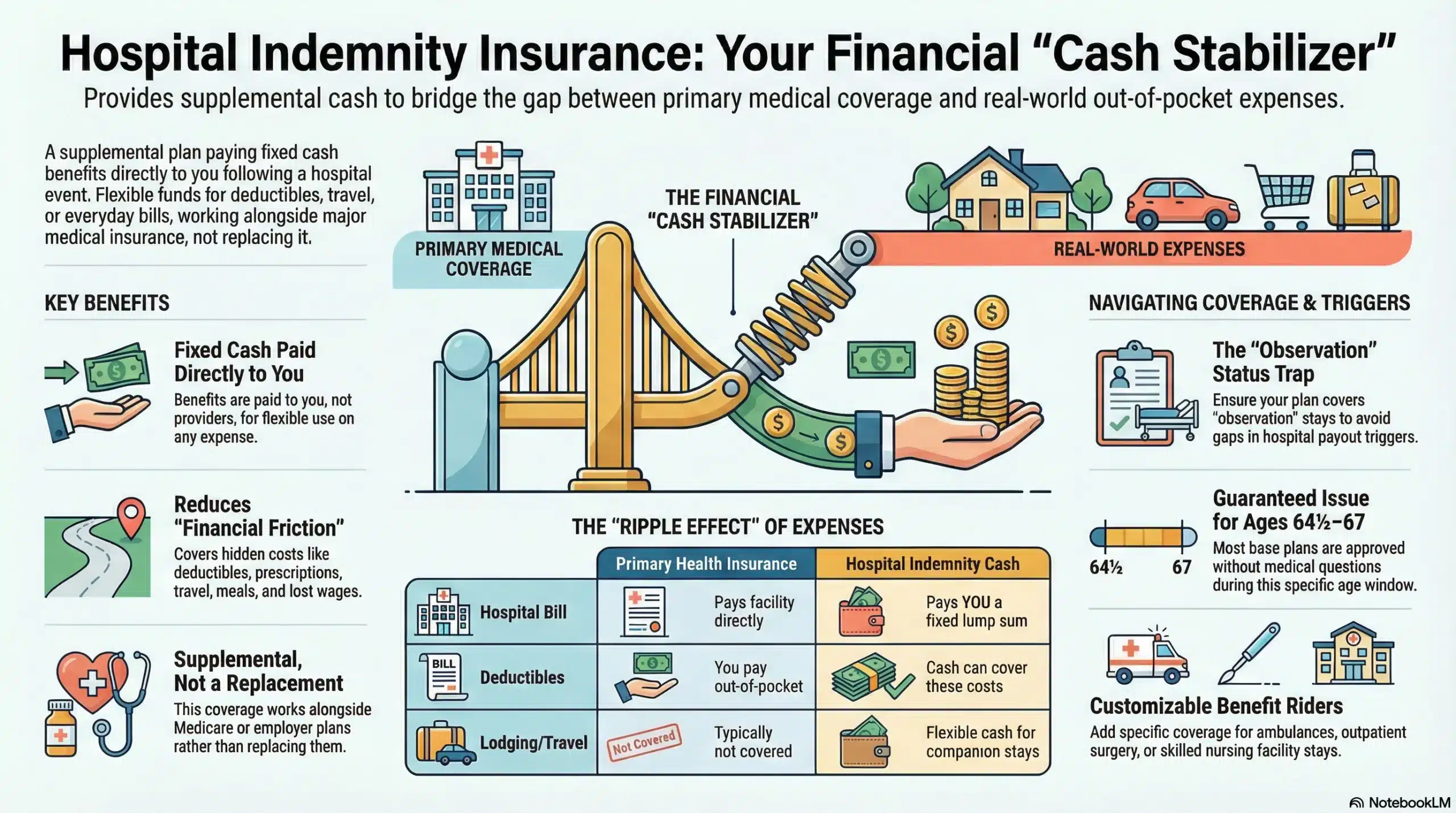
A cancer diagnosis cash benefit rider is a supplemental insurance add-on that pays a fixed lump sum directly to you when a covered malignant cancer is first diagnosed. The payment is immediate and unconditional in its use — it is not a reimbursement tied to specific medical receipts, not a pre-authorization process with a health insurer, and not subject to deductible offset or coordination of benefits. It is cash, triggered by a defined diagnosis event, deposited into your account, available for whatever the household needs most at the moment the financial disruption of a cancer episode begins. The term that oncologists and health economists use for the economic burden of cancer treatment is “financial toxicity” — the recognition that the financial consequences of a cancer diagnosis are themselves a health outcome that affects treatment adherence, care quality, and recovery. Privately insured patients under 65 face an average increase in out-of-pocket costs of approximately $592 per month during the first six months after a cancer diagnosis, and younger working adults average approximately $5,900 in total out-of-pocket and lost-time costs in the first year. These are the insured patients — people with employer-sponsored or marketplace health coverage who are already paying premiums. The cancer diagnosis cash benefit rider directly addresses the gap between what health insurance was designed to cover and what a cancer episode actually costs a household. Our resource on hospital indemnity insurance — what it covers and costs covers the broader supplemental insurance category, and our resource on heart attack and stroke cash benefit rider covers the parallel product for cardiac events.
The financial disruption of a cancer diagnosis is not primarily a medical billing problem. Medical billing is one layer — deductibles, copays, coinsurance for imaging, biopsies, specialist consultations, and treatment — but it is only one layer. The other layer, which health insurance does not address at all, is the non-medical economic disruption that a cancer diagnosis creates for most households. Transportation to treatment centers — which for some cancer types means specialized facilities that are not local — is often a daily or weekly recurring cost during active treatment. Lodging expenses when a patient travels for care, or when a family member must stay nearby during inpatient admission, are not reimbursed. Meals, childcare while a parent is receiving treatment or accompanying a spouse to treatment, home support services when a recovering patient cannot manage ordinary household tasks, and the income impact of reduced work hours or complete inability to work during active treatment — none of these appear in an insurance reimbursement form. They appear in the household budget, as immediate pressure, starting from the day the diagnosis is received. A lump-sum cancer diagnosis cash benefit rider is the right product for addressing this layer because it provides the right type of payment — unrestricted cash — at the right time — at diagnosis, when the financial disruption begins. Our resource on travel, lodging, and pet care benefits explained covers how supplemental insurance can address the non-medical logistical costs of a cancer episode specifically.
The cancer diagnosis cash benefit rider is most commonly structured as a rider added to a hospital indemnity plan or a critical illness policy, though some carriers offer it as a standalone add-on to group health coverage. The rider is underwritten at enrollment — meaning it requires completion of health questions and may exclude pre-existing conditions or apply waiting periods for recently diagnosed or treated conditions — so the time to consider it is before a diagnosis, not after. Approximately 1 in 2 men and 1 in 3 women in the United States will develop an invasive cancer during their lifetime, according to the National Cancer Institute. The rider is not a bet against yourself; it is a recognition that the population-level probability of a cancer diagnosis is high enough that the cost of protection is a rational trade against the financial disruption of an unprotected episode. Our resource on what is critical illness insurance covers the broader critical illness product category, and our resource on should you consider critical illness insurance covers the decision framework for this category of supplemental protection.
Get a Cancer Rider Quote
We compare rider designs, benefit amounts, and pairing options across carriers — and identify the structure that provides the most meaningful cash at diagnosis for the premium you’re comfortable with.
Request a Cancer Rider QuoteCancer Diagnosis Rider vs. Critical Illness Insurance — How They Compare
The most common consumer confusion in this product category is between the cancer diagnosis cash benefit rider and a standalone critical illness insurance policy. Both pay a lump sum at diagnosis. Both are separate from health insurance. But they are meaningfully different products — and which one belongs in a given protection plan depends on the household’s priorities and existing coverage structure.
| Feature | Cancer Diagnosis Cash Benefit Rider | Critical Illness Insurance (Standalone Policy) |
|---|---|---|
| Covered conditions | Cancer only (malignant, covered under the rider definition); typically excludes skin cancers (basal cell, squamous cell) and in-situ cancers or pays reduced benefit | Multiple covered conditions — typically cancer, heart attack, stroke, and a list of additional conditions that varies by carrier; broader but typically more expensive per dollar of coverage for cancer alone |
| Benefit structure | Lump-sum cash at first covered diagnosis; rider design varies on recurrence, multiple cancers, and lifetime limits | Lump-sum cash per covered diagnosis event; some policies pay per condition, some have overall policy limits; structure varies significantly by carrier |
| Cost relative to coverage scope | Lower premium than standalone CI for the same benefit amount — because coverage is limited to cancer only; high value per dollar for households most concerned specifically about cancer risk | Higher premium — reflects multi-condition coverage; better overall value for households equally concerned about cardiac events and other critical illness conditions |
| How it is purchased | Add-on rider to a hospital indemnity plan, critical illness plan, or sometimes group health coverage; cannot typically stand alone | Can be purchased as a standalone policy independent of other coverage; also available as a rider on some life insurance policies through living benefits |
| Use of funds | Unrestricted — paid directly to the insured for any purpose | Unrestricted — paid directly to the insured for any purpose |
| Best fit | Households adding cancer-specific cash protection to an existing hospital indemnity plan; those with personal or family history making cancer the primary concern; budget-conscious buyers who want targeted coverage | Households without other supplemental coverage who want a single policy that covers multiple catastrophic diagnosis events; those with cardiac or other critical illness risk alongside cancer risk |
| Living benefits alternative | Cancer rider provides cash regardless of the life insurance coverage situation | Some life insurance policies with living benefits provide CI-style payouts as accelerated death benefits — our resource on life insurance with living benefits covers this option |
Product structures vary significantly by carrier. Specific benefit definitions, exclusions, underwriting requirements, and pricing are contract-specific. Always review the policy or rider document before purchase. The table reflects general market patterns; your specific plan may differ in meaningful ways.
How the Benefit Trigger Works — What “Covered Diagnosis” Actually Means
The cancer diagnosis cash benefit rider pays on a specific triggering event — a covered malignant cancer diagnosis — and the details of how that trigger is defined in the contract determine how broadly or narrowly the protection actually applies. Several components are worth reviewing carefully before purchasing any rider. First, the covered diagnosis definition: most riders cover malignant cancers as defined in the contract, which typically aligns with common clinical usage but may include specific exclusions or reduced benefit tiers. Skin cancers are the most common exclusion — basal cell carcinoma and squamous cell carcinoma of the skin are excluded under most cancer riders because they are extremely common and typically treatable with minimal financial disruption. Melanoma, which is more serious and less common, is usually included. In-situ cancers — cancers that are present but have not invaded surrounding tissue — are handled differently across carriers: some exclude them entirely, some pay a reduced benefit (often 25-50% of the full lump sum), and some include them at the full benefit amount. If a family history includes in-situ diagnoses specifically, this difference matters. Second, evidence requirements: most riders require pathological or histological confirmation of the cancer diagnosis — a biopsy result or pathology report — because the benefit is triggered by a clinical diagnosis event rather than by hospitalization or treatment initiation. Third, waiting periods: a standard waiting period after policy issue (often 30-90 days) applies before the diagnosis benefit becomes eligible. Fourth, pre-existing condition limitations: many carriers impose a look-back period and may exclude or delay benefits for cancers that were diagnosed, treated, or advised within that window prior to enrollment. Understanding these conditions before applying is the only way to ensure the rider you purchase reflects what you actually need protected.
What Cancer Patients Actually Use the Cash For
The value of an unrestricted cash benefit is that it mirrors the actual financial reality of a cancer episode, which spreads costs across categories that medical insurance was not built to address. Based on the national patient burden research and clinical experience with cancer patients, the most consistent uses of lump-sum cancer diagnosis cash fall into four areas. The first is insurance cost-sharing — deductibles, copays, and coinsurance that accumulate rapidly during the diagnostic phase of a cancer episode, before any treatment plan is even established. Imaging, biopsies, specialist consultations, and laboratory work during the diagnostic evaluation typically generate multiple cost-sharing events in a short window. The second is travel and lodging — for patients whose cancer type, stage, or treatment protocol requires care at a cancer center of excellence or specialized facility, transportation and lodging become recurring fixed costs for the duration of treatment. National Cancer Institute designated cancer centers are not distributed evenly by geography, and access to the best care often requires travel. Our resource on travel, lodging, and pet care benefits explained covers how supplemental riders specifically address this layer. The third is income bridging — for working adults whose treatment requires extended leave from employment, the income impact of reduced hours or temporary disability begins before short-term disability insurance typically kicks in, and a lump-sum payment available immediately at diagnosis provides a critical bridge. Our resource on disability insurance services covers the longer-term income protection layer that complements the cancer rider for working adults. The fourth is household logistics — childcare while a parent is receiving treatment, home support services during recovery, meals, and the invisible costs of a household running on reduced capacity during active cancer treatment.
Building an Episode-of-Care Design — Rider Pairing for Real Cancer Coverage
The cancer diagnosis cash benefit rider is the first-dollar, front-loaded component of a supplemental insurance design — the benefit that pays earliest in the episode and provides the broadest-use flexibility. A cancer episode, however, involves multiple care settings over months or years, and a complete design accounts for the financial exposure across all of them. The rider pairing framework begins with the cancer diagnosis cash benefit as the anchor and adds targeted riders based on where the household’s remaining financial exposure is highest. Emergency room and urgent care benefits — covered in our resource on ER and urgent care hospital indemnity benefits — address the frequent scenario where a cancer patient seeks urgent evaluation for treatment side effects or complications. Because ER visits during active cancer treatment often do not result in inpatient admission, a separate ER rider ensures those visits produce a supplemental payment rather than landing entirely as out-of-pocket cost-sharing. Observation status benefits — covered in our resource on hospital indemnity for observation stays — address the specific coverage gap that occurs when a short facility stay is classified as outpatient observation rather than inpatient admission. Outpatient surgery and rehabilitation benefits — covered in our resource on outpatient surgery and rehab riders — address same-day surgical procedures that are standard in many cancer treatment protocols. Hospital daily benefits, skilled nursing facility benefits covered in our resource on skilled nursing facility rider explained, and step-up benefit provisions covered in our resource on increasing daily benefit riders complete the design for households anticipating more intensive care scenarios. Our resource on best hospital indemnity riders for seniors — what to add and what to skip covers the age-specific rider selection framework for Medicare-age beneficiaries adding supplemental cancer coverage.
The Medicare Advantage Member and the Cancer Rider
Medicare Advantage members — those receiving Medicare through a private insurer rather than Original Medicare — face a specific version of the cancer diagnosis financial gap. Medicare Advantage plans structure cost-sharing through copays, coinsurance, and network restrictions that concentrate significant out-of-pocket costs in the early phases of any serious illness, including cancer. The annual out-of-pocket maximum provides a ceiling, but reaching that ceiling requires the member to first absorb all cost-sharing up to the limit — which for a newly diagnosed cancer patient in the diagnostic evaluation phase can happen within the first few weeks. A cancer diagnosis cash benefit rider added to the Medicare Advantage coverage provides immediate lump-sum cash that helps absorb that early cost-sharing exposure before the OOP maximum kicks in. It also addresses the non-medical costs that the Medicare Advantage plan cannot address regardless of benefit design. Our resource on hospital indemnity for Medicare Advantage members covers the full supplemental insurance picture for this population, and our resource on guaranteed issue hospital indemnity at 65 covers the guaranteed-issue pathway available to Medicare-eligible individuals who want supplemental coverage without health questions at age 65.
After a Cancer Diagnosis — Other Coverage Gaps This Exposes
A cancer episode often reveals protection gaps that existed before the diagnosis but were not previously visible. Life insurance for cancer survivors and cancer patients is a common concern — either for maintaining existing coverage, replacing lapsing coverage, or establishing new coverage after treatment. Our resources on life insurance for cancer survivors and burial insurance for cancer survivors cover the market access questions that cancer patients and survivors face in the life insurance market. Income protection for a working adult who is undergoing active treatment is another gap — disability insurance provides longer-term income replacement for those who cannot work during treatment or recovery, and our resource on why you need disability insurance even if you’re young and healthy covers the case for protecting income against conditions exactly like a serious cancer diagnosis. For individuals with existing critical illness coverage who want to understand whether it complements or overlaps with a cancer rider, our resources on is critical illness insurance expensive and how to buy critical illness insurance online cover the cost and access picture. Our resource on Assurity Life critical illness insurance covers a specific carrier option for those pursuing standalone critical illness coverage alongside a cancer rider.
Talk With an Advisor Today
Choose how you’d like to connect—call or message us, then book a time that works for you.
Schedule here:
calendly.com/jason-dibcompanies/diversified-quotes
Licensed in all 50 states • Fiduciary, family-owned since 1980
FAQs: Cancer Diagnosis Cash Benefit Rider
When does the cancer rider actually pay — at diagnosis or after treatment begins?
The trigger is diagnosis, not treatment initiation. Once a covered malignant cancer is diagnosed and confirmed with the documentation required by the rider — typically pathological or histological confirmation — the benefit payment is triggered. The rider pays before you set foot in a treatment center, which is what makes it valuable for covering the early financial disruption: the diagnostic evaluation costs, the specialist consultations, the out-of-pocket expenses that begin accumulating from the day the diagnosis is received. Some riders include a short survival period (often 30 days) after diagnosis before payment is issued; others pay at confirmed diagnosis. Check this detail in the specific rider contract before purchasing.
Does the cancer rider cover all types of cancer?
No — all cancer riders have definitions and exclusions, and the details matter. Basal cell carcinoma and squamous cell carcinoma of the skin are excluded by most riders because they are extremely common and typically treatable with minimal financial disruption. Melanoma is generally covered. In-situ cancers — those that are present but have not invaded surrounding tissue — are handled differently across carriers: some exclude them, some pay a reduced benefit (typically 25-50% of the full lump sum), and some include them at full benefit. A diagnosis of pre-cancer or a positive genetic test for cancer risk alone does not trigger the benefit. Review the covered diagnosis definition and any specific exclusion list in the rider document before purchasing.
Can I get a cancer rider if I have a family history of cancer?
Family history of cancer in a parent, sibling, or child is typically not a disqualifying factor for a cancer diagnosis cash benefit rider. Carriers underwrite based on the applicant’s own health history — their own diagnoses, treatments, and symptoms — not the history of relatives. If you personally have not been diagnosed with or treated for cancer within the pre-existing condition look-back period (typically 12-24 months depending on the carrier), family history alone does not typically prevent approval or reduce the benefit. This is a meaningful advantage of the cancer rider versus some other insurance products that treat family history more conservatively.
How is the cancer rider different from critical illness insurance?
The fundamental difference is scope. A cancer diagnosis cash benefit rider covers cancer only. A critical illness insurance policy typically covers cancer plus a list of other serious conditions — heart attack, stroke, kidney failure, major organ transplant, and others depending on the carrier. Critical illness coverage is broader but typically more expensive per dollar of coverage for cancer specifically, because the premium reflects the multi-condition structure. The cancer rider is the better value when cancer is the primary concern and cost-efficiency matters. Critical illness coverage is the better value when the household wants unified protection against multiple catastrophic diagnosis events under a single policy. Many clients hold both — the rider for early-diagnosis cash specific to cancer, and CI coverage for cardiac and other event protection.
Does the cancer rider pay if I already have health insurance?
Yes — the cancer diagnosis cash benefit rider is a supplemental benefit that pays in addition to health insurance, not in place of it. The payment does not depend on what your health insurance pays, does not reduce your health insurance benefits, and is not subject to coordination of benefits rules the way some supplemental products are. Whether your health insurance paid $0 or $50,000 toward your cancer treatment, the rider pays the lump-sum benefit upon the covered diagnosis. This additive nature is the core structural value of the product — it fills the gap that health insurance does not address, including non-medical costs and cost-sharing exposure, without any interaction with the underlying coverage.
What benefit amount should I choose?
The right amount reflects what you want available immediately at diagnosis to stabilize the first 30-90 days of a cancer episode. A practical framework: estimate your annual health insurance deductible plus coinsurance maximum, add a reasonable estimate of travel and non-medical costs specific to your geographic situation, and add one to two months of income if work interruption is likely. The resulting number is your realistic early-episode financial exposure. Many households find that $5,000 to $15,000 covers the practical first-episode stabilization goal without creating an unaffordable premium. The premium for larger amounts can be run easily for comparison — sometimes the jump from $5,000 to $10,000 in benefit is smaller than expected because the premium structure has a fixed element.
About the Author:
Jason Stolz, CLTC, CRPC, DIA, CAA and Chief Underwriter at Diversified Insurance Brokers (NPN 20471358), is a senior insurance and retirement professional with more than 25 years of real-world experience helping individuals, families, and business owners protect their income, assets, and long-term financial stability. As a long-time partner of the nationally licensed independent agency Diversified Insurance Brokers, Jason provides trusted guidance across multiple specialties—including fixed and indexed annuities, long-term care planning, personal and business disability insurance, life insurance solutions, Group Health, Travel Medical and Evacuation Insurance, and short-term health coverage. Diversified Insurance Brokers maintains active contracts with over 100 highly rated insurance carriers, ensuring clients have access to a broad and competitive marketplace.
His practical, education-first approach has earned recognition in publications such as VoyageATL, and contributions from his agency featured in Kiplinger and GoBankingRates— highlighting his commitment to financial clarity and client-focused planning. Drawing on deep product knowledge and years of hands-on field experience, Jason helps clients evaluate carriers, compare strategies, and build retirement and protection plans that are both secure and cost-efficient. Visitors who want to explore current annuity rates and compare options across multiple insurers can also use this annuity quote and comparison tool.
Browse More Resources: Return to our complete Supplemental, Hospital Indemnity & Critical Illness guide — covering hospital indemnity, accident insurance & critical illness coverage.
Last Reviewed: June 4, 2026 |
Reviewed by: Jason Stolz, CLTC, CRPC, DIA, CAA
Chief Underwriter, Diversified Insurance Brokers, Inc. | NPN: 20471358 | Diversified Insurance Brokers, Inc. — Licensed in all 50 states
Fact Checked by: Tonia Pettitt, CMIP©
Medicare Specialist, Diversified Insurance Brokers, Inc. | NPN: 14374308 | Diversified Insurance Brokers, Inc. — Licensed in all 50 states
Did you find this content helpful? Leave us a Google review — it helps others find trustworthy guidance too.
Editorial Standards: Diversified Insurance Brokers maintains rigorous editorial standards to ensure accuracy, clarity, and independence in all content. Learn more about our editorial standards and commitment to transparency.
