
Assurity Life Critical Illness Insurance
Assurity Life Critical Illness Insurance

Jason Stolz CLTC, CRPC
At Diversified Insurance Brokers, we help families protect their income and lifestyle when life takes an unexpected turn. Assurity Life’s Critical Illness Insurance is designed to pay a lump-sum cash benefit directly to you after a covered diagnosis — so you can focus on recovery and treatment decisions instead of worrying about how to keep up with the bills that don’t stop arriving just because you’re in the middle of a health crisis.
Because we are an independent, family-owned agency, we often evaluate Assurity’s critical illness protection alongside other tools that protect your household in different ways — such as disability income coverage for paycheck replacement and longer-range planning options like long-term care strategies that address extended care costs later in life. If Assurity turns out to be the right fit, we will show you how critical illness coverage coordinates with your existing health insurance, savings, and retirement plan — so you are not forced to drain accounts or make rushed financial decisions during a crisis when your attention should be on recovery.
If you prefer to handle your application on your own schedule, you can do that directly through the online portal. The quote-and-apply experience is fully self-directed — you can start, pause, and finish without needing a sales appointment — while still having access to our team if you want a second opinion on benefit levels or plan design before submitting.
Quote & Apply for Assurity Critical Illness Insurance Online
Prefer to apply on your own schedule? You can get a quote, customize your benefits, and submit your Assurity Critical Illness Insurance application completely online.
Start Your Quote & ApplicationApply 100% online. If you get stuck, our advisors are available to help you compare options or review your quote.
What Is Assurity Critical Illness Insurance?
Assurity’s Critical Illness Insurance is a cash-benefit policy. If you are diagnosed with a covered condition and the claim is approved, the policy pays a lump sum directly to you — not to a doctor, hospital, or any other third party. That distinction matters considerably, because even with solid major medical health coverage, the real financial stress after a serious diagnosis often comes from exactly what health insurance is not designed to address: high deductibles and coinsurance, extended time away from work and lost income, travel costs to specialty treatment centers, family logistics including childcare and elder care disruptions, and the ordinary recurring bills — mortgage, utilities, car payments — that continue arriving every month whether or not you are working and earning normally.
Covered conditions commonly include major events such as heart attack, stroke, certain types of cancer, kidney failure, major organ transplant, paralysis, coma, and advanced Alzheimer’s disease. The specific definitions of covered conditions and any applicable survival periods vary by state and policy form, but the consistent design intent is to create a meaningful financial cushion at the moment of greatest need — when attention and energy should be focused on treatment decisions and recovery, not on cash flow management. Because of its direct-payment, flexible-use design, Assurity critical illness insurance functions naturally as a complement to existing health insurance rather than a replacement for it. For households thinking about how a serious diagnosis might create both immediate financial needs and longer-term care requirements, this coverage can also coordinate well with long-term care planning, providing protection against both the initial financial shock of a diagnosis and the possibility of ongoing care costs that develop afterward.
How the Cash Benefit Can Be Used
The defining practical advantage of critical illness insurance is the complete flexibility of the cash benefit. Once the benefit is paid following an approved claim, you can use it for whatever your household genuinely needs most in that moment — with no restrictions, no receipts required, and no requirement that expenditures be medically documented. For many families, the first application is medical out-of-pocket costs that health insurance does not fully cover: deductibles, coinsurance amounts, specialty prescription medications, diagnostic imaging, specialist consultations outside normal networks, or clinical trial-related expenses. But the benefit is equally valuable for the non-medical costs that are almost always part of the real financial story of a serious illness: replacing lost income during time away from work, keeping mortgage or rent payments current, maintaining childcare consistency so a partner can be present during treatment, funding travel to a specialized treatment center, or simply protecting the emergency fund so you do not have to sell taxable investments or take early distributions from retirement accounts during a period of financial and emotional stress.
For some households, the cash benefit also supports practical quality-of-life needs during recovery: help at home, transportation to appointments, or assistance with activities of daily living while adjusting to new limitations. If you are coordinating multiple protection strategies and evaluating how the financial pieces fit together across different insurance types, the planning overview on our tax benefits of long-term care insurance page provides useful context for thinking about how different coverage types complement rather than duplicate each other.
Coverage Amounts and Underwriting
Assurity structures critical illness coverage so that many applicants can qualify without the extensive underwriting process associated with some other insurance lines. In many cases, moderate benefit levels can be approved through a simplified underwriting process that relies primarily on health history questions rather than medical examinations or laboratory tests. As requested benefit amounts increase, underwriting typically becomes more detailed and may involve physical measurements, lab work, and review of medical records. The practical consequence is that you can often put meaningful coverage in place quickly and efficiently at a benefit level that addresses realistic out-of-pocket exposure, then evaluate whether additional coverage layers make sense as income, savings, family responsibilities, and health planning evolve over time.
If your priority is speed and simplicity, starting through the online Quote & Apply portal can put a plan in place without requiring a scheduled advisor appointment. From that foundation, many households choose to build a more comprehensive protection structure by pairing a lump-sum critical illness benefit with paycheck replacement coverage through disability income insurance, or adding longer-horizon protection through return-of-premium long-term care planning for potential care needs later in life. Each product addresses a different financial risk — the immediate lump sum, the income stream, the extended care costs — and a comprehensive plan ideally addresses all three in appropriate proportions relative to the household’s assets, income, and health planning goals.
Key Features and Optional Riders
Assurity critical illness designs commonly include features intended to make coverage more durable and useful over time. Depending on the specific product version and state availability, some plans allow additional benefits if a second, unrelated covered condition occurs later — after the applicable policy waiting periods are satisfied — recognizing that serious health events sometimes occur in stages or sequences rather than as a single isolated episode across a lifetime. Many designs are structured with renewable provisions that keep coverage in force as long as premiums continue to be paid, subject to the contract terms, providing long-term certainty rather than coverage that terminates at a fixed expiration date.
Optional riders in some designs include a return-of-premium feature — often structured to refund a portion of premiums paid, net of any claims received — which addresses the concern about paying premiums for protection that is ultimately not used. Increasing benefit riders, where available, gradually raise the coverage amount over time to help the policy remain relevant against rising costs. Because these optional features affect both the premium level and the long-term financial value of the policy, comparing two or three plan designs side by side before selecting is worthwhile — similar to how we evaluate product structures across carriers in broader company reviews like Is Assurity a Good Insurance Company?
Important Limitations and Exclusions
Like every critical illness policy in the market, Assurity’s coverage comes with limitations and exclusions that are important to understand clearly before applying. Pre-existing condition provisions are among the most consequential: many policies limit or exclude benefits for a defined period if a covered diagnosis is connected to conditions that existed before the policy was issued. Understanding exactly how the policy defines a pre-existing condition — the look-back period, the stability requirements, and how the provision interacts with different types of diagnoses — is essential for accurately assessing the coverage’s real value for your specific health history.
Age-based benefit changes are another important element: some designs reduce the maximum available benefit or the benefit percentage after specified ages, with modified terms continuing afterward. These provisions exist to keep long-term premiums sustainable relative to changing actuarial risk, but they affect how you should think about the policy’s long-term role in your financial plan. Standard exclusions for high-risk or illegal activities, self-inflicted injury, war, and similar circumstances apply as they do across most insurance products. Availability, specific covered conditions, definitions, rider options, and benefit structures also vary by state, and some products may not be available in certain jurisdictions in their standard form.
It is also important to state plainly: critical illness insurance is not a substitute for comprehensive major medical coverage or for Medicare. It is a supplemental financial tool that pays cash directly to you — it does not negotiate with providers, pay claims to hospitals, or replace the broader coverage framework that your health insurance provides. For households trying to understand what Medicare does and does not cover — particularly around longer-term care needs — our resources on Does Medicare Cover Long-Term Care? and Are Medicare and Long-Term Care Insurance the Same? provide useful clarity on those distinctions.
Who Is a Good Fit for Assurity Critical Illness Insurance?
Assurity Critical Illness Insurance is a particularly strong fit for people who want a defined lump-sum financial resource available if they receive a covered diagnosis — and who recognize that even good health insurance leaves them exposed to significant out-of-pocket costs, income disruption, and non-medical expenses that health insurance simply is not designed to address. It is especially relevant for working-age households whose lifestyle, mortgage, childcare, and daily expenses depend on current income continuing to flow, and who do not have sufficient liquid savings to self-insure against a 6 to 18 month period of reduced or eliminated income combined with elevated healthcare out-of-pocket costs. The lump-sum nature of the benefit — rather than a monthly income replacement — is also appropriate for households who want “options money”: a defined cash resource that enables choices during a health crisis rather than forcing decisions based on cash flow constraints.
If the primary financial concern is extended care costs rather than the immediate shock of a new diagnosis, it may be more appropriate to compare critical illness coverage with care-focused solutions that are designed specifically for longer-duration needs. Some families prefer shared-benefit designs that provide flexibility between two spouses, as outlined in our resource on shared-benefit long-term care. Others explore hybrid repositioning strategies that combine annuity assets with long-term care benefits, such as non-qualified long-term care annuity structures. The right answer depends on the household’s specific assets, income, health history, and how they prioritize different types of financial risk across the full retirement planning horizon.
How Assurity Critical Illness Compares to Other Protection Types
Critical illness insurance occupies a specific and distinct role in a comprehensive risk management strategy, and understanding how it differs from the other major protection categories helps clarify where it genuinely adds value and where other products are better suited. Health insurance — whether employer-sponsored, individual, or Medicare — is built to pay providers directly for covered medical services, but it still leaves the insured exposed to deductibles, coinsurance, non-covered services, and all of the non-medical financial consequences of a serious illness. Disability income insurance is designed to replace a portion of monthly income when the insured cannot work due to illness or injury, but it pays ongoing monthly benefits rather than a lump sum at diagnosis and typically does not activate immediately. Long-term care insurance addresses the cost of ongoing extended care services when the insured cannot perform certain activities of daily living, but it is designed for the duration phase rather than the initial financial shock of a new diagnosis.
That is why many financially prepared households choose to layer these types of coverage rather than selecting only one. Critical illness provides the immediate lump sum at diagnosis — addressing the initial financial shock. Disability insurance provides ongoing income replacement if the ability to work is disrupted for an extended period. Long-term care insurance addresses the possibility of needing professional care support as the condition progresses or as aging increases care needs later in life. At Diversified Insurance Brokers, our role is to help you evaluate where Assurity Critical Illness Insurance fits in your overall protection plan — so the pieces genuinely support each other rather than creating overlapping gaps or unnecessary duplication.
Next Steps
If you are ready to apply, the most efficient path for most people is to start with the online Quote & Apply system, build a benefit level that fits your risk tolerance and household budget, and submit the application at your own pace. If you prefer to compare multiple approaches first — critical illness alone, critical illness combined with disability income protection, or critical illness as a starting point toward a broader long-term care strategy — we can help you evaluate the options and identify the plan structure that makes the most practical sense for your situation, assets, and health planning goals.
Quote & Apply for Assurity Critical Illness Insurance Online
Prefer to apply on your own schedule? You can get a quote, customize your benefits, and submit your Assurity Critical Illness Insurance application completely online.
Start Your Quote & ApplicationApply 100% online. If you get stuck, our advisors are available to help you compare options or review your quote.
Related Pages
Additional resources to help you compare coverage options, evaluate carriers, and strengthen your overall financial protection strategy.
Financial Protection Essentials
Core strategies to protect retirement income, prepare for healthcare costs, and build long-term financial stability.
Talk With an Advisor Today
Choose how you’d like to connect—call or message us, then book a time that works for you.
Schedule here:
calendly.com/jason-dibcompanies/diversified-quotes
Licensed in all 50 states • Fiduciary, family-owned since 1980
FAQs: Critical Illness Insurance
Critical illness insurance is a type of supplemental insurance that pays a lump-sum cash benefit directly to the policyholder if they are diagnosed with a covered serious condition — such as certain cancers, heart attack, stroke, kidney failure, or major organ transplant — and the claim is approved according to the policy’s definitions and terms. The money is paid directly to you rather than to a doctor, hospital, or any other provider, and there are typically no restrictions on how you use the benefit. The primary purpose is to provide a defined financial cushion at the moment of diagnosis — when financial stress is highest, decisions need to be made quickly, and health insurance alone may leave significant gaps in actual costs covered. Critical illness insurance does not replace health insurance or Medicare; it supplements those plans by addressing the out-of-pocket costs, income disruption, and non-medical expenses that major medical coverage is not designed to address.
Critical illness coverage works alongside your health insurance as a supplemental layer — it does not replace or compete with your major medical plan. Your health insurance continues to work exactly as it normally does: paying providers directly for covered medical services subject to your deductible, copayment, and coinsurance obligations. The critical illness policy activates separately when a covered diagnosis is confirmed and approved: it pays a lump-sum cash benefit directly to you, which you can then use for whatever your household needs — including your health insurance out-of-pocket costs, but also for the income loss, mortgage payments, travel, childcare, or other non-medical expenses that your health plan does not address. This complementary relationship means the two types of coverage address genuinely different financial risks: your health plan pays the provider for care, while the critical illness benefit puts cash in your hands to manage the broader financial impact of a serious illness on your household. Many financially prepared families use both types of coverage precisely because the financial consequences of a serious illness extend well beyond what even excellent health insurance covers.
Critical illness policies typically cover a defined list of serious medical events that are specified in the policy contract with precise medical definitions rather than general descriptions. Assurity’s covered conditions commonly include certain cancers (with specific definitions regarding cancer type, stage, and treatment status), heart attack, stroke, end-stage kidney disease requiring dialysis, major organ transplant, paralysis, coma, and advanced Alzheimer’s disease, among others. Some policies also cover coronary artery bypass surgery as a separate benefit. The exact list of covered conditions, the medical definitions that determine whether a diagnosis qualifies, any applicable survival periods (some policies require the insured to survive a specified number of days after diagnosis for the benefit to be payable), and any partial benefit provisions vary by state and by the specific policy form you are applying for. Reviewing the actual policy definitions — rather than relying on general category descriptions — before applying is important for understanding which diagnoses your specific situation is most likely to benefit from and whether the policy’s definitions align with how those conditions are typically diagnosed and treated.
Assurity offers a fully online Quote & Apply portal that allows you to complete the entire application process at your own pace without requiring a scheduled advisor appointment. You enter basic demographic information including your state of residence and date of birth, select a benefit amount from the available options, answer the medical and lifestyle questions that constitute the underwriting application, and sign the application electronically. The portal then submits your application for underwriting review. Some applicants receive an immediate or fast decision without additional information being required. Others may be asked for supplemental medical information or medical records depending on the answers provided and the benefit level requested. The online portal is accessible at any time, allows you to pause and return to an application in progress, and provides a clean summary of the benefit options and premiums available for your state and age before you commit to applying. If you have questions about which benefit amount is appropriate, which optional riders add value for your situation, or how the Assurity plan compares to other carriers, our advisors are available to review your quote and provide independent guidance before you finalize the application.
The lump-sum benefit from a critical illness policy is unrestricted cash — you can use it for any purpose without documentation requirements, provider billing, or insurer approval for individual expenditures. In practice, most families use the benefit for some combination of the following: medical out-of-pocket costs that health insurance does not cover including deductibles, coinsurance, non-covered medications, specialist consultations, and diagnostic testing; replacement of lost income during time away from work for treatment, recovery, or caregiving; continuing essential household expenses including mortgage or rent, utilities, car payments, and food during a period of reduced income; travel costs to specialized treatment centers or cancer programs that may not be locally available; childcare or elder care costs to allow a partner or caregiver to be present during treatment; and protection of emergency savings and retirement accounts so you do not need to make premature withdrawals that create tax consequences and reduce long-term financial security. The flexibility of the benefit is its primary advantage over more narrowly defined insurance products — it addresses the financial reality of a serious illness on your household’s specific terms rather than on a predetermined schedule of covered expenses.
Yes — underwriting for critical illness insurance considers your health history, current health status, medications, build, and lifestyle factors such as tobacco use, and these factors directly influence both the underwriting decision and the premium you will be offered if approved. Age is also a significant pricing factor, as the probability of experiencing a covered condition increases with age. For applicants with straightforward health histories and no significant pre-existing conditions, the underwriting process is typically efficient and premiums are competitive. For applicants with more complex health histories — prior diagnoses, ongoing treatment, or conditions that directly relate to covered categories in the policy — underwriting may result in exclusion riders that specifically exclude that pre-existing condition from coverage, higher premiums to reflect elevated risk, or in some cases a decline if the risk falls outside the carrier’s underwriting guidelines. If you have a complex medical history and are concerned about how it will affect your application, working with an independent advisor who can review multiple carriers’ underwriting approaches and guidelines — rather than applying through a single carrier’s portal without guidance — can help identify the carrier and product most likely to provide the coverage you need at reasonable terms.
In most cases, benefits paid from an individually owned critical illness insurance policy — where the policyholder pays premiums with after-tax dollars — are received income-tax free as a result of the general principle that insurance benefit payments intended to compensate for loss rather than generate profit are generally not treated as taxable income. However, the tax treatment of critical illness insurance benefits depends on several factors that vary by individual situation: how the policy is owned and funded, whether the premium was paid with pre-tax or after-tax dollars (as can occur in some employer-sponsored benefit arrangements), the specific amount received relative to the costs incurred, and current applicable tax law at the time of receipt. Because tax law can change and individual circumstances vary significantly, you should consult a qualified tax professional for guidance specific to your situation rather than relying on general descriptions. We can provide the coverage; your tax advisor can advise on the tax treatment in your specific case.
There is no universal answer, because the right benefit amount depends on your specific household’s financial profile: your annual income and how much of it would be at risk if you could not work for an extended period, your health insurance plan’s deductible and out-of-pocket maximum that you would be responsible for paying, your existing liquid savings available to absorb expenses without disrupting your financial plan, your recurring monthly obligations that would need to be covered if income stopped, and your realistic assessment of what a serious illness would cost your household in both direct medical costs and indirect financial disruption. As a general framework, many households start by estimating 12 to 18 months of essential living expenses plus their health plan’s annual out-of-pocket maximum as a reasonable target benefit amount — a figure that would provide genuine financial breathing room without requiring immediate asset liquidation or retirement account withdrawals. From there, the benefit level is adjusted based on what is affordable at current premium rates and what underwriting will approve given your health history. An advisor can help you work through this calculation for your specific situation and identify the benefit level that provides meaningful protection without requiring premium expenditure that is not justified by the household’s overall risk management needs.
Yes — and in fact, the two types of coverage are explicitly designed to complement each other rather than duplicate coverage. They address meaningfully different financial risks associated with a serious illness, and owning both provides more complete financial protection than either one alone. Critical illness insurance pays a defined lump sum at the time of a covered diagnosis — addressing the immediate financial shock of learning you have a serious condition and providing a cash resource you can deploy immediately for whatever your household needs. Disability income insurance pays a monthly benefit, typically after a waiting period, when you are unable to work due to illness or injury — replacing a portion of your ongoing income to support your household’s recurring expenses over the potentially extended period during which you cannot return to your previous work activities. The two products have different activation points, different benefit structures, and different financial roles: the critical illness benefit is designed for the diagnosis moment, while the disability benefit is designed for the sustained income-replacement need. Many households that are serious about financial protection choose to build a layered plan that includes both, sometimes adding long-term care coverage as a third layer to address the possibility of needing professional care support if a condition progresses or aging increases care needs later.
Absolutely — online quote-and-apply tools are an excellent option for people who prefer to research and apply independently, but they are not the only path. Working directly with one of our advisors gives you access to an independent professional who can compare Assurity’s critical illness offering against other carriers’ products, help you evaluate the appropriate benefit amount for your specific household situation, review optional riders and determine which ones add genuine value versus add cost without proportional benefit, and coordinate critical illness coverage with your existing life insurance, disability income protection, and any long-term care planning you may already have in place or be considering. This comprehensive view is particularly valuable if your health history creates underwriting questions, if you are building a layered protection plan across multiple product types, or if you simply want confidence that the coverage you are purchasing is the right fit before committing. Our team is available by phone, through our contact page, or you can schedule a specific consultation time using the scheduling tool on our site. There is no obligation and no pressure — the goal of the conversation is simply to ensure you have the information you need to make a decision that serves your household well.
About the Author:
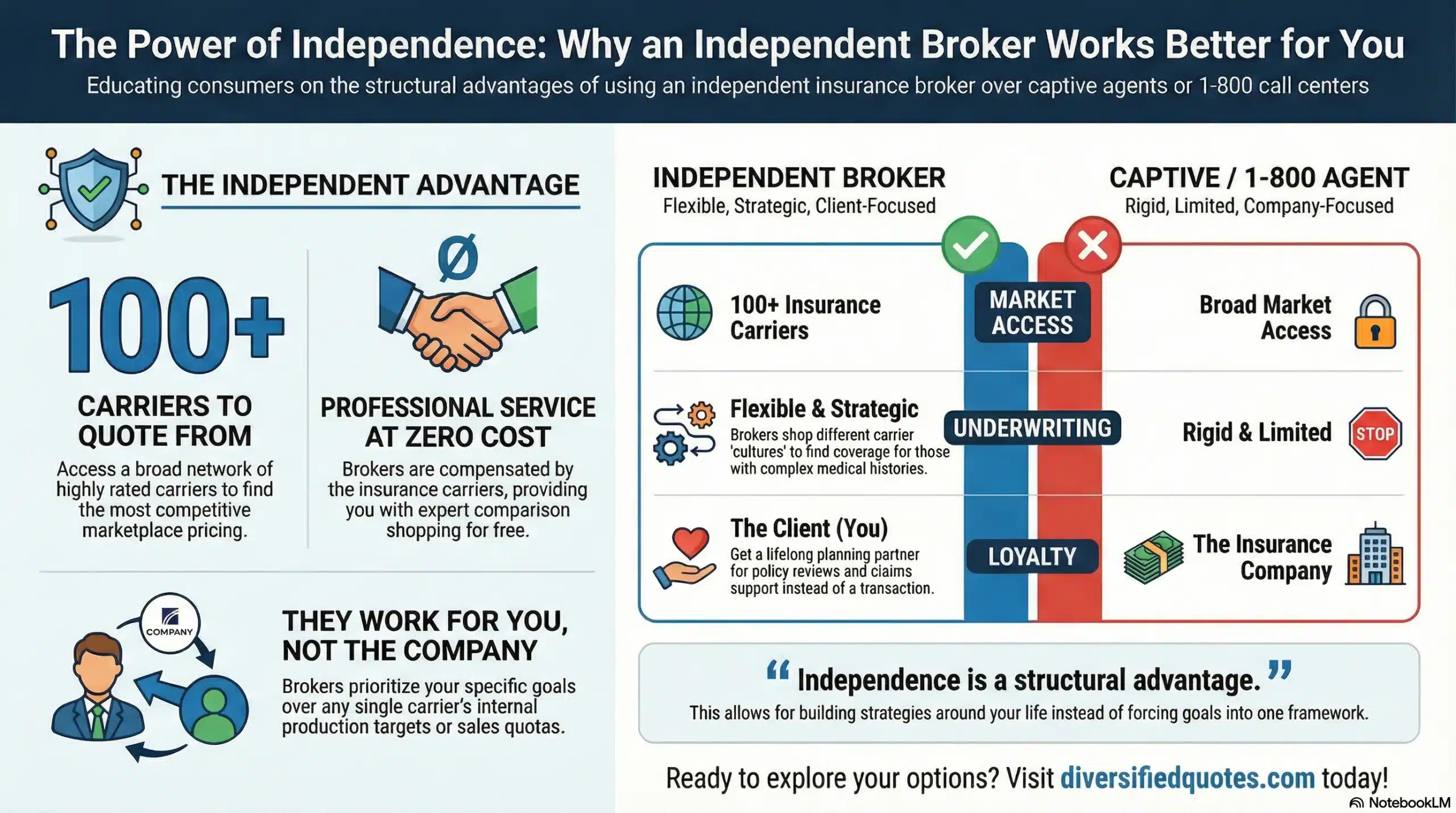
Jason Stolz, CLTC, CRPC, DIA, CAA and Chief Underwriter at Diversified Insurance Brokers (NPN 20471358), is a senior insurance and retirement professional with more than 25 years of real-world experience helping individuals, families, and business owners protect their income, assets, and long-term financial stability. As a long-time partner of the nationally licensed independent agency Diversified Insurance Brokers, Jason provides trusted guidance across multiple specialties—including fixed and indexed annuities, long-term care planning, personal and business disability insurance, life insurance solutions, Group Health, Travel Medical and Evacuation Insurance, and short-term health coverage. Diversified Insurance Brokers maintains active contracts with over 100 highly rated insurance carriers, ensuring clients have access to a broad and competitive marketplace.
His practical, education-first approach has earned recognition in publications such as VoyageATL, and contributions from his agency featured in Kiplinger and GoBankingRates— highlighting his commitment to financial clarity and client-focused planning. Drawing on deep product knowledge and years of hands-on field experience, Jason helps clients evaluate carriers, compare strategies, and build retirement and protection plans that are both secure and cost-efficient. Visitors who want to explore current annuity rates and compare options across multiple insurers can also use this annuity quote and comparison tool.
Explore More Life Insurance Options: Browse our complete guide to How Life Insurance Works — covering term life, whole life, final expense, annuity alternatives & more from 100+ carriers.
Last Reviewed: May 11, 2026 |
Reviewed by: Jason Stolz, CLTC, CRPC, DIA, CAA
Chief Underwriter, Diversified Insurance Brokers, Inc. | NPN: 20471358 | Diversified Insurance Brokers, Inc. — Licensed in all 50 states
Fact Checked by: Tonia Pettitt, CMIP©
Medicare Specialist, Diversified Insurance Brokers, Inc. | NPN: 14374308 | Diversified Insurance Brokers, Inc. — Licensed in all 50 states
Did you find this content helpful? Leave us a Google review — it helps others find trustworthy guidance too.
Editorial Standards: Diversified Insurance Brokers maintains rigorous editorial standards to ensure accuracy, clarity, and independence in all content. Learn more about our editorial standards and commitment to transparency.
