
Skilled Nursing Facility Rider Explained
Skilled Nursing Facility Rider Explained

Jason Stolz CLTC, CRPC, DIA, CAA
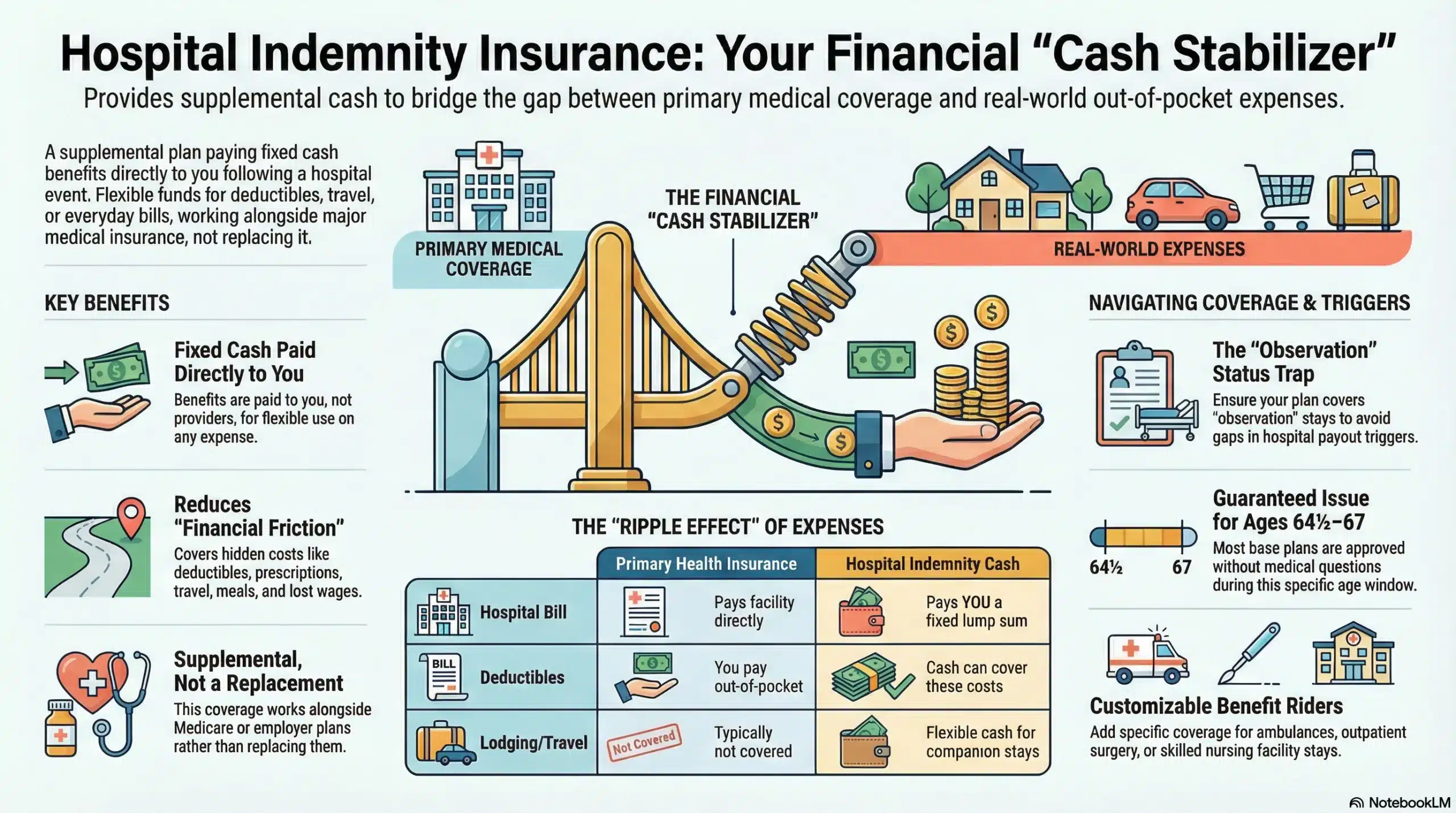
A Skilled Nursing Facility rider is designed to provide daily cash benefits when you receive skilled care inside a licensed Skilled Nursing Facility following a qualifying hospital event. The payment structure that makes a Skilled Nursing Facility rider distinctively valuable is that the benefit is paid directly to the policyholder rather than to the medical provider — creating financial flexibility during recovery at exactly the time when expenses are least predictable and financial pressure is most acute. Post-hospital rehabilitation costs rarely arrive as one clean, manageable bill. Most families discover quickly that recovery expenses span multiple categories simultaneously: transportation to and from therapy appointments, the costs of transitioning home from a facility, temporary caregiver support for hours that trained staff no longer provide, medical equipment and supply needs that insurance does not fully cover, travel and lodging expenses for family members providing support, medication adjustments that generate new out-of-pocket costs, and the practical economic disruption of a household member being unable to manage their normal responsibilities during recovery. The Skilled Nursing Facility rider is designed to absorb that cumulative financial pressure rather than leaving the household to manage it from general savings or retirement assets.
Healthcare delivery has changed significantly over the past decade in ways that have directly increased patient financial exposure during the rehabilitation phase of recovery. Hospitals are now focused on stabilizing patients quickly and transferring them to lower-cost care environments as soon as medically appropriate — a model that is efficient from a systems perspective but that shifts meaningful financial responsibility into the Skilled Nursing Facility phase of care. Skilled Nursing Facility copays under Medicare and Medicare Advantage plans are often structured in tiers that create escalating patient cost-sharing as stays extend, which means the households that most need extended rehabilitation are often also the households with the greatest SNF cost exposure. Understanding the specific cost-sharing structure of your current health plan and aligning SNF rider benefits to that structure is the most important step in designing coverage that provides real financial protection rather than theoretical protection that does not align with how actual costs are incurred. Hospital indemnity insurance coverage covers the full landscape of how hospital indemnity products are structured and how the various riders — including the SNF rider — function within a comprehensive hospital indemnity plan design.
How SNF Copay Structures Create Financial Exposure
The tiered copay structure that most Medicare and Medicare Advantage plans use for Skilled Nursing Facility stays is one of the most important dynamics to understand before evaluating an SNF rider. Traditional Medicare covers the first twenty days of a qualifying SNF stay at no cost to the beneficiary, but then applies a per-day copay that is indexed annually for days twenty-one through one hundred. Beyond one hundred days, traditional Medicare covers nothing — the patient is fully responsible for facility costs. Medicare Advantage plans typically have their own tiered copay structures that differ from traditional Medicare and vary by plan, with many plans providing some coverage beyond one hundred days under supplemental benefit provisions while applying different daily copay amounts across the benefit tiers than traditional Medicare uses.
The financial consequence of these tiered structures is that the households most likely to accumulate large SNF copay exposure are precisely those who need the longest rehabilitation stays — typically individuals with more complex medical presentations, slower recovery trajectories, or complicating co-morbidities. A patient recovering from a straightforward orthopedic procedure who completes rehabilitation in ten to fourteen days faces minimal copay exposure. A patient recovering from a stroke, a complex cardiac event, or a challenging post-surgical complication who requires forty or fifty days of intensive rehabilitation can accumulate thousands of dollars in daily copays that health insurance alone does not cover. The SNF rider is specifically designed to provide a daily cash benefit that runs concurrent with the stay and offsets those escalating daily copays — not by tracking the exact copay amount, but by providing a defined daily benefit that the policyholder controls and allocates to their most pressing financial needs during the recovery period. Best hospital indemnity riders for seniors covers the full rider evaluation framework including how the SNF rider compares to other available riders and which combinations provide the most effective episode-of-care protection for different health plan profiles. Guaranteed issue hospital indemnity at 65 covers the coverage options available for Medicare-eligible individuals who want hospital indemnity protection without medical underwriting.
SNF Rider vs. Other Protection Tools: Key Distinctions
| Feature | SNF Rider | Long-Term Care Insurance | Medicare Supplement |
|---|---|---|---|
| Primary purpose | Short-term post-hospital rehabilitation cost-sharing protection — typically days 20–100 of a qualifying SNF stay | Extended custodial care coverage — months to years of assistance with activities of daily living when independent care is no longer possible | Standardized coverage of Medicare cost-sharing — covers SNF copays within specific plan designs (Plans C, D, F, G cover SNF copays differently) |
| Benefit structure | Daily cash paid directly to the policyholder — unrestricted use for any recovery-related expense | Daily or monthly benefit paid for qualifying care — typically reimbursement or indemnity for care costs | Covers Medicare cost-sharing gaps — works behind Medicare to pay what Medicare does not |
| Trigger | Inpatient hospital admission followed by qualifying SNF stay — objective medical documentation required | Inability to perform two or more activities of daily living, or cognitive impairment — functional assessment required | Medicare-covered SNF stay — Medigap plan pays its share of defined SNF copays according to plan type |
| Claims process | Facility documentation, physician orders, and admission verification — typically straightforward and faster than LTC claims | Functional assessment, care plan documentation, and licensed care provider certification — more complex process | Automatic coordination with Medicare — Medigap insurer coordinates directly with Medicare for covered services |
| Use with Medicare Advantage | Compatible — SNF rider benefits offset Medicare Advantage SNF copays that vary by plan design | Separate from Medicare — LTC benefits activate for custodial care regardless of Medicare coverage status | Not compatible with Medicare Advantage — Medicare Supplement plans are available only with traditional Medicare |
| Flexibility of benefit | High — cash paid to policyholder can be used for copays, non-medical expenses, income replacement, or any purpose | Moderate — benefits typically designated for care costs; cash designs vary by policy type | Low — Medigap pays specific defined cost-sharing amounts according to plan structure |
Why SNF Riders Are Not Duplicative of Long-Term Care Insurance
A question that comes up frequently in hospital indemnity planning conversations is whether a Skilled Nursing Facility rider and a long-term care insurance policy overlap in ways that make owning both redundant. The answer is that they serve meaningfully different risk categories and activate under different circumstances — which is why many thoughtful protection plans include both rather than treating them as substitutes for each other. Long-term care insurance is designed for extended custodial care scenarios: situations where an individual can no longer independently perform two or more activities of daily living — bathing, dressing, toileting, transferring, continence, or eating — or has a cognitive impairment that requires substantial supervision to protect them from harm. These are extended care situations that may last months or years and that focus on custodial assistance with daily function rather than skilled rehabilitation. The trigger for LTC benefits is functional impairment, assessed through a formal process that evaluates independence in activities of daily living.
The Skilled Nursing Facility rider, by contrast, is designed for short-term post-hospital rehabilitation — the two to ten week period following a hospitalization event when a patient needs skilled nursing care, physical therapy, occupational therapy, or speech therapy to restore function and safely return home. The patient receiving SNF rehabilitation is typically not a long-term care patient in the functional sense — they are expected to recover and return to independent living, which is why the care is classified as skilled rather than custodial. The financial exposure the SNF rider addresses is the daily copay obligation under Medicare or Medicare Advantage for those skilled rehabilitation days, not the ongoing monthly cost of custodial residential care that LTC insurance is designed to fund. Because these two products address different care types, different trigger criteria, and different financial risk categories, they are genuinely complementary rather than redundant in a comprehensive protection strategy. Are Medicare and long-term care insurance the same covers the foundational distinctions between these two coverage types that are frequently confused with each other. Long-term care insurance services covers the full range of LTC coverage options for individuals and couples planning for extended custodial care risk. Hybrid long-term care covers how combined life insurance and LTC benefit designs address both mortality and long-term care risk in an integrated structure.
The Most Common Recovery Scenarios Where SNF Riders Provide Real Protection
Many people mistakenly assume that Skilled Nursing Facility stays are rare events associated only with extreme medical situations. In reality, SNF-level rehabilitation is commonly used across a wide range of medical procedures and events that affect healthy, active individuals — the same procedures that many pre-retirees and retirees anticipate or are already managing. Orthopedic recovery is one of the most frequent triggers: total knee replacement, total hip replacement, hip fracture repair, and spinal surgery commonly include SNF rehabilitation phases ranging from one to four weeks depending on the patient’s age, baseline fitness, surgical complexity, and recovery trajectory. Cardiac rehabilitation following a heart attack, open heart surgery, or coronary artery bypass procedure frequently involves an SNF phase for medically monitored therapy and activity progression before safe home discharge. Neurological recovery following stroke involves intensive speech, physical, and occupational therapy that often requires the staffing levels and therapy intensity that only an inpatient rehabilitation or SNF setting can provide. Post-surgical wound care for complex or diabetic wound management, respiratory rehabilitation following pneumonia or COPD exacerbation, and complex medication management following major illness events are additional common SNF care triggers that most people do not anticipate when they think about who uses skilled nursing facilities.
The SNF rider is particularly valuable in elective surgery planning scenarios where a patient and their family can anticipate that a rehabilitation phase will occur. Pre-planning the coverage ensures the rider is in force before the hospital event rather than attempting to add coverage after a diagnosis or procedure that would affect underwriting eligibility. For planned procedures like joint replacement or spinal surgery, aligning the SNF rider benefit amount and day limit to the expected rehabilitation window creates precisely targeted protection rather than generic coverage that may be either excessive for the planned event or insufficient for complications that extend the stay. Outpatient surgery and rehab rider planning covers how surgical recovery coverage works for procedures that do not involve an inpatient hospital stay — an increasingly common scenario as more procedures shift to outpatient settings. Observation stay cash benefit protection covers the observation status issue that can affect SNF rider eligibility when a hospital stay is classified as observation rather than inpatient admission. Emergency room and urgent care cash benefits covers how hospital indemnity benefits activate for emergency and urgent care events that may precede an SNF stay in the care episode.
SNF Rider Design: Aligning Benefits to Your Actual Plan
Effective SNF rider design is not about maximizing the daily benefit amount or the benefit duration in isolation — it is about aligning the specific rider benefit structure to the specific cost-sharing structure of the health plan the policyholder actually has. This alignment requires understanding three things: what the plan pays during different phases of an SNF stay, what the patient is responsible for during each phase, and what the realistic rehabilitation duration looks like for the types of medical events the policyholder is most likely to experience based on their age, health history, and surgical plans. A rider designed around a patient’s Medicare Advantage plan should account for that plan’s specific SNF copay tiers, which may differ from traditional Medicare’s structure in both the copay amounts and the coverage durations. A rider designed around traditional Medicare supplemented by a Medigap plan should account for which Medigap plan is in place, because different Medigap plan designs cover SNF copays differently and the rider benefit should fill the gap that the Medigap does not.
Benefit duration selection within the SNF rider is another important design decision. Many policies offer benefit periods ranging from fifteen days to one hundred days or longer, and the appropriate benefit period depends on the realistic distribution of rehabilitation lengths for the types of medical events the policyholder anticipates. Shorter benefit periods may be appropriate for policyholders whose primary concern is planned orthopedic surgery with an expected ten to fourteen day rehabilitation phase. Longer benefit periods are more appropriate for policyholders with elevated risk factors for extended rehabilitation — older age, multiple comorbidities, history of stroke or cardiac events, or anticipated complex surgical procedures. Because the daily copay exposure is highest in the middle and later phases of an SNF stay — after the early covered period ends and before the patient either recovers or transitions to custodial LTC status — the benefit period design directly determines how much of the highest-exposure window the rider actually covers. Sequence-of-returns risk covers why medical expense spikes during market downturns create compounding financial damage for retirees whose portfolio withdrawals are forced during unfavorable market conditions — exactly the scenario an SNF rider is designed to prevent by providing dedicated recovery-phase liquidity. Annuity surrender charges explained covers why accessible cash benefits from an SNF rider are particularly valuable for retirees who have allocated retirement assets to annuities with surrender charge periods — because accessing those assets during a recovery event creates surrender charge costs that the rider can prevent.
The SNF Rider Within a Broader Episode-of-Care Protection Strategy
The most effective hospital indemnity protection strategies are designed to follow the real-world flow of medical care across the full episode rather than protecting only one phase in isolation. A comprehensive episode-of-care strategy typically begins with emergency room or ambulance benefits that activate at the point of initial medical contact, continues through hospital admission benefits that provide daily cash during the inpatient stabilization phase, transitions to the SNF rider benefits that activate during the rehabilitation phase following discharge, and may extend to outpatient rehabilitation and transition-home benefits that support the recovery period after facility discharge. The Skilled Nursing Facility rider is specifically positioned at the phase of this continuum where financial exposure is often highest, duration is most variable, and predictability is lowest — making it one of the highest-value riders in a well-designed hospital indemnity structure.
From a retirement income planning perspective, the SNF rider functions as a circuit breaker that prevents a single medical recovery event from triggering a cascade of financial consequences that disrupt the broader retirement income structure. Sequence-of-returns risk is particularly acute for retirees who might otherwise be forced to withdraw from investment accounts during unfavorable market conditions because a recovery event requires immediate cash. An SNF rider benefit that provides several hundred dollars per day across a three-to-six week rehabilitation stay creates a meaningful cash pool that absorbs the immediate financial demand of recovery without requiring portfolio liquidation, retirement account withdrawal, or disruption of annuity income strategies. The rider benefits are paid quickly upon claim — typically within days of submitting facility documentation — which aligns with the immediate cash need that recovery expenses create. This speed and simplicity of claims is often cited as one of the most practically valuable features of hospital indemnity riders generally and the SNF rider specifically, because the administrative burden of managing claims should be minimal during a period when the policyholder and their family are focused on medical recovery. Best Medicare supplement plans for seniors covers how Medigap plans interact with SNF cost-sharing under traditional Medicare and how the rider planning conversation differs between Medigap and Medicare Advantage policyholders. Fixed annuity ladder strategy covers how staggering fixed annuity maturities creates accessibility and liquidity within a protected accumulation structure — context for understanding why a separate SNF rider benefit is more efficient than accessing ladder assets during a recovery event.
Match SNF Cash Benefits to Your Plan Copays
We design Skilled Nursing Facility riders around your actual Medicare Advantage or health plan cost structure.
Build My SNF Rider QuoteEmotional and Logistical Benefits Beyond Financial Protection
The financial protection value of an SNF rider is the most quantifiable dimension of the coverage, but the logistical and psychological benefits deserve attention as equally important factors in how the rider performs during a real recovery event. Medical recovery is inherently stressful — managing pain, navigating unfamiliar medical environments, coordinating care transitions, and facing uncertainty about recovery timelines creates a significant cognitive and emotional burden on the patient and their family. When financial uncertainty is layered on top of medical uncertainty — when the patient or their family is simultaneously managing medical decisions and financial stress about how to fund daily copays, household expenses, and recovery logistics — the dual burden can compromise both medical and financial outcomes.
Knowing that a defined daily cash benefit will arrive during the recovery period removes one layer of that uncertainty entirely. The patient does not need to calculate whether the accumulated copays will exceed their available savings. The family does not need to debate whether to draw from retirement accounts or take on debt to manage the financial side of recovery. The benefit arrives on a predictable schedule, is applied wherever it is most needed, and eliminates the need for financial triage during a period that should be focused entirely on medical recovery. Family members who might otherwise need to reduce work hours to manage logistics can allocate some of the benefit to services that reduce that burden. Spouses who might otherwise face their own financial stress watching savings decline during a partner’s extended recovery can maintain financial stability without the anxiety of watching reserves deplete. These psychological and logistical benefits are not always captured in premium-versus-benefit analyses, but they are among the most consistently reported values policyholders describe when reflecting on how their coverage performed during an actual recovery event.
Geographic factors add another dimension that riders help address. Rural patients may face longer travel distances for rehabilitation facility access, specialized therapy services, or family member visits that urban patients can manage without significant incremental cost. A daily cash benefit that can be applied to transportation costs, family lodging near a rehabilitation facility, or home modification for discharge creates flexibility that a coverage design focused only on direct medical costs does not provide. The unrestricted cash structure of the SNF rider — unlike direct-to-provider reimbursement insurance — is what makes this geographic flexibility possible and practical during the full range of recovery scenarios that policyholders actually experience.
Design Skilled Nursing Facility Coverage That Fits Your Health Plan
We align daily cash benefits, day limits, and trigger rules to your exact plan so you avoid overpaying or underinsuring.
Request My Custom SNF Rider QuoteRelated Hospital Indemnity Planning Topics
Explore how different riders and benefits work together to protect you across the full hospital and recovery cycle.
Talk With an Advisor Today
Choose how you’d like to connect—call or message us, then book a time that works for you.
Schedule here:
calendly.com/jason-dibcompanies/diversified-quotes
Licensed in all 50 states • Fiduciary, family-owned since 1980
Frequently Asked Questions: Skilled Nursing Facility Rider
What is a Skilled Nursing Facility rider and how does it pay benefits?
A Skilled Nursing Facility rider is an add-on to a hospital indemnity insurance policy that pays a defined daily cash benefit when the policyholder receives skilled care in a licensed Skilled Nursing Facility following a qualifying hospital admission. The benefit is paid directly to the policyholder rather than to the facility or medical provider — which means the cash can be used for any purpose the policyholder determines is most pressing, whether that is offsetting daily copays, covering household expenses, replacing lost income, funding family travel, or managing any other recovery-related cost. Benefits are typically triggered by objective medical documentation — physician orders confirming skilled care need, facility admission records, and discharge documentation — rather than by a functional assessment, which generally makes SNF rider claims faster and more straightforward to process than longer-term care insurance claims.
How is an SNF rider different from long-term care insurance?
A Skilled Nursing Facility rider and long-term care insurance address different care types, different triggers, and different financial risk categories — which is why many protection strategies include both rather than treating them as substitutes. An SNF rider covers the short-term post-hospital rehabilitation phase — typically two to ten weeks of skilled therapy following a hospitalizing medical event, when the patient is expected to recover and return to independent living. Long-term care insurance covers extended custodial care — the ongoing assistance with activities of daily living or supervision for cognitive impairment that occurs when independent living is no longer achievable without ongoing professional support. The trigger for LTC insurance is functional impairment; the trigger for the SNF rider is a post-hospital skilled care need. Because they address different phases of care, they are complementary rather than duplicative in a comprehensive protection plan.
What health events commonly lead to a Skilled Nursing Facility stay?
SNF stays are more common than most people assume and cover a wide range of medical events that many pre-retirees and retirees are likely to experience. Orthopedic procedures — total knee replacement, hip replacement, hip fracture repair, and spinal surgery — commonly include a one-to-four week SNF rehabilitation phase. Cardiac rehabilitation following heart attack or open heart surgery often requires an SNF-level therapy environment for safe activity progression. Stroke recovery involves intensive physical, occupational, and speech therapy that frequently takes place in an SNF or inpatient rehabilitation setting. Post-surgical wound management for complex wounds, neurological stabilization, and respiratory rehabilitation following significant illness are additional common triggers. SNF stays are not limited to catastrophic or terminal situations — they are frequently used by otherwise healthy individuals recovering from planned or acute medical events.
How do I design an SNF rider that fits my specific health plan?
Effective SNF rider design requires matching the benefit structure to the cost-sharing structure of the specific health plan you actually have. For Medicare Advantage members, this means reviewing the plan’s specific SNF copay tiers — which may differ significantly from traditional Medicare — and sizing the daily benefit to offset the daily copay exposure during the phases where patient responsibility is highest. For traditional Medicare beneficiaries, the design depends on whether a Medigap plan is in place and which plan type, since different Medigap plans cover SNF copays differently. Benefit duration selection should reflect the realistic rehabilitation length for the types of medical events you anticipate based on your age, health history, and any planned procedures. Working with an advisor who understands both Medicare plan structures and hospital indemnity rider design produces more precise and cost-effective coverage than generic coverage selections.
How does an SNF rider protect retirement income from medical expense disruption?
An SNF rider functions as a financial circuit breaker that prevents a single rehabilitation event from forcing early withdrawal from retirement accounts, triggering investment liquidation, or disrupting annuity income strategies that have been carefully structured for long-term retirement income stability. Without the rider, a multi-week rehabilitation stay can produce daily copay exposure that accumulates into thousands of dollars over the stay period, creating an immediate cash demand that retirees typically fund from savings, retirement accounts, or emergency reserves — all of which carry financial costs ranging from tax events on IRA withdrawals to surrender charges on annuity assets. The SNF rider benefit provides dedicated cash specifically for recovery-phase expenses, protecting the retirement income structure from disruption during one of the most financially vulnerable periods most retirees will experience.
About the Author:
Jason Stolz, CLTC, CRPC, DIA, CAA and Chief Underwriter at Diversified Insurance Brokers (NPN 20471358), is a senior insurance and retirement professional with more than 25 years of real-world experience helping individuals, families, and business owners protect their income, assets, and long-term financial stability. As a long-time partner of the nationally licensed independent agency Diversified Insurance Brokers, Jason provides trusted guidance across multiple specialties—including fixed and indexed annuities, long-term care planning, personal and business disability insurance, life insurance solutions, Group Health, Travel Medical and Evacuation Insurance, and short-term health coverage. Diversified Insurance Brokers maintains active contracts with over 100 highly rated insurance carriers, ensuring clients have access to a broad and competitive marketplace.
His practical, education-first approach has earned recognition in publications such as VoyageATL, and contributions from his agency featured in Kiplinger and GoBankingRates— highlighting his commitment to financial clarity and client-focused planning. Drawing on deep product knowledge and years of hands-on field experience, Jason helps clients evaluate carriers, compare strategies, and build retirement and protection plans that are both secure and cost-efficient. Visitors who want to explore current annuity rates and compare options across multiple insurers can also use this annuity quote and comparison tool.
Explore More Long Term Care Insurance Options: Browse our complete guide to How to Buy, Qualify & Coverage Details — covering how to buy, who qualifies, policy types, shared benefits, partnership plans & more from top carriers.
Last Reviewed: June 16, 2026 |
Reviewed by: Jason Stolz, CLTC, CRPC, DIA, CAA
Chief Underwriter, Diversified Insurance Brokers, Inc. | NPN: 20471358 | Diversified Insurance Brokers, Inc. — Licensed in all 50 states
Fact Checked by: Tonia Pettitt, CMIP©
Medicare Specialist, Diversified Insurance Brokers, Inc. | NPN: 14374308 | Diversified Insurance Brokers, Inc. — Licensed in all 50 states
Did you find this content helpful? Leave us a Google review — it helps others find trustworthy guidance too.
Editorial Standards: Diversified Insurance Brokers maintains rigorous editorial standards to ensure accuracy, clarity, and independence in all content. Learn more about our editorial standards and commitment to transparency.
