
Outpatient Surgery & Rehab Riders: What to Know
Outpatient Surgery & Rehab Riders: What to Know

Jason Stolz CLTC, CRPC, DIA, CAA
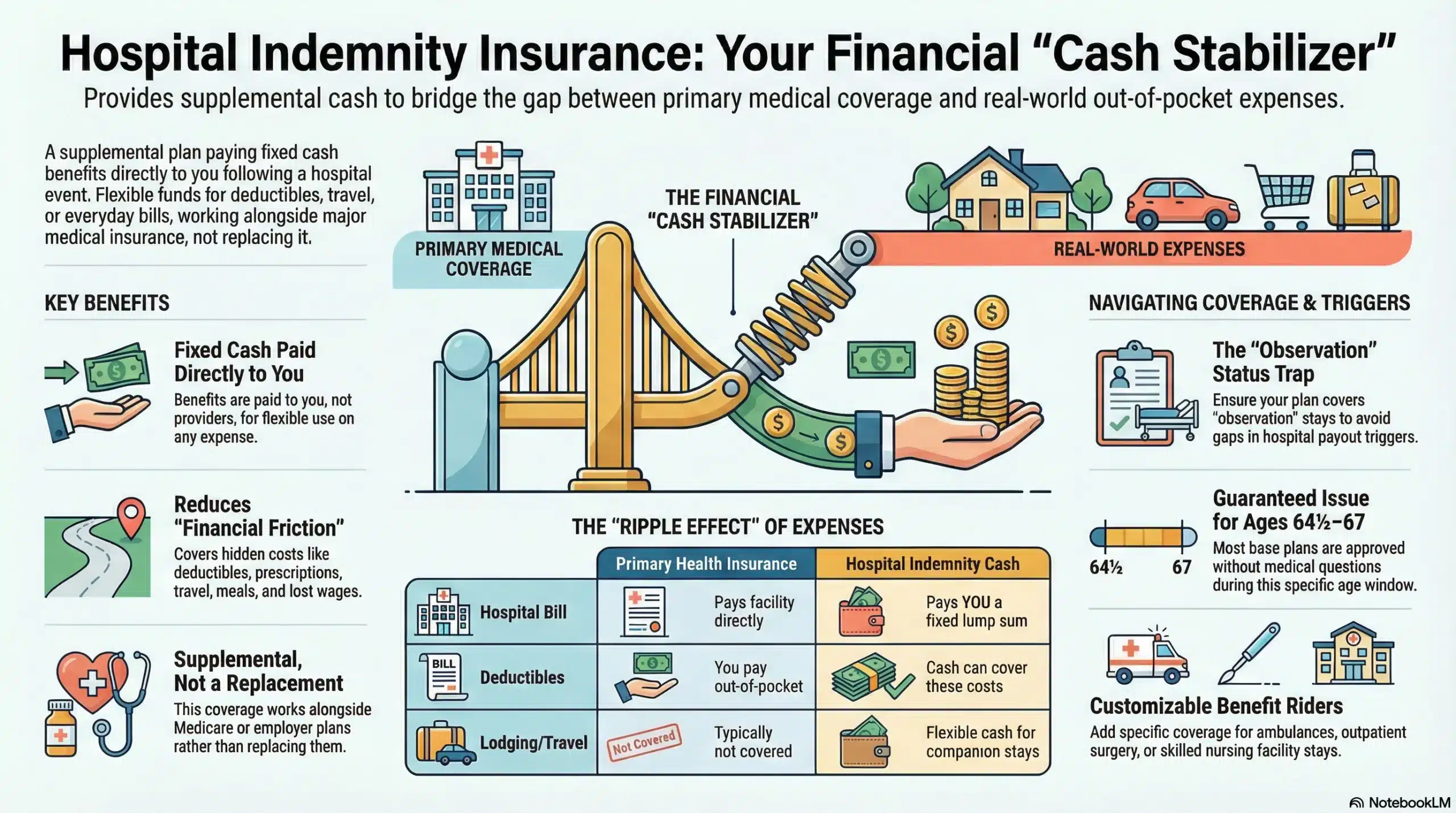
Outpatient surgery riders and rehab and therapy riders are among the most practical add-ons on hospital indemnity and supplemental health plans because they are built for how modern healthcare actually works. Many significant medical events no longer happen through long inpatient stays. Instead, the system increasingly moves patients through same-day procedures, outpatient hospital departments, ambulatory surgery centers, and then a predictable rhythm of follow-up appointments and therapy visits. That model is often clinically efficient, but it creates a frustrating financial experience — you may be responsible for copays, coinsurance, facility fees, and a long string of therapy visit charges that do not feel large individually yet accumulate quickly over weeks. According to the American Hospital Association, outpatient visits now account for more than 80% of all hospital encounters, which means the financial exposure many people face is concentrated in exactly the settings and visit patterns these riders are designed to address. These riders exist to reduce that friction by paying fixed cash benefits directly to you when qualifying events occur, giving you money you can direct toward whatever part of the episode is most financially disruptive.
The most important mindset shift is understanding what these riders are and what they are not. They are not a replacement for major medical coverage. They are not insurance that pays the doctor or the hospital directly. They are cash benefits that help you manage what your primary health plan leaves behind as your cost-sharing obligation. If your primary plan is strong with predictable copays, these riders soften the practical costs surrounding an episode of care. If your primary plan is cost-sharing heavy with meaningful coinsurance percentages on outpatient facility charges or per-visit therapy copays, these riders convert unpredictable bill sequences into a more manageable cash flow. The benefit is paid to you — which means you can apply it to procedure copays, therapy visit copays, prescriptions, transportation, time off work, or household bills that continue regardless of your recovery schedule. If you want the broader foundation for how these cash benefit plans work, Hospital Indemnity Insurance: What It Covers and Costs covers the larger framework and explains how riders layer on top of the base plan design. Best hospital indemnity riders for seniors covers which riders add the most value for Medicare-age enrollees and which ones are frequently over-purchased relative to their realistic benefit.
Cash for Same-Day Surgery & Rehab Visits
Add outpatient surgery and rehab riders to turn copays and coinsurance into predictable cash paid directly to you.
What Outpatient Surgery Riders Cover and Why Setting Matters
Outpatient surgery riders pay when a qualifying procedure is performed in an eligible setting. The two settings you will see most frequently are a hospital outpatient department and an ambulatory surgery center. The setting matters because billing differs substantially between the two. Hospital outpatient departments often carry significantly higher facility charges — and many primary health plans apply coinsurance percentages to those charges rather than fixed copays, creating cost-sharing exposure that varies with the facility’s billing rather than being capped at a predictable amount. Because of this, many outpatient surgery rider designs pay different benefit amounts based on facility setting. That is not arbitrary — it reflects the real difference in out-of-pocket exposure the two settings typically create for the enrollee.
These riders are commonly used for cataract surgery, arthroscopic joint repairs, endoscopy and colonoscopy with interventions, certain vascular procedures, outpatient orthopedic surgeries, hernia repairs, and dozens of other same-day interventions that are more common than most people realize before they encounter one. The carrier defines what qualifies through procedure categories, plan definitions, and sometimes specific coding requirements. The core mechanism is simple: if the procedure meets the contract definition and occurs in an eligible setting, a fixed benefit pays. That benefit can cover the primary plan’s coinsurance on the facility charge, but it can also be applied to the practical edges of the episode — medications, transportation costs, or lost income during recovery days.
A rider delivers the most value when it matches your primary plan’s specific pain points. If your plan has a small flat copay for outpatient surgery but a heavy per-visit therapy copay schedule, the rehab rider may be the more important piece. If your plan has significant coinsurance percentages on hospital outpatient facility charges, the outpatient surgery rider becomes the anchor benefit. The best rider is not the one with the highest benefit amount — it is the one that targets what would be most financially disruptive given how your primary plan actually bills you. Another reason setting awareness matters is that many episodes do not begin with a planned surgery. They begin with a symptom, an urgent care or ER visit, then imaging, then a specialist referral, then a procedure. If you want coverage that feels complete across the full arc, outpatient benefits should be paired with front-end benefits for ER and urgent care. ER and Urgent Care: When Hospital Indemnity Pays explains how those front-end benefits trigger and how they coordinate with the episode of care that follows.
Outpatient Surgery vs. Rehab Riders: How They Compare
| Feature | Outpatient Surgery Rider | Rehab / Therapy Rider | Planning Note |
|---|---|---|---|
| What triggers the benefit | Qualifying procedure performed in an eligible setting — hospital outpatient department or ambulatory surgery center | Covered therapy visit — typically physical therapy, occupational therapy, or speech therapy — prescribed by a provider | Outpatient surgery pays once per event; rehab pays per visit across the recovery schedule |
| Benefit structure | Fixed lump sum per qualifying procedure; often different amounts for hospital outpatient vs ASC setting | Fixed amount per covered visit up to a defined visit cap per incident or per year | Visit cap is critical — should cover the typical number of visits in a full therapy plan, not just the first few sessions |
| Primary cost it addresses | Coinsurance on facility charges or flat procedure copay from primary plan | Per-visit therapy copay or coinsurance that accumulates across weeks of prescribed sessions | Match the rider benefit to what your primary plan charges at each touchpoint |
| When it feels most valuable | Plans with coinsurance on hospital outpatient charges; procedures at higher-cost hospital outpatient departments | Multi-week therapy prescriptions after surgery, injury, or chronic condition management | Both riders together address two phases of the episode: the procedure day and the recovery period |
| Common pitfall | Benefit amount too small relative to actual coinsurance exposure on facility charges | Visit cap exhausted early in the therapy schedule, leaving most sessions uncovered | Size the benefit and the cap to match realistic utilization — not just what looks good on a plan summary |
| Setting distinction matters | Yes — hospital outpatient and ambulatory surgery center often carry different benefit amounts | Some plans distinguish between therapy following surgery versus injury or chronic condition | Read the contract definition of eligible settings and qualifying visit types before assuming coverage |
| Best paired with | ER/urgent care rider for front-end episode costs; observation vs inpatient clarification for correct trigger expectations | Outpatient surgery rider for the procedure day; skilled nursing facility rider if recovery extends to inpatient rehab | Design the stack to cover the full episode arc, not just a single touchpoint |
How Benefits Are Triggered — So You Know What Counts
A rider is only as good as your understanding of how it triggers. Most outpatient surgery riders pay when a qualifying procedure is performed by a licensed provider in an eligible facility. The claim decision is typically not about whether the procedure was medically complex. It is about whether the event matches the contract definition — specifically, whether the place of service and the documented encounter status match what the rider requires. The carrier wants documentation that the procedure occurred, where it occurred, and how it was billed or classified. Understanding these categories before an event prevents the frustrating expectation gap that occurs when patients assume their coverage will pay and then discover the event was categorized differently than they anticipated.
The single most confusing classification for patients is observation status. People spend the night in a hospital and reasonably assume they were admitted as inpatients, which would trigger inpatient benefits. But observation is a billing status that is different from formal inpatient admission, and it is often categorized differently in carrier claim processing. Benefits triggered by inpatient admission may not trigger for an observation stay, even if the patient spent multiple nights in a hospital bed. Observation vs. Inpatient: How Cash Benefits Pay is one of the most important pages to read before selecting any hospital-related rider, because it explains why the status labels on your medical record determine which benefits trigger — and how to design your rider stack to address this classification risk before it becomes a problem.
Rehab and Therapy Riders: PT, OT, Speech, and Beyond
Rehab and therapy riders are often the difference between a plan that feels genuinely useful and one that feels like it only pays for dramatic events. That distinction matters because the rehab phase is where cost-sharing becomes repetitive and financially fatiguing. Therapy is rarely a single visit. It is usually a defined plan of care — a schedule of visits over time designed to restore function, reduce pain, build strength, and prevent re-injury or complication. That schedule can be 6 visits, 12 visits, 20 visits, or more depending on the clinical situation and how the patient responds. If your primary plan requires copays or coinsurance per session, the cost accumulates consistently across weeks — often while you are also managing lost income, prescription costs, and changing household routines. A rehab rider pays a fixed benefit per covered visit so the recovery schedule becomes financially manageable rather than a source of ongoing financial drain.
Therapy riders vary more than most people expect. Some cover strictly outpatient physical therapy, occupational therapy, and speech therapy on a per-visit basis. Others include adjacent rehab categories relevant to specific recovery types. Some plans distinguish between therapy following surgery versus therapy for a stand-alone injury. Some apply visit caps per incident and others per year, which affects how much of a multi-week therapy plan is actually covered. The visit cap is the make-or-break variable — not because you should plan to exhaust it, but because you want the rider to remain active during the core of the prescribed recovery period rather than stopping after the first week or two. A strong rehab rider can also function as a behavior tool alongside its financial function: when therapy visits carry no or low out-of-pocket cost, patients are more likely to complete the full prescribed plan, which can improve functional outcomes and reduce the risk of re-injury or secondary complications that would generate additional medical utilization. Skilled Nursing Facility Rider Explained covers the adjacent benefit that matters when recovery extends beyond outpatient therapy into a more intensive skilled rehab environment — relevant after complex orthopedic surgeries, strokes, and other events where the recovery arc is longer than outpatient therapy can serve. Cancer diagnosis cash benefit rider covers a related category where the treatment and recovery arc involves extended outpatient visits and therapy sessions that directly engage with how these outpatient and rehab riders function in the broader supplemental plan design.
Designing Riders Around Real-Life Care Pathways
The most effective way to design outpatient surgery and rehab riders is to stop thinking in terms of individual benefits and start thinking in terms of the full care pathway — the complete arc of what happens during an episode: the first visit, the diagnosis, the procedure, the follow-up, and the rehabilitation. Most people do not experience a single isolated bill. They experience a sequence of costs that arrive in clusters across weeks or months. When riders are designed to match those clusters, the plan feels like it was built for real life. When riders are chosen as random additions with no connection to how episodes actually unfold, people often find the plan pays sometimes but does not meaningfully reduce financial stress during the periods when stress is highest.
Common pathways include an urgent injury leading to evaluation, then imaging, then an outpatient repair, then a multi-week therapy schedule. Or a planned procedure with a facility charge, a short follow-up schedule, and a brief therapy course. Or a symptom leading to an emergency room visit, then observation monitoring, then an outpatient intervention, then extended rehabilitation. The rider stack should be designed so that regardless of which pathway occurs, the cash benefits still support the episode’s financial arc rather than covering only one phase. That pairing logic is why the outpatient surgery rider and rehab rider are so frequently designed together — they address different phases of the same arc — and why front-end riders for ER and urgent care complete the picture for episodes that begin unexpectedly. If your plan design includes rehab or longer recovery phases, Heart Attack and Stroke Cash Benefit Rider covers a critical illness category where the recovery arc often involves intensive outpatient therapy and follow-up visits that engage directly with how outpatient and rehab riders function. Travel, lodging, and pet care benefits explained covers the logistical expense dimension of complex care episodes that sometimes involves distance travel for specialized treatment — a rider that completes the coverage picture when the care pathway includes providers or facilities that are not local.
Match Rider Benefits to How Your Plan Actually Bills
We’ll align outpatient and therapy benefit amounts with your copays, coinsurance, and realistic rehab schedules so the coverage feels useful when you need it.
Why These Riders Feel Worth It for Many Families
These riders feel worth it when they reduce decision stress. Medical decisions are difficult enough without financial uncertainty layered on top of clinical uncertainty, recovery disruption, and work absence. When a plan sends cash benefits after qualifying events, it removes the feeling that every appointment is a budget problem and every therapy session requires a cost-benefit calculation. It also removes the pressure to delay care or shorten a therapy schedule because the per-visit cost has accumulated into a problematic monthly total. That matters because recovery outcomes are frequently tied to consistency — a therapy plan produces better results when followed as prescribed, and a rider that removes the financial barrier to attendance can improve how the full episode resolves.
Another reason these riders are widely used is that they create genuine financial flexibility. A fixed cash benefit is not a coupon for one exact bill type. It can solve different problems depending on what the episode looks like for a specific household. Some people use the benefit to cover a facility coinsurance charge. Others use it for repeated therapy copays. Others use it to keep mortgage payments current while they take medically necessary time away from work. Others use it for prescription costs or transportation to multiple weekly therapy appointments. That flexibility makes cash benefits more relevant to actual life than benefits that only pay a provider directly for a defined service. Increasing daily benefit rider with 5% step-ups covers the inflation-protection design feature that allows base benefit amounts to grow over time — a dimension of long-term plan design that affects how well outpatient and therapy benefits hold their value across years of plan ownership. Guaranteed issue hospital indemnity at 65 covers the enrollment pathway that allows Medicare-eligible enrollees to add these riders without medical underwriting — particularly relevant for seniors with existing health conditions that might otherwise complicate supplemental plan approval.
Common Mistakes That Make Riders Feel Useless
The most common mistake is designing riders without checking how your primary plan actually charges you. If your plan applies a coinsurance percentage to outpatient facility charges and you choose a small fixed outpatient surgery benefit, the rider may feel meaningless during a high-cost event where the coinsurance exposure is several times the benefit amount. If your plan has repeated per-visit therapy copays and you choose a rehab rider with a very low visit cap, the benefit may stop early in the recovery schedule and feel like it barely contributed. These are not bad riders — they are mismatched riders. The solution is aligning benefit amounts and visit caps to your plan’s actual cost-sharing pattern and your realistic utilization frequency, not to a generic example or an average that may not reflect your specific plan.
The second common mistake is ignoring observation status and its effect on which benefits trigger. The third mistake is over-buying benefits that are unlikely to be used rather than focusing the rider design on what is most likely to be financially disruptive given your health history, your plan’s billing patterns, and your household’s financial resilience. The best rider design is focused rather than comprehensive — targeting realistic cost exposure rather than maximizing the list of included benefits and hoping the premium increase is worthwhile.
Quote Outpatient Surgery & Rehab Riders
We’ll align benefit amounts and visit caps with the way your plan actually bills — so the coverage feels useful when you need it.
Related Hospital Indemnity Pages
Continue building a complete cash-benefit plan by understanding how common riders trigger and coordinate across an episode of care.
Related Recovery & Rider Planning
If your plan design includes rehab or longer recovery phases, these pages help you coordinate cash benefits across the full timeline.
Talk With an Advisor Today
Choose how you’d like to connect—call or message us, then book a time that works for you.
Schedule here:
calendly.com/jason-dibcompanies/diversified-quotes
Licensed in all 50 states • Fiduciary, family-owned since 1980
Frequently Asked Questions: Outpatient Surgery & Rehab Riders
What does an outpatient surgery rider pay for?
An outpatient surgery rider pays a fixed cash benefit when a qualifying procedure is performed in an eligible outpatient setting — typically a hospital outpatient department or an ambulatory surgery center. The benefit triggers based on where the procedure was performed and whether the event meets the contract’s definition of a qualifying outpatient surgery, not based on the procedure’s clinical complexity. Common qualifying procedures include cataract surgery, arthroscopic joint repairs, endoscopy with interventions, outpatient orthopedic surgeries, and many other same-day interventions. Because hospital outpatient departments often carry significantly higher facility charges than ambulatory surgery centers, many rider designs pay different benefit amounts based on the setting — reflecting the real difference in cost-sharing exposure the two settings create under most primary health plans.
How does a rehab rider work and how many visits does it cover?
A rehab or therapy rider pays a fixed cash benefit per covered visit — typically physical therapy, occupational therapy, or speech therapy — up to a defined visit cap that may apply per incident or per year. The per-visit payment helps offset the copay or coinsurance your primary plan charges for each therapy session, converting a potentially large series of repeated bills into a more manageable financial pattern. The visit cap is the most important design variable — it should be sized to cover the typical number of sessions in a realistic therapy plan of care, not just the first few visits. A prescription of two to three visits per week for eight weeks, for example, requires 16 to 24 covered visits to provide meaningful benefit throughout the course of treatment. Riders with very low visit caps may stop paying early in the recovery schedule and feel insufficient for multi-week therapy plans.
Why does observation vs. inpatient status matter for these riders?
Observation is a billing status that is different from formal inpatient admission, and hospital indemnity plans distinguish between the two when determining which benefits trigger. A patient who spends time in a hospital bed under observation status may not trigger inpatient admission benefits, even if the experience felt like a hospital stay. This classification affects which riders pay and how much. If a hospital event is billed as observation rather than inpatient admission, inpatient-specific benefits may not apply — but outpatient benefits may. Understanding this distinction before selecting a rider stack helps prevent situations where patients believe their coverage failed when the event simply fell into a different contractual category than anticipated. Designing the rider stack to address both inpatient and observation scenarios reduces this risk.
Should I add both an outpatient surgery rider and a rehab rider?
In most cases, pairing both riders produces a more complete financial picture than either alone because they address different phases of the same episode. The outpatient surgery rider covers the procedure day — the facility charge or coinsurance from the primary plan on the day of the surgery itself. The rehab rider covers the recovery period — the repeated per-visit costs that accumulate across weeks of prescribed therapy following the procedure. An episode that includes only one of these phases is less common than an episode that includes both. Designing for the full arc of the episode — procedure day plus recovery period — is what makes the plan feel genuinely useful rather than covering only part of what happened.
How do I choose the right benefit amount for an outpatient surgery rider?
The right benefit amount should reflect what your primary plan actually charges you at the outpatient facility level — specifically the coinsurance percentage applied to facility charges if your plan uses coinsurance rather than a flat copay. If your primary plan has a 20% coinsurance on hospital outpatient facility charges and those charges typically run $3,000 to $5,000 for common same-day procedures, your out-of-pocket exposure could be $600 to $1,000 before any deductible considerations. An outpatient surgery rider benefit should be meaningful relative to that exposure — not just a token amount that covers a fraction of what the event actually costs. The best approach is to review a recent explanation of benefits from your primary plan, identify what you paid at the outpatient level, and select a benefit that would have materially reduced that amount.
About the Author:
Jason Stolz, CLTC, CRPC, DIA, CAA and Chief Underwriter at Diversified Insurance Brokers (NPN 20471358), is a senior insurance and retirement professional with more than 25 years of real-world experience helping individuals, families, and business owners protect their income, assets, and long-term financial stability. As a long-time partner of the nationally licensed independent agency Diversified Insurance Brokers, Jason provides trusted guidance across multiple specialties—including fixed and indexed annuities, long-term care planning, personal and business disability insurance, life insurance solutions, Group Health, Travel Medical and Evacuation Insurance, and short-term health coverage. Diversified Insurance Brokers maintains active contracts with over 100 highly rated insurance carriers, ensuring clients have access to a broad and competitive marketplace.
His practical, education-first approach has earned recognition in publications such as VoyageATL, and contributions from his agency featured in Kiplinger and GoBankingRates— highlighting his commitment to financial clarity and client-focused planning. Drawing on deep product knowledge and years of hands-on field experience, Jason helps clients evaluate carriers, compare strategies, and build retirement and protection plans that are both secure and cost-efficient. Visitors who want to explore current annuity rates and compare options across multiple insurers can also use this annuity quote and comparison tool.
Browse More Resources: Return to our complete Supplemental, Hospital Indemnity & Critical Illness guide — covering hospital indemnity, accident insurance & critical illness coverage.
Last Reviewed: June 15, 2026 |
Reviewed by: Jason Stolz, CLTC, CRPC, DIA, CAA
Chief Underwriter, Diversified Insurance Brokers, Inc. | NPN: 20471358 | Diversified Insurance Brokers, Inc. — Licensed in all 50 states
Fact Checked by: Tonia Pettitt, CMIP©
Medicare Specialist, Diversified Insurance Brokers, Inc. | NPN: 14374308 | Diversified Insurance Brokers, Inc. — Licensed in all 50 states
Did you find this content helpful? Leave us a Google review — it helps others find trustworthy guidance too.
Editorial Standards: Diversified Insurance Brokers maintains rigorous editorial standards to ensure accuracy, clarity, and independence in all content. Learn more about our editorial standards and commitment to transparency.
