
Travel, Lodging & Pet Care Benefits Explained.
Travel, Lodging & Pet Care Benefits Explained.

Jason Stolz CLTC, CRPC, DIA, CAA
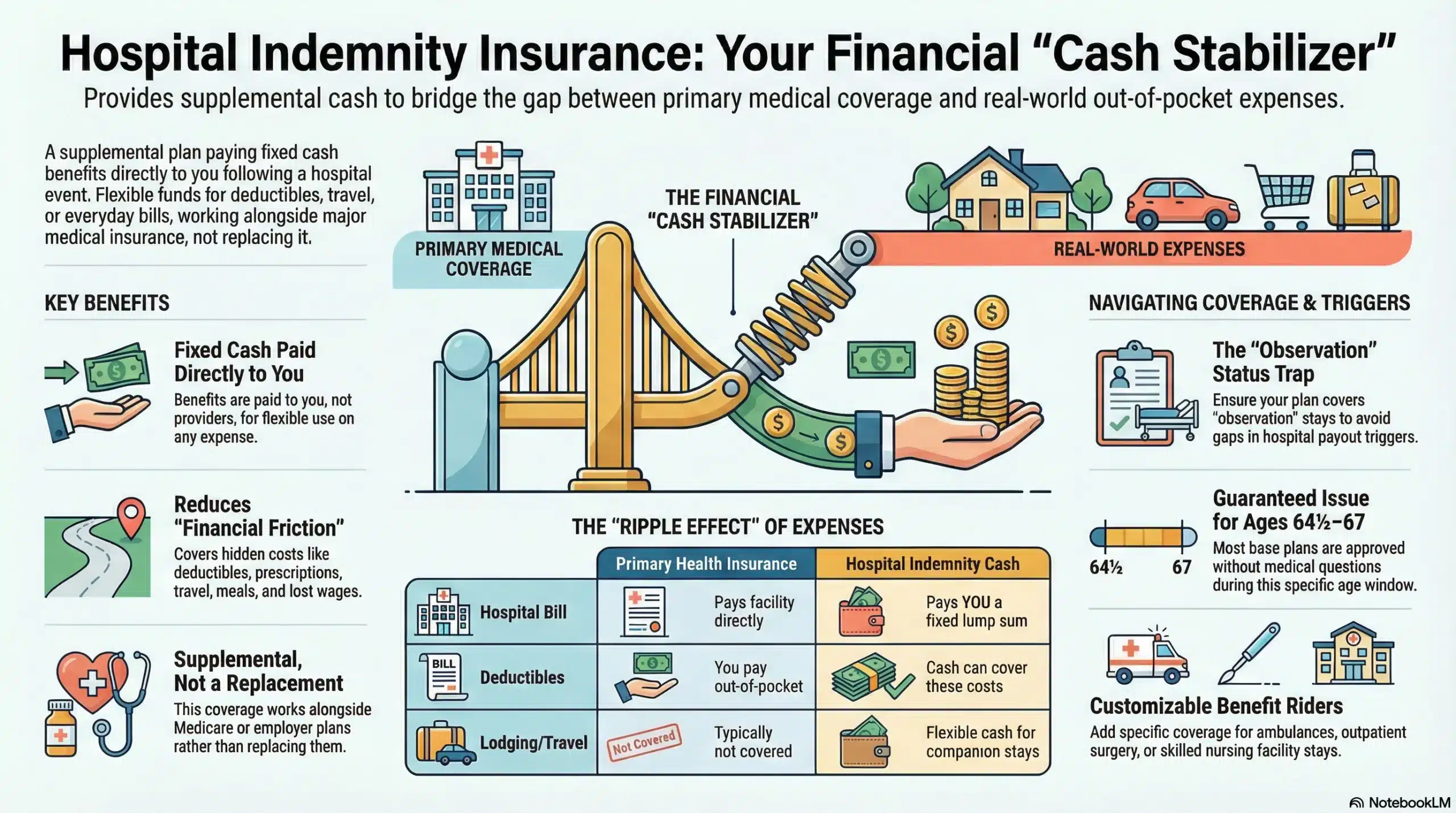
Travel, lodging, and pet care benefits are among the most overlooked quality-of-life add-ons available on hospital indemnity plans, and they are consistently underestimated until the moment a policyholder actually needs them. When care pulls you away from home, the costs that create the most immediate financial pressure are often not the large clinical bill you anticipated — they are the stream of practical expenses that appear immediately and keep accumulating until life returns to normal. Gas and mileage, tolls and parking fees, rideshare costs, meals away from home, a hotel near the treatment facility, a place for a spouse or family member to stay while you receive care, and an emergency plan for pets when you are admitted unexpectedly can collectively create significant financial pressure at exactly the moment you are trying to focus entirely on recovery. Travel, lodging, and pet care riders are built to address that practical reality by paying fixed cash benefits directly to you under plan-defined rules, so the logistical costs of receiving care do not compound the stress of the medical event itself.
These riders are particularly valuable for people who may need to travel to a center of excellence, see out-of-town specialists, or receive repeated treatment at a facility that is not their closest option. In practice, travel for care does not always mean a dramatic cross-country journey. It can mean driving to a larger hospital system one county away because that is where the relevant specialist is located, staying overnight because an early-morning procedure requires arrival before dawn, or making repeated trips for testing, follow-up visits, rehabilitation sessions, and monitoring appointments in the weeks following the primary event. At Diversified Insurance Brokers, we design these riders to match how you would actually use them — starting with benefit structure and state-specific rules, then sizing travel, lodging, and pet care amounts to complement the other riders in your plan, including emergency room, observation, daily hospital confinement, outpatient surgery, skilled nursing, therapy, and recovery benefits. Hospital indemnity insurance: what it covers and costs provides the foundational overview of how these plans work as a complete system before adding rider-level detail. Best hospital indemnity riders for seniors covers the full rider evaluation framework including which riders deliver the most practical value across different care scenarios and age profiles.
Build a Travel & Lodging Rider That Fits Your Life
We’ll confirm distance rules, caps, and documentation expectations — then size benefits to your actual travel patterns.
Why These Riders Matter More Than Most People Expect
A common misunderstanding is that travel and lodging riders operate as expense reimbursements requiring itemized documentation after the fact. Most of these benefits are fixed cash payments — when a qualifying event occurs and the plan’s defined triggers are met, the plan pays the defined benefit amount directly to you without requiring proof of how the money was spent. That distinction matters practically because fixed cash benefits are simpler to claim, faster to receive, and more flexible in how the payment can be applied. You demonstrate that the qualifying care event occurred, and the benefit pays according to the plan schedule. A second common misunderstanding is that these riders only matter during major surgeries. In reality, the travel and lodging burden often increases in the weeks surrounding a care event rather than being concentrated in a single day. Consultations, imaging, laboratory work, pre-operative clearance, post-operative visits, therapy sessions, and specialist follow-ups can each require a separate trip — and the cumulative cost of transportation, parking, meals, and lodging across those appointments can significantly exceed what most families anticipate when they budget for a medical event. When you layer travel, lodging, and pet care benefits with clinical event riders that pay for emergency room visits, observation stays, inpatient daily confinement, outpatient procedures, and rehabilitation, you construct a more complete cash safety net that reduces the need to use credit cards or make reactive financial decisions during a healthcare disruption. Observation vs. inpatient: how cash benefits pay covers how the care setting determines which benefit triggers activate — critical context for understanding how travel and lodging benefits coordinate with the clinical event riders in the same plan.
People also consistently underestimate how often a companion is involved in care. After sedation, anesthesia, a complex procedure, or a significant medical event, traveling alone is often unsafe or inadvisable. A spouse or family member may drive, stay overnight, coordinate discharge paperwork, and help at home afterward. Companion lodging benefits exist precisely because real care often requires real support, and when a family member must be present, their accommodation costs are just as real and immediate as the patient’s. It also helps to think in terms of what actually happens during a typical episode of care rather than imagining a single discrete event. Many healthcare episodes start with symptoms and uncertainty — a visit to urgent care or the emergency room, a period under observation, a decision about admission, a procedure, a discharge, and then a recovery period at home or in a rehabilitation facility. The clinical part of that sequence is only half the story. The other half is transportation logistics, timing constraints, family member coordination, and household support costs that do not disappear simply because the patient has been discharged. ER and urgent care: when hospital indemnity pays provides a practical overview of how emergency room-related benefits function within hospital indemnity designs — ER events frequently initiate the care sequences that make travel and lodging benefits most relevant in the days and weeks that follow.
Travel, Lodging, and Pet Care: How Each Benefit Is Structured
| Feature | Travel Benefit | Lodging Benefit | Pet Care Benefit |
|---|---|---|---|
| What it covers | Transportation costs to and from qualifying care — mileage, tolls, parking, rideshare, and meals associated with travel to an eligible facility | Overnight accommodation near the treatment facility for the patient and/or a companion, tied to a qualifying care event | Daily costs of pet care when the insured is hospitalized or must travel — boarding, pet sitting, dog walking, feeding, medication management |
| Typical structure | Per-trip, per-day, or per-episode fixed cash payment — structure determines how often the benefit pays across a care sequence | Per-night cash benefit with per-episode and/or annual caps — some plans include companion lodging as a separate sub-benefit | Per-day fixed cash for a defined maximum number of days per event |
| Common trigger | Care at a facility beyond a defined mileage radius from the insured’s residence, or travel to a qualifying provider for a covered event | Overnight stay near the facility connected to a covered admission, outpatient procedure, or qualifying treatment event | Inpatient hospital admission or qualifying travel trigger — some carriers require minimum admission days |
| Reimbursement vs. cash | Fixed cash — proves the qualifying event occurred, plan pays the defined amount without requiring itemized expense documentation | Fixed cash — amount defined by plan schedule, not calibrated to the actual hotel cost the insured submits | Fixed cash — pays per day regardless of actual pet care vendor cost; flexible use for any recovery-related expense |
| Key caps to confirm | Per-episode caps and annual maximums — determines whether benefit remains meaningful across repeated care events in a single year | Maximum nights per event and annual maximum nights | Maximum days per event — typically modest, designed for the immediate disruption period |
| Most valuable for | Rural households, people who travel to larger hospital systems or specialty centers, anyone with repeated multi-appointment care sequences | Anyone requiring overnight proximity to a treatment facility — planned surgeries, multi-day procedures, early-morning appointments at distant facilities | Pet owners without a strong local support network who cannot easily arrange informal pet care during unexpected hospitalization or travel |
Distance Triggers, Benefit Structures, and How to Design Each Rider
Before designing a travel, lodging, or pet care rider package, it is important to understand that carriers define qualifying events and distance triggers differently — and the distance trigger is the most common source of confusion and unexpected gaps. Some plans require care to occur beyond a defined mileage radius from the insured’s primary residence before the travel benefit activates. That threshold makes the benefit extremely valuable for rural families who routinely drive to a larger hospital system for care not available locally, and less immediately relevant for someone who lives within short distance of multiple major medical facilities. However, even urban households regularly encounter situations where specific specialties, centers of excellence, or the facility where a particular surgeon operates is outside the immediate local area — and that is precisely where the rider becomes practical. The key design principle is matching the rider’s trigger to your realistic care pattern rather than assuming all care will be local.
Travel benefits can also be structured per-trip, per-day, or per-episode, and the right structure depends on how often you would need the benefit across a care sequence. A per-trip structure works cleanly when the pattern is one trip to the facility and one return trip. A per-day structure aligns better with multi-day treatment cycles requiring consecutive nights near the facility. Documentation expectations are usually straightforward in well-designed plans — most carriers require confirmation that a qualifying visit, procedure, or admission occurred at an eligible location on eligible dates, which is very different from reimbursement models requiring gas receipts, hotel invoices, and itemized mileage logs. Lodging benefits should be sized to reflect realistic hotel costs in areas where you would most likely need overnight accommodation. Pet care benefits should reflect realistic daily boarding or pet sitting costs for the number and type of pets you have. A family with multiple pets or animals requiring specialized care may find a higher daily benefit appropriate. A family with one pet and a strong local support network may find a modest benefit adequate, with the cash flexibility allowing the benefit to serve other recovery expense purposes when pet care is handled informally. Outpatient surgery and rehab riders covers how procedure-focused and rehabilitation-focused riders stack around common recovery pathways — the clinical context within which lodging and travel benefits provide their most practical logistical support. Skilled nursing facility rider explained covers the post-hospital rehabilitation phase where many families see the most extended household disruption, including continued travel needs for family members through the full recovery sequence. Increasing daily benefit rider: 5% step-ups covers how step-up benefit structures work — a concept relevant to policyholders who want lodging and pet care benefits that keep pace with cost increases over time rather than remaining fixed at original purchase levels.
How Travel, Lodging, and Pet Care Riders Coordinate With the Rest of the Plan
Travel, lodging, and pet care benefits deliver their greatest practical value when designed as coordinated components of a complete rider package rather than standalone additions to a generic plan. These three riders address the logistical and household costs that surround a care event, while the clinical event riders — emergency room, observation, daily inpatient confinement, outpatient procedure, and rehabilitation benefits — address the clinical costs of the event itself. When both categories are present and properly sized, the total cash flow generated across an episode of care can meaningfully reduce the family’s net out-of-pocket financial exposure from both the clinical and logistical dimensions simultaneously. A well-designed rider package feels cohesive — travel, lodging, and pet care triggers align with the timeline of actual care episodes rather than existing as benefits that are technically present but difficult to activate when needed most. A poorly designed package can have all three riders on paper while none of them trigger cleanly for the scenarios the policyholder actually experiences, which is the most common source of rider dissatisfaction.
From a financial planning perspective, these benefits protect liquidity and protect household routine — preventing the reactive financial decisions that medical events can force, such as carrying high-interest credit card balances, tapping retirement accounts during market downturns, or forcing asset liquidation at an unfavorable time. Even after discharge, travel continues through follow-up visits, testing, therapy, and specialist monitoring that can span weeks or months. Designing travel and lodging benefits around that full timeline — not just the day of the clinical event — is what separates a rider package that genuinely supports recovery from one that covers only a fraction of the actual financial disruption. For Medicare Advantage members, fixed cash benefits also serve as a buffer against the cost-sharing patterns that many Medicare Advantage plans create across different care settings — travel and lodging riders address costs that exist regardless of whether the plan’s copays are low or high. Should you consider critical illness insurance covers how lump-sum event-based benefits coordinate with ongoing logistical riders — particularly relevant for cardiac events or cancer treatment that generate both immediate lump-sum financial needs and extended multi-appointment care sequences requiring repeated travel. Heart attack and stroke cash benefit rider covers how event-based fixed benefits fit into the overall strategy alongside travel and lodging benefits that are particularly valuable during cardiac and neurological recovery sequences involving repeated specialist appointments. Accident insurance covers the complementary accident-specific coverage for injury events that generate repeated travel to orthopedic specialists, imaging centers, and rehabilitation facilities — exactly the repeated logistical cost pattern that travel and lodging riders are designed to absorb. Guaranteed issue hospital indemnity at 65 covers coverage options for Medicare-eligible individuals who want hospital indemnity protection without medical underwriting — the context within which travel, lodging, and pet care riders are often most practically valuable given Medicare’s cost-sharing structure. Short-term care insurance alternatives covers how supplemental protection products fit within the broader continuum of care planning. Are Medicare and long-term care insurance the same frames why hospital indemnity riders address practical gaps that neither Medicare nor long-term care insurance is designed to fill.
Quote Travel, Lodging & Pet Care Riders
Clear options, state-specific rules confirmed, and benefits sized to your likely care path.
Related Hospital Indemnity Pages
Continue building a complete cash-benefit plan by understanding how common riders trigger and coordinate across an episode of care.
Related Recovery & Rider Pages
If your plan design includes rehab or condition-focused benefits, these pages help you coordinate cash benefits across recovery timelines.
Talk With an Advisor Today
Choose how you’d like to connect—call or message us, then book a time that works for you.
Schedule here:
calendly.com/jason-dibcompanies/diversified-quotes
Licensed in all 50 states • Fiduciary, family-owned since 1980
Frequently Asked Questions: Travel, Lodging, and Pet Care Benefits
Are travel and lodging benefits reimbursements or fixed cash payments?
Most travel and lodging benefits in hospital indemnity plans are fixed cash payments rather than expense reimbursements. A reimbursement structure would require you to submit itemized expense documentation — receipts, invoices, mileage logs — and receive back only what you can document spending. A fixed cash benefit works differently: when a qualifying event occurs and the plan’s trigger conditions are met, the plan pays the defined benefit amount directly to you without requiring you to prove what you spent the money on. That distinction matters practically because fixed cash benefits are simpler to claim, faster to receive, and more flexible in how the payment can be used once it is made. The plan’s documentation requirement is typically to demonstrate that the qualifying care event occurred — not to provide granular expense records for every logistical cost incurred around the event.
What distance trigger is typically required for a travel benefit to activate?
Distance triggers vary by carrier and plan design — there is no universal standard. Many plans require care to occur beyond a defined mileage radius from the insured’s primary residence, commonly expressed as a threshold of 50 to 100 miles. Some plans use a simpler trigger based on whether the care occurred at an eligible facility for a qualifying event type, without a specific mileage requirement. The distance threshold is the most important rider design element to confirm before purchasing because it directly determines whether the benefit will activate for your actual care pattern. Rural households that routinely travel to larger regional hospitals often find that their typical travel distance meets or exceeds common mileage thresholds. Urban households may find that their routine care is local but that specific specialty care — cancer centers, cardiac surgery programs, orthopedic specialty hospitals — triggers travel distances that qualify.
Do lodging benefits cover a companion’s hotel stay as well as the patient’s?
Some plans include companion lodging benefits either as part of the base lodging rider or as a separate sub-benefit, while others cover only the patient’s accommodation costs. Companion lodging is particularly valuable because many care situations — surgery, procedures involving sedation or anesthesia, significant medical events — require a family member or caregiver to be present at or near the facility. That companion has their own accommodation need when the facility is not local, and without a companion lodging benefit, that cost falls entirely outside what the plan addresses. When evaluating lodging riders, confirming whether companion lodging is included, how it is defined, and whether it has its own caps separate from the patient’s lodging benefit is an important design detail — particularly for policyholders who know their care situations typically involve a support person traveling with them.
What triggers a pet care benefit and how many days does it typically pay?
Pet care benefit triggers vary by carrier — most commonly they activate upon inpatient hospital admission of the insured, sometimes with a minimum number of admission days required before the benefit begins paying. Some plans also allow the pet care benefit to trigger around qualifying travel events associated with care, recognizing that the household disruption requiring pet care can begin before an inpatient admission if the insured must travel away from home for treatment. The number of covered days is typically modest — often between 5 and 14 days per event — because the benefit is designed for the immediate disruption period rather than extended pet care. The daily benefit amount should be sized to cover realistic boarding or pet sitting costs in the insured’s area, and the fixed cash structure means the payment can be applied flexibly if informal pet care arrangements are made and the cash is more useful for other recovery-related expenses.
How should I size travel, lodging, and pet care benefits relative to the rest of my hospital indemnity plan?
The right sizing approach starts with your realistic care geography and household situation rather than with the maximum benefit available in each rider category. Travel benefits should be sized to cover meaningful transportation costs for the distance you would actually travel to receive specialty care or access facilities beyond your immediate local area — not sized around the assumption of cross-country trips if your realistic travel pattern is a one-to-two-hour drive. Lodging benefits should reflect actual hotel costs in the areas where you would most likely need overnight accommodation, not idealized minimum costs. Pet care benefits should reflect the realistic daily cost of boarding or professional pet sitting for your specific pets in your area. These riders deliver the most value when they are proportionate to actual use rather than treated as “the more the better” additions that inflate premium without proportional benefit increase. Working with an advisor to confirm trigger conditions and caps before enrollment prevents the most common sizing mistakes.
About the Author:
Jason Stolz, CLTC, CRPC, DIA, CAA and Chief Underwriter at Diversified Insurance Brokers (NPN 20471358), is a senior insurance and retirement professional with more than 25 years of real-world experience helping individuals, families, and business owners protect their income, assets, and long-term financial stability. As a long-time partner of the nationally licensed independent agency Diversified Insurance Brokers, Jason provides trusted guidance across multiple specialties—including fixed and indexed annuities, long-term care planning, personal and business disability insurance, life insurance solutions, Group Health, Travel Medical and Evacuation Insurance, and short-term health coverage. Diversified Insurance Brokers maintains active contracts with over 100 highly rated insurance carriers, ensuring clients have access to a broad and competitive marketplace.
His practical, education-first approach has earned recognition in publications such as VoyageATL, and contributions from his agency featured in Kiplinger and GoBankingRates— highlighting his commitment to financial clarity and client-focused planning. Drawing on deep product knowledge and years of hands-on field experience, Jason helps clients evaluate carriers, compare strategies, and build retirement and protection plans that are both secure and cost-efficient. Visitors who want to explore current annuity rates and compare options across multiple insurers can also use this annuity quote and comparison tool.
Explore More Travel Medical Insurance Options: Browse our complete guide to Travel Insurance Planning & Education — covering how it works, costs, last minute coverage, high risk travel & buying guides.
Explore More: Browse our complete Travel Medical Insurance guide — covering international health coverage, medical evacuation & trip protection plans from 100+ carriers.
Last Reviewed: June 17, 2026 |
Reviewed by: Jason Stolz, CLTC, CRPC, DIA, CAA
Chief Underwriter, Diversified Insurance Brokers, Inc. | NPN: 20471358 | Diversified Insurance Brokers, Inc. — Licensed in all 50 states
Fact Checked by: Tonia Pettitt, CMIP©
Medicare Specialist, Diversified Insurance Brokers, Inc. | NPN: 14374308 | Diversified Insurance Brokers, Inc. — Licensed in all 50 states
Did you find this content helpful? Leave us a Google review — it helps others find trustworthy guidance too.
Editorial Standards: Diversified Insurance Brokers maintains rigorous editorial standards to ensure accuracy, clarity, and independence in all content. Learn more about our editorial standards and commitment to transparency.
