
Index Universal Life vs Variable Universal Life
Index Universal Life vs Variable Universal Life

Jason Stolz CLTC, CRPC, DIA, CAA
Index Universal Life versus Variable Universal Life is one of the most consequential permanent life insurance decisions a buyer can make — and one of the most frequently misunderstood. Both are flexible, permanent contracts that build cash value over time. Both are tax-advantaged. Both can play a role in a broader retirement and estate planning strategy. But the mechanics of how each product generates growth, manages risk, charges costs, and behaves over a 20-to-40-year policy horizon are fundamentally different. Choosing the wrong structure can mean unnecessary volatility, fee drag that undermines accumulation, a policy that lapses at exactly the wrong time, or a design that conflicts with the rest of the financial plan rather than reinforcing it.
At Diversified Insurance Brokers, Jason Stolz, CLTC, CRPC, DIA, CAA, helps clients evaluate IUL and VUL in the full context of their retirement picture — including rollover decisions from accounts like what to do with a 401(k) after retirement, pension election decisions from evaluating pension payouts, government plan transitions from TSP rollover strategies, and the broader tax and income planning that permanent life insurance must coordinate with to be effective. Life insurance should never be purchased in isolation. When it is, it tends to underperform expectations — not because the product failed, but because the funding strategy, the policy structure, and the coordination with the overall financial plan were never properly aligned.
See Real-Term Rates Side by Side
Life Insurance Quoter
What IUL and VUL Have in Common — and Why That Makes the Differences More Important
Before examining where they diverge, it is worth establishing the shared foundation — because both products are frequently presented as being more different than they actually are in their basic structure. IUL and VUL are both flexible premium universal life insurance contracts, meaning the policyholder has discretion over premium amounts within IRS-defined limits rather than paying a fixed scheduled premium as in whole life. Both accumulate cash value on a tax-deferred basis. Both generally allow access to cash value through withdrawals or policy loans without triggering income tax, subject to proper funding and structuring. Both pay a death benefit that passes to beneficiaries generally free of income tax. And both carry the risk of policy lapse if cash value is insufficient to cover ongoing insurance costs — a risk that is far more consequential in both products than most illustration-focused sales conversations acknowledge.
Both are also subject to Modified Endowment Contract rules. If cumulative premiums paid in the first seven years of the policy exceed IRS-defined limits based on the death benefit size, the policy becomes a Modified Endowment Contract, and the tax treatment of distributions changes materially — withdrawals and loans become taxable and may be subject to a 10% penalty before age 59½. Proper funding design that maximizes cash value accumulation while staying below MEC thresholds is one of the most technically important aspects of either product, and one that is frequently glossed over in sales illustrations that show only the upside scenario.
How IUL Growth Works — The Crediting Mechanism That Defines the Trade-Off
An Index Universal Life policy does not invest your cash value directly in the stock market. That distinction is foundational and frequently misunderstood. Instead, the insurance carrier uses the cash value to purchase a portfolio of fixed income instruments, and then uses a portion of the interest earned on those instruments to purchase options tied to an equity index — typically the S&P 500, though many carriers offer multiple index choices including international indices, volatility-controlled indices, and blended strategies. The result is a crediting mechanism that can generate interest based on index performance while the underlying principal is not directly exposed to market loss.
The mechanics of this involve two limiting parameters: caps and participation rates (and sometimes spreads). A cap is the maximum interest rate that can be credited in a given policy year regardless of how much the index returned. A participation rate is the percentage of the index return that is credited, applied before or instead of a cap depending on the crediting strategy. If the S&P 500 returns 18% and the cap is 10%, the policy is credited 10%. If the participation rate is 70% and the index returns 15%, the credit is 10.5%. The floor — typically 0% — means a negative index year results in 0% interest credit to the policy rather than a loss, though the policy charges for mortality and administration continue to be deducted from cash value regardless of the crediting result.
This structure produces a smoothed return profile: genuine negative years are avoided at the cost of capped upside in strong years. Over a long policy horizon with multiple market cycles, the question is whether the average credited return net of caps and charges is sufficient to both sustain the policy and build meaningful cash value. That question requires running illustrations at conservative assumed crediting rates — not the maximum illustrated rate — and stress-testing them against scenarios where caps decline, as carrier cap rates are adjustable and can change over the policy’s life. How IUL works inside qualified plan structures and how IUL is used for college funding cover two of the non-death-benefit applications where the IUL’s accumulation profile has specific utility.
How VUL Growth Works — Direct Market Participation and Its Consequences
Variable Universal Life invests the policy’s cash value directly into market-based subaccounts that function similarly to mutual funds — equity funds, bond funds, balanced portfolios, money market options, and sometimes specialty strategies. The cash value rises and falls with the performance of the selected subaccounts. There is no floor. If the equity subaccounts decline 30% in a given year, the policy’s cash value declines proportionally (net of subaccount returns on bonds or money market if allocated there). There is also no cap — if equity subaccounts gain 25% in a strong year, the policy captures that full gain within the selected allocation, minus investment management fees.
This produces a fundamentally different risk profile from IUL. VUL’s potential for long-term accumulation in strong market environments is theoretically higher — there is no cap limiting upside. But the interaction between market volatility, ongoing policy charges, and cash value creates a specific danger that is unique to VUL and that is frequently underemphasized in sales discussions. During sustained market downturns, the combination of investment losses and continuing mortality and expense charges can erode cash value rapidly. If the cash value falls to zero, the policy lapses — even if the policyholder has paid premiums for decades. This lapse risk during late-life market downturns, when the policyholder is older and reinsuring would be prohibitively expensive or medically impossible, is one of the most consequential real-world risks in VUL policies that are not designed and funded with sufficient conservatism.
VUL is regulated as a security in addition to an insurance contract, which means the selling agent must hold both an insurance license and securities licenses. This is a practical difference that also reflects the fundamental nature of the product: it is an investment vehicle wrapped in insurance, not an insurance product with investment-like characteristics. For clients who are already heavily invested in securities accounts and want to add insurance-based tax advantages without adding more market exposure, this distinction matters significantly.
IUL vs VUL — Side-by-Side Comparison
| Factor | Index Universal Life (IUL) | Variable Universal Life (VUL) |
|---|---|---|
| Growth Mechanism | Interest credits linked to an external index via options strategy; not directly invested in equities; carrier general account holds the premium | Cash value directly invested in market-based subaccounts (equity, bond, money market, etc.); policyholder directs allocations; value fluctuates with market performance |
| Downside Protection | Floor (typically 0%) prevents negative interest credits in down index years; policy charges still deducted regardless of crediting result | No floor; cash value can decline with market; sustained declines combined with policy charges can create lapse risk |
| Upside Limit | Caps and participation rates limit maximum credited interest; strong index years partially captured; carrier can adjust caps over policy life | No caps; full subaccount performance (minus management fees) is reflected in cash value; strong markets captured entirely within allocation |
| Cost Structure | Mortality charges, administrative fees, rider costs; implicit cost embedded in cap/spread mechanics; no separate investment management fees | Mortality charges, administrative fees, rider costs PLUS subaccount investment management expense ratios; total cost layer is typically higher |
| Lapse Risk Profile | Lapse risk from underfunding; 0% floor limits cash value erosion during market downturns but charges still apply; less acute market-driven lapse risk | Lapse risk from both underfunding AND sustained market declines; late-retirement market downturns create compounding lapse risk when reinsurance is most expensive or unavailable |
| Regulatory Classification | Insurance product; sold by licensed insurance agents; not classified as a security | Insurance contract AND security; selling agent must hold securities licenses (Series 6 or 7) in addition to insurance license; subject to FINRA oversight |
| Best-Fit Profile | Conservative-to-moderate risk tolerance; client already has equity exposure elsewhere and wants a defensive, tax-advantaged bucket; prioritizes downside protection over maximum upside | Higher risk tolerance; comfort with market volatility over decades; wants maximum growth potential within insurance wrapper; has sufficient premium to weather downturns without lapse risk |
Funding Strategy — The Variable That Determines Whether Either Policy Succeeds
The single most common source of permanent life insurance underperformance — in both IUL and VUL — is inadequate funding relative to what the policy needs to build meaningful cash value and remain viable over a 30-to-40-year horizon. Minimum premium payments keep the policy in force in the near term but leave little cash value after mortality and administrative charges are deducted. Over decades, this produces a policy with a persistent gap between the illustrated optimistic projection and actual performance — a gap that eventually manifests as lapse risk when the policyholder is in their 70s or 80s and reinsurance is prohibitively expensive.
Maximum non-MEC funding — contributing the highest premium amount that keeps the policy below Modified Endowment Contract thresholds — is the design objective for clients who want to maximize cash value accumulation. This requires careful annual premium calculation based on the death benefit size, the policy structure, and the IRS seven-pay test. Understanding MEC status and how to avoid it is a prerequisite for any client considering high-premium permanent life insurance strategies. The relationship between premium amounts, death benefit sizing, and MEC thresholds also explains why properly designed IUL and VUL policies often carry a lower death benefit relative to the premium than a client might initially expect — the policy is intentionally structured to minimize the mortality cost relative to the premium, leaving more of each dollar available for cash value accumulation.
For clients considering larger premium commitments — often in the context of estate planning, business succession, or significant non-qualified asset repositioning — premium financing and how premium financing works for estate planning cover the more advanced leverage-based strategies that use borrowed capital to fund large policies, along with the risks those strategies introduce. Premium financing is not appropriate for most clients but can serve a specific role in high-net-worth estate planning when structured correctly.
When Permanent Life Insurance Is — and Isn’t — the Right Tool
The IUL vs VUL question presupposes that permanent life insurance is the appropriate solution, which is not always the case. Many individuals are better served by term life insurance paired with disciplined investing — particularly those with primarily income-replacement needs during their working years, a defined insurance timeline (until children are independent, until the mortgage is paid, until retirement savings are sufficient), or limited premium budgets that cannot sustain proper permanent policy funding. Converting term to permanent insurance is an option some policyholders use when circumstances change, avoiding the need for new underwriting. Getting a second opinion on a life insurance proposal before committing to either IUL or VUL ensures the product, carrier, and funding design are genuinely appropriate for the situation rather than simply what was easiest to sell.
For clients approaching retirement whose insurance need is more about final expense coverage than tax-advantaged accumulation, burial insurance for seniors over 80 and guaranteed universal life insurance cover the simpler permanent structures that provide lifetime coverage with minimal complexity and no cash value accumulation goal. For business owners whose needs involve key person coverage, buy-sell funding, or executive benefit planning, life insurance for business owners covers how permanent policies serve those specific corporate planning applications where the insurance need is institutional rather than personal.
Compare IUL vs VUL Side by Side
Request a personalized illustration comparing index universal life and variable universal life based on your age, goals, and funding strategy — across multiple carriers with conservative assumption stress-testing.
Start Your Secure ComparisonQuestions? Call 800-533-5969
Talk With an Advisor Today
Choose how you’d like to connect—call or message us, then book a time that works for you.
Schedule here:
calendly.com/jason-dibcompanies/diversified-quotes
Licensed in all 50 states • Fiduciary, family-owned since 1980
Frequently Asked Questions: IUL vs VUL
Can I lose money in an IUL policy?
The short answer requires a distinction between “losing the credited interest” and “losing the cash value.” The floor in most IUL policies — typically 0% — means you cannot be credited a negative interest rate in a down index year. If the S&P 500 drops 25%, your interest credit for that policy year is 0%, not negative 25%. In that sense, your credited interest is protected. However, the policy’s ongoing charges — mortality costs, administrative fees, rider costs — are deducted from cash value regardless of the crediting result. So in a 0% credited year, cash value still declines by the amount of those charges. In most well-funded IUL policies with adequate premium, the charges are modest relative to the cash value and the 0% floor provides meaningful protection. In underfunded policies where the cash value is thin, charges can erode it even in 0% credited years, creating lapse risk over time. This distinction is why funding strategy matters as much as the crediting mechanics in an IUL policy evaluation.
Can I lose money in a VUL policy?
Yes — and this is the most important structural distinction between VUL and IUL. In a VUL policy, the cash value is directly invested in market-based subaccounts. If those subaccounts decline in value, the cash value declines proportionally. There is no floor protecting against market losses. In a severe market downturn — a 30% to 40% equity decline, as occurred in 2000-2002 and 2008-2009 — a VUL policy that was appropriately funded under normal market conditions can see its cash value eroded to a point where it is insufficient to cover ongoing policy charges. If the cash value reaches zero, the policy lapses. This lapse risk is most dangerous late in the policy’s life when the policyholder is older, mortality charges are highest, and reinsuring at any price may be medically impossible. Preventing this requires either conservative subaccount allocation (reducing equity exposure and therefore reducing lapse risk but also reducing growth potential), or maintaining higher premium payments as a buffer against market volatility. Any VUL policy should be stress-tested under sustained poor market scenarios — not just optimistic average return assumptions — before purchase.
Which is better for tax-free retirement income — IUL or VUL?
Both IUL and VUL can be structured to provide tax-advantaged access to cash value through policy loans — loans against the cash value that are not taxable events as long as the policy remains in force and does not lapse or become a Modified Endowment Contract. In this use case, the long-term accumulation of cash value inside the policy, followed by structured policy loans in retirement, can supplement taxable retirement income with non-reportable distributions. Whether IUL or VUL produces better long-term cash value for this purpose depends on the market environment over the policy’s lifetime. IUL will likely outperform VUL during volatile or bearish market periods due to the 0% floor, while VUL may outperform IUL during sustained strong bull markets where the cap limits IUL’s credited return while VUL captures the full gain. The more reliable predictor of which produces better retirement income is not market assumption — it is funding discipline. Both products require maximum non-MEC funding to build adequate cash value for meaningful tax-free income access. An underfunded IUL or VUL produces little usable retirement income regardless of market performance.
What is the MEC limit and why does it matter for IUL and VUL?
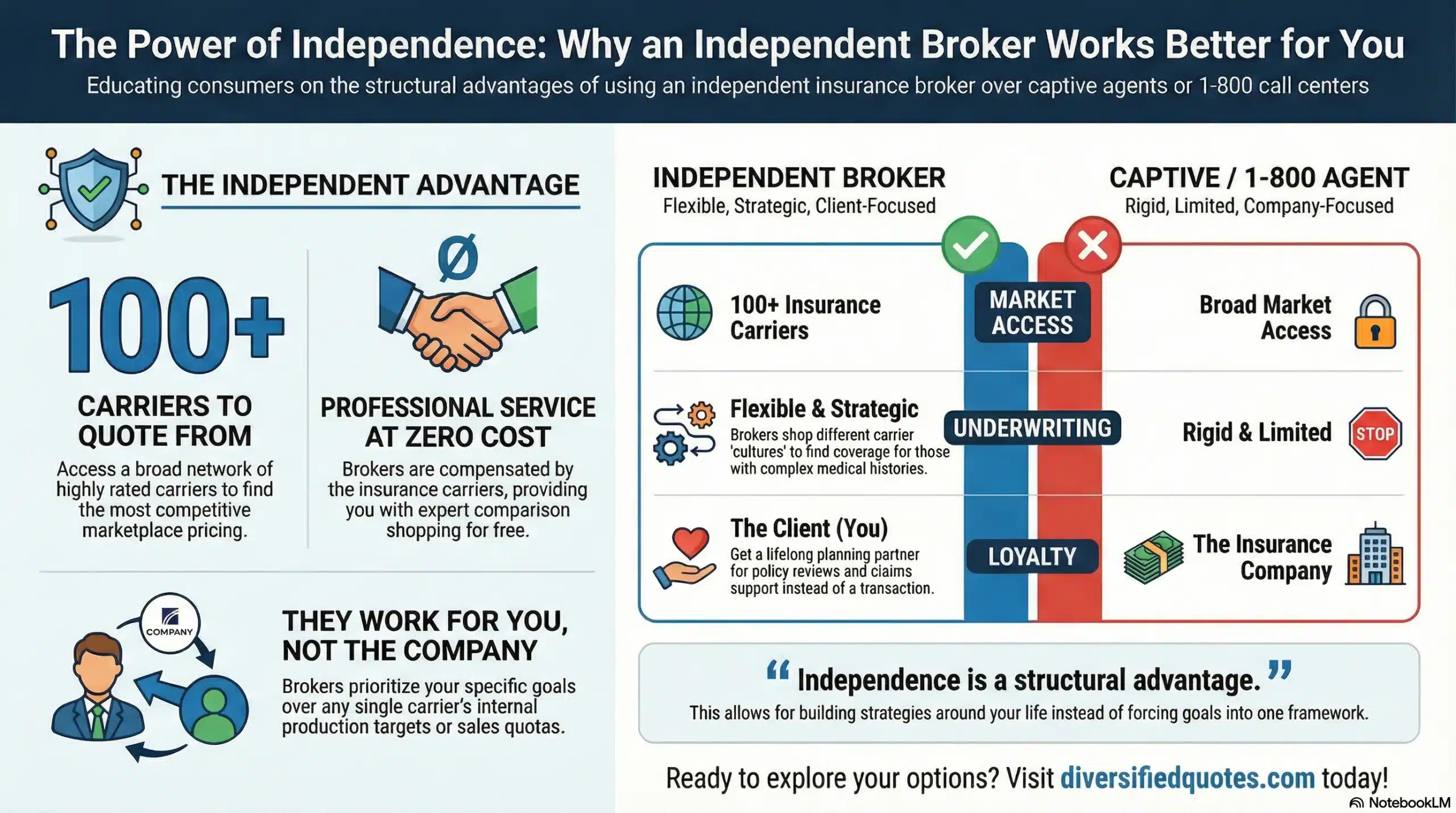
A Modified Endowment Contract is created when cumulative premiums paid into a life insurance policy in the first seven years exceed what the IRS considers necessary to fund a paid-up policy — a threshold calculated based on the death benefit size and defined in the IRC Section 7702A seven-pay test. When a policy becomes a MEC, the tax treatment of withdrawals and loans changes significantly: distributions are taxed on a last-in-first-out basis (earnings are taxed before principal is returned), and withdrawals taken before age 59½ are subject to a 10% early distribution penalty. This eliminates the tax-free access to cash value that makes IUL and VUL strategies appealing in the first place. The practical implication is that properly designed IUL and VUL policies must be funded at the maximum non-MEC level — as much premium as possible without triggering MEC status — which requires careful calculation based on the specific death benefit selected. Maximizing cash value accumulation while keeping the policy just below MEC thresholds is one of the primary technical objectives of a well-structured permanent policy design. Working with an independent advisor rather than a captive agent provides access to multiple carrier illustrations that show where the MEC threshold falls for each product at your age and target premium level.
How do I evaluate IUL and VUL illustrations honestly?
Most IUL and VUL illustrations presented in sales contexts use the maximum allowable illustrated rate — the highest performance scenario the carrier is permitted to show — as the primary projection. These illustrations are not projections of likely outcomes; they are regulatory-compliant illustrations of what the policy would look like if the illustrated rate were achieved consistently for every year of the policy’s life. In reality, credited interest fluctuates, caps may decline, subaccount returns vary, and policy charges increase as the insured ages. Evaluating any illustration honestly requires three steps: first, request a mid-range or conservative illustration that shows performance at 50-75% of the maximum illustrated rate; second, ask for a “break-even” analysis showing the minimum sustained crediting rate required to keep the policy in force to age 90 or 95 without additional premium; and third, for VUL specifically, request a stress-test illustration that applies a multi-year negative return scenario in years 10-15 of the policy when cash value is substantial. If the conservative or stress-tested illustration still produces an acceptable outcome, the policy may be well-suited to the situation. If it only looks compelling at maximum illustrated rates, that is a significant red flag about whether the product will perform as expected under realistic conditions.
About the Author:
Jason Stolz, CLTC, CRPC, DIA, CAA and Chief Underwriter at Diversified Insurance Brokers (NPN 20471358), is a senior insurance and retirement professional with more than 25 years of real-world experience helping individuals, families, and business owners protect their income, assets, and long-term financial stability. As a long-time partner of the nationally licensed independent agency Diversified Insurance Brokers, Jason provides trusted guidance across multiple specialties—including fixed and indexed annuities, long-term care planning, personal and business disability insurance, life insurance solutions, Group Health, Travel Medical and Evacuation Insurance, and short-term health coverage. Diversified Insurance Brokers maintains active contracts with over 100 highly rated insurance carriers, ensuring clients have access to a broad and competitive marketplace.
His practical, education-first approach has earned recognition in publications such as VoyageATL, and contributions from his agency featured in Kiplinger and GoBankingRates— highlighting his commitment to financial clarity and client-focused planning. Drawing on deep product knowledge and years of hands-on field experience, Jason helps clients evaluate carriers, compare strategies, and build retirement and protection plans that are both secure and cost-efficient. Visitors who want to explore current annuity rates and compare options across multiple insurers can also use this annuity quote and comparison tool.
Explore More Life Insurance Options: Browse our complete guide to Business Life Insurance — covering buy-sell agreements, key person, contract indemnity & group life from 100+ carriers.
Last Reviewed: June 13, 2026 |
Reviewed by: Jason Stolz, CLTC, CRPC, DIA, CAA
Chief Underwriter, Diversified Insurance Brokers, Inc. | NPN: 20471358 | Diversified Insurance Brokers, Inc. — Licensed in all 50 states
Fact Checked by: Tonia Pettitt, CMIP©
Medicare Specialist, Diversified Insurance Brokers, Inc. | NPN: 14374308 | Diversified Insurance Brokers, Inc. — Licensed in all 50 states
Did you find this content helpful? Leave us a Google review — it helps others find trustworthy guidance too.
Editorial Standards: Diversified Insurance Brokers maintains rigorous editorial standards to ensure accuracy, clarity, and independence in all content. Learn more about our editorial standards and commitment to transparency.
