
Life Insurance for CPAP Users
Life Insurance for CPAP Users

Jason Stolz CLTC, CRPC, DIA, CAA
Life insurance for CPAP users is one of the more misunderstood topics in impaired-risk underwriting — primarily because most applicants assume that using a CPAP machine for sleep apnea is a strike against them. The reality is precisely the opposite. CPAP compliance is viewed as a positive underwriting factor by most life insurance carriers because it demonstrates that obstructive sleep apnea (OSA) is being actively managed, its cardiovascular risks are being mitigated, and the applicant is engaged with their own health. Carriers draw a sharp line between treated sleep apnea and untreated sleep apnea — and that line makes a meaningful difference in both approval rates and pricing. Many CPAP users with mild to moderate sleep apnea, good compliance documentation, and healthy overall health metrics qualify for standard or even preferred life insurance rates. The diagnosis alone is not the underwriting problem. What creates underwriting problems is untreated or poorly managed OSA combined with additional cardiovascular or metabolic risk factors that compound the mortality risk picture.
The key to understanding how CPAP use interacts with life insurance underwriting is recognizing what sleep apnea actually represents in a mortality risk model. Untreated obstructive sleep apnea is associated with chronically elevated cardiovascular stress — repeated episodes of hypoxia (oxygen deprivation), sleep fragmentation, and autonomic nervous system activation during the night create sustained pressure on the heart, arteries, and metabolic system. That sustained pressure, unmanaged over years, is associated with higher rates of hypertension, atrial fibrillation, coronary artery disease, stroke, and metabolic disease. When CPAP therapy is used consistently and effectively, it addresses the underlying physiology — restoring normal breathing patterns, normalizing oxygen saturation, and reducing cardiovascular stress during sleep. Underwriters who understand this physiology know that a compliant CPAP user is in a materially different risk category than a non-compliant or untreated patient with the same AHI score. This is why CPAP compliance data — increasingly available through the digital tracking built into modern CPAP machines — has become an important piece of documentation in sleep apnea underwriting.
For applicants evaluating life insurance, the practical implication is clear: if you use CPAP, use it consistently, document that use, and bring that documentation to the application process. The investment in consistent nightly use produces dividends in underwriting outcomes. For the broader context on how insurance companies evaluate health conditions in life insurance applications, our resource on life insurance with pre-existing conditions explains the underwriting framework, and our dedicated page on life insurance for sleep apnea provides the full context for applicants across the severity spectrum. For CPAP users with additional health considerations — weight, blood pressure, diabetes — our resources on life insurance for overweight people, life insurance for type 2 diabetes, and life insurance after a heart attack cover the compounding factor considerations in detail.
See Real-Term Rates Side by Side
Life Insurance Quoter
Sleep Apnea Severity and Underwriting Classification — The AHI Framework
The Apnea-Hypopnea Index (AHI) is the primary clinical measurement that drives sleep apnea severity classification — and therefore the primary starting point for life insurance underwriting. The AHI counts the average number of apnea (complete breathing cessation) and hypopnea (partial breathing obstruction) events per hour of sleep recorded during a polysomnography (sleep study). The result is used to place the patient in one of three severity categories that form the foundation of underwriting analysis.
The severity classification is consistent across most major carriers, though the underwriting response to each severity level varies by carrier and is modulated by compliance documentation, overall health, and co-occurring conditions. The table below shows the general underwriting framework for CPAP users across severity levels — keeping in mind that individual carrier guidelines vary and that these outcomes assume consistent compliance and reasonably healthy overall metrics.
| Severity Level | AHI Range | With Good CPAP Compliance | Untreated / Poor Compliance |
|---|---|---|---|
| Mild | 5–14 events/hour | Standard or Preferred rates common; minimal underwriting impact when overall health is strong | Standard to Table 2; some carriers apply a rating even for mild if untreated |
| Moderate | 15–29 events/hour | Standard to Table 2 typical; strong compliance documentation is key | Table 2 to Table 4 or higher; some carriers decline; significant pricing impact |
| Severe | 30+ events/hour | Table 2 to Table 4 typical; strong compliance and clean cardiovascular profile needed for best results | Table 4 to Table 8 or decline; traditional coverage may not be available |
These are general frameworks based on carrier underwriting patterns — not guarantees. Individual carrier guidelines vary, and the presence of additional health factors (elevated BMI, blood pressure issues, cardiovascular history, diabetes) can shift outcomes in either direction. The right independent broker will identify which carrier is most receptive to your specific combination of AHI, compliance data, and overall health profile.
Two important caveats apply to this framework. First, AHI alone is not the only severity indicator. Oxygen desaturation levels — how low blood oxygen drops during apnea events — are also evaluated. A moderate AHI score with severe oxygen desaturation may underwrite more conservatively than the AHI category alone would suggest, because deep desaturation events create more acute cardiovascular stress. Second, post-treatment AHI matters as much as the original diagnostic AHI. Many underwriters want to see the treated AHI — confirmed through a CPAP download showing that effective pressure is being delivered and airflow events are being controlled — alongside the original sleep study. An original AHI of 40 that has been treated down to an effective AHI under 5 represents a very different risk profile than an AHI of 40 with no treatment data.
Request a CPAP Sleep Apnea Underwriting Review
We match your compliance profile, AHI score, and overall health picture to carriers most likely to produce the most favorable underwriting outcome. No obligation.
CPAP Compliance — The Single Most Important Variable for CPAP Users
Among all the factors that underwriters evaluate for CPAP users, compliance documentation consistently carries the most weight — more than the original AHI score in many cases. An applicant with severe sleep apnea and excellent documented compliance often underwriters better than an applicant with mild sleep apnea who was prescribed CPAP but uses it sporadically. The reason is straightforward from a mortality risk perspective: compliance is the evidence that the underlying health risk is actively being managed, and active management reduces the long-term cardiovascular consequences that make untreated OSA a significant mortality risk factor.
Modern CPAP machines store detailed usage data that is accessible through downloadable compliance reports — typically showing average hours of use per night, the AHI recorded during CPAP use, mask leak percentages, and pressure settings. Most carriers, when requesting CPAP compliance data, are looking for evidence of consistent nightly use. The general framework that emerges from carrier underwriting guidelines places compliance in three practical tiers. Consistent use of six or more hours per night typically supports the most favorable underwriting outcomes — standard rates are realistic for otherwise healthy applicants at this compliance level. Use of four to six hours per night per night remains within the commonly accepted compliance range and typically supports standard to mildly table-rated outcomes at most carriers. Use below four hours per night per night on average is where underwriting begins to treat the CPAP prescription as inadequately compliant, which can significantly increase ratings or limit carrier options.
The practical implication for applicants is direct: if you are preparing to apply for life insurance and your CPAP use has been inconsistent, there is meaningful value in reestablishing consistent nightly use in the months before application — not only for your health, but because the 90-day compliance report is the data most commonly requested by underwriters. If your CPAP machine is older and may not be storing compliance data, a conversation with your sleep physician about data download options or a re-evaluation of your current machine’s tracking capability is worthwhile before applying. Bringing a clean, consistent compliance report to an application is one of the most controllable steps a CPAP user can take to improve their underwriting outcome.
How Untreated Sleep Apnea Is Evaluated — The Critical Contrast
The difference in underwriting treatment between a compliant CPAP user and someone with the same diagnosed AHI who is either untreated or non-compliant is substantial — and it represents the single most important concept for anyone with a sleep apnea diagnosis considering life insurance. Untreated OSA leaves the cardiovascular system exposed to the full cumulative stress of repeated hypoxia events, autonomic activation, and oxygen desaturation throughout every night. Underwriters evaluating untreated or non-compliant sleep apnea are not only rating the sleep apnea — they are rating the downstream health implications of chronic unmanaged OSA.
Applicants who have been diagnosed with sleep apnea but have not been prescribed or have not started CPAP therapy — or who were prescribed CPAP but do not use it consistently — should expect meaningfully more conservative underwriting outcomes. Carriers approach non-compliant cases as the higher end of the risk spectrum for that AHI level, because the documented risk of untreated OSA is higher and there is no compliance data to support a more favorable assessment. In some cases, carriers may postpone applications until the applicant establishes a documented compliance record. If you have been diagnosed but have not yet started treatment, initiating consistent CPAP use and establishing a documented compliance record before applying for life insurance is the most effective strategy for improving your underwriting position.
Secondary Risk Factors That Compound Sleep Apnea Underwriting
Sleep apnea rarely exists in isolation. It is associated with a cluster of conditions — obesity, hypertension, atrial fibrillation, insulin resistance, and cardiovascular disease — that underwriters also evaluate independently. When sleep apnea is compounded by one or more of these conditions, the underwriting picture becomes more complex and carrier selection becomes more consequential.
Body mass index is the most common complicating factor because obesity is both a primary cause of OSA and an independent life insurance underwriting risk factor. Underwriters evaluate BMI on its own merits alongside the sleep apnea history. An applicant with a mildly elevated BMI alongside mild treated sleep apnea may still qualify at standard rates. As BMI increases — particularly into the range associated with Class II or Class III obesity — the combined effect of weight-related risk and OSA-related risk is evaluated together, which can produce more conservative outcomes even when CPAP compliance is excellent. Our resource on life insurance for overweight people covers the independent underwriting framework for BMI specifically.
Cardiovascular health is the second major compounding factor. The most significant long-term risk of untreated OSA is cardiovascular — and underwriters know this. When a CPAP user’s application also shows a history of atrial fibrillation, coronary artery disease, hypertension requiring multiple medications, or prior cardiac events, the underwriter evaluates whether those conditions are related to historically uncontrolled OSA or are independent conditions that exist alongside it. Stable cardiovascular health alongside documented CPAP compliance is the best possible profile. Our resource on life insurance for atrial fibrillation covers that specific co-occurring condition and how it interacts with broader underwriting.
Metabolic health — particularly blood sugar control and diabetes history — is the third major complicating factor. OSA and insulin resistance frequently co-occur, and the combination of sleep apnea and diabetes or pre-diabetes creates a layered underwriting profile. Applicants with both conditions are evaluated on both, with the quality of metabolic management mattering as much as CPAP compliance. Our resources on life insurance for type 2 diabetes and life insurance for high A1C diabetics cover how blood sugar management interacts with underwriting outcomes.
Tobacco use is the fourth compounding factor. Smoking worsens upper airway inflammation, independently elevates cardiovascular risk, and compounds the cardiovascular consequences of sleep apnea. Even non-cigarette tobacco use affects underwriting. Former smokers who have quit for at least 12 months typically qualify for non-smoker rate classes at most carriers, which meaningfully improves outcomes regardless of other health factors. Our resource on life insurance for cigar smokers covers how different tobacco use patterns are classified in underwriting.
Central Sleep Apnea — A Different Underwriting Evaluation
Obstructive sleep apnea — caused by physical airway collapse during sleep — is the most common form and the primary focus of CPAP therapy. Central sleep apnea (CSA), which is caused by the brain’s failure to send consistent breathing signals during sleep rather than by airway obstruction, is less common and is underwritten differently. Central sleep apnea may be idiopathic (no identifiable cause) or secondary to another condition — most notably heart failure, opioid use, or neurological conditions. When CSA is secondary to another condition, underwriters evaluate the underlying condition as the primary risk driver, with the CSA representing a complication or marker of that condition’s severity.
The underwriting challenge with CSA is that CPAP alone is often insufficient as treatment — CSA typically requires BiPAP (bilevel positive airway pressure) or specialized devices like ASV (Adaptive Servo-Ventilation) that address the neurological signaling component rather than simply maintaining airway pressure. Underwriters reviewing a CSA application will want to understand the underlying cause, the treatment modality, and any associated conditions before forming a risk assessment. Idiopathic CSA with good treatment response and clean cardiovascular workup is more favorable than CSA secondary to heart failure, where the cardiac condition itself drives the underwriting evaluation.
Alternative Treatments — BiPAP, Oral Appliances, and Inspire Therapy
CPAP is the most common and best-documented treatment for OSA from an underwriting perspective, but it is not the only option — and carriers evaluate alternative treatments based on the same fundamental principle: is the condition being actively managed, and does the evidence support that management is effective? BiPAP (bilevel positive airway pressure), which delivers different pressure levels for inhalation and exhalation, is often used for patients who cannot tolerate CPAP or who have more complex pressure requirements. Underwriters treat BiPAP compliance similarly to CPAP compliance when usage data and follow-up sleep study results demonstrate effective airway management.
Oral appliance therapy (mandibular advancement devices) is a clinically validated alternative for mild to moderate OSA that many patients prefer over CPAP due to portability and comfort. When used consistently and when post-treatment sleep study results confirm effective reduction in AHI, oral appliance therapy is generally viewed favorably by underwriters — though some carriers may apply slightly more conservative underwriting absent the objective compliance data that CPAP machines provide automatically. A follow-up sleep study confirming effective treatment is particularly important documentation for oral appliance cases.
Surgical interventions — including uvulopalatopharyngoplasty (UPPP) and hypoglossal nerve stimulation (Inspire therapy) — represent the most definitive treatment approach for eligible patients. When post-operative sleep studies show meaningful improvement in AHI and the improvement has been maintained over time, surgical treatment can produce very favorable underwriting outcomes. Underwriters reviewing surgical cases want the pre-operative and post-operative sleep study results alongside documentation of sustained improvement over a meaningful follow-up period. A patient who received Inspire therapy, achieved an AHI reduction from 45 to under 10, and has maintained that improvement over several years of annual follow-up presents an excellent underwriting narrative.
What Documentation Underwriters Request — Building the Strongest Possible File
The quality and completeness of documentation assembled before submitting a CPAP application is one of the most directly controllable factors in underwriting outcomes. Underwriters working sleep apnea cases are trying to establish three things: severity at diagnosis, quality of treatment response, and sustained compliance and stability. Documentation that answers those three questions clearly and proactively moves cases faster and reduces the likelihood of conservative interim assumptions while the carrier chases missing records.
The original polysomnography (PSG) sleep study is the foundation. It contains the diagnostic AHI score, oxygen desaturation levels, sleep architecture data, and the clinical basis for the CPAP prescription. If the original PSG was performed years ago, a current sleep physician’s note confirming continued treatment and absence of clinical deterioration supplements the original study effectively. A CPAP compliance report covering the most recent 90 days is the second critical document — downloaded from the CPAP machine’s data card or cloud-connected tracking system, it shows average nightly use hours, residual AHI under treatment, mask leak percentages, and the effectiveness of pressure delivery. This report is the most powerful positive evidence in a CPAP application when compliance is strong. A physician’s statement or follow-up letter from the prescribing sleep specialist confirming current treatment status, compliance, and absence of significant comorbidities or new complications rounds out the core file. For applicants with cardiovascular considerations, recent blood pressure records, EKG results, or cardiologist clearance letters add another layer of supporting documentation that helps underwriters evaluate the cardiovascular risk component.
Carrier Selection — Why Independent Access Produces Better Outcomes
Sleep apnea underwriting philosophy varies meaningfully across carriers, and that variation has direct premium consequences. Different companies apply different weighting to AHI severity, different minimum compliance thresholds, different cardiovascular risk stacking rules, and different interpretations of alternative treatment efficacy. The same applicant with an AHI of 28, documented CPAP compliance of 5.5 hours per night, and a BMI in the moderately elevated range might receive a Standard offer at one carrier, a Table 2 offer at another, and a Table 4 offer at a third — without anything about the applicant’s health changing. The difference is entirely in how each carrier’s underwriting guidelines weight those factors against each other.
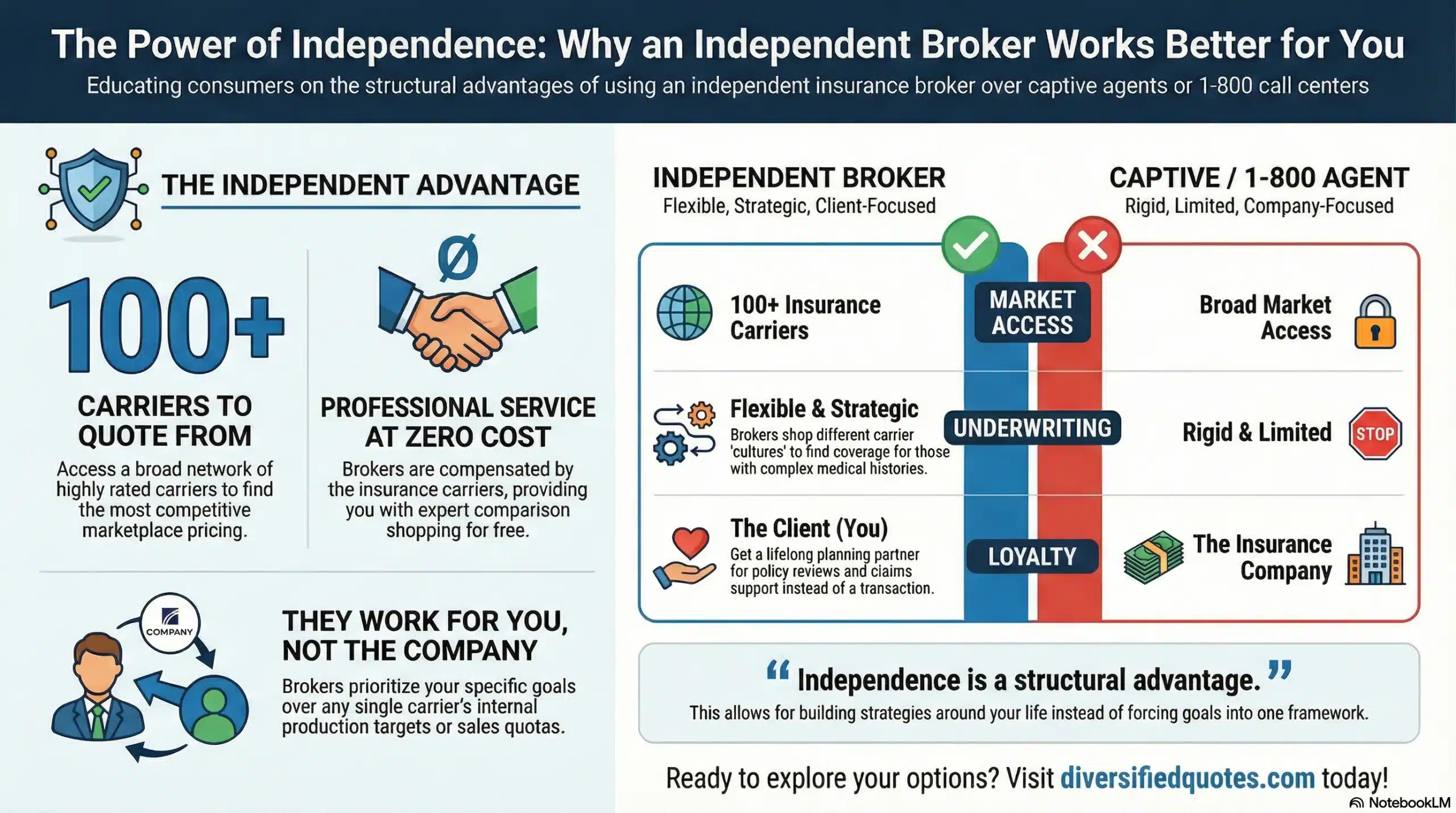
For CPAP users, this carrier variability is why working with an independent broker who actively tracks which carriers have the most favorable sleep apnea guidelines — and who understands how to present compliance documentation in the format each carrier finds most useful — produces measurably better outcomes than applying to one or two companies directly. Our high-risk life insurance services cover how we approach these cases across our full carrier network. For applicants who want a second opinion on a rating or offer they’ve already received, our life insurance second opinion service provides an independent review of existing underwriting offers to determine whether a better outcome is achievable elsewhere. For applicants who have already been declined, our resource on life insurance with a prior decline covers the recovery process.
Related Pages
Life Insurance for Overweight People
Life Insurance for Atrial Fibrillation
Life Insurance for Type 2 Diabetes
Life Insurance for High A1C Diabetics
Life Insurance With Pre-Existing Conditions
Life Insurance Table Ratings Explained
Compare Life Insurance Options for CPAP Users
We shop across 100+ carriers to match your compliance profile, AHI score, and overall health picture to the most favorable underwriting available. No obligation.
Compare Term Life Insurance Lengths
Explore different term periods to find coverage that best matches your timeline and budget.
Talk With an Advisor Today
Choose how you’d like to connect—call or message us, then book a time that works for you.
Schedule here:
calendly.com/jason-dibcompanies/diversified-quotes
Licensed in all 50 states • Fiduciary, family-owned since 1980
FAQs: Life Insurance for CPAP Users
Does using a CPAP machine hurt my life insurance application?
No — CPAP use is generally a positive factor in life insurance underwriting, not a negative one. It demonstrates that obstructive sleep apnea is being actively managed, its cardiovascular risks are being mitigated, and the applicant is engaged with their own health. Carriers draw a sharp line between treated and untreated sleep apnea. Well-documented CPAP compliance with a strong usage record consistently produces better underwriting outcomes than the same AHI score without treatment. The CPAP machine itself is not the problem — lack of consistent use is.
Can I qualify for preferred life insurance rates as a CPAP user?
Yes, in some cases. CPAP users with mild sleep apnea (AHI 5–14), consistent nightly compliance, normal BMI, controlled blood pressure, and no significant cardiovascular history can qualify for standard or even preferred rate classes at carriers with favorable sleep apnea guidelines. Preferred rates require the total health profile — not just the sleep apnea history — to be strong. As sleep apnea severity increases into moderate or severe range, standard rates remain achievable with excellent compliance, but preferred rates become less likely at most carriers. The specific outcome depends heavily on which carrier receives the application.
What CPAP compliance level do life insurance carriers look for?
Most carriers evaluate CPAP compliance from machine data downloads and look for consistent nightly use. The general framework: use averaging six or more hours per night typically supports the most favorable outcomes; four to six hours per night per night is within the accepted compliance range at most carriers and typically supports standard to mildly table-rated outcomes; use below four hours per night on average begins to raise compliance concerns and can increase ratings or limit carrier options. The compliance report covering the most recent 90 days of usage is the most commonly requested documentation. Consistent nightly use is what underwriters want to see — not occasional use when the machine is convenient.
What documents do I need to apply for life insurance as a CPAP user?
The core documentation package for a CPAP application includes: the original polysomnography (sleep study) report showing your AHI score and oxygen desaturation levels; a CPAP compliance report covering at least the most recent 90 days of machine usage data; a physician’s statement or follow-up note from your sleep specialist confirming current treatment status and absence of significant complications; and documentation of controlled co-occurring conditions if relevant (blood pressure records, A1C results for diabetic applicants). Having this documentation assembled before applying significantly accelerates underwriting and reduces the likelihood of conservative interim decisions while the carrier chases missing records.
What if I was prescribed CPAP but don’t use it consistently?
Non-compliance is one of the most significant avoidable underwriting problems for sleep apnea applicants. Carriers who see a CPAP prescription with sporadic or infrequent use treat the applicant more conservatively than a compliant user with the same AHI score — because the cardiovascular risk of untreated OSA has not been mitigated. If your compliance has been inconsistent, the most effective strategy is to reestablish consistent nightly use for at least 90 days before applying, so your compliance report shows a genuine and sustained change in behavior. Applying with a poor compliance record and hoping the carrier overlooks it rarely produces favorable outcomes.
Does my BMI or weight affect my life insurance approval as a CPAP user?
Yes, independently and in combination with sleep apnea. BMI is evaluated as a standalone underwriting factor and also in the context of sleep apnea because obesity is both a primary driver of OSA and an independent mortality risk factor. An applicant with mild treated sleep apnea and a moderately elevated BMI may still achieve standard rates if the overall profile is otherwise clean. As BMI increases into higher obesity ranges, the combined effect of weight-related risk and OSA-related risk is evaluated together and can produce more conservative outcomes — even when CPAP compliance is excellent. Weight management that moves BMI in a favorable direction before applying can meaningfully improve underwriting outcomes for CPAP users.
Is central sleep apnea underwritten the same way as obstructive sleep apnea?
No. Central sleep apnea (CSA) involves the brain’s failure to send consistent breathing signals during sleep rather than airway obstruction, and it requires different treatment — typically BiPAP or specialized ASV devices. CSA may be idiopathic (no identifiable cause) or secondary to another condition such as heart failure, opioid use, or neurological conditions. When CSA is secondary to another condition, underwriters evaluate the underlying condition as the primary risk driver. Idiopathic CSA with good treatment response and clean cardiovascular workup is more favorable than CSA associated with heart failure. The treatment modality, underlying cause, and cardiovascular context all influence how CSA is underwritten.
Why does the carrier I apply to matter so much for sleep apnea underwriting?
Because different carriers apply different weighting to AHI severity, different compliance thresholds, different cardiovascular risk stacking rules, and different interpretations of alternative treatment efficacy. The same CPAP user — same AHI, same compliance record, same BMI — might receive a Standard offer at one carrier, Table 2 at another, and Table 4 at a third. That difference can represent significant premium savings over the life of a policy. An independent broker who actively tracks which carriers have the most favorable sleep apnea guidelines and understands how to present compliance data in the format each carrier finds most useful produces measurably better outcomes than direct application to one or two companies.
About the Author:
Jason Stolz, CLTC, CRPC, DIA, CAA and Chief Underwriter at Diversified Insurance Brokers (NPN 20471358), is a senior insurance and retirement professional with more than 25 years of real-world experience helping individuals, families, and business owners protect their income, assets, and long-term financial stability. As a long-time partner of the nationally licensed independent agency Diversified Insurance Brokers, Jason provides trusted guidance across multiple specialties—including fixed and indexed annuities, long-term care planning, personal and business disability insurance, life insurance solutions, Group Health, Travel Medical and Evacuation Insurance, and short-term health coverage. Diversified Insurance Brokers maintains active contracts with over 100 highly rated insurance carriers, ensuring clients have access to a broad and competitive marketplace.
His practical, education-first approach has earned recognition in publications such as VoyageATL, and contributions from his agency featured in Kiplinger and GoBankingRates— highlighting his commitment to financial clarity and client-focused planning. Drawing on deep product knowledge and years of hands-on field experience, Jason helps clients evaluate carriers, compare strategies, and build retirement and protection plans that are both secure and cost-efficient. Visitors who want to explore current annuity rates and compare options across multiple insurers can also use this annuity quote and comparison tool.
Explore More Life Insurance Options: Browse our complete guide to Life Insurance for Cardiovascular & Respiratory Conditions — covering heart attack, heart disease, stroke, blood clots, COPD, and sleep apnea from 100+ carriers.
Last Reviewed: June 14, 2026 |
Reviewed by: Jason Stolz, CLTC, CRPC, DIA, CAA
Chief Underwriter, Diversified Insurance Brokers, Inc. | NPN: 20471358 | Diversified Insurance Brokers, Inc. — Licensed in all 50 states
Fact Checked by: Tonia Pettitt, CMIP©
Medicare Specialist, Diversified Insurance Brokers, Inc. | NPN: 14374308 | Diversified Insurance Brokers, Inc. — Licensed in all 50 states
Did you find this content helpful? Leave us a Google review — it helps others find trustworthy guidance too.
Editorial Standards: Diversified Insurance Brokers maintains rigorous editorial standards to ensure accuracy, clarity, and independence in all content. Learn more about our editorial standards and commitment to transparency.
