
Is USAA a Good Insurance Company?

Jason Stolz CLTC, CRPC

This USAA review is written for retirees and pre-retirees who want to separate two different questions that often get blended together: (1) “Is USAA a good insurance company?” and (2) “Is a USAA annuity (or retirement income product) the best way to build guaranteed income in my situation?” At Diversified Insurance Brokers, we evaluate insurers through the lens of retirement-income readiness, contract clarity, and the strength of long-term guarantees—because those are the variables that matter when a decision has to hold up for 10, 20, or 30+ years. The short answer for USAA’s core market is yes: USAA is widely respected, has an exceptional reputation for service, and is often one of the most trusted brands in the country for military families. The nuance is that USAA’s retirement and annuity footprint is not always the same story as its auto/homeowners reputation, and its membership eligibility model changes what “availability” looks like compared with carriers built specifically for broad annuity distribution.
If you are military-affiliated and eligible for USAA membership, you already know one of USAA’s biggest strengths: the culture is designed around members, not retail “walk-in” traffic. That tends to produce better experiences in the lines of business where USAA is most dominant, especially property & casualty. But retirement planning decisions—particularly annuity decisions—are rarely about service alone. They are about the rulebook inside the contract: how interest is credited, how income is calculated, how liquidity works, what surrender charges apply, and how beneficiary outcomes are handled. That is why our approach is straightforward: we treat USAA as a strong candidate in the conversation, then we compare USAA’s relevant retirement products against other carriers using the same assumptions so you can see the real trade-offs with clarity.
Before you compare any annuity from any company—USAA included—it helps to understand the “parts” that drive outcomes. A traditional fixed annuity credits interest directly and is designed for principal protection. A fixed indexed annuity links credited interest to an index formula while still protecting principal, and your results depend on contract rules like caps, participation rates, and spreads. Income-focused annuities are designed to create a lifetime paycheck through annuitization or a rider-based withdrawal strategy. If you want a clean foundation before comparing contracts, start with what is a fixed annuity, then review how fixed indexed annuities work, and keep how annuities earn interest open as a reference when you read illustrations. Those three pages help you avoid the most common mistake in retirement annuity shopping: comparing numbers without understanding the rules that create the numbers.
Ensure you are receiving the absolute top rates
Compare today’s strongest fixed and bonus annuity opportunities, then request a personalized quote/illustration so you can see real numbers for your age and state. If USAA is an option in your case, we can benchmark it against the broader marketplace so you can make a decision based on outcomes, not familiarity.
Note: The calculator accepts premiums up to $2,000,000. If you’re investing more, results increase in direct proportion — for example, doubling your premium roughly doubles the guaranteed income at the same age and options.
USAA Company Overview: Why the Membership Model Matters
USAA was founded in 1922 and is headquartered in San Antonio, Texas. The organization is best known for serving active-duty military, veterans, and eligible family members across insurance, banking, and financial services. From a consumer standpoint, the membership model is not a small detail—it changes the company’s incentives. Many people experience USAA as “built for members,” and that is part of why the brand earns such loyalty over time. For insurance lines like auto and homeowners, USAA is often considered among the strongest names in the market, with a reputation for service that is difficult for many competitors to match.
Where the nuance begins is that retirement products—especially annuities—are not judged the same way as auto or homeowners insurance. An annuity is not primarily a service experience; it is a long-term contract that defines how money grows, how income is calculated, how access works, and what happens to beneficiaries. A strong brand can still offer a contract that is “good but not best” depending on your age, timeline, and goals. That is why the most accurate way to answer “Is USAA a good insurance company?” is to say yes for its core market and many lines, while also recognizing that annuity competitiveness must be evaluated contract-by-contract and scenario-by-scenario.
What USAA Usually Excels At for Retirees
For many retirees, USAA’s greatest value is not that it “has annuities.” The value is that the organization tends to deliver a high-confidence experience across the essential risk-management categories retirees care about: property protection, liability protection, and simplified household coverage. This matters because retirement planning is not only about investing and income; it is also about keeping risks from derailing the plan. When core coverage is stable and predictable, it becomes easier to plan cash flow, protect assets, and avoid large unexpected expenses that can force withdrawals at the wrong time.
USAA is also a strong fit for people who place a premium on trust and long-term relationship continuity—especially if a household has used USAA for decades and wants simplicity. That is a legitimate value. But retirement income decisions still require a second step: confirm that the retirement contract you are choosing is the strongest “rulebook” available for your intended outcome. Trust should get USAA on the shortlist. It should not end the comparison.
Where Retirees Should Compare Closely: Annuities, Income, and Liquidity
If your main question is about an annuity or guaranteed retirement income, your decision should be driven by the contract mechanics that create income. This is where many people mistakenly “reverse” the process: they pick a carrier first and then accept whatever contract is offered, instead of defining the income goal and then selecting the contract that best fits it. When we compare USAA to other carriers for income planning, we focus on a short list of variables that tend to determine whether a contract is a win or a missed opportunity.
Income rider design and payout factors. If you are considering a rider-based income strategy, you need to know how the income base grows, how the lifetime payout percentage is set by age, what rider fees apply (if any), and what withdrawal flexibility exists. Many people see “roll-up” or “bonus” language and assume that is the same as income. It is not. The best starting point for understanding the language is what a GLWB is, followed by GLWB basics explained so you can compare riders correctly without confusing account value with income value.
Liquidity and penalty-free access. In real retirement life, access to funds can matter as much as the guarantee. The contract can look perfect until you notice surrender charges, the length of the surrender period, and how free withdrawals work. This is especially important if you are rolling over a meaningful amount of savings and you want the option to reposition later, fund a large one-time expense, or adjust your plan if health changes. If you want the practical framework, review annuity free withdrawal rules. It explains why “10% free withdrawals” and similar features can either be adequate or insufficient depending on your plan.
Surrender charges and market value adjustment risk. Many retirees do not plan to surrender early, but planning should still account for what happens if life forces a change. Some contracts include market value adjustments that can affect surrender values depending on interest rate movements. If you want a clear explanation of what to review, see surrender charges and MVA explained. This is one of the most overlooked pieces of the decision, and it can be the difference between “flexible enough” and “locked in more than intended.”
Fees, rider costs, and the net outcome. Some annuity designs include optional benefits with annual fees. Fees do not automatically make a product bad. They become a problem when they reduce the net income outcome without adding enough value for your timeline. If you want a simple overview of where costs show up and what to ask, review do annuities have fees. The goal is not “no fees.” The goal is paying for a guarantee that improves the result you care about most.
Inflation pressure and rising-income features. Retirees typically choose between higher income today versus features that may increase income over time. If you are exploring rising-income mechanics, the best starting point is what COLA means on an annuity, then pair that with annuity inflation protection to think through the trade-offs between level income and potentially increasing income.
How USAA Can Fit into a Practical Retirement Strategy
For many households, the best way to think about USAA is as a “household stability platform.” If you already have USAA for auto, homeowners, umbrella liability, and related lines, that can simplify risk management and reduce administrative friction. That simplicity can indirectly improve retirement outcomes because fewer surprises and fewer coverage gaps reduce the chance you are forced to liquidate investments or withdraw retirement funds at the wrong time.
When it comes to retirement income, we typically encourage a layered framework. First, define essential expenses and how they will be covered by guaranteed sources like Social Security. Second, decide whether you want to fill any remaining “income gap” with an annuity-based personal pension. Third, keep a portion of assets flexible for discretionary spending and unexpected needs. In that framework, USAA may be excellent in the first category, and potentially relevant in the second if the retirement contract you are evaluating is competitive for your scenario. The only way to know is to compare.
If you are military-affiliated and eligible for USAA, it can be rational to include USAA’s retirement options in your comparison. But the “comparison” must still be outcome-based. If your goal is maximum guaranteed income for a specific start age, you should evaluate the top income structures available in your state, not only the options under one brand. That is why we use consistent baseline modeling and then run carrier illustrations. This prevents the most common regret: choosing familiarity over the strongest contract mechanics.
Common Scenarios Where Comparing USAA is Especially Important
You are rolling money from a 401(k) or IRA. When retirement funds are being repositioned, the cost of a “good but not best” contract can be significant over time, because small differences in payout factors, rider costs, and surrender flexibility compound across years. If you want a step-by-step framework for what to consider in a rollover, review how to transfer a 401(k) to an annuity. That page helps you keep the decision anchored to timeline and plan design, not brand familiarity.
You want the strongest guaranteed income available today. The “best” payout depends on your age, premium size, state, and start date, and it can change as carriers adjust pricing. If your primary goal is the highest possible guaranteed paycheck, the responsible approach is to compare multiple carriers built for income-first design and then confirm the contract rules that support the payout. If you want a broader framework for thinking about income-focused structures, see best retirement income annuity ideas and then evaluate riders with roll-up vs payout rate so you compare income designs correctly.
You care about beneficiary outcomes and family protection. Many retirees want a reliable paycheck, but they also want to ensure their spouse or heirs are protected if something happens. That is why beneficiary provisions and death benefit rules are not an afterthought; they are part of the product design. If you want a clear overview of how annuity legacy provisions commonly work, review annuity beneficiary death benefits. This is especially important for households that want income while still preserving a meaningful legacy outcome.
A Practical Example: “Is USAA Enough for the Income Layer?”
Imagine a 65-year-old retiree eligible for USAA who wants to allocate $250,000 to support guaranteed income beginning at 68. They like USAA, trust USAA, and prefer simplicity. Those are valid priorities. The next step is to test whether the income layer is strongest through a USAA option or whether another carrier provides a meaningfully better result for the same assumptions. In this case, we would run side-by-side comparisons using the same premium and the same income start date, then evaluate the guaranteed lifetime payout, rider costs (if applicable), liquidity rules, surrender schedule, and beneficiary outcomes. We would also look at whether the retiree wants level income or rising-income features by referencing inflation protection structures. The retiree is not “choosing a brand.” They are choosing a paycheck strategy, and the best strategy is the one that produces the strongest net outcome under their real-world constraints.
Sometimes the results show that USAA is competitive enough for the goal. Other times, another carrier’s income design produces a higher guaranteed paycheck or better liquidity terms, and the household decides to separate “household coverage simplicity” from “income optimization.” Either result is a win, because the decision is based on numbers and contract mechanics rather than assumptions.
Pros and Potential Trade-Offs (USAA for Retirement Planning)
Pros. USAA is one of the most trusted insurance brands in America for military families, and it is widely recognized for service and member satisfaction. For many retirees, USAA simplifies the “essential coverage” portion of the retirement plan and reduces friction across multiple lines. If you are eligible and you value long-term relationship continuity, USAA can be an excellent foundation for household risk management. That foundation matters, because retirement outcomes are not only about returns; they are also about preventing avoidable financial shocks.
Potential trade-offs. USAA’s membership eligibility restrictions are a real factor: not everyone can access USAA, and availability can be limited based on eligibility and product versions. In the annuity context, USAA may not always lead the market for income payout factors or specialized income-first rider designs compared with carriers whose primary business is annuities and lifetime income. Product availability and features can also vary by state, which is another reason we evaluate based on your location and assumptions rather than generic marketing statements. If maximizing guaranteed retirement income is the primary objective, USAA should be compared side-by-side with carriers built specifically for that outcome.
Is USAA the Right Fit for You?
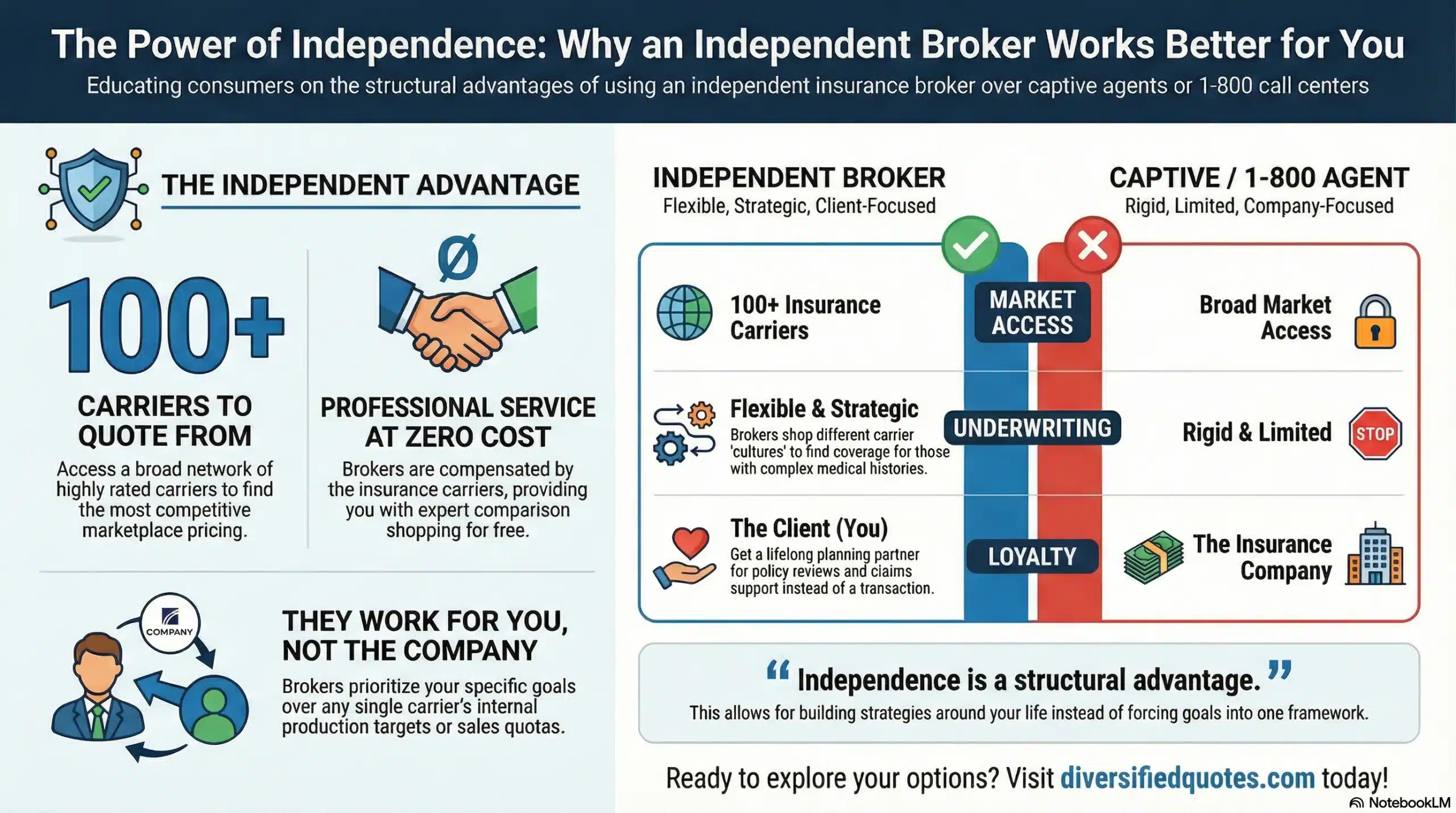
If you are eligible and you value trusted service, USAA is often an excellent choice for core insurance needs, and it frequently belongs in the shortlist for any broader planning conversation. If your main goal is guaranteed retirement income through an annuity, the best approach is to treat USAA as one option and compare it with other carriers using consistent assumptions. That is exactly what we do as independent advisors. We pull carrier illustrations, compare contract rulebooks, and help you see the real differences in payout, liquidity, and long-term flexibility so you can make a decision with confidence.
In other words, the answer is not “USAA or not USAA.” The answer is “What contract produces the strongest retirement outcome for your plan?” If USAA wins the comparison, great. If another carrier produces a stronger guaranteed paycheck or more favorable flexibility, that is also great—because you found the best fit based on outcomes rather than defaulting to a familiar brand.
Bottom Line
Yes—USAA is a good insurance company, particularly for its core military membership base and the lines of business where it has built an exceptional reputation over time. The retirement-income nuance is that annuity competitiveness depends on the specific contract, the state, and your personal timeline. If you are considering USAA for an annuity or guaranteed income strategy, the smartest step is to benchmark it against today’s strongest fixed, bonus, and income-oriented designs so you can see what your money can realistically produce. At Diversified Insurance Brokers, we can run that comparison and help you choose the contract that best matches your income goals, liquidity needs, and long-term planning priorities.
Related Pages
Talk With an Advisor Today
Choose how you’d like to connect—call or message us, then book a time that works for you.
Schedule here:
calendly.com/jason-dibcompanies/diversified-quotes
Licensed in all 50 states • Fiduciary, family-owned since 1980
FAQs: Is USAA a Good Insurance Company?
Is USAA financially strong?
Yes. USAA carries some of the highest strength ratings in the industry, reflecting its long history and member-owned model.
Can anyone buy insurance from USAA?
No. USAA membership is limited to military members, veterans and their families, which can restrict availability compared with other carriers.
Does USAA offer annuities for retirement income?
Yes, USAA offers annuities, but the product features may not be as rich or widely marketed as some specialized retirement-income focused carriers—so we recommend comparing.
Are USAA’s annuity payout rates competitive?
While USAA offers solid products, when maximizing guaranteed income we often find higher payout factors and enhanced income riders available from niche carriers. Comparison is beneficial.
What should I ask when evaluating a USAA annuity?
Ask about the income multiplier or withdrawal factor, free-access provisions, surrender charges, state availability, and how the annuity compares with other carriers.
About the Author:
Jason Stolz, CLTC, CRPC and Chief Underwriter at Diversified Insurance Brokers, is a senior insurance and retirement professional with more than two decades of real-world experience helping individuals, families, and business owners protect their income, assets, and long-term financial stability. As a long-time partner of the nationally licensed independent agency Diversified Insurance Brokers, Jason provides trusted guidance across multiple specialties—including fixed and indexed annuities, long-term care planning, personal and business disability insurance, life insurance solutions, and short-term health coverage. Diversified Insurance Brokers maintains active contracts with over 100 highly rated insurance carriers, ensuring clients have access to a broad and competitive marketplace.
His practical, education-first approach has earned recognition in publications such as VoyageATL, highlighting his commitment to financial clarity and client-focused planning. Drawing on deep product knowledge and years of hands-on field experience, Jason helps clients evaluate carriers, compare strategies, and build retirement and protection plans that are both secure and cost-efficient.
